Hey, I’m Mossaraof — a professional cook and food blogger
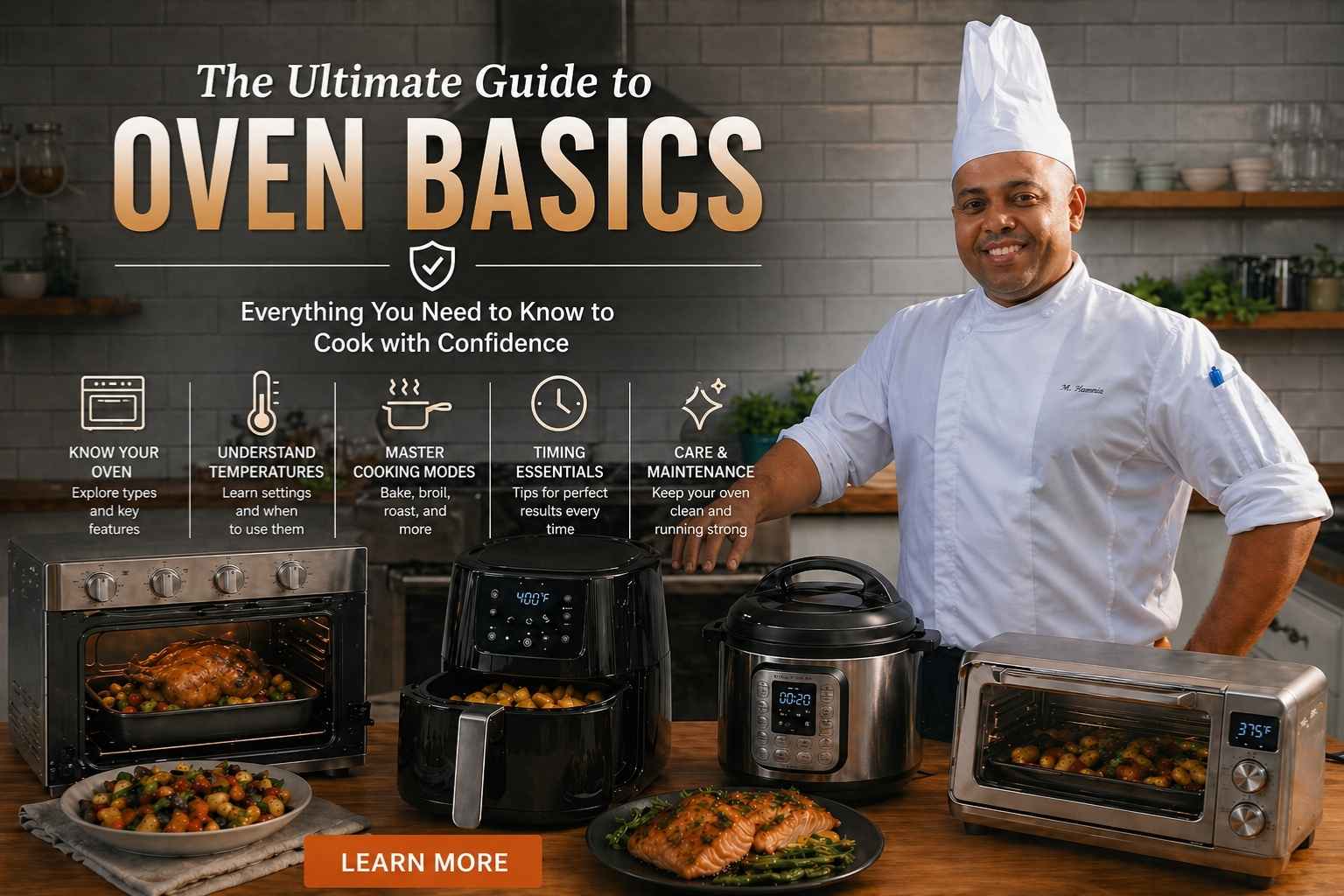
Do you ever feel like your oven is a total mystery? I have spent many years in hot kitchens, and I know that the right heat is the heart of a great meal. This The Ultimate Guide to Oven Basics will help you master your tools and cook with joy. You should also check out my Complete Guide to Using an Oven at Home to build your skills fast. Let us start this tasty path to better meals right now!
Understanding Your Heat Source: Gas vs. Electric vs. Induction
Every kitchen in the U.S. has a “vibe” based on what powers the stove. Whether you have a blue flame or a red coil, your food feels the difference. If you are stepping into a kitchen for the first time, it helps to know how to use an oven for the first time so you can navigate the different settings safely.
I’ve lived in houses with old gas ranges that smelled like a campfire. Sometimes that smell is normal, but it’s important to understand why an oven might smoke when you turn it on. I’ve also used sleek electric ones where I had to squint to figure out what the oven symbols mean. Here is what I learned while standing over those burners:
- Gas Ovens: These use a real flame. They create “moist” heat, which is great for keeping a turkey juicy. However, gas can sometimes lead to uneven cooking if the airflow isn’t just right.
- Electric Ovens: These use coils to provide a “dry” heat—the best friend of anyone baking crisp cookies. Because the heat comes from specific coils, you need to be careful about food burning on the bottom if the tray is too close to the source.
- Induction: This is the new kid on the block. It’s fast and safe, but you need special magnetic pans.
Temperature and Timing
One major difference is speed. You might find yourself wondering how long it takes an oven to preheat depending on the model. Gas usually clicks on and off more often to maintain heat, while electric stays steady but takes longer to get hot. If your meals aren’t coming out right, you should check if your oven temperature is actually accurate.
In my experience, gas is great for searing and electric is better for baking. To get the most out of either, you have to learn where to place your oven racks to avoid oven hot spots. If you ignore these factors, you’ll likely end up asking why your oven takes so long to cook food.
If you are moving to a new place in the States, check the hookup first. It changes how you shop for your next meal.
Convection Decoded: To Fan or Not to Fan
Most people see the “Convection” button and ignore it because it sounds like a physics class. I used to be scared of it too until I saw what it did to a batch of wings.
Essentially, convection is just a fan inside the box. It blows hot air around so there are no cold spots. It makes things crunchy.
- The Big Benefit: It cooks food about 25% faster.
- The Crunch Factor: It strips moisture off the surface of meat. This gives you that “snap” when you bite into it.
- The Bake Adjustment: You usually need to drop your temp by 25°F. If the box says 400°F, set it to 375°F.
- When to Skip It: Never use the fan for cakes or muffins. It will blow them over and make them lopsided.
One Tuesday, I tried to bake a delicate soufflé with the fan on. It looked like a leaning tower of cheese. Lesson learned: fans are for roasting, not for fluffy treats.
Oven Anatomy 101: Racks and Zones
I used to just throw everything on the middle rack. It felt safe. But once I started using the whole oven, my cooking changed forever.
Think of your oven like a house with different floors. The attic is hot, the basement is steady, and the middle is where everyone hangs out.
- The Top Rack: This is where the heat rises. Use this for browning the top of a cheesy mac and cheese.
- The Middle Rack: This is the “Goldilocks” zone. It’s perfect for almost everything.
- The Bottom Rack: This is closest to the heat source. Use it for pizza crusts or bread that needs a hard bottom.
- The Broiler: This is like an upside-down grill. It’s for melting and charring.
I once worked in a kitchen where the bottom rack was so hot it would melt shoes. I learned to keep my heavy cast-iron pans down there. It’s all about knowing where the “hot spots” live.
Essential Materials: What You Put Inside Matters
You can have a $5,000 oven, but if you use a flimsy tray from the dollar store, your food will burn. I’ve seen it happen a thousand times.
In America, we love our brands. Whether it’s a Lodge cast iron or a Pyrex dish, the material changes the cook time.
- Cast Iron: It takes a long time to get hot, but it stays hot forever. It’s the king of searing.
- Stainless Steel: It’s light and cleans up fast. Great for roasting veggies.
- Ceramic and Glass: These hold heat well but can crack if you change the temp too fast.
- Non-Stick: Be careful here. Most non-stick pans can’t go above 450°F without releasing weird fumes.
I have a favorite heavy Dutch oven. It’s chipped and ugly, but it makes the best braised short ribs in the world. Good gear is an investment in your sanity.
The Truth About Preheating
I’m going to be honest with you. Your oven is lying to you. When it beeps and says it’s ready, it usually isn’t.
The air might be hot, but the walls are still cold. If you put food in too early, the temp drops the moment you open the door.
- The 20-Minute Rule: Give it twenty minutes, no matter what the little light says.
- Thermal Mass: Put a pizza stone on the bottom rack. It helps keep the heat steady even when you peek.
- The Thermometer: Buy a cheap oven thermometer. You will be shocked to see your oven is actually 20 degrees off.
I used to be impatient. I’d toss my biscuits in the second the beep sounded. They always came out pale and sad. Now, I wait. Patience tastes better.
The Art of the Broiler: Using the “Upside Down” Grill
The broiler is the most misunderstood part of the American kitchen. Most people think it is just for making toast, but I use it like a high-end steakhouse infrared grill.
It provides intense, direct heat from above. It is perfect for when you want a char but don’t want to fire up the Weber outside in the middle of a snowy January.
- Distance Matters: Moving your rack just two inches closer to the flame can be the difference between “golden brown” and “fire alarm.”
- The “Door Crack” Trick: In many older US electric ovens, you need to leave the door open a few inches so the oven doesn’t get too hot and shut the element off.
- Flash Searing: Use it for thin cuts of meat like flank steak or for getting that bubbly, charred look on a sheet pan of peppers.
- Sugar Warning: If you are glazing something with honey or BBQ sauce, stay right there. Sugar burns in seconds under a broiler.
I once walked away for sixty seconds to answer my phone while broiling a tray of nachos. My kitchen smelled like burnt corn for three days. Stay focused and keep your eyes on the glass.
Cleaning and Maintenance: Keeping the Fire Happy
A dirty oven is a dangerous oven. I’ve seen grease fires start from a tiny drip of bacon fat that sat on the bottom for a month.
In the U.S., we love the “Self-Clean” button, but I actually hate it. It gets so hot it can melt the wires in your control panel.
- The Steam Method: Put a bowl of water with lemon slices in at 250°F for an hour. It softens the gunk so you can wipe it out.
- Baking Soda Paste: For the tough spots, mix baking soda and water. Let it sit overnight. It works better than those harsh chemicals.
- The Glass Door: Use a razor blade to gently scrape off the brown “fog” on the window. It feels so satisfying.
- Check the Gasket: That rubber seal around the door keeps the heat in. If it’s brittle or cracked, you are wasting money on your electric bill.
Cleaning isn’t fun, but a clean oven heats up faster. It also makes your house smell like cookies instead of old grease. Your nose and your wallet will thank you.
Troubleshooting Common Bake Issues
Sometimes you follow the recipe exactly, and the food still comes out wrong. Don’t blame yourself yet. It might be the box.
I’ve had days where my cakes were raw in the middle but burnt on the edges. That is usually a sign of poor airflow or a bad sensor.
- The Bread Test: Line a rack with cheap white bread. Turn the oven to 350°F. See which slices get dark first. Now you know your hot spots.
- The Peeking Problem: Every time you open the door, you lose about 25 to 50 degrees. If you keep looking, the food will never cook.
- Calibration: Most ovens have a hidden setting to offset the temperature. Check your manual; you can usually fix a 10-degree error yourself.
- Leveling: Use a level to make sure your oven is flat. If it’s tilted, your cake batter will pool on one side and bake unevenly.
I spent an hour once trying to figure out why my cupcakes were slanted. Turns out, the floor in my old apartment was crooked. A couple of shims under the oven feet fixed everything.
Modern Features: Air Fry, Steam, and Smart Tech
Ovens are getting smarter every year. Brands like Samsung and LG are adding features that used to only exist in professional restaurant kitchens.
I was skeptical at first. Do I really need my oven to talk to my phone? But some of these “smart” tools are actually life-changers for busy parents.
- Built-in Air Fry: It’s just high-speed convection. It’s great because you don’t need another appliance taking up space on your counter.
- Steam Roast: This adds moisture while cooking. It makes the best bread crust you have ever tasted in your life.
- Remote Preheat: I love being able to start the oven while I’m still at the grocery store. It saves me 20 minutes of waiting.
- Food Probes: These plug directly into the oven wall. You set the temp, and the oven turns off the moment your roast hits 145°F.
Technology should make your life easier, not harder. If a feature feels too complicated, don’t use it. The best tool is still the one you feel most comfortable with.
Practical Exercises: Mastering Your Heat This Weekend
You have the knowledge now. But as my old chef used to say, “You can’t learn to swim by reading a book.” You have to get in the kitchen.
I want you to try three things this week. These aren’t for a fancy dinner party. They are just for you to learn how your specific oven breathes.
- The Roast Chicken: Buy a whole bird. Use the middle rack. Watch how the skin changes color and listen for the sizzle.
- The Cookie Sheet Swap: Bake two trays of cookies at once. Switch them halfway through. This teaches you about heat flow.
- The Broiled Grapefruit: Sprinkle some brown sugar on a grapefruit and put it under the broiler. It’s a cheap way to learn how fast things brown.
Cooking is a journey. You will make mistakes. You will burn things. I still do! But each time you turn that dial, you get a little bit better. Keep the heat steady and your heart open.
Tool Materials and Why Your Pan Choice Changes Everything
In a professional kitchen, we choose pans based on how they move heat. It is not about how pretty they look on the shelf. It is about physics.
If you use a thin, cheap pan, it will warp. You will hear a “pop” in the oven, and suddenly your oil is all on one side. That is why I always tell my friends to buy heavy stuff.
- Aluminum: This is what most pros use. It heats up fast and cools down fast. It’s cheap but can react with acidic foods like tomatoes.
- Carbon Steel: Think of this as cast iron’s lighter cousin. It is amazing for roasting meat because it gets screaming hot.
- Copper: This is the “Ferrari” of cookware. It is expensive and high-maintenance, but the heat control is perfect.
- Silicone: Great for easy cleanup. But be careful; it doesn’t brown food. Your muffins will be pale.
I have a heavy aluminum sheet pan I’ve used for ten years. It’s stained and dark, but it cooks more evenly than any shiny new one. The darker the pan, the more heat it absorbs.
Power Types and Energy: What’s Running Your Range?
Most Americans don’t think about the wires or pipes behind their oven. But the power type changes your daily routine.
I’ve lived in old houses in New Orleans where the gas pressure was low. I’ve also lived in modern condos with 240-volt electric lines. Both taught me something different about timing.
- Natural Gas: Very common in cities. It’s cheap and gives you a visual flame so you know it’s on.
- Propane: Mostly used in rural areas. It burns hotter than natural gas, so you might need to watch your pots.
- Standard Electric: Uses coils or a glass top. It stays hot for a long time after you turn it off. Great for keeping food warm.
- Dual Fuel: These ranges are the best of both worlds. They have a gas cooktop and an electric oven. It’s a chef’s dream.
If you are thinking about switching from gas to electric, check your circuit breaker first. You need a lot of “juice” to run a modern oven. It’s not just a simple plug-and-play.
Ergonomics and Safety: Cooking Without the Pain
Cooking should be fun, not a workout. If your oven is at the wrong height or the door is too heavy, you won’t want to use it.
I once worked in a kitchen where the oven door was so stiff I had to use both hands. That is a recipe for a burn. Your tools should work with your body.
- Telescopic Racks: These are racks that slide out on ball bearings. They make it easy to check a heavy turkey without reaching inside.
- Knob vs. Touch Screen: Knobs are easier to use with greasy hands. Touch screens look cool but can be finicky if they get wet.
- Handle Grip: Look for handles that stay cool. Many US brands like Viking or Wolf have heavy-duty handles designed for big oven mitts.
- Child Locks: Essential if you have little ones running around. Many smart ovens now let you lock the door from your phone.
I prefer a big, chunky knob that I can turn with my elbow if I have to. It’s about speed and safety when things get busy. Simple is usually better.
Durability and Torque: Building a Kitchen That Lasts
When we talk about “torque” in kitchen tools, we are talking about the strength of the motors and the hinge. An oven door gets opened thousands of times.
You want something that feels solid. If the door feels light and “tinny,” it won’t hold heat well. I look for thick insulation and heavy hinges.
- Hinge Strength: A good door should stay open at a 45-degree angle without falling. This is great for venting steam.
- Insulation: Thick walls mean the heat stays in the oven and out of your kitchen. This is a lifesaver during a Texas summer.
- Self-Closing Doors: Some new luxury ovens have “soft-close” doors. No more slamming and ruining your delicate cakes!
- Replacement Parts: Brands like KitchenAid or GE are great because you can find parts at any local hardware store.
I once bought a cheap, “no-name” oven for a rental. The hinge snapped after six months. Now, I always check the “heft” of the door before I buy.
Real-World US Cooking Habits and Your Oven
The way we cook in America is unique. We love big roasts, we love baking for the holidays, and we love our frozen snacks.
Your oven needs to handle a 20-pound bird in November and a simple frozen pizza on a Tuesday night. It has to be a workhorse.
- The Thanksgiving Test: Does the oven fit a standard US roasting pan? Some “compact” models are too small for a big family feast.
- Sheet Pan Dinners: This is a huge trend in the States. You need an oven with even airflow so the salmon and the broccoli cook at the same time.
- Pizza Night: Most US home ovens max out at 500°F or 550°F. This is okay, but a pizza stone is a must for that “New York” crust.
- Regional Humidity: If you live in a humid place like Florida, your flour might be damp. You might need to bake things a few minutes longer.
I love a good Sunday roast. It’s the time when I slow down and really watch the oven work. It’s not just a machine; it’s a member of the family.
The Science of Scent and Sensory Cooking
You don’t just cook with your hands. You cook with your nose and your ears. In a busy kitchen, I can tell a steak is done just by the sound of the sizzle.
The oven tells you a story if you listen. A high-pitched hiss means moisture is escaping too fast. A deep, bubbly gurgle means your sauce is thickening.
- The Scent of Sugar: When you smell caramel, your cookies are seconds away from being perfect. If it smells like toast, get them out now.
- The Visual “Shimmer”: Look through the glass. If you see waves of heat, your oven is venting properly.
- The “Thump” Test: For a loaf of sourdough, tap the bottom. It should sound hollow like a drum.
- Steam Clouds: When you open the door, watch the steam. If a huge cloud hits you, your oven is holding moisture well.
Last Saturday, I was reading in the living room. I smelled a faint sweetness. I didn’t need a timer. I knew my apple pie was ready. Trust your senses more than your clock.
Airflow and the “Crowded Oven” Problem
We all do it. During the holidays, we cram the turkey, the yams, and the rolls all in at once. This is a recipe for a cold oven and soggy food.
Heat needs space to move. If you block the airflow, the bottom of your pans will stay cold while the tops burn.
- The Two-Inch Rule: Try to keep at least two inches of space between your pans and the oven walls.
- Staggered Racks: If you have two trays, don’t put one directly over the other. Shift them so they are diagonal.
- The “Cold Sink” Effect: Adding a large, cold pot of chili can drop the oven temp by 30 degrees instantly.
- Rotating Trays: Even the best ovens have spots. Always rotate your pans 180 degrees halfway through the cook time.
I remember one Christmas where the stuffing was raw because I blocked the fan with a giant ham. Now, I cook the sides ahead of time. Space is your best friend.
Understanding U.S. Temperature Standards
In the States, we use Fahrenheit. But even then, “350 degrees” isn’t a universal truth. High-altitude cooking in Denver is a whole different world compared to sea-level cooking in Miami.
Air is thinner in the mountains. Water boils at a lower temp. This means your oven basics have to change if you live in the Rockies.
- High-Altitude Adjustments: You might need to increase your temp by 15–25°F to get the same rise.
- Humidity and Crust: In the South, the air is thick. You may need to leave the door cracked for the last five minutes to get a crisp crust.
- Standard Conversions: Most recipes in the U.S. assume a standard home oven. If you use a “Toaster Oven,” reduce the temp by 25°F.
- Preheat Times by State: A cold kitchen in Minnesota in January takes twice as long to preheat as a kitchen in Phoenix.
I once tried to bake bread at a ski resort. My dough rose fast but stayed raw inside. I had to learn to slow down and turn up the heat. Always know your local “weather” inside the kitchen.
Safety Standards and Fire Prevention
Let’s talk about the scary stuff. Ovens get hot, and things happen. I’ve seen small fires turn into big ones because someone panicked.
Most American ovens are built with safety in mind. But you are the most important safety feature.
- The Fire Extinguisher: Keep a “Class K” or “ABC” extinguisher in the kitchen. Never use water on a grease fire.
- Parchment vs. Wax Paper: Never, ever use wax paper in the oven. It will melt and catch fire. Use parchment paper or silicone mats.
- The “Baking Soda” Trick: If you have a small grease fire on the bottom, dump a box of baking soda on it. It smothers the flames.
- Mitt Choice: Throw away those thin, pretty decorative mitts. Get heavy-duty silicone or professional “side towels.”
I once saw a cook use a wet towel to grab a hot pan. The water turned to steam and burned his hand instantly. Always use a dry, thick cloth. Safety is about being smart before the heat starts.
The Future of Your Kitchen: Building a Connection
At the end of the day, your oven is a tool. But it is also where the magic happens. It’s where the Sunday dinners and the birthday cakes come from.
Mastering The Ultimate Guide to Oven Basics isn’t about being perfect. It’s about being confident. When you aren’t afraid of the heat, you can truly cook.
- Don’t Overthink It: If it tastes good, you did it right.
- Keep Learning: Every oven you use will teach you something new.
- Share the Wealth: Teach your kids or your friends how to use the broiler. It’s a skill for life.
- Quality Over Quantity: Buy one good pan instead of ten cheap ones.
I still get a little nervous when I try a new recipe. That’s okay. It means I still care. Grab your apron, preheat that box, and go make something amazing. You’ve got this.
Material Science: Why Pan Thickness is Your Best Friend
I used to think a pan was just a pan. Then I worked a brunch shift where we went through 200 eggs in an hour. I realized that the “gauge” or thickness of the metal is everything.
In the U.S., we often see “half-sheet” pans. If you buy the thin ones at a grocery store, they will snap and pop in the heat. A heavy-duty aluminum pan—the kind you find at a restaurant supply store—is a game changer.
- Heat Distribution: Thick metal spreads heat out. Thin metal creates “hot spots” that burn your cookies while the middle stays raw.
- Warping: Ever heard a loud bang inside your oven? That is a thin pan twisting. It ruins the level surface of your cakes.
- Thermal Retention: A heavy pan stays hot even when you add cold food. This gives you a better sear on roasted potatoes.
- Gauge Ratings: Look for 13-gauge or 18-gauge. The lower the number, the thicker the metal.
I have one specific heavy pan I call “The Tank.” It’s ugly and covered in black seasoning. But it makes the most perfect, golden-brown roasted Brussels sprouts. It never lets me down.
The Ergonomics of Oven Racks: Saving Your Back
We don’t talk about oven racks enough. Most people leave them in one spot for five years. But moving your racks is the easiest way to “upgrade” your oven for free.
In professional kitchens, we are constantly sliding racks up and down. It changes the “torque” of the heat hitting your food.
- Offset Racks: Some American brands like GE have racks with a “dip” in them. This gives you an extra inch of height for a tall stockpot.
- Full-Extension Racks: These are on rollers. You can pull the whole rack out without it tipping. It is the safest way to baste a heavy ham.
- Cleaning the Tracks: If your racks are squeaky or hard to move, rub a little vegetable oil on the side rails. They will slide like butter.
- The “Empty” Rack: If you aren’t using a rack, take it out! It blocks airflow and takes energy to heat up.
One Thanksgiving, I almost dropped a 22-pound turkey because the rack stuck. I learned my lesson. Keep your tracks clean and your racks positioned before you turn on the heat.
Energy Efficiency: Cooking Without Breaking the Bank
Let’s be real—running an oven at 425°F for three hours is expensive. Especially in the summer when your AC is fighting the oven heat.
I’ve learned a few tricks to keep the kitchen cool and the bill low. It’s about working smarter, not harder.
- Batch Cooking: If you are heating the oven for one thing, fill the other racks. Roast veggies for tomorrow while you bake chicken for tonight.
- The “Carryover” Finish: Turn the oven off 5 minutes early. The residual heat is enough to finish most dishes.
- Door Seals: If you can feel heat leaking out the front, you are losing money. Replace that rubber gasket.
- Glass vs. Metal: Glass pans hold heat so well that you can usually lower the recipe temp by 25°F.
I live in a place where the summers are brutal. I do all my heavy oven roasting on Sunday mornings while it’s still cool. It saves my AC and my sanity.
Professional Maintenance: The 6-Month Tune-Up
You wouldn’t drive a car for years without changing the oil. Your oven needs a check-up too. A little “TLC” prevents that “oven failed on Christmas” nightmare.
I do a quick inspection twice a year. It takes ten minutes and saves hundreds of dollars in repairs.
- The Level Test: Put a bowl of water on the rack. If the water is tilted, your oven isn’t level. Adjust the feet at the bottom.
- The Light Bulb: Always keep a spare 40-watt appliance bulb. You can’t cook what you can’t see.
- Thermostat Calibration: Use an independent thermometer. If the oven is consistently off, most digital pads let you “offset” the temp in the settings.
- Igniter Health: On a gas oven, if it takes more than 5 seconds to click and light, the igniter is wearing out. Replace it before it dies.
I once had an oven that was 40 degrees too cold. I thought I was a bad baker for months! Once I calibrated it, my cakes started winning awards again.
The Sensory Detail: How to “Hear” Your Food
This is a pro-tip that took me years to master. Your oven makes noise, and so does your food. If you listen closely, the oven tells you exactly when to open the door.
I don’t rely on timers as much as I rely on my ears. It’s a more honest way to cook.
- The Sizzle: A fast, aggressive sizzle means the fat is rendering. A slow sizzle means the pan is crowded.
- The “Pop”: When roasting skin-on chicken, a little pop means the skin has finally dried out and is starting to crisp.
- The Silence: If your oven fan sounds different, it might be struggling. Listen for a steady hum.
- The Smell of “Done”: There is a specific smell when flour turns into crust. It’s a nutty, toasted scent. When you smell it, the bread is ready.
I love the sound of a quiet kitchen and a roasting chicken. It’s a peaceful kind of music. It tells me that a good meal is on the way.
Regional Climates and Your Oven: Why Miami is Not Seattle
I’ve cooked in the damp chill of the Pacific Northwest and the heavy, thick air of the Florida Keys. Most people don’t realize that the air outside your house changes the air inside your oven.
In the U.S., we deal with massive swings in humidity. This affects how your flour absorbs water and how fast your oven can vent steam.
- The Humidity Factor: In humid places like Houston, your crackers might never get “snap” unless you leave them in a turned-off oven to dry.
- The Dry Heat: In Arizona, your bread might form a crust too fast, stopping the rise. I use a pan of water on the bottom rack to add “fake” humidity.
- Cold Kitchens: If you live in a drafty farmhouse in Maine, your oven has to work 20% harder just to keep a steady temperature.
- Altitude Adjustment: In Denver, the air is thin. Gases expand faster. You might need more flour or a higher temp to keep your cake from collapsing.
I remember my first summer in New Orleans. My biscuits were gummy because the flour was so wet from the air. I had to learn to bake them longer at a lower temp. Always listen to your environment.
The “Deep Cleaning” Disaster: A Cautionary Tale
I mentioned the self-clean button before, but we need to talk about the “Chemical” versus “Natural” debate. I’ve seen people ruin their oven liners with the wrong spray.
In America, we have a lot of “Easy-Off” style cleaners. They work, but they are tough on your lungs and the oven’s internal parts.
- The Fume Factor: If you use heavy chemicals, turn on every fan in your house. Better yet, open the windows.
- The Blue Lining: Many modern ovens (like those from LG or KitchenAid) have a blue porcelain interior. Never use a metal scraper on this! You’ll chip it.
- The Ammonia Trick: Some old-school chefs leave a bowl of ammonia in a cold oven overnight. The fumes loosen the grease so it wipes off like water.
- Vinegar Rinse: After any cleaning, wipe the whole thing down with vinegar and water. It neutralizes the soap so your next pizza doesn’t taste like lemon-scent chemicals.
I once cleaned an oven with a harsh spray and didn’t rinse it well. The next time I made a roast, the whole house smelled like a laboratory. It was a total waste of a good ribeye. Rinse twice, cook once.
Troubleshooting the “Soggy Bottom”
In the baking world, the “Soggy Bottom” is the ultimate failure. It usually happens with fruit pies or heavy quiches. I’ve had my fair share of failures here.
It isn’t your fault; it’s a heat transfer problem. Your pan is shielding the bottom of the crust from the hot air.
- The Pre-Heated Tray: Place a baking sheet in the oven while it preheats. Slide your pie directly onto that hot metal. It’s like a jump-start for your crust.
- The “Blind Bake”: Cook the crust for 10 minutes with weights before you add the filling. It creates a “seal” so the juice doesn’t soak in.
- Lower Rack Placement: Move your rack to the very bottom. The closer you are to the heating element, the crispier that base will be.
- Metal vs. Ceramic: Ceramic is beautiful for the table, but metal gets hotter faster. If you want a crisp bottom, go with a dark metal pan.
I used to make a peach cobbler that was always a mess. Once I started using a pre-heated cast iron skillet, the bottom was as crunchy as the top. It changed the whole game.
The “Torque” of the Convection Fan: Speed vs. Silence
Not all fans are created equal. When you look at high-end American ranges, you’ll hear them talk about “Dual-Fan” or “Vertical” convection. This is about “torque”—the power behind the air.
A weak fan just stirs the air. A strong fan creates a “wind tunnel” effect that can actually blow your cookies across the tray.
- High Speed: Great for “Air Frying” or roasting a large prime rib. It pushes heat into the center of the meat.
- Low Speed: Perfect for drying out jerky or making delicate meringue cookies that need to stay white.
- The Sound Test: A good fan should be a low hum. If it rattles or whines, the bearings might be going bad.
- Filter Cleaning: Some ovens have a small mesh filter over the fan. If it gets clogged with grease, your convection won’t work.
I once used a pro-grade oven where the fan was so strong it blew the parchment paper right off the tray. I had to use magnets to hold the paper down! Know your fan’s power before you hit “Start.”
Building an “Oven Diary”: The Pro’s Secret Tool
This sounds nerdy, but every professional chef I know does it. We keep a little notebook in the kitchen drawer. We write down how our specific oven behaves.
No two ovens are the same, even if they are the same model. Yours might run hot in the back left corner. Write that down.
- Preheat Times: Note how long it actually takes to hit 400°F on a Tuesday night versus a Saturday morning.
- Brand Performance: Does your oven like “Pillsbury” dough better than “King Arthur” flour? (Hint: it usually has to do with sugar content).
- The “Fail” Log: When something burns, don’t just throw it away. Write down why. Was the rack too high? Was the fan on?
- Holiday Planning: Note exactly how long that 15lb turkey took last year. It takes the stress out of the next big dinner.
I’ve had the same little grease-stained notebook for five years. It’s the most valuable tool in my kitchen. It’s not about memory; it’s about data. When you know your oven’s history, you own the kitchen.
Comparing the Giants: A Look at US Kitchen Brands
In my career, I’ve stood in front of almost every brand of oven sold in the States. From the heavy-duty Wolf ranges in professional catering halls to the reliable Whirlpool units in suburban homes. Each brand has a “feel” that affects how you cook.
When you are shopping or cooking at a friend’s house, knowing these quirks helps you adjust on the fly. It is about trusting the machine but knowing its limits.
- Viking and Wolf: These are the “heavy hitters.” They have high torque and incredible insulation. They stay hot for hours.
- GE and Whirlpool: The American workhorses. They are designed for easy repairs. If a heating element snaps, you can usually find a part at the local hardware store.
- KitchenAid: Known for their “Even-Heat” technology. They use a unique bow-tie shaped fan to move air in a specific pattern.
- Samsung and LG: These are the tech leaders. They often have the best “Air Fry” modes and very sleek touch screens.
I once worked a gig with a brand-new high-end range that had so many buttons it felt like a spaceship. I had to call the owner just to turn on the broiler! Don’t let the tech distract you from the basic job: making heat.
The “Last Call” for Oven Safety: Smoke and Alarms
It happens to the best of us. A drip of fat hits the bottom, and suddenly your kitchen looks like a London fog. Your smoke alarm starts screaming, and you lose your cool.
I’ve learned that the way you react to an oven “incident” defines you as a cook. If you panic and open all the doors, you might make it worse.
- Don’t Open the Oven: If there is a small fire inside, keep the door closed. Oxygen is fuel. Cutting off the air will often starve the fire.
- The Power Cut: Turn the dial to “Off.” If it’s safe, unplug the unit or flip the breaker.
- The Ventilation Plan: Open your windows before you open the oven door to let the smoke out.
- Post-Smoke Cleanup: Once it’s cold, you must clean the soot. Soot is acidic and can ruin the metal over time.
I remember a night where I was searing steaks and the pan flared up. I kept my head, slid the tray out, and covered it with a lid. No fire, no mess, just a slightly smoky dinner and a good story.
Why We Love the Heat: The Soul of the Home
At the end of the day, this The Ultimate Guide to Oven Basics is about more than just knobs and fans. It is about the feeling of a warm house on a cold night.
In America, the kitchen is where we gather. The oven is the engine that drives those memories. Whether it’s the smell of cinnamon rolls on Christmas morning or the sizzle of a Sunday roast, it’s all about connection.
- Consistency is Love: When you master your oven, you can give your family the same perfect meal every time.
- Confidence is Key: No more “is it done yet?” anxiety. You know your tool, so you know your food.
- The Joy of the Craft: There is a deep satisfaction in seeing a loaf of bread rise perfectly because you knew exactly which rack to use.
I still get a thrill every time I see the light turn on and a cake begin to rise. It never gets old. The oven is a simple box, but what comes out of it is pure magic.
Final Actionable Tips: Your Pro-Chef Checklist
Before you head off to your next meal, keep these final thoughts in your back pocket. These are the “quick wins” I’ve picked up over twenty years of cooking.
If you do nothing else, do these four things. Your cooking will improve by 50% overnight. I promise.
- Buy a Thermometer: Don’t trust the digital display. Trust the $10 piece of metal sitting on your rack.
- Stop Peeking: Use the light and the window. Every time you open that door, a chef somewhere sheds a tear.
- Preheat Longer: Give it 20 minutes. Let those walls get bone-deep hot.
- Rotate Everything: Unless you are baking a souffle, turn your pans halfway through. No oven is perfectly even.
I’ve had a lot of jobs in my life, but nothing beats being a chef. It taught me that life, like a good roast, takes time, steady heat, and a little bit of patience. Now, go turn that oven on and make something delicious. Your kitchen is waiting!

I’m Mossaraof, a trained chef and the founder of OvenInsights.com. I spent years cooking at Larrupin’ Cafe and in kitchens across Chicago and Seattle. Now I test kitchen gear for a living. I moved to North Acton, London, and I test every tool I write about. I use real meals and real heat. No brand deals. No shortcuts. I cover 12 kitchen types and hundreds of recipes. I believe this: the right tools matter as much as the recipe.