
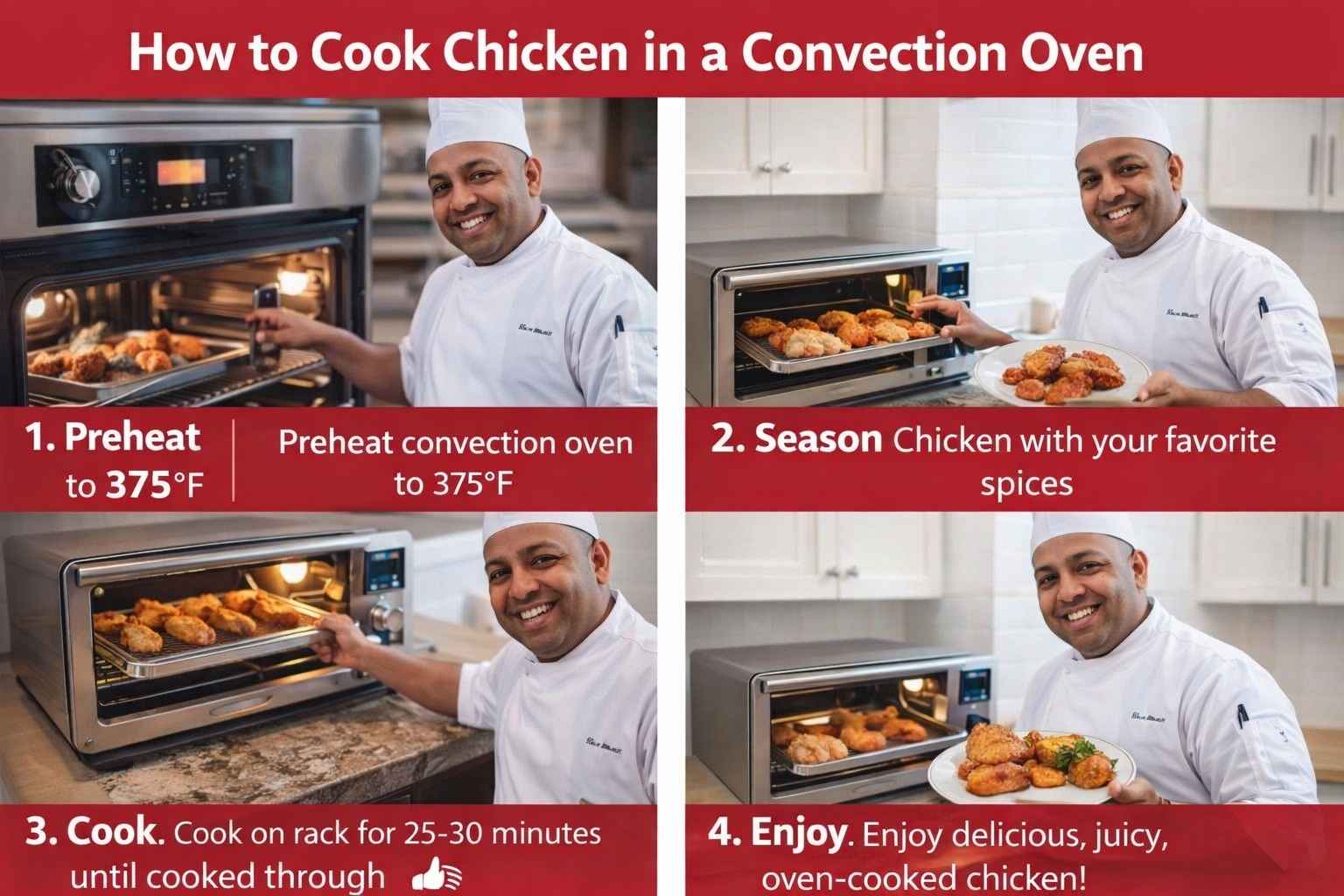
Hey, I’m Mossaraof — a professional cook and food blogger.
We all want a bird with skin that shatters like glass and meat that stays incredibly tender. I will show you how to cook chicken in a convection oven so you get a beautiful, even gold all the way around in less time than a standard bake. My years in a busy Chicago kitchen taught me that a moving fan is the true secret to a faster, crispier roast that locks in every drop of juice. Use my Ultimate Guide to Master Your Oven to learn how to adjust your temperature and time for this high-performance setting. Let’s grab your favorite pan and start this perfect meal together right now!
To help improve your SEO and provide more value to your readers, I have integrated your links into the article naturally.
Here is the revised text with the interlinks placed within relevant paragraphs:
What Makes a Convection Oven Different for Chicken?
If you’re used to regular ovens, convection feels like switching from a slow walk to a brisk power walk. Same path, but you get there faster — and your results look better too.
I didn’t get why the fan mattered at first. I assumed it was just there to make noise and heat things faster. But once I started roasting chicken thighs with the convection fan on, the skin crisped up like I’d broiled it. That changed everything. Whether you are learning how to cook chicken in the oven at 400 degrees or preparing a specialized dish like teriyaki chicken in the oven, the airflow makes a massive difference in the final texture.
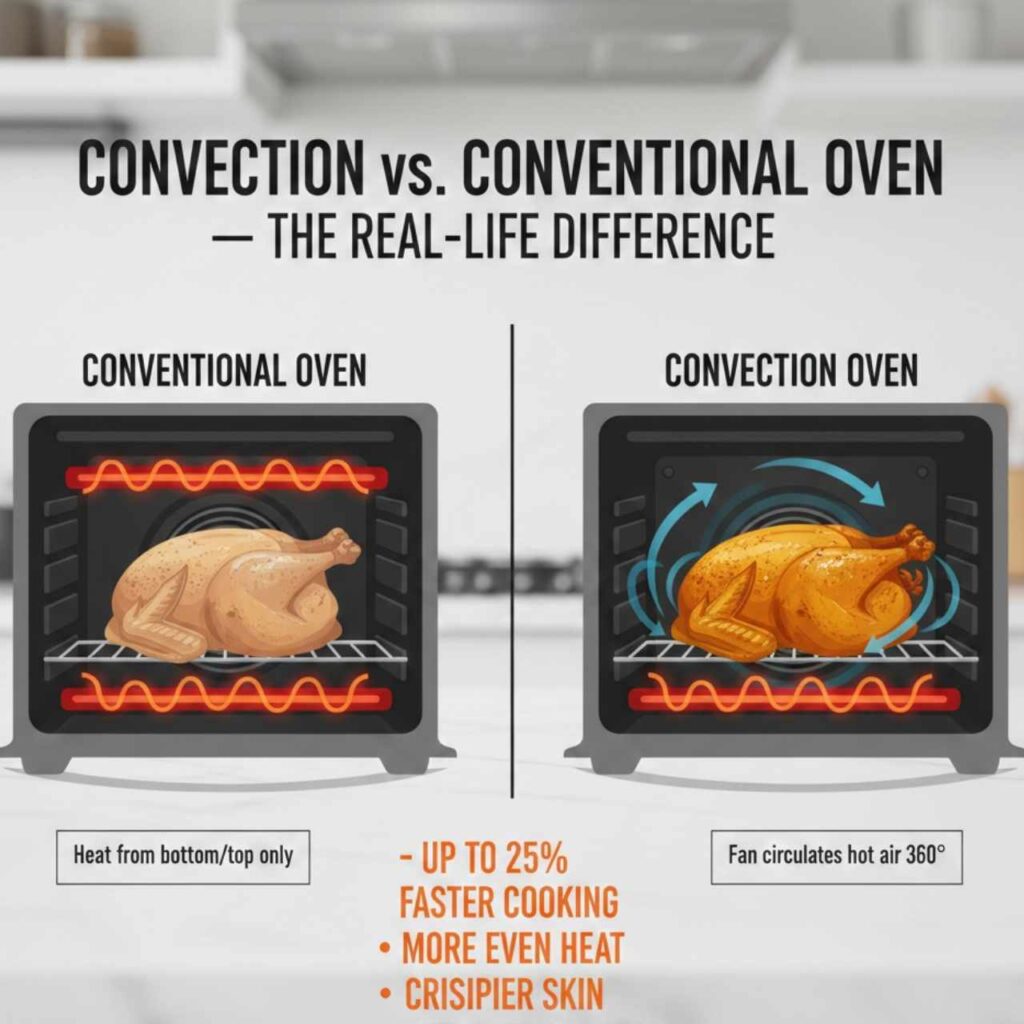
Convection vs. Conventional Oven — The Real-Life Difference
When I use my convection oven, the fan circulates hot air around the chicken. It’s not just blasting heat from the bottom or top — it’s wrapping it like a warm breeze in every direction. This is also the secret weapon for leftovers; it’s the best way to reheat chicken nuggets in the oven or reheat chicken thighs without them getting soggy.
Here’s how it changes the game:
- More even heat — No more burnt edges and raw centers. This is vital when learning how to cook sliced chicken breast so the small pieces don’t dry out.
- Faster cooking — Up to 25% faster in most cases.
- Crispier skin — Especially on chicken legs and thighs, wings, and drumsticks.
- Better browning — Surface gets dry faster, so it caramelizes better.
When I switched from my old coil-style oven in Florida to a newer convection range in Arizona, I had to adjust my cooking times. I once overcooked a tray of chicken thighs by 10 minutes because I forgot convection moves faster. The smell was great — the texture, not so much. I’ve since learned that the same speed applies to smaller items; you can reheat chicken legs in minutes, and it’s the perfect environment to make BBQ chicken drumsticks with a sticky, caramelized glaze.
Types of Convection Ovens I’ve Used in the U.S.
Let me break down the two types I’ve cooked with:
1. True European Convection This type has a third heating element behind the fan. It creates even heat from all sides. I used one in a rental in Scottsdale and it was incredible for roasting a whole chicken evenly—no flipping needed. It is also the superior choice for complex recipes, such as cooking stuffed chicken breasts, where you need the internal stuffing to reach temperature without burning the outside.
2. Fan-Assisted Convection (Most Common in the U.S.) This is what you’ll find in most Whirlpool, GE, or Frigidaire ovens at places like Home Depot or Lowe’s. It uses the main heating element and the fan to push air around. This setting is a lifesaver for busy weeknights when you need to cook frozen chicken patties or frozen chicken nuggets for the kids, as it gives them a “deep-fried” crunch without the oil.
Both work well for chicken — but you may need to rotate your pan if the fan’s airflow isn’t perfect (especially in older models).
Why Chicken Loves Convection Cooking
This surprised me, but chicken actually reacts better than most proteins in convection ovens. Especially the skin-on kind.
Here’s why:
- Fat renders quicker — You’ll get less greasy skin and more crunch
- Juices stay sealed in — You’re not drying the meat out with long bake times
- No soggy bottoms — The airflow dries out moisture that would otherwise pool
It’s like the oven helps babysit your chicken so you don’t have to hover. I’ve even left a tray in while folding laundry and came back to perfectly roasted thighs with golden skin.
How Long to Cook Chicken in a Convection Oven (Timing by Cut & Temp)
When I first started using a convection oven, my biggest question was: how long do you cook chicken in a convection oven — without overdoing it?
Turns out, it depends on the cut, the temperature, and your oven’s personality (yes, they each have quirks).
My Go-To Convection Chicken Cooking Times
I’ve messed this up enough times to know what works. I’ve baked undercooked drumsticks on a Monday and over-roasted breasts the next day. So I started tracking.
Here’s what I follow now — and it rarely fails me:
| Cut | Temp (°F) | Time (Minutes) | Notes |
|---|---|---|---|
| Boneless Breasts | 400 | 20–25 | Flip once halfway — dries fast if overcooked |
| Bone-In Thighs | 375 | 30–35 | Skin crisps nicely, juicy underneath |
| Drumsticks | 375 | 35–40 | Rotate pan once — helps browning |
| Chicken Wings | 425 | 30–35 | Skin bubbles up like in an air fryer |
| Whole Chicken | 375 | 15 min/lb | Spatchcock for faster cook, more even skin |
If you’re cooking a whole bird, especially a 5-lb one, I usually give it 75 minutes and check at the 60-minute mark. I once roasted a whole chicken during a snowstorm in Chicago — the house smelled amazing, but I forgot to rotate it and one leg was way crispier than the other.
Use a Meat Thermometer — Every Time
Don’t play chicken roulette. Use a thermometer. I bought a cheap ThermoPro from Amazon after I served pink meat once during a Sunday lunch. That was awkward.
Here’s what I go by:
- 165°F in the thickest part (usually the breast or thigh)
- Avoid touching bone when inserting the probe — it’ll give you a false read
- Remove from oven at 160°F — it’ll rise as it rests
Now I never serve undercooked chicken. Or dry chicken. Or apologize for dinner. Game-changer.
Altitude and Humidity — U.S. Kitchen Quirks
I’ve cooked chicken in Denver, Tucson, and humid Tampa. Let me tell you — convection reacts differently depending on the air.
- High Altitude (Colorado)
Chicken took a bit longer, and the skin didn’t crisp as quickly
I had to turn up the temp slightly to get the same results - High Humidity (Florida)
Sometimes the skin “sweats” before it browns — convection helps dry that up faster, but only if you don’t overcrowd the pan
If you’re in the U.S., your climate actually does affect your chicken. I had no idea until I tried cooking the same recipe in Arizona and then again in St. Petersburg, FL. Totally different behavior.
Quick Tips for Timing It Right
Here’s what I do now to nail the timing:
Smell counts — when it starts smelling roasted and toasty, it’s usually close
Start checking 5–7 minutes before you think it’s done
Rest the chicken for 5–10 minutes after baking — don’t skip this
How to Bake Chicken in a Convection Oven — Step-by-Step Guide
This is exactly how I do it. No fluff, no overly perfect setups. Just the method I’ve dialed in after cooking chicken in different U.S. kitchens, from steamy Florida summers to crisp Arizona evenings.
Step 1: Prep Your Chicken Like You Mean It
First things first — don’t skip the drying step.
I used to pull chicken straight from the package and throw on seasoning. The result? Steamed skin. Sad and rubbery.
Now I always:
- Pat the chicken dry with paper towels (every nook and cranny)
- Lightly coat with oil — I use avocado or olive oil
- Season generously — salt, pepper, garlic powder, smoked paprika
- Optional trick: rub with mayo or Greek yogurt for extra moisture hold (especially boneless breasts)
Sometimes I add lemon zest or thyme if I’m feeling fancy. Other times, I’m too hungry to bother. Both ways still work.
Step 2: Preheat the Oven — Yes, Even With Convection
This one’s tempting to skip, especially when you’re rushed. But trust me — preheating matters.
My convection oven heats up quicker than my old standard oven. I usually set it to 375°F and wait about 5–7 minutes. If I’m making wings or skin-on thighs, I go 400–425°F to get that golden top layer.
If you don’t preheat:
- The chicken starts steaming instead of roasting
- The skin won’t crisp up
- Cook time gets unpredictable
Been there. Greasy mess, pale skin, and frustration. Lesson learned.
Step 3: Use the Right Pan (It Actually Makes a Difference)
I didn’t believe pan type mattered until I accidentally used a glass baking dish instead of my usual metal tray. Total fail. The chicken cooked fine, but the skin? Soft. No crunch.
Here’s what I use now:
- Dark metal sheet pans — best browning and fast heat-up
- Wire rack on the pan — helps air flow underneath for crispy bottoms
- Parchment paper — easy cleanup, but not above 425°F
- No foil unless I need to tent it (more on that later)
If you’re baking a lot of pieces (like a week’s worth of meal prep), don’t overcrowd. Two pans are better than cramming it all on one.
Step 4: Roast on the Middle Rack and Give It Space
Convection ovens need air to circulate. I learned that the hard way after cramming 12 drumsticks on one tray and ending up with uneven skin — some charred, some soggy.
Now I always:
- Use the middle rack — best airflow
- Leave at least ½ inch between pieces
- Rotate the pan halfway through if needed (especially for older or uneven ovens)
If I’m cooking bone-in thighs, I flip them once around the 20-minute mark. Not required, but it helps the underside crisp and avoids those weird pale patches.
Step 5: Optional But Delicious — Baste or Brush at the End
Sometimes, especially when I’m making BBQ-style chicken, I’ll add a little something near the end.
- Brush on BBQ sauce, honey mustard, or teriyaki glaze
- Do it with 8–10 minutes left so it doesn’t burn
- Turn up to broil for 1–2 minutes if I want that glossy, sticky finish
I once tried brushing too early and forgot it in the oven. Sugar burns fast. My smoke alarm had thoughts. Don’t be me.
Best Chicken Cuts for Convection Cooking
Not every chicken cut behaves the same under that hot, circulating air. Some shine. Others need a little extra love. I’ve cooked them all — wings, thighs, breasts, even a whole bird during a blackout (yes, I had backup power).
Here’s what’s worked best in my real U.S. kitchens.
Boneless, Skinless Chicken Breasts
These are tricky. They cook fast in a convection oven — which is both a blessing and a curse.
Why I love them:
- Quick weekday dinner
- Soaks up dry rubs well
- Easy to slice over salads or grain bowls
But… they dry out in a blink. I’ve ruined more breasts than I care to admit.
What I do now:
- Bake at 400°F for 20–25 minutes
- Use a thermometer — pull at 160°F
- Brush with mayo, mustard, or olive oil before seasoning to help lock in moisture
- Rest it, always
Sometimes I add a thin lemon slice on top. It adds flavor and keeps the top from drying too quickly. Small trick — big difference.
Bone-In, Skin-On Chicken Thighs
This is where convection ovens shine. Thighs come out juicy with the crispiest skin — almost like they’ve been shallow-fried, but without the mess.
These are my go-to when I want:
- Maximum flavor
- Forgiving cook times
- Killer leftovers
I usually bake them at 375°F for about 35 minutes. I’ve also used them for one-pan meals — just toss some veggies underneath to soak up the drippings.
Pro tip from my Arizona kitchen: if your thighs are cold straight from the fridge, give them 5–10 minutes at room temp before cooking. Otherwise, the skin shrinks weirdly.
Chicken Drumsticks
Great for kids, game day, or lazy Sunday nights. Super forgiving and budget-friendly too.
Why they work:
- The convection fan browns the skin beautifully
- Internal meat stays moist even if you overcook it a bit
- Pairs well with dry rubs and glazes
My favorite combo:
- Dry rub with smoked paprika + garlic powder
- Roast at 375°F for 35–40 minutes
- Flip once halfway
- Glaze with BBQ sauce in the last 10 minutes
I used to make trays of these during football season in Florida — they disappeared before halftime.
Chicken Wings
Honestly? This is where convection ovens go full MVP.
You get crispy wings without deep frying. I repeat: no fryer needed.
What I do:
- Pat them dry (this is key)
- Toss in a little baking powder + salt
- Bake at 425°F for 30–35 minutes on a wire rack
- Flip halfway through
- Toss in buffalo or honey garlic after cooking
They come out so crispy that people have asked if I used an air fryer. Nope — just my trusty convection setting.
Whole Chicken
This one’s a bit more involved but worth it. I used to be intimidated by whole chickens. Now, it’s one of my favorite things to roast.
Key tip: spatchcock it (cut out the backbone and flatten it). Cooks faster and more evenly.
Here’s what I do:
- Rub with a mix of oil, salt, garlic, rosemary, and lemon
- Roast at 375°F for 60–75 minutes depending on weight
- Use a meat thermometer in the thickest part of the thigh
- Let it rest for 10–15 minutes before carving
The convection fan helps the breast and thigh finish at nearly the same time — no more dry breast meat. I’ve made this for family dinners in both Denver and Tampa, and it never fails to impress.
Common Mistakes When Cooking Chicken in a Convection Oven
I’ve made every mistake on this list. Some twice. A couple more than I’d like to admit.
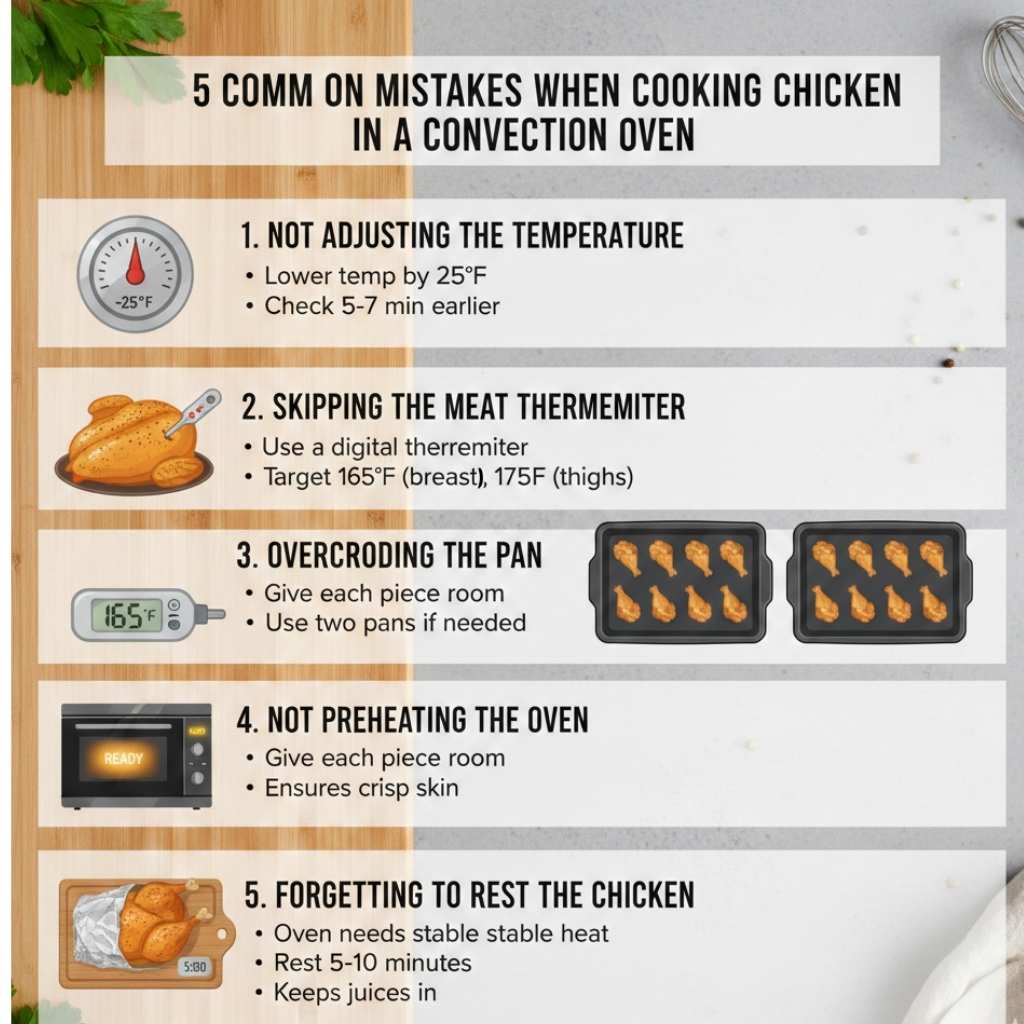
Convection ovens are powerful, but they’re not magic. If you skip the basics, your chicken will let you know — usually with rubbery skin or a dried-out middle.
Mistake #1: Not Adjusting the Temperature
This is the one that bit me early on.
I followed a regular oven recipe for thighs, threw it in at 400°F, and walked away. The skin was burnt before the inside even hit safe temp.
Most convection ovens cook faster because of the air circulation. That means you often need to:
- Lower the temp by 25°F compared to standard recipes
- Start checking 5–7 minutes earlier than usual
Now I always pause before preheating and ask: “Was this written for convection?” If I’m not sure, I adjust it.
Mistake #2: Skipping the Meat Thermometer
Listen, I get it. Thermometers feel like extra work. But nothing ruins a good dinner like guessing wrong.
I served undercooked drumsticks once during a casual dinner in St. Pete. I smiled like everything was fine, but inside I was panicking. We ended up microwaving the middle. Yikes.
Now I use my ThermoPro every time — even for wings. It takes two seconds, and it’s saved me from over- and undercooking more times than I can count.
Mistake #3: Overcrowding the Pan
Guilty. Especially during meal prep Sundays.
I used to cram 10–12 pieces on one tray thinking, “Eh, the oven can handle it.” Nope. All that moisture trapped under the chicken? Steamed instead of roasted.
If you want crisp skin and even browning, you’ve gotta:
- Give each piece breathing room
- Use two pans if needed
- Avoid stacking or layering
Trust me — less is more. Your chicken will thank you.
Mistake #4: Not Preheating the Oven
I used to think, “It’s convection, it gets hot fast — I can skip preheating.” That worked… once. The other times, my chicken came out pale and limp.
Even convection ovens need time to stabilize the heat. If you don’t preheat:
- Your cook time is off
- Your skin won’t crisp
- You risk uneven texture, especially with bone-in cuts
Now I preheat while I season. By the time the tray’s ready, the oven’s hot.
Mistake #5: Forgetting to Rest the Chicken
This one feels small but makes a huge difference.
If you cut into chicken right after it comes out of the oven, the juices spill everywhere. I’ve done it. Multiple times. And each time I thought, “Why is this so dry now?”
Now I always:
- Let it rest for 5–10 minutes under loose foil
- Only slice when the meat feels slightly cooler to the touch
- Remind myself that I waited this long — what’s 5 more minutes?
Flavor Tips and Seasonings That Work Best in Convection
You’d think any seasoning works the same in a convection oven. I thought that too — until I scorched honey garlic wings into charcoal crisps on a Wednesday night in Phoenix. Learned the hard way that when and how you season chicken really matters with convection heat.
Here’s what’s actually worked for me, tested across dozens of meals.
Dry Rubs Always Beat Wet Marinades (In Most Cases)
Convection heat is dry and fast. That’s a good thing — unless you drown your chicken in liquid.
Heavy marinades just don’t do well. They drip, burn, and block the crisping process.
Instead, I go for dry rubs or light oil-based blends. Some favorites:
- Smoked paprika + garlic powder + onion powder + thyme
- Lemon zest + sea salt + cracked pepper + rosemary
- Chili powder + cumin + brown sugar (great on drumsticks)
For boneless chicken, I might brush on mustard or mayo first — it helps the rub stick and adds moisture. That trick saved my dinner more than once when I overcooked chicken breasts in Arizona’s dry climate.
When to Add Glazes, Sauces, or Sticky Coatings
I love a sticky BBQ glaze as much as anyone, but convection ovens don’t play nice with sugar too early.
The air circulation intensifies browning — which means anything sweet will burn fast. I’ve seen my favorite homemade teriyaki sauce turn to black crust before the chicken even finished cooking.
Here’s my new rule:
- Wait until the last 7–10 minutes to add anything sticky
- Brush in thin layers — don’t slather
- Keep a close eye once it’s glazed
- Use broil mode for 1–2 minutes if you want that lacquered finish
My go-to store-bought sauce: Stubb’s Original BBQ — not too sweet, and it holds up well in convection.
U.S. Brand Seasonings I Keep Reaching For
Not sponsored — just what I use, love, and rebuy at Publix or Walmart.
- McCormick’s Montreal Chicken — bold, herby, great on wings
- Trader Joe’s 21 Seasoning Salute — light and citrusy
- Tony Chachere’s Creole Seasoning — for spicy thighs with a Southern kick
- Badia Complete Seasoning — simple, garlicky, perfect on drumsticks
Sometimes I mix my own blends, but when I’m tired or distracted (which happens), these are pantry lifesavers.
Fresh Herbs, Garlic, and Citrus — How to Use Without Burning
Fresh ingredients like garlic and parsley are tricky in convection. If they’re exposed, they crisp too fast — or worse, burn.
Here’s how I handle them:
- Mix into oil or butter and tuck under skin
- Use as a final garnish after roasting
- Zest lemon over the chicken before cooking, then squeeze juice after
- Roast whole garlic cloves beside the chicken instead of on it
When I do it right, the aroma in the kitchen is unreal — like walking into a cozy rotisserie spot with rosemary and lemon in the air.
How to Reheat Chicken in a Convection Oven Without Drying It Out
Leftover chicken can go two ways — dry and stringy, or juicy and just as good the second time around. I’ve had both. One night in Tampa, I reheated a gorgeous roast chicken and turned it into dusty jerky. I learned quick: convection can reheat like magic… if you do it right.
My Step-by-Step Reheat Method
This is what I actually do when reheating baked chicken — wings, thighs, breasts, whatever’s left in the fridge.
- Preheat oven to 325°F (convection mode)
Not too hot. You want gentle heat that won’t overcook the outside. - Place chicken in a small oven-safe dish or tray
If it’s skin-on, I’ll put it on a wire rack over a pan. If it’s boneless breast, I lay it flat in a small baking dish. - Add a splash of moisture
- A spoonful of chicken broth or water goes a long way
- For breasts, I sometimes use melted butter instead — flavor + moisture = win
- Cover loosely with foil (optional)
Helps trap steam and prevent drying during the first half of reheating - Reheat for 10–12 minutes, then uncover
If it’s skin-on, I take the foil off near the end and let the fan crisp things up - Check temp (optional but smart)
Just make sure the inside hits 165°F again. It usually does fast in convection.
What Works Best for Reheating in Convection
Some cuts reheat like a dream. Others… need help.
- Thighs and drumsticks – stay moist and flavorful.
These are the easiest — I’ve reheated drumsticks from the night before and had them taste even better. - Bone-in wings – crisp up beautifully, just like round one
I’ve even turned leftovers into snack platters with a fresh dry rub. - Boneless breasts – the riskiest
These dry out fast unless you:- Add broth or butter
- Cover for most of the time
- Reheat low and slow (don’t rush it)
When I’m short on time, I still use this method. It takes 15 minutes max and keeps my chicken from turning into cardboard.
My Real-Life Convection Reheat Trick
Sometimes I hit the broil mode for the last 1–2 minutes to re-crisp the skin. Just a short burst — watch it like a hawk.
I learned that from reheating BBQ thighs during a camping trip where we had a portable convection setup (don’t ask — it was weird but fun). The skin puffed back up, the fat sizzled, and dinner tasted brand new.
Using Foil, Racks, or Parchment in Convection Ovens — What I Learned
Not all liners are created equal — especially when a fan’s blasting 400°F heat around your oven. I’ve scorched parchment. I’ve had foil stick to chicken skin. I even melted a silicone mat once trying to “save cleanup.” (Never again.)
Here’s what’s actually worked for me, after dozens of chicken dinners and a few crispy surprises.
Foil — Helpful, but Tricky
I use foil, but I use it carefully.
When I tent it over chicken, it’s to slow browning or trap moisture — especially helpful if the skin starts crisping too early. I’ve done this with whole chickens and drumsticks when I misjudged cook time.
When I use foil:
- Tenting loosely over chicken for the first 15–20 minutes
- Lining a pan if I’m lazy about cleanup (not proud, just real)
- Under wings when I don’t want drippings on the tray
When I avoid it:
- Directly under the convection fan if it could blow into the element
- Wrapping chicken tightly — makes it steam, not roast
If I’m cooking at high temps (like 425°F), I keep foil off the top entirely. It tends to brown unevenly under there.
Parchment Paper — My Go-To Liner (Below 425°F)
I love parchment. Easy cleanup. No sticking. But I learned the hard way — it has a limit.
One night in Arizona, I cranked the oven to 450°F, forgot I had parchment underneath, and suddenly I had blackened paper curling at the edges like a campfire.
So now I:
- Use parchment only under 425°F
- Cut it to fit so it doesn’t blow around
- Use it mostly for skinless cuts or sticky glazes
Bonus: it keeps chicken from sitting in fat puddles, which helps keep the bottom crisp.
Wire Racks — The Secret to Crispy Skin
This is a game-changer. When I started roasting chicken thighs on a wire rack, I felt like I leveled up.
Why it works:
- Hot air hits all sides
- Fat drips away instead of soaking the bottom
- No more pale undersides — just all-around golden crispness
I use a cooling rack set on a sheet tray. Just make sure it’s oven-safe (not all of them are). I’ve had one warp on me mid-cook. It made the chicken lean to one side — awkward, but still tasty.
My Current Setup for Most Chicken Meals
Here’s my real routine:
- Sheet pan + parchment + wire rack = easy cleanup, max crisp
- If I need foil, I tent it gently and only for part of the bake
- No silicone mats — they don’t crisp anything and can smell weird at high temps
The tools don’t have to be fancy — I bought my favorite rack at a grocery store in Florida for under $10. Still use it.
Oven Brands I’ve Used & How They Behaved with Chicken
I’ve cooked chicken in a bunch of different ovens across the country — from rentals to my own setups to friend’s kitchens. One thing I’ve learned? Not all convection ovens are built the same.
Some blast heat like a wind tunnel. Others are gentler and need a little coaxing to crisp the skin. Here’s what I’ve experienced with some of the most common U.S. brands.
GE Profile (Used in My Florida Apartment)
This was the first convection oven I really experimented with — a standalone GE range in a small, humid kitchen near Tampa.
- Fan kicked on loud and strong — great for crisping chicken thighs
- Preheated super fast — like 6 minutes to 375°F
- Hot spots in corners — I had to rotate trays halfway
I used this oven to cook drumsticks for a potluck once. Forgot to rotate the tray and one side got golden while the other looked… underwhelmed. Since then, I never skip the mid-bake spin.
Whirlpool Smart Oven (My Current Setup in Chicago)
This one’s my daily driver now — a built-in convection wall oven with a digital display and consistent results.
- Fan is quieter but more even — cooks chicken through beautifully
- Great with multi-rack baking — I’ve roasted wings and veggies together
- Broiler is strong — helpful for that final skin crisp
It’s my favorite so far. I trust the temp readings enough that my thermometer usually just confirms what I already know. When I’m batch-roasting chicken for meal prep, this one delivers every time.
KitchenAid Wall Oven (Friend’s Place in Arizona)
I cooked a full chicken dinner in this setup while house-sitting during a dry, 100°F Arizona spring.
- Fan ran even after cooking — helped the chicken rest without getting soggy
- Top heat was intense — had to lower the rack position to avoid over-browning
- Temperature spot-on — skin crisped up in less time than I expected
Funny story — I left the bird in while the fan cooled down and forgot about it for 5 minutes. Came back and the skin had gone from crispy to perfect. I didn’t plan it, but it worked out.
Frigidaire Gallery (Used in Denver Rental)
This one had a convection bake and a convection roast option. I didn’t fully know the difference back then, but I played around until I got it right.
- Bake mode = better for uniform heat
- Roast mode = great for high-heat browning
- Altitude adjustments needed — skin didn’t crisp as fast at 5,000+ feet
I once roasted chicken thighs with veggies on the same tray and forgot to account for the lower air pressure. Took longer than usual. Tasted great, but the timing threw me off. Lesson: if you live high up, give it an extra 5 minutes.
What I’ve Learned from All These Ovens
Even though all these were convection models, they each had their quirks:
- Fan strength changes how quickly skin crisps
- Element placement affects how evenly the chicken browns
- Climate + altitude definitely make a difference
That’s why I always recommend testing a new oven with something simple — like two bone-in thighs with salt and pepper. You’ll learn so much from just one tray.
Final Tips for Crispy Skin and Juicy Chicken Every Time
Over the years — and across different ovens, cities, and chaotic weeknights — I’ve built a list of little habits that make convection chicken go from “fine” to “dang, this is really good.”
These are the tricks I use almost every time. And yep, they still work, even when I’m tired, out of foil, or forgot to thaw the chicken fully (don’t recommend that last one, but it happens).
Let the Chicken Rest Before You Slice
I used to skip this step because I was hungry and impatient. Don’t. It’s the easiest way to make dry chicken worse.
Here’s what I do now:
- Pull it out of the oven
- Tent it loosely with foil or just leave it alone
- Wait 5 to 10 minutes, even if it feels like forever
The juices settle back in. Your cutting board doesn’t get soaked. And the texture? Way more tender.
Use Broil Mode for Final Crisping (Optional, But Magical)
Sometimes the skin isn’t quite there by the end — especially if I added sauce or had to cover the tray early on.
I’ll hit broil for 1–2 minutes at the end, watching like a hawk. Don’t walk away. I’ve done it. Smoke alarm said hello.
Just a short blast can puff up the skin and add that final crunch you crave. It’s like a built-in air fryer bonus.
Add Fresh Finishers After Baking
This one took me a while to adopt. I used to rely only on seasoning before baking. But a final touch after roasting? Game changer.
Some of my go-to finishers:
- Lemon zest or juice — wakes everything up
- Fresh herbs — parsley, thyme, even a few chives
- Sprinkle of flake salt — adds crunch and pop
I’ve even grated a little garlic into olive oil and drizzled it over sliced chicken breast. It felt fancy… even though I was just in pajamas eating over the sink.
Trust Your Senses, Not Just the Clock
Timers are helpful, but ovens (and chickens) don’t always follow the script.
If the kitchen smells golden and rich — check the tray.
If the skin looks done, even if the timer says “5 more minutes,” grab that thermometer and check the temp.
Some of my best convection chicken happened when I felt like it was ready. Years of experience help, sure — but so does noticing the little signs.
Conclusion: Why I Keep Coming Back to Convection for Chicken
After all the trial and error — the burnt skin, undercooked thighs, forgotten flip-steps, and smoky glaze experiments — convection ovens have become my go-to for cooking chicken.
Not because it’s trendy. Not because the manual said so.
But because once you learn how to work with that hot, circulating air — the chicken cooks better. It’s that simple.
I’ve made crispy drumsticks during muggy Florida afternoons, roasted whole birds in cozy Midwest winters, and pulled juicy boneless breasts out of rental ovens that I barely knew how to use. All with convection. And all with better, faster, tastier results than I ever got from a standard oven.
Whether you’re cooking for one, feeding kids after practice, or roasting for a full table on Sunday — convection can help you do it faster, cleaner, and with more confidence.
You don’t need fancy equipment.
Just a sheet pan, a decent oven, and a little know-how.
And now? You’ve got that know-how.
I hope this guide saves you from dry chicken, burnt skin, or a ruined dinner party — and helps you fall into a rhythm that feels natural, like it did for me.
See you in the next oven project.
Warmly,
Mossaraof
FAQs: How to Cook Chicken in a Convection Oven
How to Cook Chicken in a Convection Oven without drying it out?
To cook chicken in a convection oven and keep it juicy, lower the temp by 25°F. Roast at 375°F, use a meat thermometer, and pull at 165°F.
What temperature is best for How to Cook Chicken in a Convection Oven?
For most cuts, cook chicken in a convection oven at 375°F. Whole birds may need 350°F. Always check the thickest part hits 165°F.
How long does it take to cook chicken in a convection oven?
Cooking chicken in a convection oven takes less time. Boneless breasts need 18–22 minutes. A whole chicken takes about 60–75 minutes.
Should I cover chicken when learning How to Cook Chicken in a Convection Oven?
Do not cover chicken in a convection oven unless it browns too fast. Open air helps crisp the skin and cook evenly on all sides.
Is convection better than a regular oven for cooking chicken?
Yes, convection cooks chicken faster and more evenly. The fan moves hot air around the meat, which helps brown the skin and seal in juice.

I’m Mossaraof, a trained chef and the founder of OvenInsights.com. I spent years cooking at Larrupin’ Cafe and in kitchens across Chicago and Seattle. Now I test kitchen gear for a living. I moved to North Acton, London, and I test every tool I write about. I use real meals and real heat. No brand deals. No shortcuts. I cover 12 kitchen types and hundreds of recipes. I believe this: the right tools matter as much as the recipe.