
At A Glance
- Cut squash into even pieces. Uneven cuts cook at other rates. Some pieces turn mushy while others stay raw.
- Salt the squash first. Let it sit for 15 to 20 minutes. This pulls out water and stops soggy results.
- Roast at 425°F for most cuts. This heat browns the outside fast, before the inside turns to mush.
- Use one layer on the pan. Leave space between pieces. A packed pan steams squash instead of browning it.
- Add salt again after roasting, not just before. Early salt pulls out too much water and dulls the taste.
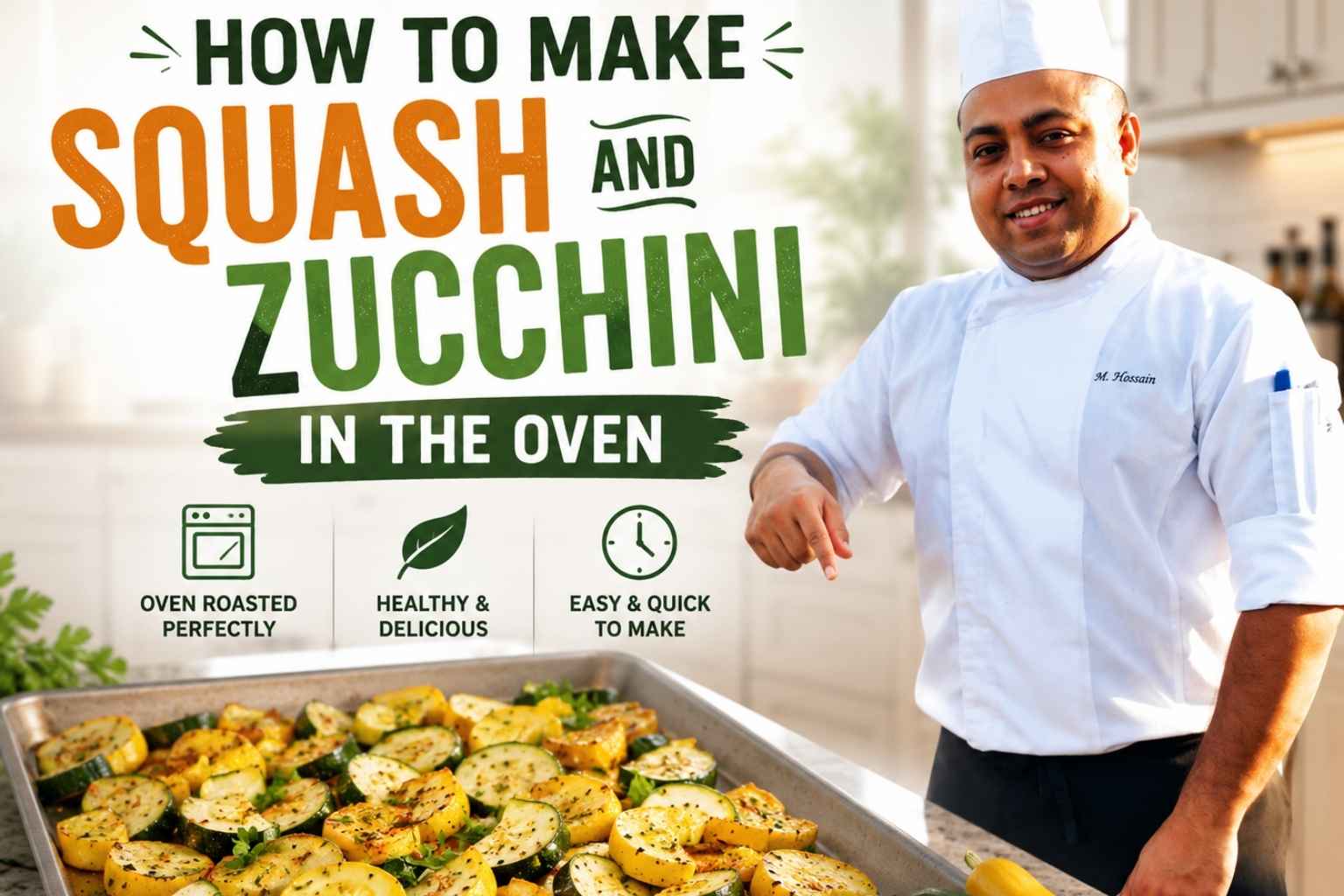
Some nights, dinner needs to be easy — and I mean really easy. That’s when I turn to my go-to trick: how to cook yellow squash and zucchini in the oven, no fuss, no babysitting a pan on the stove. After 15 years in professional kitchens, I’ve learned that the best recipes are often the simplest ones. This method turns two humble veggies into a golden, tender side dish in under 30 minutes. Stick with me, and I’ll walk you through every step so you nail it on the first try.
Why Yellow Squash and Zucchini Are Hard to Roast Well
Yellow squash and zucchini are mostly water. Zucchini is about 94% water by weight (USDA, 2019). That water works against you the moment it hits a hot pan.
Here is what happens. As the squash heats up, the cells break down. They let out liquid onto the pan. That liquid has nowhere to go. It pools. It turns to steam. The steam cooks the squash from the outside in, instead of browning it. You end up with soft, wet squash that tastes flat and dull.
I learned this the hard way in my first line-cook job. We threw whole trays of squash in the oven at 350°F. It came out gray and limp, each time. The fix was not a fancy trick. It was heat, space, and salt, used the right way and in the right order.
Choosing and Prepping the Squash
How to Pick the Best Squash
Look for squash that feels firm. It should feel heavy for its size. The skin should be smooth and shiny, not dull or wrinkled. Wrinkled skin means the squash lost water. Lost water means a bitter taste.
Pick small to mid-size squash, about 6 to 8 inches long. They taste better than big ones. Big squash grow more seeds and a spongy core. That spongy part holds even more water. More water makes your roasting job harder.
Washing and Trimming
Rinse the squash under cool water. Rub off dirt with your hands. You do not need soap. Pat the squash dry with a towel. Wet squash on a cutting board just means more water for you to deal with later on.
Cut off both ends. Trim about a quarter inch from each side. The stem end is tough. The blossom end can turn soft and start to rot.
Cut Sizes and Why They Matter
The way you cut squash decides how it cooks. Here is the short version: thin cuts cook fast and brown well. Thick cuts hold their shape but need more time in the oven.
- Sliced rounds (¼ inch thick): Cook fast. Brown well on both flat sides.
- Half-moons (¼ inch thick, cut in half first): Good for mixing with other veggies since they sit flat on the pan.
- Planks (long strips, about ½ inch thick): Best for a firm bite and grill-style marks.
- Cubes (¾ inch): Hold up well in sheet pan meals with meat or other hearty veggies.
Mixing cut sizes on one pan is a common slip. Small pieces burn before big pieces even soften. Pick one cut size. Stick with it for each batch you roast.
Reference Table: Cuts, Heat, and Time
| Cut Style | Thickness | Oven Heat | Cook Time | Notes |
|---|---|---|---|---|
| Sliced rounds | ¼ inch | 425°F | 12–15 min | Flip once, halfway through, for even color. |
| Half-moons | ¼ inch | 425°F | 12–15 min | Great for mixed veggie trays. |
| Planks | ½ inch | 400°F | 15–18 min | Lower heat keeps the core moist. |
| Cubed | ¾ inch | 425°F | 18–22 min | Stir once at the 10-minute mark. |
| Whole baby squash | Whole, halved | 375°F | 20–25 min | Low, slow heat cooks the core all the way through. |
Should You Salt and Sweat the Squash First?
Yes, in most cases. Salt pulls water out of the squash through a process called osmosis. Less water on the top means better browning and less steam (Serious Eats, 2023).
How to Salt and Sweat Squash
- Cut the squash into your chosen shape.
- Lay the pieces on a few layers of paper towel, or a clean kitchen towel.
- Sprinkle both sides with salt. Use about ½ teaspoon per pound.
- Let the squash sit for 15 to 20 minutes.
- Press with a towel to soak up the beads of water on top.
When You Can Skip This Step
Skip salting if you roast thin rounds at high heat, like 450°F, with a short cook time. Fast heat and a small surface area limit how much water can pool before it dries off. You can also skip it if you are short on time. The result will just be a bit softer.
I sweat my squash almost each time I cook it for service. At home, on a rushed Tuesday night, thin rounds at 450°F skip this step and still turn out fine.
Oven Temperature Breakdown
375°F: Best for Whole or Halved Baby Squash
This lower heat gives thick pieces time to cook through. The outside will not burn. Use it for whole baby squash, or thick planks you want fully soft in the middle.
400°F: Best for Planks and Mixed Veggie Trays
This mid-range heat browns the squash. It still gives thick cuts enough time to soften. It is also the safest pick when squash shares a pan with veggies that cook at other speeds, like carrots or potatoes.
425°F: Best for Most Home Roasting
This is my go-to heat for rounds, half-moons, and cubes. It is hot enough to brown the outside in under 15 minutes. It is not so hot that the squash burns before the core softens.
450°F: Best for Fast, Thin Cuts
Use this high heat only for thin rounds you want done in 10 minutes or less. High heat browns fast, but thick cuts will burn on the outside before the core is done at this level.
Sheet Pan Technique
Spacing and Overcrowding
Give each piece of squash room to breathe. A single layer with small gaps lets steam escape, instead of trapping it around the squash. Packing the pan too full is the top reason home roasted squash turns out soggy.
If your squash will not fit in one layer, use two pans instead of one tall pile. This takes a bit more time. The payoff is real brown color, not steamed, pale squash.
Parchment vs. Bare Pan vs. Oiled Foil
Parchment paper gives you easy clean-up and even cooking. It gives slightly less brown color than a bare metal pan. A bare, well-oiled pan gives the best color, since the metal holds heat close to the squash. Oiled foil sits in the middle. It is easy to clean and gives fair color, but foil can trap a bit more steam than parchment does.
I use a bare, oiled sheet pan for most squash. The extra brown color is worth the few extra minutes spent on scrubbing.
Oil, Seasoning, and Salt Timing
Oil Choice and Amount
Use a plain oil, like avocado oil or a light olive oil. Use about 1 to 2 tablespoons per pound of squash. Toss the squash in oil before it hits the pan. Each piece needs an even coat.
When to Add Salt: Before vs. After
This part trips up a lot of home cooks. Add a light amount of salt before you roast, mainly for early taste. Add a second, slightly heavier pinch right after the squash comes out of the oven.
Adding too much salt before roasting is a common mistake. Heavy early salt pulls out extra water mid-cook. That slows down browning. It can leave the squash limp. A light hand before the oven, and a fuller hand after, gives you the best texture and the best taste.
Convection vs. Standard Oven for Roasting Veggies
A convection oven uses a fan to move hot air around the food. That moving air pulls water off the surface faster. This gives better brown color and slightly shorter cook times (America’s Test Kitchen, 2021).
If you use convection, drop the heat by about 25°F from what the table above lists. Or check for doneness a few minutes early. A standard oven with no fan works fine too. Just expect softer edges and a few extra minutes on the clock.
How to Tell When Squash Is Done
Visual Signs
Look for light golden brown spots on the flat sides that touched the pan. The squash should look a bit smaller than it did raw. It should not look swollen or wet on top.
Texture Signs
Poke a piece with a fork. It should push back a little before the fork slides through. It should not fall apart right away. If the fork meets no push back at all, the squash has gone past done into mushy ground.
Avoiding mushy or soggy squash comes down to three things: enough heat, enough space, and not overcooking. Pull the squash the moment it turns light gold. It keeps cooking a bit on its own heat, even after it leaves the oven.
Common Mistakes and How to Fix Them
- Packing the pan too full: Squash steams instead of browning. Fix: use two pans instead of one crowded pan.
- Salting too early and too heavy: This pulls out too much water before roasting even starts. Fix: use a light pinch of salt before, and a heavier pinch after.
- Cutting pieces at odd sizes: Some pieces burn while others stay raw. Fix: cut all pieces to the same size before you roast.
- Skipping the preheat: Squash sits in a slowly heating oven and steams, instead of browning right away. Fix: always preheat fully, about 15 minutes, before the pan goes in.
- Using the wrong oven rack: The middle rack gives even heat. A low rack browns the bottom too fast. Fix: use the middle rack, unless you want extra brown color on one side.
Flavor Add-Ons and Serving Ideas
Simple Seasoning Combos That Work
Plain salt, pepper, and oil is a fine base. But a few small add-ons can take roasted squash further, with almost no extra work.
- Garlic and Parmesan: Toss squash with minced garlic before roasting. Add grated Parmesan in the last 3 minutes of cook time.
- Lemon and herb: Squeeze fresh lemon over the squash right after it leaves the oven. Add torn basil, mint, or dill.
- Smoky spice: Toss raw squash with a pinch of smoked paprika and cumin before roasting for a warmer, deeper taste.
- Balsamic glaze: Drizzle a thin balsamic glaze over the squash after roasting. The sweet, tart edge cuts through the mild squash taste.
What to Serve Roasted Squash With
Roasted squash pairs well with grilled chicken, pan-seared fish, or a simple steak. It also works well tossed cold into a grain bowl with rice or farro. For a full meal, roast squash on the same pan as chicken thighs or salmon. Just give each food its own space so nothing steams.
Storing and Reheating Leftover Roasted Squash
Let the squash cool fully before you store it. Warm squash in a sealed container will trap steam and turn soft fast. Store cooled squash in a sealed container in the fridge for up to 4 days.
To reheat, skip the microwave if you can. A microwave adds moisture and brings back that soft, wet texture you worked hard to avoid. Instead, spread the squash on a sheet pan and reheat at 400°F for 5 to 7 minutes. This brings back some of the brown color and a firmer bite.
Roasted squash also freezes, though the texture softens once it thaws. Freeze in a flat layer on a tray first, then move it to a bag once fully frozen. This stops the pieces from turning into one solid block.
Sheet Pan Meals: Adding Squash to a Full Dinner
Why Squash Works Well in Sheet Pan Dinners
Squash cooks fast, so it fits well next to meat or fish that cook at a close speed. Chicken thighs, salmon, and shrimp all pair well with squash on one pan.
Add squash to the pan partway through the cook time, not at the start. Meat and fish often need more time in the oven than thin squash cuts. Adding squash too soon means it turns to mush before the rest of the meal is done.
A Simple Sheet Pan Plan
Start your protein on the pan first. Give it a head start of 10 to 15 minutes. Then push the protein to one side. Add your oiled, salted squash to the open space. Roast both together until the squash turns gold and the protein is fully cooked.
This one-pan method cuts down on dishes. It also means your whole meal finishes at close to the same time, hot and ready to eat.
My Personal Routine for Roasting Squash and Zucchini
Here is exactly what I do at home, most weeknights, when I want squash on the table in under 30 minutes.
I cut the squash into ¼-inch rounds. I lay the rounds on paper towels. I hit both sides with a light pinch of salt. I let them sit while my oven heats to 425°F. That takes about 12 to 15 minutes, plenty of time for the salt to pull out water.
I press the rounds dry with a towel. I toss them in olive oil. I spread them on a bare, oiled sheet pan in a single layer. No parchment for this one. I want the brown color that comes from bare metal.
I roast for about 12 minutes. I flip each round once. Then I roast another 3 to 4 minutes, until the edges turn gold. Off the heat, I add a fresh pinch of flaky salt, a squeeze of lemon, and torn basil if I have it on hand.
This method never lets me down. It is fast. It is simple. It gives real brown color, not the soft, soggy squash most people grew up eating at home.
Frequently Asked Questions About Roasting Squash and Zucchini
What temperature is best for roasting squash and zucchini?
425°F works best for most cuts, like rounds, half-moons, and cubes. It browns the outside fast, while it gives the inside enough time to soften without turning to mush.
Do you need to salt squash before roasting?
Salting before roasting helps pull out extra water. That leads to better brown color. It is worth doing for most cuts. You can skip it for thin rounds roasted at high heat for a short time.
Why does my roasted squash turn out soggy?
Soggy squash almost always comes from a packed pan, too much water left on top, or an oven that was not fully hot yet. Fixing those three things solves most soggy squash problems.
How long does it take to roast zucchini in the oven?
Thin rounds and half-moons take about 12 to 15 minutes at 425°F. Thick cuts, like cubes or planks, take closer to 18 to 22 minutes.
Should I peel zucchini or yellow squash before roasting?
No. The skin is thin, soft, and full of nutrients. You do not need to peel it, unless the skin looks tough or the squash is very large.
Can you roast zucchini and yellow squash together on the same pan?
Yes. Both veggies cook at close to the same rate. Cut both to the same size, so they finish at the same time.
What is the best oil for roasting squash?
A plain oil, like avocado oil or a light olive oil, works well. Both can take high oven heat without burning or turning bitter.
Can I roast frozen squash or zucchini?
You can, but expect a softer, wetter result, since frozen squash lets out more water as it thaws. Pat it dry well. Expect a few extra minutes of cook time.
Key Takeaways
- Cut squash into even, same-size pieces, so each piece cooks at the same rate.
- Salt the squash before roasting to pull out water. Salt it again after roasting for full taste.
- Roast at 425°F for most cuts. Drop to 400°F for thick planks. Go up to 450°F for thin, fast rounds.
- Give the squash space on the pan. A single layer with gaps beats a packed pan each time.
- Pull the squash the moment it turns light gold. It keeps cooking a bit, even after it leaves the oven.