
At A Glance
- Squash and zucchini are about 95% water, so the salt-and-drain step matters more than the oil or the herbs you pick (USDA FoodData Central, 2025).
- Cut pieces into ½-inch rounds or half-moons and roast at 425°F for 20 to 25 minutes for the best mix of browning and tenderness.
- Give every piece breathing room on the pan. A crowded tray steams the vegetables instead of roasting them.
- Salt the raw squash for 15 to 30 minutes, then pat it dry before it hits the oil. This one step fixes most soggy-squash complaints.
- Convection knocks 25°F off your target temperature and speeds up browning (America’s Test Kitchen, 2026).
Ever stood in your kitchen staring at a pile of squash and zucchini, wondering if you’ll turn them into something amazing or a soggy mess? I get it. I’ve burned my fair share of veggies before I found the trick to nailing it every time.
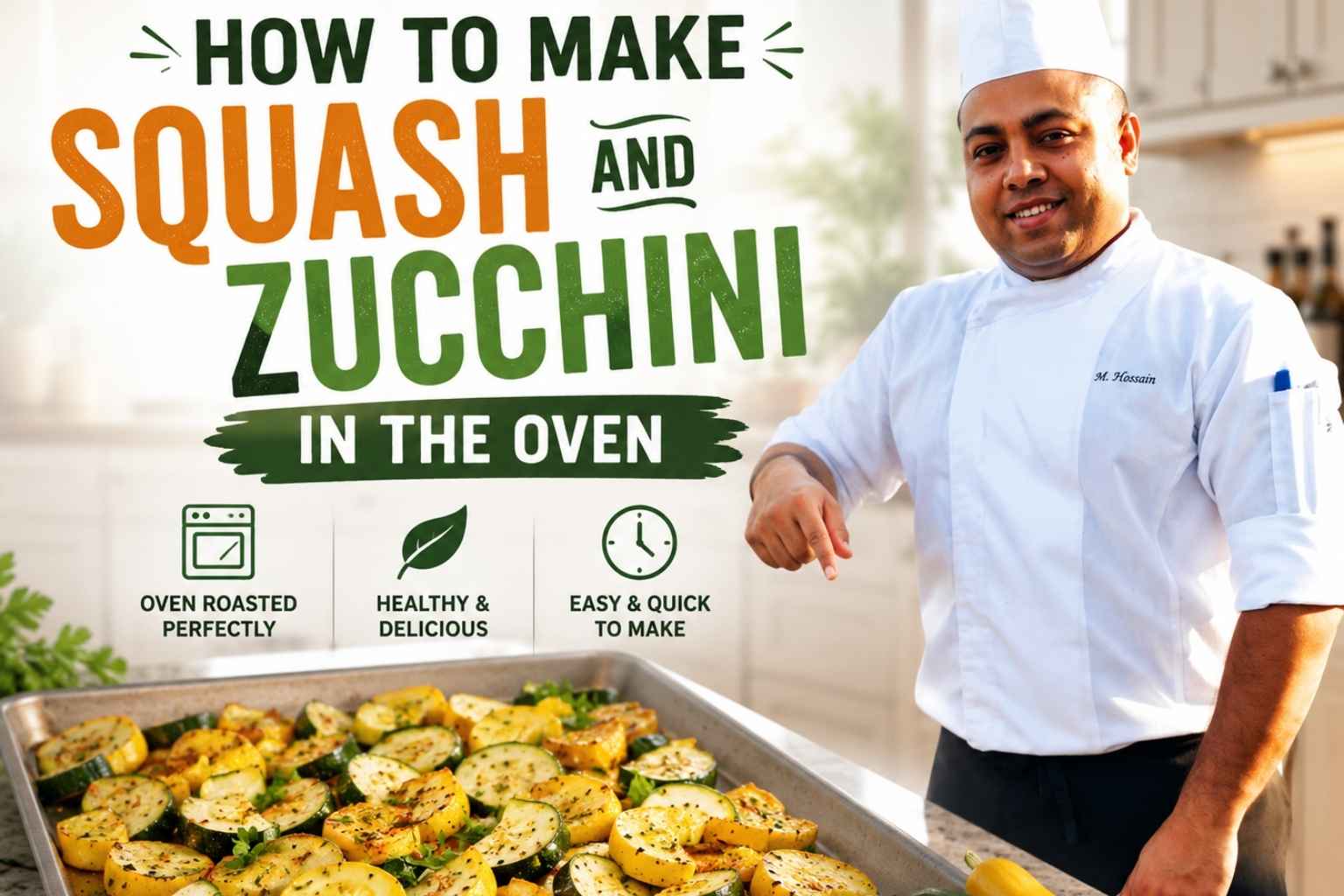
That’s why I put together this simple guide on how to make squash and zucchini in the oven. After 15 years in professional kitchens, I’ve tested this method more times than I can count, and it never fails. The secret isn’t fancy equipment or rare ingredients. It’s just the right temperature, the right cut, and a little patience.
Stick with me, and I’ll walk you through every step, from prep to that perfect golden finish. Grab your baking sheet, and let’s get cooking.
Why Squash and Zucchini Are Hard to Roast Well
Squash and zucchini give home cooks more trouble than almost any other roasted vegetable. The reason is simple: they hold enormous amounts of water inside a soft cell structure that breaks down fast under heat.
Zucchini runs close to 95% water by weight (University of Maine Cooperative Extension, 2025). When you cut it and hit it with oven heat, that water has to go somewhere. If it can’t escape fast enough, it pools around the vegetable and boils it instead of browning it. That’s the difference between a crisp, golden piece of squash and a gray, limp one sitting in its own puddle.
I’ve cooked squash in restaurant kitchens and in my own oven at home, and the physics doesn’t change either place. Dense root vegetables like carrots or potatoes can survive a crowded pan or a slightly low oven. Squash cannot. It punishes every shortcut.
Best Cut Sizes and Shapes for Even Roasting
The shape you cut determines how fast moisture escapes and how evenly the pieces cook. Match your cut to the texture you want.
Rounds
Cut into ¼- to ½-inch rounds for a classic side dish. Thinner rounds crisp faster but can turn mushy if you slice them too thin. I stick to ½-inch as my default; it holds structure and still cooks through in under 25 minutes.
Half-Moons
Halve the squash lengthwise, then slice into half-moons. This shape gives you more flat surface area touching the pan, which means more contact for browning. I reach for half-moons when I want a deeper caramelized crust.
Spears
Quarter the squash lengthwise into long spears for a more rustic presentation. Spears take a few minutes longer than rounds because they’re thicker in the middle, but they hold up well next to a roasted protein.
Common mistake: Cutting pieces in different sizes on the same tray. Uneven cuts mean some pieces finish before others, so you either pull underdone squash or burn the smaller pieces waiting on the rest.
The Salting Step: Why It Works and How Long to Wait
Salting draws water out of squash and zucchini through osmosis, and it’s the single biggest fix for soggy roasted vegetables. Skip it and you’re fighting the vegetable’s own water content the whole time it’s in the oven.
Here’s the process I use every time. Slice the squash into your chosen cut, then spread the pieces in a single layer on a paper towel or wire rack. Sprinkle kosher salt evenly over the surface, about ½ teaspoon per pound of squash. Let it sit for 15 to 30 minutes. You’ll see small beads of water form on the surface; that’s the salt pulling moisture out of the cell walls (Tasting Table, 2024). Pat the pieces completely dry with a fresh paper towel before tossing them in oil.
Cook’s Illustrated recommends roughly 30 minutes of draining time for sliced zucchini rounds (America’s Test Kitchen, 2012). Thinner slices need less time. Thicker ones need more. I follow the same window for oven roasting. If you’re short on time, 15 minutes still pulls out a meaningful amount of water. It just won’t be as dramatic as the full 30.
Important callout: Don’t skip the pat-dry step after salting. Wet squash steams in oil instead of frying, and you lose the crisp edge you salted for in the first place.
Oven Temperature: What Each Range Achieves
Temperature controls the tradeoff between caramelization and tenderness. Higher heat browns the surface fast, which locks in structure before the inside turns to mush. Lower heat gives the inside more time to soften but risks a pale, steamed exterior.
| Temperature | Cut Size | Estimated Time | Texture Outcome |
|---|---|---|---|
| 400°F | ½-inch rounds | 25–30 min | Soft, evenly tender, lighter browning |
| 400°F | Spears/quarters | 30–35 min | Tender throughout, mild caramelization |
| 425°F | ½-inch rounds | 20–25 min | Best balance: golden edges, tender center |
| 425°F | Half-moons | 18–22 min | Deep browning, firm-tender bite |
| 450°F | ½-inch rounds | 14–18 min | Heavy caramelization, softer interior, watch closely |
| 450°F | Half-moons | 12–16 min | Charred edges, custardy center |
I default to 425°F for almost every squash and zucchini roast. It’s hot enough to caramelize the surface before the water inside has time to pool. It’s also forgiving if you pull the tray a couple minutes early or late. Chef Thomas Keller’s oven-roasted zucchini method uses a similar high-heat approach. He sears the cut side in a pan, then finishes it in a 450°F oven for 25 to 30 minutes (MasterClass, 2026).
I save 450°F for nights when I want restaurant-style char. I use 400°F only when squash shares a pan with something delicate that can’t take the higher heat.
Sheet Pan Setup: Avoiding the Steam Trap
A single layer with real space between pieces is what separates roasted squash from steamed squash. This is the step people rush, and it’s the one that ruins more trays than bad seasoning ever does.
Spread the squash across the pan so no piece touches another. If you can’t fit everything with breathing room, use two sheet pans instead of piling onto one. Overcrowding traps steam between the pieces. That steam cooks the squash from the outside in before the oven’s dry heat ever gets a chance to brown it.
Line the pan with parchment for easy cleanup. Skip the parchment if you’re chasing maximum browning, since direct contact with metal browns faster. I use a heavy aluminum half-sheet pan for deep caramelization. I also preheat it in the oven first, so the vegetables get a head start on browning.
Common mistake: Piling squash onto one pan to save a dish. Use the second pan. Your patience with cleanup is worth less than a properly roasted vegetable.
Oil, Seasoning, and Herb Pairings
Extra-virgin olive oil is my default for squash and zucchini. It has enough flavor to matter but a high enough smoke point for 425°F roasting. Use about 1 to 2 tablespoons per pound of squash, just enough to coat every piece without pooling on the pan.
Salt and black pepper come first, added after the initial salting-and-draining step (a second, lighter seasoning pass right before roasting). From there, I build around what I’m serving the squash with.
Herb pairings I reach for most:
- Garlic and thyme: A classic combination that works with almost any protein.
- Lemon zest and oregano: Brightens the dish and cuts through the oil.
- Parmesan and basil: Added in the last five minutes so the cheese doesn’t burn.
- Red pepper flakes and mint: An unexpected pairing that works surprisingly well with charred zucchini.
Add delicate fresh herbs like basil or mint after the squash comes out of the oven. Hardier herbs like thyme and rosemary can go in before roasting since they hold up to the heat.
Convection vs. Conventional Ovens for Roasting
Convection roasts faster and browns more evenly because the fan keeps hot air moving across every surface of the food. A conventional oven relies on heat rising and settling, which creates uneven hot spots.
If your oven has a convection setting, use it for squash and zucchini. Drop your target temperature by 25°F from a conventional recipe. Start checking for doneness a few minutes early too (America’s Test Kitchen, 2026). A recipe written for 425°F conventional becomes 400°F convection.
The moving air also speeds up surface evaporation. That helps browning even more than the lower temperature alone. If your oven splits convection into two modes, use convection roast for squash. It pulls more heat from the bottom element, which gives better contact browning than convection bake.
Roasting Squash and Zucchini with Other Vegetables
Squash and zucchini cook faster than dense vegetables like potatoes, carrots, and winter squash varieties such as butternut. If you’re roasting a mixed tray, stagger the additions instead of dumping everything on at once.
Start denser vegetables first. Cut potatoes and carrots to a similar size, then give them a 15- to 20-minute head start at 425°F. Add the zucchini and summer squash after that. Bell peppers, onions, and mushrooms roast at close to the same speed as zucchini, so those can go in together.
A practical timing guide for a mixed 425°F tray:
- Potatoes, carrots, and other root vegetables: start immediately, roast 15–20 minutes alone
- Add zucchini, summer squash, bell peppers, and onions: roast together 20–22 minutes more
- Add delicate items like cherry tomatoes or fresh herbs in the final 5 minutes
This staggered approach keeps everything finishing at roughly the same time instead of ending up with mushy squash next to underdone potatoes.
Doneness Cues: How to Know It’s Ready
Squash and zucchini are done when a fork slides in with almost no resistance and the edges show real color. Relying on the clock alone is a mistake, since oven calibration and cut size both shift actual cook times.
Visual cues: Look for golden-brown edges and some visible caramelization, especially on the cut sides that touched the pan directly. The color should be more amber-gold than pale yellow-green.
Texture cues: Press a piece gently with a spatula. It should give slightly without falling apart. Squash that’s still firm in the center needs more time; squash that collapses when you touch it has gone too far.
The fork test: Insert a fork into the thickest piece on the tray. It should slide through with light resistance, similar to a cooked potato. If the fork meets real resistance, give the tray another 3 to 5 minutes and check again.
Common Mistakes and How to Fix Them
Overcrowding the pan: This is the number one cause of soggy squash. Fix it by splitting the vegetables across two pans, or roasting in batches.
Skipping the salt step: This isn’t fatal, but it raises your odds of a watery result. Larger, older zucchini hold the most water and suffer the most. Fix it by building the 15- to 30-minute salt window into your prep time, even when you’re in a hurry.
Wrong cut size: Pieces cut too thin overcook and fall apart. Pieces cut too thick leave the center underdone while the outside burns. Fix it by sticking to ½-inch as a reliable default. Adjust only after you’ve tested your own oven.
Underseasoning: Squash and zucchini are mild vegetables, and a light hand with salt before roasting leaves the final dish bland. Fix it by salting twice: once during the draining step, and again lightly right before the pan goes in the oven.
Using cold squash straight from the fridge: Cold vegetables lower the pan temperature the moment they hit the oven, adding a few minutes of steaming before real roasting starts. Fix it by letting cut squash sit at room temperature for 10 to 15 minutes before roasting, during the same window you’re already using to salt it.
My Personal Roasting Routine
Here’s exactly what I do on a normal weeknight when I’m roasting squash and zucchini for dinner.
I preheat the oven to 425°F with a heavy sheet pan already inside, so the metal is hot before the vegetables ever touch it. While the oven heats, I slice one medium zucchini and one medium yellow squash into ½-inch half-moons, since mixing the two gives a better color contrast on the plate than either vegetable alone.
I salt the pieces and let them sit on a wire rack over a baking sheet for 20 minutes, which is long enough to pull real moisture out without eating into my whole evening. While that happens, I mince garlic and pick thyme leaves off the stem.
Once the squash is patted dry, I toss it in olive oil, the minced garlic, thyme, salt, and pepper. I pull the hot pan from the oven, spread the squash in a single layer, and get it back in fast so I don’t lose the pan’s heat. Twenty minutes later, I check for golden edges and a fork that slides through clean. If it needs another few minutes, I give it that; if it’s ready, it comes out immediately. Letting roasted squash sit on a hot pan even after the oven is off keeps cooking it and can push it past done.
I finish with a squeeze of lemon and a small handful of torn basil right before serving. That’s it. No fancy technique, just attention to the steps that actually matter.
Storage and Reheating Without Sogginess
Roasted squash and zucchini keep in the refrigerator for 3 to 4 days in a sealed container, but reheating them wrong turns leftovers soft and watery fast.
Skip the microwave if you care about texture. Microwaving traps steam around the vegetable and undoes all the work the original roast did. Instead, reheat in a 400°F oven or toaster oven for 8 to 10 minutes, spread in a single layer on a pan, which lets any released moisture escape instead of pooling.
An air fryer at 375°F for 4 to 5 minutes works well too, and it’s my preferred method when I only have a small portion left over. Whatever method you choose, don’t cover the vegetables while reheating. A lid or foil traps steam the same way a crowded pan does during the original roast.
Frequently Asked Questions About Roasting Squash and Zucchini
What temperature is best for roasting zucchini and squash?
425°F gives the best balance of browning and tenderness for most cuts. Use 400°F if you want a softer result with less caramelization, or 450°F when you want heavy char and don’t mind watching the tray closely.
Do I really need to salt zucchini before roasting?
Salting isn’t mandatory, but it meaningfully reduces the amount of water the squash releases in the oven, which lowers your risk of a soggy result. It matters most with larger, more mature squash that holds extra moisture.
Why does my roasted zucchini always turn out soggy?
The most common causes are overcrowding the pan, skipping the salt-and-drain step, and cutting the pieces too thin. Any one of these traps moisture around the vegetable instead of letting it evaporate.
Should I peel zucchini before roasting?
No. The skin holds the vegetable’s structure together during cooking and adds nutrients and texture. Peeled zucchini tends to fall apart at high roasting temperatures.
Can I roast squash and zucchini together with other vegetables?
Yes, but stagger the timing. Dense vegetables like potatoes and carrots need a 15 to 20 minute head start before squash and zucchini join the pan, since squash cooks faster.
How do I keep roasted squash from sticking to the pan?
Use enough oil to coat every piece, about 1 to 2 tablespoons per pound, and preheat the pan before adding the vegetables. A well-oiled, hot pan releases food far more easily than a cold one.
What’s the difference between roasting at 400°F versus 425°F?
400°F produces a softer, more evenly tender result with lighter browning, while 425°F caramelizes the surface faster and gives a firmer bite. Both work; the choice comes down to the texture you want.
How long does roasted squash and zucchini last in the fridge?
Three to four days in a sealed container. Reheat in the oven or air fryer rather than the microwave to avoid a soggy texture the second time around.
Key Takeaways
- Squash and zucchini are roughly 95% water, which is why the salt-and-drain step matters more than any other single technique.
- 425°F for 20 to 25 minutes is a reliable default for ½-inch cuts, with 400°F and 450°F available for softer or more charred results.
- Give every piece space on the pan. Crowding is the most common cause of soggy roasted squash.
- Convection ovens work well for this vegetable; drop the temperature by 25°F and check for doneness a few minutes early.
- Reheat leftovers in the oven or air fryer, never the microwave, to keep the texture intact.