Hey, I’m Mossaraof — a professional cook and food blogger.
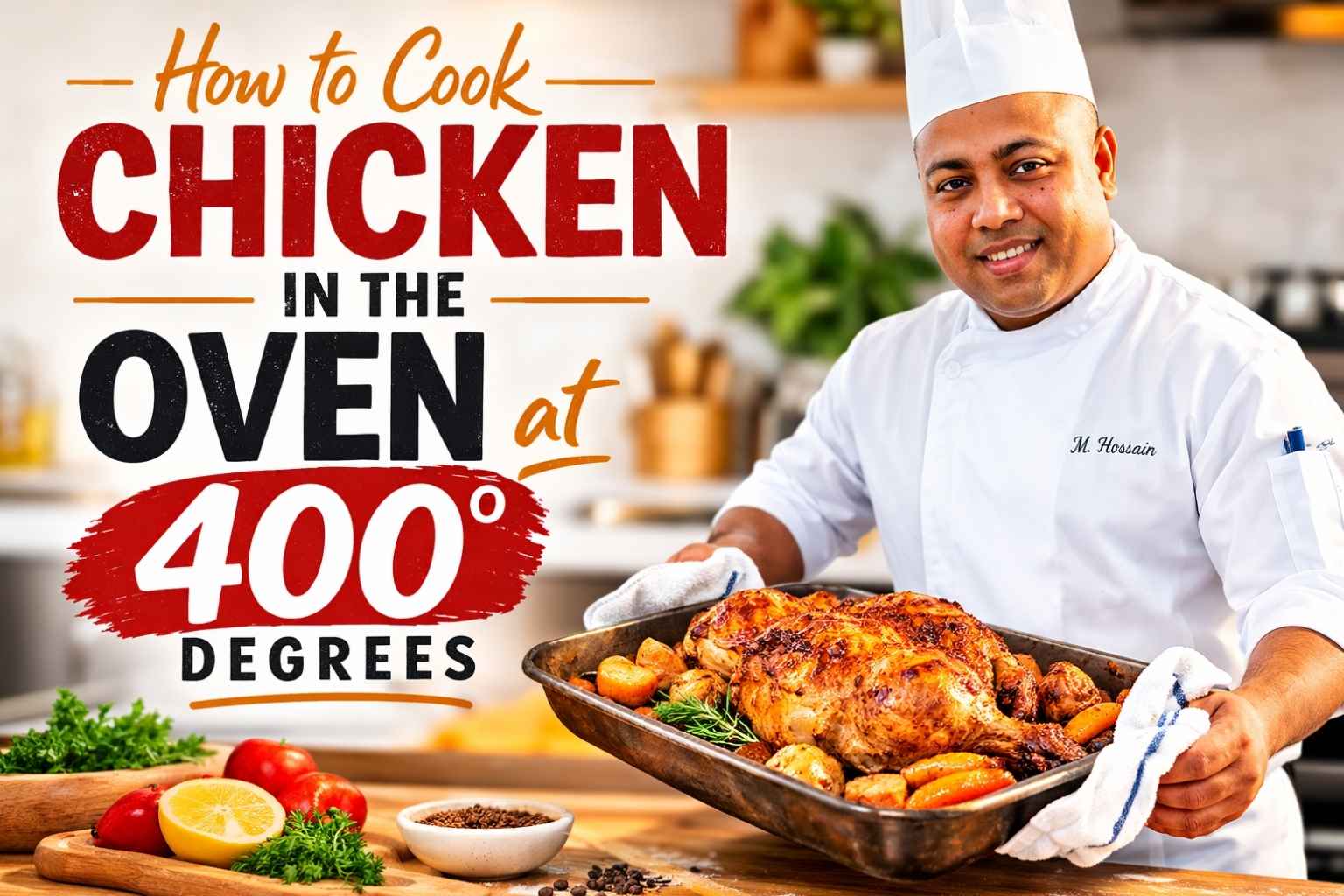
We all want those tender, savory bites that take on a beautiful, golden sear and a salty, parchment-thin snap in record time. I will show you how to cook chicken in the oven at 400°F so you get a fast, high-heat roast that locks in every drop of juice while creating a deep, caramelized crust.
My years in a busy Chicago kitchen taught me that this higher temperature is the true secret to rendering skin perfectly without overcooking the delicate meat underneath. Use my Ultimate Guide to Master Your Oven to find the best rack height for an even, intense heat flow that browns every edge. Let’s grab your favorite roasting pan and start this quick, succulent meal together right now!
🟦 Why I Started Baking Chicken at 400°F (And Why It Works So Well)
It wasn’t some recipe blog or culinary class that convinced me—just one chaotic Tuesday night in Chicago.
🟩 The Day I Gave Up on 350°F
I’ll never forget it. It was snowing like crazy, I’d just gotten off a late shift, and I had a pack of chicken thighs staring at me from the fridge. I preheated the oven to my usual 350°F, then sat down to “rest my eyes”—classic mistake.
Thirty minutes in, the thighs looked pale, wet, and borderline sad. I cranked it to 400°F out of pure frustration.
Fifteen minutes later, I had sizzling golden skin and the juiciest thighs I’d ever pulled out of my oven.
That’s when it hit me—400°F is my new default.
🟩 It’s That Perfect Middle Ground
It’s hot enough to crisp the outside but still gentle on the inside.
At 400°F:
- Chicken skin renders faster without burning
- Juices stay sealed in
- Dinner gets on the table quicker—especially useful if you’ve got hangry family pacing the kitchen
I tested this temp again and again in different kitchens—rented Airbnbs in Florida, my cousin’s dry-as-toast place in Arizona, even an old farmhouse with a creaky Whirlpool oven in Michigan. It just works.
🟩 Why U.S. Ovens Make It Tricky
Here’s something no one tells you: most U.S. ovens lie.
Even newer brands like GE or Frigidaire can run 15–20°F off. I didn’t know that until I started using an oven thermometer. I use a cheap one from ThermoPro. It changed everything.
That means when I set my oven to 400°F, I’m really cooking somewhere around 385–390°F. And that little difference? It matters.
So if you’ve ever asked “how long to cook chicken in oven at 400?” and ended up with dry meat… your oven temp might be to blame, not you.
🟦 Let’s Talk Timing: Chicken in Oven at 400, How Long?
Here’s where things get real. I used to stand in my kitchen muttering, “Chicken in oven 400… how long again?”
Let me walk you through what actually works from my own trials.
🟦 Let’s Talk Timing: Chicken in Oven at 400, How Long?
This is the part I used to mess up. You think it’s 30 minutes for everything—but nope. It depends on the cut, the weight, bone or no bone, and even the moisture content.
I’ve tested each one below, usually with a meat thermometer in one hand and a potholder in the other.
🟩 How Long to Cook Chicken Breast in Oven at 400
Boneless breasts are touchy—one extra minute and they turn chalky.
- Boneless, skinless: 20–25 minutes
- Bone-in, skin-on: 30–35 minutes
If the breast is thick in the middle, I’ll sometimes pound it out a bit so it cooks evenly. Not aggressively—just a few smacks with my rolling pin.
Tips I swear by:
- I brush them with olive oil and season both sides before baking
- I check for doneness at 20 minutes with a digital thermometer
- 165°F is perfect—don’t go higher or it’ll dry out fast
When I bake these in Arizona’s dry heat, I cover them loosely with foil for the first 10 minutes. Helps them steam without browning too soon.
🟩 How Long to Cook Chicken Thighs in Oven at 400
My favorite cut—cheap, forgiving, and packed with flavor.
- Bone-in, skin-on: 35–40 minutes
- Boneless, skinless: 25–30 minutes
The skin crisps beautifully at 400°F. I’ve made hundreds of trays of these—some just seasoned with salt, others slathered in mustard or honey-garlic marinades.
Little trick I learned:
- I bake them skin-side up the whole time
- Sometimes I broil the last 3 minutes if I want extra crunch
- The meat stays juicy even if I forget and leave them in for 5 extra minutes
And yes, even after all this time, I still forget sometimes.
🟩 How Long to Cook Chicken Legs in Oven at 400
By “legs,” I mean the full drumstick + thigh quarters. These are great for meal prepping.
- Leg quarters: 40–45 minutes
- Drumsticks only: 35–40 minutes
When I bake these in my Chicago apartment during winter, I notice it takes a few minutes longer. My oven preheats slower when the kitchen’s cold, and I’ve learned to pad in extra time.
I do this every time:
- Flip them at the 20-minute mark
- Baste with their own fat around 30 minutes in
- Sprinkle smoked paprika during the final 10 for color and kick
🟩 How Long to Cook Whole Chicken in Oven at 400
This one used to intimidate me. But once I nailed it, it became my weekend go-to.
- General rule: 15–18 minutes per pound
- A 4-lb chicken: 60–75 minutes
I roast it on a rack inside a Staub roasting pan. That way the heat gets underneath and browns the back too.
What I always remember:
- Stuffing the cavity slows cooking, so I usually skip it
- I rub butter and herbs under the skin—makes the breast extra juicy
- I start checking internal temp at the 1-hour mark in the thickest part of the thigh
And when it’s done, I let it rest 15 minutes on a wooden board. The juices settle in beautifully.
🟩 How Long to Cook Chicken Wings in Oven at 400
Now we’re talking game-day territory. I’ve made these during Super Bowl parties, college nights, and even once at 2 a.m. after a long shift.
- Flats and drums: 35–40 minutes
- Flip halfway at 20 minutes
Key steps I never skip:
- Pat wings dry before seasoning
- Use a wire rack on a sheet pan so heat circulates
- Add sauce only in the final 5 minutes so it doesn’t burn
They come out crisp and caramelized, even without frying.
🟩 How Long to Cook Chicken Drumsticks in Oven at 400
These are my lazy-day heroes. No slicing, no fancy prep.
- Standard drumsticks: 35–40 minutes
- If frozen, add 10–15 minutes and cover loosely with foil early on
I usually toss them in avocado oil and season with garlic powder, paprika, salt, and pepper. Sometimes BBQ rub if I’m craving smoky vibes.
My go-to routine:
- Bake uncovered on parchment
- Flip once
- Check for 165°F in the thickest part, near the bone
They smell incredible around the 30-minute mark—like Sunday dinner came early.
🟦 My Go-To Oven Setup (from Arizona Heat to Midwest Winters)
No two ovens behave the same. I’ve cooked chicken in so many U.S. kitchens—hot, humid, dry, drafty—you’d think I was running a moving food truck.
This is how I prep my oven and gear before throwing in any chicken at 400°F.
🟩 Sheet Pan vs Roasting Pan: When I Use What
I used to grab the same sheet pan for everything. Big mistake. Once I started switching pans based on the cut, my results improved overnight.
- Sheet pans (I love my old Nordic Ware aluminum ones):
- Best for wings, breasts, thighs, and drumsticks
- Great heat contact = better browning
- I line them with parchment for easy cleanup
- Roasting pans with racks (Staub or Lodge):
- Only for whole chickens or big bone-in quarters
- The rack helps the bottom crisp up too
- Holds juices underneath if I want to turn them into gravy later
Quick note for U.S. readers:
Older ovens—especially gas ones—tend to brown unevenly. I rotate the sheet 180° halfway through roasting. Otherwise, the back row gets crisp, and the front looks boiled.
🟩 What I Line My Pans With (and When I Don’t)
This took me longer to figure out than it should have.
- Parchment paper:
- My go-to for boneless pieces
- Prevents sticking, makes cleanup a breeze
- Doesn’t brown the skin as aggressively, but I’ll take it
- Foil:
- When I want quicker browning
- Also good for lining roasting pans under racks
- Reflects heat back onto the food (helpful in older ovens)
- Bare pan (no lining):
- Only when I want that full sear
- I oil the pan generously—otherwise I’m scraping bits for days
If I’m roasting something with a glaze or sticky BBQ rub, I use parchment. Otherwise, I’ve ended up chipping sauce off my pan with a spatula like I’m in a crime scene.
🟩 Where I Position the Rack
This one surprised me. Rack height affects crisping a lot—especially in U.S. electric ovens with bottom coils.
- Middle rack:
- My default for chicken thighs, drumsticks, and whole birds
- Good heat balance—crisps the skin without burning
- Upper third rack:
- Great for wings or skin-on breasts
- Closer to top heat = more browning
- I use this when I want golden, blistered skin without broiling
- Lower rack:
- Honestly? I rarely use it for chicken
- It’s too close to bottom heat—prone to burning or soggy skin
If I’m baking multiple trays (like a full meal prep day), I rotate the pans between racks halfway through. That’s the only way to get everything evenly cooked.
🟦 Tools That Make 400°F Roasting Easier (And Safer)
I’ve roasted chicken in everything from a modern Whirlpool convection oven in Phoenix to a stubborn old GE electric range in Ohio. Over the years, I’ve found a few tools that just make life easier—and help avoid dry chicken or burnt fingers.
🟩 My Must-Have U.S. Kitchen Tools for Oven Chicken
I don’t use anything fancy. Just stuff that works—and has survived a lot of trial and error.
- ThermoPro digital meat thermometer
Reads internal temp fast. I’ve used it for years. It’s never lied to me, unlike my oven dial. - OXO Good Grips tongs
The silicone tips don’t tear skin. Also great for flipping drumsticks mid-roast without flinging them across the pan (which has happened). - Nordic Ware aluminum sheet pans
These heat evenly, don’t warp at 400°F, and last forever. I’ve had mine for nearly a decade. - Staub cast iron roasting pan with rack
I break this out for whole chickens or leg quarters. It’s heavy but holds heat like a champ.
In most U.S. kitchens, I find that having just these four tools cuts the stress by half—especially when cooking for picky eaters or hosting dinner.
🟩 Foil Tenting: My Low-Tech Trick for Juicy Chicken
When I’m cooking skinless breasts or frozen thighs, I’ll cover the dish loosely with foil for the first 15 minutes. It creates a little steam pocket—kind of like a mini Dutch oven.
- Keeps moisture in during the early stage
- Helps cook thicker pieces without drying the edges
- I remove the foil halfway through so the top browns up
I do the same when reheating leftovers. If I skip this step, they always turn out leathery.
🟩 The Preheating Trap I Used to Fall Into
I used to preheat the oven until the beeper went off, then toss the chicken in right away.
But here’s what I’ve learned:
- Many U.S. ovens beep at around 350°F—even if you set it to 400°F
- The walls, racks, and air aren’t evenly heated yet
- That first 5–10 minutes of roasting can be inconsistent if the oven isn’t fully stable
Now, I let it beep, then I wait 10 extra minutes. It sounds tedious, but it changed how evenly my chicken cooks.
My thighs used to be pale and spotty. Now they come out crisp and golden. All because I stopped rushing the oven.
🟦 Tips for Different Cuts of Chicken (And My Mistakes)
No shame here—I’ve ruined my fair share of chicken. Dry breasts, soggy thighs, wings that looked boiled… But after dozens (okay, hundreds) of 400°F trials, I figured out what works for each cut.
This section’s for anyone who’s asked themselves:
“Why did that piece turn out weird even though I followed the recipe?”
Been there.
🟩 Chicken Breasts: The Diva of the Oven
I used to dread baking chicken breast. It felt like I had a 3-minute window between raw and dry as drywall.
Here’s what finally worked:
- I flatten them a bit so they cook evenly
- I always oil them lightly before seasoning
- If they’re thick, I sometimes split them lengthwise
And yes, I’ve forgotten to do that and ended up slicing into raw centers while the outside looked perfect. Now I check the thickest part with a thermometer at 20 minutes—religiously.
If I’m cooking for meal prep, I’ll throw in a tray of breasts brushed with olive oil, garlic powder, onion powder, and smoked paprika. Nothing fancy, but it works every time.
🟩 Thighs: Forgiving and Full of Flavor
Chicken thighs are my fallback dinner when I’ve got 45 minutes and zero energy.
They’re:
- Juicy by default
- Fatty enough to handle overcooking
- Basically fail-proof at 400°F
I’ve made them skin-on, boneless, bone-in—you name it. If I’m tired, I just season them with salt, pepper, and rosemary and throw them in.
Want the skin extra crisp? Leave them uncovered the whole time and don’t add any sauce until the last 5 minutes.
And don’t be afraid of the fat. That golden bubble around the edges? That’s flavor waiting to happen.
🟩 Wings: Crisp Without the Fryer
I’ve tested more wing recipes than I care to admit. Baked at 400°F, wings can be amazing—if you do a few things right.
- Dry them with paper towels first
- Toss them in a little baking powder + salt for that crispy texture
- Bake on a wire rack over a pan so air hits all sides
I flip them halfway and resist the urge to sauce early. Sticky sauces (like buffalo or BBQ) should go on during the final 5 minutes—or after they’re done.
Otherwise, they burn. I’ve watched many sweet wings turn into tar in the oven.
🟩 Drumsticks: The Lazy-Day Lifesaver
You could cook these in your sleep (though I wouldn’t recommend it). They don’t need babysitting. They crisp up naturally. They taste great with barely any effort.
My routine:
- Oil + salt + pepper + smoked paprika
- Bake 20 minutes, flip, bake 15–20 more
- Check temp near the bone (165°F+)
Sometimes I even throw frozen ones straight into the oven, covered with foil for the first half. Just remember to add 10–15 minutes extra if starting from frozen.
Kids love them, adults love them, and they smell like a Sunday dinner while you scroll on your phone.
🟦 What About Frozen Chicken? (Yes, You Can Cook It at 400°F)
I’ll admit it—sometimes I forget to thaw the chicken. Usually it’s a weekday, I’m juggling a million things, and I open the fridge like… oops. Still frozen.
So I started experimenting. Turns out, you can cook frozen chicken at 400°F—and it’s saved me more than once.
🟩 Can You Bake Frozen Chicken at 400°F?
Yes. I’ve done it with drumsticks, thighs, and even whole chicken breasts.
You just have to:
- Add 10 to 15 minutes to your normal time
- Cover with foil for the first half so the outside doesn’t dry out
- Season halfway through, when the surface thaws enough to hold it
I’ve thrown frozen thighs into the oven straight from the pack. They looked scary at first—icy and pale. But 15 minutes in, they started to defrost and sizzle.
I carefully pulled them out, brushed on oil and seasoning, then finished baking uncovered. Crispy skin, juicy center. No one knew I winged it (pun intended).
🟩 Food Safety First (Seriously, Don’t Skip This)
Here’s what I follow religiously:
Internal temp must hit 165°F. Period.
Even if the outside looks golden and perfect, the inside might still be undercooked—especially with frozen cuts.
I use my ThermoPro thermometer every time. I check:
- The thickest part of the breast or thigh
- Near the bone if it’s drumsticks or leg quarters
- In multiple spots, just to be sure
Also, I always make sure frozen chicken is separated before baking. If pieces are stuck together like a poultry iceberg, I run them under cold water to break them apart.
Learned that the hard way when two drumsticks cooked together and one ended up raw.
🟦 Oven Roasting Chicken in Real U.S. Kitchens (My Regional Trials)
Cooking at 400°F sounds simple—until you realize every kitchen in the U.S. has its own quirks.
I’ve roasted chicken in Florida humidity, Midwest chill, and Arizona bone-dry heat. Each one behaved a little differently. Here’s what I learned the hard way.
🟩 Florida Humidity: When Crispy Skin Fights Back
I spent a sticky summer in Central Florida, house-sitting for a friend. I popped some wings into the oven—same routine I use in Chicago.
They came out… soft. Like boiled. The flavor was fine, but the skin? Chewy.
Here’s how I fixed it:
- Ran the vent hood fan on high to pull moisture out of the air
- Kept the oven door shut the entire time—no peeking
- Added a few extra minutes and broiled the last 2 minutes
Also learned not to line the pan with foil in that kind of climate—it just traps more steam.
🟩 Midwest Winters: The Cold Slows Everything Down
Back in my own Chicago apartment during the winter, my oven struggles to hold heat. You’d think once it beeps “ready,” it’s good—but nope.
When it’s freezing outside:
- Preheating takes longer, even for newer Whirlpool or GE models
- My chicken takes 5–10 minutes longer than usual
- I rotate the pan more often, since the back of the oven gets hotter
That’s especially true for whole chicken. The outside starts browning, but the inside lags behind. I’ve learned to check earlier, then decide whether to tent it or let it ride.
🟩 Dry Arizona Heat: Chicken Cooks Fast—Too Fast
Arizona ovens run hot. Or maybe it’s just the climate, but I noticed this even with a newer Frigidaire gas range.
In that dry heat:
- The skin crisps fast, sometimes too fast
- I’ve had wings brown beautifully… and turn dry inside
- I now check 5 minutes earlier than usual, especially with breasts
Sometimes I’ll lower the rack one level to reduce direct heat exposure, especially if I’m cooking skin-on cuts.
Moisture evaporates faster in the desert. That’s great for crisping, not so great if you forget to monitor.
🟦 Final Tips from a Real Chef Who Bakes Chicken at 400 All the Time
After roasting what feels like a truckload of chicken over the years, I’ve landed on a few truths. These aren’t hacks. They’re just… habits. Ones that actually help you cook better chicken in the oven at 400°F, no matter where you live or what your oven’s attitude is.
🟩 Don’t Skip Resting Time (Even When You’re Starving)
The first few times I nailed my chicken—juicy, perfectly browned—I ruined it by slicing it immediately.
I get it. You’re hungry. It smells amazing. But cutting too soon lets all the juices run out.
Now I always rest chicken for:
- 5 minutes for wings or small pieces
- 10 minutes for thighs or drumsticks
- 10–15 minutes for whole chicken or large bone-in cuts
I usually just slide the tray out of the oven and let it sit on the stovetop. Nothing fancy. No foil. No tricks. Just patience.
And if I walk away and forget it for 20 minutes? Even better.
🟩 Always Use a Thermometer (No Matter How Confident You Feel)
I’ve been cooking for years, but I still check with a thermometer. Why? Because I’ve bitten into undercooked chicken before—and so has one of my guests. Never again.
At 400°F, chicken looks done fast. But that’s just the outside.
I use a ThermoPro. You don’t need anything fancy. Just check for:
- 165°F internal temp for breasts, wings, thighs
- In the thickest part—don’t just poke the edge
- If it’s bone-in, slide the probe next to the bone, not touching it
Seriously, even if the juices run clear… I still check.
🟩 Batch Cook Like a Pro (Even If You’re Not One)
One of my favorite things about baking chicken at 400°F is how easy it is to scale. When I meal prep, I’ll roast two full trays at once.
Here’s what I do:
- One tray of breasts + thighs
- Another tray of drumsticks or wings
- Rotate trays between top and bottom halfway through
- Flip the pieces if they’re looking uneven
I use leftovers in salads, sandwiches, wraps—even diced into soup or pasta. Roasted chicken keeps well for 4 days in the fridge, or longer if frozen.
And if you reheat it in the oven instead of the microwave? Still tastes like it was just made.
FAQs: How to Cook Chicken in the Oven at 400 Degrees
How long does it take to cook chicken in the oven at 400 degrees?
Chicken usually cooks in 20–30 minutes at 400°F. Thicker pieces take more time. Always check the inside is fully cooked before serving.
What is the best way to cook chicken in the oven at 400 degrees?
Season the chicken, place it on a tray, and bake at 400°F. Turn once for even cooking. This method keeps it juicy and adds a nice golden crust.
Should I cover chicken when baking at 400 degrees?
No, you do not need to cover it. Baking uncovered helps the skin get crispy. Cover only if the chicken starts to dry out.
How do I keep chicken moist when cooking at 400 degrees?
Use a little oil or marinade before baking. Do not overcook. Let the chicken rest for a few minutes after baking to keep the juices inside.
Can I cook frozen chicken in the oven at 400 degrees?
Yes, but it takes longer to cook. Add extra time and check the center is hot. For best results, thaw the chicken first before baking.

I’m Mossaraof, a trained chef and the founder of OvenInsights.com. I spent years cooking at Larrupin’ Cafe and in kitchens across Chicago and Seattle. Now I test kitchen gear for a living. I moved to North Acton, London, and I test every tool I write about. I use real meals and real heat. No brand deals. No shortcuts. I cover 12 kitchen types and hundreds of recipes. I believe this: the right tools matter as much as the recipe.