Hey, I’m Mossaraof — a professional cook and food blogger.
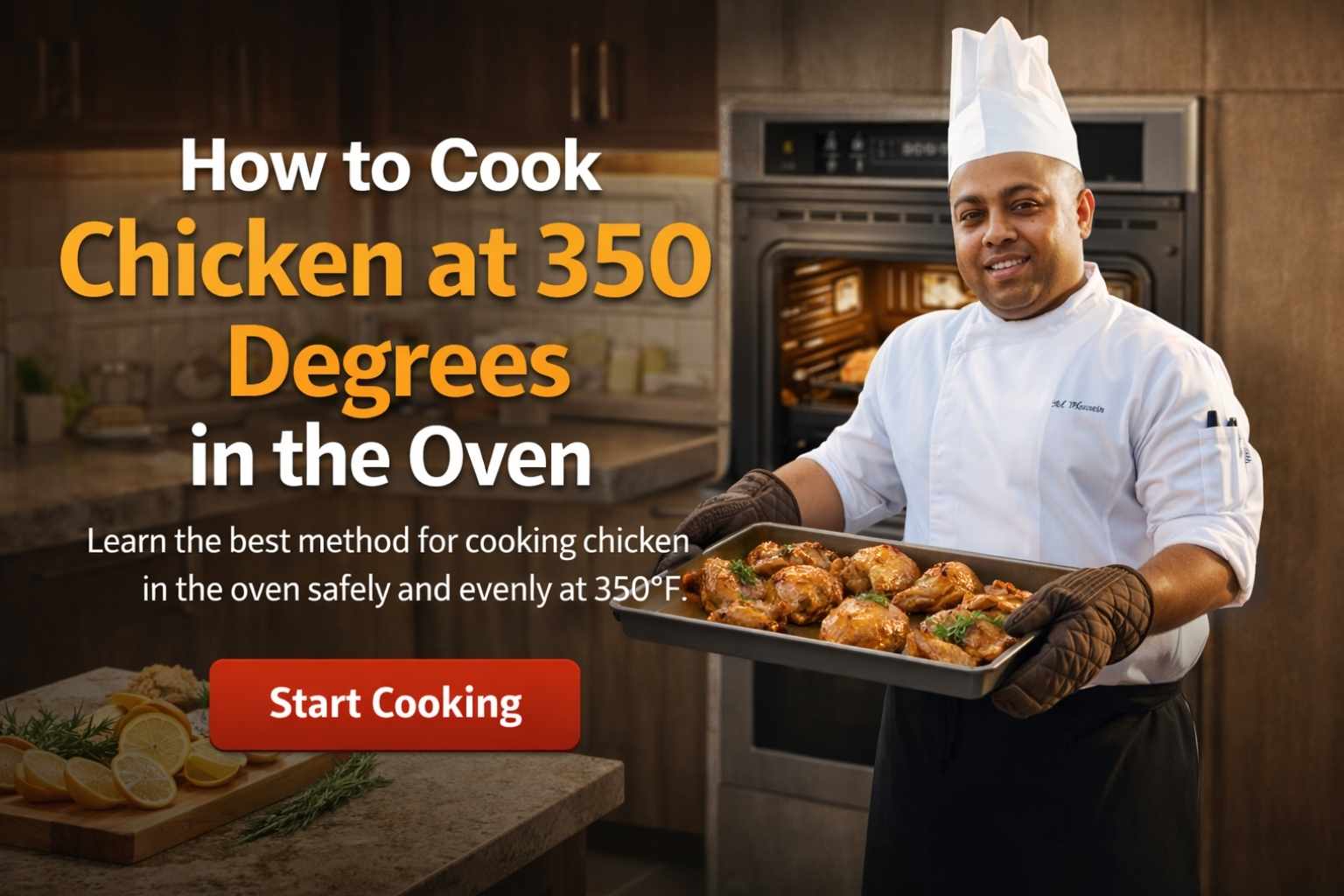
We all want that tender, reliable roast where the meat stays incredibly juicy and the flavors have time to develop into a deep, savory profile. I will show you how to cook chicken at 350°C in the oven so you get a perfectly even bake and a succulent center that never feels rushed or dry.
My years in a busy Chicago kitchen taught me that this moderate temperature is the true secret to rendering fat slowly, ensuring a consistent texture for everything from breasts to whole birds. Use my Ultimate Guide to Master Your Oven to find the exact rack height for the best heat circulation at this steady pace. Let’s grab your favorite baking dish and start this classic, foolproof meal together right now!
Why the Right Temperature Makes a Real Difference
When you’re cooking chicken, especially in a home oven, the stakes feel higher than they sound. Undercooked? Risky. Overcooked? Dry and disappointing. I’ve been there.
350°F hits this perfect balance where:
- The inside cooks evenly without drying out the outside
- You get safe, juicy meat — especially if you’re using bone-in cuts
- It plays nice with sauces, herbs, and even sugary marinades
And here’s the real talk:
I’ve messed this up.
I’ve cranked the heat at 425°F thinking it’d speed up dinner, only to end up with crispy skin and a pink bone. I’ve also tried slow-baking at 300°F, and let’s just say… my patience (and hunger) gave out before the chicken did.
My Kitchen Test Zones: U.S. Ovens Aren’t Created Equal
In my Florida condo, I had this tiny Frigidaire electric oven that ran hot — it’d sear the top before the center even knew what was happening.
Then in Arizona, the dry heat mixed with my convection oven made chicken thighs cook lightning fast. I had to reduce bake time by 10 minutes and keep a close eye.
Up north in Ohio, the old GE gas range took its sweet time preheating. I’d literally start dinner prep early just to give it a head start.
Those differences taught me that the type of oven, humidity in the room, and even your pan material (metal vs glass vs ceramic) all mess with timing — but the one thing that stayed reliable was 350°F.
Why This Article Exists: Honest, Hands-On Chicken Cooking
This isn’t some lab-tested, perfect-kitchen theory.
I wrote this because I’ve been:
- Burned by underdone chicken at 8:45 p.m.
- Saved by a reliable Pyrex dish and a leave-in thermometer
- Proud of juicy, flavorful chicken on a random Wednesday night
So I’m going to break this down cut by cut — breast, thighs, wings, drumsticks, and whole bird — with exact timing, tools I actually use (hello, Staub Dutch oven), and all the little things I wish I knew earlier.
Because if you’ve ever stood in your kitchen thinking,
“How long to cook chicken in oven at 350?”
or
“Wait… is this done yet?”
I’ve been there too.
The Science of 350°F: Why This Temperature Works So Well
Some things just work — like a well-worn cast iron pan or your grandma’s biscuit recipe. For me, 350°F falls into that category. I’ve tested other temps, but when it comes to baking chicken in the oven, this one hits the sweet spot over and over again.
🔬 What Actually Happens to Chicken at 350°F
I didn’t always think about science when cooking. But once I started burning the outside while the inside stayed raw, I had to understand what was going on.
Here’s what I’ve learned in plain English:
- Protein Breakdown: Chicken proteins start to tighten and release moisture around 140–160°F. At 350°F, the heat rises gently, giving the meat a chance to cook through before it seizes up.
- Fat Renders Just Right: Skin-on chicken releases that golden fat at a slow, delicious pace at 350°F. You get crispy edges without burnt bits.
- Even Heat Penetration: This temp isn’t too aggressive. It gives the heat time to work through bones, which matters for drumsticks, thighs, and whole birds.
I’ve cooked chicken at 400°F before. It gets crispier faster — sure — but it’s easy to dry things out. And at 325°F? It can take forever and sometimes turns rubbery. 350°F feels like that comfy middle lane that keeps everything juicy and done.
🍗 What 350°F Delivers (When You Do It Right)
When I take my time and let 350°F do its thing, the difference is obvious. The chicken doesn’t just taste better — it feels better when you bite into it. It’s not dry. It’s not mushy. It’s just… right.
Here’s what I consistently get:
- Moist, juicy centers (even with boneless breast, if I don’t overdo it)
- Golden brown skin without setting off the smoke alarm
- Reliable doneness even when my oven plays favorites with hot spots
And if I’m baking with seasoning blends, BBQ sauce, or anything with sugar? 350°F keeps the flavors intact without burning them off.
🧪 USDA Rules vs Real-Life Tweaks
Let’s talk food safety for a second. The USDA says you should cook chicken to 165°F internal temperature — no exceptions. I follow that rule every time.
But here’s a trick I learned:
- I pull the chicken at 162°F
- Then I let it rest for 10 minutes on the counter
- That carryover cooking (from trapped heat) brings it up right where it needs to be
I’ve tested this with a thermometer a dozen times. Works like clockwork.
Still, when I’m cooking bone-in thighs or a whole bird, I do sometimes let it creep up to 170–175°F — especially when I want super-tender dark meat. It doesn’t dry out like breasts do.
😅 Real-Life Example: That Time I Rushed It
One weeknight, I was late coming home. I had chicken thighs pre-marinated in the fridge, but I was starving and impatient. Cranked the oven to 400°F thinking I could shave 10 minutes.
Bad move.
- Skin browned too fast
- Inside was still pink
- I ended up throwing it back in for another 15 mins, totally defeating the point
From that day forward, I stuck with 350°F unless I had a clear reason to change it. It’s not glamorous, but it’s dependable — and that matters when your brain’s fried after work and dinner’s on you.
Oven Types and Chicken Cooking Times at 350°F
A 350°F setting on one oven isn’t the same as on another. Trust me — after baking chicken in gas ovens in Ohio, electric ones in Florida, and even a countertop oven in Arizona, I’ve learned not to assume anything.
🔥 Gas vs. Electric: The Hidden Differences
Back in Ohio, I had a gas oven that looked like it came with the house in 1984. It took forever to heat up and had wild hot spots. One corner would brown chicken thighs while the other stayed pale and sad.
When I moved to Florida, I had an electric oven — newer, sleeker, but it didn’t have the same “burst” of bottom heat. That changed how I adjusted cook times.
Here’s what I noticed:
- Gas ovens heat fast, but they’re prone to uneven spots
- Electric ovens hold temp more consistently but take longer to preheat
- I had to rotate pans halfway in my gas oven or risk lopsided cooking
Neither is better — you just learn their personalities. In both cases, 350°F worked great, but the way it got there made me tweak things a bit.
🌪️ Convection vs Conventional: Is the Fan Worth It?
My first convection oven was a game changer… but also a bit aggressive. That fan in the back forces hot air around the chicken, cooking it faster — great if you know what to expect.
I ran a side-by-side test with chicken wings once. Same marinade, same tray setup, same 350°F — just one with convection, one without.
- Convection wings cooked in 35 minutes, with crispy skin
- Conventional wings took 45 minutes, but were slightly juicier
So now I do this:
- Use convection for wings, thighs, drumsticks — crispier skin, faster cook
- Avoid convection for large cuts like whole chicken — it can dry the skin before the inside finishes
And I always reduce cook time by about 5–10 minutes if I’m using convection mode.
🧱 Toaster Ovens, Wall Ovens, and Countertop Air Fryer Ovens
During one Arizona summer (think: 108°F outside), I refused to turn on the main oven. I used my Breville Smart Oven instead — a fancy toaster oven that still lets me set 350°F.
I was surprised by how well it handled:
- Boneless breasts baked beautifully in 25 minutes
- Drumsticks took 40, just like a regular oven — but I had to leave space between them
- I used a small rack for airflow, which made a big difference
For small households, I think toaster ovens are underrated. Just be mindful of:
- Tray size: Don’t overcrowd — it messes with heat circulation
- Heating element location: Stuff placed too close browns unevenly
- Preheat accuracy: I give it a couple extra minutes even after the beep
If you’re using one of those countertop “air fryer ovens” with bake mode — they’re basically mini convection ovens. At 350°F, you’ll probably want to knock 5 minutes off any standard oven timing.
🛠️ U.S. Brand Experience (Real Talk)
Here are a few brands I’ve cooked chicken in at 350°F with and how they behaved:
- GE gas range (older model): slow preheat, needs rotation
- Whirlpool electric (mid-tier): consistent, accurate
- Samsung convection wall oven: fast and even, but sometimes over-bakes chicken breast
- Frigidaire gallery electric: small quirks but great for thighs
- Breville countertop oven: excellent for 2–3 portions max
I’m not picking favorites — just saying every oven has its vibe. The key is learning how your 350°F behaves.
How Long to Cook Chicken Breast at 350 in the Oven
Chicken breast might seem easy, but I’ve overcooked it more times than I’d like to admit. At 350°F though, I’ve found a rhythm that keeps it tender and flavorful.
🕒 Timing: Boneless vs Bone-In at 350°F
When I’m baking boneless chicken breast at 350°F, I usually plan on about 25–30 minutes if they’re around 6 to 8 ounces each.
But with bone-in, I bump that to 35–45 minutes, especially if they’re thick and still have the skin on.
Here’s how it breaks down in my kitchen:
- Boneless breasts: 25 mins if they’re thin, 30–33 mins if thicker
- Bone-in breasts: 40 mins minimum, sometimes up to 45 mins
- Stuffed breasts or breaded? Add 5–10 mins
I learned to stop trusting the timer alone after biting into one that looked done but still had a pink streak in the center.
🌡️ Thickness Matters Way More Than Weight
You could hand me two 8-oz breasts and one would take 10 minutes longer — just because it’s thicker. That’s why I started doing this:
- Pound thicker ends slightly to even them out
- Tuck the thin tail end under if it’s super flimsy
- Check temp in the thickest part only — that’s your safety zone
I use a basic meat thermometer — not fancy — and I shoot for 162°F, then let it rest for about 8–10 minutes before slicing.
🧈 How I Keep Chicken Breast Juicy at 350°F
This took me way too long to figure out. For years, I assumed chicken breast would always be a little dry. Then I made a few changes.
Here’s what actually worked:
- Rub with olive oil or butter before seasoning — helps lock in moisture
- Salt 30 minutes ahead of baking (mini dry brine)
- Rest after baking — I used to skip this, and the juices would run out fast
If I’m doing plain chicken (just salt, pepper, garlic powder), I’ll sometimes add a pat of butter on top halfway through. It melts into the breast and gives that rich, golden top.
And when I want extra moisture?
- I bake in a glass or ceramic dish
- Cover lightly with foil for the first 15–20 minutes
- Remove foil at the end to get a little browning
I don’t do this every time — mostly when I’m cooking ahead for meal prep and want slices that stay juicy in the fridge.
🧂 Quick Personal Favorites for Breast Seasoning
Some days, I go fancy. Most nights, I keep it simple.
These always work at 350°F:
- Lemon pepper + garlic powder
- Smoked paprika + thyme + olive oil
- BBQ seasoning + brown sugar (just enough to not burn)
- Italian herbs + parmesan sprinkled halfway through
When I’m meal-prepping for salads or sandwiches, I skip heavy sauces and just do salt, pepper, and oil. Let the toppings do the work later.
How Long to Cook Chicken Thighs at 350 in the Oven
If there’s one cut I trust when I’m tired or distracted, it’s chicken thighs. At 350°F, they turn out tender, juicy, and almost impossible to mess up.
🕒 Bone-In vs Boneless Thigh Timing
Here’s the usual breakdown when I bake thighs at 350°F:
- Boneless thighs: 25–30 minutes
- Bone-in, skin-on thighs: 40–45 minutes
- Extra-large or frozen? Add 5–10 minutes
I always test the thickest part of the meat (not near the bone) with my thermometer. I pull them around 170°F — not just 165°F — because dark meat handles higher temps like a champ. It actually gets better.
I’ve gone to 180°F before and they were still juicy.
🔥 How I Get Crispy Skin at 350°F
Now, if I want skin that shatters when I bite it? I have to set it up right. 350°F can get you crispy skin — but you need to help it out.
Here’s what works in my kitchen:
- Dry the skin with paper towels — I press down hard
- Sprinkle baking powder with salt — not much, just a dusting
- Rack + tray combo — lets air circulate underneath
- Don’t crowd the pan — space is crispness
And if I really want that crunch?
- I hit broil for the last 2–3 minutes.
- Watch it like a hawk — it goes from perfect to scorched fast
🧄 Marinades and Rubs That Handle 350°F
I’ve ruined a few thighs using sugary marinades at high heat. But at 350°F? They work great — the sugars don’t burn, they caramelize.
These are my favorites for weeknight thighs:
- Soy sauce + honey + garlic
- Buttermilk + hot sauce + smoked paprika
- Cilantro + lime + olive oil
- Classic BBQ rub with brown sugar and mustard powder
I let them marinate for at least 30 minutes — longer if I remember. But honestly, even 20 minutes while the oven preheats helps.
One trick I use? Bake skin-side down for the first half, then flip. That way, the fat renders into the meat, and the top crisps up at the end.
🥴 Real Moment: Forgot to Set a Timer
One time I tossed some thighs in with olive oil, lemon, and rosemary. Then I got distracted folding laundry… and forgot to set a timer.
Luckily, I was using 350°F and not something higher. They were still fine at 50 minutes. A little darker than usual, but totally edible — and honestly, even more flavorful. That’s why I love thighs. They’re forgiving.
How Long to Cook Chicken Legs at 350 in the Oven
Chicken legs are underrated, honestly. They’re budget-friendly, flavorful, and they stay moist without much babysitting — especially when you cook them at 350°F.
🕒 Bake Time for Chicken Legs
Here’s what I usually see in my oven:
- Standard chicken legs (drumstick attached to thigh): 45–55 minutes
- Just drumsticks: 40–50 minutes
- If frozen or extra thick: Add 5–10 minutes
I’ve learned the hard way — a chicken leg that looks browned on the outside can still be raw near the bone. So now I always:
- Stick a thermometer deep near the bone (but not touching it)
- Aim for 170–175°F before pulling them
- Let them rest for 10 minutes, which pushes them safely up to 180°F and keeps them juicy
🔄 Turning for Even Cooking
The shape of a drumstick is… well, awkward. One side is meaty, the other skinny. That used to frustrate me.
Here’s what changed the game:
- Flip halfway through — usually at the 25-minute mark
- If I’m feeling fancy, I’ll rotate them upright using a rack or roll of foil to get crisp on all sides
- Leave space between legs — crowding = steaming, not roasting
One time, I crammed 10 drumsticks onto one pan. Thought I was clever. Instead of crispy skin, I got soft, steamy chicken that made my smoke alarm mad. Never again.
🍗 How I Season Legs for 350°F Success
I like legs to be bold — they’re built for flavor. Here are a few rubs and marinades that always work well at 350°F:
- Dry rub (paprika, garlic powder, salt, onion powder, cayenne)
- BBQ sauce brushed on halfway through
- Olive oil + lemon juice + rosemary
- Buffalo seasoning with melted butter at the end
If I’m in a rush, I’ll just toss them in olive oil, salt, and pepper. Roast them on a rack-lined baking sheet, and boom — still good.
For family dinners, I often bake 8–10 drumsticks in a disposable foil tray. Cleanup is a breeze, and it feeds everyone.
🤦♂️ That One Time I Didn’t Flip Them…
I remember one Sunday when I tossed in a batch of drumsticks and completely forgot to turn them. When I pulled them out, one side was golden and crispy… and the other side looked pale and underdone.
I ended up broiling the top to fake some color. It worked, but the texture was off. Since then, flipping halfway has been non-negotiable.
How Long to Cook Whole Chicken at 350 in the Oven
Roasting a whole chicken at 350°F feels like a ritual in my kitchen. The smell alone is worth it — rich, cozy, and nostalgic. I usually do it on weekends when I have a little extra time and want leftovers that actually taste good.
🕒 Time by Weight: My Real-World Roasting Guide
The general rule is 20 minutes per pound at 350°F. But here’s how that plays out in practice:
- 3 lb chicken → ~1 hour
- 4 lb chicken → 1 hour 20 minutes
- 5 lb chicken → 1 hour 40 minutes
- 6 lb chicken → 1 hour 55 minutes to 2 hours+
But don’t just go by the clock. Every oven (and chicken) is a little different. What I do every single time:
- Insert a meat thermometer into the inner thigh, not touching bone
- Pull the bird when it hits 165°F
- Let it rest at least 15 minutes, loosely tented with foil
That rest is magic. The juices redistribute and the bird finishes cooking gently. Skip it, and you’ll watch all the flavor run onto the cutting board.
🧄 What I Put Inside: Stuffing for Flavor, Not Bulk
I don’t do bread stuffing inside the bird. It takes too long to cook through and can turn soggy. Instead, I go for aromatics that steam the inside and add subtle flavor:
- Half a lemon
- Halved garlic bulb
- Fresh rosemary or thyme
- Quartered onion
Sometimes I’ll toss in a halved apple or a bay leaf just to mix it up. Whatever I’ve got handy, really.
I drizzle a little oil and salt inside the cavity too — gives it a clean, savory smell as it roasts.
🧈 Skin Tricks: Butter Under or Over?
I used to rub butter all over the outside like I saw on TV. It helped a little, but it always melted off too soon.
Then I tried slipping softened butter under the skin, especially over the breast meat. Total game changer. Here’s how I do it:
- Gently loosen the skin with your fingers
- Slide a tablespoon of herbed butter under each side
- Massage it smooth from the outside
At 350°F, that butter slowly melts into the meat and keeps it from drying out.
For crispy skin, I skip basting. It sounds fancy but just washes the skin down. I roast it dry — and sometimes crank the broiler for 2–3 minutes at the end if it needs extra color.
🔪 Resting and Carving: What I Used to Mess Up
My first roasted chicken? I cut into it immediately. The juices flooded out, and the breast meat dried up fast. Never again.
Now I rest it on the counter for 15–20 minutes. I loosely cover it with foil and leave it alone.
Carving used to intimidate me. These days, I follow this simple routine:
- Legs off first — slice through the joint
- Wings next — easy pop off
- Breast last — slice along the breastbone, then cut crosswise
I use both a sharp chef’s knife and kitchen shears. Shears are great for backbone removal (if you’re butterflying) or separating joints without hacking.
🍲 What I Do With Leftovers
I never waste the bones. After carving, I throw everything — bones, skin, herbs — into a pot with water, onion peels, and carrot ends.
Simmer for a couple hours and you’ve got homemade stock. Way better than store-bought, and no sodium bomb.
I freeze it in small containers and use it for:
- Soup base
- Gravy
- Cooking rice or quinoa (so much flavor!)
How Long to Cook Chicken Wings at 350 in the Oven
Chicken wings at 350°F? Absolutely. I know most people go hotter for crispy skin, but I’ve baked wings at 350 plenty of times — and they come out golden, juicy, and flavorful. You just need a few extra tricks.
🕒 Bake Time and Temperature Tips
In my kitchen, chicken wings baked at 350°F usually take around 40 to 45 minutes. That’s for separated wingettes and drumettes — not full wings.
Here’s my usual setup:
- Preheat to 350°F
- Lay wings on a rack over a foil-lined sheet pan
- Bake for 20 minutes, flip, then another 20–25 minutes
If I want them even crispier, I switch the oven to convection for the final 5 minutes. It makes a huge difference.
🌬️ Getting Crispy Skin Without Cranking the Heat
When I first started baking wings, I thought high heat was the only way to get that crunch. Turns out, you can get crisp skin at 350°F with the right prep:
- Pat the wings dry with paper towels — moisture = sogginess
- Toss in baking powder + salt — this helps draw out moisture and tighten the skin
- Space them out — no stacking or crowding
- Use a rack to let air circulate under and around the wings
I once made a whole tray without a rack, and the bottoms turned out pale and soft. The rack changed everything.
🧂 My Go-To Dry Rubs for 350°F Wings
These blends hold up well at this lower temp — no burnt sugar or sticky mess:
- Garlic powder + smoked paprika + cayenne + salt
- Lemon pepper + dried parsley + olive oil
- Chili powder + cumin + onion powder
- Ranch seasoning packet + cracked black pepper
I mix the rub with a little oil, toss the wings in it, then bake. The rub gets slightly crusty and seals in the juices.
🥣 When to Add Sauce (Don’t Do It Too Early)
One of my early mistakes was brushing BBQ or hot sauce on before baking. At 350°F, it didn’t burn, but it did stay wet — kind of slippery and soft.
Now, I always:
- Bake wings fully with dry rub only
- Toss in sauce after baking while they’re still hot
- Sometimes return them to the oven for 5 minutes to “set” the sauce
That extra step helps the sauce cling without making the skin soggy.
Favorites in my house:
- Buffalo (hot sauce + butter)
- Honey BBQ
- Garlic parmesan (tossed with melted butter, not baked on)
- Sweet chili sauce (with a squeeze of lime)
😬 Wing Fails That Taught Me a Lesson
I once tried to bake 30 wings in one tray during a football game. Thought I was being efficient. Instead, I got overcrowded soggy wings, uneven cooking, and sad looks from hungry guests.
Now I always:
- Bake in two trays if needed
- Give them room to breathe
- Use a rack — always
How Long to Cook Chicken Drumsticks at 350 in the Oven
Drumsticks are probably the most stress-free part of the chicken to cook. They’re meaty, juicy, and super forgiving — perfect when I don’t have the energy to baby-sit dinner.
🕒 Timing by Size: How Long Drumsticks Take at 350°F
Not all drumsticks are the same. Sometimes they’re tiny, sometimes they’re closer to caveman clubs. Here’s the breakdown I go by:
- Medium drumsticks → 40–45 minutes
- Large drumsticks → 50–55 minutes
- Frozen drumsticks (thawed slightly) → up to 60 minutes
I bake them at 350°F on a foil-lined sheet pan and flip them once around the 25-minute mark. That helps them brown evenly.
And always — always — I check the internal temp:
- I aim for 170–175°F at the thickest part (not touching the bone)
- Let them rest for 10 minutes before biting in — no burned mouths or raw centers
🌿 My Favorite Drumstick Seasonings (Quick + Easy)
Drumsticks take seasoning well. I love tossing them in bold spices, especially on busy weeknights.
Here are a few that never fail me:
- Cajun dry rub — paprika, cayenne, garlic, onion, black pepper
- Lemon pepper + olive oil — zesty and simple
- Garlic salt + chili powder + brown sugar — sweet heat
- BBQ rub — then toss in sauce after baking
If I’m marinating, I throw them in a zip-top bag with the mix in the morning. But if I forget (and I often do), I just toss them in olive oil and spices right before they go in the oven.
🧽 My Lazy Cleanup Routine
I won’t lie — I’ve had nights where the dinner was great, but the aftermath wasn’t. Sticky sauce, baked-on fat, and dark skin bits welded to the tray.
So now I always:
- Line my baking sheet with foil AND parchment paper
- Place a wire rack over it (optional, but great for crispy skin)
- Spray the rack with oil so nothing sticks
- Let the tray soak with hot water immediately after dinner
That soak is the difference between a 1-minute rinse and a 15-minute scrub-fest.
For family dinners, I’ll even use a disposable foil tray sometimes. It’s not fancy, but when you’re wiped out after work, it’s okay to give yourself a break.
😅 A Small Mistake That Taught Me a Big Lesson
Once, I baked drumsticks without seasoning them. No oil, no salt. Just pure chicken and hope.
They came out gray, rubbery, and flavorless. No amount of sauce could save them.
Now I never skip that quick pre-bake rub. Even salt and pepper + oil makes a huge difference.
Best Practices for Baking Chicken Evenly at 350°F
Getting chicken done evenly — that used to frustrate me more than anything. One side perfect, the other side pink near the bone. These days, I’ve got a rhythm. 350°F is forgiving, but these tips make it foolproof.
🧊 Bring Chicken to Room Temp First
This is a small thing that makes a big difference. If I pull chicken straight from the fridge and toss it in the oven, here’s what usually happens:
- The outside cooks too fast,
- The inside stays cold longer,
- And the cook time stretches out unevenly
So now I do this:
- Take the chicken out 20–30 minutes before baking
- Let it sit on the counter (covered or loosely wrapped)
- Pat it dry before seasoning
On rushed nights, I’ll cheat and give it 10 minutes — still better than straight-from-the-fridge cold.
🧂 Season Before, Not After
I used to season right before serving. Mistake.
When you season before baking — especially with salt — it draws out a little moisture and then pulls flavor back into the meat as it cooks.
My usual order:
- Pat chicken dry
- Rub with oil or melted butter
- Sprinkle with seasoning or marinade
- Let it sit while the oven preheats
Sometimes I do a dry rub in the morning and let it sit in the fridge all day. When I do that, the skin comes out even better.
🔍 My Thermometer Is My Best Friend
I spent years guessing if my chicken was done. Pressing it with a spoon. Cutting into it “just to check.” Dry meat, pink bones — all that changed when I finally started using a thermometer.
Here’s how I use it:
- Stick it in the thickest part of the meat, avoiding bone
- Look for 165°F for breasts, 170–175°F for thighs, legs, and wings
- Pull a few degrees early, then rest for 10 minutes
I use a $15 instant-read thermometer I grabbed from Target. Nothing fancy. It’s saved so many dinners.
🍽️ Pan, Rack, and Setup Tips
What you bake your chicken on matters more than I thought.
Here’s what works for me:
- Sheet pan + wire rack combo → air circulates better = even browning
- Glass or ceramic dish → juicier results, but slower browning
- Cast iron skillet → deep flavor and amazing skin (but watch the timing)
- Foil + parchment paper → for easy cleanup
And no matter the pan, I space out the chicken pieces. Overcrowding traps steam. I’ve learned the hard way that when chicken steams instead of roasts, you lose that delicious texture.
🔄 Rotate the Pan in Older Ovens
In one of my older rentals, the oven had a hot left side and a cool right side. I didn’t know at first — I just thought my chicken hated me.
Now I always:
- Rotate the pan halfway through
- Flip the chicken if needed (especially legs or thighs)
- Check a few different pieces with my thermometer — not just one
Tools I Swear By for Perfect Chicken at 350°F
I’ve cooked chicken in tiny apartments and roomy suburban kitchens — and if there’s one thing I’ve learned, it’s that the right tools make the process smoother, faster, and more consistent.
🧪 Thermometers That Save Dinners
If I had to pick just one tool, it’d be my meat thermometer. Before I used one, I’d overcook chicken “just in case.” Now I know exactly when it’s done — no guesswork.
Here’s what I’ve used:
- Basic instant-read thermometer ($10–$20): fast, simple, and easy to clean
- Digital leave-in thermometer with alarm: great for whole chickens or multitasking
- Fancy brands: I’ve tested ThermoPro, OXO, and once borrowed a friend’s Thermapen — all solid
My current go-to is a mid-range ThermoPro — not too pricey, super reliable.
🥄 Bakeware That Actually Affects Cooking
I didn’t think pan material mattered… until I roasted chicken thighs in three different pans and got totally different results.
Here’s what I’ve found:
- Dark metal pans → faster browning, especially skin-on pieces
- Glass dishes (like Pyrex) → hold heat well, great for juicy results
- Ceramic or enameled pans (like Staub or Le Creuset) → slow and even heat, gorgeous crusts
- Aluminum sheet pans → versatile and budget-friendly for big batches
In my Midwest kitchen, I reach for cast iron more often in the winter — it holds heat well when the room is cold.
🍽️ Wire Racks, Trays, and Cleanup Tricks
Want crispy skin? Air circulation matters. That’s where wire racks come in.
My setup:
- Sheet pan + cooling rack combo
- Spray the rack to keep things from sticking
- Line the pan underneath with foil or parchment for easy cleanup
No rack? I prop up chicken legs with scrunched foil rings to lift them off the surface. Not pretty — but it works.
When I’m cooking for a crowd or doing meal prep, I use:
- Disposable foil trays (yes, I said it) — not eco-perfect, but so helpful on busy weeks
- Quarter sheet pans for toaster ovens or small batches
🔪 Knives and Shears That Make Cutting Easier
I’m not a knife snob, but I do keep my chef’s knife sharpened. Still, when it comes to chicken?
- Kitchen shears are my real heroes
- They slice through joints and skin without slipping
- I use them for butterflying whole chickens too
Don’t get cheap shears, though — the dull ones are worse than no shears at all. I’ve had the best luck with mid-range brands like OXO or Henckels.
😬 Tools I Tried and Don’t Use Anymore
Just being honest:
- Silicone mats made chicken skin soggy — I’ll use them for cookies, not meat
- Roasting baskets sounded cool but were a pain to clean
- Built-in oven thermometers? Way off. I’ve seen a 25°F difference from my digital one
So if you’re using what your oven says, and things seem off — trust your own thermometer.
Common Mistakes When Baking Chicken at 350°F (That I’ve Made)
Even after years of cooking, I still mess up sometimes. And most of the time, it’s not because I don’t know better — it’s because I got distracted, rushed, or trusted the wrong thing. So here’s what I’ve learned the hard way.
❌ Relying on Time Instead of Temperature
Early on, I used to go strictly by recipes:
“Bake for 35 minutes at 350°F.”
So I did. And I’d pull the chicken out right at 35 minutes — even if it looked questionable. Big mistake.
I’ve had chicken:
- Look golden outside but still pink near the bone
- Feel firm but not fully cooked
- Cooked way past done because I added 10 extra minutes “just in case”
Now, I never go by time alone. A thermometer tells me when it’s done — and it’s usually different every time, depending on the cut, pan, oven, and even room temperature.
❌ Not Resting the Chicken
I used to be so hungry that I’d pull chicken out of the oven and immediately slice into it. Steam would pour out. Looked juicy, right?
Nope. All that steam = moisture leaving the meat.
The first few bites were good, but then it felt dry and stringy.
Now I rest everything — even wings — for at least 5–10 minutes. For big pieces or whole birds, I give it 15–20 minutes, tented with foil.
That alone improved my chicken more than any spice or sauce ever did.
❌ Overcrowding the Pan
I still do this when I’m cooking for a group and I’m trying to be “efficient.”
The problem?
- The chicken steams instead of roasts
- You get pale skin and uneven cooking
- The bottom stays soft, even with parchment or foil
The fix? Just use two pans. It’s more cleanup, but honestly, it’s worth it. Everything cooks better and tastes better — and nobody ends up eating the sad, soggy pieces from the middle.
❌ Confusing Bone-In with Boneless Timing
One time I baked a tray of chicken thighs — half boneless, half bone-in — all on the same sheet pan.
They looked done at the same time… but only the boneless ones were ready. The bone-in thighs needed 10 more minutes. I didn’t realize until one guest cut into theirs and found it still pink.
Now I either:
- Cook them on separate trays, or
- Pull the boneless ones out earlier and let the others finish
They cook completely differently even though they look similar.
❌ Trusting Visual Cues Over Internal Checks
Color can lie. I’ve had chicken that looked raw but was fully cooked, and vice versa.
Some of the biggest letdowns:
- Pink near the bone even at 170°F (especially in legs)
- Golden skin but raw inside (mostly in convection ovens)
- White and dry meat because I went too far past done
Now, I rely on this order:
- Use a thermometer
- Rest the meat
- Then slice or serve
That combo never fails me.
Conclusion: Why 350°F Became My Chicken Comfort Zone
I didn’t set out to become an expert on baking chicken at 350°F. It just kind of… happened. Over time, after trial and error, undercooked centers, dry edges, and a few proud golden-skinned wins, I started noticing a pattern.
350°F kept working.
In summer kitchens in Florida with the A/C humming, I’d roast thighs on a sheet pan with lemon and rosemary.
In Ohio winters, I’d bake whole chickens in my Staub cocotte just to warm up the kitchen — and my mood.
In a cramped Chicago apartment, I survived off boneless breasts, baked at 350°F on a foil-lined toaster oven tray because that’s all I had.
Every time, 350°F gave me breathing room. Enough heat to cook evenly, but slow enough to let me pivot if life got chaotic mid-dinner (which it always does).
🧑🍳 It’s More Than a Number — It’s a Habit
Now, it’s second nature. I grab chicken from the fridge and mentally clock the time — 25 minutes if it’s breasts, 45 for thighs or drumsticks, longer for a whole bird.
I don’t stress.
I don’t second-guess.
Because I’ve done it so many times, in so many ovens, in so many moods — and I trust it.
💬 If You’re Still Unsure, That’s Okay
When I started, I googled “how long to cook chicken in oven at 350” every. single. time.
Breast, thighs, legs, wings — I searched all of it. Just to double check.
So if that’s where you are right now — I get it.
You’ll figure out your own rhythm soon. Maybe 350°F will become your chicken comfort zone too.
Thanks for spending time in my kitchen.
— Mossaraof
(Chef, food blogger, and guy who still triple-checks the oven temp when he’s tired.)
FAQs: How to Cook Chicken at 350 Degrees in the Oven
How long does it take to cook chicken at 350 degrees in the oven?
Cooking chicken at 350°F takes about 25–30 minutes per pound. Bone-in pieces may need more time. Always check the inside is fully cooked before serving.
What is the best way to cook chicken at 350 degrees in the oven?
The best way is to season the chicken, place it in a baking dish, and cook at 350°F until done. Covering it helps keep it moist and tender.
Should I cover chicken when baking at 350 degrees?
Covering chicken at 350°F keeps it juicy and soft. You can uncover it near the end to make the top golden and slightly crisp.
How do I know when chicken is done at 350 degrees in the oven?
Chicken is done when the inside reaches 165°F. The juices should run clear, not pink. A food thermometer gives the most accurate result.
Can I cook frozen chicken at 350 degrees in the oven?
Yes, you can cook frozen chicken at 350°F, but it takes about 50% longer. For best taste and texture, thaw the chicken first before baking.

I’m Mossaraof, a trained chef and the founder of OvenInsights.com. I spent years cooking at Larrupin’ Cafe and in kitchens across Chicago and Seattle. Now I test kitchen gear for a living. I moved to North Acton, London, and I test every tool I write about. I use real meals and real heat. No brand deals. No shortcuts. I cover 12 kitchen types and hundreds of recipes. I believe this: the right tools matter as much as the recipe.