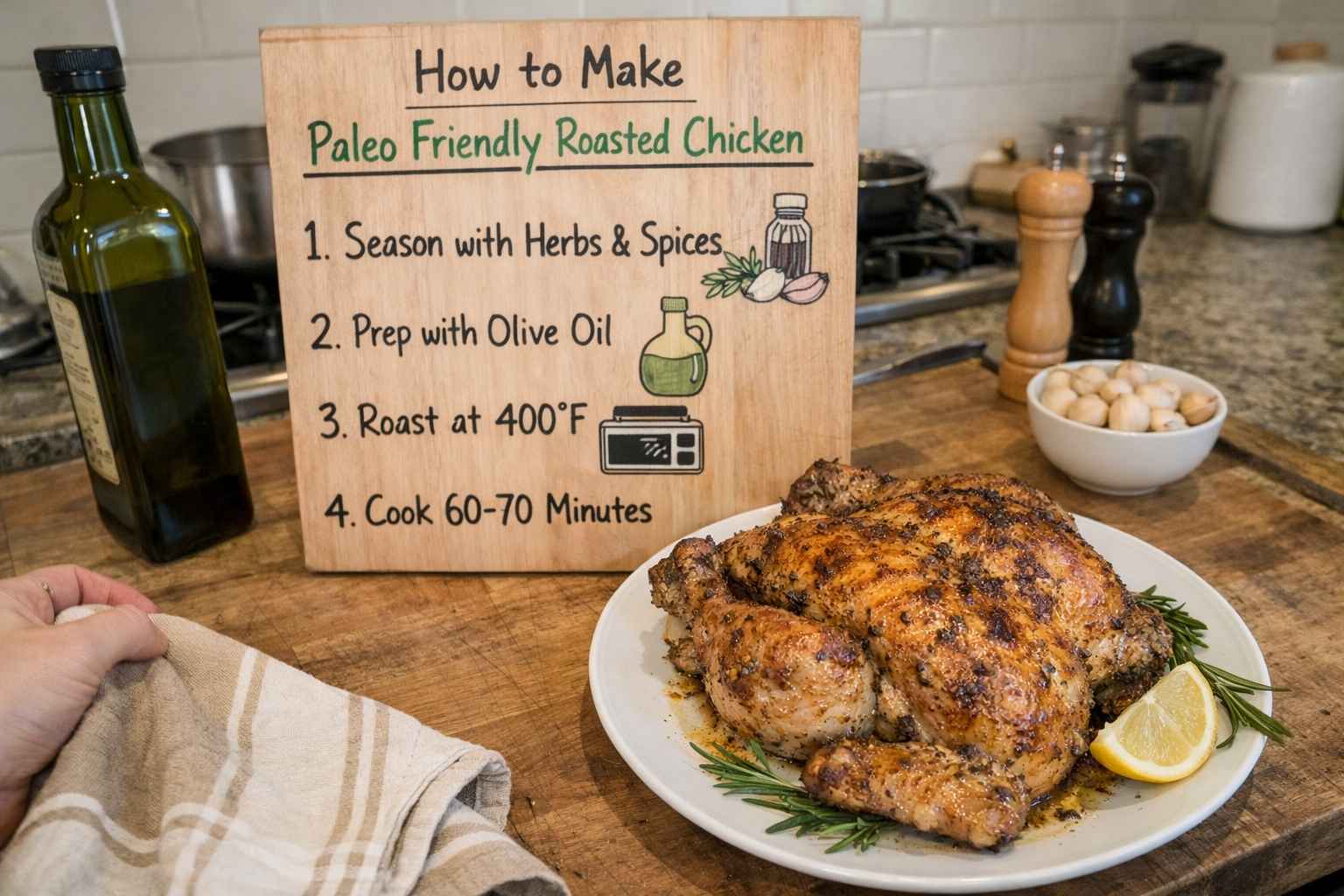
Forget bland meals that take all day. I love to show friends how to make paleo friendly roasted chicken that is both simple and full of deep flavor. After years in professional kitchens, I’ve found that the right heat makes all the difference for crispy skin. Check out my Ultimate Guide to Master Your Oven to help you nail the heat settings. Grab your roasting pan and let’s get this delicious, healthy dinner started!
Why Your Oven Setup Matters More Than the Recipe
Your oven is a tool, not just a box that gets hot. If you don’t understand how it breathes, your chicken will suffer.
In the U.S., we deal with a lot of variety. You might have an old electric oven with coils that click and pop. Or maybe you have a fancy new convection range.
- Electric vs. Gas: Electric heat is dry. This is great for crispy skin. Gas heat is “wet,” which can make skin soggy if you aren’t careful.
- The Rack Position: I always move my rack to the center. Too high and the skin burns. Too low and the bottom gets greasy.
- Trust Your Tools: Don’t trust the dial on your oven. Most are off by ten degrees. Buy a cheap oven thermometer at a place like Target or Walmart. It changed my life.
How to Make Paleo Friendly Roasted Chicken with Real Flavor
Paleo cooking is about getting back to basics. No processed sugar. No weird oils. Just heat, meat, and good fats.
When I make this at home, I want it to taste like the woods and the earth. I want it to be clean.
- Pick Your Fat: I love avocado oil or ghee. Ghee smells like popcorn and makes the skin golden.
- The Salt Factor: I only use Kosher salt. It has big flakes. You can see where it lands. Table salt is too fine and makes things too salty too fast.
- Skip the Sugar: Most store-bought rubs have brown sugar. For Paleo, we use smoked paprika or garlic powder for color and depth.
Master the Thigh: How to Make Oven Roasted Chicken Thighs
Thighs are my favorite part of the bird. They have more fat and more flavor. They are also much harder to mess up than breasts.
If you are just starting out, start here. Thighs stay juicy even if you forget them for five extra minutes while watching the game.
- Bone-In is King: Keep the bone in. It acts like a heat pipe. It cooks the meat from the inside out.
- High Heat: I crank my oven to 425°F. You need that blast to render the fat.
- Crowding the Pan: Don’t let the thighs touch. If they touch, they steam. If they have space, they roast.
The One-Pan Wonder: How to Cook Oven Roasted Chicken Breast with Potatoes
This is my go-to Tuesday night meal. It’s one pan to wash. That’s a win in my book.
The trick is making sure the potatoes are soft when the chicken is done. Nobody likes a crunchy potato or a dry breast.
- The Chop: Cut your potatoes into small cubes. About half an inch.
- The Timing: Toss the potatoes in oil and salt first. Put them on the tray.
- The Breast: Place the chicken on top. The juices from the meat will drip down and flavor the potatoes. It’s like a flavor bath.
Cracking the Code: How to Cook Oven Roasted Chicken Breast Like Subway
Sometimes you just want that soft, deli-style texture. It’s not “fancy” cooking, but it’s a classic American taste.
I spent a week trying to figure out how is Subway oven roasted chicken made. It’s mostly about moisture and low heat.
- The Brine: Soak your chicken in salt water for an hour. This keeps it plump.
- The “Steam” Effect: Cover the dish with foil tightly. This traps the moisture.
- The Result: You get a very soft, white meat that is perfect for a sandwich. Use it to learn how to make Subway oven roasted chicken sandwich at home with better bread.
Understanding the Macros: How Much Protein in Subway Oven Roasted Chicken Breast?
I get asked about nutrition a lot. Especially by friends who hit the gym and want a quick fix.
When you cook at home, you know exactly what goes in. When you eat out, it’s a bit of a guess.
- The Numbers: A standard portion has about 23 to 27 grams of protein.
- The Catch: Store-bought versions often have extra sodium.
- The Home Advantage: My Paleo version has the same protein but zero “hidden” ingredients.
No Oven? No Problem!
Sometimes the summer heat in places like Phoenix or Atlanta makes turning on the oven feel like a mistake. I have been there. My kitchen once hit 95 degrees, and I still needed dinner.
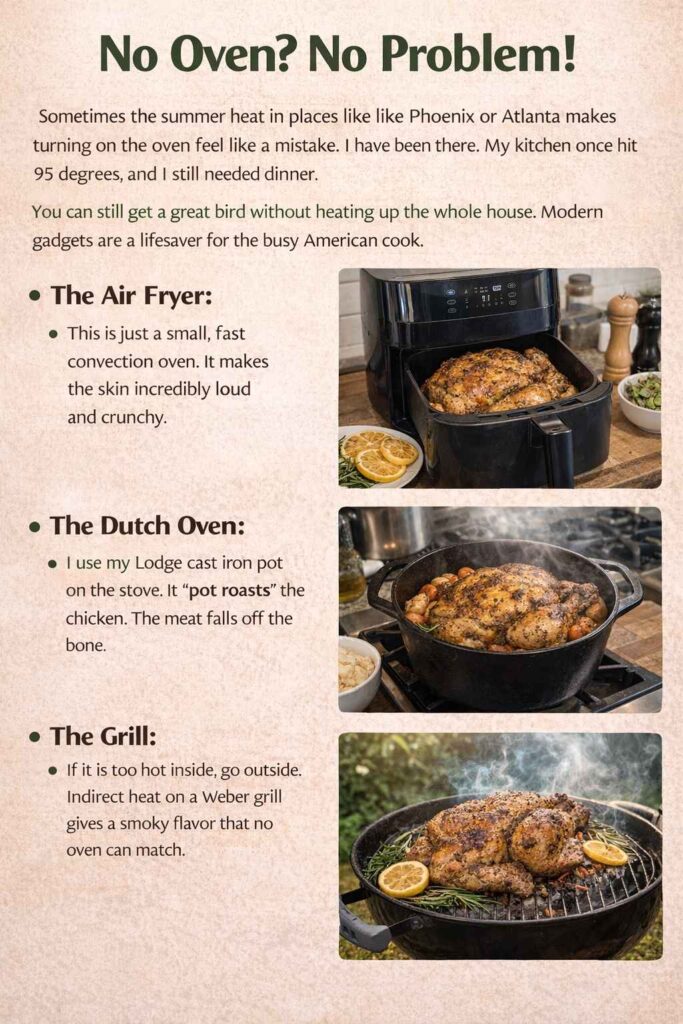
You can still get a great bird without heating up the whole house. Modern gadgets are a lifesaver for the busy American cook.
- The Air Fryer: This is just a small, fast convection oven. It makes the skin incredibly loud and crunchy.
- The Dutch Oven: I use my Lodge cast iron pot on the stove. It “pot roasts” the chicken. The meat falls off the bone.
- The Grill: If it is too hot inside, go outside. Indirect heat on a Weber grill gives a smoky flavor that no oven can match.
How to Prepare Roasted Chicken in Microwave Oven
I know what you are thinking. A microwave? But listen, modern “Inverter” microwaves in the U.S. are actually quite smart.
You won’t get that deep golden skin, but you can get a fast meal. It is all about the power setting.
- Don’t Use Max Power: Use 70% power. This prevents the meat from turning into rubber.
- Use a Rack: Keep the chicken off the bottom of the glass plate. This lets the air move.
- Season Heavily: Since you lose the “roast” flavor, double up on the herbs and garlic.
How to Prepare Roasted Chicken Without Oven
When I lived in a tiny studio with only a hot plate, I learned how to prepare roasted chicken without oven using a heavy pan and a lid.
It is more like “pan-roasting.” You sear the skin first to get it dark, then lower the heat and cover it.
- The Sear: Start skin-side down in a cold pan. Let the fat melt slowly.
- The Lid: Use a heavy lid to trap the heat. This acts like a mini-oven.
- The Flip: Only flip once. You want that skin to stay intact and pretty.
Leg Day: How to Prepare Oven Roasted Chicken Legs
Legs are the most budget-friendly part of the bird at any Kroger or Publix. They are juicy and fun to eat with your hands.
I love making these for a Sunday football game. They are easy to grab and stay hot for a long time.
- Dry the Skin: Use a paper towel. Get every drop of water off. Dry skin equals crispy skin.
- The “Pop”: You know they are done when the meat starts to pull away from the bone at the bottom.
- Spice it Up: I use a lot of smoked paprika here. It gives that deep red “BBQ” look without the sugary sauce.
How to Prepare Oven Roasted Chicken Legs
To really master how to prepare oven roasted chicken legs, you need a wire rack.
I place the rack over a baking sheet. This lets the hot air hit the bottom of the leg. No more “soggy bottoms.”
- Temp Check: Aim for 175°F for legs. They taste better when they are cooked a bit more than breasts.
- Seasoning: Don’t forget to season under the skin. Just peel it back a bit and rub the salt in.
The Morning After: How to Heat Up a Roasted Chicken in the Oven
Stop using the microwave for leftovers. It makes the chicken taste like a wet sponge. I hate seeing good food go to waste.
The goal is to wake up the fat and crisp the skin again. It takes ten minutes, but it is worth it.
- The Temp: Set your oven to 350°F. Not too hot.
- The Moisture: Put a tablespoon of water or broth in the pan. Cover it with foil for the first 5 minutes.
- The Finish: Take the foil off for the last 5 minutes. The skin will crisp right back up.
Pro-Tips for Kitchen Safety and Longevity
Being a chef isn’t just about flavor. It is about not hurting yourself. A hot pan is a weapon if you aren’t careful.
I have the scars to prove that rushing is a bad idea. Take your time and use the right gear.
- Knife Skills: A sharp knife is safer. You don’t have to push as hard, so it won’t slip.
- The “Oven Mitt” Rule: Never use a wet towel to grab a hot pan. The water turns to steam instantly and burns your hand.
- Cross-Contamination: Use a plastic board for raw chicken. Use a wood board for everything else. Wash your hands like a surgeon.
Gear Talk: The Best Roasting Pans for the American Kitchen
If you walk into a Williams Sonoma or even a local Target, the wall of pans can be overwhelming. I have tested dozens of them in high-volume kitchens and my own home.
A good roasting pan is an investment in your sanity. You want something that won’t warp when you slide it into a 450-degree oven or make a mess when you try to pour out the juices.
- The Gold Standard: I personally use the All-Clad D3 Stainless Steel Roaster. It is pricey, but the tri-ply construction means no hot spots. It browns the bird evenly from Maine to California.
- The Reliable Value: If you want a solid pan without the “chef price,” the Cuisinart MultiClad Pro is a beast. It has a flat bottom which is perfect for making a Paleo gravy right on the stovetop after the bird is done.
- The Modern Pick: I recently tried a Caraway Roasting Pan. The ceramic non-stick is a dream for cleanup. If you hate scrubbing burnt chicken skin for twenty minutes, this is your best friend.
Paleo Secrets: Beyond Just “Healthy”
People think Paleo is boring. They think it’s just plain meat and boiled greens. That is a myth.
As a chef, I know that flavor comes from fat and fire. When you learn how to make Paleo Friendly Roasted Chicken, you are learning how to use the bird’s own gifts to make it taste amazing.
- The Fat Trick: Use Ghee (clarified butter). Since the milk solids are gone, it won’t burn at high heat. It gives your chicken a rich, nutty flavor that avocado oil just can’t match.
- The Spice Move: Smoked paprika is my “secret weapon.” It gives the chicken a deep, mahogany color that looks like it came from a professional rotisserie.
- Fresh Herbs: I always keep a pot of rosemary and thyme on my windowsill. Tucking a few sprigs inside the cavity of the bird makes your whole house smell like a high-end bistro.
Mastering the “Bird Science”
In the U.S., we love our big chickens. Most birds at a standard grocery store are “broilers” or “fryers.” They are usually 3 to 5 pounds.
Knowing the weight of your bird is step one. If you don’t know how much it weighs, you’re just guessing on the time. And guessing leads to dry meat.
- Internal Temperature: The USDA says 165°F. I usually pull mine out at 160°F. The “carry-over” heat will finish the job while the meat rests.
- The Resting Period: This is the hardest part. You must wait 15 minutes before cutting. If you cut it too soon, all that juice ends up on the cutting board instead of in your mouth.
- Air Circulation: Use a rack! If the chicken sits on the bottom of the pan, the bottom becomes “stewed” and soggy. A V-shaped or flat rack lets the heat hit the chicken from 360 degrees.
My Saturday Night Routine
Every Saturday, I head to the local market and grab a fresh whole chicken. It has become a ritual. It’s the one day I don’t want to think about complex recipes.
I just rub it down with sea salt, some garlic powder, and a generous amount of avocado oil. I toss some halved onions and carrots into the bottom of the pan.
- The Sound: When the oven is really humming, you can hear the skin “sizzling.” That’s the sound of the fat rendering out.
- The Smell: About 45 minutes in, the smell of roasted garlic starts to hit the living room. That’s when my family starts hovering near the kitchen.
- The Reward: There is nothing like that first bite of a wing—salty, crispy, and hot. It makes the whole week feel better.
Carving Like a Pro: Don’t Butcher Your Bird
I’ve seen too many people spend hours roasting a beautiful chicken only to shred it into a pile of jagged meat at the table. It hurts my chef heart! Carving is just a few simple cuts.
You need a sharp knife. In my kitchen, I reach for my Wüsthof Classic 8-inch Chef’s Knife. It’s a German steel workhorse that most American pros swear by.
- Find the Joint: Pull the leg away from the body. You’ll see a natural “seam.” Cut right through that soft spot.
- The Wishbone Trick: If you are feeling fancy, remove the wishbone before cooking. It makes slicing the breast much easier later on.
- Follow the Bone: For the breast, run your knife right down the center bone. Then, use long, smooth strokes to peel the meat away from the ribcage.
- The “Oysters”: Don’t forget the two small nuggets of meat on the back near the thighs. Those are the chef’s snack—the best part of the whole bird.
Regional Flavors: A Taste of the USA
One thing I love about the U.S. is how a roasted chicken changes depending on where you are. In my travels, I’ve seen how local climates and tastes shift the spice rack.
- The Southwest Kick: When I’m in Texas, I add a bit of cumin and dried chipotle powder to my Paleo rub. It gives a smoky heat that pairs perfectly with a side of roasted peppers.
- The Northwest Freshness: Up in Seattle, it’s all about the herbs. Lots of fresh dill and tarragon. It makes the chicken feel light and bright, even on a gray, rainy day.
- The Southern Comfort: In the South, we love our aromatics. I stuff the bird with plenty of onions, celery, and bell pepper—the “holy trinity.”
Troubleshooting: What to Do When Things Go Wrong
Even after twenty years, I still have bad days. Maybe the phone rang and I lost track of time. Maybe the oven decided to run hot.
Don’t panic. Almost any “mistake” can be fixed before it hits the table.
- If the Skin is Pale: If the meat is done but the skin looks white, turn on the broiler for 60 seconds. Stay right there and watch it! It goes from golden to burnt in a heartbeat.
- If the Breast is Dry: Slice it thin and pour a little warm chicken broth or “jus” over it. The meat will soak up the liquid like a sponge.
- If the Joints are Bloody: This means the legs need more time. Just cut the legs off and pop them back in the oven for 5 to 10 minutes while the rest of the bird rests.
The Ultimate Paleo Side: Roasted Root Veggies
You can’t have a roast without sides. Since we are keeping it Paleo, we want to stay away from the heavy rolls and buttered corn.
I like to use the “pan drippings.” That liquid gold at the bottom of the pan is full of flavor.
- Carrots and Parsnips: These get sweet and candy-like when roasted in chicken fat.
- Brussels Sprouts: Cut them in half. They get crispy on the outside and tender in the middle.
- The Garlic Trick: I throw in whole cloves of garlic with the skins still on. They turn into a soft paste that you can squeeze right onto your chicken.
Planning Your Meal: The Chef’s Timeline
I’m a big fan of working smart, not hard. If I want to eat at 6:00 PM on a Sunday, I start my prep much earlier.
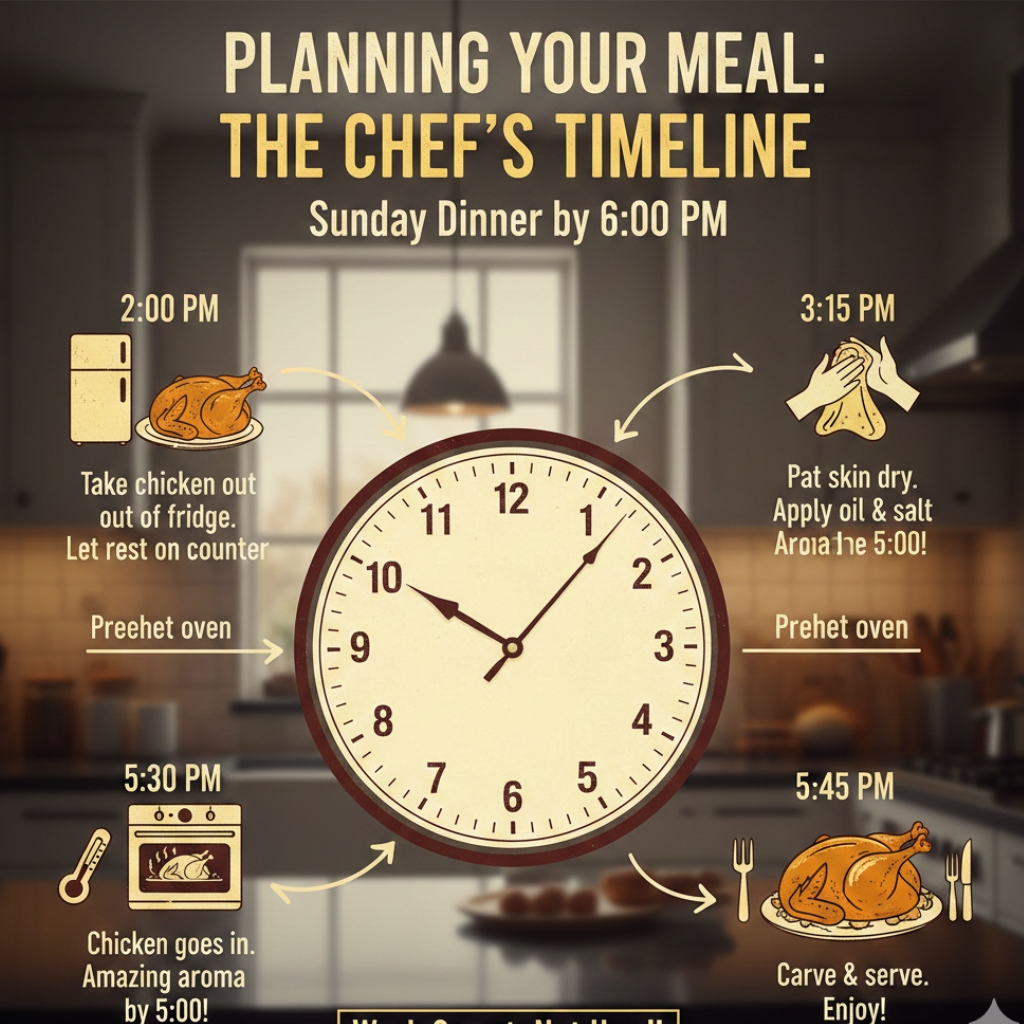
- 2:00 PM: Take the chicken out of the fridge. Let it lose the “chill” on the counter for an hour.
- 3:15 PM: Pat the skin dry and apply the oil and salt.
- 4:00 PM: Preheat the oven. Make sure it’s nice and hot.
- 4:30 PM: Bird goes in. The house starts smelling amazing by 5:00.
- 5:45 PM: Check the temp. Pull it out to rest.
- 6:00 PM: Carve and serve.
The Liquid Gold: Making Paleo Gravy Without Flour
In most American kitchens, gravy starts with a “roux”—flour and butter. But we are staying Paleo. I remember the first time I tried to make a thick sauce without grain; I thought it was impossible. I was wrong.
You have everything you need right in the bottom of that pan. The drippings are the soul of the meal. Don’t you dare pour them down the drain!
- The Reduction Method: Pour the juices into a small saucepan. Simmer it until it thickens naturally. It concentrates the flavor until it’s like a savory syrup.
- The Vegetable Puree: Here is a chef’s secret. Roast an extra carrot and onion under the bird. Toss them into a blender with the pan juices. It creates a thick, creamy sauce that is 100% Paleo.
- The Arrowroot Swap: If you want that classic “glossy” look, use a teaspoon of arrowroot powder mixed with cold water. It works just like cornstarch but keeps things clean.
Don’t Waste the Frame: The 24-Hour Bone Broth
Once the meat is gone, you are left with the carcass. In a professional kitchen, we call this “white gold.” I never throw these bones away. It feels like a waste of the animal and a waste of money.
Living in the U.S., we spend so much on boxed broth at the store. It’s mostly water and salt. Making your own is basically free and tastes ten times better.
- The Slow Cooker: Throw the bones in your Crock-Pot or Instant Pot. Cover them with filtered water.
- The “Acid” Trick: Add a splash of apple cider vinegar. This helps pull the calcium and collagen out of the bones.
- The Veggie Scraps: Save your onion skins, celery ends, and parsley stems in a bag in the freezer. Toss them in with the bones for extra depth.
- The Long Simmer: Let it go for at least 12 to 24 hours. You want a broth that turns into “jello” when it’s cold. That’s how you know it’s full of healthy collagen.
My Honest Thoughts on Kitchen Gadgets
I’ve seen a lot of trends come and go in American cooking. From the “George Foreman” craze to the “Instant Pot” explosion. Some are great, some just take up space on your counter.
When it comes to roasting a chicken, you don’t need a lot of “As Seen on TV” junk. You just need quality items that last.
- The Thermometer: This is non-negotiable. I use a Thermapen MK4. It gives a reading in one second. It’s the difference between a juicy dinner and a dry one.
- Kitchen String: I always keep a roll of cotton twine in the drawer. Tying the legs together (trussing) helps the bird cook more evenly. It also looks much prettier on the platter.
- A Good Platter: Don’t serve your beautiful bird in the greasy roasting pan. Transfer it to a warm ceramic platter. It makes the meal feel like an event.
Living the Paleo Lifestyle in a Fast-Food World
It’s hard to eat clean in the U.S. sometimes. We are surrounded by easy, processed options. That’s why how to make Paleo Friendly Roasted Chicken is such a vital skill. It’s your defense against the “standard American diet.”
When I have a roasted chicken in the fridge, I don’t reach for a bag of chips. I grab a cold drumstick. It’s satisfying, high in protein, and keeps me fueled for the day.
- The Prep Mindset: I usually roast two birds at once. It takes the same amount of time. Now I have lunch for the next four days.
- The “Clean” Win: There is a mental shift that happens when you cook for yourself. You feel more in control. You feel better.
- The Community: Sharing a roast chicken with friends is the ultimate Paleo social move. Everyone loves a roast. Nobody even notices it’s “diet” food.
The Leftover Life: Salads, Wraps, and Cold Bites
In my house, the “day after” is almost better than the roast itself. Cold chicken is a staple in American lunchboxes, but it doesn’t have to be a sad, dry sandwich.
Since we are staying Paleo, we skip the flour tortillas and the sugary dressings. I look for crunch and acidity to wake up the cold meat.
- The Lettuce Wrap: Use big leaves of Bibb or Romaine lettuce. Pile in the shredded chicken with some sliced avocado and a squeeze of lime.
- The “No-Mayo” Chicken Salad: Instead of heavy mayo, I mash up a ripe avocado with some Dijon mustard and lemon juice. It’s creamy, green, and full of healthy fats.
- The Quick Stir-Fry: Toss your leftover chicken into a hot pan with some frozen broccoli and coconut aminos. It’s a 5-minute meal that hits the spot after a long day at work.
My Final Chef’s Checklist for the Perfect Bird
Before you preheat that oven, let’s do a quick run-through. I do this every single time, even after thousands of chickens. It’s the ritual that ensures I never serve a bad meal.
- Is the skin dry? I can’t say it enough. If it’s wet, it won’t crisp.
- Did I salt the cavity? Seasoning the inside helps the flavor reach the meat from both sides.
- Is the oven actually hot? Wait ten minutes after the “beep” to make sure the walls of the oven are truly radiating heat.
- Do I have my timer ready? Don’t rely on “feeling.” Use the clock and the thermometer.
- Is the wine open? Okay, that one is just for the chef. But a relaxed cook makes better food!
Why This Matters to Me
Cooking for people is how I show love. In the U.S., we are always in a rush. We eat in cars or over our keyboards.
Taking an hour to learn how to make Paleo Friendly Roasted Chicken is an act of rebellion. It’s choosing quality over speed. It’s choosing your health over a drive-thru.
Every time I pull a bird out of the oven and see that golden skin, I feel a sense of pride. I know exactly what went into it. I know it’s going to nourish my body and taste amazing.
I hope these tips help you feel that same pride in your own kitchen. You don’t need a culinary degree to master the roast. You just need a little patience, a hot oven, and a good bird.
Ready to Roast?
You have the guide. You have the gear list. Now, all you need is the chicken.
Head to your local butcher or the organic section of your grocery store. Look for a bird that looks plump and has clear skin.
- Start Small: If you’re nervous, try the thighs first.
- Trust Your Senses: Listen for the sizzle and smell for the garlic.
- Have Fun: It’s just dinner. If the skin isn’t perfect the first time, it will still taste better than anything in a box.
FAQs
How to make Paleo Friendly Roasted Chicken crispy without flour?
To make Paleo Friendly Roasted Chicken crispy, dry the skin well and use healthy fats like olive oil or avocado oil. Roast at high heat so the skin browns while the meat stays juicy.
What ingredients are allowed when learning how to make Paleo Friendly Roasted Chicken?
Use whole foods like chicken, herbs, garlic, salt, and natural oils. Avoid dairy, grains, and processed sauces. Simple seasoning keeps the flavor clean and fits Paleo rules.
How long does it take to make Paleo Friendly Roasted Chicken in the oven?
Most Paleo Friendly Roasted Chicken takes about 45 to 75 minutes, depending on size. Cook until juices run clear and the inside reaches safe temperature for tender results.
Can I meal prep using Paleo Friendly Roasted Chicken?
Yes, Paleo Friendly Roasted Chicken works well for meal prep. Roast extra chicken and store it in the fridge for easy salads, bowls, or quick dinners during busy weekdays.
What temperature is best for how to make Paleo Friendly Roasted Chicken juicy?
Roasting at around 400°F helps keep Paleo Friendly Roasted Chicken juicy while creating golden skin. Let the chicken rest after cooking so the juices settle before slicing.

I’m Mossaraof, a trained chef and the founder of OvenInsights.com. I spent years cooking at Larrupin’ Cafe and in kitchens across Chicago and Seattle. Now I test kitchen gear for a living. I moved to North Acton, London, and I test every tool I write about. I use real meals and real heat. No brand deals. No shortcuts. I cover 12 kitchen types and hundreds of recipes. I believe this: the right tools matter as much as the recipe.