At A Glance
- Most takeout meals pack 30-50% more calories and double the sodium of the same dish cooked at home (USDA, 2024)
- Home oven cooking gives you full control over oil, salt, and portion size – the three things that make takeout unhealthy
- A week of takeout for one person can cost $80-120. The same meals cooked at home cost $30-40 (Bureau of Labor Statistics, 2024)
- Oven-baked versions of fried foods cut fat content by half or more while keeping good texture
- Batch cooking two or three nights a week removes most of the “I’m too tired to cook” excuses
- Takeout still wins for true emergencies, very late nights, or dishes that need a wok or deep fryer to taste right
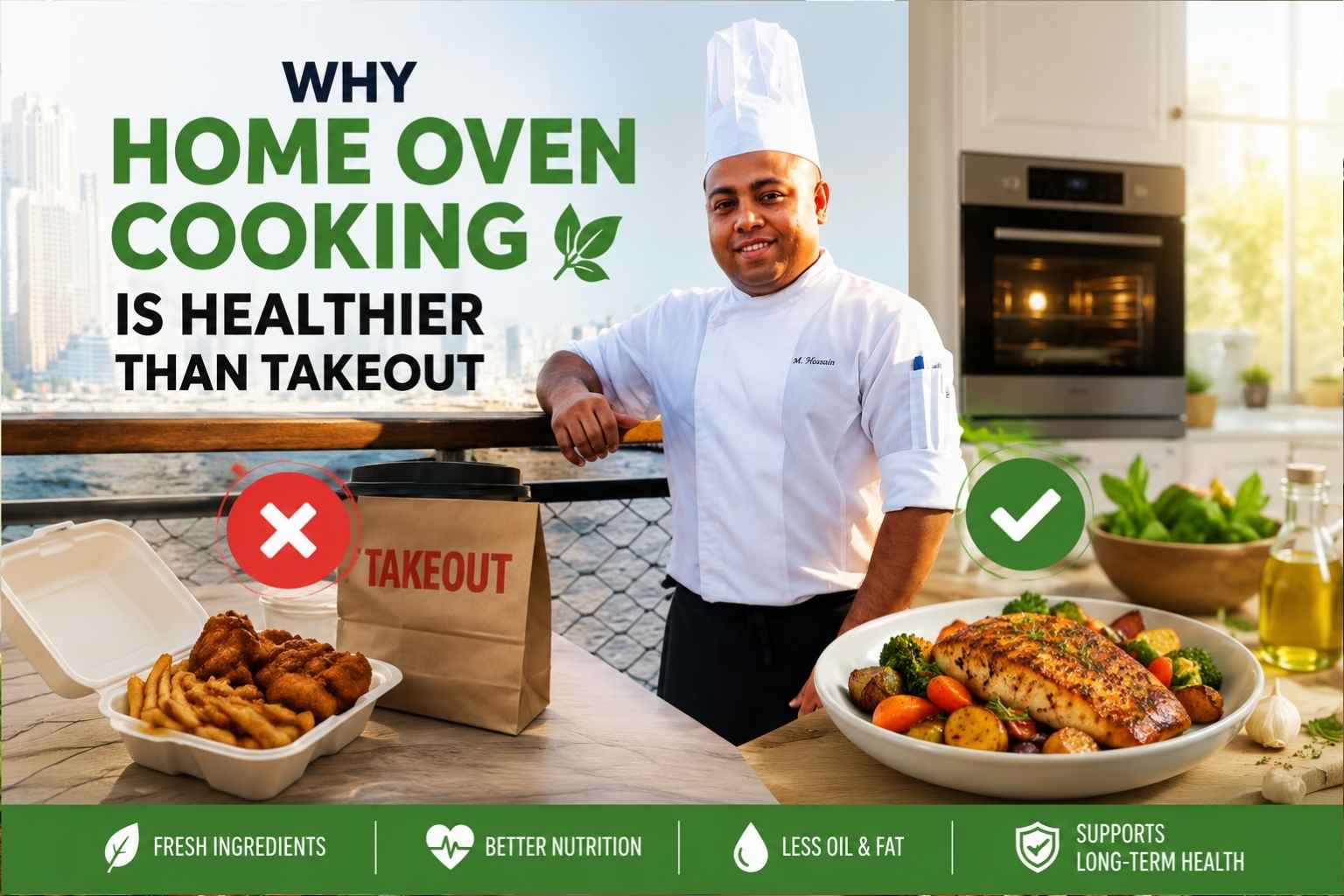
I used to grab takeout three nights a week. Then I made one small swap, and it changed my whole kitchen game. Why home oven cooking is healthier than takeout comes down to one simple truth: you control what goes in the dish. As a chef, I’ve tested this in my own kitchen more times than I can count, and the results never lie. Stick with me, and I’ll show you the easy wins that make home cooking your new go-to.
What Takeout Actually Does to Your Plate
Takeout food is built for taste and shelf life, not for your health. Restaurants add extra oil, salt, and sugar because those three things make food taste better fast, and they help dishes survive the trip in a delivery bag.
I spent years on the line at restaurants that did heavy takeout volume. I can tell you exactly what goes into those containers, because I plated thousands of them myself.
The Hidden Oil Problem
Most restaurant kitchens cook with way more oil than home cooks would ever use. A stir-fry that takes two teaspoons of oil at home might use a quarter cup at a restaurant, because oil carries flavor and keeps food from sticking to high-volume equipment.
Hidden oil is the single biggest difference between restaurant food and home food. You can’t see it, you can’t taste it as “oil,” but it’s there. A study from Harvard T.H. Chan School of Public Health found that restaurant meals average significantly higher fat content than the same dishes made at home, largely due to cooking oil volume (Harvard T.H. Chan School of Public Health, 2023).
Sodium Is Worse Than You Think
A single takeout meal can contain your entire recommended sodium intake for the day. The Cleveland Clinic notes that one restaurant entree can carry 2,000 to 3,000 milligrams of sodium, while the daily recommended limit sits around 2,300 milligrams (Cleveland Clinic, 2024).
Salt is cheap, it’s a flavor shortcut, and it’s a preservative. Kitchens lean on it for all three reasons. When you cook at home, you decide how much goes in. At a restaurant, that decision was made for you, and it was made to maximize flavor, not your health.
Portion Sizes Have Quietly Doubled
The portion on your plate at a restaurant today is roughly double what was served 20 years ago (USDA, 2023). Most people don’t split that portion in half. They eat what’s in front of them, because that’s how eating works.
When you cook at home, you control the portion before it ever hits the plate. That single decision does more for your health than almost anything else on this list.
Reheating Quality Drops Fast
Even if a takeout meal starts out reasonably healthy, it usually doesn’t survive the trip home. Steam builds up in the container, fried food goes soggy, and rice clumps. By the time you reheat it the next day, the texture is gone and the nutrition hasn’t improved either.
What Happens When You Cook the Same Dish at Home
Cooking the exact same dish at home in your oven changes almost everything about it, and not just the taste. You’re not just removing calories. You’re changing the entire nutritional profile of the meal.
You Control the Oil
At home, you measure the oil. A tablespoon of olive oil on roasted vegetables is enough to coat them and help them crisp. That’s it. No one is adding a quarter cup “for flavor” because the kitchen runs on volume.
This single change – cutting oil from a quarter cup to a tablespoon – can remove 400+ calories from a dish without changing the recipe in any other way.
You Control the Salt
When I cook at home, I salt in layers. A little when I season the protein, a little in the marinade, maybe a pinch at the end for brightness. The total usually lands well under half of what a restaurant would use for the same dish.
You can taste as you go. A restaurant cook salting a tray of 40 chicken thighs for a dinner rush doesn’t have that luxury. They salt heavy and move on.
You Control the Portion
This is the easiest win on the entire list. If you cook four chicken breasts, you get four servings. You’re not eating “what’s on the plate” because you decided what’s on the plate before you started cooking.
The Oven Specifically Helps
Ovens cook food evenly with dry heat, which means you get crispy textures without needing to submerge food in oil. A sheet pan of vegetables roasted at 425°F develops the same caramelization and crisp edges that deep frying gives you, using a fraction of the fat (America’s Test Kitchen, 2023).
Cost Comparison: Home Oven Cooking vs. Regular Takeout
Let’s talk money, because the health argument only goes so far if your wallet says no.
| Item | Takeout Cost (per meal) | Home Oven Cost (per meal) | Notes |
|---|---|---|---|
| Fried chicken dinner | $14-18 | $3-5 | Whole chicken thighs cost a fraction of fried takeout portions |
| Pizza (large, delivered) | $20-28 with delivery fees and tip | $4-6 per pizza | Homemade dough and toppings are cheap in bulk |
| Fried rice with protein | $10-14 | $2-4 | Rice and frozen vegetables are some of the cheapest calories you can buy |
| Stir-fry with rice | $11-15 | $3-5 | Protein is the main cost driver either way |
| Roasted salmon with vegetables | $18-24 | $6-9 | Fish is the priciest home option, but still far below takeout |
A single person ordering takeout four nights a week spends roughly $80-120 (Bureau of Labor Statistics, 2024). The same four meals cooked at home, even with some waste and pantry restocking factored in, land closer to $30-40. Over a month, that’s a difference of $200-320.
Comparison Table: Takeout Dishes vs. Homemade Oven Versions
| Dish | Calories (Takeout) | Calories (Oven-Baked) | Sodium (Takeout) | Sodium (Oven-Baked) | Oil/Fat (Takeout) | Oil/Fat (Oven-Baked) | Notes |
|---|---|---|---|---|---|---|---|
| Fried chicken (2 pieces) | 800-950 kcal | 380-450 kcal | 1,800-2,200 mg | 600-800 mg | Deep fried, 25-30g fat | Brushed with oil, 8-10g fat | Buttermilk-brined and oven-baked thighs get nearly the same crunch |
| Pepperoni pizza (2 slices, large) | 600-700 kcal | 450-550 kcal | 1,400-1,700 mg | 700-900 mg | Heavy cheese blend, oily pepperoni | Standard mozzarella, controlled toppings | Homemade dough alone removes a lot of added sugar and oil |
| Fried rice (1 takeout container) | 700-850 kcal | 350-450 kcal | 1,500-1,900 mg | 400-600 mg | Wok oil, 3-4 tbsp | Light spray oil, roasted not fried | Oven-roasted rice with vegetables and egg gets close to the flavor |
| General Tso’s chicken | 1,000-1,200 kcal | 450-550 kcal | 2,000-2,400 mg | 500-700 mg | Deep fried then sauced | Oven-baked then lightly glazed | The sauce is where most of the sugar and sodium hide |
| Burger and fries (combo) | 950-1,100 kcal | 550-650 kcal | 1,600-2,000 mg | 600-800 mg | Fried fries, fatty patty | Oven fries, leaner ground beef | Oven fries at 425°F get crispy without a deep fryer |
These ranges come from typical fast-casual and sit-down restaurant nutrition data (USDA FoodData Central, 2024) compared against standard home recipes scaled to similar portion sizes.
Real Examples: Side by Side
Fried Chicken vs. Oven-Baked Chicken
Restaurant fried chicken is dipped in batter and submerged in oil at around 350°F. That batter soaks up oil like a sponge. A single piece can absorb 2-3 tablespoons of oil on its own.
Oven-baked chicken uses a buttermilk marinade, a seasoned flour or panko coating, and a wire rack set over a baking sheet. The rack lets hot air circulate underneath, so the bottom crisps instead of getting soggy. I bake mine at 425°F for 35-40 minutes, flipping once.
Is it identical to deep-fried? No. Is it close enough that I’d rather eat it, knowing what I know about what’s in the fryer oil after its third batch of the day? Absolutely.
Takeout Pizza vs. Homemade Pizza
The biggest difference here isn’t the cheese. It’s the dough and the sauce. Restaurant pizza dough often contains added sugar and oil to help it brown and stay soft during the delivery trip. Restaurant sauce is frequently sweetened far more than a basic tomato sauce needs to be.
A homemade pizza with store-bought dough, a simple crushed tomato sauce, and a moderate amount of mozzarella can cut 150-250 calories per slice and remove 500+ mg of sodium, just from those two changes.
Fried Rice vs. Oven-Roasted Vegetables and Protein
This one surprised me the first time I did the math. Fried rice gets most of its calories from the oil the rice is fried in, plus the soy sauce, which is loaded with sodium.
My oven version: spread cooked rice, chopped vegetables, and diced chicken or tofu on a sheet pan, drizzle with a small amount of sesame oil and low-sodium soy sauce, and roast at 425°F for 15-20 minutes until the edges crisp up. You get the same toasty, slightly crunchy texture as fried rice, with a third of the oil.
Batch Cooking and Meal Prep: The Real Takeout Killer
Here’s the truth nobody wants to hear: the reason people order takeout isn’t usually that they can’t cook. It’s that they’re tired, and cooking from scratch every single night is exhausting.
Batch cooking solves this. On Sunday, I roast two full sheet pans of protein and vegetables. That’s it. That’s the whole plan.
My Basic Batch Cooking Formula
- Pick two proteins – usually chicken thighs and a plant-based option like tofu or chickpeas
- Pick three vegetables that roast well – broccoli, sweet potatoes, and bell peppers are my go-to
- Season simply – olive oil, salt, pepper, and one spice blend per tray
- Roast everything at 425°F for 25-35 minutes, rotating trays halfway through
- Portion into containers while everything is still warm
This gives me 8-10 meals from about 90 minutes of active cooking time. That’s less time than it takes to decide what to order, wait for delivery, and eat it.
Common Excuses for Ordering Takeout (and Oven-Based Fixes)
“I don’t have time to cook after work”
Fix: Set your oven to 425°F when you walk in the door. By the time you’ve changed clothes and checked your messages, it’s preheated. A sheet pan dinner takes 20-30 minutes total, most of it hands-off.
“Cooking for one person feels like a waste”
Fix: Cook for four and freeze the extras. Sheet pan meals freeze well, especially roasted grains, beans, and most proteins. Your oven doesn’t care if it’s making one portion or six.
“I don’t know how to make [specific dish] taste as good”
Fix: Most “restaurant flavor” comes down to fat, salt, and acid. If your home version tastes flat, it’s usually missing one of those three, not missing some secret restaurant technique.
“My kitchen is too small / I don’t have the right equipment”
Fix: A sheet pan, a good knife, and an oven cover the vast majority of meals. You don’t need a wok, a deep fryer, or a stand mixer to eat better than takeout.
“I’m too stressed to think about cooking”
Fix: This is exactly what batch cooking solves. On stressful weeknights, you’re not cooking. You’re reheating something you already made. The decision was made for you, by past-you, who had more energy.
Equipment and Pantry Staples That Make Oven Cooking Faster Than Delivery
You don’t need a professional kitchen to beat takeout on speed. You need a handful of tools that are already doing most of the work while you do something else.
Equipment Worth Having
- Sheet pans (at least two) – one for protein, one for vegetables, so flavors don’t mix and everything cooks evenly
- A wire rack that fits inside your sheet pan – this is the secret to crispy oven-baked “fried” foods
- An oven thermometer – most home ovens run 25-50°F off from what the dial says, which throws off cooking times
- Parchment paper or silicone mats – cuts cleanup time to almost nothing, which removes one more excuse
Pantry Staples Worth Stocking
- Olive oil and a neutral oil like avocado or canola
- Kosher salt and a pepper grinder
- Garlic powder, smoked paprika, and one all-purpose spice blend you actually like
- Low-sodium soy sauce
- A few canned goods: crushed tomatoes, beans, and broth
With these on hand, you can start a meal the moment you decide to, instead of waiting 30-45 minutes for delivery and then waiting again for it to actually arrive.
When Takeout Is Actually the Smarter Choice
I’m not going to pretend takeout is always the wrong call, because it isn’t.
Takeout makes sense when:
- You’re genuinely sick and standing in the kitchen isn’t realistic
- You want a dish that needs equipment you don’t have, like a tandoor, a wok running at restaurant-grade heat, or a deep fryer
- It’s a celebration and the cost difference doesn’t matter for one night
- You’ve had a brutal week and the mental break is worth more than the savings
The problem isn’t takeout itself. It’s takeout as a default, three or four nights a week, because cooking feels like too much effort. Occasional takeout, eaten mindfully, fits into a healthy routine just fine.
My Personal Routine for Avoiding Takeout During Busy Weeks
Here’s what I actually do, not what I think I should do.
Sunday afternoon, I roast two sheet pans: one with chicken thighs and broccoli, one with sweet potatoes and chickpeas. That’s roughly 45 minutes of oven time while I do laundry or watch something.
Monday through Wednesday, dinner is whatever combination of those two trays sounds good, sometimes with a fried egg on top or a quick sauce stirred together in two minutes.
Thursday, I usually cook something fresh, because by then I have the energy and the fridge has some space again. Friday is my “anything goes” night, and sometimes that’s takeout, and I don’t feel guilty about it because it’s one meal out of twenty-one that week.
The math only works because I’m not trying to cook every single meal from scratch every single day. I’m trying to make sure the default option in my fridge is better than the default option on a delivery app.
Frequently Asked Questions
Is oven-baked food really as healthy as people say?
Yes, in most cases. Oven baking uses dry heat instead of submerging food in oil, which cuts fat content significantly while still producing crispy textures (America’s Test Kitchen, 2023). The main variables you control are oil amount, salt amount, and portion size.
How much money can I actually save by cooking at home instead of ordering takeout?
A single person ordering takeout four times a week typically spends $80-120, while the same meals cooked at home cost roughly $30-40 (Bureau of Labor Statistics, 2024). Over a month, that adds up to $200-320 in savings.
What’s the easiest oven meal for a beginner to start with?
A sheet pan dinner. Pick one protein, two vegetables that roast at similar times (like broccoli and sweet potatoes), season with olive oil, salt, and pepper, and roast at 425°F for 25-30 minutes. There’s very little room for error.
Can oven-baked “fried” chicken actually taste good without a deep fryer?
Yes. A buttermilk marinade plus a seasoned panko or flour coating, baked on a wire rack at 425°F for 35-40 minutes, gets you a genuinely crispy crust. It won’t be identical to deep-fried, but it’s close enough that most people prefer it once they try it.
How do I stop fried rice and stir-fry takeout cravings?
Roast rice, chopped vegetables, and a protein on a sheet pan with a small amount of sesame oil and low-sodium soy sauce at 425°F for 15-20 minutes. The crisp edges mimic the texture of fried rice with far less oil and sodium.
Is batch cooking only for people who meal prep seriously?
No. Batch cooking just means cooking more than one meal’s worth of food at a time. Roasting two sheet pans on a Sunday gives you a head start on three or four dinners, without requiring strict portioning or special containers.
How much sodium is actually in a typical takeout meal compared to homemade?
A single restaurant entree can contain 2,000-3,000 mg of sodium, compared to the daily recommended limit of around 2,300 mg (Cleveland Clinic, 2024). The same dish cooked at home, seasoned in layers and tasted along the way, often lands at 400-800 mg.
Is it bad to order takeout occasionally if I mostly cook at home?
No. Occasional takeout fits fine into a healthy routine. The issue is takeout as a default several nights a week, not takeout as a once-in-a-while choice.
Key Takeaways
- Takeout dishes often carry 30-50% more calories and double the sodium of the same dish cooked at home, mainly due to hidden oil and heavy seasoning
- Cooking the same recipe in your oven gives you direct control over oil, salt, and portion size, which are the three biggest factors in a meal’s health impact
- A wire rack and a sheet pan can get you “fried” textures with a fraction of the fat
- Batch cooking on one day removes most of the time pressure that pushes people toward takeout
- Takeout still has its place for emergencies, special equipment needs, and occasional treats
- The goal isn’t to never order takeout again. It’s to make home-cooked food the easier, faster default most of the time

I’m Mossaraof, a trained chef and the founder of OvenInsights.com. I spent years cooking at Larrupin’ Cafe and in kitchens across Chicago and Seattle. Now I test kitchen gear for a living. I moved to North Acton, London, and I test every tool I write about. I use real meals and real heat. No brand deals. No shortcuts. I cover 12 kitchen types and hundreds of recipes. I believe this: the right tools matter as much as the recipe.