At A Glance
- Caramelization and the Maillard reaction only happen when vegetables are dry, hot (400-450°F), and spaced at least 1 inch apart on the pan.
- Heavy-gauge aluminum half-sheet pans (18×13 inches) outperform dark nonstick and glass for even browning.
- Cut density-matched vegetables to the same size; add tender vegetables 10-15 minutes after dense ones in mixed pans.
- Add salt before roasting, add fresh herbs and acid (lemon juice, vinegar) after the pan comes out of the oven.
- Convection mode cuts roasting time by about 25% – drop your target temperature by 25°F when switching from conventional heat.
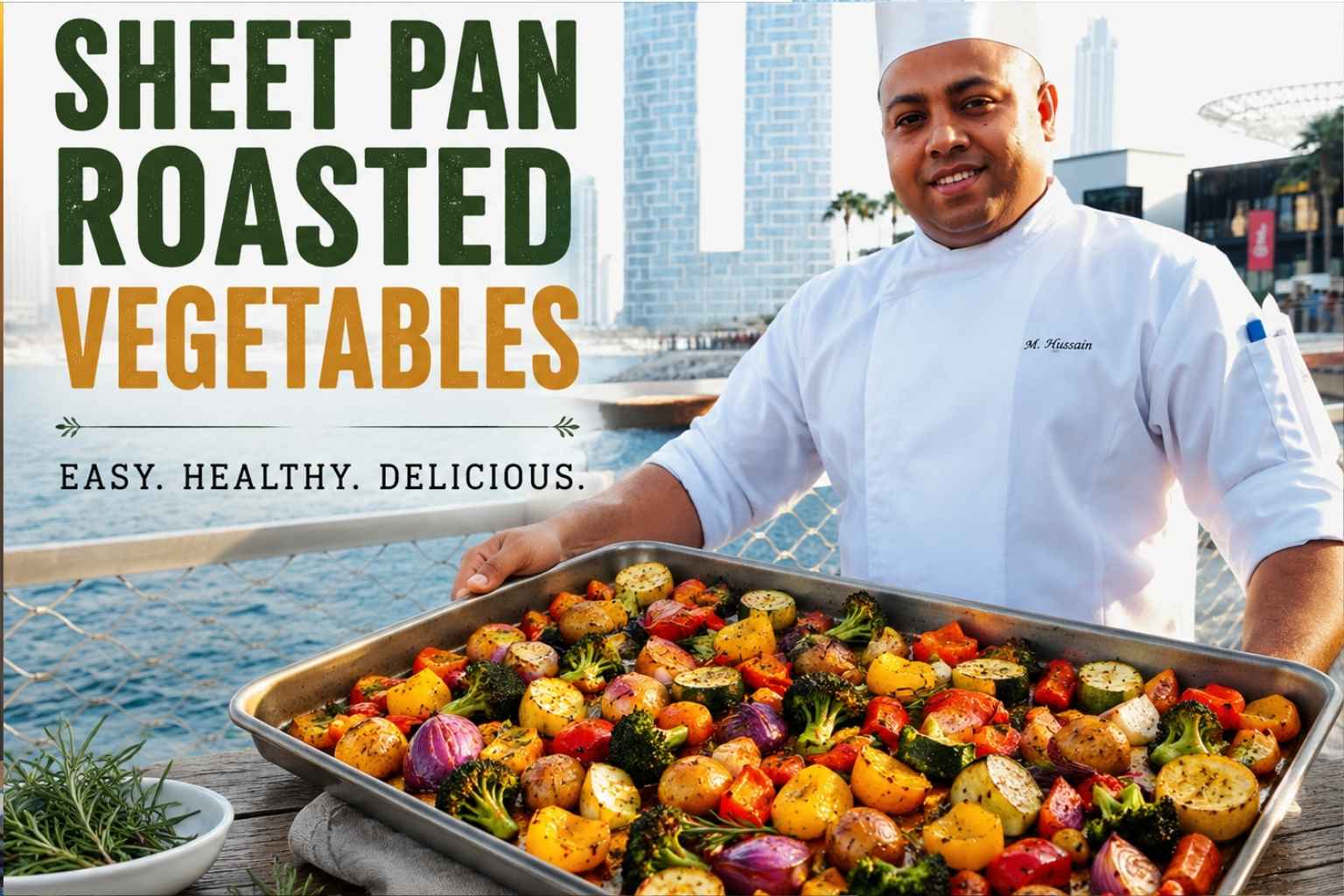
Sheet Pan Roasted Vegetables have saved me on many busy nights. I can toss fresh veggies with oil and spices, slide the pan into the oven, and relax while dinner cooks. After making this meal more times than I can count, I have learned the small tips that bring out sweet flavor, crisp edges, and bright color every time. Let me show you how to make perfect Sheet Pan Roasted Vegetables with easy steps, simple tricks, and tasty ideas you will want to use again and again.
Why Sheet Pan Roasting Works – and What Kills It
Sheet pan roasting works because a screaming hot oven turns water into steam, drives out moisture fast, and then lets the dry surface of the vegetable hit temperatures above 300°F where browning actually starts. Two things happen at that point: the Maillard reaction (amino acids and reducing sugars forming hundreds of new flavor compounds) and caramelization (sugars breaking down into nutty, complex molecules). Both require dry heat. Both die the moment there’s too much moisture in the pan.
The single biggest mistake I see home cooks make – after 15 years of cooking in professional kitchens and testing hundreds of sheet pans at home – is crowding. Crowd the pan and the vegetables steam instead of roast. The moisture they release has nowhere to go. The surface never dries out. You end up with soft, dull vegetables that taste boiled, not roasted.
The fix is simple: one layer, pieces not touching, space around each piece. If you have more vegetables than your pan can hold, use two pans. This is not optional.
How to Choose the Right Sheet Pan for Roasting
The best sheet pan for roasting vegetables is a heavy-gauge aluminum half-sheet pan (18×13 inches with a 1-inch rim). It conducts heat evenly, it doesn’t warp at high temperatures, and the light color reflects heat instead of absorbing it the way dark nonstick pans do.
Here’s how the main options compare:
| Pan Type | Material | Heat Distribution | Browning | Warping Risk |
|---|---|---|---|---|
| Heavy aluminum half-sheet | Aluminum | Excellent | Best | Low |
| Dark nonstick half-sheet | Steel + coating | Good | Over-browns easily | Low |
| Stainless steel sheet pan | Stainless | Uneven hot spots | Decent | Very low |
| Glass baking dish | Borosilicate | Poor | Poor | None |
| Thin cheap aluminum | Aluminum | Poor | Burns edges | High |
I use Nordic Ware Natural Aluminum Commercial Baker’s Half Sheet pans. They’re $15-20 each, they don’t warp, and they brown vegetables the same way every time (Nordic Ware, 2024). Buy two. Roast in batches on separate racks if needed.
Dark nonstick pans absorb too much radiant heat and tend to cook the undersides faster than the tops. That’s fine for cookies, not ideal for vegetables where you want even caramelization on multiple surfaces.
How to Cut Vegetables for Even Roasting
Cut vegetables to a consistent size – about 1 to 1.5 inches for most pieces – so every piece finishes at the same time. Size matters more than shape. A 1-inch cube of carrot and a 1-inch wedge of carrot will roast at roughly the same rate. A 2-inch chunk of carrot next to a half-inch piece won’t – one will be raw when the other burns.
Surface area also matters. More surface area = more browning = more flavor. For something like Brussels sprouts, halve them so the flat cut side sits against the pan. That flat side will caramelize hard and turn almost sweet. Leave them whole and you lose that.
Density is the other variable. Dense vegetables (carrots, beets, potatoes, sweet potatoes, turnips) need more time than tender vegetables (zucchini, cherry tomatoes, asparagus, green beans). Don’t cut dense vegetables small to compensate – that just makes them mushy. Cut them to the right size for their density, and stagger your roasting times when mixing categories (more on that in the mixed-pan section below).
The Complete Vegetable Roasting Reference Table
Use this table as your default starting point. Oven temperature is conventional heat. For convection, subtract 25°F and check 5 minutes early.
| Vegetable | Cut Size | Oil | Key Seasonings | Temp (°F) | Time (min) |
|---|---|---|---|---|---|
| Carrots | 1-inch pieces or coins | Olive oil | Salt, cumin, black pepper | 425 | 25-30 |
| Broccoli | Medium florets | Olive oil | Salt, garlic powder, red pepper flakes | 425 | 20-25 |
| Cauliflower | Medium florets | Olive oil or avocado oil | Salt, turmeric, cumin | 425 | 25-30 |
| Brussels sprouts | Halved | Olive oil | Salt, black pepper | 400 | 25-30 |
| Sweet potatoes | 1-inch cubes | Avocado oil | Salt, smoked paprika, cinnamon | 425 | 30-35 |
| Beets | 1-inch cubes | Olive oil | Salt, thyme | 400 | 35-40 |
| Zucchini | Half-inch rounds | Olive oil | Salt, oregano, garlic | 425 | 15-20 |
| Asparagus | Whole spears | Olive oil | Salt, black pepper | 425 | 12-15 |
| Bell peppers | 1-inch strips | Olive oil | Salt, smoked paprika | 425 | 20-25 |
| Cherry tomatoes | Whole | Olive oil | Salt, dried basil | 400 | 20-25 |
| Red onions | Wedges | Olive oil | Salt, balsamic vinegar (after) | 400 | 25-30 |
| Fennel | Wedges | Olive oil | Salt, black pepper, lemon zest | 400 | 30-35 |
Times assume a single-layer pan, vegetables spaced at least 1 inch apart, oven fully preheated before the pan goes in.
Oil Selection: What to Use and How Much
Use an oil with a smoke point above your roasting temperature. At 425°F, that rules out unrefined flaxseed oil and limits butter (smoke point around 350°F) unless you’re roasting below 375°F or mixing it with a neutral oil.
For most sheet pan roasting at 400-450°F, I use:
- Extra-virgin olive oil for Mediterranean vegetables (broccoli, zucchini, tomatoes, peppers, fennel). Smoke point is around 375-405°F depending on quality – it gets close at 425°F but the flavor payoff is worth it for most vegetables. (Serious Eats, 2022)
- Avocado oil for high-heat roasting above 425°F, or for root vegetables where I don’t want the olive oil flavor competing. Smoke point is around 520°F. (The Food Lab, J. Kenji López-Alt, 2015)
- Neutral vegetable or grapeseed oil when I want the vegetable’s flavor to come through without any added taste.
How much oil: enough to coat every surface. For a full half-sheet of vegetables, that’s usually 2-3 tablespoons. Toss the vegetables in a large bowl with the oil before spreading on the pan – that’s the only reliable way to coat every side. Drizzling oil on the pan itself and tossing there doesn’t work as well.
Too much oil makes vegetables greasy, not crispy. Too little and they dry out and stick. The target is a light, even sheen on every piece.
Salt Timing and the Seasoning Order That Actually Works
Salt the vegetables before roasting. Add fresh herbs and acid after the pan comes out. This is not chef preference – it has real effects on the final dish.
Salt draws out surface moisture. Applied 10-15 minutes before roasting, it pulls a small amount of water to the surface, which then evaporates fast in the oven. The result is a drier surface that browns faster. Applied right before the pan goes in, the effect is roughly the same and works fine too. (America’s Test Kitchen, 2023)
What you don’t want to do is toss vegetables in salt an hour early and leave them sitting in a bowl. They’ll weep enough moisture to slow browning significantly.
Dry spices (cumin, paprika, garlic powder, oregano, turmeric) go on before roasting. They need the heat of the oven to bloom their flavor compounds.
Fresh herbs (parsley, basil, chives, tarragon) go on after. High heat turns them brown and bitter.
Acid – lemon juice, red wine vinegar, sherry vinegar – goes on after the pan comes out. Acid added before roasting breaks down the cell walls of vegetables and makes them soft. Add it after and it brightens the dish without affecting texture. A squeeze of lemon over just-roasted broccoli is one of the best things in cooking.
Temperature Breakdown by Vegetable Category
Root vegetables roast at 400-425°F for 30-40 minutes. Brassicas and alliums roast at 400-425°F for 20-30 minutes. Tender vegetables roast at 425°F for 12-20 minutes. These are not rules to memorize – they’re starting points based on water content and density.
Root Vegetables (Carrots, Beets, Sweet Potatoes, Turnips, Parsnips)
These are dense and low in water. They need sustained heat to soften the interior while the exterior browns. 425°F for 30-35 minutes gets most 1-inch pieces to a caramelized exterior and tender center. Don’t go much hotter or the outside burns before the inside cooks.
Brassicas (Broccoli, Cauliflower, Brussels Sprouts, Cabbage Wedges)
Brassicas have moderate density and enough natural sugar to caramelize well. I roast them at 425°F. Broccoli takes about 20-22 minutes. Cauliflower takes 25-30 minutes. Brussels sprouts, halved and flat-side down, take 25-28 minutes. At these temperatures, brassicas get genuinely brown edges without turning mushy.
Alliums (Onions, Shallots, Fennel)
Alliums are high in sugar and caramelize fast. 400°F works better than 425°F here – lower heat gives the sugars time to develop without burning. Fennel wedges at 400°F for 30-35 minutes turn sweet and almost jammy. Red onion wedges at 400°F for 25 minutes get tender with browned edges.
Tender Vegetables (Zucchini, Asparagus, Green Beans, Cherry Tomatoes)
High water content means these go fast. 425°F for 12-20 minutes depending on size. Asparagus spears (medium thickness) take 12-14 minutes. Zucchini rounds take 15-18 minutes. Cherry tomatoes take 20-22 minutes and burst into concentrated, jammy bites – one of my favorite things to roast.
How to Roast a Mixed-Vegetable Pan Without Ruining Everything
Start dense vegetables first, then add tender vegetables partway through. A mixed pan with carrots, broccoli, and zucchini all going in at the same time will give you raw carrots, perfectly cooked broccoli, and mush for zucchini.
Here’s the staggered timing approach I use:
- Put the dense vegetables on the pan and slide it into the oven at 425°F.
- After 15 minutes, pull the pan out. Add the medium-density vegetables (broccoli, cauliflower). Toss everything lightly. Return to oven.
- After another 10 minutes, add the tender vegetables (zucchini, asparagus). Return to oven for a final 12-15 minutes.
Everything finishes together. Everything is properly cooked. The dense vegetables have 37-40 minutes total. The tender vegetables have 12-15 minutes. No mushiness, no raw centers.
The second option is to group by density and roast on separate pans at the same time, then combine on a serving platter. This is what I do in a professional kitchen where oven space isn’t a constraint.
Gas vs. Electric Ovens: What Changes for Sheet Pan Cooking
Gas ovens run hotter at the bottom and have more moisture in the air from combustion. Electric ovens run hotter at the top and produce drier heat. Both work for sheet pan roasting, but you adjust differently.
In a gas oven, place the sheet pan on a lower-middle rack. The bottom element heats the floor of the oven, which heats the pan directly. The natural moisture in a gas oven (water is a byproduct of gas combustion) slightly slows crisping. If your vegetables aren’t browning as fast as you expect, move the rack one position lower or increase the temperature 25°F. (Bon Appétit, 2021)
In an electric oven, the top element handles broiling and the bottom element handles baking. Radiant heat from the top can burn the tops of vegetables before the undersides brown. Use the middle rack. If you want more color on top in the last 3-4 minutes, flip the broiler on briefly and watch closely.
Convection Mode: When to Use It and the Temperature Offset Rule
Use convection mode for every sheet pan roast if your oven has it. Convection uses a fan to circulate hot air continuously. This strips the steam layer that forms above vegetables and accelerates moisture evaporation. The result is faster browning and crispier surfaces. (America’s Test Kitchen, 2023)
The temperature offset rule: drop your target temperature by 25°F when switching from conventional to convection. 425°F conventional = 400°F convection. The fan makes up the difference in browning speed.
The time offset: convection cuts roasting time by roughly 20-25%. Check your vegetables 5 minutes earlier than the conventional recipe suggests. A 30-minute conventional roast will likely be done in 22-25 minutes on convection.
One exception: cherry tomatoes and other very tender vegetables can shrivel too fast on convection. For those, I use conventional heat.
When to Flip, When to Leave It Alone
Flip vegetables once, halfway through roasting. Not twice, not constantly – once. The goal is to get browning on two sides. Flipping too often disrupts the browning process and cools the pan.
The flip timing: halfway through the total estimated roasting time. For a 30-minute roast, flip at 15 minutes. For a 20-minute roast, flip at 10 minutes.
Some vegetables you don’t flip at all:
- Asparagus spears – they roll and are hard to flip cleanly. Shake the pan instead.
- Cherry tomatoes – they burst if you try to flip them. Leave them alone.
- Halved Brussels sprouts – leave them flat-side down the entire time. That’s where the best browning happens.
How to read caramelization: look at the underside of one piece. If it’s deep golden-brown with some darker edges, flip the whole pan. If it’s pale, give it more time. If it’s blackened, your oven runs hot – lower by 25°F next time.
Common Mistakes and How to Fix Them
Mistake 1: The oven isn’t fully preheated. Put a cold pan with vegetables into a cold oven and they steam through the preheat phase. Fix: preheat the oven for at least 15-20 minutes. For extra browning power, preheat the empty sheet pan in the oven and dump the vegetables onto the hot pan – this gives immediate contact heat on the underside.
Mistake 2: Vegetables aren’t dry before oiling. Wet vegetables steam. If you’ve washed them, dry them thoroughly with a towel before tossing with oil. This is especially important for broccoli and mushrooms, which hold water in every crevice.
Mistake 3: All vegetables go in at the same time regardless of density. Dense vegetables take twice as long as tender ones. Stagger the additions as described in the mixed-pan section above.
Mistake 4: Seasoning only with salt. Salt alone gives you a flat result. Add one dry spice that complements the vegetable – cumin for carrots, smoked paprika for sweet potatoes, red pepper flakes for broccoli – and the dish becomes something people ask for the recipe.
Mistake 5 (altitude): At elevations above 3,500 feet, water boils at a lower temperature. This means vegetables release steam at a lower temperature, which slows the transition from steaming to roasting. Fix: increase oven temperature by 15-25°F and expect 5-10 more minutes of total roasting time. (The Food Lab, J. Kenji López-Alt, 2015)
Mistake 6 (humidity): In high-humidity environments, vegetables absorb ambient moisture. This is a real factor in coastal or tropical kitchens. If your roasted vegetables keep coming out soft despite doing everything right, try patting them extra dry and using a slightly higher temperature (add 25°F).
My Sheet Pan Routine: Specific, Opinionated, and What Actually Works
I’ve roasted vegetables in high-volume restaurant kitchens and a home kitchen with a mediocre electric oven. The routine I’m going to describe works in both.
I start by preheating the oven to 425°F with the rack in the middle and an empty sheet pan on the rack. While the oven heats (20 minutes minimum), I cut everything to 1-1.5 inch pieces and dry each vegetable with a clean kitchen towel.
I toss the vegetables in a large bowl – not on the pan – with 2-3 tablespoons of oil, 1 teaspoon of kosher salt, and whatever dry spice I’m using that day. I spread them on the hot pan in a single layer, pieces not touching.
Dense vegetables go in first. After 15 minutes, I add medium-density vegetables. I flip everything at the halfway point of each item’s total time. I check doneness by pressing a piece with a fork – it should give with light pressure but not fall apart.
When the pan comes out, I add fresh herbs and a squeeze of lemon immediately. The residual heat from the vegetables blooms the herbs slightly without burning them.
Total active time: about 10 minutes. The oven does everything else.
Frequently Asked Questions About Sheet Pan Roasted Vegetables
What temperature is best for roasting vegetables?
For most vegetables, 400-425°F (conventional oven) gives the best balance of browning and tenderness. Dense root vegetables do well at 425°F. Alliums and vegetables prone to burning do better at 400°F. Tender vegetables like asparagus also do well at 425°F but need less time – around 12-15 minutes.
Why are my roasted vegetables soggy instead of crispy?
Soggy vegetables are almost always caused by one of three things: the pan is too crowded (pieces are touching and trapping steam), the vegetables were wet when they went into the oven, or the oven temperature was too low. Fix crowding by using a second pan. Dry vegetables thoroughly before oiling. Make sure the oven is at full temperature before the pan goes in.
Should I roast vegetables covered or uncovered?
Always uncovered. Covering the pan traps steam, which turns roasting into steaming. There’s no situation in sheet pan vegetable roasting where you want the pan covered.
Can I roast frozen vegetables on a sheet pan?
Yes, but expect a longer roasting time and less caramelization. Frozen vegetables release a large amount of water as they thaw in the oven. Spread them out more than you would fresh vegetables, use a slightly higher temperature (450°F), and don’t add oil until they’ve thawed and dried in the oven for about 10 minutes. (Serious Eats, 2023)
How do I keep roasted vegetables from sticking to the pan?
Use enough oil (every piece should be lightly coated), make sure the oven is at temperature before the pan goes in, and don’t try to move the vegetables too early. They’ll stick initially and release on their own once the surface has browned and dried. If you try to flip before the bottom has caramelized, you’ll tear the surface. Wait until the piece releases cleanly.
How long do sheet pan roasted vegetables last in the fridge?
Properly stored in an airtight container, roasted vegetables keep for 4-5 days in the refrigerator. Reheat them in a 400°F oven for 8-10 minutes to restore some of the texture – the microwave makes them soft. They also work cold, straight from the fridge, on sandwiches or grain bowls.
Do I need to parboil root vegetables before roasting?
No, and I’d advise against it for most applications. Parboiling softens the interior, which makes it easier to overcook the outside by the time the inside finishes. Cut to the right size (1-1.5 inches), use a hot oven, and give them enough time. The only exception is if you’re roasting very large pieces (2+ inches) and worried about the center staying raw – in that case, a 3-minute parboil can help.
What’s the difference between roasting and baking vegetables?
Roasting uses high heat (375°F and above) and is designed to drive off moisture and brown the surface. Baking typically uses lower heat and is less concerned with browning. When people say “baked sweet potato,” they usually mean a whole potato cooked low and slow. When they say “roasted sweet potato,” they mean cubed, oiled, seasoned, and cooked at high heat until the exterior caramelizes. The distinction is temperature and intent, not the appliance.
Key Takeaways
- Caramelization needs dry heat. Space vegetables at least 1 inch apart on the pan. One layer only. No crowding.
- Cut to consistent size. Uniform pieces finish at the same time. Mixed sizes guarantee uneven results.
- Match oil to temperature. Olive oil works up to about 405°F. Use avocado oil for 425°F and above.
- Stagger your timing for mixed pans. Dense vegetables go in first; add tender vegetables 10-15 minutes later.
- Salt before, acid after. Salt before roasting for better browning. Lemon juice and vinegar go on when the pan comes out.
- Use convection when you have it. Drop temperature by 25°F and check 5 minutes early.
- Flip once, at the halfway point. Let the underside brown fully before you move anything.

I’m Mossaraof, a trained chef and the founder of OvenInsights.com. I spent years cooking at Larrupin’ Cafe and in kitchens across Chicago and Seattle. Now I test kitchen gear for a living. I moved to North Acton, London, and I test every tool I write about. I use real meals and real heat. No brand deals. No shortcuts. I cover 12 kitchen types and hundreds of recipes. I believe this: the right tools matter as much as the recipe.