
At A Glance
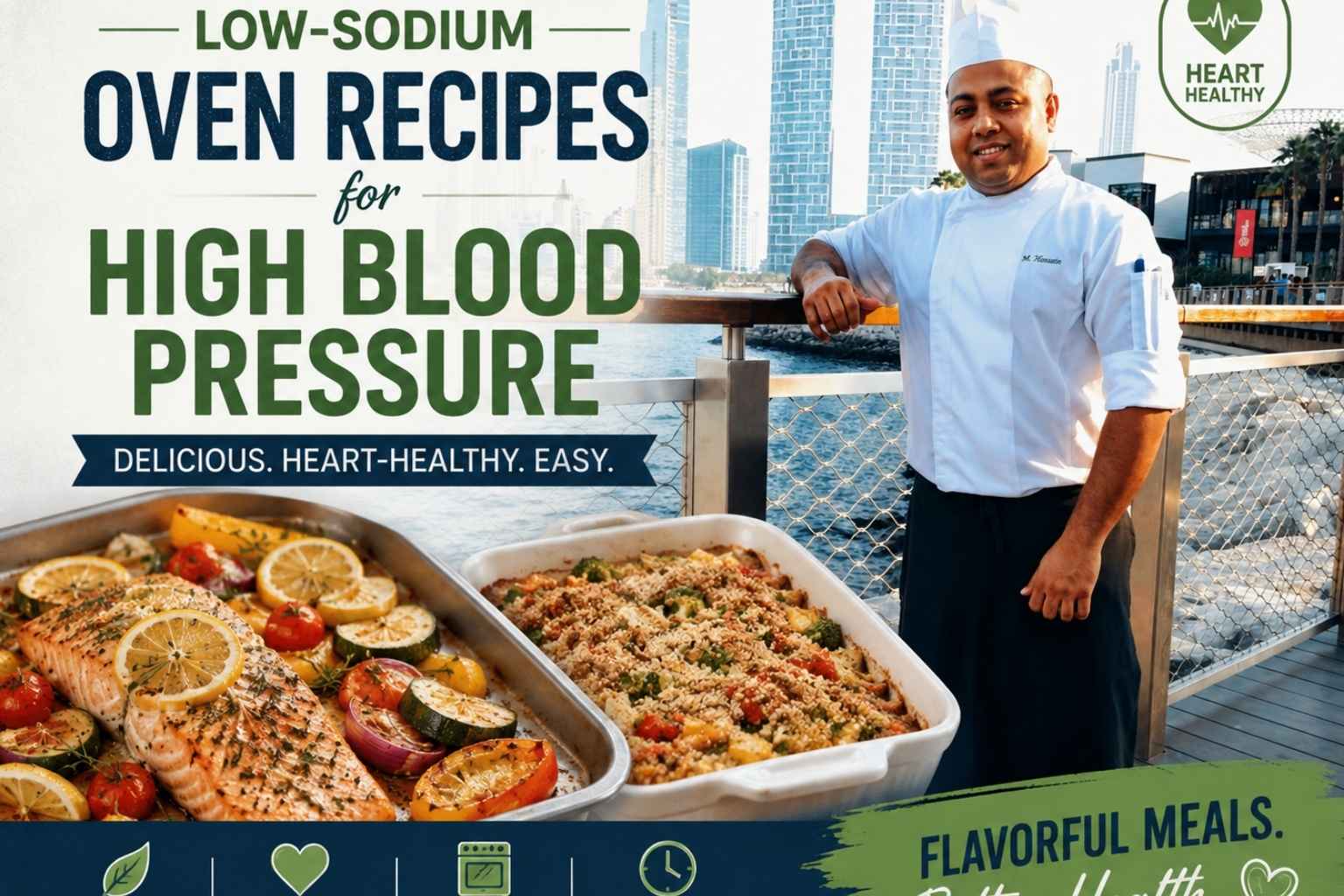
- This guide covers low-sodium oven recipes for high blood pressure, built around techniques that replace salt instead of just removing it.
- Too much sodium raises blood pressure by making your body hold extra water, which adds strain to your blood vessels (American Heart Association, 2024).
- The oven is your best low-sodium tool. Roasting, baking, and broiling brown food and build flavor on their own, so you need less salt.
- Acid, fresh herbs, toasted spices, and umami foods like mushrooms and tomato paste can replace most of the salt in a dish.
- Potassium-based salt substitutes can help some people, but anyone with kidney disease, or on certain blood pressure drugs, should ask a doctor first (Mayo Clinic, 2023).
A quick note before we start: I’m a chef, not a doctor. This guide is for general cooking purposes only and is not medical advice. If you have high blood pressure, kidney disease, or any other health condition, talk to your doctor or a registered dietitian about your specific sodium target, especially before trying a potassium-based salt substitute.
Why Sodium Matters for Blood Pressure: The Plain-Language Basics
Sodium raises blood pressure because it makes your body hold on to more water. Extra water means extra fluid moving through your blood vessels. That extra fluid puts more pressure on the vessel walls. Over years, this pressure can wear down your heart, kidneys, and arteries (American Heart Association, 2024).
Most adults eat far more sodium than they need. The American Heart Association recommends no more than 2,300 milligrams a day, and says most adults with high blood pressure do better closer to 1,500 milligrams (American Heart Association, 2024). For reference, one teaspoon of table salt has about 2,300 milligrams of sodium on its own.
I learned this the hard way early in my career. In restaurant kitchens, salt is the fast fix for almost everything. Then a regular client told me her doctor wanted her sodium under 1,500 milligrams a day, and I had to relearn how I built flavor from the ground up.
That relearning is what this guide is about. You do not need bland food to protect your blood pressure. You need better tools than the salt shaker, and the oven is the best one I know.
The Oven Is Your Best Tool for Low-Sodium Cooking
The oven is the best tool for low-sodium cooking because dry heat builds flavor on its own. When you roast, bake, or broil, the surface of your food browns and turns slightly crisp. That browning creates flavors that salt cannot copy.
Think about a roasted carrot versus a steamed one. The roasted carrot turns sweet, slightly nutty, and a bit chewy at the edges. The steamed carrot just tastes like a wet carrot, plus whatever salt you add. The oven does half the flavor work for you, every time.
The same goes for proteins. A chicken thigh roasted at high heat gets crisp skin and browned edges that taste savory on their own. A broiled salmon fillet gets a slightly charred top that adds a smoky note. Neither needs a heavy hand with salt.
In my own kitchen, the oven is where I start almost every low-sodium plan. If a dish can be roasted, baked, or broiled instead of boiled or steamed, I choose the oven first. It is the single biggest flavor upgrade you can make without touching the salt at all.
Flavor-Building Techniques That Replace Salt
You can replace most of the salt in a recipe with five tools: acid, aromatics, fresh herbs and spices, umami foods, and toasting. Each tool adds a different kind of depth. Use two or three together, and a dish can taste bold and satisfying with very little salt.
Acid: Lemon, Lime, and Vinegar
A splash of acid does some of the same work as salt. Lemon juice, lime juice, and vinegar all brighten flavor and make other ingredients taste sharper. Add acid near the end of cooking, right before serving, for the strongest effect.
Try a squeeze of lemon over roasted broccoli, or a splash of red wine vinegar over roasted mushrooms. Both add a lift that makes the dish taste finished.
Aromatics and Fresh Herbs
Aromatics like garlic, onion, ginger, and shallots build a flavor base before salt enters the picture. Fresh herbs add a second layer on top, right before serving.
Roast a whole head of garlic alongside your chicken, then mash it into the pan juices. Scatter fresh rosemary over roasted potatoes, or fresh basil over baked tomatoes. These small additions do a lot of the flavor work that salt used to do.
Umami Boosters: Mushrooms, Tomato Paste, and Nutritional Yeast
Umami is the deep, savory taste that makes food feel satisfying, even without salt. Mushrooms, tomato paste, and nutritional yeast all bring umami with very little sodium.
Roast mushrooms until they turn brown and slightly crisp at the edges, then chop them into grain bowls or sauces. Stir a spoonful of tomato paste into vegetables before they go in the oven. Sprinkle nutritional yeast over roasted cauliflower for a cheesy, savory note without the cheese.
Toasting and Charring for Deeper Flavor
Toasting spices and charring vegetables both add a smoky depth that can stand in for salt. Toast whole cumin, coriander, or fennel seeds in a dry pan for about a minute, then grind them fresh.
Char broccoli, peppers, or onions under the broiler until the edges turn dark brown or black in spots. That char adds a smoky, slightly bitter note that rounds out a dish, without one extra grain of salt.
How to Spot Hidden Sodium on Food Labels
Hidden sodium shows up most often in broths, sauces, cheese, breadcrumbs, and marinades. To find it, check the Nutrition Facts label for sodium per serving, then check how many servings are actually in the package. A soup that looks fine per cup can add up fast over a whole bowl, which is often two servings (USDA, 2024).
Watch for the word “reduced sodium.” By law, it only means the product has at least 25% less sodium than the regular version (USDA, 2024). A “reduced sodium” soy sauce can still be very salty.
Breadcrumbs and crackers are easy to miss. A half cup of regular breadcrumbs can carry several hundred milligrams of sodium, mostly from salt added during baking. If a recipe calls for breadcrumbs, look for a low-sodium or no-salt-added version, or make your own from low-sodium bread.
When I shop with clients, we read every label on broths, canned tomatoes, and any sauce in a jar. Those three categories cause more sodium overload than any other part of a low-sodium kitchen.
Sodium Swap Reference Table: Pantry Staples Compared
The table below shows how much sodium you can cut by swapping five common pantry items. These five swaps alone can lower your daily sodium by several hundred milligrams, often without changing how a recipe tastes.
| Pantry Staple | Regular Version (Sodium per Serving) | Low-Sodium Version (Sodium per Serving) | Chef’s Swap Tip |
|---|---|---|---|
| Chicken broth (1 cup) | ~860 mg (USDA, 2024) | ~70-140 mg | Use low-sodium broth as your base, then season at the end so you control the salt. |
| Soy sauce (1 tbsp) | ~900 mg (USDA, 2024) | ~530-575 mg | Even “low-sodium” soy sauce is salty. Use half the amount and add rice vinegar for the rest of the flavor. |
| Canned beans (1/2 cup) | ~400 mg (USDA, 2024) | ~0-15 mg (no-salt-added) | Rinse and drain canned beans under running water to cut sodium by up to 40% (Cleveland Clinic, 2023). |
| Cheddar cheese (1 oz) | ~180 mg (USDA, 2024) | ~5-30 mg (low-sodium cheddar) | Use a small amount of a full-flavor aged cheese, like Parmesan, instead of a large amount of a mild one. |
| Ketchup or similar condiment (1 tbsp) | ~150 mg (USDA, 2024) | ~30-35 mg | Swap in no-salt-added tomato paste mixed with vinegar and a pinch of sugar for a similar tang. |
Notice that “low-sodium” does not always mean “no sodium.” Low-sodium soy sauce, for example, still carries real sodium. The goal is to cut sodium where you can, then build flavor back with the techniques above.
Salt Substitutes: What Works and What to Watch Out For
Salt substitutes fall into two main types: potassium chloride blends and herb-and-spice blends with no sodium at all. Potassium chloride tastes close to salt and can help lower blood pressure for some people (Mayo Clinic, 2023). It is not safe for everyone, though.
If you have kidney disease, your kidneys may not be able to clear extra potassium from your blood. That can lead to high potassium levels, which can affect your heart rhythm (Mayo Clinic, 2023). Some blood pressure medications, including certain ACE inhibitors and potassium-sparing diuretics, also raise potassium levels on their own. Combining those drugs with a potassium-based salt substitute can be risky.
This is exactly why I tell every client to check with their doctor before switching to a potassium-based blend, especially if they take blood pressure medication or have any kidney concerns.
Herb-and-spice blends are simpler and safe for almost everyone. A mix of garlic powder, onion powder, smoked paprika, black pepper, and dried herbs can replace a lot of the savory punch of salt. I keep a jar of this kind of blend on my counter and use it on everything from roasted chicken to baked potatoes.
Low-Sodium Oven Recipes for High Blood Pressure: Recipe Categories to Try
These four recipe types are where the oven helps the most: roasted proteins, roasted vegetables, baked grains, and heart-healthy baked goods. Each one leans on the techniques above instead of a heavy hand with the salt shaker.
Low-Sodium Roasted Proteins: Chicken, Salmon, and Pork
For chicken, pat the skin dry, rub it with olive oil, and season with garlic powder, smoked paprika, black pepper, and fresh thyme. Roast at high heat, around 425°F, until the skin turns deep golden brown.
For salmon, a quick marinade of lemon juice, olive oil, and dill works well, then broil for the last few minutes for a slightly charred top. For pork tenderloin, a dry rub of cumin, coriander, garlic powder, and a touch of brown sugar gives a savory crust without added salt.
Oven-Roasted Vegetables That Don’t Need Salt
Toss vegetables like carrots, broccoli, Brussels sprouts, or sweet potatoes with olive oil and roast at high heat until the edges turn brown and crisp. That browning is most of the flavor.
Finish with a squeeze of lemon, a sprinkle of toasted nuts, or fresh herbs right before serving. The contrast between the warm, sweet vegetable and the bright topping does the work that salt usually does.
Low-Sodium Baked Grain Dishes
Cook rice, farro, or quinoa in low-sodium broth instead of water for an instant flavor boost. Stir in roasted vegetables, toasted nuts, and fresh herbs after baking.
One of my go-to dishes is a baked farro pilaf with roasted mushrooms, toasted walnuts, and a finish of lemon zest and parsley. It tastes full and savory, with a fraction of the sodium of a store-bought rice mix.
Heart-Healthy Baked Breads and Muffins
Most bread recipes use more salt than they need for flavor. Salt mainly controls how fast yeast rises, not just taste, so home bakers can often cut it by a third without ruining the texture (King Arthur Baking, 2024).
For muffins, skip the salt entirely and lean on cinnamon, vanilla, citrus zest, or unsweetened cocoa for flavor. Use unsalted butter and unsalted nuts, and check your baking powder, since some brands carry more sodium than others.
Meal Prep and Batch Cooking for a Low-Sodium Diet
Batch cooking is the easiest way to stay low-sodium all week. When you cook your own proteins, grains, and vegetables in big batches, you control every gram of salt that goes in. That control disappears the moment you rely on takeout or ready-made meals.
On a typical Sunday, I roast two trays of vegetables, one tray of chicken thighs or salmon, and a big batch of grains, all using the techniques above. I let everything cool, then portion it into containers for the week.
I keep sauces and dressings separate from the main food. A bright lemon-herb dressing or a quick yogurt sauce, added right before eating, keeps reheated food from tasting flat. Reheated food loses some flavor, and fresh herbs and citrus bring it back.
Freezing works the same way. I freeze roasted proteins and grains in flat layers, then thaw what I need and finish with fresh herbs, citrus, or a spice blend right before serving.
Common Low-Sodium Cooking Mistakes (and How to Fix Them)
The biggest mistake I see is leaning on “salt-free” packaged foods that are still high in other additives, like added sugar or saturated fat. The fix is simple: read the whole label, not just the sodium line.
- Mistake: Cutting salt but not adding anything else. A dish with no salt and no other flavor will taste flat and dull. Fix it by adding at least one acid, one herb or spice, and one umami booster every time you cut salt.
- Mistake: Stacking a salt substitute on top of regular salt. Some cooks add a potassium-based substitute and then still salt the dish out of habit. Fix it by picking one or the other, not both, and tasting before you add more.
- Mistake: Trusting “no-salt” sauces without reading the rest of the label. Many no-salt sauces make up for the missing salt with extra sugar or thickeners. Fix it by checking the sugar and total carbohydrate lines too, not just sodium.
- Mistake: Forgetting that low-sodium broth still adds up. A few cups of low-sodium broth across a week of cooking can still add a few hundred milligrams of sodium. Fix it by using broth for some of your liquid and water for the rest.
My Weekly Routine for Stocking a Low-Sodium Kitchen
My low-sodium pantry stays simple. I keep low-sodium or no-salt-added broth, canned tomatoes, and canned beans on hand at all times. I keep a jar of my herb-and-spice blend next to the stove, along with smoked paprika, cumin, dried oregano, and black pepper.
In the fridge, I always have lemons, fresh garlic, and at least two kinds of fresh herbs, usually parsley and either thyme or rosemary. These cover most of the dishes I cook in a week.
On Sunday, I plan three or four oven dishes for the week: one roasted protein, one tray of vegetables, one grain dish, and sometimes a batch of muffins or a quick bread for breakfast. I write the oven temperatures and times on a sticky note so I am not guessing mid-week.
This routine took me years to build. The short version is: stock a few low-sodium basics, keep fresh herbs and citrus on hand, and let the oven do the heavy lifting.
Frequently Asked Questions About Low-Sodium Oven Cooking
What is the best way to lower sodium in oven-roasted meals?
The best way is to season with herbs, spices, citrus, and garlic instead of salt, then let the oven’s heat brown the food for natural flavor. Add any salt you do use at the table, in small amounts, so you control exactly how much you get.
How much sodium should someone with high blood pressure eat per day?
Most adults should stay under 2,300 milligrams of sodium a day, and many adults with high blood pressure do better closer to 1,500 milligrams (American Heart Association, 2024). Your doctor or a registered dietitian can give you a target based on your health history.
Are low-sodium broths actually better, or just a marketing label?
Low-sodium broths are usually a real improvement, often cutting sodium by 70% or more compared to regular broth (USDA, 2024). They still contain some sodium, so check the label and use them as part of a wider low-sodium plan, not a free pass to salt everything else.
Can I use a salt substitute if I have high blood pressure?
Many people with high blood pressure can use potassium-based salt substitutes safely, and some research links them to lower blood pressure (Mayo Clinic, 2023). Anyone with kidney disease, or anyone on certain blood pressure medications, should check with their doctor first, since these substitutes raise potassium levels in the blood.
What foods have surprising amounts of hidden sodium?
Bread, breakfast cereal, canned vegetables, deli meat, and pre-made sauces all carry more sodium than most people expect. Even foods that taste sweet, like some breads and cereals, can have several hundred milligrams of sodium per serving (USDA, 2024).
How do I make low-sodium food taste good without salt?
Combine two or three flavor tools at once: an acid like lemon or vinegar, fresh herbs or toasted spices, and an umami booster like roasted mushrooms or tomato paste. Adding these together, plus the natural browning from the oven, can replace most of the flavor that salt used to add.
Can I meal prep low-sodium meals for the whole week?
Yes, and it is one of the most effective ways to control sodium. When you cook proteins, grains, and vegetables yourself in batches, you decide exactly how much sodium goes into every container, instead of relying on the unknown sodium in takeout or pre-made meals.
Is sea salt or kosher salt better for blood pressure than table salt?
No. Sea salt, kosher salt, and table salt all contain roughly the same amount of sodium by weight (Cleveland Clinic, 2023). The grain size and texture differ, but for blood pressure, the source of the salt does not matter. The total amount you eat does.
Key Takeaways
- Sodium raises blood pressure mainly by making your body hold extra water, which adds pressure to your blood vessels (American Heart Association, 2024).
- The oven builds flavor through browning, so roasted, baked, and broiled dishes need less salt than boiled or steamed ones.
- Acid, aromatics, fresh herbs, umami foods, and toasted spices can replace most of the salt in any recipe.
- Always check labels for sodium per serving, watch for “reduced sodium” claims, and rinse canned beans to cut sodium further (Cleveland Clinic, 2023).
- Potassium-based salt substitutes can help, but anyone with kidney disease or on certain blood pressure medications should ask their doctor first (Mayo Clinic, 2023).
- Batch cooking your own proteins, grains, and vegetables gives you full control over sodium, all week long.

I’m Mossaraof, a trained chef and the founder of OvenInsights.com. I spent years cooking at Larrupin’ Cafe and in kitchens across Chicago and Seattle. Now I test kitchen gear for a living. I moved to North Acton, London, and I test every tool I write about. I use real meals and real heat. No brand deals. No shortcuts. I cover 12 kitchen types and hundreds of recipes. I believe this: the right tools matter as much as the recipe.