
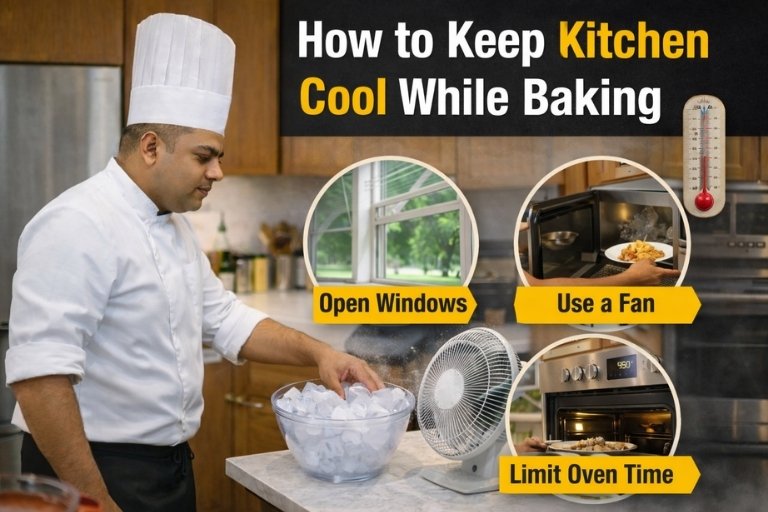
Does your kitchen feel like a sauna the moment you start your oven? As a cook, I know how hard it is to bake treats without breaking a sweat, so I learned how to keep kitchen cool while baking. My years in hot kitchens taught me smart ways to trap the heat and save your sanity. Today, I will share my best tips to help you stay fresh while your bread rises. Check out our Ultimate Guide: Energy Use & Costs to stay cool and save money!
Real Talk — Why Ovens Heat Up the Whole Kitchen
Back then, I didn’t fully get why my whole space felt like a steam room.
Turns out, ovens do more than bake — they radiate heat like little sunboxes.
Even newer models, especially in older kitchens, don’t always trap that heat inside.
Here’s what I’ve come to realize:
- Radiant heat leaks out the oven sides, door, and even through the bottom
- Poor insulation (especially in rental-grade ovens) makes it worse
- No cross-ventilation? That heat just lingers, especially in closed galley kitchens
It’s not always the oven’s fault. Sometimes it’s the layout, the climate, or… both.
What Makes Summer Baking Worse in the U.S.
Living and cooking across different U.S. states taught me that not all heat is created equal.
- Arizona: Dry air, but wow — that sun hits hard. My sourdough dried out faster than it baked.
- Chicago (summer): I had to mop sweat off my nose during pie season.
- Florida: Think wet blanket. Add bugs. Bake brownies. Repeat.
And here’s another thing — many American homes have open-plan kitchens, which I love… until I bake. That heat doesn’t just stay in the kitchen. It spreads into the dining space, the living room, even the hallway.
Suddenly everyone’s uncomfortable, and the dog’s lying belly-up under the only ceiling fan.
Strategic Baking Times (When It’s Coolest)
Early mornings are my secret weapon. Not because I’m a morning person — I’m not — but because the air’s cooler and my AC isn’t already fighting off the afternoon sun.
If I bake before 9 AM, the kitchen stays bearable. By 10:30, it’s a different story.
Here’s how I plan it now:
- Early morning baking before the day heats up
- Late night baking if I need to prep for the next day
- Avoid 2 PM – 6 PM, especially in summer — utility “peak hours” and the sun blazing through the window? No thanks.
And if you’re in states like California or Texas, those time-of-use electricity rates? Yeah — baking during off-peak hours saves money too.
AC Tricks I’ve Learned the Hard Way
I used to crank the AC down just before baking. That backfired fast — the AC overworked, my electric bill spiked, and the kitchen still felt like a sauna.
Here’s what works better:
- Close off unused rooms — this keeps the cool air where it matters
- Keep ceiling fans spinning counterclockwise — helps push cool air down
- Set the thermostat early — give the room time to cool before you even preheat
If you’re using a smart thermostat (like a Nest), try scheduling a slight temp drop an hour before baking. It helps cushion that heat spike.
Fans, Windows & Ventilation Setup
Okay, let me confess — for a long time, I thought just cracking a window was enough. Nope. Not in Florida. Not in Chicago. Not anywhere.
What actually worked? Creating a cooling airflow path. Here’s how I set it up:
- Place a box fan in the kitchen doorway, blowing the warm air out
- Turn on the oven’s exhaust hood fan — yes, even if it’s loud
- Open a window on the far side of the house to pull air through
- Avoid running bathroom exhausts at the same time — they compete
This setup may look a little chaotic, but it works. My kitchen cools faster, and I don’t feel like I’m roasting with the lasagna.
Convection Mode = Faster Bake, Less Heat Time
I’ll admit it — I ignored the convection setting on my oven for years. I thought it was just a fancy fan.
Then one summer, while baking chicken thighs in a small Chicago apartment, I finally tried it.
Game changer.
The fan in convection mode circulates hot air evenly, so food bakes faster. Which means…
- Less time with the oven running
- Fewer preheat cycles
- Less trapped heat in the kitchen
I shaved 10–15 minutes off most of my bakes. That may not sound like much, but when the heat’s rising — every minute matters.
If you’re using a U.S. brand like Whirlpool, Frigidaire, or GE, chances are you already have convection. Just flip that setting and go.
Using the Right Bakeware (Yes, It Matters)
This one surprised me the most.
I used to use thick ceramic dishes and glass pans for almost everything. They looked nice. But they held onto heat forever, even after I pulled them out.
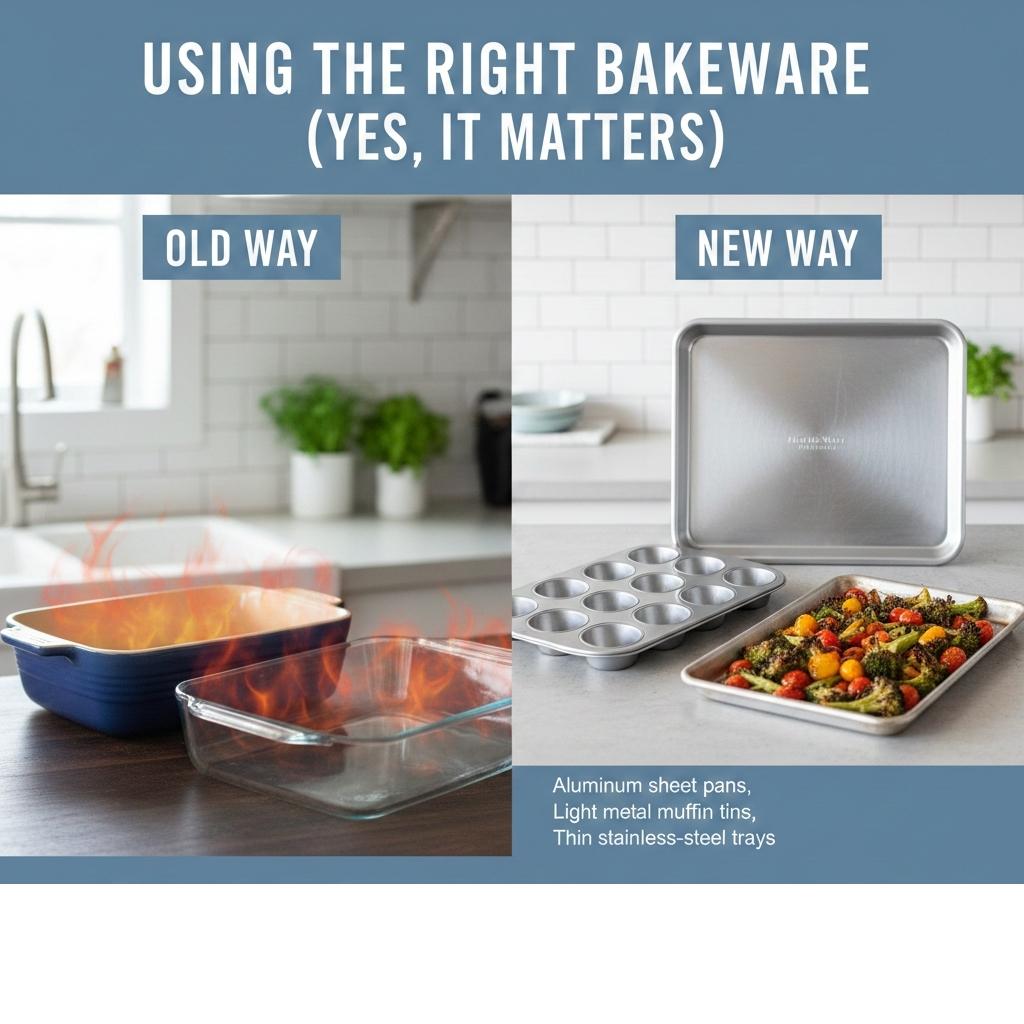
So I switched to lightweight, reflective metal bakeware. My favorites now?
- Aluminum sheet pans — like the Nordic Ware Naturals
- Light-colored metal muffin tins
- Thin stainless-steel trays for roasting veggies
They heat up fast, release heat fast, and bake evenly. And because they cool down quickly, the kitchen doesn’t stay hot long after baking.
Glass has its place — just not when I’m trying to keep the sweat off my face.
Mini Appliances to the Rescue
Sometimes, I just don’t want to deal with the full-size oven. That’s when my countertop oven steps in.
I’ve used the Breville Smart Oven Air for over two years now, and it’s saved me during summer baking marathons. I’ve baked:
- Small batches of cookies
- Reheated lasagna
- Even roasted a whole chicken (yeah, for real)
Why it’s better on hot days:
- Heats up faster
- Uses less energy
- Doesn’t pump as much heat into the room
Even an air fryer helps for quick bakes like biscuits or frozen pastries. These little guys don’t get enough credit — but my AC definitely noticed.
Bake Multiple Things at Once
If the oven’s already on, I make it count.
Back in my Arizona kitchen — where summer lasts nine months — I’d roast veggies, bake banana bread, and prep a tray of chicken all in the same hour. Not because I wanted to multitask. But because I refused to suffer again tomorrow.
Here’s why I batch bake now:
- One preheat = less total heat output
- Oven stays on once, not five separate times
- Food for multiple meals = win
I call it “heat consolidation.” And honestly, it’s one of the smartest things I started doing in my own kitchen.
Avoiding Unnecessary Preheating
Not every dish needs a preheated oven. I didn’t realize this until I forgot to preheat once… and my casserole still turned out perfect.
Since then, I’ve stopped over-preheating:
- Casseroles, lasagna, baked mac — I put them in as the oven warms up
- Frozen meals often don’t care about a 50°F head start
- Even thick meats like chicken thighs adjust fine if you give them extra time
And guess what? That saves around 10–15 minutes of full blast oven heat just floating into the room.
Bonus tip: Some modern ovens (like GE and LG models) beep when they hit the exact temperature — but they might take longer to stabilize. Use an oven thermometer to really know.
Keep the Door Shut (Seriously)
I used to peek all the time. I’d check on cookies, adjust bread, make sure the cheese wasn’t burning.
Now? I’ve trained myself not to touch that door.
Every time you open it, a big wave of heat comes flying out — straight into your face. It also makes the oven reheat again, which adds even more heat into the room.
Here’s what helps me stay disciplined:
- Use the oven light instead
- Set timers and trust your nose
- Rotate pans only when absolutely needed
It’s a small thing, but it makes a noticeable difference — especially when I’m baking multiple items.
Use a Fan the Right Way While Baking
I used to just flip on any fan and hope for the best. Spoiler: that barely helped.
Then I played around with fan placement. I got real about airflow. It’s not about just moving air — it’s about pushing the hot air out and keeping cooler air flowing in.
Here’s what I do now:
- Place a box fan low, in the kitchen doorway, blowing air out of the room
- Crack a window on the far side of the house to create a pressure pull
- Set another fan facing inward, in a cooler hallway or shaded room
- Don’t use ceiling fans directly over the oven — they just swirl the heat
This setup made a huge difference during a July pie bake in my Illinois rental. It’s not silent. But it works.
Open/Close Strategy for Windows
This trick’s simple but gold.
If I bake in the early morning or late evening, I keep all windows closed while baking — to trap the cooler air. But the second I turn off the oven, I pop the windows open.
The goal? Let the hot air escape fast.
I even tried opening the oven door just a crack after baking, with a fan pulling that heat out the window. Works best when there’s even a slight breeze outside.
- Closed during bake = keep cool air in
- Open after bake = vent hot air out
- Best when outdoor temps are below 80°F (think early mornings)
Post-Bake “Quick Cool” Routine
I’ve developed a little routine over time. Especially on days when I’m sweating through my apron by 9 AM.
Here’s my go-to cool-down:
- Turn off the oven, and crack the door only after removing food
- Aim a fan directly at the oven to push that lingering heat out
- Cold towel on the neck — sounds dramatic, but it helps
- Keep a glass of ice water nearby — hydration matters
I’ve even put my wrists under cold running water when I felt heat-exhausted. It’s a trick I picked up during culinary school and it still works wonders.
Rearranging for Better Airflow
One day, I was standing in my kitchen, sweating over a tray of scones, when I realized… my fridge and oven were right next to each other. No space. No airflow.
That setup had to go.
I moved things around and here’s what changed:
- Shifted the fridge away from the oven — so both appliances could “breathe”
- Cleared clutter near vents — turns out, blocking air vents with utensils? Not smart
- Prep station moved to the coolest corner, under a ceiling fan
Even in a small kitchen, a couple of feet make a big difference. If I had to cook near the oven, I made sure I wasn’t stuck in a heat pocket.
Light Curtains, Reflective Surfaces, and No Rugs
This one’s a little design-y, but it totally ties into comfort. I never thought curtains or flooring had anything to do with baking — until I moved into a rental with thick dark drapes and shaggy kitchen rugs.
Here’s what I learned the hard way:
- White or light curtains reflect heat — dark ones trap it
- Reflective backsplash (like glass or light tile) bounces heat away
- I ditched area rugs near the oven — they trap warmth and hold onto it
After swapping out those little things, the space felt brighter and lighter — and not just in looks. Even the air felt less stuffy when the oven ran.
When I Added a Portable AC to My Kitchen
This might sound extreme — but trust me, it’s not.
During a heatwave in Illinois, I had four dozen cupcakes to bake for an event. I tried all my usual tricks. Nothing helped. So I hauled my portable AC unit into the kitchen, vented it out the window, and gave it a test run.
It worked. Like, surprisingly well.
Here’s what I did:
- Used a Honeywell portable AC with a flexible exhaust hose
- Sealed the window gap with an old baking mat and painter’s tape (don’t judge)
- Ran it during and after baking to pull the edge off the heat
I wouldn’t use this daily — it does bump up the electric bill — but for big baking days? Total lifesaver.
Baking in an RV or Tiny Kitchen?
I once took a baking road trip in an RV across the Midwest — don’t ask, long story. Let’s just say baking in a space the size of a closet taught me a few survival tricks.
Here’s what helped keep things from turning into a rolling hotbox:
- Use silicone mats — they bake faster and don’t retain heat like metal
- Stick to single-layer items — cupcakes or cookies over sheet cakes
- Rotate dishes halfway — the heat buildup in one corner was real
- Keep a window open and the vent fan on — even when temps are chilly outside
And when it was just too hot to deal? I’d use a Dutch oven on the stovetop to bake bread. Crusty, steamy, and way less radiant heat.
When Hosting Guests (and the Oven’s Blazing)
The last time I hosted a summer dinner party, I thought, “Sure, I’ll bake fresh bread, roast chicken, and finish a peach crisp — all before guests arrive.”
Yeah… the kitchen turned into a sweat lodge. Lesson learned.
Now I do this instead:
- Prebake everything the night before — reheat gently before serving
- Avoid dishes with multiple baking stages (lasagna, I’m looking at you)
- Keep guests out of the kitchen — I literally tape off the doorway if I have to
- Set up a cool-down station:
- Ice water pitcher with citrus
- Portable fan near the dining area
- Frozen grapes or mini popsicles for snacks (people love this)
No one wants a host dripping in sweat — especially not while slicing pie.
Baking With Kids Around
This is chaos with an oven timer.
I’ve had my niece and nephew over during bake days, and between the “Can I crack the eggs?” and “Can we eat the dough?” — I nearly lost it in the heat.
Here’s how I make it work without turning into a mess:
- Set up a “cool zone” in another room — fan, snacks, coloring books
- Give them tasks that don’t involve the oven:
- Measuring flour
- Lining muffin tins
- Decorating cookies after they cool
- Let them wear aprons and pretend to be chefs — this buys you 20 minutes, trust me
- Play a timer with a silly song — not just to track bake time, but to make it fun
It’s not perfect. Sometimes they sneak marshmallows when I’m not looking. But at least we’re not sweating all over the cinnamon rolls.
My Go-To Summer Baking Setup
After years of trial, sweat, and half-melted frosting, I finally built a routine that works — especially in hot U.S. kitchens, where summers hit hard.
If I had to bake tomorrow during a heatwave, here’s exactly what I’d do:
- Start by 7 AM — no excuses
- Use convection mode to speed things up
- Bake multiple dishes in one go
- Run two box fans: one pushing air out, one pulling cool air in
- Curtains closed, prep area cleared, water bottle full
- And always — always — have a towel handy for the forehead sweat
It’s not glamorous, but it works. And it keeps me from losing my mind halfway through a peach cobbler.
Brands & Tools I Actually Trust
Over time, I’ve found a handful of kitchen tools and appliances that genuinely help beat the heat — and most are made or sold widely in the U.S.
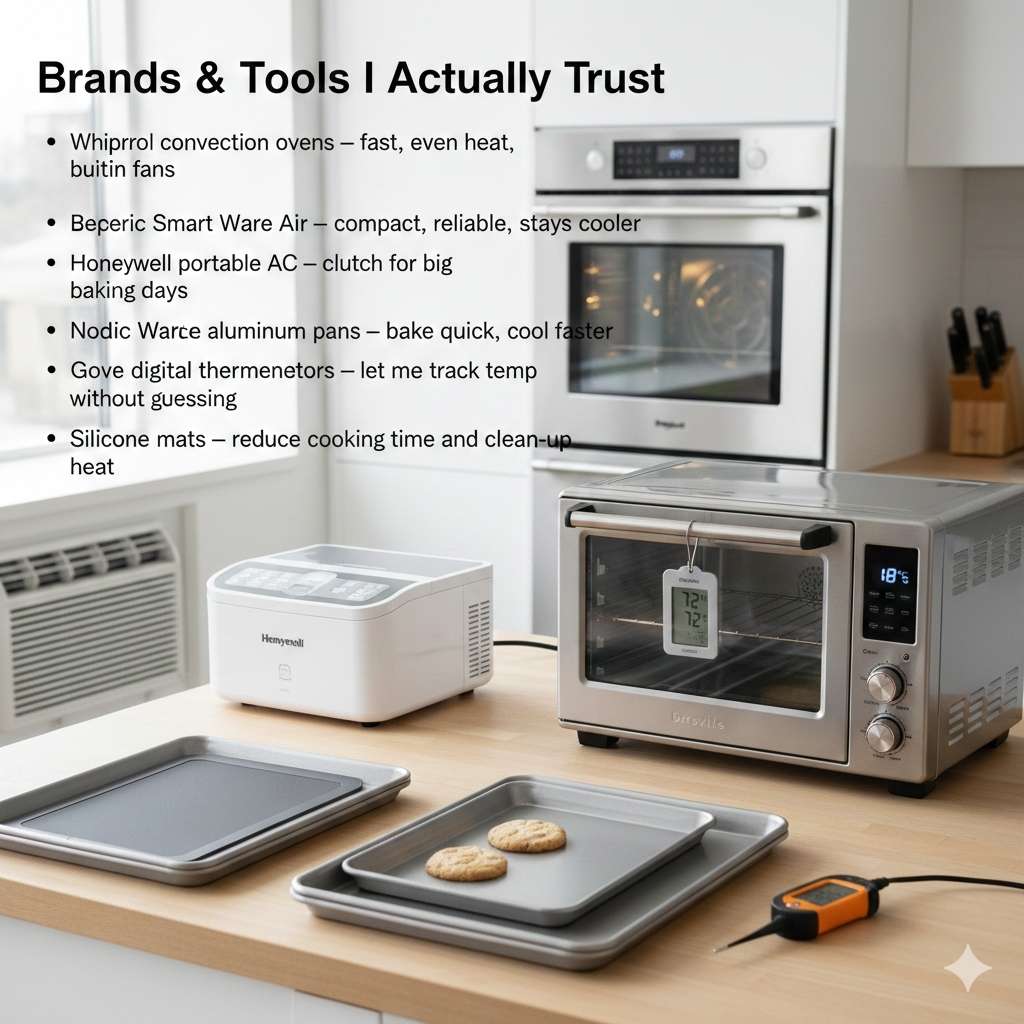
Here’s my personal cool-down lineup:
- Whirlpool convection ovens — fast, even heat, built-in fans
- Breville Smart Oven Air — compact, reliable, stays cooler
- Honeywell portable AC — clutch for big baking days
- Nordic Ware aluminum pans — bake quick, cool faster
- Govee digital thermometers — let me track temp without guessing
- Silicone mats — reduce cooking time and clean-up heat
None of these are magic. But together, they’ve made my summer baking a whole lot more doable.
You Don’t Have to Suffer to Bake Well
Look, baking should be joyful — not something that makes you regret turning on the oven.
And while I’ve had plenty of sweaty disasters (including one where the AC broke mid-cinnamon rolls), I’ve also had cool, comfortable wins. Days where I baked a double batch of banana bread, drank iced tea barefoot, and didn’t even sweat through my shirt.
That’s the goal, right?
So take what works. Skip what doesn’t. Try new tricks. And know that you’re not alone in trying to bake without melting in your own kitchen.
FAQs: How to Keep Kitchen Cool While Baking
How can I bake without heating the house?
Try using a toaster oven or air fryer instead of a full-size oven. These small tools use less power and keep the heat contained in a tiny space.
Does a kitchen fan help during baking?
Yes, turn on your exhaust fan to pull hot air out. You can also place a floor fan near a window to push the warm oven air right out of the room.
When is the best time to bake in summer?
Bake in the early morning or late at night. The air is cooler then, so your oven won’t fight the midday sun. This keeps your main living area much nicer.
Should I keep the kitchen door closed?
Keep the door to the rest of the house closed while the oven is on. This traps the heat in one spot. It stops the warm air from reaching your bedrooms.
Can I use a slow cooker to stay cool?
A slow cooker is a great way to “bake” treats like brownies or bread. It stays shut and uses very low heat. Your kitchen stays fresh and cool all day long.

I’m Mossaraof, a trained chef and the founder of OvenInsights.com. I spent years cooking at Larrupin’ Cafe and in kitchens across Chicago and Seattle. Now I test kitchen gear for a living. I moved to North Acton, London, and I test every tool I write about. I use real meals and real heat. No brand deals. No shortcuts. I cover 12 kitchen types and hundreds of recipes. I believe this: the right tools matter as much as the recipe.