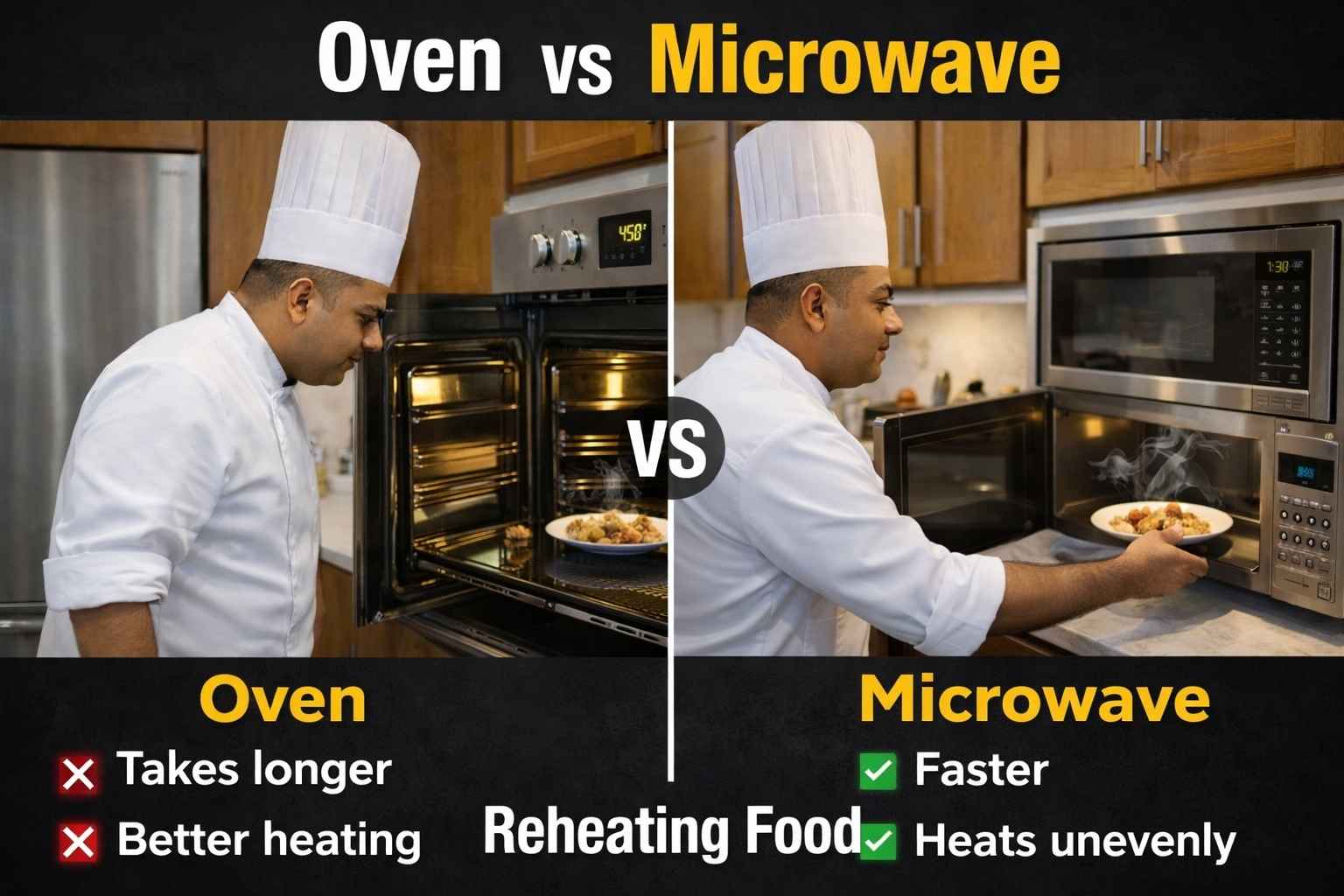
Nothing beats the smell of a home-cooked meal, but let’s be real: we all rely on leftovers. As a cook, I know the struggle of choosing between oven vs microwave for reheating food when you want that perfect crunch or a quick bite. It is all about how heat hits your plate, so I have tested every method to save your dinner. Keep reading to see which one wins for your favorite meal, and check out The future of home cooking: oven vs. smart gadgets for more tips!
What is the one meal you always struggle to reheat without it getting soggy?
The Great Reheating Debate: Science and Soul
Behind every hot plate is a choice. You can have speed, or you can have texture. I learned this the hard way during a Friday night rush at the bistro.
How a Microwave Actually Works (The Fast Way)
The microwave is a marvel of the modern U.S. kitchen. It uses waves to shake water molecules. This creates heat very fast. It is great for things with lots of liquid.
But there is a catch. It does not brown food. It steams it from the inside out. This is why bread gets tough. The water turns to steam and then escapes. You are left with a brick.
- Speed: It takes seconds, not minutes.
- Ease: One button and you are done.
- Mess: Very low, usually just one dish.
The Oven’s Low and Slow Magic
Your oven is a different beast. Whether it is a GE or a KitchenAid, it uses dry heat. This is the key to crispiness. It takes longer to preheat, but the results are worth it.
In the oven, you get the Maillard reaction. That is a fancy word for browning. It makes food smell and taste better. I use my oven for anything that should have a crunch.
- Texture: It keeps things crispy and flaky.
- Even Heat: No cold spots in the middle of your lasagna.
- Capacity: You can reheat a whole family meal at once.
When to Choose the Microwave (Speed over Style)
Sometimes the clock is ticking. My kids are hungry, or I have five minutes before a long shift. Here is when the zap is actually okay.
Best Foods for Microwave Reheating
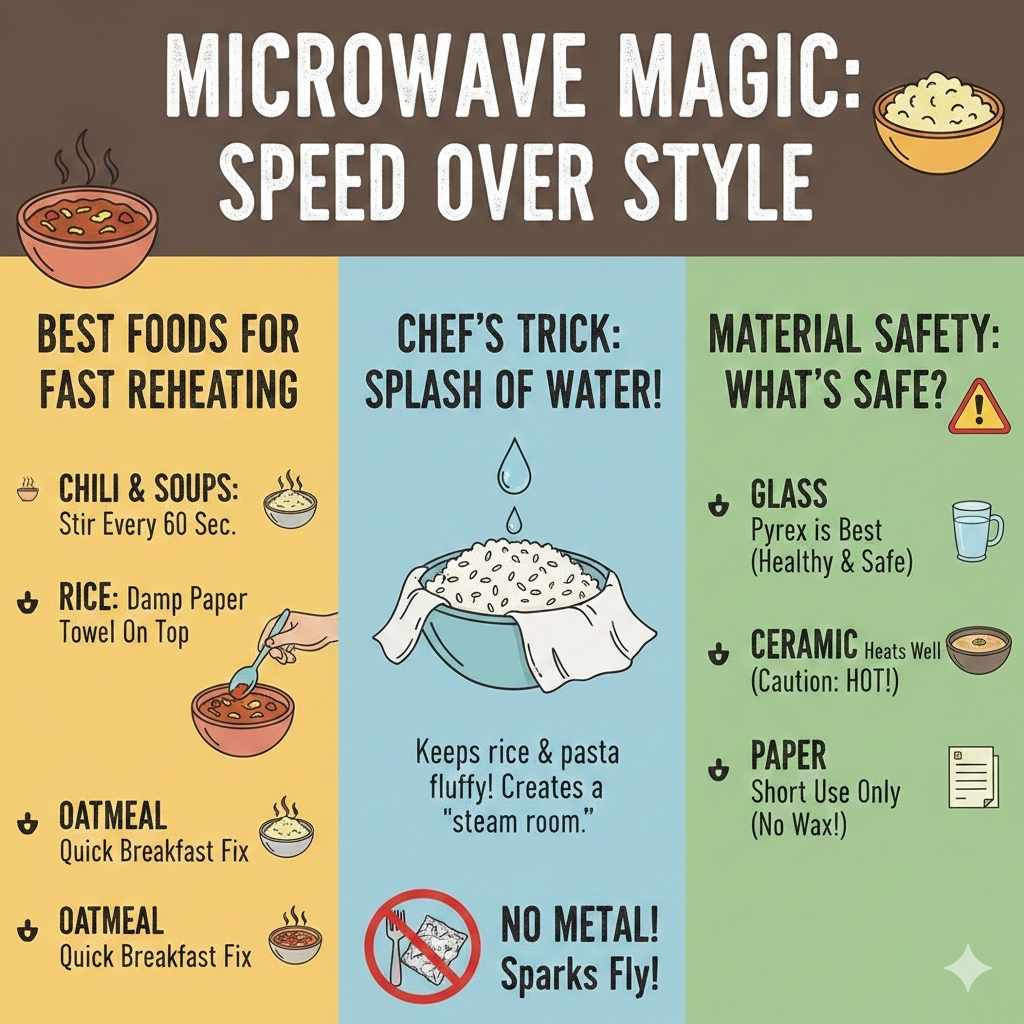
Soups and stews are the kings of the microwave. The liquid protects the food. It heats evenly if you stir it halfway through. I also like it for mashed potatoes.
Add a splash of milk to your potatoes. It keeps them creamy. Steamed veggies also do well here. They stay bright and snappy if you don’t overdo it.
- Chili and Soups: Stir every 60 seconds.
- Rice: Use a damp paper towel on top.
- Oatmeal: Fast and easy for busy mornings.
The “Splash of Water” Trick
This is my top chef secret for home cooks. If you are reheating rice, it gets dry in the fridge. Put a teaspoon of water on top before you microwave it.
Cover it with a lid or a paper towel. This creates a tiny steam room. Your rice will come out fluffy and soft. It works for pasta too. No one likes crunchy spaghetti.
Material Safety: Not All Plastic is Equal
In America, we use a lot of Tupperware. But be careful. Look for the “BPA-Free” label on the bottom. I prefer glass like Pyrex. It doesn’t hold smells.
Never put metal in there. That foil from the diner will cause sparks. I’ve seen a microwave die because of a tiny staple in a takeout box. It’s not a pretty sight.
- Glass: Best for heat and health.
- Ceramic: Good, but can get very hot to the touch.
- Paper: Fine for short bursts, but watch for wax coatings.
When the Oven is the Only Answer
If you spent forty dollars on a ribeye, do not kill it in the microwave. The oven is about respect. It treats the ingredients with kindness.
Rescuing the Crunch: Fried Foods and Pizza
Pizza belongs in the oven. Period. I like to put my baking sheet in while the oven heats up. When it’s hot, slide the pizza on.
This makes the bottom crust crisp again. Set it to 350°F. It takes about five to eight minutes. Your kitchen will smell like a real pizzeria. It’s a game-changer.
- Fried Chicken: Keeps the skin from getting soggy.
- French Fries: Use a high heat (400°F) for a short time.
- Pastries: Croissants stay flaky and light.
Casseroles and Lasagna: The Core Temperature Challenge
Lasagna is thick. The microwave usually makes the edges lava and the middle ice. The oven fixes this. Cover it with foil first.
The foil traps the moisture so the cheese doesn’t burn. Take the foil off for the last five minutes. This lets the top get bubbly and brown. It takes patience, but it’s worth it.
Reheating Proteins Without the Rubber Texture
Chicken thighs are my favorite. They have enough fat to stay juicy. Put them in at 325°F. I like to add a tiny bit of chicken broth to the pan.
For beef, go low and slow. 250°F is best. You want to warm it up, not cook it again. If you see grey meat, you went too far.
Heat Distribution and Food Safety
I’ve taken enough food safety courses to tell you one thing. Lukewarm food is dangerous. We need to hit a safe heat every single time.
The “Cold Spot” Problem in Microwaves
Microwaves are famous for cold spots. You bite into a burrito and it is ice in the middle. This happens because waves do not hit every inch.
Even with a spinning tray, some parts stay cold. This is where bacteria can hide. Always let your food sit for one minute after the timer beeps.
- The Stir Rule: Stir liquids every sixty seconds to move the heat.
- The Ring Shape: Spread your food in a circle with a hole in the middle.
- The Stand Time: Letting it sit helps the heat move to the center.
Understanding Hot Spots in Your Oven
Ovens have their own quirks too. My old oven in Chicago had a back corner that was like a furnace. Every oven has a personality.
If you live in a humid place like Florida, your oven works differently than in dry Arizona. Humidity helps heat move through the air. You might need to adjust your times.
- Rotating Pans: Turn your baking sheet halfway through the time.
- Rack Position: Keep reheating on the middle rack for the best air flow.
- Thermometers: Buy a cheap oven thermometer to see if 350°F is really 350°F.
Equipment Deep Dive: Tools for the Job
A chef is only as good as their gear. You do not need a five-star kitchen. You just need the right basics for your home.
The Power of the Toaster Oven
I love a good toaster oven. Brands like Breville or Cuisinart make amazing ones now. They heat up much faster than a big range.
If you live in a small NYC studio, this is your best friend. It acts like a tiny oven. It is perfect for two slices of pizza or a small sandwich.
- Efficiency: It uses less power than a full-size oven.
- Speed: It preheats in just a couple of minutes.
- Crispiness: Much better than a microwave for browning bread.
Best Containers for Heat Transfer
Materials matter. I always reach for glass like Pyrex or Anchor Hocking. They handle the heat well and do not warp.
Cast iron is also great for the oven. If I have leftover steak, I put it in a cold cast iron pan. Then I put the pan in a 250°F oven. It warms up gently.
- Stainless Steel: Great for the oven, but never the microwave.
- Ceramic Dishes: Perfect for casseroles because they hold heat a long time.
- Silicone Mats: These are great for keeping things from sticking to your tray.
Practical Reheating Charts (The Cheat Sheet)
I keep these rules in my head while I work. Now you can use them in your own kitchen. It makes life much easier.
The Meat Manual
Meat is the hardest to get right. If you overcook it, it gets tough. You want to be gentle with it.
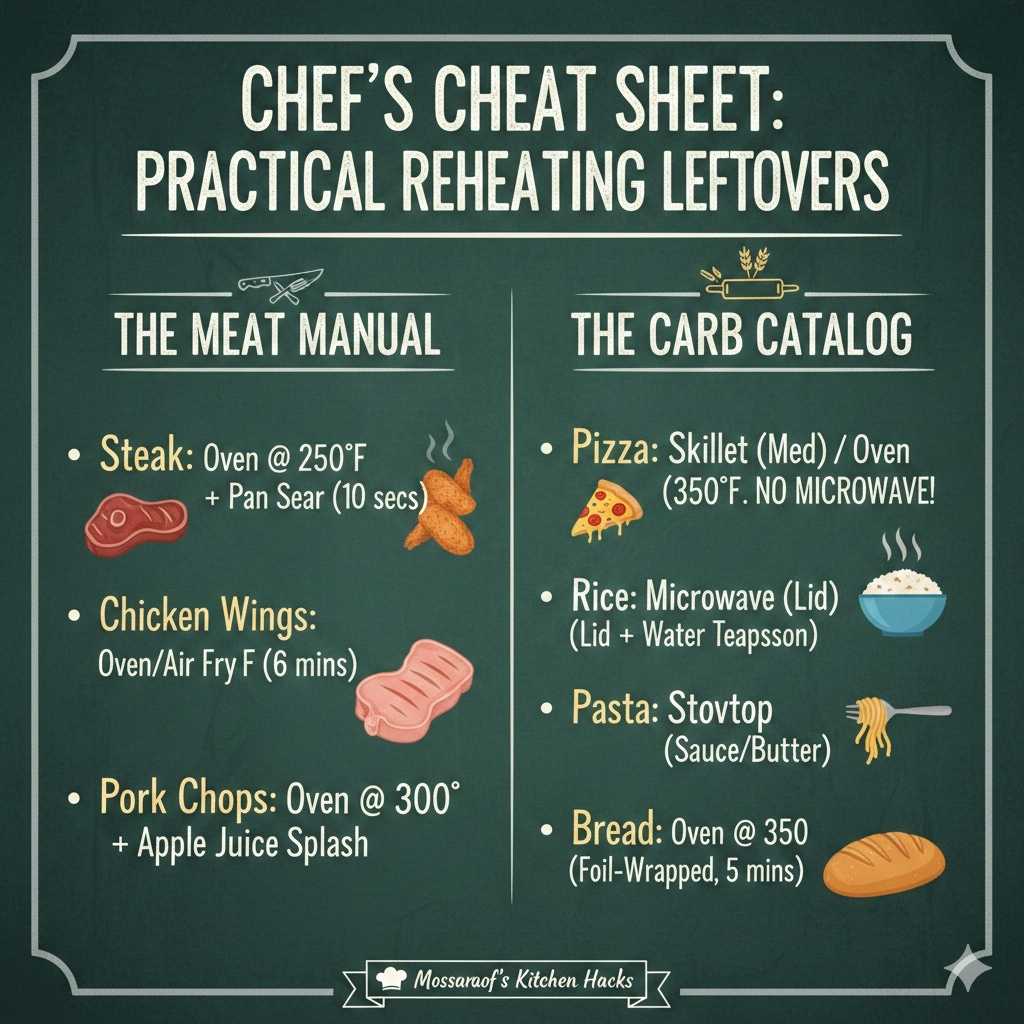
- Steak: Oven at 250°F until warm, then a ten-second sear in a pan.
- Chicken Wings: Oven or Air Fryer at 375°F for six minutes.
- Pork Chops: Oven at 300°F with a splash of apple juice in the pan.
The Carb Catalog
Carbs are all about the moisture. Too much makes them mushy. Too little makes them rocks.
- Pizza: Skillet on medium heat or Oven at 350°F. Never microwave.
- Rice: Microwave in a bowl with a lid and a teaspoon of water.
- Pasta: Stovetop with a little extra sauce or butter to loosen it up.
- Bread: Oven at 350°F wrapped in foil for five minutes to stay soft.
Flavor Recovery: Bringing Leftovers Back to Life
Heat is only half the battle. Sometimes leftovers lose their soul in the fridge. You need a little “Chef’s Kiss” to fix them.
The “Fat and Acid” Rule
When food sits, the flavors get dull. I always add a tiny bit of fat or acid after heating. It wakes the dish up.
A pat of butter on your steak or a squeeze of lemon on your fish. It makes it taste fresh again. You will be surprised at the difference it makes.
- Extra Virgin Olive Oil: Drizzle it over reheated pasta.
- Fresh Lime: Squeeze it over your tacos or stir-fry.
- Kosher Salt: A tiny pinch at the end brings out the hidden flavors.
Texture Contrast
Leftovers are often soft. Adding something crunchy makes them better. I like to chop up some fresh herbs or green onions.
Even some toasted breadcrumbs can save a boring mac and cheese. It gives your mouth something to do. It feels like a brand new meal.
The Professional Verdict on Oven vs Microwave for Reheating Food
After a long ten-hour day at the restaurant, I just want my dinner to taste good. I don’t want to work anymore. But I still care about flavor.
If I am eating a bowl of chili, I hit the microwave button every time. It is efficient and does the job. I can be sitting on my couch with a hot bowl in three minutes.
But if I have a slice of deep-dish pizza or a piece of fried fish? I will always wait for the oven. The texture is 90% of the experience. Eating soggy fried food is just sad.
- Choose Microwave for: Wet foods, liquids, and soft grains.
- Choose Oven for: Crispy edges, meats, and breads.
- The Middle Ground: The Air Fryer or Toaster Oven.
Reheating food is a skill. It is the last step in the cooking process. Treat your leftovers with a little bit of love. Your taste buds will thank you for the extra five minutes of patience.
I hope this helps you save your next meal. Now, go check on that pizza before it burns!
Frequently Asked Questions
Is it safe to reheat food more than once?
I get asked this all the time at family BBQs. Technically, yes, if you heat it to 165°F each time. But honestly? Each time you heat it, the quality drops.
The proteins get tighter and the moisture leaves. By the third time, your chicken will taste like a shoe. Try to only reheat the portion you are going to eat right then.
Why does my bread get hard as a rock in the microwave?
This is all about the sugar and starch. When you microwave bread, the sugar melts. As soon as it cools down, it recrystallizes and turns into a brick.
If you must use the microwave, keep it short. Twenty seconds is usually plenty. Wrap it in a damp paper towel to trap some steam.
Can I put a cold glass dish straight into a hot oven?
Please, do not do this. I have seen glass shatter into a million pieces. It is called thermal shock. Glass expands when it gets hot.
If it expands too fast, it breaks. Take your Pyrex out of the fridge for twenty minutes before it goes into the oven. Or, put it in the oven while the oven is still preheating. This lets them warm up together.
Avoid: Putting a frozen dish in a 400°F oven.
Avoid: Putting a hot glass dish on a wet, cold counter.
Better: Use metal pans for high-heat reheating.

I’m Mossaraof, a trained chef and the founder of OvenInsights.com. I spent years cooking at Larrupin’ Cafe and in kitchens across Chicago and Seattle. Now I test kitchen gear for a living. I moved to North Acton, London, and I test every tool I write about. I use real meals and real heat. No brand deals. No shortcuts. I cover 12 kitchen types and hundreds of recipes. I believe this: the right tools matter as much as the recipe.