Hey, I’m Mossaraof — a professional cook and food blogger.
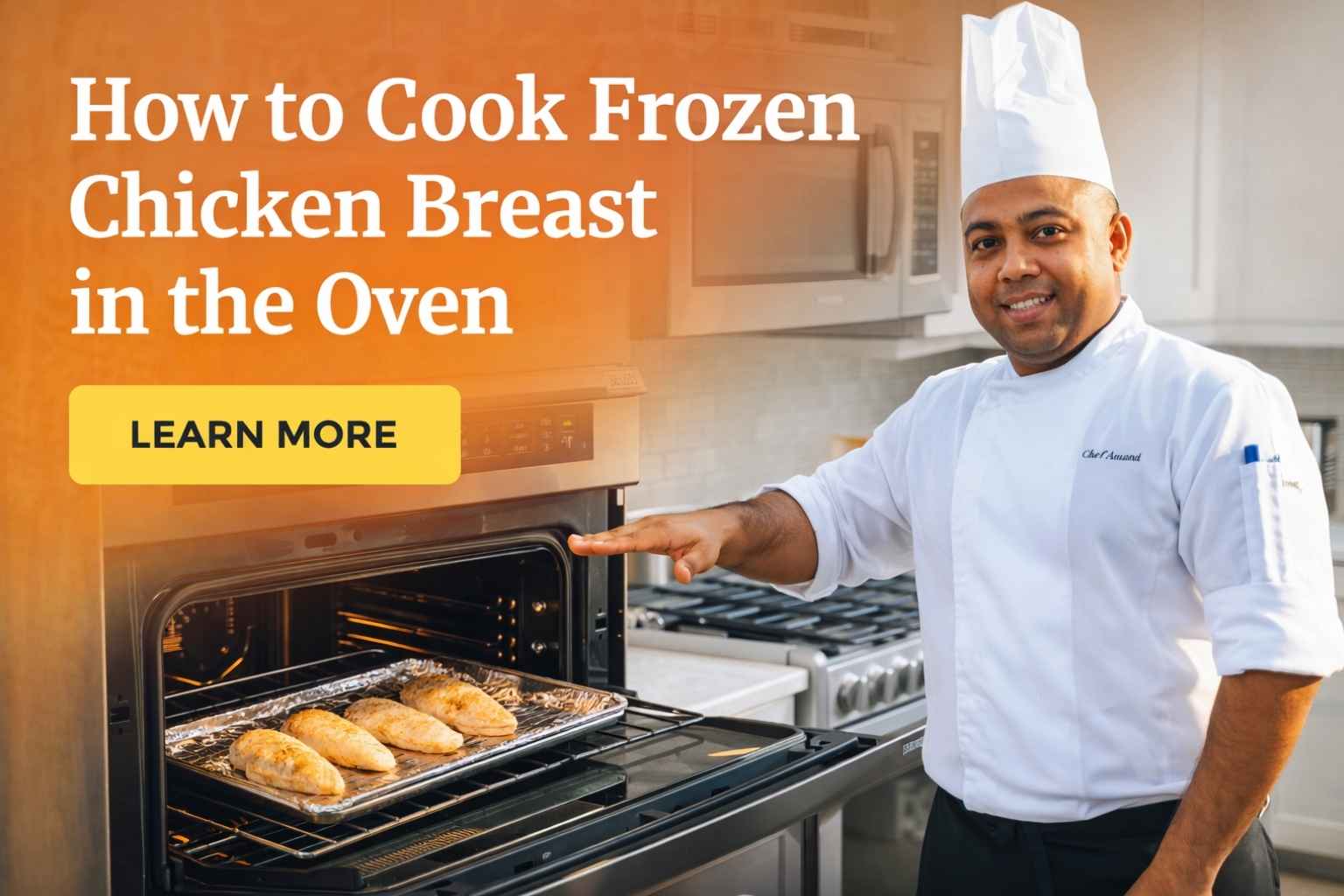
We all want that tender, juicy bite that feels fresh even when you pull the meat straight from the cold freezer. I will show you how to cook frozen chicken breast in the oven so you get a safe, moist result with a beautiful, golden outside.
My years in a busy Chicago kitchen taught me that a tight seal for the first half of the bake is the true secret to thawing the meat without drying it out. Use my Ultimate Guide to Master Your Oven to find the best rack position for an even, gentle roast. Let’s grab your baking dish and start this easy, stress-free meal together right now!
🔥 Why Cooking Frozen Chicken Breast in the Oven Is a Game-Changer
Some days just don’t go the way you planned. And when that happens? Frozen chicken and a preheated oven have saved me more times than I care to admit.
Let me walk you through why this method became my go-to—even when I have thawed chicken sitting in the fridge.
🏠 Real-Life Moments When It Saved the Day
There was a Tuesday—I remember because I’d already burned toast that morning—when dinner was the last thing on my mind. I had forgotten to thaw the chicken. Again.
That’s when I realized this wasn’t a fluke. It was a pattern. But now? I plan for frozen.
Here are just a few times when frozen-to-oven cooking came through for me:
- Last-minute dinner: When I forgot to defrost but still wanted real food.
- Busy Sundays: Great for meal prep—especially when you buy bulk from Costco.
- Unplanned guests: When my brother dropped by with his kids… and appetites.
- Stretching groceries: When I needed to make the week’s food budget last.
And the best part? It doesn’t take any longer than preheating a delivery app and waiting 45 minutes.
👨🍳 Why I Trust the Oven Over the Microwave or Skillet
I’ve tried it all. Microwave. Skillet. Even one wild attempt in an air fryer. And while those methods technically work, none of them gave me the texture I was looking for.
The oven wins for a few solid reasons:
- Even heating — No half-cooked center or dry outer layer
- Hands-off cooking — I can get other things done while it bakes
- Reliable texture — Juicy inside, crisp top if you want it
When I pan-fried frozen chicken once (in a hurry), it stayed icy in the middle but burned on the outside. My smoke alarm was not amused. Never again.
The microwave? Sure, it’ll heat the meat. But it turns it rubbery. Especially with chicken breast, which is lean and unforgiving when overcooked.
🧠 What the USDA Says About Cooking Frozen Chicken
Okay, so I’m not just winging it (pun intended). The USDA actually backs this method.
- Yes, you can cook chicken directly from frozen — safely.
- You need to cook it 50% longer than thawed chicken.
- The safe internal temp is 165°F — always use a thermometer. (I keep a digital one from ThermoPro clipped to my fridge.)
I never mess around with chicken. If it’s not at 165°F in the thickest part? Back in it goes.
🧊 Why U.S. Freezers Are Packed with Chicken Breasts
I’ve noticed something over the years—every U.S. kitchen I’ve been in, from New York to Nevada, has at least one bag of frozen chicken in the freezer. Maybe it’s Tyson. Maybe store brand. Maybe a Ziploc bag with mystery dates scribbled in Sharpie.
That’s the American kitchen reality. And if you’re reading this from a small apartment, a suburban home, or a college dorm with a mini oven—you know exactly what I’m talking about.
We lean on frozen chicken because it:
- Keeps well
- Costs less when bought in bulk
- Works in dozens of recipes
- Gives you options on nights when dinner feels impossible
Learning how to cook frozen chicken breast in the oven made my weeknights smoother. It gave me a way to show up at the table—even when the day was a mess.
🧂 How I Prep Frozen Chicken Breasts for the Oven (No Thaw Needed)
This is where the magic starts—before the oven even turns on.
The first few times I tried baking frozen chicken breasts, I overthought everything. Should I rinse them? Should I defrost them just a little? Was I supposed to microwave them for 2 minutes first?
Nope. I’ve learned to keep it simple. These days, I prep straight from frozen—no thaw, no stress, and no extra mess.
🧊 My Go-To Frozen Chicken Brands (From U.S. Grocery Runs)
Not all frozen chicken breasts are created equal. Some come out juicy and plump. Others? A little sad and stringy.
After years of cooking with what I could find (and afford), here’s what I reach for:
- Kirkland Signature (Costco): The individually frozen ones? Gold. Thick, even cuts.
- Tyson: Widely available, decent size, not overly watery.
- Trader Joe’s Tenderloins: Smaller, thinner, cook super fast.
- ALDI’s Kirkwood line: Cheaper option, but trim the edges—sometimes icy clumps stay on.
Sometimes I buy raw chicken in bulk and freeze it myself, but when time’s tight, I grab these pre-frozen packs. In the U.S., we’re lucky to have so many freezer aisle options that work well for oven baking.
🔪 Quick Prep Before It Hits the Heat
Here’s my exact step-by-step method—works whether I’m in my Chicago apartment or down in Florida.
Step 1: Preheat the oven to 400°F.
Higher heat helps cook frozen chicken without drying it out.
Step 2: Line your pan.
I use heavy-duty foil or parchment paper. Less cleanup.
- Reynolds foil = sturdy and doesn’t rip when I remove sticky chicken.
- If I’m feeling extra lazy, I use a foil baking tray from the dollar store.
Step 3: Lay the frozen breasts in a single layer.
No stacking. No crowding.
I space them out with at least an inch between each—otherwise, they steam instead of roast.
Step 4: Add fat.
Olive oil or melted butter goes right on top. I drizzle it straight from the bottle—no measuring.
Helps with browning and keeps the surface from drying out too soon.
Step 5: Season like you mean it.
Even frozen, seasoning sticks surprisingly well. My go-to mix:
- Garlic powder
- Smoked paprika
- Salt and black pepper
- Sometimes a little dried rosemary
Don’t add too much salt though—frozen chicken holds onto moisture, and the flavors can concentrate.
🥘 My Favorite Cookware for Even Roasting
I’ve tested a ton of pans over the years. Some warped. Some rusted. Some just didn’t cook evenly.
Here’s what I trust when I’m baking frozen chicken breast in the oven:
🔹 Staub Cast Iron Roasting Pan
- Heavy, holds heat well
- Great for even browning
- I use this when I want juicy chicken with crispy edges
🔹 Nordic Ware Half Sheet
- Lightweight, durable
- Doesn’t buckle at high heat
- Ideal for busy weeknight cooking
🔹 Pyrex Glass Dish
- Keeps moisture in
- Good for when I’m adding broth or lemon slices
- I don’t use it if I want crispy tops—it softens the texture more
I once tried using a cheap aluminum pan, and it bent mid-bake—chicken juice everywhere. Lesson learned.
🧂 Bonus Tip: Seasoning While Frozen Actually Works
This surprised me at first, but seasoning frozen chicken is absolutely worth it.
The oil helps the spices cling, and as the chicken defrosts in the oven, it pulls the flavor into the meat.
If I’m baking plain frozen chicken breast in the oven for meal prep, I stick to garlic, paprika, and pepper. Keeps it flexible so I can toss it into salads, wraps, or bowls later.
If I know I want BBQ or a specific flavor? I’ll hold off on sauce until later in the bake—but we’ll get into that soon.
⏱️ How Long to Cook Frozen Chicken Breast in the Oven
There’s no one-size-fits-all answer here. Trust me, I’ve tried.
I’ve baked frozen chicken breasts in a cramped Florida toaster oven and a roomy Whirlpool wall oven in the Midwest—and the timing shifted every single time. But after burning the edges once (okay, more than once), I figured out a rhythm that works.
Let me walk you through what I do now—by size, by cut, and by oven type.
📏 General Oven Cook Time Guide (Uncovered)
Here’s my personal cheat sheet—based on dozens of real weeknight meals.
🔸 Standard Frozen Chicken Breasts (6–8 oz each)
- 400°F (uncovered):
- 6 oz → 35–40 minutes
- 8 oz → 45–50 minutes
- 375°F (covered with foil):
- 6–8 oz → 45–55 minutes
(Longer, but helps with moisture in dry climates)
- 6–8 oz → 45–55 minutes
🔸 Frozen Chicken Tenderloins
(Smaller, faster, great for batch prep)
- 400°F:
- 20–25 minutes
- Flip halfway through
I always let chicken rest for about 5 minutes before slicing. That’s when the juices settle in and stop leaking all over the plate.
🔁 Why I Flip It Halfway Through
I didn’t do this the first few times—lazy, I admit. But the difference? Huge.
- One side would brown beautifully
- The other looked like steamed cafeteria food
Now I flip about 20–25 minutes in (depending on the size), using tongs or a spatula. It helps the seasoning crust up evenly too.
One time, I forgot to flip, and the bottom half came out pale while the top had a decent color. Still edible—but didn’t look great on the plate.
💡 My Timer Trick for Toaster Ovens vs Wall Ovens
I cook in both, depending on where I am—and the timer strategy changes.
Wall Oven (like my Whirlpool in Illinois):
- Preheat to 400°F
- Bake for 45 minutes
- Flip at 25 minutes
- Check internal temp at 40 minutes
Toaster Oven (my Breville in Florida):
- Preheat to 375°F
- Cover loosely with foil after 25 minutes to prevent top drying
- Total bake time = 50 minutes
- Let it rest 5–10 minutes inside the warm oven (door slightly open)
The toaster oven runs hotter near the coils, so I give it a few extra minutes and watch closely toward the end.
🌡️ Always Use a Thermometer
This isn’t optional in my kitchen. I’ve learned the hard way.
One night, I thought my chicken looked “done.” Golden, smelled great. I sliced it—and the middle was still icy.
Now I use a cheap digital meat thermometer (I picked up a ThermoPro on sale) and check for 165°F in the thickest part. Not near the edge. Not the surface. The deepest center.
If it’s at 162°F, I leave it in for 3–5 more minutes. That final stretch makes all the difference.
🧊 Cold Oven Starts? I’ve Tried It
Once, I forgot to preheat. It was a rushed Thursday, and I just threw the frozen breasts in and turned the dial.
Surprisingly, it worked. They just needed about 5–8 minutes more.
So yes, if you’re wondering, “How long does it take if I start from a cold oven?” — add an extra 10% of the total cook time.
I still prefer preheating when I can. It’s just more consistent.
🧴 Should You Cover Frozen Chicken with Foil?
I used to skip the foil. Not on purpose — I just didn’t want to dig through the drawer.
But after a few dry, pale chicken disasters, I started playing around with it. And wow, what a difference a simple sheet of foil makes — especially if you’re baking in a dry kitchen or using lean chicken breasts.
Let me show you when I wrap it up… and when I let it breathe.
✅ When I Use Foil (Moisture = Friend)
In Arizona, I swear the air sucked moisture out of everything — including my chicken.
Foil saved the day.
Here’s when I definitely use it:
- In dry climates — I tested this in Scottsdale and Bakersfield. Without foil, the chicken turned leathery.
- For lean, skinless breasts — These dry out fast. Covering keeps the top tender.
- When I add sauce — Keeps BBQ or teriyaki from burning early.
- If baking at 375°F — The slower cook plus foil = super juicy finish.
When I cover, I make a loose tent so the steam stays in but doesn’t press down on the meat.
And the aroma when you peel it back? That first cloud of garlic and butter hits you right in the face. In a good way.
❌ When I Skip the Foil
Foil’s great, but sometimes I want that golden, slightly crisp top.
I skip it when:
- I’m going for a roasted look — Foil softens the surface.
- The chicken is pre-marinated and moist — Like those bagged lemon pepper breasts from Aldi.
- Using a glass dish with a lid — Already traps steam, no need to double down.
- Cooking tenderloins fast at 425°F — They’re done before drying kicks in.
I once forgot I had covered the chicken and added BBQ sauce on top early. It stayed pale and mushy. Now I either uncover for the last 10 minutes or broil it briefly at the end.
🧪 My Foil vs No-Foil Test (Yes, I Took Notes)
One Sunday, I cooked two frozen chicken breasts — same weight, seasoning, pan.
- With foil:
- More tender
- Lighter color
- Better moisture when sliced
- Great for shredding
- Without foil:
- Browner top
- Slightly drier, especially at the corners
- Needed more sauce afterward
Moral of the story? Use foil when you care more about tenderness than appearance.
Or split the difference: foil for the first 30 minutes, then uncover. That’s what I do now when I want both.
🧂 What I Add Under the Foil (Flavor Boosts)
If I’m covering the chicken, I often toss a few extras in the pan:
- Lemon slices
- Crushed garlic
- A splash of chicken broth or white wine
- Fresh rosemary or thyme (when I’m feeling fancy)
These help build a quick little steam bath — and your kitchen ends up smelling like a rustic countryside bistro. Well, sorta.
🍗 How to Bake Plain Frozen Chicken Breast in the Oven
This is my weeknight workhorse. No sauces. No marinades. Just frozen chicken, a hot oven, and whatever seasoning I grab from the pantry.
I started baking plain frozen chicken breast in the oven when I was doing meal prep on Sundays. I wanted something I could eat three ways — in salads, wraps, or rice bowls — without clashing flavors.
It’s also perfect for picky eaters. And honestly? It’s the easiest version to get right.
🥶 Straight from Freezer to Sheet Pan (Yes, Really)
Here’s my exact routine — works like clockwork whether I’m in my chilly Chicago kitchen or sweating through a Florida afternoon.
Step-by-step:
- Preheat oven to 400°F.
I never skip this step anymore. I tried a cold start once and the bottom got soggy. - Line a rimmed baking sheet with foil or parchment.
I use Reynolds foil or If You Care parchment. Makes cleanup easy. - Lay the frozen chicken breasts in a single layer.
I don’t rinse or pat dry — just straight from the freezer bag onto the pan. - Drizzle lightly with olive oil or melted butter.
Just enough to help the spices stick and prevent drying. - Season generously.
My go-to mix:- Garlic powder
- Smoked paprika
- Salt + black pepper
- Sometimes a tiny sprinkle of Italian herbs
- Bake uncovered for 40–50 minutes.
Flip at the 25-minute mark. I check temp at 40 minutes — I want 165°F in the thickest part. - Let it rest for 5–10 minutes.
I usually cover it loosely with foil while it rests to keep the moisture in.
🧂 Why I Don’t Overdo the Seasoning
I used to think more spice = more flavor. Then I accidentally made chicken that tasted like a salt lick.
Now I go lighter, especially if I plan to reheat it later or toss it into something saucy like pasta or curry. Less is more when it’s acting as a base protein.
🥗 How I Use It Throughout the Week
This plain frozen chicken method makes my life easier. Here’s how I use the leftovers:
- Monday lunch: Chopped and tossed into a Caesar salad
- Tuesday wrap: Sliced with hummus and spinach in a tortilla
- Wednesday dinner: Heated with BBQ sauce and served with sweet potatoes
- Thursday: Shredded for tacos (yes, I season again before reheating)
- Friday: If there’s any left, I cube it up for a last-minute stir-fry
It’s clean. It’s flexible. And if I forget to cook, I’ve got backup protein waiting in the fridge.
🔥 Optional Add-Ons for a Flavor Kick
If I’m not meal-prepping and want a little flair, I’ll throw one of these on top before baking:
- Thin lemon slices for brightness
- A dash of chili flakes for heat
- A drizzle of Dijon mustard for tang
- Fresh rosemary if I’ve got some leftover from another recipe
But even without all that? This method stands strong.
It’s the one I use when I’m tired, hungry, and just need something that works.
🍯 How to Oven Bake Frozen Chicken Breast with BBQ Sauce
This version always reminds me of summer—even when I’m cooking it in the dead of February.
I used to think BBQ chicken had to come off a grill. But after a few years of dealing with Midwest snowstorms and unpredictable gas tanks, I’ve learned to get that sticky-sweet flavor from my oven. And yes, even with frozen chicken breasts.
Let me walk you through how I do it without drying out the meat… or torching the sauce.
🍖 My Sticky BBQ Oven Method (From Freezer to Feast)
The trick is all in the timing. If you slap the sauce on too early, it’ll burn. Wait too long, and the chicken won’t soak it up.
Here’s what works for me:
Step-by-step:
- Preheat oven to 400°F.
Higher heat helps caramelize the sauce later. - Line a sheet pan with foil and lightly grease it.
I use avocado oil spray so the sugar in the sauce doesn’t glue everything down. - Place frozen chicken breasts on the pan.
No need to defrost. Just space them out so they bake evenly. - Drizzle with olive oil and season lightly.
I usually go with garlic powder, paprika, and a pinch of salt. This builds a good base flavor before the sauce goes on. - Bake uncovered for 30 minutes.
Don’t touch it. Let it do its thing. - Remove and brush BBQ sauce on generously.
Both sides. I use a silicone brush and get in all the little nooks. - Return to oven for 15–20 more minutes.
Sometimes I flip halfway through if I want more even glaze. - Optional: Broil for 1–2 minutes at the end.
This gives you that gorgeous caramelized top—but watch it like a hawk. Sauce can burn fast.
👃 The Smell When It’s Almost Done? Unreal.
It starts about 10 minutes after the sauce hits the heat.
You get this warm, smoky-sweet scent that floats into the hallway. I once had my neighbor knock and ask what I was grilling. (Joke’s on them—there was snow on the balcony.)
BBQ chicken in the oven just hits different. Especially when the windows are closed and you need something cozy and nostalgic.
🍗 Best BBQ Sauces I’ve Tested (That Don’t Burn)
Some sauces just work better in the oven. Others turn bitter or dry out fast.
Here are my go-tos:
- Sweet Baby Ray’s Original:
- Thick, sweet, doesn’t scorch easily
- Budget-friendly and sold everywhere
- Stubb’s Hickory Bourbon:
- More savory and smoky
- Great when you want less sugar
- Local Farmer’s Market Sauces:
- I once grabbed a peach-chipotle blend in Asheville, NC — it was amazing baked onto frozen chicken
Tip: Always check the sugar content. Higher sugar = more likely to burn under direct heat. That’s why I add it late in the bake.
🍴 What I Serve It With (When I’m Craving BBQ Vibes)
Even if I’m just cooking for myself, I lean all the way into the flavor.
Here’s my go-to plate:
- Baked BBQ chicken breast (sliced thick)
- Oven-roasted sweet potatoes (seasoned with smoked paprika + brown sugar)
- Coleslaw with apple cider vinegar and celery seed
- A warm slice of cornbread if I’ve got any left in the freezer
And yes, I eat this on a Tuesday night like it’s a Sunday BBQ.
🥗 How to Cook Frozen Chicken Breast in the Oven Healthy
I’ll be honest — “healthy” used to mean “boring” in my kitchen. Dry. Plain. Sad.
But over the past few years, especially during New Year’s reset season (hello, January!), I started figuring out how to cook frozen chicken breast in the oven without loading it up with butter, sauce, or sodium-heavy marinades.
The results? Still juicy. Still flavorful. And surprisingly satisfying.
🥬 My Clean Cooking Setup (Simple and Reliable)
I keep this routine in rotation whenever I’m meal prepping or watching what I eat. It’s low-fat, high-protein, and doesn’t leave me reaching for a gallon of water from too much salt.
Here’s how I do it:
- Preheat oven to 400°F.
Hot enough to cook fast, but not dry out the meat. - Line a rimmed sheet pan with parchment paper.
I use unbleached, compostable sheets. No oil, no sticking, no cleanup stress. - Place frozen chicken breasts spaced apart.
I use 6–8 oz breasts — anything larger gets rubbery when cooked lean. - Mist lightly with olive oil spray.
Trader Joe’s and Chosen Foods both make avocado oil sprays that I trust. - Season simply but generously.
My favorite clean blend:- Smoked paprika
- Lemon zest
- Garlic powder
- A pinch of salt
- Cracked black pepper
- Bake uncovered for 40–45 minutes.
Flip once halfway through. Temp check at 40 mins — I always aim for 165°F. - Let it rest for 5 minutes before slicing.
I usually tent with foil while I clean up — helps lock in steam without using extra fat.
🌿 Why It Still Tastes Like Comfort Food
The trick is balance. Just enough seasoning to feel like real food… but clean enough to eat five days in a row.
I used to overdo it with lemon juice or vinegar. But now? A touch of lemon zest and a crack of pepper does the job. It smells fresh, tastes clean, and pairs with just about anything.
And the smell? You still get that warm “dinner’s ready” oven aroma. Especially if you throw in a rosemary sprig or two.
🍽️ Healthy Sides I Rotate Through the Week
I like to mix things up so it doesn’t feel like Groundhog Day every night.
Here’s what I usually pair with clean oven-baked frozen chicken:
- Roasted broccoli or asparagus (spray + garlic powder)
- Steamed brown rice or quinoa
- Sliced avocado with a squeeze of lime
- Pickled onions or kimchi for crunch
Sometimes I batch roast sweet potatoes on a second pan while the chicken cooks — one tray on the top rack, one below.
Pro tip: Switch the trays halfway through if your oven runs hot on top. Learned that the hard way when my broccoli turned into blackened confetti.
🧊 Meal Prep Bonus: Cold Chicken That’s Still Tasty
One of my favorite things about this method is how well it holds up in the fridge.
I usually bake 3–4 frozen breasts at once, then slice or cube them after they cool.
During the week, I’ll use them in:
- Wraps with hummus and spinach
- Grain bowls with roasted veggies
- Chopped over salads with vinaigrette
- Heated up quickly in a skillet with fresh herbs
The texture stays firm, never rubbery — even without sauce or fat.
🔥 How to Cook Frozen Chicken Breast Tenderloins in the Oven
There are nights when I want dinner fast — like, shower’s-not-even-done-yet fast.
That’s when frozen chicken breast tenderloins come to the rescue. They’re thinner, cook quicker, and still turn out tender (if you don’t forget them in the oven… which I’ve done once or twice).
I use these when I need a protein option but don’t want to babysit a big thick cut. Whether I’m in a rush or just feeling lazy, these little strips make it way easier.
⏱️ Why I Reach for Tenderloins
- Faster cook time: I can go from freezer to fork in about 25 minutes.
- Even sizing: They all finish around the same time — less guesswork.
- Better flavor soak: They grab seasoning and sauce quickly, even from frozen.
- Kid-friendly: Bite-sized pieces are easier to plate for picky eaters (my niece calls them “oven chicken fries”).
Bonus: They reheat well. I toss them into grain bowls, breakfast scrambles, or wraps without losing texture.
🕒 My Go-To Tenderloin Method (Quick and Easy)
This is what I do when the clock’s ticking and I don’t want takeout again.
Step-by-step:
- Preheat oven to 400°F.
Tenderloins cook fast, so I want solid heat from the start. - Line a sheet pan with parchment or foil.
I usually use parchment for tenderloins — helps keep the bottom from getting too dark. - Spread out frozen tenderloins.
I don’t pile them — if they touch too much, they steam instead of roast. - Spray lightly with olive oil or avocado oil.
Just a mist. Helps with browning and holds the seasoning. - Season well.
This is where I have fun. A few favorite blends:- Taco mix (chili powder, cumin, garlic, lime zest)
- Lemon pepper and dried dill
- Maple syrup + mustard (added later)
- Bake for 20–25 minutes.
Flip at 12 minutes.
Check for 165°F internal temp — don’t guess just because they look small. - Rest 3–5 minutes.
I usually plate sides while they rest.
🍴 How I Use Tenderloins in My Weekly Meals
Honestly, I didn’t think I’d rely on these so much. But they’ve become my fallback when things feel chaotic.
Some ways I use them:
- Fast weeknight tacos: Slice and serve with avocado, salsa, and red cabbage
- Protein for salads: Chop and add over spinach or arugula with balsamic
- Breakfast protein: Reheat and eat with scrambled eggs and sweet potatoes
- Wraps: Toss with hummus and shredded carrots in a tortilla
- Last-minute stir fry: Add at the end for quick sear and heat-up
They’re small, but mighty. And when time’s short, that’s all I need.
🔌 How to Cook Frozen Chicken Breast in a Toaster Oven
When I’m in Florida, I’ll do almost anything to avoid firing up the full oven in the middle of July.
That’s when the toaster oven becomes my best friend.
I didn’t expect it to work as well as it does. At first, I thought, “There’s no way frozen chicken will cook evenly in something this small.” But after a little trial (and a couple dry disasters), I got the timing right — and now I use it more often than I thought I would.
🧊 When I Choose the Toaster Oven Over the Big Oven
I reach for it when:
- It’s too hot outside and I don’t want to heat up the whole kitchen.
- I’m only cooking one or two breasts — no need to waste energy.
- My main oven’s full (maybe roasting veggies or baking dessert).
- I’m in a small apartment or a rental with limited space.
In fact, in my Florida condo, the Breville Smart Oven pretty much runs the show. Compact. Quick to preheat. Doesn’t turn the kitchen into a sauna.
🕒 My Method: Frozen Chicken Breast in a Toaster Oven
Toaster ovens vary — mine has bake, convection, and broil modes. I’ve tested all of them, but this is what works best for juicy results.
Here’s how I do it:
- Set to Bake mode at 375°F.
If you’re using convection, drop it to 350°F. Toaster ovens tend to run hot. - Preheat fully.
I skip this in my wall oven sometimes, but not here. You need the temp stable. - Line the baking tray with foil or parchment.
I usually use the tray that came with the oven — smaller size keeps heat close to the food. - Place frozen breasts in the center.
Don’t crowd them. For two medium breasts, spacing matters. - Drizzle with olive oil and season.
I use garlic powder, salt, pepper, and a touch of paprika for color. - Bake for 45–50 minutes total.
Flip at the 25-minute mark.
I sometimes tent with foil at the 30-minute mark if the top looks too dry. - Rest 5–7 minutes before slicing.
The toaster oven doesn’t hold residual heat like a full oven, so rest time really helps here.
🧪 Real Differences I’ve Noticed (Big Oven vs Toaster Oven)
The first time I made frozen chicken in the toaster oven, it browned faster than I expected. It also cooked through surprisingly evenly.
But I also noticed:
- Edges crisp up more (great for texture)
- Dry spots happen quicker if you don’t watch carefully
- Foil tenting helps keep the top juicy
- Takes a little longer than full ovens because of tighter airflow
And don’t be surprised if the outside looks “done” before the inside is. I always check with my meat thermometer — the small space can be deceiving.
🥘 My Favorite Toaster Oven Combos
When I’m using the toaster oven, I keep it simple and efficient. Here’s how I turn one tray into a whole meal:
- Frozen chicken breast + sliced zucchini + red bell pepper
→ Toss veggies in olive oil and cook alongside - Frozen chicken with lemon slices + rosemary sprigs
→ Flavorful, light, and makes the kitchen smell amazing - BBQ-glazed frozen chicken + foil-wrapped corn on the cob
→ Summer flavor without stepping outside
Sometimes I even sneak in a couple frozen sweet potato fries beside the chicken. That’s my midweek cheat combo when I want something comforting but don’t want to fry anyth
📦 Can You Cook Frozen Chicken in Oven-Safe Packaging?
Here’s a moment I won’t forget — I was in a rush one Thursday night, trying to throw dinner together between cleaning and a Zoom call. I pulled a pre-seasoned frozen chicken breast out of the freezer, tossed it straight onto the tray — plastic pouch and all — and turned on the oven.
Big mistake.
Within 10 minutes, the plastic started puffing like a balloon. The smell? Let’s just say it wasn’t rosemary and garlic. I yanked it out and had to open every window.
After that fiasco, I started reading packaging labels like my dinner depended on it. Because, well… it kind of does.
🧊 Can You Bake Frozen Chicken in Its Original Packaging?
Short answer: sometimes — but not always.
It depends entirely on what the packaging is made of and what the label says. Here’s what I’ve learned:
✅ Safe to Bake If:
- The label clearly says “Oven-Safe”
- It’s in a foil tray with clear oven instructions
- It’s wrapped in butcher paper or parchment-like liner
- It comes with USDA-backed cooking directions for baking
❌ Not Safe to Bake If:
- It’s in plastic or vacuum-sealed wrap
(Even if it looks heatproof — don’t trust it) - No baking instructions are listed
- The packaging is labeled microwave only
- It’s a bag with seams or glue — those can melt or leach chemicals
In the U.S., some frozen chicken brands offer oven-ready trays — Tyson does this occasionally, and I’ve seen it with Perdue products too. But they almost always come with clear labels like “Bake at 375°F for 45 minutes — do not remove film.”
If you don’t see those words? Take it out of the packaging.
🔍 What I Look For on the Label
When I’m in the freezer aisle at Publix or Costco, here’s what I check:
- “Ready to Bake” or “Oven-Safe Tray” — good signs
- “Microwave Only” — hard no
- No cooking instructions? I skip it
- If it says “remove from packaging before cooking” — I follow that every time, even if I’m in a hurry
Sometimes, the packaging will say “oven-safe film” — that’s rare, but I’ve used a few with that label and had no problems. Still, I usually cut a slit in the film just to be safe.
🧪 When I Do Cook It in the Tray
If the chicken comes in a foil tray or oven-proof container, here’s what I do:
- Place the tray on a baking sheet — more stability, and easier to remove
- Double-check for any plastic seals hiding under the lid
- Set a timer 5 minutes early — these cook differently, and I like to check progress
I once had a foil-pack chicken breast with broccoli and rice that cooked perfectly at 400°F for 50 minutes. The steam inside the pouch actually helped keep it moist — kind of like a mini pressure cooker.
🔥 The One Rule I Never Break
When in doubt, take it out.
If the label isn’t crystal clear, I remove the chicken, place it on parchment or foil, and season it myself. Even if it was pre-flavored, I’ve learned it’s better to re-season and play it safe.
And trust me, melted plastic is not a smell you want stuck in your oven for a week.
🧠 Common Mistakes I’ve Made (So You Don’t Have To)
Let me be real with you.
I didn’t nail frozen chicken breast in the oven on the first try. Or the second. Or even the fifth. I’ve served dry chicken. I’ve undercooked the middle. I’ve created weird, rubbery outer layers that felt like chewing a tire.
But hey — every kitchen fail taught me something. So here’s a list of what not to do, based on actual mess-ups in my very real, sometimes-too-hot U.S. kitchen.
🛑 Mistake #1: Starting at 350°F and Hoping for the Best
I used to bake everything at 350°F. Cookies? Yup. Veggies? Sure. Chicken? Big nope.
Frozen chicken needs more power upfront.
When I tried 350°F, the outside cooked… kind of. The inside? Still icy. I cranked up the heat mid-bake and ended up with rubbery meat and frustration.
What I do now:
- Start at 400°F
- Use 375°F only if I’m covering with foil
- 425°F only for thin tenderloins or BBQ finish
🧂 Mistake #2: Oversalting Before Cooking
This one stings — because it looked so good. Golden, juicy chicken. Perfect on the outside. But one bite in, and I was downing water like I’d licked a salt block.
Frozen chicken releases moisture as it bakes, which can concentrate any seasoning.
What I do now:
- Go light on salt
- Taste and adjust after baking
- Add flavor with garlic, lemon, paprika, herbs instead
🔥 Mistake #3: Not Using a Meat Thermometer
I thought I could “eyeball” it.
Wrong.
I once served chicken that looked done — golden top, juices bubbling. Then I sliced it, and the center was translucent. Not just underdone. I mean cold.
What I do now:
- Use a digital thermometer every single time
- Check the thickest part, not just the surface
- Don’t trust the clock alone — ovens vary
165°F = done. Not 160. Not 150. Not “I think it’s close.”
🧊 Mistake #4: Forgetting to Flip
I used to just throw the chicken in and walk away. When I pulled it out? One side was beautifully browned. The other looked like it had never seen heat.
It also cooked unevenly — thicker side stayed tough.
What I do now:
- Flip halfway through
- Rotate the pan if I notice hot spots (especially in my older oven)
- Use tongs so I don’t lose seasoning or tear the meat
🧴 Mistake #5: Adding BBQ Sauce Too Early
This one still hurts a little. I had a gorgeous batch of frozen breasts, brushed them with a sweet BBQ glaze right at the start, and baked for 45 minutes.
The result? Burnt sugar crust. Bitter taste. Smoke alarm.
What I do now:
- Bake plain for 30 minutes
- Add sauce and bake another 15–20
- Optional: broil for 1–2 minutes (but stay close)
💧 Mistake #6: Not Letting It Rest
I used to pull chicken from the oven and slice it immediately.
And then I’d wonder why the cutting board turned into a juice puddle and the meat felt dry.
What I do now:
- Let chicken rest 5–10 minutes
- Tent loosely with foil
- Slice after juices settle in
😬 Mistake #7: Trusting Bad Packaging
One time I cooked frozen chicken still sealed in a vacuum pack. I thought it was oven-safe.
It puffed like a balloon and left a nasty film inside my oven. Took me days to get that smell out.
What I do now:
- Always read the label
- If it doesn’t clearly say “oven safe,” I remove it
- Better to re-season than risk plastic poisoning
👨🍳 My Go-To Oven Chicken Breast Combos (From Lazy Weeknights to Impressing Guests)
Some days, I’m running on fumes. Other nights, I feel like plating dinner like I’m on a cooking show.
Either way, having a few frozen chicken breast combos in my back pocket helps me cook without overthinking. These all start with frozen chicken, straight from the bag — no thawing, no special prep.
Let me walk you through a few of my personal favorites.
🍋 1. Lemon Herb — Light, Clean, Reliable
This one’s my default. It never fails me. Works great for meal prep, weekday lunches, or when I want something that feels fresh and not heavy.
What I use:
- Olive oil drizzle
- Garlic powder
- Lemon zest + lemon slices on top
- Dried thyme or rosemary
- Sea salt + black pepper
Best side pairings:
- Roasted asparagus
- Quinoa
- Arugula salad with vinaigrette
Sometimes I even add thin lemon wheels to the pan — they crisp slightly and smell incredible while cooking.
🧄 2. Garlic Parmesan — Savory and Crowd-Pleasing
I make this when I want flavor with zero effort. It smells like an Italian deli as it bakes.
What I use:
- Mayo or Greek yogurt as a base
- Minced garlic or garlic powder
- Grated Parmesan cheese
- Black pepper
- Optional: Italian seasoning
How I do it:
Spread the garlic-parm mix on top of the frozen breast after 10–15 minutes in the oven. Let it melt and brown naturally.
Best side pairings:
- Roasted potatoes
- Steamed broccoli
- Pasta with olive oil and red pepper flakes
🌶️ 3. Spicy BBQ — Sticky, Smoky, and Satisfying
This one’s for when I’m craving takeout but want to feel like I cooked something real.
What I use:
- Olive oil + paprika + chili powder (pre-season)
- Sweet Baby Ray’s or Stubb’s BBQ sauce
- Cayenne if I want it hot
- Optional: liquid smoke or chipotle powder
My move:
I bake the chicken plain for 30 minutes, then brush the sauce on both sides and finish it uncovered. Sometimes I broil it for the last 2 minutes to get those sticky edges.
Best side pairings:
- Corn on the cob
- Baked beans
- Coleslaw with vinegar dressing
🥬 4. Clean & Green — For When I Want to Eat Healthy but Still Feel Full
This combo has saved me during post-holiday resets and “I should probably eat a vegetable” moments.
What I use:
- Avocado oil spray
- Smoked paprika
- Garlic powder
- Lemon juice or zest
- Salt + cracked pepper
Best side pairings:
- Roasted zucchini or Brussels sprouts
- Brown rice or farro
- Chopped kale salad with tahini dressing
Sometimes I slice the cooked chicken cold over greens for lunch the next day. Still juicy. Still flavorful.
🧂 5. Maple Mustard — A Little Sweet, A Little Sharp
This one feels fancy, but takes less than 3 minutes to prep. I serve it when guests show up and I pretend I had a plan.
What I use:
- Dijon mustard
- Maple syrup
- Garlic powder
- Salt + pepper
How I do it:
I mix the sauce while the chicken bakes, then brush it on during the last 15 minutes. The sugar caramelizes without burning if you wait until the halfway point.
Best side pairings:
- Roasted carrots
- Mashed potatoes
- Sauteed spinach with garlic
🧊 Pro Tip: Mix and Match for the Week
If I’m cooking 3–4 frozen breasts at once (which I usually do), I’ll season each one differently.
One lemon herb. One BBQ. One garlic parm. One plain with salt and pepper.
That way, I’ve got flavor variety for days — without cooking four separate meals.
🏁 Final Thoughts (From One Real-Life Cook to Another)
I didn’t set out to become the frozen chicken breast expert.
Honestly, I just got tired of throwing away half-used bags from the freezer and caving to takeout because I “forgot to defrost.” But after enough trial runs, burnt edges, and random Tuesday night saves, I figured out what works — and more importantly, what doesn’t.
Cooking frozen chicken breast in the oven isn’t just possible — it’s practical. It’s one of those everyday skills that makes weeknight dinners easier, cheaper, and a whole lot more flexible. Whether you’re in a tiny kitchen with a toaster oven or juggling three kids and need something hands-off, this method shows up.
Some days, you’ll want to go full lemon-herb with fresh rosemary sprigs. Other days? A quick BBQ glaze and a bag of frozen fries will do the trick.
Both count. Both are real. And both came out of my oven more times than I can remember.
So if tonight’s dinner plan is staring at a frozen block of chicken and an empty stomach? You’re good. You’ve got this.
Thanks for letting me share my kitchen with you.
Now go preheat that oven — or don’t. (You know what to do either way.)
— Mossaraof 🍴
FAQs
How to cook frozen chicken breast in the oven safely?
Preheat oven to 190°C (375°F). Place frozen chicken breast in a dish. Season lightly and bake for 45–50 minutes. Check the center is fully cooked before serving.
How long to cook frozen chicken breast in the oven?
Frozen chicken breast usually takes 45–50 minutes at 375°F. Thicker pieces may need more time. Always check the inside is hot and no longer pink.
Do I need to thaw chicken before baking in the oven?
No, you can cook frozen chicken breast in the oven without thawing. Just add extra time. This method saves time and still gives juicy results.
What temperature is best to cook frozen chicken breast in the oven?
The best temperature is 375°F (190°C). It cooks the chicken evenly without drying it out. Lower heat helps keep the meat tender and moist.
How do I keep frozen chicken breast moist in the oven?
Cover the chicken with foil and add a little oil or broth. This locks in moisture while baking. It helps prevent dry and tough chicken.

I’m Mossaraof, a trained chef and the founder of OvenInsights.com. I spent years cooking at Larrupin’ Cafe and in kitchens across Chicago and Seattle. Now I test kitchen gear for a living. I moved to North Acton, London, and I test every tool I write about. I use real meals and real heat. No brand deals. No shortcuts. I cover 12 kitchen types and hundreds of recipes. I believe this: the right tools matter as much as the recipe.