Hey, I’m Mossaraof — a professional cook and food blogger.
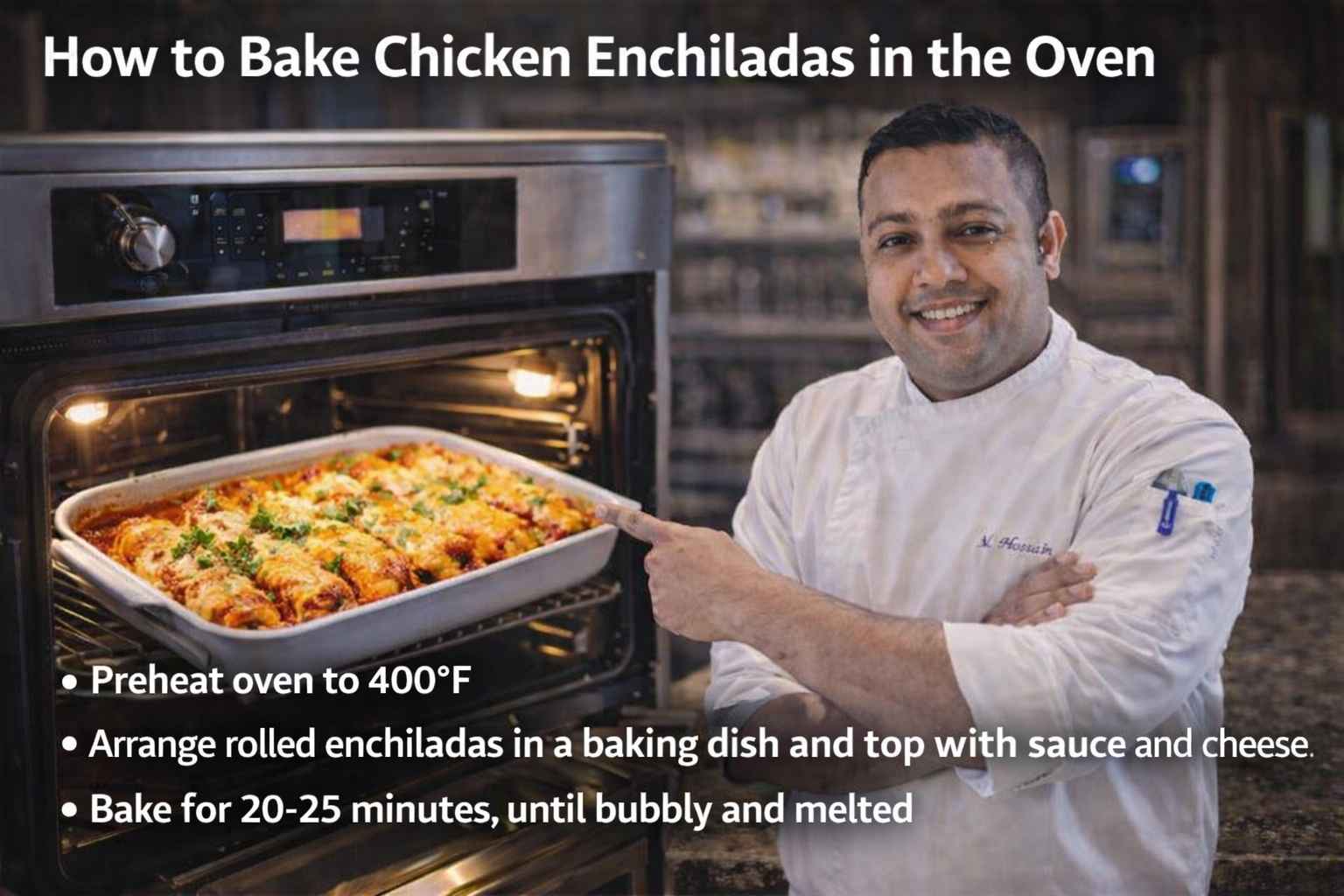
We all want those tender, corn-wrapped rolls to stay incredibly succulent while the cheese on top transforms into a bubbly, golden-brown blanket with a slight salty snap. I will show you how to bake chicken enchiladas in the oven so you get a perfectly fused, restaurant-quality meal where the sauce thickens and the edges of the tortillas take on a beautiful, savory depth.
My years in a busy Chicago kitchen taught me that lightly frying your tortillas in oil before rolling is the true secret to preventing them from becoming soggy once the sauce hits the heat. Use my Ultimate Guide to Master Your Oven to find the best rack height for a balanced bake that melts the cheese perfectly without drying out the heart of the filling. Let’s grab your favorite baking dish and start this warm, cheesy fiesta together right now!
The Emotional Comfort of a Baked Dish
I still remember this one chilly Wednesday — early January in Chicago. The kind of cold that clings to your bones even when you’re inside. I was dead tired after a long day and craving something warm and filling. That’s when I reached for my go-to: chicken enchiladas baked in the oven.
There’s something incredibly grounding about layering seasoned chicken, rolling tortillas, smothering it all in sauce, and letting the oven do the rest. The smell alone — cheesy, smoky, tangy — fills the whole house. And when I finally pull that pan out? It’s not just dinner. It feels like a reward.
I think that’s part of why I keep coming back to this dish. It’s a hug. From the oven.
Oven vs. Stovetop or Microwave: Texture Talks
Over the years, I’ve reheated enchiladas every which way. Trust me, the oven wins — every time.
Microwave? Quick, yes. But soggy. That tortilla turns gummy, and the cheese feels like rubber. Stovetop? Too fussy for me. Uneven, hard to crisp, and cleanup is worse.
But the oven? That’s where the magic happens:
- The edges crisp just a little.
- The cheese browns in spots.
- The sauce bubbles up around the sides.
- Everything warms through evenly — not scorched in one spot and cold in the center.
It’s that perfect in-between: soft, gooey center with just enough texture outside.
And for U.S. home cooks — especially in regions with colder winters — baking enchiladas in the oven doubles as a cozy heat source. I’ve done it in small kitchens where the oven warms more than just the food!
U.S. Oven Realities Matter
Over the past decade, I’ve baked enchiladas in all kinds of ovens — gas, electric, even those unreliable apartment ovens with sketchy thermostats.
In Arizona, my gas oven ran hot. I had to drop the temp by 25°F or things would burn. In a Florida rental, the electric oven heated slowly and unevenly, thanks to high humidity and poor insulation. I learned to rotate the dish halfway through just to get even browning.
And in my Chicago kitchen? I finally invested in an oven thermometer — best $10 I ever spent. U.S. ovens vary a lot by region, age, and brand. Whirlpool, Frigidaire, GE — each one bakes just a little different.
If you’re wondering how long to bake chicken enchiladas in the oven, the answer might depend on your oven’s quirks. Not just the recipe.
My Go-To Ingredients (And the Brands That Never Fail Me)
When I’m making enchiladas, I don’t need fancy — I need dependable. Over time, I’ve figured out what works, what falls apart, and what’s worth buying twice.
Chicken Types I’ve Tried (and What Actually Works Best)
I’ve used just about every kind of chicken you can imagine for enchiladas. Sometimes I’ve planned ahead, and other times I’ve just made do with what was in the fridge.
Here’s what I’ve used:
- Rotisserie chicken from Costco or Sam’s Club — a lifesaver when I’m exhausted.
- Baked chicken thighs in the oven — my favorite when I have time. The meat is juicy and flavorful.
- Leftover grilled chicken — especially during summer cookouts.
- Boiled chicken breast — easy, but can get dry fast if I’m not careful.
On weekends, I like to bake up a batch of boneless skinless thighs with a little oil, garlic, and cumin. That way I can shred them for tacos, enchiladas, or quick salads during the week. If you’re wondering how to cook baked skinless chicken thighs in the oven, I usually go 375°F for 25–30 minutes with foil to keep them moist, then uncover for a little color.
It’s not fancy. But it works.
Tortilla Talk
Tortillas can make or break enchiladas. I’ve had flour ones completely disintegrate in the oven — like wet paper. I’ve also had corn ones crack while rolling. Real pain.
What I’ve learned:
- Corn tortillas are classic, but they need to be warmed just right or they fall apart. I microwave 4–5 at a time in a damp paper towel.
- Flour tortillas hold up well but can get gummy unless I toast them lightly first.
- Blended tortillas (corn + flour) are the happy medium when I don’t want to fuss.
Favorite brands I use here in the U.S.:
- Mission® — reliable and everywhere.
- La Banderita® — soft and super rollable.
- Trader Joe’s house brand — affordable and surprisingly sturdy.
There’s nothing more annoying than rolling a dozen enchiladas and having the tortilla split right down the middle. Been there. Swore loudly. Switched brands.
Cheese, Sauce, and Shortcuts
Okay, let’s talk cheese. I like a blend:
- Sharp cheddar for flavor
- Monterey Jack for melt
- Sometimes a little pepper jack if I want heat
Pre-shredded is fine in a pinch, but if I have time, I shred it myself. It melts better without that anti-caking powder.
For sauce:
- Homemade is amazing, but I don’t always have the energy.
- When I buy, I lean on Hatch® or Old El Paso®. Both have red and green varieties.
- If I’m making “white enchiladas,” I sometimes cheat with cream of chicken soup + sour cream + green chiles.
And here’s my confession — I’ve totally used those oven baked enchilada chicken prep kits before (the ones that come with sauce, seasoning, and tortillas). They’re not bad! But I always tweak them. I might add cumin, lime juice, or extra shredded chicken because the portion never feels quite enough.
How I Prep the Chicken Before It Even Meets the Sauce
You can’t just throw plain, bland chicken into a tortilla and call it enchiladas. The prep makes all the difference. Whether I’m roasting chicken fresh or using leftovers, I always try to add flavor and texture first.
Baking the Chicken from Scratch
On Sundays, I often batch-bake chicken just to have it ready for the week. And honestly, for enchiladas, baked chicken always beats boiled or pan-fried. It stays juicier and holds up better in the oven during the second bake.
Here’s how I make baked chicken in the oven for enchiladas:
- Oven temp: 375°F
- Bake time: 25–30 minutes (uncovered)
- Cuts I use: boneless skinless thighs or breasts
- Pan: I usually use a sheet pan lined with parchment or foil for easy cleanup
I season with:
- Olive oil
- Garlic powder
- Smoked paprika
- Cumin
- Salt and black pepper
- Sometimes a squeeze of lime or a sprinkle of chili powder
If I’m being honest, I never measure spices — I just go by instinct and taste. Some days I’m heavy-handed, others I forget the salt until it’s already in the oven. (Oops. It happens.)
The house smells amazing when it’s baking — smoky, savory, and a little citrusy if I’ve added lime. Makes it hard to wait.
Getting Crunchy (Optional but Worth It)
Some days I want that extra layer of texture inside the enchilada — something slightly crisp to contrast the soft tortillas and melty cheese.
That’s when I reach for:
- Baked chicken cutlets (lightly breaded)
- Or I pan-sear seasoned chicken briefly, then finish it in the oven
If you’re curious about how to make crunchy oven baked chicken, I’ve had great luck with a panko crust. I dip the chicken in seasoned mayo or Greek yogurt, then coat it in seasoned panko crumbs, and bake at 400°F for 20 minutes.
Once baked, I let the cutlets cool, slice them thin, and roll them into the enchiladas. It adds a slight crunch even after saucing — not crispy like fried, but a nice bite. Especially good for kids or picky eaters.
Shredded vs Cubed vs Sliced
Here’s how I decide:
- Shredded: Classic, soft, soaks up sauce well. I use this most often.
- Cubed: Good if I’m in a rush and don’t want to shred — works better with chicken breast.
- Sliced: Great for crunchy cutlets or leftover grilled pieces — feels “meatier.”
Quick tip:
If you’ve never tried shredding hot chicken with a hand mixer — do it. Life changing. It takes 30 seconds, and your arms don’t hate you afterward.
How I Actually Assemble My Enchiladas (On a Real Weeknight)
I’ve made enchiladas with a glass of wine in hand and music playing. I’ve also made them with my shirt inside out, one sock on, and a grocery bag still sitting on the counter. So yeah — I know both vibes.
Step-by-Step Assembly (Without Dirtying Every Bowl)
Here’s how I roll… literally:
- Warm the tortillas. I wrap them in a damp paper towel and microwave them for 30–40 seconds. Skipping this step has cost me many torn tortillas and loud sighs.
- Line up your fillings. I lay out shredded chicken, shredded cheese, and sauce in a little row on the counter like a taco-building assembly line.
- Layer it in this order:
- Chicken
- Then cheese
- A spoonful of sauce
- Roll tightly and place seam-side down in the pan
On weeknights, I don’t even bother transferring to extra bowls — I shred the chicken on a cutting board and scoop sauce straight from the jar or saucepan. Why add more dishes?
Pro tip:
If you’re using baked chicken parts (like a whole breast or thigh), shred or chop it before you start assembling. Once your hands are messy with sauce, you’re not gonna want to stop and carve anything.
Best Pan Size for Even Baking
Most of the time, I use a classic 9×13 pan. It fits 8–10 enchiladas perfectly. I’ve used:
- Glass Pyrex®: Even heat, easy to clean
- Ceramic: Holds heat longer — great if serving guests
- Metal pans: They work, but enchiladas brown faster on the bottom
When I’m making a smaller batch (say, just 4 enchiladas), I grab two 8×8s or even a small toaster oven tray. I’ve done that in hotel suite kitchens — not ideal, but hey, it worked.
My Oven Setup Tips
This might sound silly, but where I place the dish in the oven makes a real difference. Here’s what I do:
- Middle rack: Always my starting point for even cooking
- Top rack for the last 5 minutes if I want the cheese golden and bubbly
- Broil cautiously — just for 1–2 minutes, watching like a hawk
And here’s a debate I’ve had with myself:
Foil or no foil?
- If I want it saucy and soft: foil on for first 15 mins, then off for the last 10
- If I want a little crunch: no foil at all — just bake uncovered
- Sometimes, I forget to cover it and it still turns out great. Honest truth.
Oh, and one more thing — spray the pan before you start. I’ve scraped off enchiladas that glued themselves to the bottom of a dry dish. Not fun.
How Long to Bake Chicken Enchiladas in the Oven (And What to Watch For)
I’ve baked enchiladas in probably a dozen ovens over the years — and each one has had its own “personality.” The kind that makes you peek through the oven light more than you’d like.
My Go-To Temperature + Time Formula
When someone asks me how long to bake chicken enchiladas in the oven, this is what I say:
- 375°F is my sweet spot
- Bake time: 20–25 minutes, uncovered
- If you’re using cold fillings (like refrigerated pre-cooked chicken), I go closer to 30 minutes
This temperature is hot enough to melt the cheese, heat the filling all the way through, and get those bubbling edges without burning the top.
If I’m working with a cranky oven — like the old electric one I had in Florida — I might lower to 350°F and go 5 minutes longer. But 375°F usually hits the mark.
If I’m feeling brave (or running late), I crank it to 400°F and shorten the time. But then I really have to watch it.
Signs They’re Done (Without a Thermometer)
I rarely use a thermometer for enchiladas — not because it’s wrong, but because I’ve learned to go by look, smell, and sound.
Here’s what I look (and listen) for:
- Bubbling sauce at the edges
- Cheese fully melted and just starting to brown
- Tortillas softened but not soggy
- A faint sizzle when I open the oven
Sometimes the edges get a little crisp — that’s my favorite part. I usually scoop one from the corner just for that golden-cheesy crunch.
Tips If Using Cold Chicken or Pre-Cooked Fillings
If your chicken came straight from the fridge, like from meal prep or leftovers, add 5–7 minutes of bake time. Cold meat slows everything down.
And here’s a trick that’s saved my dinner a few times:
- Pour extra sauce on top before baking.
- It helps reheat cold fillings and prevents them from drying out.
I also sometimes cover with foil for the first 15 minutes, then uncover for the last 10. That combo keeps it moist and gives me that oven-baked top.
And yes, I’ve forgotten to uncover before. Ended up with pale cheese. Still edible, just not pretty. (We ate it anyway.)
Creative Twists I’ve Tried (And Loved or Hated)
I’ve made enchiladas dozens of times — and I still find myself thinking, “What if I tried this today?” Sometimes it’s magic. Sometimes… it’s dinner with a backup plan.
Baked Chicken Cutlets in Oven — As Enchilada Filling?
One night, I had leftover baked chicken cutlets from lunch. I didn’t want them to go to waste, so I sliced them up and tucked them into tortillas with pepper jack and red sauce.
Honestly? It was way better than I expected.
If you’re curious how to bake chicken cutlets in the oven:
- I bake them at 400°F for 18–20 minutes, using thin-sliced chicken breast
- Dip in egg, then panko + seasoning
- Spray with oil to help crisp up
After baking, I slice the cutlets into thin strips. They give the enchiladas this subtle crunch inside, even after baking with sauce. Not fried-level crispy, but enough texture to make each bite interesting.
It felt indulgent. Like fast-food Tex-Mex — but homemade.
Cream Cheese, Green Chiles, and Rotel Mix-ins
Another time, I was trying to stretch a small amount of shredded chicken. I mixed in:
- 2 oz of cream cheese
- A spoonful of sour cream
- A can of Rotel (diced tomatoes + green chiles)
I stirred that all into the chicken and used it as the filling. The result was creamy, slightly spicy, and honestly hard to stop eating.
A few notes:
- It works best with chicken breast (absorbs the moisture better)
- Go light on salt if using canned sauce — some of these mix-ins already pack plenty
- I added a squeeze of lime before baking, just to brighten things up
Enchilada Casserole When I’m Feeling Lazy
Let’s be real — rolling tortillas is fun sometimes. Other nights? I just want to get everything into the oven without playing tortilla origami.
Enter the enchilada casserole.
Here’s how I layer it:
- Sauce on the bottom
- A layer of tortillas (cut in half or torn)
- Chicken + cheese
- More tortillas
- More sauce
- More cheese
It’s like lasagna but with tortillas. No rolling, no cracking, no stressing.
I bake it at 375°F for 25–30 minutes — just like normal enchiladas. And honestly, it tastes almost the same. Even better the next day. Super freezer-friendly too.
I’ve made this version for potlucks and Sunday family meals. One time I even used baked chicken parts in the oven from a roast chicken dinner the night before. The dark meat added amazing flavor.
How I Store and Reheat Oven-Baked Chicken Enchiladas
Enchiladas might be one of the few dishes I actually look forward to reheating. But only if I do it right. I’ve learned a lot after years of soggy microwave messes and dry, overbaked leftovers.
Fridge vs Freezer Storage
Here’s what I do when I have leftovers — which, let’s be honest, happens more than half the time.
In the fridge:
- I store them in a glass container with a tight lid (I use my trusty Pyrex® set).
- If the pan’s still mostly full, I just wrap the whole thing in foil plus plastic wrap — keeps air out and prevents that weird fridge taste.
They stay good for about 3 to 4 days, but I try to finish them within 2 if they have cream-based sauce. After that, the texture starts changing.
In the freezer:
- I portion them individually — one enchilada per foil packet, wrapped and labeled.
- Then I toss those into a big zip-top freezer bag.
They can last up to 3 months, but I try to use them within 6–8 weeks for best flavor. Beyond that, the tortillas start to get grainy.
Freezer tip:
If you’re planning ahead, underbake the enchiladas slightly (maybe 5 minutes less) before freezing. That way they don’t overcook when reheating.
How to Reheat in the Oven (Without Drying Out)
If someone asks me how to reheat baked chicken in the oven, this is my go-to method:
- Preheat oven to 325°F
- Place enchiladas in a baking dish (or toaster oven tray if just one)
- Add a little extra sauce or broth over the top
- Cover with foil
- Bake for 15–20 minutes, or until heated through
That extra moisture helps bring everything back to life. And keeping it covered keeps the cheese soft and melty instead of dry and rubbery.
For an even better result, I sometimes uncover for the last 3 minutes. Gets a little crisp on top.
Reheating Just One Enchilada?
Here’s what I do when I only want one:
- Toaster oven: Wrap it in foil, bake at 325°F for 12–15 minutes
- Air fryer (yes, really): 350°F for 5–7 minutes, uncovered — this works better than I expected
- Microwave (when desperate): I cover it with a damp paper towel and microwave for about 90 seconds. It works, but it’s not the same. Still, sometimes convenience wins.
And when I’m feeling lazy but fancy? I reheat two enchiladas in my cast iron skillet with a lid on low heat. It takes longer but keeps everything soft on the inside, and the bottom gets just a little crispy.
Real-Life Oven Tips from a Pro Chef (a.k.a. Me, in a Messy Apron)
I may be a chef, but I still burn my knuckles on oven racks. I still forget to preheat. I’ve even baked enchiladas at broil once because I didn’t double-check the dial. (It wasn’t pretty.)
So yeah — here’s what I’ve learned in the real world, not some perfect test kitchen.
Know Your Oven Personality
If you’ve baked in more than one U.S. kitchen, you already know: no two ovens behave the same.
My old GE gas oven in Arizona ran hot. I had to drop most recipes by 25°F or the cheese would go brown fast. My Frigidaire electric oven in Florida heated slow, and I had to rotate the pan halfway through just to get even browning.
And don’t even get me started on the tiny oven in my Chicago apartment. No insulation, no fan, and the bottom rack cooked things like a blowtorch.
Now, no matter where I am, I always use an oven thermometer. It’s saved my enchiladas more times than I can count. I’ve seen ovens preheated to “375°F” but reading 335°F inside. That’s a recipe for undercooked, sad cheese puddles.
Tools That Make Life Easier
I’m not a brand snob, but there are some tools I genuinely love. These are the ones that have survived years of bubbling cheese, sticky sauce, and accidental burns.
- USA Pan® half sheet pan — sturdy and never warps
- Le Creuset® or Staub® baking dishes — expensive, yes, but hold heat like champs
- Pyrex® glass dishes — great for storage and baking
- Silicone oven mitts — seriously, don’t trust thin cotton ones (ask my left thumb)
And I always have:
- A roll of parchment paper (not for enchiladas, but for roasting chicken parts)
- A solid metal spatula for serving without tearing the tortillas
- A beat-up cooling rack I use to keep hot dishes off the counter — mine is older than my chef jacket
Oven Safety Reminders I Learned the Hard Way
If you’ve never opened the oven while wearing short sleeves and leaned in too fast… consider yourself lucky.
Here are my humbling lessons:
- Don’t put cold Pyrex® in a hot oven. I did once. It shattered. The chicken was saved. The pan was not.
- Open the oven door slowly. That blast of steam? It’s no joke. I’ve fogged up my glasses and nearly lost my eyebrows.
- Kids and pets stay out. My dog once tried to investigate a tray of bacon grease. One slip, and it could’ve been awful. Now he knows the oven beep means “stay back.”
And always — I mean always — check that the bake setting is actually set. I once baked a full pan of enchiladas on “warm.” Thought they were done after 20 minutes. Nope. Cold in the middle, cheese unmelted, sauce crusty. Huge letdown.
Final Bite — The Joy of Bubbling Cheese and Crispy Edges
There’s this moment — right when I open the oven — when the whole kitchen just stops.
The sauce is bubbling around the corners, little cheese islands are turning golden, and the smell? It wraps around you. Smoky, savory, warm. Like you’ve earned it.
I always stand there for a second with the oven door cracked open, letting that wave of heat hit my face. It’s comforting. Especially on a cold night. Especially when the day’s been long.
The tortillas on the edges get that toasty crisp. The cheese stretches as I serve it, clinging to the spatula like it doesn’t want to let go. There’s sauce in the corners of the dish and probably on the counter too. But that’s okay. That’s real.
When I sit down with that first bite — one cheesy, tangy, juicy mouthful — it’s not just food. It’s a little victory. From scratch or from leftovers, in a cast iron pan or a casserole dish, baked chicken enchiladas in the oven have never let me down.
And even if they’re a little messy or uneven or the cheese browned more on one side than the other — that’s part of the charm.
That’s oven-baked life. And I’m all in.
FAQs: How to Bake Chicken Enchiladas in the Oven
How to bake chicken enchiladas in the oven step by step?
To bake chicken enchiladas in the oven, fill tortillas with chicken, roll them, and place them in a baking dish. Add sauce and cheese, then bake at 375°F for about 20 minutes until hot and bubbly.
How long should you bake chicken enchiladas in the oven?
Most chicken enchiladas bake in the oven for 20–25 minutes at 375°F. Bake until the cheese melts and the sauce bubbles. Cover with foil at first if you want soft tortillas.
What temperature is best to bake chicken enchiladas in the oven?
The best oven temperature to bake chicken enchiladas is 375°F. This heat warms the filling, melts the cheese, and keeps tortillas soft without burning the sauce.
Should you cover chicken enchiladas when baking in the oven?
Cover chicken enchiladas with foil for the first 10–15 minutes of baking. This keeps them moist. Remove the foil near the end so the cheese melts and turns slightly golden.
Can you bake chicken enchiladas in the oven ahead of time?
Yes, you can prep chicken enchiladas ahead and store them in the fridge. When ready, bake them in the oven for about 25 minutes until hot, melted, and ready to serve.

I’m Mossaraof, a trained chef and the founder of OvenInsights.com. I spent years cooking at Larrupin’ Cafe and in kitchens across Chicago and Seattle. Now I test kitchen gear for a living. I moved to North Acton, London, and I test every tool I write about. I use real meals and real heat. No brand deals. No shortcuts. I cover 12 kitchen types and hundreds of recipes. I believe this: the right tools matter as much as the recipe.