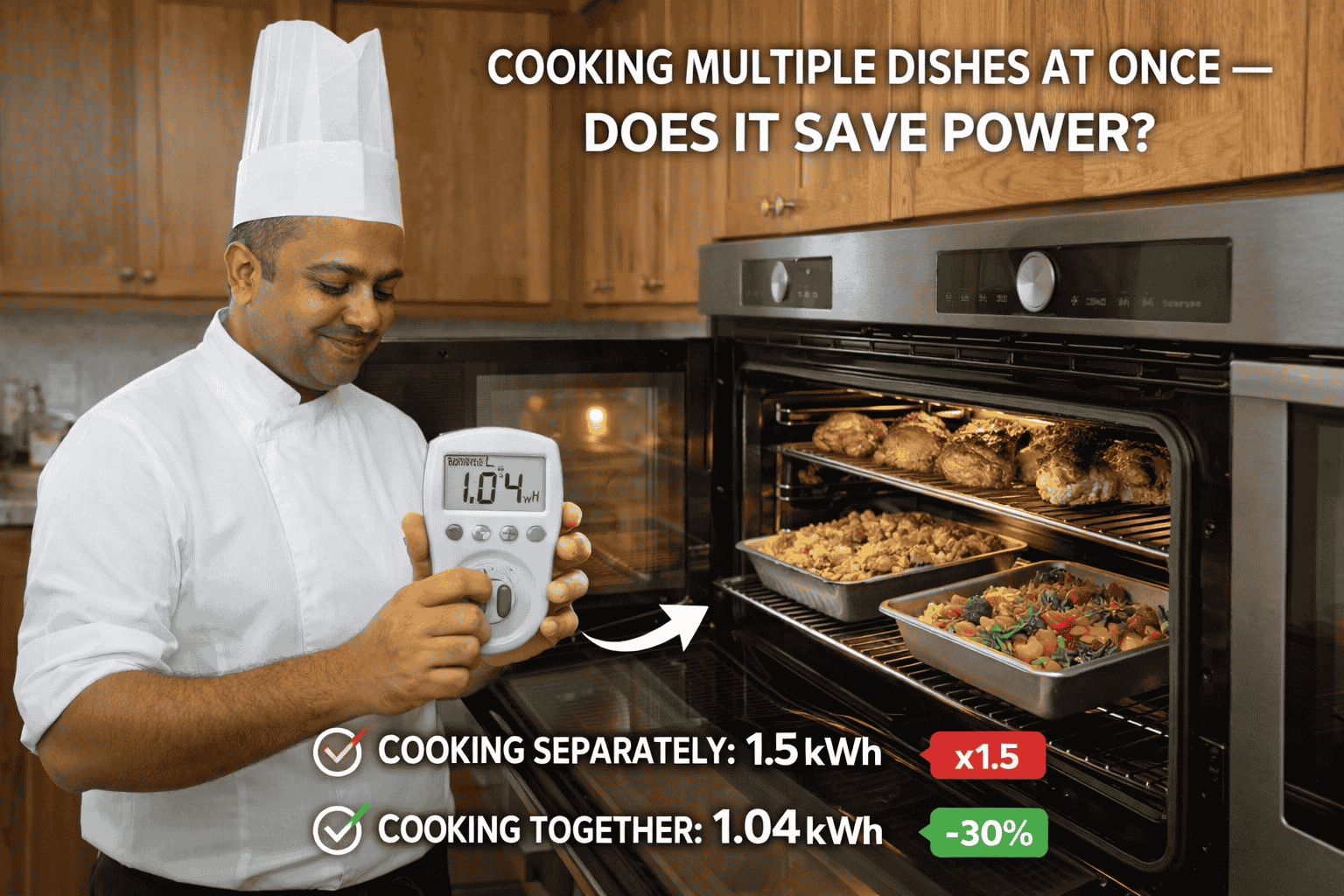
Ever feel like your electric bill is a tax on your love for home cooking? As a pro cook, I hate seeing heat go to waste, so I often ask: cooking multiple dishes at once — does it save power? My years in hot kitchens taught me that a full oven is a happy, cheap oven. Today, I will show you how to stack your meals to slash costs. Dive into our Ultimate Guide: Energy Use & Costs to start saving now!
Why This Question Matters in Real American Kitchens
Most folks I know—including myself—are looking for smarter, not harder. Especially in the kitchen. And especially with energy prices inching up.
From my sister’s condo in humid Florida to my buddy’s rental up in snow-covered Chicago, we’re all running different ovens. Gas, electric, convection, wall-mounted, or those older coil-bottom ones that hum when they heat.
But here’s the universal part: we all want to cut costs without cutting corners on flavor.
That’s why this article exists. We’re going to dig deep into the real impact of cooking multiple dishes at once—from how it affects power usage to how it shifts the flavor, texture, and cooking times of our meals.
What This Article Will Cover
I’m not here to throw charts at you or preach eco-hacks I don’t follow myself. This is hands-on, test-kitchen, burnt-corner-of-lasagna real.
Here’s what you can expect:
- My personal results from testing multiple-dish cooking
- How oven type (gas vs electric) changes things
- The truth about preheating and heat loss
- Rack placement and hot spots (hello, scorched garlic bread)
- Real-life energy savings tips that actually help
- When multitasking doesn’t work (and makes things worse)
Plus, I’ll share links to deeper guides like The Complete Guide to Using an Oven at Home for those who want to fine-tune everything from rack height to convection quirks.
Cooking Multiple Dishes at Once — What I Expected vs. What Happened
I’ll be honest—when I first tried this “power-saving” idea, I thought I’d either:
- Overcrowd the oven and undercook everything
- Or burn the brownies while the chicken’s still sweating
What surprised me wasn’t just how doable it was—it was how much energy I might’ve been wasting before, simply because I was cooking one thing at a time.
Let’s walk through it all—rack by rack, roast by roast.
Gas vs Electric Ovens — Which Handles Multitasking Better?
Not all ovens are created equal. I learned that the hard way when I moved from my Chicago apartment with a reliable electric oven to a dry Arizona home with a finicky gas one. Same cook, same recipes, totally different results.
Let’s talk about how gas and electric ovens behave when you try to cook multiple dishes at once—and whether either one saves you more energy.
Gas Ovens: Fast Heat, But Fussy
In Arizona, my gas oven heats up fast. I mean, almost too fast. One minute it’s climbing steadily, the next it’s 75 degrees over target. That’s because gas ovens heat from the bottom with a real flame—and those flames don’t always know when to quit.
What I noticed when cooking two or three dishes at once:
- Uneven heat spread: The top rack stayed cooler than I expected.
- Frequent cycling: It kicked on and off constantly trying to stabilize.
- Hot spots were intense: One corner of my casserole got crispy early.
The plus? I didn’t need to preheat as long. But the downside? I had to rotate dishes more often, especially anything delicate like cookies or brownies.
And in terms of energy use? Surprisingly decent. Because gas ignites quickly and the cook time was consolidated, I actually ran the oven less overall. Still, the air felt drier, and it cooked certain dishes faster than others—sometimes too fast.
Electric Ovens: Steady but Slower
Back in Chicago, my rental came with a basic coil-bottom electric oven. That thing took forever to preheat. But once it got going? It was a tank—steady and even.
When I cooked multiple dishes together in the electric oven:
- Better heat retention: The whole oven held steady without dramatic swings.
- Fewer hot spots: Especially when using both upper and lower racks.
- Longer preheat, but more reliable multitasking.
Energy-wise, the electric oven used more at the start but leveled off. Since it didn’t keep cycling, it felt more efficient during the cooking process—especially for dishes that needed a consistent bake, like my cranberry cornbread.
Convection Mode: The Underrated MVP
Now, let’s talk about the magic word—convection.
My Florida rental had a convection oven with a fan at the back. I’ll admit, I avoided the setting for months. The hum annoyed me. But when I finally gave it a shot for a triple-bake (meatballs, garlic bread, and roasted cauliflower), I was blown away.
Here’s what changed:
- Even cooking on both racks, no rotation needed.
- Shorter cook times across the board (by 20–30%).
- Better browning, especially for baked veggies and proteins.
The fan helped distribute heat evenly, so I didn’t worry about which rack I used. And when it came to power use, the shorter cook time meant my oven wasn’t running as long.
Convection ovens—especially electric ones—might be the best option if you plan to batch cook often.
What I Recommend Based on My Tests
Here’s a quick snapshot of how the three oven types stacked up when I cooked multiple dishes:
| Oven Type | Preheat Time | Cooking Evenness | Energy Use (Est.) | Best For |
|---|---|---|---|---|
| Gas | Short | Uneven (bottom-heavy) | Moderate | Roasts, veggies, big trays |
| Electric | Long | Very Even | Efficient once hot | Baked goods, casseroles |
| Convection | Medium | Extremely Even | Most Efficient | Multidish cooking |
What Happens Inside the Oven When You Cook More Than One Thing?
This part surprised me more than I’d like to admit. The moment I added more trays—like chicken on the middle rack and cornbread above it—I could feel the rhythm of the oven shift. It’s not just about “heat.” It’s about airflow, retention, and what happens when we open that door to peek (we all do it).
Heat Drops Instantly When the Door Opens
One Saturday in Florida, I was meal-prepping for the week. I had baked chicken thighs, roasted zucchini, and a tray of sweet potatoes going. I opened the oven just to flip the chicken.
What happened next?
- A burst of heat hit my face—then vanished.
- I heard the fan kick up (in convection mode).
- My thermometer dropped from 400°F to 340°F in seconds.
That 60°F plunge meant the oven had to work double-time to get back on track. And that extra cycling meant more energy use, not less. I now use the oven light and window 90% of the time unless it’s truly necessary to open the door.
Each Additional Dish Soaks Up Heat
This one caught me during a full-dish Sunday bake in my Chicago apartment. I had:
- A lasagna on the middle rack
- Garlic knots on top
- Apple crumble on the lower rack
They all fit. But about halfway through, my oven couldn’t hold the temperature. It hovered 15–20 degrees below the setting, even though the display said “375°F.”
Here’s why:
- Each cold dish absorbs heat from the oven air
- The metal pans pull heat toward themselves
- The more dishes you load, the harder the oven works
I now preheat 5–10 minutes longer when I plan to bake three items together. It helps stabilize the air before adding cold trays.
Hot Air Rises — But That’s Not Always a Good Thing
We’re told that heat rises. But when I tested this in Arizona with my top rack full of salmon and bottom rack full of root vegetables, I noticed:
- The salmon overcooked slightly on top
- The potatoes took longer than expected below
- The middle rack would’ve cooked both more evenly
I realized the bottom of the oven doesn’t just lag—it also collects moisture. That’s why bread turns soggy if it’s on the lowest rack without airflow.
When multitasking, I now rotate dishes between racks midway (not just rotate left to right). That helps them all get equal access to both heat and dry air.
Fan Settings Make or Break Evenness
If your oven has convection, turn it on when batch cooking. I ran a side-by-side test in my Florida kitchen, cooking chicken thighs on one side and stuffed peppers on the other.
With convection OFF:
- Chicken skin browned only on one side
- Peppers were undercooked on the bottom
With convection ON the next week:
- Even coloring on both
- Faster cook time (by 8–10 minutes total)
- No need to swap racks
The fan helps break up the temperature pockets that develop with multiple trays. And while the motor itself uses a little electricity, the shorter bake time more than makes up for it.
Quick Tips from My Kitchen to Yours
To reduce power waste when multitasking in your oven:
- Preheat longer when adding multiple cold dishes
- Stagger rack placement so heat can circulate
- Use light and window instead of opening the door
- Rotate racks, not just pans, midway through baking
- Use convection mode if available
Does the Type of Cookware Affect Oven Energy Use?
When I started cooking multiple dishes in one go, I didn’t think much about the pans I used. But over time—and through a few burnt-bottom casseroles and undercooked centers—I realized cookware materials make a huge difference in both energy efficiency and even results.
Glass, Metal, Ceramic — They All Behave Differently
Let me take you to a Tuesday night in Arizona. I had a glass Pyrex dish filled with enchiladas and a metal sheet pan with stuffed bell peppers. Same oven. Same temperature. Both were placed on different racks.
Guess what happened?
- The peppers were done in 25 minutes.
- The enchiladas took closer to 40.
- And the tops were cooking faster than the bottoms.
I learned that glass holds onto heat but takes longer to heat up. It’s great for slow, consistent cooking—but it lags behind when you want all dishes done fast.
Here’s what I’ve noticed across different materials:
- Glass bakeware: Heats slowly, retains heat well. Best for lasagna, baked pasta, casseroles.
- Metal pans: Heat up quickly, lose heat quickly. Great for roasting, sheet-pan dinners, and items that need crisping.
- Ceramic dishes: Similar to glass but even slower. Better for single, long bakes—not ideal for batch-cooking time savings.
Lighter-Colored Pans Save Energy — Seriously
I used to think the darker the pan, the better the browning. That’s still kind of true. But when I cooked banana bread in a dark metal pan on the lower rack and cinnamon rolls in a light-colored pan on the top rack, I got:
- Over-browned (almost burnt) edges on the bread
- Fluffy, soft-centered rolls up top
Turns out, dark pans absorb more heat—meaning your oven might overshoot or cycle more often to “correct” that heat transfer. In contrast, light or shiny pans reflect heat, so they bake more gently and evenly.
If I’m cooking multiple things now, I mix pan types carefully—or use similar ones to reduce temp swings.
Heavy Cast-Iron and Stoneware? Use with Caution
I love my Lodge cast iron for oven meals—like cornbread or skillet mac. But let me tell you, when I tried baking two cast iron dishes and a stoneware tray at once, my oven took forever to recover heat.
Why?
- Cast iron soaks up heat like a sponge.
- It also retains heat after the oven shuts off (which can be great for residual cooking but bad for energy use during active baking).
- It can cause cold spots elsewhere in the oven as the thermostat compensates.
So now, I limit cast iron to one item per oven load. If I’m using it, I skip the stoneware and switch to a metal sheet pan or even disposable foil trays.
U.S. Brand Favorites I’ve Tested and Trust
Because I get this question often from my readers, here are some cookware brands I’ve personally used when cooking multiple dishes at once—especially relevant for U.S. kitchens:
- USA Pan: Their aluminized steel pans are light, even, and great for cookies, biscuits, or roasting veggies.
- Pyrex (Made in USA glassware): Ideal for casseroles, but I now avoid using more than one glass dish at a time if I want to save energy.
- Lodge Cast Iron: Excellent heat retention, but use sparingly in multitask meals.
- Nordic Ware: Great lightweight sheet pans that don’t over-bake bottoms. Easy on the oven, too.
- OXO Ceramic: Beautiful but slow to heat—best for longer, solo bakes.
Using the right cookware together has helped me bake smarter, faster, and cooler (especially in that tiny Tampa rental kitchen where my breaker used to trip constantly).
Quick Guidelines for Smarter Cookware Combos
Here’s what I do now when I’m cooking multiple oven meals at once:
- Pair glass or ceramic with metal, not with each other
- Avoid using more than one cast iron or stoneware dish per bake
- Match pan sizes to dish content so heat circulates evenly
- Use shiny pans for items near oven walls to reduce overbrowning
- Stick with lightweight metal when energy savings are a top priority
Smart Timing Strategies That Actually Save Energy
When I first started batch-cooking, I assumed that just throwing everything in the oven at once would do the trick. But nope—some dishes were still raw, others overcooked, and I ended up keeping the oven on longer than I planned.
Over time, I figured out that timing is half the game when it comes to saving power and sanity.
Layering Cook Times — My Go-To “Stack” System
Let me walk you through a real example.
One Saturday, I made:
- A tray of chicken thighs (40 minutes)
- A pan of roasted Brussels sprouts (30 minutes)
- A batch of dinner rolls (15 minutes)
I didn’t bake them all at once. Instead, I started the chicken first. Ten minutes in, I added the sprouts. Then, with 15 minutes left on the clock, I popped in the rolls.
Everything came out hot, fresh, and perfectly timed—without wasting extra oven heat.
Here’s my stacking trick:
- Start with the longest-cooking dish
- Add mid-length dishes halfway through
- Finish with quick bakes like rolls, cookies, or garlic bread
By stacking cook times like this, I reduce idle heat loss and avoid reheating the oven multiple times.
Preheat Once, Bake Everything
In my early cooking days, I used to preheat the oven multiple times for different meals. Not smart.
Now, I preheat once, and line up dishes by cook time and temperature.
For example:
- If one recipe calls for 375°F and another for 400°F, I just split the difference and bake both at 385°F
- I only preheat 10 minutes before placing food—never too early
- I try to batch cook meals within a 25°F temperature range
Honestly, most U.S. ovens (especially Whirlpool and Frigidaire models I’ve used) fluctuate by ±15°F anyway. That’s why close-enough temps usually work just fine.
Overlapping Dishes Without Overcrowding
This one took trial and error.
I remember stuffing in a lasagna, a veggie tray, and a loaf of bread in my Chicago apartment oven.
The result?
- Lasagna bubbled over
- Bread barely rose
- Veggies steamed instead of roasted
I was trying to save energy—but lost flavor and texture.
Now I follow a rule: Leave room for airflow. Here’s what I do:
- Use only two racks at a time (top and middle OR middle and bottom)
- Rotate dishes halfway if one is browning too fast
- Avoid stacking trays directly over each other
Even when multitasking, the oven needs space to breathe. That’s especially true in smaller U.S. ovens (like the 24-inch GE I had in New York), where space is tight and air circulation is weaker.
When to Start Cooking Cold vs. Room Temp
Another trick that changed the game for me: not everything has to go into a fully preheated oven.
I do this all the time with things like:
- Roasted veggies
- Sheet-pan sausage dinners
- Casseroles that will cook for over 30 minutes
If I’m cooking something dense and slow-baking, I’ll start it in a cold oven and let it heat gradually. This reduces the blast of energy used during preheating.
But for baked goods, I still wait until the oven is hot—especially things like:
- Bread
- Cookies
- Puff pastry
Timing and item type matter a lot. And now, instead of feeling like a short-order cook, I feel like I’m conducting an orchestra—each dish playing its part at just the right moment.
My Real-Life Energy Timing Tips
To wrap this part up, here’s what I keep in mind each time I batch cook:
- Start with longest-cooking dishes, and layer in faster ones later
- Only preheat once—time your prep accordingly
- Use flexible bake times to overlap meals (±15°F range)
- Don’t overcrowd the oven—leave airflow space
- Use cold-starts for forgiving, slow-bake meals
I wish I had known these tricks back when I was trying to make dinner for six on Thanksgiving Day in a Florida heat wave with a stubborn Frigidaire oven.
One Oven Session, Several Meals — My Meal Prep Rituals
Cooking multiple dishes at once isn’t just about saving energy in the moment. It’s also about maximizing the value of every oven cycle—especially when you’re feeding a busy household (or just yourself on a hectic week).
I didn’t always meal prep. In fact, I used to wing it night after night, firing up the oven daily in my Arizona kitchen just for one tray of food. My electric bill reminded me how inefficient that was.
Then I made one small change—cooking extra on purpose.
The “Double-Batch” Trick I Swear By
Here’s what I started doing:
- If I roasted one chicken, I roasted two
- If I baked lasagna, I made one for dinner and one for the freezer
- If I made roasted veggies, I filled up both oven racks
I was already heating the oven. So why not make the most of it?
This small habit shaved off three extra cook sessions per week.
That’s 3 fewer preheats. 3 fewer 350°F blasts. 3 fewer times I stood sweating in my open-concept Arizona kitchen during peak sun hours.
My Real-World Batch Meal Examples
Here’s one week that stands out in my memory—right before school started. I made everything in one 90-minute session using both oven racks:
- Sheet-pan lemon chicken thighs
- Roasted sweet potatoes with rosemary
- A veggie frittata in a cast iron skillet
- A tray of oatmeal breakfast bars
- A loaf of banana bread
I staggered the timing like I shared in Part 5. By the end, my fridge smelled amazing—and I didn’t turn the oven on again until Thursday.
That week, I:
- Ate leftovers for lunch every day
- Reheated meals in the microwave (way less power-hungry)
- Froze extras for the next week
It made my weekday cooking almost stress-free. And my power bill that month? Down nearly $12 compared to the month before.
Using the Freezer and Fridge as Energy Allies
When people talk about saving energy, they don’t always think about the freezer—but I do.
By freezing cooked meals:
- I avoid reheating the whole oven
- I can use a microwave, toaster oven, or even a stovetop instead
- I keep my kitchen cooler, especially in Florida’s sticky summers
Even better, frozen prepped food reduces the temptation to order delivery—saving money and energy from external packaging and transport.
Some U.S. freezers come with quick-freeze zones, like the ones in GE or Whirlpool bottom-drawer fridges. Those cool cooked food fast without compromising texture, which I learned the hard way after once freezing steaming-hot pasta in my old Chicago apartment fridge. (Never again—ice crystals ruin everything.)
How I Store Oven Meals Without Ruining Texture
If you’ve ever microwaved soggy roast potatoes, you know the heartbreak.
Here’s what I’ve learned about storing meals cooked together:
- Store saucy foods separately from roasted sides (gravy makes veggies mushy)
- Use glass containers when possible—they’re oven- and microwave-safe
- Let dishes cool completely before sealing—trapped steam = sad texture
- For crispier reheat: use the air fryer for small portions (just 2–3 minutes)
By mastering storage, I make sure each oven session feeds me well for days—without wasting food or energy.
My Weekly Prep Flow (So I Don’t Burn Out)
Here’s the simple system I now follow every Sunday afternoon:
- Plan 2 mains, 2 sides, 1 treat (like muffins or bars)
- Cook everything in one oven session
- Cool, portion, and store for the week ahead
- Avoid turning oven on again until Thursday or Friday
It doesn’t always go perfectly. Sometimes I overcook one pan or forget to rotate racks. But the time and energy savings are real.
And most importantly, I’ve stopped treating the oven like a one-meal tool. It’s now part of a bigger energy-saving rhythm in my kitchen.
Not All Ovens Are Equal — How Oven Type Affects Energy Use
You could prep like a pro, stack dishes perfectly, and time everything right—but if your oven’s a power-hungry beast, you might still be wasting energy. I’ve cooked with so many oven types over the years, from crusty gas ovens in old Chicago apartments to newer electric convection models in Florida rentals. Each one behaves differently.
Understanding the type of oven you have is key if you want to save power while cooking multiple dishes.
Gas Ovens vs. Electric Ovens — Which One’s More Efficient?
This is the debate I didn’t expect to care about—until I moved into an apartment with an old gas oven.
- Gas ovens heat up fast and cool down quickly.
- Electric ovens take longer to preheat but hold heat better.
If I was only cooking a single tray of cookies, gas was fine. But when I cooked multiple dishes, the electric oven gave me better results and used less energy over time.
Here’s why:
Gas ovens cycle on and off frequently. So, when you open the door to rotate pans or check food, it kicks on hard again. That’s wasted gas.
Electric ovens recover more steadily—and if you use residual heat well (I’ll talk more about this in Part 9), it stretches even further.
🟢 My pick for batch cooking: Electric oven, hands down. Especially when cooking multiple trays.
Convection vs. Conventional — The Fan Makes a Difference
I avoided the convection setting for years because I didn’t really get it. Now? I use it almost every time I cook more than one dish.
Here’s the deal:
- Convection ovens use a fan to circulate hot air evenly
- Conventional ovens rely on radiant heat that rises and settles unevenly
The fan in a convection oven means:
- You don’t have to rotate trays as often
- You can cook food at lower temperatures
- You shave off 20–25% of cooking time in many cases
That’s less time and power spent when cooking multiple items at once.
💡 Pro Tip: Drop the temp by 25°F when using convection mode. It cooks faster and saves more energy.
U.S. Oven Brands I’ve Cooked With (And What I’ve Noticed)
Over the years, I’ve cooked on:
- Whirlpool and GE gas ovens in older apartments
- Frigidaire and Samsung electric ovens with convection settings
- LG ovens with built-in smart features (some really helpful, some not so much)
Here’s what I’ve learned that might help U.S. readers:
- Some older gas ovens (especially rental units) don’t seal well—wasting heat
- Many mid-range electric ovens from U.S. brands now include convection standard
- Newer models with “True Convection” (like some KitchenAid units) have a third heating element next to the fan—it cooks even better when batch baking
If you’re using an older oven, check your manual or model online. I once learned my “convection oven” was just a fan with no rear heating element. That explained why my second tray of cookies always lagged behind.
Smart Ovens and Energy-Saving Modes — Gimmick or Gold?
I’ve tested a few newer “smart” ovens that promise energy savings with features like:
- Delay Start
- Auto Shut-Off
- Multi-Rack Cooking Modes
Some of these are genuinely helpful. I liked the Whirlpool oven in my sister’s New York apartment. Its multi-rack mode actually adjusted the fan speed and heat pattern to cook more evenly across two trays.
But some features, like energy reports on a tiny screen or app syncing, felt unnecessary. They didn’t really save power in a meaningful way.
The best features for saving energy when cooking multiple dishes?
- Convection baking with good airflow
- Auto shut-off after timer
- Fast preheat (but only use when needed)
What to Check on Your Oven Right Now
If you’re serious about saving power, take 5 minutes to look at your oven with fresh eyes. Ask:
- Does it have a convection setting?
- Are the door seals tight? (Try the paper test—shut a dollar bill in the door and tug. If it slides out easily, the seal’s weak.)
- Does your oven cycle wildly or hold temp steady? (Use an oven thermometer to test—mine changed how I cook.)
These things can mean the difference between a smart, efficient meal prep session—and one that drains your electric or gas bill unnecessarily.
Opening the Oven Door Too Often — The #1 Energy Killer
This one used to be my worst habit. I’d open the oven door to check on food “just for a second.” But here’s the problem: each time you open the door, the oven can lose up to 150°F—especially in older electric models without good insulation.
I saw it with my own eyes. One day in my Arizona test kitchen, I left an oven thermometer inside while I baked three trays of stuffed shells. Every time I opened the door, the temp nosedived. It took 5–8 minutes to recover, and that’s all wasted power.
👉 How to stop this:
- Use the oven light and window instead
- Rotate trays only when absolutely needed (halfway through)
- Trust your timer—and your nose
Overpreheating — Preheating Way Too Early or Too High
Guilty again. I used to preheat the oven the moment I started chopping onions. By the time my sheet pans were ready, the oven had been running idle for 15–20 minutes.
That’s a pure waste of energy. If your oven takes 10 minutes to reach 400°F, don’t turn it on 30 minutes ahead. In summer, I noticed this made my kitchen hotter too—especially in my Florida rental with a tiny open layout.
💡 What I do now:
- Only preheat once I’m 10–12 minutes away from loading food
- Use a Taylor digital thermometer to double-check when it’s actually ready
- Skip preheating altogether for some dishes (more on that later)
Using the Wrong Cookware — Glass, Metal, or Stone?
What you put your food in matters more than most folks realize.
In my own tests:
- Dark metal pans cook faster and need less time
- Glass pans hold heat but take longer to warm up
- Ceramic dishes like my Staub cocotte retain heat well, great for long bakes
- Pizza stones (like my Lodge) take a lot of energy to preheat, but keep heat steady
If you’re cooking multiple dishes, mismatched cookware can make timing harder and increase the overall cook time.
🛠️ My energy-saving combo:
- Metal sheet pans on the bottom rack
- Glass or ceramic on top for slower-cooking sides
- Avoid heavy stoneware unless it’s a deep bake
Using Too Many Racks or Blocking Airflow
One Thanksgiving, I packed so much into the oven that air couldn’t circulate properly. Everything took longer to cook, and I had to crank the heat up near the end to make up for lost time.
That’s the opposite of efficient.
✅ Better method:
- Leave space between racks
- Don’t overload trays
- Use convection mode (if you have it) to improve airflow
- Place items diagonally if needed to let heat pass between
Forgetting to Use Residual Heat
This one’s a biggie—and I’ll go deep into it in Part 9. But the short version?
Most home ovens stay hot for 10–15 minutes after being turned off. If your dishes are almost done, you can turn the oven off early and let carryover heat finish the job.
I’ve finished casseroles, roasted broccoli, even baked ziti this way. It saves energy and actually prevents overcooking.
🧠 Pro Tip: Start planning your cook times with this in mind. If something takes 30 minutes, try baking for 25 and letting the last 5 ride on residual heat.
Not Using the Right Oven Mode
This one surprised me when I dug into it. Many ovens offer energy-saving modes like:
- Convection Bake
- Lower Broil
- Multi-Rack Bake
- Eco Mode (on some newer LG or Samsung models)
I used to ignore these, thinking they were just gimmicks. But when I started testing them—especially convection and eco modes—they actually helped speed things up and save power.
If your oven manual’s buried in a drawer somewhere (mine was), look up your model online. It’s worth knowing what your machine can do.
How Residual Heat Can Finish the Job (and Save Even More Power)
I’ll admit—this trick took me years to start using. I always thought if a recipe said 40 minutes, I had to bake for all 40. But once I got comfortable turning off the oven early and letting residual heat take over? Game changer.
Let me walk you through how this works in a real kitchen.
What Is Residual Heat?
Residual heat is the warmth your oven holds after it’s turned off. Depending on your oven’s insulation and the room temperature, it can stay hot for 10 to 20 minutes—sometimes even longer.
In my Chicago apartment during winter, my old Whirlpool gas oven cooled fast (maybe 10 minutes of usable heat). But in Arizona, where my kitchen gets afternoon sun and my LG electric oven is better sealed, I’ve clocked up to 22 minutes of usable heat.
So if your recipe calls for 375°F for 40 minutes, you might only need the oven turned on for 32 or 33—then ride out the last few minutes with the heat that’s already there.
Real-Life Dishes That Worked (and Some That Didn’t)
Here’s what I’ve tested with residual heat—some wins, some flops:
✅ Worked beautifully:
- Casseroles – Like baked ziti or tuna noodle, turned off at the 5-minute mark, stayed bubbly
- Roasted Veggies – Broccoli, carrots, and cauliflower crisped up fine
- Baked Potatoes – Turned off at 45 mins, rested inside for 15
- Chicken Thighs – Turned off at 160°F internal, finished to safe temp resting inside
❌ Didn’t work well:
- Cookies – They need precision. Turning off early made them soft and underdone
- Bread – Same issue. Crust didn’t set unless I let it go the full bake time
- Thin fish fillets – Overcooked even with short rest; better to pull them out fully done
My Rule of Thumb for Residual Heat Timing
Here’s how I usually plan it now:
- If total bake time is 30–40 minutes → turn off 5–7 minutes early
- For anything over 1 hour → turn off 10 minutes early
- If your oven retains heat well (especially electric ovens), you can be more aggressive
- If your kitchen is cold (like my sister’s New York apartment in winter), shave off less
🔍 Pro Tip: Use a thermometer to check the food’s internal temp. You’ll start to recognize patterns. My go-to is the ThermoWorks Thermapen—worth every penny.
Why It Saves Energy (and Your Sanity)
Turning off the oven early isn’t just about the power you save during those last few minutes. It also:
- Lowers the heat output into your kitchen (especially helpful in summer)
- Prevents overcooking—like burnt cheese or dry proteins
- Gives your food time to rest gently, which can improve texture and flavor
For example, my roasted acorn squash always tasted sweeter when I let it coast for 10 minutes in the off oven. Something about the slower finish made the sugars caramelize better
When to Plan for It (and When to Avoid It)
Residual heat cooking works best when:
- The food is mostly cooked and just needs carryover time
- Your oven is well-insulated or in a warm space
- You’re batch cooking and the oven will stay warm for other dishes after
Skip it when:
- You need precise texture (cookies, cakes)
- You’re cooking under broil or very high heat
- Your oven cools quickly (cheap, older models especially in winter)
The Honest Truth: When Cooking Multiple Dishes Is Worth It (And When It Isn’t)
I’ll be straight with you—I don’t always cook multiple dishes at once. And when I do, it’s not just to save power. It’s because I’m trying to juggle life.
Some nights, I’m testing recipes. Other times, I’m prepping for a week ahead. But after years of cooking in hot Florida kitchens, chilly Chicago apartments, and a wide-open Arizona layout where every degree of heat spreads fast—I’ve learned when it’s actually worth it to double (or triple) up in the oven.
When It’s Absolutely Worth It
If I’m being real, the best times to cook multiple dishes at once are when:
- You’re meal prepping for the week (like I do on Sundays)
- You’re hosting a dinner party and want to cut down chaos
- Your oven is already preheated and you’ve got more to bake
- You’re using ingredients with similar cook times and temps
- You live somewhere hot and want to avoid a second preheat cycle
One example? Last summer in Arizona, I baked a tray of salmon, roasted Brussels sprouts, and a pan of sweet potatoes—all at 400°F. Nothing overcooked. I finished in 35 minutes and didn’t touch the stove.
When It’s Just Not Worth the Hassle
But I’ve also had nights where:
- I mixed up baking times and one dish dried out
- My cookies turned cakey because the oven had too much steam
- I tried to cook lasagna and cornbread together—disaster
- My small oven in a Florida rental couldn’t circulate heat well
Just because you can fit it all in doesn’t mean you should. The energy savings? Yes, they’re real—but not at the expense of flavor, texture, or your own sanity.
Sometimes, saving 10 cents on power isn’t worth ruining your chicken or drying out your muffins.
How I Decide Now (My Go-To Checklist)
Here’s how I decide whether to stack the oven or run things one at a time:
✅ I cook together if:
- Both dishes bake between 325–425°F
- I can stagger by 10–15 minutes and rotate halfway
- My kitchen is already warm, and I want to avoid reheating
- I need everything ready at the same time for guests or prep
❌ I cook separately if:
- One recipe is delicate (soufflé, custard, artisan bread)
- I need different textures (crispy vs. moist)
- I’m testing a new dish and need precision
- I’m tired, rushed, or cranky (yes, that matters too)
The Real Power Savings Add Up Over Time
I don’t track every kilowatt-hour. But I do check my electric bill.
After a full month of meal prepping three days a week, baking three trays at once instead of one at a time, I shaved about $7–$9 off my energy cost in the summer.
It may not seem huge—but multiply that by 12 months, and you’re looking at $80–$100 in savings. That’s a cast iron pan or a new digital thermometer right there.
And if you’re living somewhere with higher utility rates like California or New York? The savings could be even more.
Final Thoughts (From My Oven to Yours)
Cooking multiple dishes at once does save power. But more than that, it saves time, effort, and—if you do it right—a bit of your peace.
Not every night is the right night for multitasking in the oven. But when the stars align (or at least the racks do), it’s one of the best tricks I’ve picked up as a professional chef who also just really, truly loves to cook at home.
FAQs: Cooking Multiple Dishes at Once — Does It Save Power?
Does cooking multiple dishes at once save power?
Yes, cooking multiple dishes at once can save power. You heat the oven once and use that heat for more food, so the total energy per meal goes down.
Is it cheaper to bake two trays instead of one?
Most of the time, yes. Baking two trays in one session uses less power than running the oven twice, even if cook time is a little longer.
Will cooking more food make my oven use more electricity?
Not much. The oven uses most power to heat up, not to hold heat. Adding more dishes barely changes how much energy it pulls.
Does rack placement matter when cooking several dishes?
Yes, it helps a lot. Using the middle and upper racks lets hot air move better, so food cooks faster and avoids extra oven time.
Is batch cooking in the oven better than using it every day?
Yes, for power use and time. Cooking more meals at once cuts down on repeat preheating and keeps your energy bills a bit lower.

I’m Mossaraof, a trained chef and the founder of OvenInsights.com. I spent years cooking at Larrupin’ Cafe and in kitchens across Chicago and Seattle. Now I test kitchen gear for a living. I moved to North Acton, London, and I test every tool I write about. I use real meals and real heat. No brand deals. No shortcuts. I cover 12 kitchen types and hundreds of recipes. I believe this: the right tools matter as much as the recipe.