At A Glance
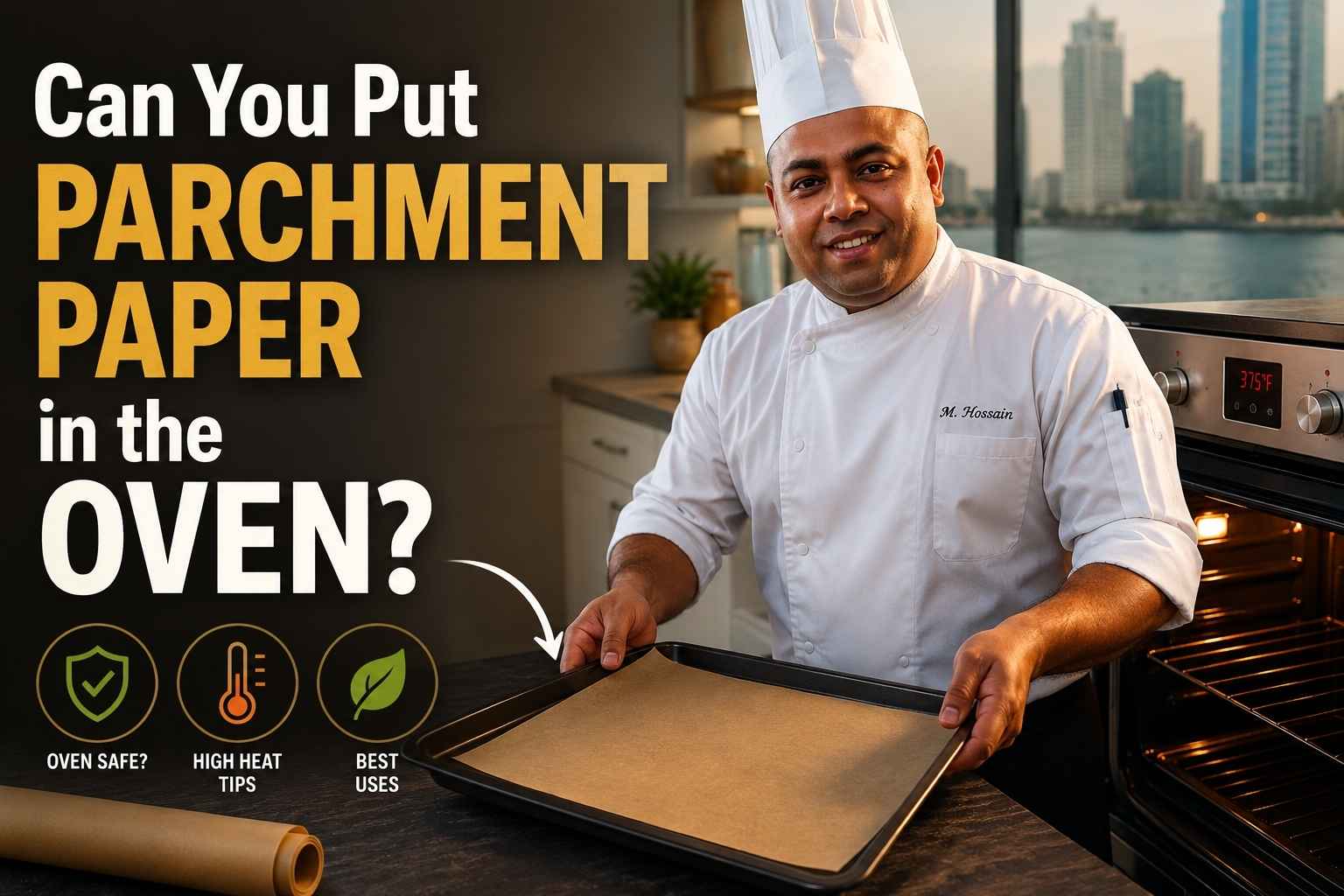
- Yes, parchment paper is oven-safe up to 420-450°F (most brands cap here per Reynolds Kitchens, 2025)
- Above 450°F, parchment can scorch, smoke, or char at the edges
- Never put parchment under a broiler – direct heat will ignite it
- Parchment beats wax paper for oven use; wax paper melts and smokes at low heat
- For high-heat searing (500°F+) or cast iron, skip parchment and go bare
Can you put parchment paper in the oven? Yes, and I use it almost every day in my own kitchen. I still remember the first time I tried it, worried it might catch fire like foil does sometimes. It didn’t, and now it’s my go-to trick for easy cleanup and perfect baking. Stick with me, and I’ll show you exactly how hot you can go, and why this simple paper is a total game-changer.
What Is Parchment Paper, Really?
Parchment paper is paper treated to handle heat and resist sticking. Most kitchen parchment today has a thin silicone coating on both sides (King Arthur Baking, 2024). This coating is what makes it non-stick and water-resistant.
Some older or specialty parchments use a quilon coating instead. Quilon is a chromium-based compound. It works, but silicone has mostly replaced it in home kitchens because it’s safer and cheaper to produce.
The paper itself is usually unbleached kraft paper or bleached white paper. Color doesn’t change performance. I’ve used both side by side and seen zero difference in browning or sticking.
Here’s the key point: the silicone coating is the part that gives parchment its heat tolerance. Without it, you’d just have regular paper, and regular paper catches fire fast.
The Real Temperature Limit (And Why It’s Lower Than You Think)
Most parchment paper is rated for 420-450°F (Reynolds Kitchens, 2025). Some premium brands push to 475°F. I’ve never seen a consumer brand rated above 500°F.
So why the gap? Silicone coatings start to break down around 450-475°F. Below that range, parchment performs fine. Above it, the coating can darken, release a faint smell, and eventually char at the edges.
Smoke Point vs. Fire Risk – These Are Not the Same Thing
A smoke point is the temperature where something starts to smolder and give off smoke, but it isn’t actively burning. Parchment hits its smoke point somewhere past 450°F, depending on the brand.
Fire risk is different. That’s the point where the paper catches an open flame. For parchment, that’s usually well above 500°F, but it depends heavily on how close the paper sits to the heating element.
I’ve scorched plenty of parchment edges in 25 years of cooking. Scorching isn’t a fire. It’s the coating breaking down and turning brown or black. But scorched parchment near a hot coil or flame can absolutely become a fire risk if you walk away.
Parchment Paper Temperature & Safety Reference Table
| Oven Temp | Safe for Parchment? | Smoke Risk | Notes |
|---|---|---|---|
| 300°F | Yes | None | Ideal for slow roasts, dehydrating, meringues |
| 350°F | Yes | None | Standard baking range. Cookies, cakes, sheet pans |
| 400°F | Yes | Very low | Most roasted veggies and proteins are fine here |
| 425°F | Yes (check brand) | Low | Approaching the upper limit for most brands |
| 450°F | Borderline | Moderate at edges | Many brands cap here. Watch for browning on exposed edges |
| 475°F | Risky | Moderate to high | Only premium high-heat parchment rated for this |
| 500°F+ | Not recommended | High | Skip parchment. Use a baking stone, bare pan, or silicone mat rated for this range |
Parchment vs. Wax Paper vs. Foil vs. Silicone Mats
This is where I see the most kitchen confusion, even from people who cook every day.
Parchment Paper
Use parchment for baking, roasting up to 450°F, and lining pans for easy cleanup. It’s non-stick, won’t add flavor, and handles direct oven heat well within its rated range.
Wax Paper
Never put wax paper in the oven. Wax paper has a thin wax coating, not silicone. That wax melts around 150°F and starts smoking soon after (America’s Test Kitchen, 2023). I’ve watched a new line cook do this with a tray of bacon. The smoke alarm went off in under five minutes.
Wax paper is for cold and room-temperature tasks: separating layers of cookies, lining a counter for rolling dough, or wrapping sandwiches.
Aluminum Foil
Foil handles any oven temperature your oven can reach. It’s great for wrapping, covering dishes to prevent over-browning, and lining pans for messy roasts.
The downside: foil can react with acidic foods like tomatoes or citrus, giving food a slightly metallic taste (USDA, 2024). I avoid foil for anything with a vinegar-heavy marinade.
Silicone Baking Mats
Reusable silicone mats are rated for higher heat than parchment, often up to 480-500°F depending on the brand. They’re great for repeated use and reduce waste.
The catch: they’re not disposable, so they need washing between uses. For a busy kitchen doing back-to-back bakes, that’s a real time cost. I keep both on hand and choose based on the job.
| Material | Max Safe Temp | Best For | Avoid For |
|---|---|---|---|
| Parchment Paper | ~450°F | Baking, roasting, lining pans | Broiler, 500°F+ |
| Wax Paper | Not oven-safe | Cold prep, layering | Any oven use |
| Aluminum Foil | Any oven temp | Wrapping, covering, high heat | Acidic foods |
| Silicone Mat | ~480-500°F | Repeated baking, candy work | Single-use convenience |
Why Parchment Should (Almost) Never Go Under the Broiler
Broilers run hot. Most home broilers hit 500-550°F, and some commercial broilers go higher (Serious Eats, 2024). That’s well past parchment’s limit.
The bigger issue isn’t just heat. It’s proximity. Broiler elements sit just a few inches from the food. Parchment that close to an open flame or glowing coil can ignite, not just scorch.
I’ve broken this rule exactly once in my career, on purpose, to test it for a training session with new cooks. We put a small parchment scrap under a commercial broiler for 30 seconds. It curled, browned, then caught a small flame at the edge. Thirty seconds. That’s all it took.
The only exception: some brands make broiler-safe parchment rated higher than standard sheets. If you don’t know your brand’s rating, assume it’s not broiler-safe.
High-Heat Baking: 425-500°F
This is the range where most home cooks get nervous, and honestly, where most confusion happens.
Pizza (450-500°F)
For pizza at 475°F or higher, I skip parchment entirely. Use a pizza stone, steel, or well-oiled pan. Parchment at these temps can scorch under the crust and add a burnt-paper smell to your pizza. Not worth it.
If you’re baking at 425-450°F, parchment under the pizza is fine, as long as it’s not extending past the pan edges.
Roasted Vegetables (400-450°F)
This is parchment’s sweet spot. I roast vegetables on parchment at 425°F constantly. Even cuts, even browning, easy cleanup. No issues within this range.
High-Heat Proteins (450°F+)
For a steak finished at 500°F, or chicken thighs crisped at 475°F, I go bare pan or use a cast iron skillet. The fat rendering at high heat plus parchment near its limit is a combination I avoid.
Rule of thumb from my kitchen: if the recipe calls for 450°F or above, ask whether parchment is actually necessary. Often, a light oil coating on the pan does the same job without the risk.
Common Mistakes (I’ve Made Most of These)
Mistake 1: Letting Parchment Edges Hang Over the Pan
This is the most common mistake I see, in home and professional kitchens alike. If parchment extends past the pan and gets close to the oven walls or heating element, it can scorch or catch fire.
Fix: trim parchment to fit inside the pan, with maybe half an inch of overhang at most.
Mistake 2: Using Parchment in Air Fryers Incorrectly
Air fryers use intense, fast-moving hot air. Loose parchment can get sucked into the heating element. I’ve seen this happen with cheap, lightweight parchment sheets.
Fix: use perforated parchment sheets designed for air fryers, and always weigh them down with food. Never run an empty air fryer with parchment inside.
Mistake 3: Reusing Scorched Parchment
Scorched parchment has already started breaking down. The coating that made it non-stick and heat-resistant is compromised. Reusing it raises your fire risk on the second go.
Fix: one use per sheet if it’s browned or smells like burnt paper. Throw it out.
Mistake 4: Confusing Parchment with Wax Paper
These look almost identical in the box. I’ve had cooks grab the wrong roll mid-rush. The fix is simple but easy to forget under pressure.
Fix: label your rolls, or buy only parchment if your kitchen doesn’t use wax paper often. One less thing to mix up.
Altitude and Oven Calibration: The Hidden Factor
Here’s something most articles skip entirely. Your oven might not actually be running at the temperature on the dial.
Home ovens can run 25-50°F hotter or cooler than the set temperature, especially in older units (Cook’s Illustrated, 2023). I’ve worked in two different restaurant kitchens where the ovens were off by more than 20°F, confirmed with an independent oven thermometer.
At higher altitudes, ovens often run hotter relative to the set temp because of changes in how heat transfers through thinner air (King Arthur Baking, 2024).
If your oven runs hot and you’re baking at “425°F” but it’s actually closer to 460°F, that’s enough to push parchment past its comfort zone, especially at the edges closest to the heating element.
My fix: I keep a cheap oven thermometer in every oven I work with. It’s a five-dollar tool that prevents a lot of guesswork.
How to Tell If Your Parchment Is Overheating
Watch for these four signs. They show up in this order, usually:
- Color change. The parchment starts turning from its normal tan or white to a darker brown, especially at the edges.
- Smell. A faint burnt-paper smell is your first real warning. It’s subtle at first, then unmistakable.
- Smoke. Thin wisps of smoke, usually starting at the edges or any spot touching the pan’s hot rim.
- Brittleness. After cooling, overheated parchment becomes crisp and crumbly instead of flexible.
If you see color change and smell at the same time, pull the tray and check what’s happening. You likely have time to fix it before it gets worse. If you see actual smoke, open the oven, pull the tray, and let things cool before continuing.
When Parchment Helps vs. When to Skip It
Parchment Helps When:
- Baking cookies, cakes, or pastries (easy release, even browning)
- Roasting vegetables at 350-425°F
- Lining pans for sticky or messy bakes
- Steaming en papillote (parchment packets) at moderate temps
Skip Parchment When:
- Cast iron cooking. Cast iron retains and radiates heat unevenly with paper on it, and most cast iron work happens above parchment’s safe range anyway.
- Very high-heat searing (475°F+). The combination of high heat and direct contact with a hot pan surface is asking for scorching.
- Direct broiler contact. Covered above, but worth repeating: broiler heat and parchment don’t mix.
- Deep frying or shallow frying in the oven. Oil splatter plus parchment plus high heat is a bad combination.
My Personal Routine for Using Parchment Safely
After 15 years of kitchen work, here’s exactly what I do, every time, without thinking about it:
- I check the temp before I grab parchment. Anything 450°F or above, I default to bare pan or a silicone mat rated for that heat.
- I cut parchment to fit, not just rip off a sheet. A few extra seconds of trimming saves me from edge scorching nine times out of ten.
- I never walk away during the first five minutes. Most scorching shows up early. If something’s going to char, it usually starts in the first few minutes at temp.
- I keep an oven thermometer in every oven I use regularly. Dial settings lie. Thermometers don’t.
- I toss parchment after one use if it’s browned at all. No second chances for compromised sheets.
- I label my parchment and wax paper rolls separately. This sounds excessive until you’ve grabbed the wrong one during a dinner rush.
This routine takes maybe ten extra seconds per use. In a busy kitchen, that’s nothing. At home, it’s even less of a factor.
Frequently Asked Questions
Is parchment paper safe at 400°F?
Yes. 400°F is well within the standard range for most parchment paper brands, which are rated up to 420-450°F (Reynolds Kitchens, 2025). You shouldn’t see any browning or smoke at this temperature.
Can parchment paper catch fire in the oven?
It can, but only under specific conditions: temperatures well above its rating (typically 500°F+), direct contact with a heating element, or extended exposure under a broiler. At normal baking temps with proper placement, fire risk is very low.
What happens if parchment paper touches the oven’s heating element?
Direct contact with a heating element can cause the parchment to scorch quickly and potentially ignite, since the element runs far hotter than the oven’s air temperature. Always trim parchment so it doesn’t extend to the oven walls or rack edges.
Is parchment paper the same as wax paper?
No. Parchment paper has a silicone coating and is oven-safe up to roughly 450°F. Wax paper has a wax coating that melts and smokes at low temperatures and should never go in the oven (America’s Test Kitchen, 2023).
Can I use parchment paper in an air fryer?
Yes, but use perforated parchment made for air fryers, and always place food on top to weigh it down. Loose parchment can get pulled into the heating element by the fan.
Why does parchment paper turn brown in my oven?
Browning usually means the parchment is approaching or exceeding its rated temperature, or it’s positioned too close to a heating element. It’s the coating starting to break down. If browning is mild and at the edges only, the food is likely still fine, but the sheet shouldn’t be reused.
Can I put parchment paper under the broiler?
Generally, no. Broiler temperatures often exceed 500°F and the heat source sits very close to the food, both of which are conditions parchment isn’t built for. Use a broiler-safe pan without parchment instead.
Does altitude affect how parchment performs in the oven?
Indirectly, yes. Ovens at higher altitudes can run hotter relative to their set temperature (King Arthur Baking, 2024), which can push parchment closer to or past its safe limit even when the dial reads a “safe” number. An oven thermometer helps catch this.
Key Takeaways
- Parchment paper is safe up to 420-450°F for most brands; check your specific packaging
- Wax paper is never oven-safe; it’s a different product with a different coating
- Trim parchment to fit your pan; overhanging edges near heating elements are the top cause of scorching
- Skip parchment under the broiler and for searing above 475°F
- An oven thermometer is the cheapest tool to prevent surprise scorching from miscalibrated ovens
- Brown color, smell, smoke, and brittleness are your warning signs, in that order
- One use per sheet if it’s already browned; don’t push your luck with a compromised sheet

I’m Mossaraof, a trained chef and the founder of OvenInsights.com. I spent years cooking at Larrupin’ Cafe and in kitchens across Chicago and Seattle. Now I test kitchen gear for a living. I moved to North Acton, London, and I test every tool I write about. I use real meals and real heat. No brand deals. No shortcuts. I cover 12 kitchen types and hundreds of recipes. I believe this: the right tools matter as much as the recipe.