
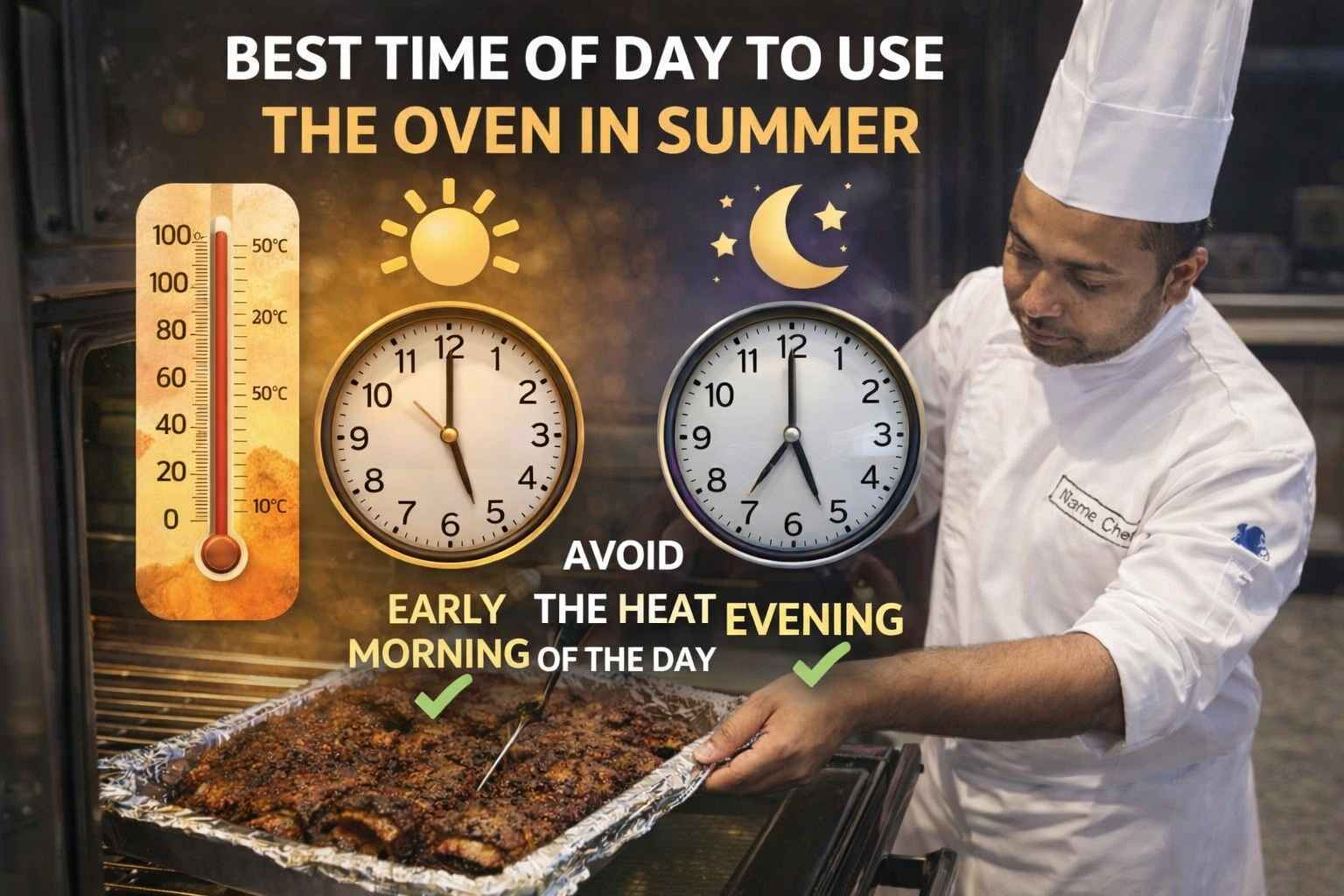
Does your kitchen feel like a sauna the moment you start roasting? As a cook, I know the pain of a hot house, so I found the best time of day to use the oven in summer. My years in the kitchen taught me how to beat the heat and save on bills. Today, I will show you when to bake so you can stay cool. Read our Ultimate Guide: Energy Use & Costs to keep your home comfy!
How Ovens Affect Indoor Temperature
I didn’t realize how much an oven could change the feel of an entire home until I moved into that open-plan Florida rental.
Even a 350°F bake would warm up the living room. My A/C had to work double just to keep things livable. If I used the oven around midday, my thermostat would spike by 6–8 degrees, and I’d be drenched before dinner was even on the table.
The worst part? It wasn’t just discomfort. It was energy waste. And sweat. Lots of sweat.
Signs You’re Using Your Oven at the Wrong Time
Over the years, I picked up on a few dead giveaways that I’d chosen the wrong time:
- My A/C ran constantly, but I still felt sticky.
- My windows fogged like a bad Florida storm.
- Food cooked fine, but I felt overbaked myself.
- I’d avoid the kitchen for hours after cleanup.
These weren’t just minor annoyances. They were signs I needed to rethink when I cooked — not just what I cooked.
Morning — The Underrated Oven Window
Mornings might just be your oven’s secret weapon in summer. Here’s how I tested it.
Why I Started Baking at 6:45 AM
One Sunday, out of pure desperation, I set my alarm for 6:30 AM. By 6:45, I was already mixing muffin batter while the sun was still lazy.
That morning was calm. The air was cool. I could actually hear birds. No sweating. No fighting the A/C. Just a warm oven and cooler vibes.
I baked a tray of zucchini muffins, a lasagna for the week, and even roasted some chickpeas — all done before 8:15. Coffee in hand. Kitchen still pleasant. No fan blasting in my face.
Ideal Dishes to Bake in the Morning
Morning became my new baking zone — especially when planning meals ahead. I still do this now and again, especially during heat waves.
Some things that work perfectly in the early hours:
- Breakfast muffins (blueberry, banana nut, lemon poppyseed)
- Roasted vegetables for later salads
- Casseroles or baked pasta to reheat for dinner
- Bread loaves (I love using Lodge pans for this)
Baking early also helps cut back on peak energy usage. Most U.S. utility companies charge more in the late afternoon — so mornings = budget friendly.
U.S. Climate Insights (Based on My Kitchens)
I’ve cooked in three wildly different kitchens across the U.S.:
- Chicago mornings: Perfect for baking — crisp, dry air and cool light.
- Arizona mornings: Already warm, but still better than 2 PM.
- Florida mornings: Humid, yes, but nowhere near the sticky mess you get later.
Even my NYC trip to visit my sister showed how her closed kitchen stayed cool longer in the AM — especially with a north-facing window.
Late Evening Cooking — A Surprisingly Chill Option
After the sun sets, the kitchen becomes manageable again. But not all evenings are equal.
Post-8PM Oven Sessions in My Phoenix Rental
When I moved to Arizona, I thought, “Well, it’s dry heat. How bad can it be?” Turns out… pretty bad—at least until the sun drops.
My first summer there, I tested using the oven after dark. Around 8:30 PM, I popped in a meatloaf. To my surprise, the kitchen didn’t turn into a furnace.
Unlike Florida, Arizona’s temps drop quickly after sunset. That dry desert air actually worked in my favor. I didn’t even need to crank the A/C. My only regret? I didn’t try it sooner.
Cooling Strategies That Helped
Of course, not all evenings are created equal. In some kitchens, heat lingers. In others, it disappears fast.
Here’s what helped me during late-night oven sessions:
- Opened the backdoor to catch a breeze
- Placed a box fan near the hallway to push heat out
- Turned off all unnecessary lights — especially overhead ones (they add more heat than you’d think)
- Kept cold drinks nearby — iced tea or cucumber water became my sidekicks
Sometimes I’d even prep dinner during the day and just bake it post-sunset. Less fuss. More chill.
Best Recipes for Evening Ovens
Evening oven time isn’t about slow-roasted briskets. It’s about quick, satisfying meals without the sweat.

Here’s what I leaned on during summer nights:
- Sheet pan dinners (chicken thighs, cherry tomatoes, sliced zucchini)
- Mini pizzas using naan bread or leftover dough
- Baked tofu cubes with sesame oil and soy sauce
- Sweet potatoes roasted while I showered
- Berry cobbler baked while cleaning up — eaten lukewarm, straight from the dish
There’s something comforting about a warm dinner when the night is cool. And honestly, it became my new summer rhythm.
When Evenings Don’t Work
That said, I’ve had nights where it just didn’t cool down. Especially during heat waves in places like Houston or Atlanta. Even post-9PM, the air stayed thick and stubborn.
On those nights, I skipped the oven and turned to leftovers or used my air fryer instead. No shame in adapting — I’ve learned to pick my battles with heat.
What About Midday Cooking? (Spoiler: Try to Avoid It)
I used to think I could “power through” a midday roast. I was wrong. Here’s what happened.
That Time I Baked Lasagna at 2:10 PM (Chicago Summer)
I thought I was being productive. It was a Wednesday. I’d just gotten off a Zoom call and had a solid hour before picking up groceries.
So I threw together a quick lasagna and slid it into the oven around 2 PM.
Huge mistake.
Within 15 minutes, my apartment felt like a sauna. The A/C kicked into overdrive. I cracked a window — bad idea. The street noise poured in, and the heat didn’t leave. By the time the lasagna was bubbling, I was melting.
I sat on the kitchen floor with a wet towel on my neck and swore I’d never do it again.
Energy Costs Spike with Peak Usage
Most utility companies in the U.S. charge more during peak afternoon hours — usually between 2 PM and 7 PM.
That lasagna day? It bumped my bill. I didn’t notice it until I got the July statement from ComEd. Cooking during those hours adds stress to your HVAC system and your wallet.
After that, I looked into energy-saving habits. And I stopped using the oven during peak hours unless it was an emergency (or I forgot, which happens more often than I like to admit).
Kitchen Feels Like a Sauna — Even With A/C
Even if you have a strong air conditioner, your oven will challenge it.
Heat from the oven doesn’t just stay in the kitchen — it leaks into hallways, creeps into bedrooms, and clings to furniture. I’d try to nap after a midday cook and still feel like I was lying in a warm tortilla wrap.
Plus, your food can actually take longer to cook. Hot kitchens mess with oven efficiency — I didn’t believe it until my muffins started baking unevenly in July.
If You Must Cook Midday…
Sometimes it’s unavoidable. Maybe you’ve got guests, or maybe dinner just has to be ready before 5.
Here’s what I do when I have no other choice:
- Use the oven briefly — broil instead of bake when possible
- Keep portions small — no giant roasts or casseroles
- Choose lighter pans — I use USA Pan aluminum sheets, which heat fast
- Skip preheating when it’s safe to do so (veggies don’t mind)
- Plan ahead — do chopping and prep in the morning, just bake midday
And always, always keep a cold washcloth in the fridge. I wrap it around my neck like a scarf of sanity.
How Kitchen Layout and Location Affects Ideal Oven Time
Not all kitchens are created equal. Mine have ranged from galley styles to open concepts — and the impact is real.
Open Layouts Trap Heat (Arizona Apartment Example)
When I lived in Tempe, Arizona, my kitchen flowed right into the living room. No doors, no divider—just a big, open space with tile floors and high ceilings.
It looked gorgeous at move-in. But the moment I turned on the oven, heat spread like wildfire. The whole apartment warmed up. Even after I finished cooking, the space stayed hot for hours. The A/C had to cool everything—not just the kitchen.
Evening baking helped a little, but on 105°F days, it still felt like I was roasting in my own convection oven.
Galley Kitchens Heat Fast But Cool Faster
My sister’s NYC apartment had a tiny galley kitchen with a single door and one window. Honestly, it looked like a hallway with an oven jammed in.
But that layout had a weird advantage in summer. The heat stayed in the kitchen. She’d close the door, open the window, and trap the warmth inside while the rest of the apartment stayed tolerable.
I visited in June one year and baked a tray of oatmeal cookies at 7 AM. The kitchen got warm, but it cooled down fast once the oven turned off. Small space, quick recovery.
North vs South Window Placement (A Subtle But Big Deal)
When I finally got my own place in the Midwest, I noticed something I never thought about before—window direction.
My oven sat right next to a large, south-facing window. In summer, that thing turned into a magnifying glass by 3 PM. I’d feel the heat on my skin just walking past it.
Eventually, I installed a light-filtering curtain, but it was a game changer once I learned to schedule my cooking for the morning or after sunset. No extra solar heat, no oven fighting with the sun.
In contrast, when I visited a friend with a north-facing kitchen, it stayed cool even at noon—a small layout detail that made a huge difference.
What I Learned About Layout Timing
Every kitchen has its own “oven rhythm.” You learn it by living in the space. Trial, error, sweat, and all.
If your layout is open:
- Cook early morning or after dark
- Use fans to move air toward windows or vents
- Try to avoid cooking during peak sun hours (2–5 PM)
If your kitchen is closed off:
- Crack a window before baking
- Shut the door to contain the heat
- Cook fast and air out afterward
Sometimes it’s not just the time of day — it’s how your kitchen breathes.
Smart Strategies to Beat the Heat While Baking
If you have to use the oven during a hot spell, there are ways to outsmart it.
Bake in Batches, Then Reheat
One Sunday in late June, I set my alarm early and went on a baking blitz. I roasted a tray of chicken thighs, baked sweet potatoes, and slid in a small peach cobbler — all before 9 AM.
By noon, I was sipping iced coffee while my kitchen stayed blissfully cool.
That one morning session gave me meals for four days. I’d just reheat the dishes in the microwave, air fryer, or even a skillet when needed — way less heat than turning the oven on every evening.
This works even better if you’re feeding a family or meal prepping for the workweek.
Use Your Oven Lightly
Sometimes, it’s not about what you bake, but how you do it. Here are a few tweaks I use during summer:
- Turn off the oven 5–10 minutes early — residual heat finishes the job
- Skip preheating for recipes like roasted vegetables or casseroles
- Use convection mode if your oven has it — cooks faster, less time = less heat
I also avoid baking dishes that need constant opening and checking. Every time you open the door, it’s like unleashing a mini heat wave into your kitchen.
Tools That Make a Difference
Over time, I’ve tested dozens of tools. Some helped. Some didn’t. But a few became non-negotiables during the summer months.
Pizza Stones and Cast Iron (Heat Holders)
- My Lodge pizza stone is a beast — I preheat it once, and it stays hot long after the oven is off
- Cast iron (like my 10-inch skillet) holds heat like a champ and cuts down on reheating time
Just be sure not to overuse both at once — they radiate a lot of warmth.
Thermometers (Taylor and ThermoPro)
- Helped me learn my oven’s actual hot spots and swings
- Avoided overbaking, which meant less time with the oven on
I once realized my 375°F setting was hitting 410°F on the left side. Knowing that let me adjust without restarting the oven.
Lightweight Sheet Pans (USA Pan, Nordic Ware)
- Heat quickly and cool fast
- Don’t add unnecessary heat mass to your kitchen
Heavy stoneware looks nice, but in summer, it’s like parking a heat brick in your oven.
Comparing Oven to Other Summer Cooking Tools
When it gets too hot to bake, I lean on these. But they’re not perfect either.
Air Fryer vs Oven (What I Actually Use Most)
I’ll admit it — my air fryer has saved me countless times in July and August. When the oven feels like a heat trap, I plug in the air fryer and keep the kitchen sane.
It doesn’t crank out heat like the oven does. I’ve used it on 90°F days without breaking a sweat. And it preheats in under 2 minutes — way less energy, less waiting.
But, it has limits.
- You can’t roast a full tray of vegetables
- You’re stuck cooking in smaller batches
- Not ideal for large families or meal prep
For single servings or quick sides (like crispy broccoli or salmon), it’s brilliant. For lasagna? Not so much.
Microwave Meals and Reheating (My Lazy Day Lifesaver)
Some evenings, especially in humid places like the Carolinas, I don’t even consider turning on the oven. That’s when my microwave gets all the glory.
If I’ve already baked in the morning or over the weekend, reheating is quick and painless. I’ve also made:
- Baked sweet potatoes (microwaved, then crisped in a skillet)
- Scrambled eggs in a mug (yes, really)
- Steamed veggies in a covered bowl
Microwaves don’t add any heat to the room. And let’s be honest — not every dinner needs to be golden and crisp. Sometimes “hot and fast” wins the night.
Outdoor Grilling (When the Weather Cooperates)
On dry summer evenings, especially in Arizona or northern California, grilling outside is a total win.
I use a basic Weber charcoal grill. I’ll toss on chicken breasts, veggie skewers, even pizza (yes, it works). Keeps the heat outdoors and gives everything that smoky kick.
But there are trade-offs:
- Rainy days or heat advisories = no grilling
- Still have to prep indoors, which can get warm
- Cleanup takes a little more effort
It’s great for weekends and cookouts, but not always ideal for weeknight rushes.
My Honest Rotation
I don’t stick to just one tool. Summer cooking for me is all about adapting:
- Oven: Early morning or late night
- Air fryer: Weekday dinners or small batches
- Microwave: Leftovers and low-effort meals
- Grill: Special dinners or when I just want to be outside
Sometimes I mess up and bake at the wrong time (hello, sweaty lasagna day again). But having options makes it easier to pivot without ordering takeout.
Seasonal Oven Meal Planning (My Summer Strategy)
It’s not just about time of day — planning meals by the week makes hot kitchen time way shorter.
Sunday Morning Cookathons
I started this habit one summer when I was juggling work deadlines and triple-digit heat in Phoenix. I’d wake up early on Sunday, drink coffee while half-asleep, and cook everything I could before 9 AM.
It felt like cheating the system.
I’d crank the oven just once and knock out:
- A tray of roasted chicken thighs
- A pan of baked ziti
- Sliced bell peppers and onions for bowls
- Banana bread or muffins for the week
By 10 AM, the oven was off, the kitchen was still cool, and I had meals lined up through Wednesday.
Cold Meal Nights
Once I’ve done my big prep session, most of my weeknights are blissfully oven-free. I’ll pull pre-baked chicken from the fridge and toss it over a salad. Or slice up those roasted veggies and throw them into a couscous bowl.
Some of my favorite cool-down meals:
- Chilled pasta salad with baked salmon
- Roasted veggie wraps with hummus
- Greek yogurt with leftover baked granola
- Tortilla pizzas using already-roasted toppings
The oven supports the week — it doesn’t run the show. That’s made all the difference.
When to Bake Desserts (So They Don’t Bake You)
I have a summer sweet tooth. Always have. But baking cookies at 4 PM in August? Recipe for misery.
Now, I time dessert bakes like this:
- Banana bread: Early morning, while meal prepping
- Mini cobblers: After 9 PM, when the house is quiet and cooler
- Frozen pies: Baked before sunrise, chilled all afternoon, served cold
I once made a blueberry crisp at 10 PM during a thunderstorm in North Carolina. The rain cooled the air, the windows were open, and the kitchen felt cozy — not sticky. It’s become a summer tradition ever since.
A Small Freezer Hack That Helps
I started doubling recipes and freezing half. It saved me on nights I really didn’t want to cook but still wanted something oven-worthy.
I’ll freeze:
- Half a tray of enchiladas (uncooked)
- Muffin batter in silicone molds
- Cooked lasagna cut into single portions
A quick reheat in the toaster oven or microwave, and dinner’s ready — no full-on baking session needed.
Power Company Peak Hours & Summer Energy Tips
This hit me hard when I saw my July bill. Knowing when your energy rates spike can save you more than you think.
The $42 Surprise From My Utility Company
I’ll never forget the moment I opened my summer energy bill in July. I thought maybe I left a window open with the A/C running. Or my fridge door was ajar.
Nope.
It was my oven. I’d been baking dinner between 4 and 6 PM almost every evening — right in the middle of my utility’s “peak pricing window.”
That $42 hike wasn’t because I baked more, but because I baked at the wrong time.
Understand Your Local Utility’s Peak Time
Most U.S. utility providers charge Time-of-Use (TOU) rates during summer. Here’s what I found when I started digging:
- Pacific Gas & Electric (PG&E): Higher rates from 4 PM to 9 PM
- Duke Energy (Carolinas): Peak from 2 PM to 6 PM
- ConEd (New York): Higher pricing during 8 AM to midnight (but extra high between 2 PM and 6 PM)
Once I learned this, I adjusted my habits fast. Even baking the same meal two hours earlier made a difference.
I now plan oven use for before noon or after 8 PM — and I’ve seen my bill drop by around 18–20% compared to previous summers.
Tools That Help Me Stay Energy-Smart
I don’t just rely on memory anymore. I use a few tools to keep my oven use smarter:
Smart Thermostat (I use a Nest)
- Schedules my A/C to chill the house before I turn on the oven
- Adjusts cooling afterward to avoid overlap
Smart Plugs & Energy Monitors
- I plug my toaster oven and air fryer into smart plugs with usage tracking
- Helps me see how much energy I’m using — and when
Energy Alerts From My Provider
- Many U.S. providers now send high-usage alerts
- One text told me I was approaching peak limits during a weekend — saved me from repeating the mistake
A/C and Oven — Don’t Let Them Battle
Here’s what I figured out the hard way: if your oven and A/C are both running during peak heat, they fight each other. Your A/C tries to cool the kitchen while your oven heats it up.
Now, I:
- Lower the thermostat 30 minutes before baking
- Use the oven light only, not overheads
- Turn off the oven 5–10 minutes early to finish with residual heat
It may seem small, but these steps make summer baking more manageable and less expensive.
Final Thoughts — What I Learned from Cooking Through Summer
After years of trial, error, and sweaty experiments, here’s what’s worked best.
Best Time of Day to Use the Oven in Summer (Based on My Tests)
After roasting, baking, sweating, and swearing my way through multiple U.S. summers — from the muggy East Coast to the dry Southwest — I’ve got a pretty solid rhythm now.
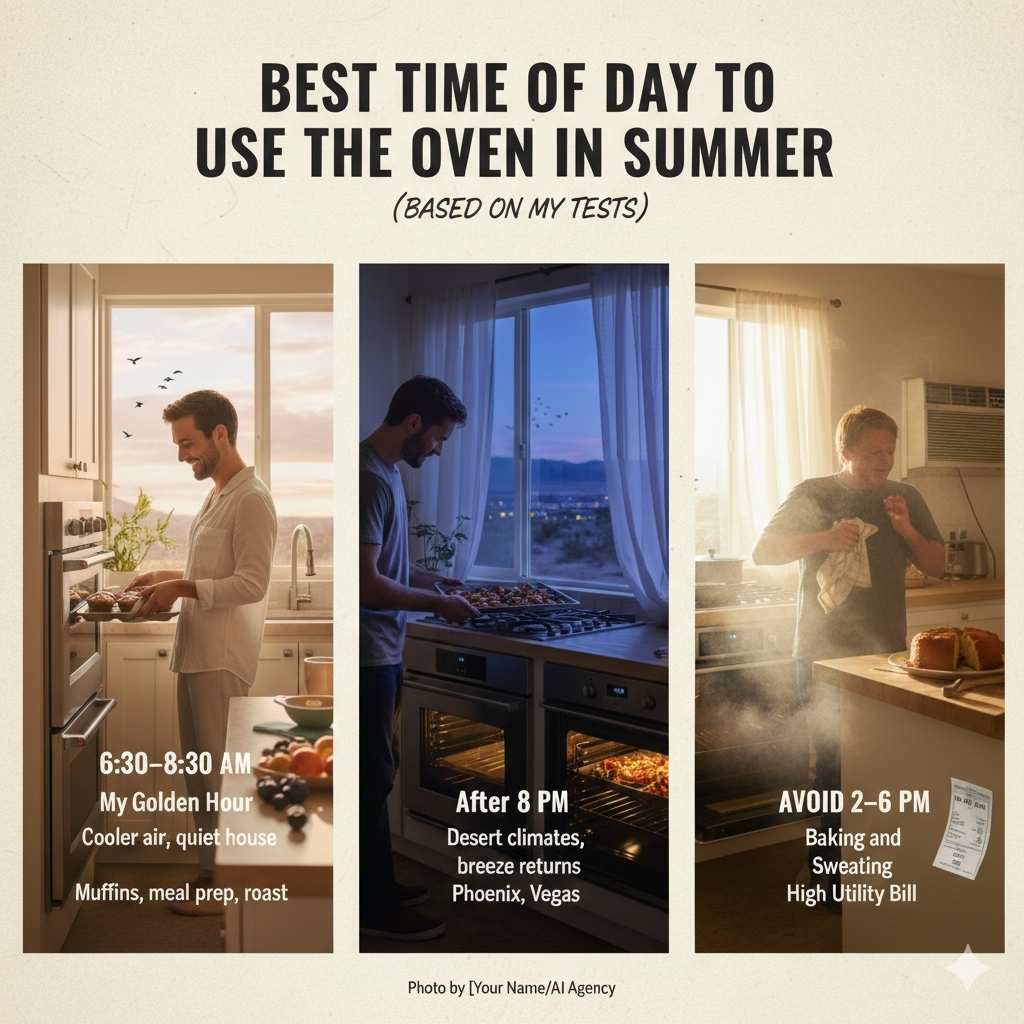
These are my go-to time slots:
- 6:30–8:30 AM — my golden hour (literally). Cooler air, quiet house, perfect for muffins, meal prep, or even a full roast.
- After 8 PM — especially in desert climates like Phoenix or Vegas, when the sun dips and the breeze returns.
- Avoid 2–6 PM — unless you enjoy baking and sweating.
Of course, things vary based on location, layout, and life. But those windows have saved my sanity (and my utility bill).
Honesty, Flexibility, and Fan Power
Not every day goes to plan. I’ve absolutely baked cookies at 3 PM because I forgot a birthday. Or roasted dinner at 5:30 because life got chaotic.
But what’s changed is how I recover from it. I turn on fans, sip something cold, and laugh about it later. I keep a frozen towel in the freezer — it’s my emergency summer baking scarf.
I also learned to be flexible. If it’s just too hot? I microwave leftovers or build a salad. No guilt. No drama.
It’s Not About Perfection — It’s About Patterns
Summer baking isn’t about rules — it’s about rhythm.
I’ve burned muffins in Miami, nailed sourdough in Chicago, and even baked a cobbler in a Florida thunderstorm with the windows open.
But through it all, I’ve found that the best time of day to use the oven in summer comes down to knowing your space, timing your energy, and cooking with care — not heat.
And when all else fails? Ice cream makes a great dinner.
FAQs — Best Time of Day to Use the Oven in Summer
What is the best time of day to use the oven in summer?
The best time of day to use the oven in summer is early morning or late evening. Outdoor temperatures are lower, so your kitchen stays cooler and your air conditioner works less.
Is it bad to use the oven during hot summer afternoons?
Using the oven in the afternoon can heat up your kitchen fast. This makes cooling systems work harder and raises energy use, especially during peak summer heat hours.
Does using the oven at night save energy in summer?
Yes, using the oven at night can help save energy in summer. Cooler air reduces indoor heat buildup, so your home cools faster and your cooling system runs less often.
Can convection ovens help when using the oven in summer?
Convection ovens cook food faster by moving hot air around. This can shorten cooking time and reduce heat released into the kitchen during hot summer cooking sessions.
How can I keep my kitchen cool while using the oven in summer?
Cook during cooler hours, keep the oven door closed, and use smaller bake times when possible. Simple habits help control heat and make summer oven cooking more comfortable.

I’m Mossaraof, a trained chef and the founder of OvenInsights.com. I spent years cooking at Larrupin’ Cafe and in kitchens across Chicago and Seattle. Now I test kitchen gear for a living. I moved to North Acton, London, and I test every tool I write about. I use real meals and real heat. No brand deals. No shortcuts. I cover 12 kitchen types and hundreds of recipes. I believe this: the right tools matter as much as the recipe.