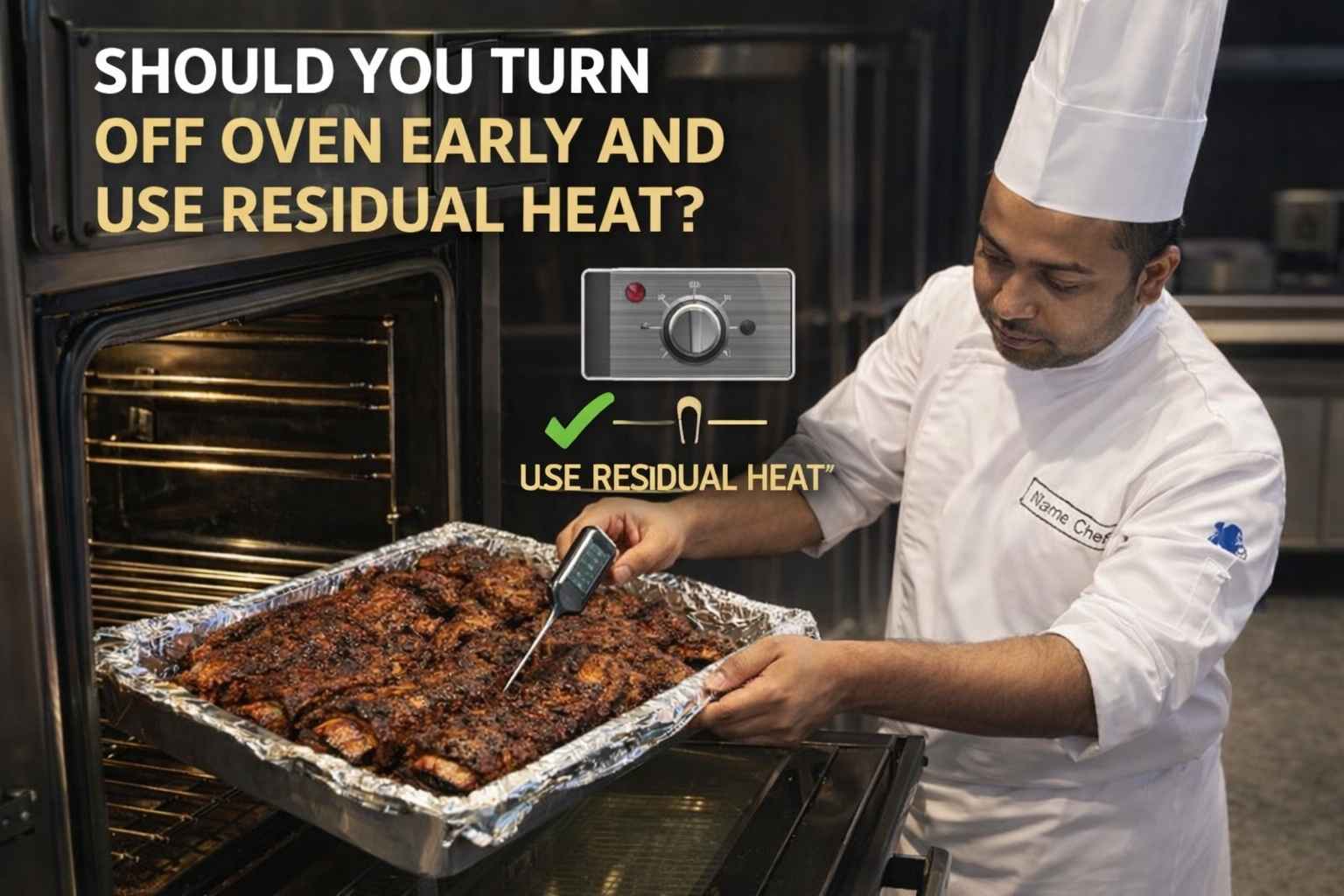
Do you hate the thought of heat and money leaking out of your kitchen? As a cook, I love finding smart ways to save, so people ask: should you turn off oven early and use residual heat? My time at the stove taught me that the oven stays hot long after the click of the dial. Today, I will show you how to use that free warmth to finish your meals perfectly. Read our Ultimate Guide: Energy Use & Costs to keep your bills low and your food tasty!
Understanding Residual Heat
Before that cookie moment, I never thought about residual heat. Now, it’s something I use weekly.
Residual heat is just the warmth your oven holds after you turn it off. Most ovens don’t cool instantly. In fact:
- My old GE electric oven stays hot for up to 20 minutes
- A Whirlpool gas oven I used in Florida cools faster — around 10 minutes
- A Frigidaire convection oven with a fan drops heat quickly unless you turn the fan off manually
What surprised me was how much useful cooking happens during that “cool-down” phase. The oven’s still doing work — just without sucking more power or blasting the kitchen.
Real-Life Situations Where It Made Sense
After that cookie success, I started testing it more. Not every recipe loved it. But some absolutely did.
In Florida, I used residual heat for roasted veggies — zucchini, bell peppers, and carrots — to avoid turning my rental into a sweatbox.
In Arizona, I baked a tray of potatoes at 425°F, turned the oven off 10 minutes early, and left the door shut. They kept cooking beautifully, even in that dry desert air.
In New York, my sister’s tiny galley kitchen stayed cooler when we baked a casserole, shut the oven off at 90%, and let it coast to doneness.
Signs Residual Heat Is Working
It took me a few tries to figure out when to trust residual heat. But now I look for:
- Edges that are already browning
- Centers that jiggle slightly but are mostly set
- Pans that radiate strong heat when I open the door
- Dishes that finish cooking just sitting on the rack
If something still feels soft or raw when the timer ends, residual heat can bridge that last 5–10%. Especially for recipes that don’t need crisping.
Conduction, Convection, and Stored Heat (Explained Like a Cook)
I’m not a physicist — I’m a cook. But I’ve learned that residual heat works because of thermal mass.
When you preheat your oven to 400°F, you’re not just heating air. You’re heating:
- The metal racks
- The walls of the oven
- Your cookware — especially cast iron or ceramic
- And, of course, your food
Even after you turn the oven off, all of that heat doesn’t just disappear. It slowly transfers — from the oven walls to the air, from the hot pan to the food.
I call it the “glide zone.” The oven stops pushing, but the heat keeps cruising.
My Side-by-Side Test: Full Bake vs Early Shut-Off
I ran a personal test in my Phoenix kitchen. Two identical trays of carrots, seasoned the same way.
- Tray A: I baked it for 35 full minutes at 425°F
- Tray B: I baked for 30 minutes, then turned the oven off and left it untouched for 10 more
Guess what? Both trays looked almost identical. Tray A had slightly more browning at the tips, but Tray B was softer in the center — and the flavors were spot-on.
I even used a Taylor oven thermometer to check the residual temperature after shutoff. It dropped about 40°F in the first 10 minutes — still plenty hot for carryover cooking.
Which Ovens Hold Heat Best? (Based on My Experience)
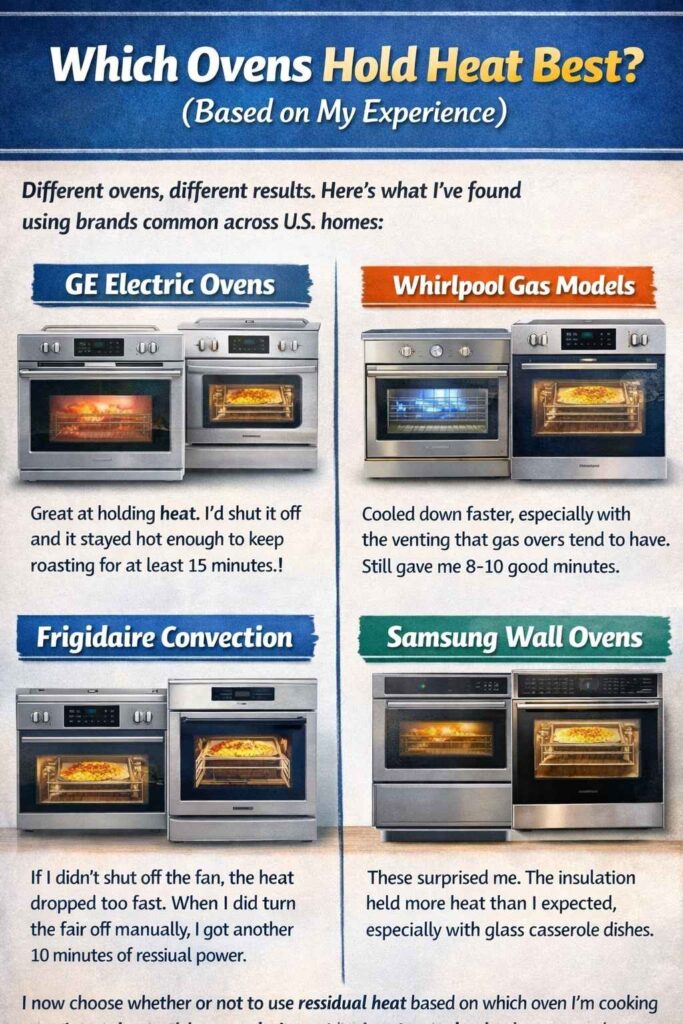
Different ovens, different results. Here’s what I’ve found using brands common across U.S. homes:
- GE Electric Ovens: Great at holding heat. I’d shut it off and it stayed hot enough to keep roasting for at least 15 minutes.
- Whirlpool Gas Models: Cooled down faster, especially with the venting that gas ovens tend to have. Still gave me 8–10 good minutes.
- Frigidaire Convection: If I didn’t shut off the fan, the heat dropped too fast. When I did turn the fan off manually, I got another 10 minutes of residual power.
- Samsung Wall Ovens: These surprised me. The insulation held more heat than I expected, especially with glass casserole dishes.
I now choose whether or not to use residual heat based on which oven I’m cooking in. The stronger the insulation and heavier the cookware, the better it works.
How to Know If It’ll Work (Without Wrecking Dinner)
After lots of trial and a few errors (I’ll share the biscuit fail later), I’ve picked up on a few cues:
Use residual heat when:
- The top of your dish is already browning
- You’re cooking in cast iron, ceramic, or glass
- You’re roasting or baking something dense (casseroles, potatoes, muffins)
- It’s already over 350°F in the oven
Skip it when:
- You need a golden top or crust
- You’re baking pastries that rise (soufflé, brioche, croissants)
- You’re using a thin pan with low heat retention
- You’re broiling — that needs full power to the end
Best Foods for Residual Heat Finish
Once I started experimenting, I found several dishes that actually do better with the oven turned off early.
Cookies, for one — especially when I want soft centers and crisp edges. The tray holds enough heat to keep things baking without overdoing it.
Muffins? Same story. I shut the oven off about 5 minutes before the timer and leave the door closed. The tops stay domed, and I avoid that dry, overbaked edge I used to get.
Roasted vegetables are a summer favorite. I’ll start the oven at 425°F, cook for 25–30 minutes, then turn it off and let them sit inside for another 10. The carryover softens them just enough while keeping that caramelized surface.
Other foods that respond well to residual heat:
- Casseroles that just need to firm up
- Egg bakes or frittatas (with the oven off, they don’t brown too quickly)
- Enchiladas — the cheese finishes melting gently, no burnt edges
Not Ideal for These Dishes
Now, not everything plays nice with this method. I’ve had a few humbling moments.
Soufflés are a hard no. I once tried to save energy by shutting the oven off early, and the whole thing collapsed like a bad day.
Crusty breads (like baguettes or artisan boules) need that final blast of heat. I once underbaked a loaf because I assumed it would finish cooking inside. It didn’t. The center was doughy and the crust never crisped.
Pizza is another one. Turning the oven off too early makes the bottom soggy — especially if you’re baking on a standard sheet pan.
Other foods I skip residual heat for:
- Puff pastry
- Brioche or challah
- Pie crusts that need to fully set
- Anything broiled or that needs crisping at the end
Real-Life Cooking Examples
Here’s where the method really started to shine — in my weekly meal prep.
My Sunday Meal Prep Trick
Every Sunday, I roast up trays of potatoes, broccoli, tofu, or chicken thighs. I stagger them — one goes in while the other finishes with residual heat.
- I bake the first tray full-time
- Slide the second tray in 10 minutes later
- Turn off the oven after 20 minutes and let the second tray finish as the oven cools
The result? Two trays cooked. Less energy. No back-to-back preheating.
Weeknight Shortcut for Lasagna
This one’s my favorite. I bake lasagna until the top is bubbling, then shut off the oven and leave the dish inside while I clean up the counter or prep a salad.
By the time I’m ready to serve, the layers are settled, the cheese is stretchy, and the edges aren’t burned. Plus, I’m not reheating the whole house at 6 PM.
Power Consumption During Final Bake Minutes
At first, I was just trying to stay cool. But one month, I noticed something odd — my electric bill went down.
I didn’t change how much I cooked. I just stopped letting the oven run those final 5–10 minutes.
Ovens pull full wattage during most of the cooking cycle — and the longer you keep them on, especially above 350°F, the more power they eat up. Those last few minutes? They’re small but stack up fast when you bake a few times a week.
I dug into my usage history with Duke Energy (yep, the one that covers most of North Carolina), and there was a clear drop in kWh. Not massive, but noticeable.
What the Energy Monitor Told Me
Just to test things more precisely, I plugged my oven into a smart energy monitor. I used a Kasa smart plug on a countertop oven first, since full-sized ovens are hardwired.
What I found:
- A typical 375°F session used around 2.3–2.7 kWh total
- Cutting it short by 10 minutes saved roughly 0.12 kWh
- Over the course of a month? That added up to 1.5–2.5 kWh saved, depending on how often I cooked
If you’re in a state with Time-of-Use pricing — like California (PG&E) or Texas (Reliant) — those peak hours between 4–9 PM hit hard. That’s when shutting off the oven early really makes a dent.
Other Kitchen Benefits I Didn’t Expect
Saving money was great, but what kept me using residual heat was everything else it improved.
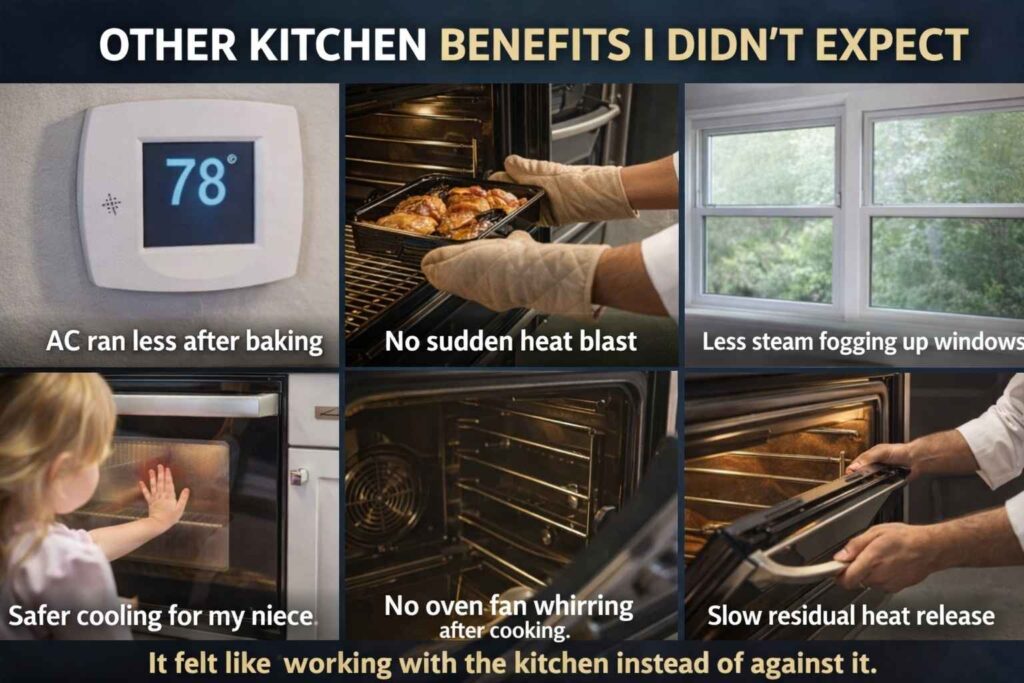
- My A/C didn’t run as hard after baking
- No oven fan whirring for 15 minutes post-cook
- Less steam fogging up windows (especially in Florida — where it already feels like soup)
- No sudden heat blast when I opened the oven to pull out a dish
- Safer for my niece, who once touched a still-hot oven door after dinner (lesson learned)
It felt like I was working with the kitchen instead of against it.
My Observations Over Time
I’ve cooked in everything from a basic apartment oven in Queens to a higher-end GE wall unit in Phoenix. Every one of them holds heat differently.
So I started timing it.
I’d bake a tray of potatoes at 400°F, shut the oven off, and track the internal temperature using a Taylor probe thermometer. Here’s what I found:
- Electric ovens: Stay hot for 15–25 minutes after shutoff. Slower to cool due to thicker insulation.
- Gas ovens: Cool faster — usually lose usable heat within 8–12 minutes. Some vent automatically once turned off.
- Convection ovens: If the fan stays on, heat drops quickly. If the fan is off or disabled, they hold warmth better.
And let me tell you — it makes a huge difference in how food finishes. That leftover heat does something when used right.
What Affects Heat Hold Time?
It’s not just the oven — the tools you use make a difference, too. I didn’t fully realize this until I did some testing with different pans back-to-back.
Here’s what holds heat better (in my hands-on experience):
- Cast iron: The king. I can take it out of the oven and it’ll keep sizzling for 10 minutes.
- Ceramic: Great for gentle finishes. My lasagnas come out bubbling even after I’ve turned the oven off.
- Thick glass dishes (like Pyrex): Slower to heat, but slower to cool. Excellent for custards and casseroles.
What doesn’t help?
- Thin aluminum pans: Cool down almost instantly once the oven’s off.
- Dark nonstick sheets: Lose surface heat fast, especially in open air.
- Perforated pans: Heat escapes through the holes. Useful for crisping, not for hold time.
I even tried finishing brownies in a light, air-insulated tray — they just sat there looking confused.
When to Open the Door (and When to Leave It Shut)
This part took me a while to figure out.
If you want a soft, moist interior — muffins, frittatas, casseroles — shut off the oven and keep the door closed. That trapped steam does its job gently.
If you’re aiming for a bit of crunch or finish — say, roasted potatoes or baked mac and cheese — crack the door open just slightly in the last few minutes. Not wide. Just a small gap. It lets enough heat out to dry the surface while the inside keeps going.
And in the dead of winter in Chicago? I’ll be honest — I leave the door open after baking. It takes the chill out of the air without touching the thermostat. My mom used to do that too. Some habits stick.
Best Materials for Holding Heat
I didn’t set out to test cookware for residual heat. It just kind of happened after years of trial and error — and a few undercooked casseroles.
What I’ve learned: the pan matters. A lot.
Here are the materials that actually hold and transfer heat well after the oven’s been turned off:
- Cast Iron (like my Lodge skillet): These things are tanks. Once hot, they stay hot. I’ve roasted chicken thighs, turned off the oven, and watched them continue to sizzle for 8+ minutes after.
- Ceramic Bakeware: I use a white Staub dish for enchiladas and lasagna. When I shut the oven off early, it keeps the food bubbling gently, even without power.
- Thick Glass Dishes (think Pyrex): Not flashy, but reliable. I use them for baked oatmeal and strata. The even, slow heat helps things finish without drying out.
These materials make residual heat feel like a feature, not a compromise.
Tools to Avoid for Early Shut-Off
Not everything works well for carryover cooking.
Here’s what I’ve stopped using when I want to use residual heat effectively:
- Thin Aluminum Sheet Pans: Great for cookies if you want speed — not great for holding heat. Things stop cooking almost the second you shut the oven off.
- Airy Nonstick Trays: They cool fast, and the nonstick surface loses heat even faster. I once underbaked an entire tray of chicken drumsticks this way.
- Perforated Pans: I use these for crisping fries, but not when I’m relying on leftover oven heat. The holes let everything escape too quickly.
- Foil Containers: I know they’re convenient — but they leak heat. Better for transport, not for gentle finishing.
Thermometers & Timers I Trust
I used to guess a lot. That led to burnt cookies and raw middles. Now, I don’t leave it to chance.
Here are the tools I use regularly when relying on residual heat:
- Taylor Probe Thermometer: I use this to measure internal temp of meats, casseroles, and even muffins. Helps me know when I can shut the oven off.
- ThermoPro Oven-Safe Probes: I insert these before baking. The remote monitor lets me know exactly when something hits 160°F or 200°F — no peeking.
- Smart Plugs with Energy Monitors (like Kasa): Great for my countertop oven. I track how long it runs and where I can trim heat time.
Having these tools has made early shut-off go from guesswork to reliable routine.
My Go-To Strategies
When I first started playing with early shut-off, I wasn’t sure what I was doing. Sometimes it worked. Sometimes… not so much. But after a few years, I’ve locked in a rhythm that works almost every time.
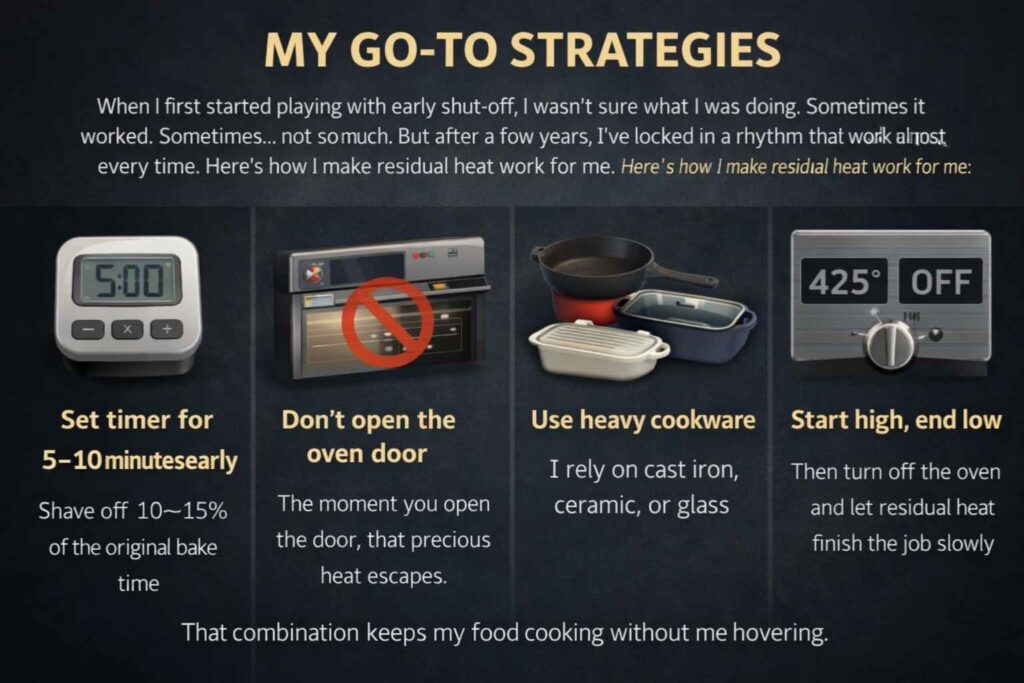
Here’s how I make residual heat work for me:
- Set your timer for 5–10 minutes early. For most dishes, I shave off 10%–15% of the original bake time.
- Don’t open the oven door. Just turn it off and leave everything exactly where it is. The moment you open the door, that precious heat escapes.
- Use heavy cookware. I rely on cast iron, ceramic, or glass to keep that internal temp going strong.
- Start high, end low. I bake at a slightly higher temp than usual, then turn off the oven and let residual heat finish the job slowly.
That combination keeps my food cooking without me hovering.
Mistakes I’ve Made (So You Don’t Have To)
I’ll be honest — not every attempt was a success. Here are some missteps that taught me the most:
- Opening the door too early: I once checked a quiche 3 minutes after shutoff. Lost all the heat, and it ended up undercooked in the middle.
- Forgetting to test doneness first: I assumed banana bread was “close enough” and turned the oven off. It looked done… but was raw inside. Now I always use a toothpick or probe first.
- Using cheap cookie sheets: They cool fast, especially in an open kitchen. I’ve had batches that stopped baking halfway through. Upgraded to USA Pan — problem solved.
- Letting the oven stay closed too long: I’ve overcooked chicken thighs that sat in the oven too long after shutoff. Carryover cooking is real — don’t underestimate it.
Now I time everything, even after the oven’s off.
Pairing With Meal Prep or Reheating
Residual heat isn’t just for fresh cooking — it’s perfect for multi-tasking during prep and reheating.
Here’s how I use it in real life:
- After baking muffins, I leave the oven closed while roasting nuts on a residual warm tray
- I reheat frozen meals by placing them inside right after turning the oven off — they thaw and warm up without drying out
- I’ll bake a batch of meatballs, shut the oven off, then use that trapped heat to warm marinara or toast the rolls inside
- On lazy Sundays, I cook pancakes on the stovetop and keep them warm on a ceramic dish inside the recently shut-off oven
It’s the little layering moments that save time — and keep the kitchen from overheating.
When It’s Worth Doing
If I’m baking muffins, roasting vegetables, or prepping weeknight meals, I almost always turn the oven off early now. It just works.
I don’t miss the full heat blast. I don’t miss the fan humming post-cook. And my food turns out exactly how I want it — or better.
Here’s when I lean into residual heat:
- Light roasts and veggie trays
- Casseroles that are 90% done
- Pasta bakes and egg dishes
- Muffins, cookies, or banana bread that don’t need crisp edges
- Meal prep mornings, when I’m multitasking
In the summer? It’s a no-brainer. Less energy, less sweat, same results.
When to Skip It
Still, I know when not to mess with it. If I’m baking for texture or presentation, I go full time — no shortcuts.
I keep the oven on for:
- Crusty breads or artisan loaves
- Pies and tarts that need full set time
- Anything with delicate rise (soufflés, brioche, puff pastry)
- Broiled dishes — they need full power, edge to edge
If the final texture matters — and I mean really matters — I let the oven do its full job.
What I’ll Keep Doing
After years of cooking across states, seasons, and ovens, here’s my truth:
- I turn the oven off early 70–80% of the time
- I check doneness with a thermometer or toothpick before deciding
- I rely on cast iron, glass, and ceramic when I want the heat to linger
- I trust my timing more than my timer
FAQs: Should You Turn Off Oven Early and Use Residual Heat?
Should you turn off oven early and use residual heat?
Yes, you often can. When you turn the oven off early, the trapped heat keeps cooking food for several minutes. It works best for casseroles, roasts, and baked pasta.
Does turning off the oven early save energy?
Yes, it can save energy. Ovens hold heat well, so shutting it off a few minutes early reduces power use without hurting results. Over time, those small savings add up.
What foods work best with residual oven heat?
Dense foods work best. Casseroles, lasagna, baked chicken, and roasted vegetables finish well using residual heat. Delicate items like cakes or bread usually need steady heat.
When should you not turn off the oven early?
Do not turn it off early for baking bread, cakes, or pastries. These foods need constant heat to rise and set properly. Turning it off too soon can cause sinking or underbaking.
How early can you turn off the oven and still cook safely?
Most meals do fine if you turn the oven off 5 to 10 minutes early. The exact time depends on oven size and food thickness. Always check doneness before serving.

I’m Mossaraof, a trained chef and the founder of OvenInsights.com. I spent years cooking at Larrupin’ Cafe and in kitchens across Chicago and Seattle. Now I test kitchen gear for a living. I moved to North Acton, London, and I test every tool I write about. I use real meals and real heat. No brand deals. No shortcuts. I cover 12 kitchen types and hundreds of recipes. I believe this: the right tools matter as much as the recipe.