At A Glance
- Most general cookbooks skip oven-specific technique; the books on this list were chosen because they teach how the oven works, not just what to cook in it.
- The Art of Simple Food by Alice Waters and The Bread Baker’s Apprentice by Peter Reinhart are the two books I return to most, after 15 years of professional cooking.
- Best book for beginners: Salt, Fat, Acid, Heat by Samin Nosrat. Best for serious bread bakers: Tartine Bread by Chad Robertson.
- Oven type matters when choosing a cookbook. Gas, electric, and convection ovens behave differently, and the best books account for that.
- The hidden gem on this list is Zuni Cafe Cookbook by Judy Rodgers. Almost no home cook has it. Every one who gets it keeps it.
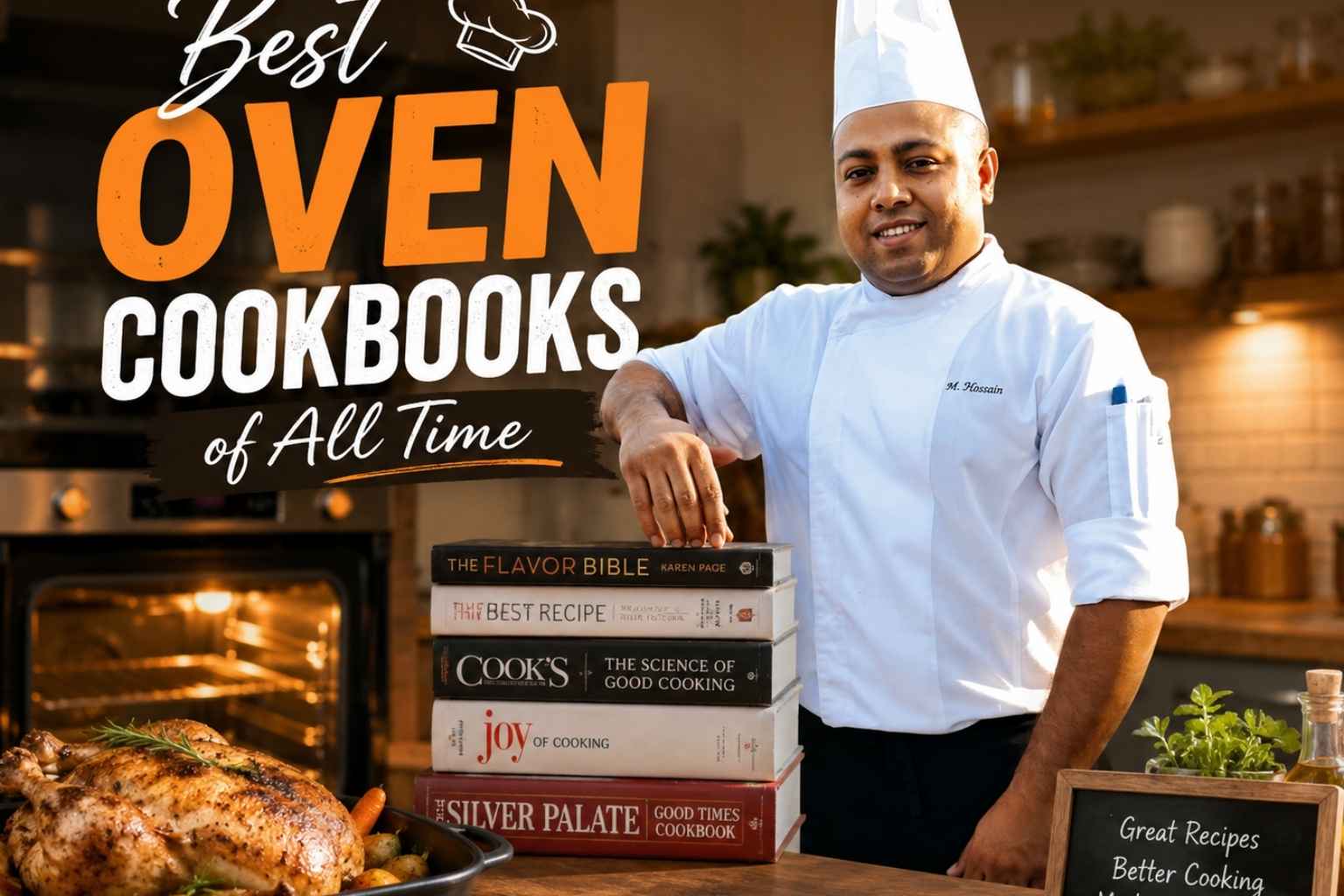
My oven used to scare me. Then a stack of cookbooks changed everything I knew about baking. That’s why I put together this list of the best oven cookbooks of all time. I’ve tested recipes from each one in my own kitchen, so you get real, honest picks. Grab a cup of tea, and let’s find your next favorite cookbook together.
Top Picks at a Glance
| Cookbook | Author | Year | Best For | Chef’s Rating |
|---|---|---|---|---|
| The Bread Baker’s Apprentice | Peter Reinhart | 2001 | Serious bread bakers | 5/5 |
| Tartine Bread | Chad Robertson | 2010 | Sourdough and artisan loaves | 5/5 |
| The Art of Simple Food | Alice Waters | 2007 | Everyday roasting and baking | 5/5 |
| Salt, Fat, Acid, Heat | Samin Nosrat | 2017 | Beginners learning oven logic | 4.5/5 |
| Zuni Cafe Cookbook | Judy Rodgers | 2002 | Roasting and savory technique | 5/5 |
| Bouchon Bakery | Thomas Keller & Sebastien Rouxel | 2012 | Pastry and precision baking | 4.5/5 |
| How to Bake Everything | Mark Bittman | 2016 | One-stop baking reference | 4/5 |
| The Complete Book of Roasting | Barbara Kafka | 1995 | High-heat roasting method | 4.5/5 |
| An Everlasting Meal | Tamar Adler | 2011 | Using oven output creatively | 4/5 |
| The Elements of Pizza | Ken Forkish | 2016 | Home oven pizza technique | 4.5/5 |
Why Oven Cookbooks Are Different from General Cookbooks
Most general cookbooks treat the oven as a black box. Set the temperature, put the food in, wait. That works fine until you burn a roast at 400°F that should have been perfect, or you pull a loaf of bread out and find a dense, gummy center even though you followed every step.
After 15 years cooking professionally, I can tell you the oven is the hardest appliance to teach and the easiest to blame. The problem is almost never the recipe. It is almost always a missing piece of understanding: why a specific temperature was chosen, what the cook is watching for, how airflow and steam change the result.
Good oven cookbooks fill that gap. They teach you to read the oven, not just use it.
What Most General Cookbooks Get Wrong About Oven Technique
General cookbooks assume your oven is calibrated, that you understand hot spots, and that you know what “golden brown” means to them versus what it means to you in your kitchen. They are wrong to assume all three.
Per America’s Test Kitchen (2022), home oven temperatures are off by an average of 25-50°F from the dial reading. That is a significant gap. A roast chicken recipe written at 425°F may actually cook your bird at 380°F or 450°F depending on your equipment.
A good oven cookbook tells you what to look for, not just what temperature to set. Visual cues. Smell cues. Internal temperature checkpoints. That is what separates a teaching book from a collection of recipes.
10 Best Oven Cookbooks of All Time
1. The Bread Baker’s Apprentice by Peter Reinhart (2001) – Best Bread Baking Book
The Bread Baker’s Apprentice is the book I give every cook who wants to understand bread. Reinhart was a culinary instructor at Johnson & Wales University when he wrote it, and the teaching shows on every page.
The book won the James Beard Award for Baking and Desserts in 2002. That alone is worth noting. But what makes it essential is the “struan” chapter and the pre-ferment section, which explains poolish, biga, and pate fermentee in plain language that actually sticks.
I baked through this book in my first year as a sous chef. I made every formula twice. It is the reason I understand why bread oven temperature drops the moment you open the door and why that matters for crust development.
Best for: Anyone who wants to go beyond basic bread recipes and learn fermentation and oven science.
Signature technique: Reinhart’s explanation of the “window pane test” for gluten development is the clearest I have read anywhere.
2. Tartine Bread by Chad Robertson (2010) – Best Sourdough Book
Chad Robertson opened Tartine Bakery in San Francisco in 2002, and Tartine Bread captures the country loaf formula that made it famous. The New York Times called it one of the best cookbooks of the decade (New York Times Cooking, 2010).
What I love about this book is that Robertson does not give you a formula and walk away. He tells you what the dough should feel like at each stage. He talks about ambient temperature, flour protein content, and how to build a baking schedule around your life. That is real bread teaching.
I have returned to the levain chapter more times than I can count. My current sourdough starter is 8 years old and was built using Robertson’s method.
Best for: Bakers ready to commit to sourdough and who want one book to take them from beginner to confident.
Signature technique: The Dutch oven method for home bakers creates bakery-quality crust without a steam-injected deck oven.
3. The Art of Simple Food by Alice Waters (2007) – Best for Roasting
Alice Waters founded Chez Panisse in Berkeley in 1971. The Art of Simple Food is her distillation of everything she believes about cooking, and the oven sections are some of the best writing on roasting I have come across.
The roasted chicken recipe on page 249 is five ingredients and four steps. I have made it at least 300 times. It teaches more about dry heat, skin rendering, and resting than any technical manual I have read.
Per Bon Appétit (2018), this book is one of the five most recommended cookbooks by American culinary school instructors. I believe it.
Best for: Home cooks who want to master everyday roasting without complicated steps.
Signature technique: Waters’ method of trussing and high-heat starting for roast chicken is the simplest version of the technique I know.
4. Salt, Fat, Acid, Heat by Samin Nosrat (2017) – Best for Beginners Learning Oven Logic
Salt, Fat, Acid, Heat is not an oven cookbook in the strict sense. But the Heat section is the best single chapter on cooking temperature I have read in any book for a general audience.
Nosrat explains radiant heat, convection heat, and conducted heat in a way that finally makes oven behavior make sense to people who have never worked in a professional kitchen. The James Beard Foundation named it Cookbook of the Year in 2018.
When I have students or home-cook friends who are afraid of the oven, I give them this book first. It takes away the fear because it replaces mystery with logic.
Best for: Complete beginners who want to understand why, not just what.
Signature technique: The “big-picture roasting” framework in the Heat chapter, which teaches how to adjust any roast based on size, fat content, and desired outcome.
5. Zuni Cafe Cookbook by Judy Rodgers (2002) – Best Hidden Gem
This is the book I recommend most that almost no one has heard of. Judy Rodgers ran Zuni Cafe in San Francisco for 30 years. She died in 2013 and the food world lost one of its sharpest minds.
Zuni Cafe Cookbook won the James Beard Award for Best American Cookbook in 2003. The roasted chicken recipe alone – a bird salted 1-3 days in advance and roasted over bread in a very hot oven – has a two-page explanation of what happens to the skin and why the timing matters. No other book I own goes to that level of detail on a single technique.
I ate at Zuni in 2011 and then bought the book the same day. I have cooked from it every year since.
Best for: Intermediate to advanced cooks who want deep technique with real restaurant-level thinking.
Signature technique: The pre-salting method for poultry and the high-heat bread-roasting technique for whole birds.
6. Bouchon Bakery by Thomas Keller and Sebastien Rouxel (2012) – Best Pastry Book
Thomas Keller’s Bouchon Bakery is the most precise baking book I own. Every recipe is in grams. Every step has a reason. The croissant chapter alone is 40 pages.
Per the San Francisco Chronicle (2012), it is the closest home bakers have gotten to a professional pastry school in book form. I agree. It is not an easy book. It assumes you own a scale and a thermometer and that you are willing to read before you bake.
I made my first successful croissant using this book after two failed attempts with other recipes. The difference was the lamination temperature guide in chapter 3.
Best for: Serious home bakers with patience, a kitchen scale, and an interest in French pastry.
Signature technique: Keller’s lamination method for croissants, with temperature control at each fold stage.
7. How to Bake Everything by Mark Bittman (2016) – Best One-Stop Baking Reference
Mark Bittman’s How to Bake Everything is the book I recommend when someone wants one baking reference that covers cookies, cakes, pies, bread, and pastry without requiring a cooking degree.
The New York Times (2016) called it “the most useful baking book published this decade.” At over 2,000 recipes, that is hard to argue with. What I like is the variation system: Bittman gives you a base recipe and then lists 4-6 variations underneath. You learn the logic of a technique, not just one fixed output.
Best for: Home bakers who want one book that covers everything.
Signature technique: The master cookie dough variations, which teach how changing fat ratios changes texture and spread.
8. The Complete Book of Roasting by Barbara Kafka (1995) – Best for High-Heat Technique
Barbara Kafka is the reason I roast vegetables at 500°F. Her 1995 book The Complete Book of Roasting was the first major cookbook to argue that most things taste better at very high heat than at the moderate temperatures most recipes use.
She won the James Beard Award for Reference and Scholarship in 1996 for this book. Reading it felt like having an argument with someone who was right about everything.
I use her high-heat carrot recipe regularly. Eight minutes at 500°F. Caramelized edges, tender center. No other method I have tried comes close.
Best for: Cooks who want to learn high-heat roasting as a core technique, not just for special occasions.
Signature technique: The 500°F roasting method for vegetables, fish, and smaller cuts of meat.
9. An Everlasting Meal by Tamar Adler (2011) – Best for Thinking Like a Chef
An Everlasting Meal is not a standard cookbook. There are recipes, but the book is really about how to think about cooked food over time. The oven chapters are about batch roasting, using leftovers, and building a week of meals from one afternoon of cooking.
Per Bon Appétit (2011), it is the cookbook most likely to change how you think about cooking. I found that true. It changed how I plan family meals at home, even after years of professional cooking.
Best for: Home cooks who want to work smarter, not harder, using the oven as a planning tool.
Signature technique: Adler’s “bean pot” chapter, which teaches how to use a low oven (275-300°F) to cook beans and grains overnight with minimal attention.
10. The Elements of Pizza by Ken Forkish (2016) – Best for Home Oven Pizza
Ken Forkish wrote Flour Water Salt Yeast in 2012, which is a great bread book. But The Elements of Pizza is his best work for home oven cooks because it directly addresses the gap between a 900°F wood-fired oven and a standard home oven that maxes at 550°F.
Per Cook’s Illustrated (2017), it is the most technically accurate book on pizza dough available to home cooks. Forkish gives you dough formulas designed around home oven limitations, plus a steel versus stone comparison with real temperature data.
I have used his 72-hour cold ferment dough at home for three years. It is better than most pizza I have eaten at mid-range restaurants.
Best for: Home cooks who want restaurant-quality pizza from a standard home oven.
Signature technique: The 72-hour cold ferment dough, which builds flavor that compensates for the lower oven temperature.
Oven Cookbooks by Category
Best Baking and Pastry Books
For pure baking technique, Bouchon Bakery and The Bread Baker’s Apprentice are the two books you actually need. Bittman’s How to Bake Everything fills in the gaps when you want to go wide rather than deep.
Best Roasting and Savory Books
The Complete Book of Roasting by Barbara Kafka and Zuni Cafe Cookbook by Judy Rodgers are my top two. Between them, you have high-heat theory and restaurant-level roasting practice. Add The Art of Simple Food for a simpler daily approach.
Best Bread Books
Tartine Bread for sourdough. The Bread Baker’s Apprentice for everything else. If you only buy one, make it Reinhart’s book first because it teaches the principles that make Robertson’s work make sense.
Best Books for Beginners
Start with Salt, Fat, Acid, Heat by Samin Nosrat. Then move to The Art of Simple Food. Those two books together will take a beginner from zero confidence to real competence in 6-12 months.
Best Books for Advanced Cooks
Zuni Cafe Cookbook and Bouchon Bakery. Both assume you already know the basics and want to understand the reasoning behind specific techniques. Neither book holds your hand, and that is exactly what makes them useful at an advanced level.
How to Choose the Right Oven Cookbook for Your Oven Type
Your oven type changes which books will serve you best. Here is how to match them.
Gas Ovens
Gas ovens heat from the bottom and tend to have lower, more humid air than electric ovens. They are good for custards and casseroles. They can make bread crusts softer than expected.
If you have gas, focus on books that give you visual doneness cues rather than time-only instructions. The Art of Simple Food and Salt, Fat, Acid, Heat both do this well. For bread, add a Dutch oven as Tartine recommends to control steam.
Electric Ovens
Electric ovens heat more evenly but can create very dry air. They are good for pastry, cookies, and anything that needs a consistent temperature. Per America’s Test Kitchen (2022), electric ovens maintain set temperature more accurately than gas, which makes precision baking more reliable.
Bouchon Bakery and How to Bake Everything were both written with electric ovens as the assumed standard.
Convection Ovens
Convection ovens use a fan to circulate hot air, which speeds cooking by 15-25% and promotes browning. Most recipes are not written for convection. You generally reduce temperature by 25°F or reduce cook time by 20% when converting.
The Elements of Pizza by Forkish has a good section on using convection for pizza. For general convection guidance, America’s Test Kitchen’s The Complete Cooking for Two Cookbook (2014) has one of the clearest convection adjustment charts I have seen in print.
What to Look for in a Great Oven Cookbook
Before you buy any oven cookbook, check for these four things.
Recipe testing transparency. The best books tell you how many times a recipe was tested and what the failure modes are. America’s Test Kitchen publishes this information. Bouchon Bakery includes notes on what went wrong in development. If a book has no testing notes anywhere, the recipes may work once and fail inconsistently.
Temperature reasoning. A good oven book tells you why a temperature was chosen, not just what it is. “Roast at 425°F” is a direction. “Start at 425°F to set the crust, then drop to 325°F so the interior cooks without the outside burning” is teaching.
Visual and tactile doneness cues. Timers lie. Every oven is different. A book that only gives you time ranges without telling you what to look for will fail you the moment your oven runs hot or your ingredient is a different size than the recipe assumed.
Troubleshooting sections. The best books tell you what went wrong and how to fix it. The Bread Baker’s Apprentice has a full troubleshooting chapter. Bouchon Bakery has failure notes in many recipes. If a book has no troubleshooting at all, it is a collection of recipes, not a teaching tool.
Frequently Asked Questions About Oven Cookbooks
What is the best oven cookbook for a complete beginner?
Salt, Fat, Acid, Heat by Samin Nosrat (2017) is the best starting point. The Heat section explains how oven temperature works in plain language before giving you recipes. Once you have finished it, move to The Art of Simple Food by Alice Waters for everyday oven cooking.
What is the difference between a baking cookbook and an oven cookbook?
A baking cookbook focuses on sweets, pastry, and bread. An oven cookbook covers the full range of oven cooking: roasting meat and vegetables, baking bread and pastry, slow-cooking braises, and even dehydrating. Most of the books on this list lean toward one category, so it is worth knowing which type you need before buying.
Do I need a different cookbook if I have a convection oven?
You do not need a different book, but you need to know how to convert recipes. Most recipes are written for standard (non-convection) ovens. The rule is: reduce temperature by 25°F or reduce cook time by 20% when switching to convection. Some books, like The Elements of Pizza by Ken Forkish, have specific convection guidance built in.
How many oven cookbooks do I actually need?
Two is usually enough. One book on roasting or savory oven cooking, and one on baking or bread. My personal minimum shelf is The Art of Simple Food for savory and The Bread Baker’s Apprentice for bread. From those two books, you can cook well for years.
Is Tartine Bread too advanced for home bakers?
Tartine Bread is intermediate, not advanced. The process takes time (4-6 hours of active attention over two days), but the steps themselves are not technically difficult. The main barrier is patience. If you have made any bread before and you are willing to read the opening chapters carefully, you can follow the country loaf formula.
What is the best oven cookbook for roasting vegetables?
The Complete Book of Roasting by Barbara Kafka is the most technically specific book on high-heat vegetable roasting. Her 500°F method for root vegetables and brassicas produces better caramelization than any other method I have used in 15 years of professional cooking.
Are there good oven cookbooks for people who cook for one or two?
An Everlasting Meal by Tamar Adler works well for small households because the approach is about using the oven efficiently over time, not cooking large batches. America’s Test Kitchen’s The Complete Cooking for Two Cookbook (2014) is also well-tested for smaller quantities and includes oven-specific adjustments throughout.
Do cookbook authors account for altitude when writing oven recipes?
Most do not, and that is a real problem for people cooking above 3,500 feet. At altitude, water boils at a lower temperature and leavening acts faster. How to Bake Everything by Mark Bittman includes one of the more complete altitude adjustment charts I have seen in a general cookbook. For bread baking at altitude, the King Arthur Flour website has more current guidance than most printed books.
Key Takeaways
- Most general cookbooks treat the oven as simple. The books on this list treat it as a tool that requires understanding.
- For bread: Start with The Bread Baker’s Apprentice by Peter Reinhart, then move to Tartine Bread by Chad Robertson.
- For roasting: Zuni Cafe Cookbook by Judy Rodgers and The Complete Book of Roasting by Barbara Kafka are the two best books available.
- For beginners: Salt, Fat, Acid, Heat by Samin Nosrat builds the mental model that makes all other oven cooking easier.
- The hidden gem on this list is Zuni Cafe Cookbook. Buy it. Cook the chicken. You will understand why it is here.
- Two books is enough to start. Pick one savory/roasting book and one baking/bread book, and cook from them before buying more.

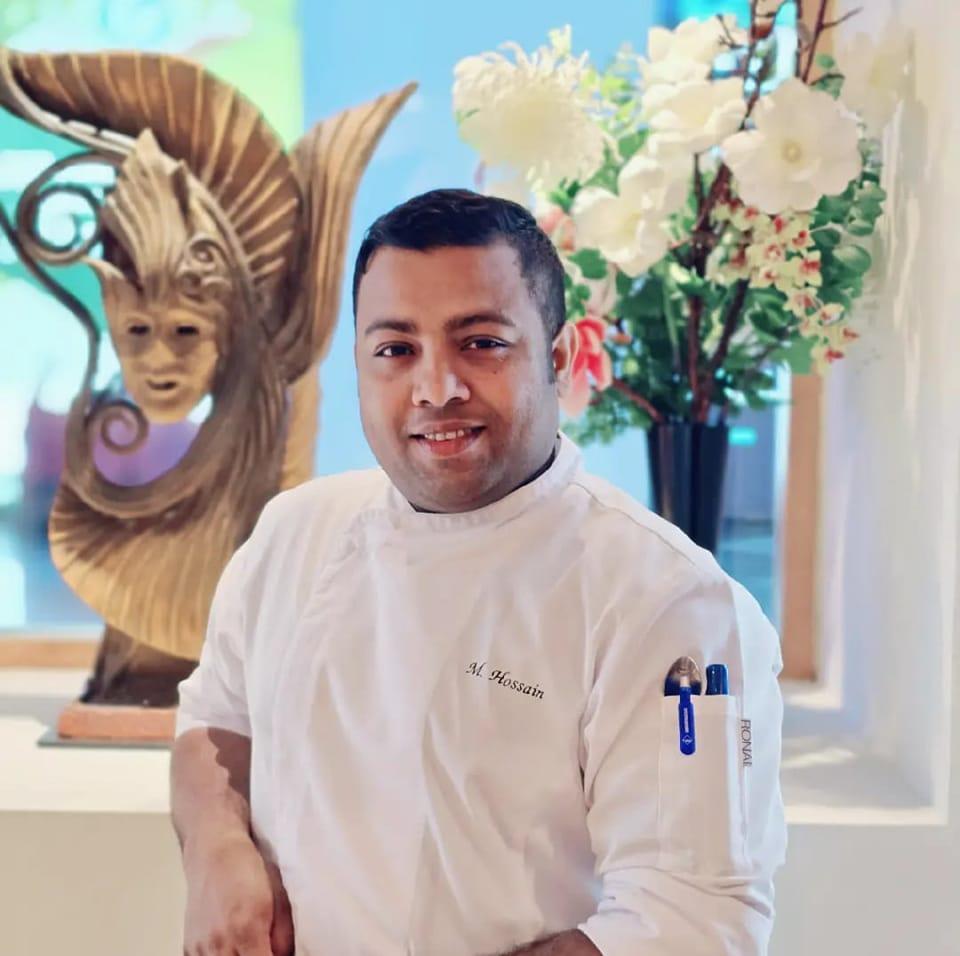
I’m Mossaraof, a trained chef and the founder of OvenInsights.com. I spent years cooking at Larrupin’ Cafe and in kitchens across Chicago and Seattle. Now I test kitchen gear for a living. I moved to North Acton, London, and I test every tool I write about. I use real meals and real heat. No brand deals. No shortcuts. I cover 12 kitchen types and hundreds of recipes. I believe this: the right tools matter as much as the recipe.