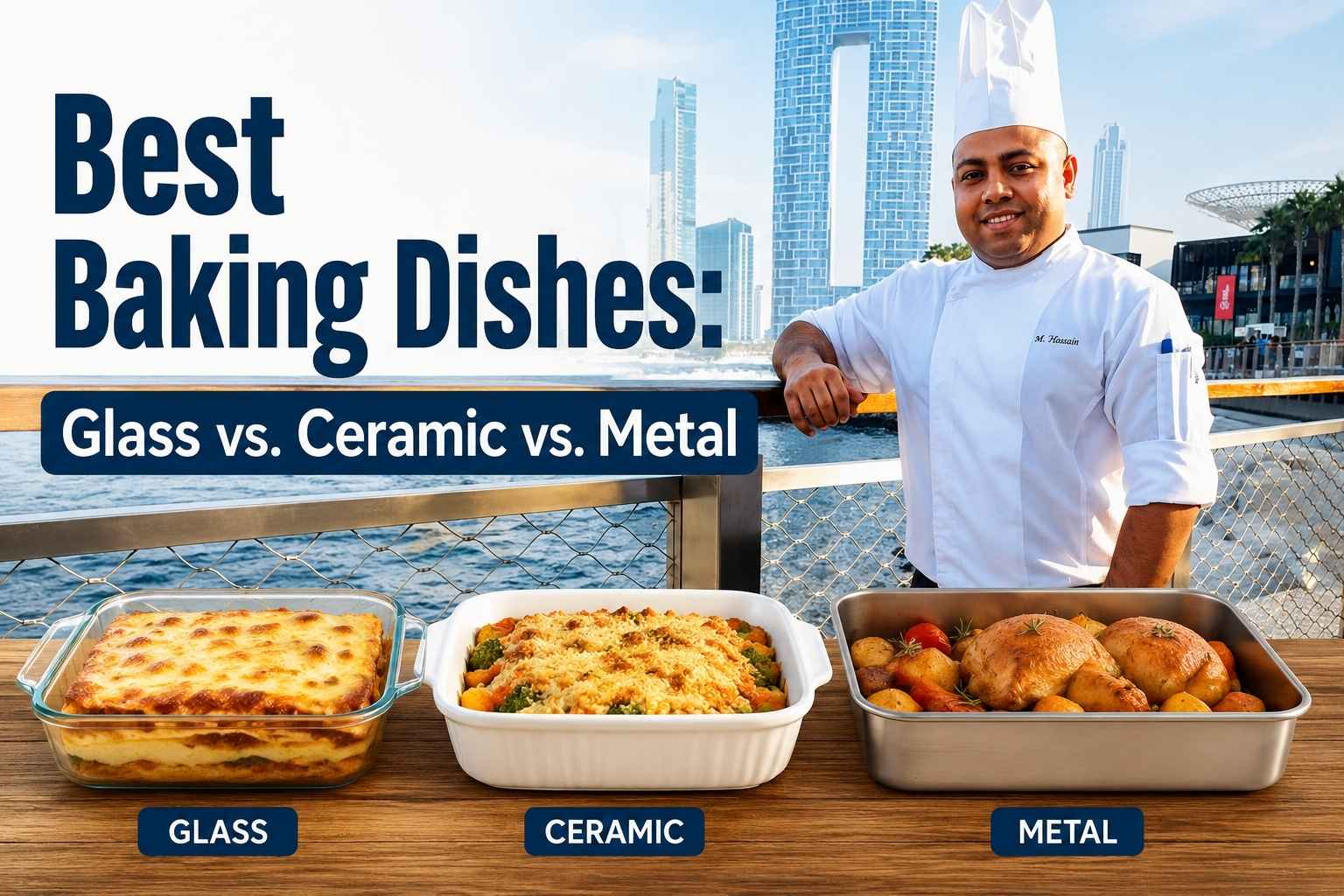
At A Glance
- Glass bakes slow and even but holds heat after the oven turns off, so pull glass dishes 5-10 minutes early to avoid overcooked edges.
- Metal pans (especially dark or nonstick) brown and crisp the fastest, making them the top pick for cookies, pies, and roasted dinners.
- Ceramic looks great on the table and heats evenly, but it chips and cracks if you drop it or hit it with sudden temperature swings.
- Never put a cold glass or ceramic dish straight into a hot oven, and never set a hot one on a cold or wet counter. That’s how dishes shatter.
- For acidic foods like tomato sauce or citrus desserts, skip bare aluminum and reach for glass, ceramic, or stainless steel instead.
I burned my first three cakes before I found the right pan. That’s the truth. Cheap dishes cook food unevenly, and I learned it the hard way in my own kitchen. Today I’ll walk you through the best baking dishes that actually work, based on years behind the oven. Stick with me, and you’ll pick the perfect dish on your very first try.
What’s the Real Difference Between Glass, Ceramic, and Metal Bakeware?
The short answer: it’s all about how fast heat moves through the material and how long it sticks around after you turn off the oven. Metal heats up fast and cools down fast. Glass and ceramic heat up slow, hold heat long, and keep cooking your food even after you pull it out.
I’ve worked stations where we had all three lined up on a rack, and I’d grab a different pan depending on what I needed that dish to do. A roasted chicken thigh? Metal, every time, for that crisp skin. A baked rice pudding? Glass or ceramic, because I wanted gentle, even heat that wouldn’t scorch the bottom.
Here’s the breakdown in plain terms:
- Glass conducts heat slowly but retains it well, so food keeps cooking after the oven is off.
- Ceramic behaves a lot like glass: slow to heat, slow to cool, and great for even baking.
- Metal conducts heat fast, which means quicker browning and crisping, but it also cools fast once it’s out of the oven.
That single fact, how fast a material moves and holds heat, explains almost everything else in this guide. It explains why your lasagna takes longer in a glass dish than a metal one. It explains why your cookies burn on a dark pan but stay pale on a light one. And it explains why some dishes are dangerous to move straight from the freezer to a hot oven.
Material Comparison Table: Glass vs. Ceramic vs. Metal at a Glance
Use this table as your quick reference. I keep a version of this taped inside my cabinet door at home, because even after 15 years, I still double check bake times when I switch pans.
| Material | Heat Conductivity | Best Uses | Durability | Care Notes |
|---|---|---|---|---|
| Glass (e.g., Pyrex) | Low, but retains heat well | Casseroles, custards, fruit desserts, lasagna | Good, but prone to thermal shock cracking | Hand wash or dishwasher safe; avoid sudden temp changes |
| Ceramic | Low to moderate, very even | Casseroles, gratins, baked dips, dishes served at the table | Fragile; chips and cracks on impact | Hand wash recommended; check glaze for oven-safe rating |
| Aluminum (uncoated) | High | Cookies, sheet pans, pie crusts, roasting | Very durable, but can warp under high heat | Hand wash; avoid acidic foods (reacts and discolors) |
| Dark/Nonstick Metal | High, browns fastest | Cookies, breads, pizza, anything needing a crisp bottom | Coating wears over time; avoid metal utensils | Hand wash gently; don’t use high heat broiler settings |
| Stainless Steel | Moderate to high | Roasting, searing, baking that needs browning without reactivity | Very durable, doesn’t warp easily | Dishwasher safe; can stain with high heat but cleans up well |
A few notes on that table. “Heat conductivity” tells you how fast the material transfers heat from the oven to your food. Higher conductivity means faster browning, faster crisping, and faster cooking on the surface of your food. Lower conductivity means gentler, more even cooking all the way through, but a paler crust.
Glass Bakeware: Pros, Cons, and Where It Shines
Glass is the workhorse of most home kitchens, and for good reason. It’s see-through, so you can check how your food is browning without opening the oven. It doesn’t react with food. And it’s affordable.
What Glass Does Best
Glass shines with casseroles, custards, and fruit desserts. Think baked mac and cheese, bread pudding, or a peach cobbler. The slow, even heat of glass means the center cooks through without the edges drying out or burning first.
I make a baked custard at least twice a month, and I always reach for a glass dish. The gentle heat keeps the eggs from curdling at the edges while the center sets properly. Try that in a thin metal pan and you’ll get rubbery edges before the middle firms up (King Arthur Baking, 2024).
The Catch With Glass: Thermal Shock
Here’s the single biggest mistake I see with glass bakeware, and it’s the one that sends people to the emergency room with glass shards in their kitchen: thermal shock.
Glass cannot handle sudden temperature changes. Two situations cause this:
- Taking a cold glass dish from the fridge or freezer and putting it directly into a hot oven.
- Taking a hot glass dish out of the oven and setting it on a cold or wet countertop, or running cold water over it.
Both can cause the glass to crack or shatter, sometimes instantly and sometimes minutes later. Pyrex itself warns against this exact scenario in its care guidelines (Pyrex, 2023). I’ve seen a dish go from “looks fine” to “split clean in half on the rack” because someone opened the oven door and a cold draft hit one corner.
The fix: Always let glass dishes come to room temperature before they go in the oven. And always set a hot glass dish on a dry towel, a wooden cutting board, or a cooling rack, never on a wet or cold surface.
Glass and Oven Temperature
Glass holds heat longer than metal, which means food in a glass dish keeps cooking even after you pull it from the oven. Many recipe developers recommend lowering your oven temperature by about 25 degrees Fahrenheit when baking in glass, or pulling the dish out 5 to 10 minutes early (Cook’s Illustrated, 2022). I do both when I’m baking something delicate, like a custard or a cheesecake, because that residual heat can push a perfectly set custard into “overcooked and weeping” territory fast.
Ceramic Bakeware: Even Heat, Great Looks, Fragile Edges
Ceramic is the material I reach for when a dish is going straight from the oven to the table. It looks good, it holds heat at the table longer than glass or metal, and it heats food evenly thanks to its dense structure.
Where Ceramic Wins
Ceramic bakeware is fantastic for gratins, baked dips, and any casserole you want to serve right in the dish. A French onion soup gratin in a ceramic crock stays hot for a good 15-20 minutes after it leaves the oven, which is more than you can say for a thin metal pan.
The even heating also makes ceramic a strong choice for baked goods that need a gentle, consistent temperature, like a baked rice pudding or a slow-roasted ratatouille.
The Downside: Fragility and Glaze Quality
Ceramic chips. It cracks. And if you drop it on a tile floor, it shatters into more pieces than you’d think possible. I’ve lost two beautiful ceramic dishes over the years, both from setting them down a little too hard on a stone counter.
There’s also the glaze to think about. Cheap ceramic bakeware sometimes has a glaze that isn’t rated for high oven temperatures, and that glaze can crack or discolor over time. Always check the manufacturer’s max temperature rating before you put a ceramic dish under the broiler (America’s Test Kitchen, 2023).
Like glass, ceramic is sensitive to thermal shock. The same rules apply: no cold-to-hot, no hot-to-cold-surface.
Metal Bakeware: Aluminum, Dark/Nonstick, and Stainless Steel
Metal is where you go for browning and crisping. If a recipe asks for a crispy bottom crust, a deeply golden cookie edge, or roasted vegetables with real char, metal is the answer.
Aluminum: The Fast, Even Conductor
Aluminum heats up quickly and spreads heat evenly across the pan. This makes it a favorite for sheet pans, pie crusts, and cookies. A light-colored aluminum pan gives you good browning without going too dark too fast.
The catch: aluminum reacts with acidic foods. If you bake a tomato-based dish or anything with a lot of citrus directly in bare aluminum, you can get a metallic taste and discoloration in the food (Serious Eats, 2023). I learned this the hard way early in my career, baking a lemon bar batch in an uncoated aluminum pan. The edges had a faint tinny taste that ruined the whole batch.
The fix: Line aluminum pans with parchment paper when baking acidic dishes, or choose a different material entirely.
Dark and Nonstick Metal: Maximum Browning Power
Dark-colored and nonstick pans absorb more heat and brown food faster than light-colored metal. This is why a dark pan cookie often comes out with a deeper, crisper edge than the same cookie baked on a light aluminum sheet, sometimes minutes faster (Cook’s Illustrated, 2024).
That extra browning power is a double-edged sword. Dark pans run hot, so recipes often suggest lowering the oven temperature by 25 degrees Fahrenheit or checking for doneness a few minutes early when using dark or nonstick pans.
Nonstick coatings also wear down over time, especially if you use metal utensils or run them through the dishwasher repeatedly. Stick to wood or silicone tools, and hand wash when you can.
Stainless Steel: Durable but Less Common for Baking
Stainless steel isn’t as common for baking dishes, but it shows up in roasting pans and some specialty bakeware. It’s durable, doesn’t warp easily, and won’t react with acidic foods the way bare aluminum does.
The downside is that stainless steel doesn’t conduct heat as evenly as aluminum unless it has an aluminum or copper core sandwiched in the middle. Cheap, thin stainless pans can develop hot spots that scorch food in some areas while leaving other areas underdone.
Warping: The Metal-Specific Problem
Thin metal pans, especially cheap aluminum baking sheets, can warp under high heat. You’ll hear that distinctive “pop” or see the pan buckle in the middle when it hits a hot oven. This usually happens with thin, lightweight pans, and it gets worse over time with repeated use (America’s Test Kitchen, 2024).
The fix: Buy heavier-gauge pans. They cost more upfront but won’t warp, and they’ll outlast three cheap pans easily.
Why the Same Recipe Needs Different Temperatures Depending on the Pan
This is the part most home cooks miss, and it’s the reason a recipe can come out perfect in one pan and overcooked or undercooked in another.
Here’s the rule of thumb I use:
- Switching from metal to glass or ceramic: Lower the oven temperature by 25 degrees Fahrenheit, or expect the bake to take a few minutes longer.
- Switching from light metal to dark or nonstick metal: Lower the oven temperature by 25 degrees Fahrenheit, or check for doneness 3-5 minutes early.
- Switching from glass/ceramic to metal: Raise the temperature back up, or shorten the bake time.
Why does this matter so much? Glass and ceramic hold heat after the oven shuts off, so food keeps cooking during that “carryover” time. Dark metal absorbs more radiant heat from the oven walls, so it runs hotter than the air temperature alone would suggest. Light aluminum sits closer to the actual oven temperature, with less carryover and less extra absorption.
I once watched a home cook follow a brownie recipe written for a metal pan, but bake it in a glass dish at the same temperature and time. The edges were nearly burnt while the center was still raw batter. A 25-degree drop and five extra minutes would have fixed it completely.
Edge and Corner Browning: Why It Differs by Material
Ever notice how the corners of a cake or casserole brown faster than the center? That’s because corners get heat from two directions instead of one, and the material of your pan changes how dramatic that effect is.
- Glass and ceramic have a gentler corner effect. The slow heat transfer means corners brown more, but not drastically more, than the center.
- Metal, especially dark metal, has a much stronger corner and edge effect. Cookies baked on a dark metal sheet often have noticeably darker edges than the centers, sometimes verging on too dark if you’re not watching closely.
If you’ve ever baked a 9×13 cake and found the corner pieces dry while the center stayed moist, that’s this effect at work, and it’s stronger in metal pans than in glass or ceramic ones.
Cleaning, Staining, and Odor Retention
This is where personal experience really comes into play, because I’ve scrubbed all three materials more times than I can count.
Glass is the easiest to clean. It’s nonporous, so it doesn’t absorb odors or stains, and most glass bakeware is dishwasher safe. Stuck-on food usually comes off with a soak.
Ceramic can stain over time, especially light-colored glazes used for tomato sauces or curries. The glaze itself doesn’t absorb odors, but if the glaze develops tiny cracks (called “crazing”), food and odors can work their way into those cracks over years of use.
Metal, especially aluminum, can develop dark stains and a slightly metallic smell over time, particularly if acidic foods are baked in it repeatedly. Nonstick coatings can also retain faint odors from strongly flavored foods like garlic or fish if not washed promptly.
My ranking for easiest cleanup: glass first, stainless steel second, ceramic third, and aluminum or nonstick last.
Cost and Longevity: What’s Worth the Investment?
Here’s how I’d break down the value for money, based on what I’ve bought, broken, and replaced over 15 years.
| Material | Typical Cost Range | Expected Lifespan | Notes |
|---|---|---|---|
| Glass | Low to moderate | 10+ years if not shocked | Cracks from thermal shock are the main killer |
| Ceramic | Moderate to high | 10+ years if handled carefully | Chips and cracks from impact are the main risk |
| Aluminum | Low | 5-10 years | Cheap pans warp sooner; heavy-gauge lasts longer |
| Dark/Nonstick | Low to moderate | 3-5 years for coating | Coating degrades faster than the metal itself |
| Stainless Steel | Moderate to high | 15+ years | Most durable long-term, especially with a core |
If I had to recommend one “buy it for life” piece, it’s a heavy stainless steel roasting pan. I’ve had the same one for over a decade, and it still performs like new. Glass dishes are close behind, as long as you treat them gently (Le Creuset, 2024).
Common Mistakes (And How to Fix Them)
Mistake 1: Using the Wrong Pan for Acidic Recipes
Baking tomato sauce, citrus desserts, or vinegar-based dishes in bare aluminum can cause a metallic taste and discoloration.
Fix: Use glass, ceramic, or stainless steel for acidic recipes. If you must use aluminum, line it with parchment paper first.
Mistake 2: Thermal Shock With Glass or Ceramic
Going from cold to hot, or hot to cold, too fast can crack or shatter glass and ceramic dishes.
Fix: Let dishes reach room temperature before baking, and set hot dishes on a dry towel or wooden board, never a cold or wet surface.
Mistake 3: Ignoring Temperature Adjustments When Switching Pans
Following a recipe’s exact temperature and time regardless of pan material leads to undercooked or burnt food.
Fix: Lower the temperature by 25 degrees Fahrenheit when switching from metal to glass or ceramic, or from light metal to dark metal. Check for doneness a few minutes early in either case.
Mistake 4: Using Metal Utensils on Nonstick Pans
Metal utensils scratch nonstick coatings, and scratched coatings flake into food over time.
Fix: Use wood, silicone, or plastic utensils on any nonstick surface.
Mistake 5: Skipping the Glaze Check on Ceramic
Some ceramic dishes aren’t rated for broiler use or high oven temperatures, and pushing past that rating can crack the glaze.
Fix: Check the manufacturer’s maximum temperature before using a ceramic dish under the broiler or at high heat.
My Personal Pan Lineup: What I Actually Reach For
After 15 years of cooking professionally and at home, here’s what’s in my own kitchen and why.
For casseroles and lasagna: A 9×13 glass dish (Pyrex). I like seeing the bottom layer brown through the glass, and I don’t have to guess when it’s done.
For roasted chicken and crispy potatoes: A heavy aluminum half-sheet pan. Fast heat, even browning, and it cleans up easily with a good soak.
For cookies: A light-colored aluminum sheet pan, not dark metal. I want my chocolate chip cookies golden, not deeply browned on the bottom before the centers set.
For gratins and dishes I serve at the table: A ceramic baker. It looks great straight from the oven, and it holds heat at the table so the second helping is still warm.
For pie crusts: Glass, hands down. Seeing the bottom crust brown through the glass is the only reliable way I’ve found to avoid a soggy bottom.
For roasting a whole turkey or large cuts of meat: A heavy stainless steel roasting pan with a core. It doesn’t warp, it browns the drippings nicely for gravy, and it’s lasted me over a decade.
For acidic baked dishes, like a baked ziti with tomato sauce: Ceramic or glass, never bare aluminum. I learned this lesson the hard way years ago, and I haven’t repeated it since.
Frequently Asked Questions
What is the best material for baking a cake?
Light-colored aluminum is the most common choice for cakes because it heats evenly and browns gently. Glass works too, but you may need to lower the oven temperature by 25 degrees Fahrenheit and check for doneness a few minutes early.
Can I put a glass baking dish straight from the fridge into the oven?
No. This is the most common cause of thermal shock cracks. Let the dish sit at room temperature for 20-30 minutes before placing it in a hot oven.
Why did my glass dish crack when I set it on the counter?
Setting a hot glass dish on a cold or wet surface causes a rapid temperature change that can crack or shatter the glass. Always use a dry towel, wooden board, or cooling rack.
Is ceramic bakeware oven safe?
Most ceramic bakeware is oven safe, but the maximum temperature varies by brand and glaze. Check the manufacturer’s guidelines before using it under a broiler or above 450 degrees Fahrenheit.
Why does my food taste metallic when baked in aluminum?
Bare aluminum reacts with acidic ingredients like tomatoes, citrus, and vinegar, which can cause a metallic taste and discoloration. Line the pan with parchment paper or use glass, ceramic, or stainless steel instead.
Do I need to adjust the recipe if I switch from a metal pan to a glass one?
Yes. Lower the oven temperature by about 25 degrees Fahrenheit, or check for doneness 5-10 minutes early, since glass retains heat longer and keeps cooking food after baking.
Which material is easiest to clean?
Glass is the easiest to clean because it’s nonporous and doesn’t absorb stains or odors. Stainless steel is a close second.
What’s the most durable type of bakeware for long-term use?
Heavy stainless steel and well-made glass dishes tend to last the longest, often 10 to 15 years or more, as long as glass avoids thermal shock and stainless avoids warping from cheap, thin construction.
Key Takeaways
- Glass and ceramic heat slowly and hold heat long, so lower your oven temperature by 25 degrees Fahrenheit or pull the dish out a few minutes early.
- Metal, especially dark or nonstick metal, browns and crisps the fastest, making it the top choice for cookies, pies, and roasted dishes.
- Never move glass or ceramic between extreme temperatures quickly. Let dishes warm to room temperature before baking, and cool on a dry surface.
- Avoid bare aluminum for acidic recipes like tomato sauce or citrus desserts. Use glass, ceramic, or stainless steel instead.
- Heavy-gauge metal and well-cared-for glass last the longest. Cheap, thin pans warp and wear out faster.
- Match your pan to your goal: glass and ceramic for even, gentle cooking and table presentation, metal for browning and crisping.

I’m Mossaraof, a trained chef and the founder of OvenInsights.com. I spent years cooking at Larrupin’ Cafe and in kitchens across Chicago and Seattle. Now I test kitchen gear for a living. I moved to North Acton, London, and I test every tool I write about. I use real meals and real heat. No brand deals. No shortcuts. I cover 12 kitchen types and hundreds of recipes. I believe this: the right tools matter as much as the recipe.