At A Glance
- The single biggest mistake home cooks make with baked pasta: they cook the pasta all the way through before it goes in the oven.
- Sauce-to-pasta ratio matters more than any other variable – aim for 1.5 cups of sauce per 8 oz of dry pasta.
- Béchamel is the base for creamy casseroles (mac and cheese, pastitsio); tomato sauce is for ziti and lasagna; cream-based works best for chicken dishes like tetrazzini.
- Make-ahead baked pasta is actually better than fresh – 24 hours in the fridge lets the flavors develop fully.
- The best baked pasta casseroles on this list: classic baked ziti, four-cheese lasagna, stovetop-style baked mac and cheese, Greek pastitsio, chicken tetrazzini, spinach and ricotta stuffed shells, baked rigatoni all’Amatriciana, and orzo-stuffed peppers.
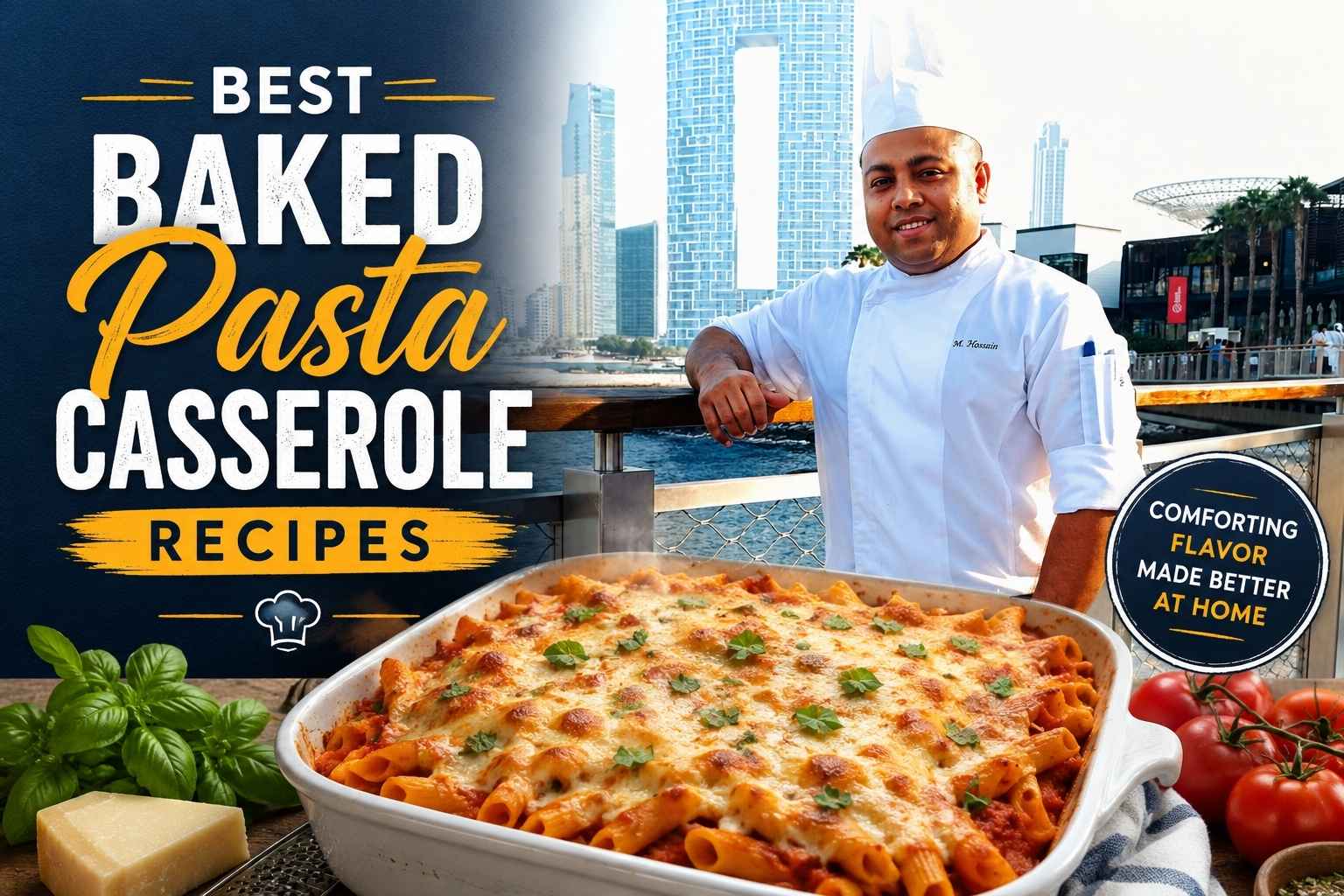
Nothing beats the warm hug of bubbling cheese on a cold night. When I first tried making these at home, my kitchen smelled like heaven, and it instantly brought my family together. Over years of cooking, I have learned the secret to getting that perfect golden crust without drying out the noodles. Today, I am sharing my top secrets and the absolute best baked pasta casserole recipes to help you make a comforting meal tonight. Let’s dive right into the kitchen!
What Makes a Baked Pasta Casserole Great
A great baked pasta casserole does four things right: it has the correct sauce ratio, the pasta is underdone going in, the cheese is layered (not just dumped on top), and the top has a proper crust.
Get any one of those wrong and you get either a dry, gummy brick or a soupy mess with a pale, sad surface. I’ve eaten both in professional kitchens. Neither is acceptable.
Sauce ratio is the one thing recipe writers consistently underestimate. Most published recipes call for too little sauce. By the time the dish bakes for 45 minutes, the pasta absorbs a significant amount of liquid. If you go in light on sauce, you come out with a tight, dense casserole that sticks to the fork. My rule: 1.5 cups of sauce per 8 oz of dry pasta, minimum. For drier pasta shapes like rigatoni, I push it to 2 cups.
Pasta doneness is covered in the next section – it’s the most common error I see.
Cheese layering means distributing cheese through the body of the casserole, not just across the top. The interior needs moisture and fat. A top-only approach gives you a cheese crust on a dry core. Layer a third of your cheese into the pasta mix itself before it goes into the dish.
The crust forms when the top layer of cheese and any breadcrumbs are exposed to direct oven heat. For this to happen properly, the dish needs to go in uncovered for the last 10-15 minutes of baking. Foil traps steam. Steam kills crunch. Pull the foil before the final stretch.
The Golden Rule: Undercook Your Pasta Before Baking
Stop cooking pasta to al dente before baking. Cook it to 2 minutes under al dente – what I call “al crudo” – and everything gets better.
Here’s what happens in the oven. Pasta continues to cook in the sauce’s heat and moisture for 30-50 minutes at 375°F-400°F. If the pasta goes in already al dente, it comes out overcooked – soft, bloated, without any bite. If it goes in al crudo (firm, slightly chalky at the center), it finishes perfectly inside the casserole.
America’s Test Kitchen confirmed this approach in their pasta casserole testing (America’s Test Kitchen, 2023): pasta cooked 2 minutes under package directions maintained better texture after baking than pasta cooked to full doneness.
The rule is simple: subtract 2 minutes from whatever the package says and pull the pasta there. It should have a visible white dot at the center when you cut a piece in half. That’s your signal.
One more thing. Salt the pasta water until it tastes like mild seawater. This is not optional. Under-salted pasta never recovers in the oven.
Top 8 Baked Pasta Casserole Recipes
Recipe Comparison Table
| Casserole | Pasta Type | Sauce Base | Oven Temp | Bake Time | Difficulty |
|---|---|---|---|---|---|
| Classic Baked Ziti | Ziti or penne | Tomato + ricotta | 400°F / 205°C | 35-40 min | Easy |
| Four-Cheese Lasagna | Lasagna sheets | Béchamel + tomato | 375°F / 190°C | 50-55 min | Intermediate |
| Stovetop-Style Baked Mac and Cheese | Elbow macaroni | Béchamel (cheese sauce) | 375°F / 190°C | 25-30 min | Easy |
| Greek Pastitsio | Bucatini or ziti | Béchamel + lamb ragù | 375°F / 190°C | 45-50 min | Intermediate |
| Chicken Tetrazzini | Spaghetti or linguine | Cream + sherry | 375°F / 190°C | 30-35 min | Easy |
| Spinach & Ricotta Stuffed Shells | Jumbo shells | Tomato + béchamel | 375°F / 190°C | 35-40 min | Intermediate |
| Baked Rigatoni all’Amatriciana | Rigatoni | Tomato + guanciale | 425°F / 220°C | 20-25 min | Easy |
| Orzo-Stuffed Peppers | Orzo | Tomato + feta | 400°F / 205°C | 40-45 min | Easy |
1. Classic Baked Ziti
Baked ziti is the casserole I make when I need to feed a crowd and don’t want to think too hard. It’s also the most forgiving of the bunch.
Ingredients (serves 8):
- 1 lb (450g) ziti or penne
- 1 lb (450g) Italian sausage, casings removed
- 1 x 28 oz (800g) can whole San Marzano tomatoes, crushed by hand
- 15 oz (425g) whole-milk ricotta
- 2 cups (200g) shredded low-moisture mozzarella
- ½ cup (50g) Pecorino Romano, grated
- 4 garlic cloves, sliced thin
- 1 tsp dried oregano
- Red pepper flakes, salt, black pepper
Method:
- Cook ziti to 2 minutes under al dente. Drain, toss with a thin coat of olive oil.
- Brown sausage in a Dutch oven over medium-high heat, breaking it up. Add garlic and cook 1 minute.
- Add crushed tomatoes, oregano, and a pinch of red pepper flakes. Simmer 15 minutes.
- Off heat, stir in ricotta until just combined – you want streaks, not full incorporation.
- Fold in pasta and 1 cup of the mozzarella.
- Transfer to a greased 9×13 baking dish. Top with remaining mozzarella and Pecorino.
- Bake at 400°F covered with foil for 25 minutes, then uncovered for 10-15 minutes until the top is golden and bubbling.
Rest 10 minutes before cutting. Non-negotiable.
2. Four-Cheese Lasagna
Lasagna takes time. There’s no shortcut worth taking. But the payoff is a casserole with distinct, defined layers that holds its structure when sliced.
Ingredients (serves 10):
- 1 lb (450g) dry lasagna sheets (not no-boil)
- Béchamel: 4 tbsp butter, ¼ cup (30g) flour, 3 cups (720ml) whole milk, nutmeg, salt
- Tomato meat sauce: 1 lb ground beef, 1 onion, 2 garlic cloves, 28 oz crushed tomatoes, ½ cup red wine
- 15 oz (425g) whole-milk ricotta
- 2 cups (200g) shredded mozzarella
- 1 cup (100g) provolone, sliced thin
- ½ cup (50g) Parmigiano-Reggiano, grated
Method:
- Make béchamel: melt butter, whisk in flour and cook 2 minutes, add milk slowly while whisking, season with salt and nutmeg. Cook until it coats a spoon.
- Make meat sauce: brown beef, add onion and garlic, deglaze with wine, add tomatoes. Simmer 30 minutes.
- Cook lasagna sheets 2 minutes under al dente. Lay flat on oiled parchment.
- Layer: thin béchamel, pasta sheet, meat sauce, ricotta dollops, provolone, mozzarella. Repeat 4-5 times. Finish with béchamel and Parmigiano.
- Cover tightly with foil. Bake at 375°F for 40 minutes. Uncover, bake 15 more minutes.
- Rest 20 minutes before cutting or the layers collapse.
3. Stovetop-Style Baked Mac and Cheese
Most baked mac and cheese recipes produce a dry, grainy product. That’s because they skip the stovetop cheese sauce step and rely on the oven to do all the work. The oven can’t make a creamy sauce – it can only bake one.
Ingredients (serves 6):
- 1 lb (450g) elbow macaroni
- 4 tbsp butter
- ¼ cup (30g) all-purpose flour
- 3 cups (720ml) whole milk, warmed
- 1 cup (240ml) heavy cream
- 2 cups (200g) sharp cheddar, grated (not pre-shredded)
- 1 cup (100g) Gruyère, grated
- ½ cup (50g) Parmigiano-Reggiano, grated
- 1 tsp dry mustard powder
- ½ tsp cayenne
- Topping: ¾ cup panko, 2 tbsp butter (melted), ¼ cup Parmigiano
Method:
- Cook macaroni 2 minutes under al dente. Drain.
- Make a roux with butter and flour. Cook 2 minutes. Add warm milk slowly, whisking. Add cream.
- Off heat, stir in cheddar and Gruyère until smooth. Add mustard and cayenne.
- Fold in pasta. Transfer to a buttered 9×13 baking dish.
- Mix panko with melted butter and Parmigiano. Scatter over the top.
- Bake at 375°F uncovered for 25-30 minutes until the crust is deep golden and the sauce is bubbling at the edges.
Tip from Serious Eats (Serious Eats, 2022): use block cheese and grate it yourself. Pre-shredded cheese contains anti-caking agents that prevent proper melting and produce a grainy sauce.
4. Greek Pastitsio
Pastitsio is the casserole that impresses people who think they’ve seen everything. It’s a Greek baked pasta with a lamb ragù base and a thick béchamel top that bakes into a firm, custard-like layer.
Ingredients (serves 10):
- 1 lb (450g) bucatini or thick ziti
- 1 lb (450g) ground lamb
- 1 onion, fine dice
- 3 garlic cloves
- 1 cup (240ml) dry red wine
- 1 x 14 oz (400g) can crushed tomatoes
- 1 tsp cinnamon, ½ tsp allspice, ¼ tsp cloves
- Béchamel: 5 tbsp butter, ⅓ cup (40g) flour, 4 cups (960ml) whole milk, 2 eggs, ½ cup Kefalotyri or Pecorino
Method:
- Brown lamb with onion and garlic. Add wine and reduce by half. Add tomatoes and spices. Simmer 25 minutes.
- Cook pasta 2 minutes under al dente.
- Make béchamel, let it cool 5 minutes, then whisk in eggs.
- Layer: half the pasta, all the meat sauce, remaining pasta, then pour béchamel evenly over everything.
- Top with grated Kefalotyri.
- Bake at 375°F for 45-50 minutes until the top is set and golden.
- Rest 25-30 minutes. Pastitsio must be fully set before slicing or it falls apart.
5. Chicken Tetrazzini
Tetrazzini is a cream-based casserole built for leftover or poached chicken. It’s mild, rich, and exactly what I want after a long service.
Ingredients (serves 8):
- 12 oz (340g) thin spaghetti or linguine
- 3 cups (420g) cooked chicken, shredded
- 3 tbsp butter
- 1 lb (450g) cremini mushrooms, sliced
- 3 shallots, minced
- ½ cup (120ml) dry sherry
- 2 cups (480ml) chicken stock
- 1 cup (240ml) heavy cream
- 1 cup (100g) Parmigiano-Reggiano, grated
- Salt, black pepper, fresh thyme
Method:
- Cook pasta 2 minutes under al dente.
- Sauté mushrooms in butter over high heat until golden. Add shallots, cook 2 minutes.
- Add sherry and reduce by half. Add stock and cream, simmer until lightly thickened (about 8 minutes).
- Fold in chicken and pasta. Season well.
- Transfer to a buttered 9×13 dish. Top with Parmigiano.
- Bake at 375°F uncovered for 30-35 minutes.
6. Spinach and Ricotta Stuffed Shells
Ingredients (serves 6):
- 20 jumbo pasta shells
- 2 cups (450g) whole-milk ricotta
- 10 oz (280g) frozen spinach, thawed and squeezed completely dry
- 1 egg
- 1 cup (100g) mozzarella, divided
- ½ cup (50g) Parmigiano-Reggiano
- Pinch nutmeg, salt, pepper
- 3 cups tomato sauce + 1 cup béchamel (for the base and top)
Method:
- Cook shells 3 minutes under al dente (they’re thick – be aggressive about undercooking here).
- Mix ricotta, spinach, egg, ½ cup mozzarella, Parmigiano, and nutmeg.
- Spread tomato sauce in the base of a 9×13 baking dish. Drizzle béchamel over it.
- Fill each shell with the ricotta mix and nestle into the sauce.
- Spoon a little extra tomato sauce over each shell. Top with remaining mozzarella.
- Cover and bake at 375°F for 30 minutes. Uncover 10 minutes.
7. Baked Rigatoni all’Amatriciana
This is a weeknight casserole. The Amatriciana sauce – guanciale, tomato, Pecorino – is already one of the best pasta sauces in existence. Baking it concentrates the flavors and gives you crispy pasta tips that stick up from the sauce.
Ingredients (serves 6):
- 1 lb (450g) rigatoni
- 5 oz (140g) guanciale or pancetta, cubed small
- ½ tsp red pepper flakes
- ½ cup (120ml) dry white wine
- 1 x 28 oz (800g) can whole tomatoes, crushed
- 1 cup (100g) Pecorino Romano, grated
- ½ cup (50g) mozzarella
Method:
- Render guanciale in a cold pan, bring to medium heat. Add red pepper flakes.
- Add wine, reduce. Add tomatoes, simmer 20 minutes.
- Cook rigatoni 2 minutes under al dente. Toss with sauce and most of the Pecorino.
- Pack into a 9×13 dish. Scatter remaining Pecorino and mozzarella on top.
- Bake at 425°F uncovered for 20-25 minutes. The high heat crisps the exposed pasta tips.
8. Orzo-Stuffed Peppers
Ingredients (serves 6):
- 6 large bell peppers, halved lengthwise, seeds removed
- 1½ cups (290g) dry orzo
- 1 x 14 oz (400g) can diced tomatoes
- 1 cup (240ml) chicken or vegetable stock
- 1 cup (100g) feta, crumbled
- 2 garlic cloves, minced
- 1 tsp dried oregano
- Olive oil, salt, pepper
Method:
- Cook orzo 3 minutes under al dente (it will cook more inside the peppers).
- Mix orzo with tomatoes, stock, garlic, oregano, and half the feta.
- Fill pepper halves with the orzo mix. Place in a baking dish with ¼ inch of water in the base.
- Top with remaining feta. Drizzle olive oil.
- Cover tightly with foil and bake at 400°F for 30 minutes. Uncover 15 minutes.
Sauce Deep-Dive: Béchamel vs. Tomato vs. Cream
Sauce choice defines the character of the casserole. Use the wrong base and the whole dish feels off.
Béchamel (butter, flour, milk) is for casseroles that need richness and body without acidity. It holds together during baking and creates the firm, custard-like top on pastitsio and the creamy interior of mac and cheese. The fat-to-flour ratio controls thickness: 1 tbsp butter + 1 tbsp flour per 1 cup of milk gives a pourable sauce; 2 tbsp each gives a thick one. Season it aggressively – béchamel needs more salt than you think.
Tomato sauce works best where you want brightness and acidity to cut through cheese. Ziti, lasagna, and Amatriciana all lean on tomato. The key is simmering long enough (20-30 minutes) that the sauce loses its raw edge and concentrates. A too-thin tomato sauce will make the casserole watery. If your sauce coats a spoon loosely, reduce it further before adding pasta.
Cream-based sauces (tetrazzini, some chicken casseroles) work when the protein is mild and you want the sauce to carry the flavor of the aromatics. Cream reduces in the oven and tightens around the pasta. Don’t try to use cream where you need acid – it’ll taste flat. Pair it with sherry, lemon zest, or Parmigiano to keep it from going heavy.
Best Pasta Shapes for Casseroles
Pasta shape is not decorative. It changes how sauce clings, how the casserole bakes, and how it cuts.
Ridged tubes (rigatoni, penne rigate, ziti) hold sauce inside and out. They create air pockets in the baking dish that let sauce circulate. The best all-purpose choice for most casseroles.
Shells and jumbo shells are made to be filled. Their concave shape traps sauce and filling in equal measure. The thicker walls mean they need more undercooking than a tube pasta.
Long pasta (spaghetti, linguine, bucatini) works for tetrazzini and pastitsio – both dishes where you want pasta that lies in layers rather than forming a chunky, irregular body.
Orzo and small pasta work inside stuffed vegetables where you need the pasta to pack into a confined space. They’re also faster to cook and bake.
Avoid fresh pasta in most baked casseroles. It’s too delicate and absorbs liquid too fast. Use dry pasta for consistent, predictable results (Bon Appétit, 2024).
The Cheese Guide: Melting vs. Topping
Melting cheeses go inside the casserole. They need low moisture and good stretch. Low-moisture mozzarella, Gruyère, Fontina, Provolone, and young Gouda all melt smoothly. Avoid fresh mozzarella – it releases too much water and creates steamed, soggy pasta. Avoid pre-shredded anything – the anti-caking coatings prevent proper melt.
Topping cheeses go on the surface where they brown and crust. Parmigiano-Reggiano, Pecorino Romano, and aged Asiago all do this well. They’re low-moisture, salty, and high in protein – which is exactly what you want for browning. Mix a topping cheese with panko breadcrumbs and melted butter for the best crust.
My go-to combinations:
- Ziti and tomato-based: mozzarella inside + Pecorino on top
- Mac and cheese: cheddar + Gruyère inside + Parmigiano on top
- Pastitsio: Kefalotyri throughout + Pecorino on the béchamel top
- Lasagna: mozzarella + provolone inside + Parmigiano on top
Avoid single-cheese casseroles. You need one cheese for stretch, one for flavor, and one for crust.
Make-Ahead, Freezing, and Reheating
Baked pasta casseroles are one of the best make-ahead dishes in a home cook’s toolkit. I put this to work constantly for catering prep and family meals.
Make-ahead (refrigerator): Assemble the casserole fully (including the cheese topping), cover tightly with foil, and refrigerate up to 48 hours. Pull it from the fridge 30 minutes before baking. Add 10-15 minutes to the covered bake time since the dish starts cold.
Freezing (unbaked): Assemble, cover with a double layer of plastic wrap then foil, and freeze up to 3 months. Thaw in the refrigerator overnight. Bake covered at the recipe temperature for the full covered time, then add the uncovered time as normal. Do not bake directly from frozen – the outside will overcook before the center heats through.
Reheating (already baked): Add 2-3 tablespoons of water or stock to the surface before covering with foil. Reheat at 350°F for 20-25 minutes. The added liquid prevents the pasta from drying out. For single portions, microwave with a damp paper towel over the top at 70% power.
King Arthur Baking (King Arthur Baking, 2023) recommends pressing plastic wrap directly onto the surface of the assembled casserole before adding the foil layer – this prevents freezer burn on the cheese top.
Common Baked Pasta Mistakes and How to Fix Them
Cooking pasta fully before baking. Already covered – cook 2 minutes under al dente, every time.
Not enough sauce. Use 1.5-2 cups of sauce per 8 oz of dry pasta. Pasta absorbs significant liquid during baking. Starting with more than you think you need is the right move.
Overcrowding the dish. A 9×13 baking dish handles 1 lb of pasta. If you try to push 1.5 lbs into the same dish, the pasta on top dries out before the interior heats. Use two dishes or a deeper vessel.
Skipping the rest time. Baked pasta casseroles need 10-20 minutes off heat before cutting. During that time, the sauce thickens and the structure sets. Cut too early and you get a sliding, soupy mess on the plate. Rest time is not optional – it’s finishing time.
Covering the entire bake with foil. Foil keeps the casserole moist during the first phase of baking, but it blocks browning. For the last 10-15 minutes, the foil comes off. That’s when the crust forms. A casserole baked fully covered will be moist but pale and texturally boring.
Using pre-shredded cheese. Block cheese, grated fresh, melts at a lower temperature, produces less grease, and creates a smoother sauce. Pre-shredded cheese is coated in potato starch or cellulose. The coating is inert – it doesn’t add flavor, and it interferes with melt (Serious Eats, 2022).
Not salting the baking dish. A light coating of butter and then a dust of Parmigiano or breadcrumbs on the interior of the baking dish adds a secondary crust on the bottom and sides. Most recipes skip this. Don’t.
My Personal Casserole Routine
I build every baked pasta casserole in the same order, regardless of recipe.
I start with the sauce. The sauce needs to be done and slightly over-seasoned before anything else – it will get diluted once it hits the unseasoned pasta and cheese. I taste the sauce on its own and push it one notch saltier than comfortable.
While the sauce simmers, I boil the pasta water and cook the pasta 2 minutes under. I drain it, toss it with a tablespoon of olive oil, and spread it on a sheet pan to cool. Hot pasta dumped directly into sauce keeps cooking from the residual heat. Cooling it on a sheet pan stops that.
I prep the cheese off the block – never pre-shredded – and divide it into thirds. One third goes into the pasta and sauce mix. One third goes into any filling or intermediate layers. One third goes on top with Parmigiano.
I butter the baking dish and dust it with Parmigiano. I assemble the casserole. I cover it with foil.
Then I either bake it immediately or refrigerate it for the next day. Next-day casseroles taste noticeably better – the pasta has time to absorb the sauce flavor and the layers settle.
I bake covered until the center is hot (I use an instant-read thermometer – 160°F internal temperature for fully cooked meat-based casseroles, 145°F for vegetable). Then I pull the foil and bake uncovered until the top is the color of caramel, not cream.
Rest. Cut. Serve.
That’s the whole system. It works for every casserole on this list.
Frequently Asked Questions About Baked Pasta Casseroles
What pasta is best for baked casseroles?
Ridged tubes – rigatoni, penne rigate, or ziti – work best for most baked pasta casseroles. The ridges hold sauce and the tube shape creates structure in the dish. For layered casseroles like lasagna or pastitsio, use flat sheets or long pasta. Small shapes like orzo are for stuffed vegetable casseroles only.
How do I keep baked pasta from drying out?
Use 1.5-2 cups of sauce per 8 oz of dry pasta, and cover the dish with foil for the first two-thirds of baking time. The foil traps steam and keeps the interior moist. Add a tablespoon of water or stock to the surface if reheating leftovers.
Can I make baked pasta casserole the night before?
Yes – and it’s actually better that way. Assemble fully, cover tightly, and refrigerate up to 48 hours. Pull from the fridge 30 minutes before baking and add 10-15 minutes to the covered portion of the bake time.
Why is my baked pasta gummy?
Gummy pasta in a casserole means it was overcooked before baking. Pasta should go into the oven firm, with a visible white center when cut. It finishes cooking in the sauce and oven heat. Also check that you’re not overcrowding the dish – too much pasta per square inch creates a dense, gummy interior.
What temperature should I bake pasta casseroles?
Most baked pasta casseroles bake at 375°F-400°F (190°C-205°C). Richer, béchamel-based casseroles do better at the lower end (375°F) to prevent curdling. Tomato-based casseroles and anything with exposed pasta tips (like Amatriciana) can go hotter – up to 425°F – to get caramelization on top.
How long does baked pasta last in the fridge?
Stored in an airtight container, baked pasta casserole lasts 4-5 days in the refrigerator. Reheat portions at 350°F with a splash of water and foil on top, or in the microwave at 70% power with a damp paper towel covering the plate.
Can I freeze baked pasta casserole?
Freeze it unbaked for the best results. Assemble fully, wrap in plastic wrap and then foil, and freeze up to 3 months. Thaw overnight in the fridge and bake as directed, adding 10-15 extra minutes to the covered bake time. Already-baked casseroles can also be frozen for up to 2 months, though the texture of the pasta is slightly softer after freezing and reheating.
What’s the difference between lasagna and pastitsio?
Both are layered baked pasta casseroles with a béchamel top. Lasagna uses flat pasta sheets, alternates layers of meat sauce and ricotta, and has Italian seasoning. Pastitsio uses bucatini or thick tube pasta, has a single layer of spiced lamb ragù (cinnamon, allspice, cloves) between two pasta layers, and the béchamel top is egg-enriched so it sets firm like a custard when sliced.
Key Takeaways
- Cook all pasta 2 minutes under al dente before it goes in the oven. This is the single biggest technical fix available to home cooks.
- Use 1.5-2 cups of sauce per 8 oz of dry pasta. Pasta absorbs liquid during baking and most recipes underestimate this.
- Layer cheese through the casserole body, not just on top. One third inside the mix, one third in layers, one third on the surface.
- Bake covered with foil first to retain moisture, then uncovered for the last 10-15 minutes to build the crust.
- Rest the casserole 10-20 minutes after it comes out of the oven. This step is finishing time, not waiting time.
- Make casseroles 24 hours ahead when possible. The flavor improves and the structure sets more cleanly.
- Grate cheese from the block. Pre-shredded cheese has anti-caking agents that produce grainy, greasy results.
- Use the right sauce base for the dish: béchamel for creamy casseroles, reduced tomato for Italian-style, cream for chicken-based dishes.

I’m Mossaraof, a trained chef and the founder of OvenInsights.com. I spent years cooking at Larrupin’ Cafe and in kitchens across Chicago and Seattle. Now I test kitchen gear for a living. I moved to North Acton, London, and I test every tool I write about. I use real meals and real heat. No brand deals. No shortcuts. I cover 12 kitchen types and hundreds of recipes. I believe this: the right tools matter as much as the recipe.