At A Glance
- The Maillard reaction is a chemical process between amino acids and sugars that creates browning, new flavors, and aroma – it starts at around 280°F (138°C) on a food’s surface.
- It is not caramelization. Caramelization only involves sugar. The Maillard reaction needs both sugar and protein.
- Moisture is your enemy. Water keeps surface temperature at 212°F (100°C), which is too low for browning. Dry your food before it hits the pan.
- Overcrowding, cold pans, and low heat are the three most common mistakes that kill browning in home kitchens.
- Convection ovens brown faster and more evenly than conventional ovens because moving air removes surface moisture.
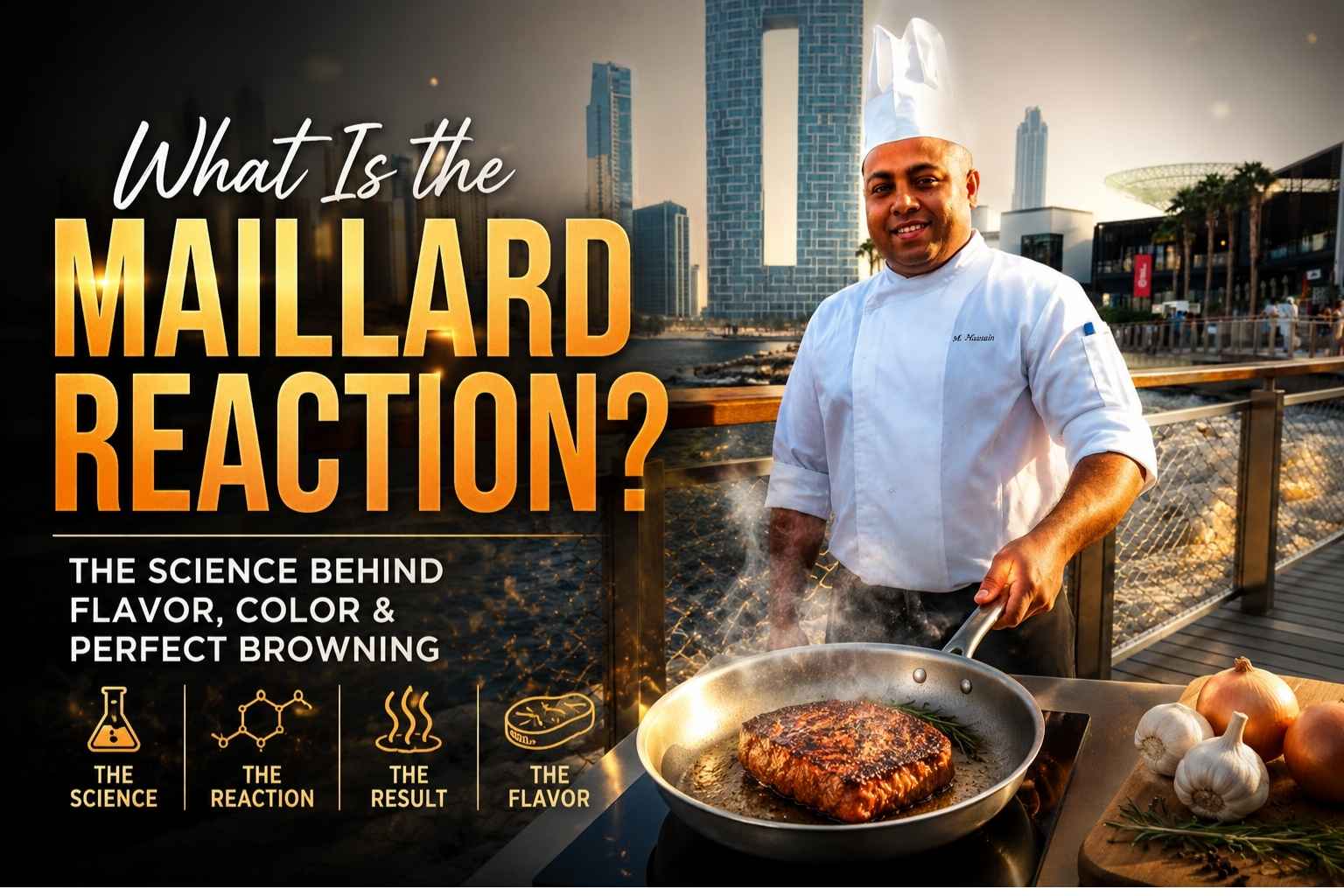
I still remember the first time I asked myself, what is the Maillard reaction? I was standing over a pan, watching a steak turn from pale pink to deep golden brown, and I just had to know why. That crust, that smell, that rich flavor—it’s not magic. It’s simple food science at work. I’ve cooked for years, tested countless techniques, and I’m excited to break this down for you in plain, easy words. By the end, you’ll know exactly how to use this trick to make your food taste amazing every single time.
What the Maillard Reaction Actually Is
The Maillard reaction is a chemical reaction between amino acids (the building blocks of protein) and reducing sugars (like glucose and fructose) when heat is applied. The result is hundreds of new flavor compounds, a brown color, and that smell that makes people walk into a kitchen and immediately feel hungry.
French chemist Louis-Camille Maillard first described it in 1912, but cooks had been using it for thousands of years before that (Harold McGee, On Food and Cooking, 2004). Every seared steak, toasted bread crust, roasted coffee bean, and golden cookie has the Maillard reaction to thank.
I want to be clear about what this is, because a lot of food writing muddles it: the Maillard reaction is not one reaction. It’s a cascade of hundreds of reactions happening at the same time, producing different compounds depending on the food, the temperature, the moisture level, and how long heat is applied. That’s why a seared chicken thigh and a coffee bean both have Maillard browning, but taste nothing alike.
How the Maillard Reaction Differs from Caramelization
Most home cooks use “caramelization” to mean any kind of browning. That’s wrong, and the difference actually matters when you’re trying to control flavor.
Caramelization only involves sugar. When sugar is heated past its melting point (around 320°F / 160°C for sucrose), it breaks down and creates brown pigments and sweet, buttery, slightly bitter flavors. No protein needed.
The Maillard reaction needs both a sugar and an amino acid. It happens at lower temperatures than caramelization – starting around 280°F (138°C) – and produces a far wider range of flavors. Meat, bread, coffee, and roasted vegetables all brown largely through the Maillard reaction, not caramelization, because they have protein.
Onions are a good example of where both happen. Early in cooking, Maillard browning gives them savory depth. Later, as sugars concentrate and temperatures rise, caramelization adds sweetness. They overlap, but they’re separate processes (J. Kenji López-Alt, The Food Lab, 2015).
I’ve had this argument in professional kitchens more times than I can count. A cook will tell me the onions are “caramelizing” at 5 minutes in a pan. They’re not. Caramelization takes much higher sustained heat. What they’re seeing at that point is Maillard browning.
The Temperature Numbers You Actually Need
The Maillard reaction starts producing visible color at around 280°F to 330°F (138°C to 165°C) on the food’s surface. It accelerates significantly above 300°F (149°C) and produces the most flavor compounds between 300°F and 400°F (149°C to 204°C) (America’s Test Kitchen, The Science of Good Cooking, 2012).
Here’s what that means in practice:
The temperature you care about is the surface temperature of the food, not your oven or burner dial. Water boils at 212°F (100°C). As long as moisture is present on a food’s surface, that surface cannot exceed 212°F no matter how high your burner is set. Browning cannot happen at 212°F. The surface has to dry out first.
That’s the single most important thing I can tell you about browning: get rid of surface moisture before applying heat.
Once the surface dries, the temperature can climb past 280°F and Maillard reactions begin. Above 400°F (204°C), you start getting bitter, acrid compounds from burning rather than browning. The sweet spot for most proteins is between 350°F and 400°F surface temperature.
Quick-Reference: Maillard Reaction Conditions by Food Type
| Food Type | Surface Temp Needed | Moisture Issue | Method | What You Get |
|---|---|---|---|---|
| Steak | 350-400°F (177-204°C) | Pat very dry, air-dry uncovered | High-heat pan or grill | Brown crust, savory depth |
| Bread crust | 300-375°F (149-190°C) | Steam early, then dry oven | Oven bake | Golden color, nutty flavor |
| Cookies | 300-350°F (149-177°C) | Low moisture dough | Oven bake | Brown edges, caramel notes |
| Coffee beans | 370-400°F (188-204°C) | Very low moisture roast | Drum roaster | Dark color, 800+ aroma compounds |
| Roasted vegetables | 375-425°F (190-218°C) | Single layer, high heat | Oven roast | Sweet-savory edges |
| Seared chicken skin | 375-400°F (190-204°C) | Air-dry overnight | Dry pan, high heat | Crispy, golden skin |
How Browning Affects Flavor, Color, and Aroma – by Food
This is where the Maillard reaction gets interesting. The specific flavors produced depend on which amino acids and sugars are present in a given food. That’s why browning a steak and toasting bread produce completely different smells, even though both are Maillard reactions.
Steak and Meat
Beef is high in the amino acid cysteine. When it reacts under heat, it produces sulfur-containing compounds that give seared beef that specific savory, almost meaty-smelling crust. The brown exterior of a well-seared steak has over 600 flavor compounds that don’t exist in raw or boiled beef (Harold McGee, On Food and Cooking, 2004).
This is why boiled meat tastes flat. The internal temperature never exceeds 212°F, so no Maillard reaction occurs at the surface.
Bread
Bread has both sugars from the flour and amino acids from the yeast and flour proteins. The Maillard reaction creates the golden-brown crust and the toasty, slightly nutty flavor that a soft sandwich loaf completely lacks. King Arthur Baking has documented that crust color correlates directly with internal steam levels – too much steam late in baking blocks browning by keeping the crust moist (King Arthur Baking, 2021).
Cookies
In cookies, the Maillard reaction is responsible for browned edges and deeper flavor in the interior. Brown butter accelerates this because clarifying butter removes water, which lets the milk solids brown through Maillard reactions before the butter even hits your dough (Serious Eats, 2020).
Coffee
Coffee is one of the most dramatic examples. Green coffee beans have almost no aroma. After roasting through Maillard reactions at 370°F to 400°F, they produce over 800 volatile aroma compounds. The specific flavor profile depends on roast level – how far through the Maillard cascade the roaster lets the beans go (Harold McGee, On Food and Cooking, 2004).
Roasted Vegetables
Vegetables have less protein than meat, so their Maillard browning is less intense. But it still happens. Asparagus, broccoli, and Brussels sprouts all contain amino acids that react with their natural sugars at high oven temperatures. The difference between steamed and roasted broccoli is almost entirely the Maillard reaction, which creates the slightly sweet, slightly bitter char on the edges.
Why Your Pan Temperature Matters More Than Your Oven Dial
Your oven dial does not tell you what temperature your cooking surface is. That took me years of professional cooking to really internalize.
A cold pan put in a 450°F oven takes time to reach that temperature. A pan preheated dry on a burner can reach 500°F or higher before you add food. The oil in that pan, once it starts shimmering, is around 375°F to 400°F. Add a wet piece of protein and the pan temperature drops immediately.
The surface temperature of your food is what drives browning. Your oven’s air temperature, your burner setting, your pan material – these are all upstream variables. What you’re trying to achieve is 280°F or above at the food’s surface, sustained long enough for Maillard reactions to progress.
Cast iron holds heat better than stainless steel or non-stick. So when you add a cold, wet piece of meat to cast iron versus a thin aluminum pan, the cast iron recovers its temperature much faster. That’s why most chefs sear in cast iron or carbon steel – not because it’s tradition, but because thermal mass means less temperature drop when food hits the pan (America’s Test Kitchen, The Science of Good Cooking, 2012).
How to Trigger Browning Faster: Five Methods That Work
These are the methods I use every day. Most are simple. All of them actually work.
1. Dry your food thoroughly. Pat meat dry with paper towels before searing. Air-dry chicken skin uncovered in the fridge overnight. The drier the surface, the faster it reaches browning temperature. This alone fixes 80% of home cook browning problems.
2. Use baking soda on meat or vegetables. A light coating of baking soda (about 1/4 teaspoon per pound of meat, dissolved in water or mixed with salt) raises the surface pH. Higher pH speeds up Maillard reactions because the reaction happens faster in alkaline conditions. This is why pretzels are dipped in lye solution before baking – they brown much faster and darker (J. Kenji López-Alt, The Food Lab, 2015).
3. Preheat your pan before oil or food go in. Put the dry pan over high heat first. Then add oil. Then add food. Never add food to a cold pan if browning is the goal.
4. Use a sugar wash. Brushing bread or chicken skin with a little honey, sugar syrup, or even milk before baking adds more reducing sugars to the surface, which gives the Maillard reaction more to work with. This is standard in most professional bread baking.
5. Raise oven temperature by 25°F. If your food is browning slowly, it’s almost always because your oven runs cool or because moisture is escaping into the oven air. Increase the temperature, or switch to convection mode if you have it.
Common Mistakes That Block Browning – With Fixes
Overcrowding the Pan
This is the most common mistake I see. When you add too much food to a pan at once, the moisture released from the food cannot evaporate fast enough. The pan temperature drops. The food steams instead of sears. You end up with grey, wet protein instead of a brown crust.
Fix: Cook in batches. Never fill more than 60% of your pan surface with food.
Adding Wet Food to the Pan
Cold, wet food from the fridge drops pan temperature twice as fast as dry food. And the moisture immediately converts to steam, which keeps the surface cool.
Fix: Dry the surface and bring food to room temperature (or close to it) before cooking.
Using Too Little Heat
Home cooks are often afraid of high heat. They set burners to medium because they don’t want to burn anything. But medium heat on most home stoves is not enough to generate true Maillard browning on thick proteins quickly.
Fix: Use high heat for searing. Watch the oil, not the dial. When the oil shimmers and a drop of water flicks off the surface immediately, the pan is hot enough.
Using the Wrong Fat
Butter has a low smoke point around 300°F to 350°F (149°C to 177°C) because of its milk solids. At high searing temperatures, it burns before the food browns. This gives you a bitter, black crust, not a Maillard crust.
Fix: Start with a high smoke point oil (avocado, grapeseed, refined sunflower). Add butter at the end of cooking and baste – butter adds flavor without needing to be in the pan from the start.
Gas vs. Electric vs. Convection Ovens and Browning
The oven type changes browning results more than most home cooks realize.
Gas ovens produce combustion byproducts that include water vapor. This adds moisture to the oven air, which can slow browning – especially for bread and roasted vegetables. Gas ovens also have hot spots and often run 25-50°F cooler than the dial says. Get an oven thermometer.
Electric ovens produce dry heat with no water vapor. Browning tends to be more even and slightly faster than in gas at the same set temperature. The heating elements cycle on and off, which can create temperature swings, but the overall environment is drier.
Convection ovens are the best for Maillard browning. The fan circulates hot air, which removes the boundary layer of moisture that builds up around food surfaces. This dries the surface faster and allows surface temperature to rise more quickly. Per America’s Test Kitchen testing, convection roasting at 400°F produces comparable browning to conventional roasting at 425°F (America’s Test Kitchen, The Science of Good Cooking, 2012). If you have convection, use it for roasting and baking.
My rule: For anything I want deeply browned, I use convection. For items where I want gentle, even heat (like custards or gentle braises), I use conventional.
My Browning Routine: What I Actually Do in the Kitchen
I’ve cooked professionally for over 15 years – hotel banquets, farm-to-table restaurants, pop-up dinners. Here’s what browning looks like in my actual kitchen, not in a textbook.
For steak, I salt the night before and leave it uncovered in the fridge. The salt draws out moisture, then it reabsorbs. The surface dries. I cook it the next day on a carbon steel pan over high heat for 90 seconds per side before finishing in a 450°F oven. I never use butter in the initial sear. I add it at the basting stage with garlic and thyme.
For roasted chicken, I dry-brine the skin with salt and baking powder (not soda – baking powder has a more neutral effect on flavor). I leave it uncovered in the fridge for at least 24 hours. The skin becomes almost papery. It browns in 20 minutes at 425°F convection. No steaming. No tent. No basting with pan juices (that adds moisture back).
For vegetables, I make sure they’re dry, spread in a single layer, and not touching. I use a very hot oven, 425°F to 450°F. If they’re crowded or cold, they steam. That’s the only way vegetables turn out soggy when roasted – too much moisture, not enough heat clearance.
For bread, I bake at a high initial temperature (450°F to 500°F) with steam for the first 15-20 minutes to build oven spring. Then I vent the steam or remove the lid of my Dutch oven. The dry heat from that point forward is what builds the Maillard crust. This is why bread baked in a covered Dutch oven has a pale top until you remove the lid.
When You Want to Avoid the Maillard Reaction
Sometimes you don’t want browning. Knowing when to avoid it is just as useful as knowing how to trigger it.
Poached eggs and fish should have no browning. The goal is gentle protein coagulation, not surface reactions. Use low, steady heat and keep moisture high.
White sauces and béchamel need butter and flour cooked together, but only until the raw flour smell is gone – not until brown. Brown the roux and you’ve made a dark sauce base, not a white one.
Steamed dumplings should have a soft, white exterior. Only pan-fried dumplings (potstickers) use Maillard browning intentionally, and only on the bottom.
Braised meats sometimes call for no initial sear. When you want very silky, tender texture without a browned crust – as in some white stews like French blanquette de veau – the meat goes in raw to cold liquid. Browning at the start would add flavors the dish doesn’t need.
The way to avoid Maillard browning is simple: keep surfaces wet, keep temperatures below 280°F, and keep cooking times short at any high heat.
Frequently Asked Questions About the Maillard Reaction
What is the Maillard reaction in simple terms?
The Maillard reaction is a chemical process where amino acids (from protein) and reducing sugars react under heat to create brown color and hundreds of new flavor compounds. It is the reason seared meat, toasted bread, and roasted coffee have deep, complex flavors that their raw or boiled versions completely lack. It starts at around 280°F (138°C) on the food’s surface.
What temperature does the Maillard reaction start?
Maillard browning begins at around 280°F (138°C) at the food’s surface. It accelerates between 300°F and 400°F (149°C to 204°C). Above 400°F, burning and bitter compounds start to dominate. The surface temperature of the food is what matters – not your oven or burner dial setting.
What is the difference between the Maillard reaction and caramelization?
Caramelization only involves sugar breaking down at high heat. The Maillard reaction requires both a reducing sugar and an amino acid. Caramelization typically starts above 320°F (160°C) for sucrose. The Maillard reaction starts lower, around 280°F, and produces a wider range of flavor compounds. Most browning in savory cooking is the Maillard reaction, not caramelization.
Why won’t my steak get a brown crust?
The most likely causes are wet surface meat, an under-heated pan, or too much food in the pan at once. Pat the meat completely dry before cooking. Preheat your pan over high heat before adding oil or meat. Cook in batches so moisture can evaporate freely instead of steaming the food.
Does baking soda actually help browning?
Yes. Baking soda raises the pH of a food’s surface, which speeds up the Maillard reaction. A small amount (about 1/4 teaspoon per pound dissolved in water, applied as a brief wash) significantly increases browning speed without affecting flavor when used in small quantities. J. Kenji López-Alt documented this in detail in The Food Lab (2015).
Why does convection brown food better than conventional baking?
Convection ovens use a fan to circulate hot air around the food. This removes the layer of water vapor that builds up around food surfaces during cooking. Drier air at the surface means the food’s surface temperature rises faster and moisture evaporates more quickly – both of which speed up Maillard browning. America’s Test Kitchen found that convection at 400°F produces similar browning to conventional at 425°F (America’s Test Kitchen, 2012).
Can the Maillard reaction happen in liquids?
Not in water-based liquids. Water keeps temperature at 212°F (100°C), which is below the Maillard threshold. This is why boiled or poached food doesn’t brown. The Maillard reaction requires dry heat at the food’s surface. Deep frying does trigger it because oil can reach 350°F to 375°F, which is why fried food browns.
Is Maillard browning the same as burning?
No. Maillard browning at 300°F to 400°F produces hundreds of pleasant flavor compounds. Burning above 400°F produces acrid, bitter compounds from pyrolysis – the complete breakdown of organic material. The line between a well-browned crust and a burnt one is mostly a matter of surface temperature and time. Watch color and smell, not just the timer.
Key Takeaways
- The Maillard reaction is a chemical process between amino acids and reducing sugars that creates browning, flavor, and aroma. It starts at around 280°F (138°C) on the food’s surface.
- Caramelization and the Maillard reaction are not the same thing. Most browning in cooking is Maillard, not caramelization.
- Moisture is the main enemy of browning. Water keeps surface temperature at 212°F, which is below the Maillard threshold. Dry your food before applying high heat.
- Surface temperature matters more than oven or burner settings. Cast iron and carbon steel brown food better because their thermal mass prevents pan temperature from dropping when food is added.
- Baking soda, high heat, pre-drying, and cooking in batches are the four fastest ways to get better browning at home.
- Convection ovens brown more efficiently than gas or electric conventional ovens because moving air removes surface moisture.
- When you don’t want browning, keep temperatures below 280°F, keep surfaces wet, and avoid prolonged dry heat.

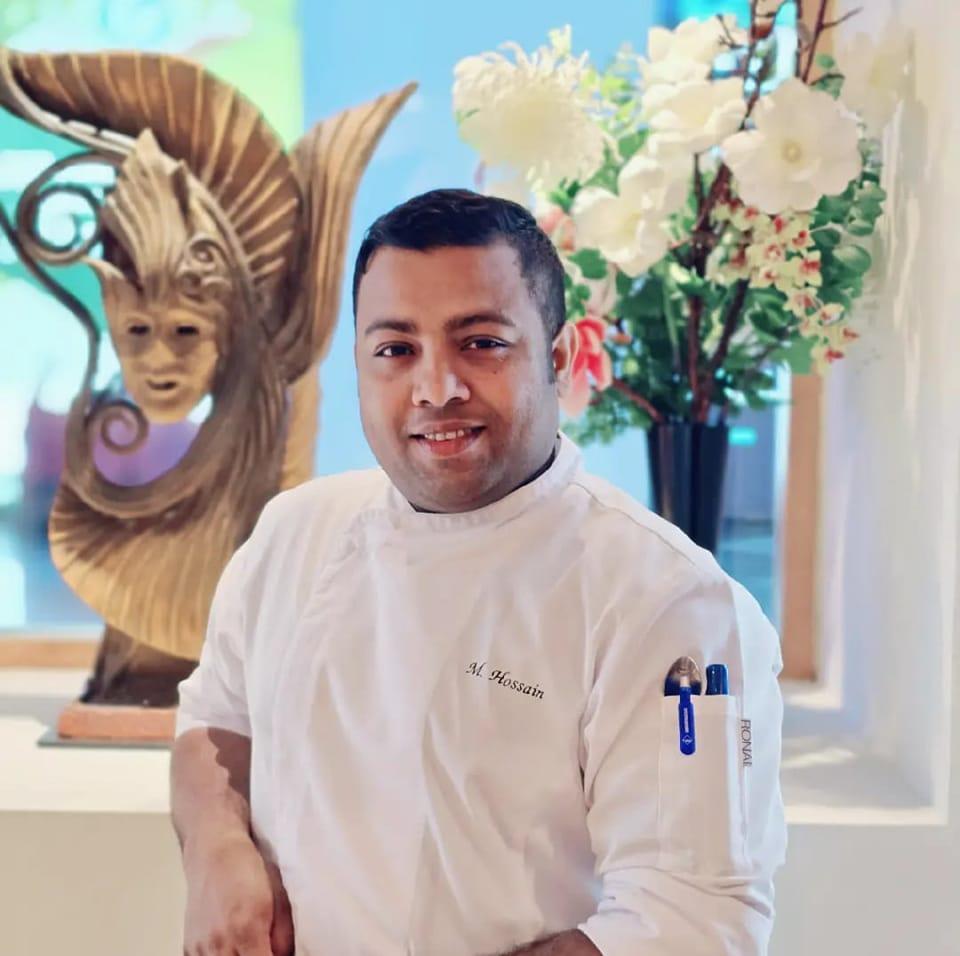
I’m Mossaraof, a trained chef and the founder of OvenInsights.com. I spent years cooking at Larrupin’ Cafe and in kitchens across Chicago and Seattle. Now I test kitchen gear for a living. I moved to North Acton, London, and I test every tool I write about. I use real meals and real heat. No brand deals. No shortcuts. I cover 12 kitchen types and hundreds of recipes. I believe this: the right tools matter as much as the recipe.