At A Glance
- The oven does the work for you. Set a temp, set a timer, and walk away. No stirring, no standing, no babysitting a pan.
- Sick food should be soft, warm, and easy to digest. Think broth, eggs, oatmeal, and baked sweet potatoes (Cleveland Clinic, 2023).
- Sheet-pan meals and one-pot bakes mean almost no chopping and almost no cleanup.
- Freezer-to-oven meals are a lifesaver. Make a batch when you’re healthy, so sick-you has zero work to do.
- Skip the oven entirely if you’re nauseous. Toast, crackers, or a banana beat any baked dish on those days.
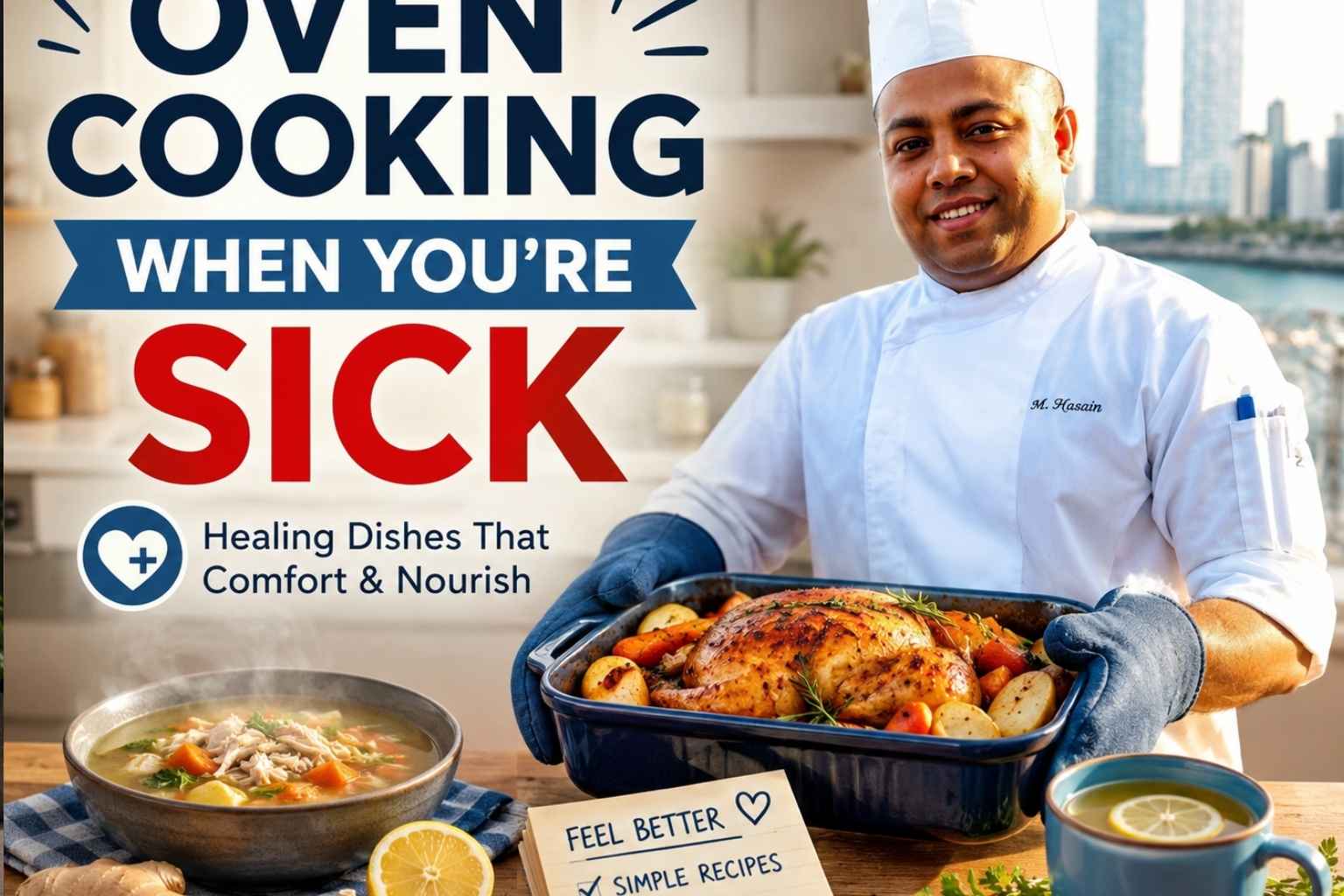
I still remember the day I had the flu but craved a warm, cozy meal. That’s when I turned to oven cooking when you’re sick, and it changed everything for me. As a chef, I know how hard it is to stand and stir a pot when your body just wants to rest. Ovens do the work for you, so you can heal while your kitchen fills with good smells. Let me show you my go-to tricks for easy, gentle meals that feel like a warm hug.
Quick-Reference: Comfort Meals by How You Feel
This table gives you a fast answer when you’re too tired to read the whole article. Match your symptom to a meal, then check the oven temp, cook time, and effort level.
| Symptom or Energy Level | Best Meal | Oven Temp | Cook Time | Effort Level |
|---|---|---|---|---|
| Sore throat | Baked oatmeal with banana | 350°F | 35 min | Low |
| Congestion | Sheet-pan ginger chicken and veggies | 400°F | 30 min | Low |
| No appetite | Soft-baked sweet potato | 400°F | 45 min | Very low |
| Low energy, body aches | Slow-roasted chicken soup base | 300°F | 2.5 hours | Very low (mostly hands-off) |
| Nausea | Skip the oven. Try plain toast or crackers | – | – | None |
| Fever, chills | Baked rice pudding or custard | 325°F | 40 min | Low |
| Stuffy nose, dry mouth | Garlic and herb braised chicken thighs | 375°F | 45 min | Low |
| Mild hunger, need protein | Baked eggs in a ramekin | 375°F | 15 min | Very low |
Why the Oven Beats the Stove When You’re Sick
The oven is your best friend when you feel awful, because it does not need you. You put food in, close the door, and lie down. A stovetop pan needs your attention. It can boil over, burn, or stick if you walk away for ten minutes.
I have cooked through plenty of colds and flu seasons in my 15 years in professional kitchens. On those days, I want one thing: a meal that needs almost no input from me. The oven gives you that.
The Oven Is Hands-Off by Design
Ovens cook food evenly, on all sides, at a steady temperature. You do not need to flip, stir, or check every few minutes. Set the timer, and go rest on the couch. This matters most when your body is fighting an infection and needs energy for healing, not for cooking (Mayo Clinic, 2022).
Cleanup Is Smaller Too
Line a sheet pan with foil or parchment paper, and cleanup becomes wiping down one pan or tossing the liner in the trash. No scrubbing a sticky skillet with a fever-fogged brain. This alone makes the oven worth it on a bad day.
You Avoid the “Standing Over a Pan” Problem
Stovetop cooking often means standing at the stove for 10 to 20 minutes. If you are dizzy, weak, or just want to lie down, that is a real barrier. With the oven, you can sit, lie down, or nap while dinner cooks itself.
What Makes Food “Sick Food”?
Good sick food is easy to digest, gentle on a sore throat, and helps you stay hydrated. It should also be low-prep, because you have little energy to cook and little appetite to enjoy a complex meal.
Easy to Digest
When you’re sick, your digestive system slows down. Heavy, greasy, or fried foods sit in your stomach and can make nausea worse (Cleveland Clinic, 2023). Soft, simple foods like rice, broth, oatmeal, and baked sweet potatoes are gentler.
Soothing for a Sore Throat
Warm, soft, and mild foods feel better going down when your throat hurts. Think baked oatmeal, soft scrambled eggs, mashed potatoes, or a warm bowl of broth. Avoid anything crunchy, spicy, or acidic until your throat feels better.
Hydrating
Fluids matter more than food when you’re sick, especially with a fever (Mayo Clinic, 2022). Broths, soups, and watery dishes like baked rice pudding all add fluid back into your body while still feeling like a real meal.
Low Prep, Low Cleanup
You do not need a five-ingredient gourmet sauce when you’re sick. You need something that takes five minutes to put together, then cooks itself. Keep a few staples on hand: eggs, rice, canned broth, frozen veggies, and root vegetables like sweet potatoes and carrots.
One-Pan and Sheet-Pan Meals for Zero Energy Days
A sheet-pan meal is the easiest dinner you can make when you’re sick. You put everything on one pan, set the oven, and walk away. No stovetop, no extra pots, and almost no chopping if you plan ahead.
Sheet-Pan Ginger Chicken and Soft Vegetables
This is one of my go-to sick-day meals. Toss boneless chicken thighs with a little olive oil, grated ginger, and salt. Add soft vegetables like carrots, zucchini, or canned, drained white beans. Bake at 400°F for about 30 minutes.
The ginger helps settle a queasy stomach, and the warm broth-like juices on the pan are great spooned over rice (Bon Appétit, 2021). Line the pan with foil first, and cleanup takes 30 seconds.
Baked Eggs in a Ramekin
If chewing feels like too much work, baked eggs are soft, protein-rich, and ready in 15 minutes. Crack one or two eggs into a small oven-safe dish, add a splash of milk and a pinch of salt, then bake at 375°F until just set.
Soft-Baked Sweet Potato
This might be the lowest-effort sick meal that exists. Wash a sweet potato, poke a few holes in it with a fork, and bake at 400°F for 45 minutes. No oil, no seasoning needed. The inside turns soft, sweet, and easy to eat with just a spoon.
Common mistake: Skipping the fork holes. Without them, steam builds up inside the potato and it can split open messily in your oven.
Soups, Broths, and Braises the Oven Makes for You
Soups and braises are some of the best sick-day meals, because the oven does almost all the work after a short prep step. You get a warm, hydrating, nourishing meal with very little hands-on time.
Oven Chicken Soup Base
Place chicken thighs, a chopped onion, a few carrots, and 6 cups of water or broth in a covered oven-safe pot. Bake at 300°F for 2.5 hours. The low, slow heat pulls flavor from the chicken bones and softens the vegetables completely.
When it’s done, shred the chicken back into the pot, add cooked rice or noodles, and you have a full pot of soup with maybe 10 minutes of total hands-on work.
Why Braising Works So Well
Braising means cooking meat slowly in liquid at a low temperature, usually in a covered pot. The low heat breaks down tough cuts of meat into something soft enough to cut with a spoon (America’s Test Kitchen, 2020). This texture is perfect when chewing feels like effort.
Simple Garlic and Herb Braised Chicken Thighs
Place chicken thighs in a covered oven dish with a splash of broth, a few smashed garlic cloves, and a sprig of thyme or rosemary if you have it. Bake at 375°F for 45 minutes. The chicken comes out fall-apart tender, and the broth at the bottom is good spooned over rice or sipped on its own.
Baked Comfort Foods for Sore Throats and Congestion
For a sore throat or stuffy nose, you want food that is soft, warm, and mild. The steam from a hot baked dish can also help open up your sinuses a little as you eat (Cleveland Clinic, 2023).
Baked Oatmeal
Mix oats, milk, a mashed banana, a beaten egg, and a little cinnamon in a small baking dish. Bake at 350°F for 35 minutes. The result is soft, warm, and slightly sweet, with no rough edges for a sore throat to deal with.
Baked Rice Pudding
Combine cooked rice, milk, a beaten egg, sugar, and a pinch of cinnamon in a baking dish. Bake at 325°F for 40 minutes, stirring once halfway through. This is soft, mild, and a little sweet, which can feel good when nothing else sounds appealing.
Why Steam Helps
When you pull a hot baked dish from the oven, the steam that rises off it can help loosen mucus in your nose and throat as you lean over it (Mayo Clinic, 2022). It is a small bonus, but a real one on a congested day.
Make-Ahead and Freezer-to-Oven Options for When You’re Too Sick to Cook
The best sick-day meal is the one you made last month, when you felt fine. Freezer-to-oven meals mean zero prep on the day you actually need them.
What Freezes Well
Soups, stews, braised meats, and baked grain dishes like rice casseroles all freeze well. Portion them into single-serving, oven-safe containers before freezing, so you can bake just what you need.
How to Reheat Safely from Frozen
Move the container from the freezer to the fridge the night before if you can. Then bake covered at 350°F until the center reaches 165°F, checked with a food thermometer (Food Network, 2022). If you’re baking straight from frozen, add 15 to 20 extra minutes and check the center temperature before eating.
Important callout: Never leave a frozen meal out on the counter to thaw for hours. Bacteria grow fastest between 40°F and 140°F (Mayo Clinic, 2022), so move food from freezer to fridge, or straight to the oven.
Build a “Sick Day Stash”
When you’re healthy, make a double batch of soup or braised chicken, and freeze half in single portions. Label each container with the dish name and date. Future sick-you will thank present-you.
Low-and-Slow: Set It and Forget It Techniques
Low and slow cooking means using a lower oven temperature, usually between 275°F and 325°F, for a longer time. This is the most hands-off way to cook, and it is perfect for sick days because you can start it and then sleep for hours.
Slow Roasting
Slow roasting works well for whole chickens, pork shoulder, or a tray of root vegetables. Set the oven to 300°F, season simply with salt and a little oil, and roast until tender. A whole chicken at 300°F takes about 2 hours, depending on its size.
Low-and-Slow Braising
As covered earlier, braising at 300°F to 325°F for 2 to 3 hours turns tough cuts into something soft and spoonable. This is ideal if you want to start cooking, then nap, then wake up to a finished meal.
The Beauty of “Forget It”
With low and slow cooking, a few extra minutes in the oven rarely ruins the dish. This forgiveness matters when you’re sick and might fall asleep on the couch for longer than planned.
Foods to Avoid When You’re Sick (and Why)
Some foods make you feel worse, even if they sound good in the moment. Knowing what to skip can save you a rough hour or two.
Greasy and Fried Foods
Greasy foods take longer to digest and can sit heavy in your stomach, which may worsen nausea (Cleveland Clinic, 2023). Save the fried chicken for when you’re feeling better.
Spicy Foods
Spicy food can irritate an already sore throat and may upset a sensitive stomach. Mild flavors are kinder to your body right now.
Hard, Crunchy, or Tough Foods
Chips, raw vegetables, and tough cuts of meat all require a lot of chewing. If your throat is sore or your jaw feels tired, these foods are simply more work than they’re worth.
Very Acidic Foods
Citrus juice, tomato sauce, and vinegar-heavy dressings can sting a sore throat. Swap them for milder options like broth, rice, or baked sweet potato until you feel better.
Kitchen Shortcuts for Sick-Day Cooking
A few small habits make sick-day cooking dramatically easier. None of these require extra energy, just a little planning.
Minimal Chopping
Buy pre-chopped vegetables, or use frozen vegetables straight from the bag. Frozen vegetables are picked and frozen at peak ripeness, so they keep most of their nutrients (America’s Test Kitchen, 2020).
One-Pot or One-Pan Cleanup
Choose recipes that cook in a single pot or pan. Fewer dishes means less standing at the sink afterward, which matters a lot when you’re tired.
Foil and Parchment Are Your Friends
Line every sheet pan and baking dish with foil or parchment paper before you start. When the meal is done, lift the liner out and toss it. Your pan stays clean.
Keep a “Sick Kit” Stocked
Keep a small shelf stocked with canned broth, instant oats, rice, canned beans, and frozen vegetables. When you’re sick, you will not want to think about a grocery list.
When to Skip the Oven Entirely
Sometimes the oven is not the answer, even though it’s low-effort. If you’re nauseous or have zero appetite, a baked meal can feel like too much, both in smell and in size.
Nausea
When you’re nauseous, the smell of food cooking, even mild food, can make things worse. On these days, skip the oven completely. Try plain crackers, dry toast, or a few sips of ginger ale or ginger tea (Mayo Clinic, 2022).
No Appetite at All
If the idea of a full meal feels impossible, do not force a baked dish. A small bowl of plain broth, a few crackers, or a banana are easier wins. Eating something small is better than skipping food entirely, but it does not need to involve the oven.
When You Just Want to Sleep
If cooking anything, even a sheet-pan meal, feels like too much, that is fine. A piece of toast or a bowl of cereal is a perfectly good meal. Rest matters more than a hot dinner on the hardest days.
Common Mistakes People Make When Cooking Sick
I have made most of these mistakes myself, usually while running a fever and convinced I had the energy for something complicated.
Overcomplicating the Meal
Common mistake: Trying to make a “proper” three-course meal because you feel guilty about ordering takeout or eating something simple. When you’re sick, a baked sweet potato and a glass of water is a complete, good meal. You do not need more.
Ignoring Hydration-Focused Meals
Common mistake: Focusing only on solid food and forgetting that broths, soups, and watery dishes count as both food and fluid. Fever and congestion both increase how much fluid your body loses (Mayo Clinic, 2022), so a soup-forward meal does double duty.
Skipping Food Safety When Reheating
Common mistake: Reheating leftovers or frozen meals only until they’re “warm enough,” instead of checking the actual temperature. Use a food thermometer and make sure the center hits 165°F (Food Network, 2022). When you’re already sick, food poisoning on top is the last thing you need.
Cooking at Too High a Temperature to “Save Time”
Common mistake: Cranking the oven to 450°F to speed things up. This can dry out chicken or burn the outside of vegetables before the inside is tender. Stick to the temperatures in the table above. They are chosen for soft, gentle results, not speed.
My Sick-Day Routine
After 15 years in professional kitchens, my own sick-day routine is almost embarrassingly simple, and that’s the point.
Day One: Fever and Aches
On day one, I make the oven chicken soup base from earlier in this article. I put it in the oven at 300°F before I even shower, then go back to bed. By the time I’m up and moving again, most of the work is done. I just shred the chicken and add rice.
Day Two: Sore Throat
By day two, my throat is usually the main problem. This is when I make baked oatmeal or rice pudding. Both are soft, warm, and a little sweet, which feels good when swallowing is uncomfortable.
When My Kids Are Sick
When my kids are sick, I lean on sheet-pan ginger chicken with soft vegetables. It is mild enough for upset stomachs, the ginger seems to help with nausea, and there is almost always a little extra for me, since I rarely have much appetite either.
The One Rule I Never Break
No matter how I feel, I always have broth in the pantry. Even on the worst days, a mug of warm broth is something I can manage, and it keeps me from getting too dehydrated while I figure out what else to make.
Frequently Asked Questions
What temperature is best for cooking when I’m sick?
Lower temperatures, between 300°F and 375°F, work well for most sick-day meals. They cook food gently, keep meat tender, and are more forgiving if you fall asleep and forget about the timer for a bit.
Can I make soup in the oven instead of on the stove?
Yes. Place your soup ingredients in a covered, oven-safe pot, then bake at 300°F for about 2.5 hours. The oven does the simmering for you, so you do not need to stir or watch the pot.
What is the easiest meal to make when I have zero energy?
A baked sweet potato is one of the easiest options. Wash it, poke a few holes with a fork, and bake at 400°F for 45 minutes. No chopping, no seasoning, and almost no cleanup.
Is it safe to eat frozen meals straight from the freezer?
It is safer to move meals from the freezer to the fridge the night before, then bake as usual. If you bake from frozen, add 15 to 20 extra minutes and check that the center reaches 165°F with a food thermometer (Food Network, 2022).
What foods should I avoid when I have a stomach bug?
Avoid greasy, fried, spicy, and very acidic foods, since they can be harder to digest and may worsen nausea (Cleveland Clinic, 2023). Stick to bland, soft foods like rice, broth, toast, and bananas until your stomach settles.
Why does soup help when I’m sick?
Soup is warm, easy to digest, and adds fluid back into your body, which helps with the extra fluid loss that comes with fever and congestion (Mayo Clinic, 2022). The warmth and steam can also feel soothing on a sore throat or stuffy nose.
What if I don’t feel like eating at all?
That is normal, especially with nausea. Try small amounts of plain food, like crackers, toast, or a few sips of broth, rather than forcing a full meal. Small, simple bites are better than nothing, and you do not need the oven for any of them.
Can I prep sick-day meals in advance?
Yes, and this is one of the best things you can do for yourself. Make a double batch of soup, braised chicken, or baked oatmeal when you’re healthy, then freeze single portions. On a sick day, you just bake and eat.
Key Takeaways
- The oven lets you cook with almost no hands-on effort, which matters most when you’re sick and low on energy.
- Good sick food is soft, warm, hydrating, and easy to digest, like broths, baked sweet potatoes, and oatmeal (Cleveland Clinic, 2023).
- Sheet-pan and one-pot meals mean less chopping and almost no cleanup, especially with foil or parchment liners.
- Freezer-to-oven meals, made ahead when you’re healthy, can turn a sick day into zero-effort cooking.
- Skip the oven entirely if you’re nauseous. Toast, crackers, or broth are better choices on those days.
- Always check that reheated food reaches 165°F in the center, especially when you’re already feeling unwell (Food Network, 2022).

I’m Mossaraof, a trained chef and the founder of OvenInsights.com. I spent years cooking at Larrupin’ Cafe and in kitchens across Chicago and Seattle. Now I test kitchen gear for a living. I moved to North Acton, London, and I test every tool I write about. I use real meals and real heat. No brand deals. No shortcuts. I cover 12 kitchen types and hundreds of recipes. I believe this: the right tools matter as much as the recipe.