At A Glance
- Bake cinnamon rolls at 350°F (177°C) in a standard home oven for 22-28 minutes — it’s the temperature that gives you a fully set interior without burning the sugar on top.
- Use a light-colored metal pan (not glass, not dark non-stick) for the most even bake and cleanest release.
- Overnight cold-proofed rolls need a 30-minute counter rest before going in the oven — skipping this is the single biggest mistake home bakers make.
- Pull rolls when the internal temperature hits 190-195°F — color alone will lie to you.
- Frost with cream cheese glaze when rolls are warm, not hot — about 10 minutes out of the oven.
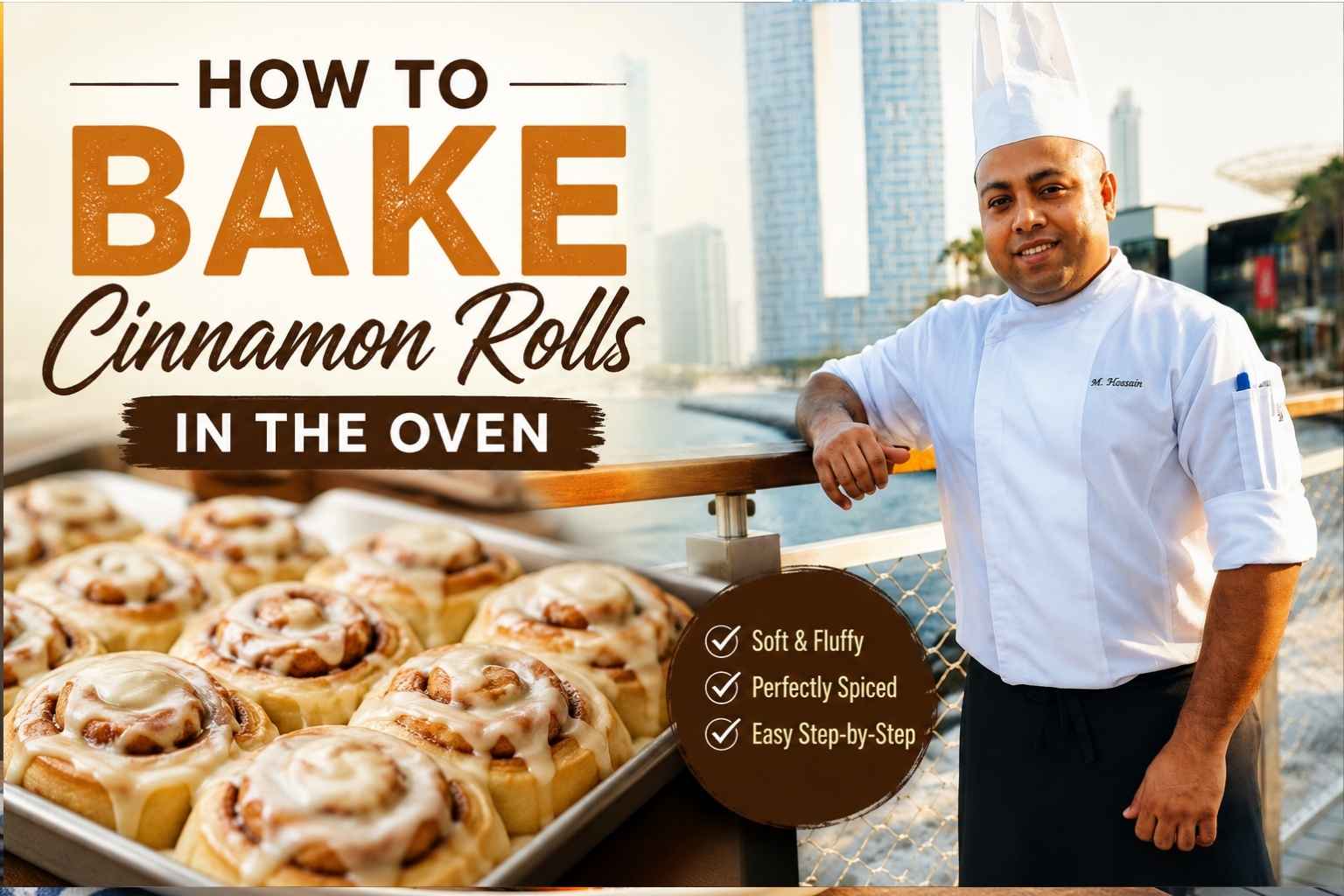
Have you ever pulled a pan of warm, soft cinnamon rolls from the oven and smiled before the first bite? How to Bake Cinnamon Rolls in the Oven is one of those simple skills that can turn any morning into something special. I have baked them for quiet weekends, busy holidays, and family treats, so I know the little steps that make a big difference. In this guide, I will show you how to get soft centers, golden tops, and rich flavor every time, with easy tips you can trust. Let’s get started and bake cinnamon rolls that everyone will love.
Why Oven Temperature Makes or Breaks Cinnamon Rolls
Oven temperature is the single variable that controls three separate things at once: yeast activity in the final minutes of baking, caramelization of the cinnamon-sugar filling, and the structure of the dough itself. Get it wrong in any direction and you end up with either raw doughy centers, scorched bottoms, or rolls that never had a chance to finish their rise.
Yeast dies at around 140°F (60°C) internal dough temperature (King Arthur Baking, 2024). That means from the moment you slide the pan into the oven, you have a short window — maybe 8-10 minutes — where the yeast is still alive, producing CO2, and pushing the dough upward. Bake too hot and that window slams shut before the dough has expanded fully. Bake too cold and the yeast stays active longer than you want, which over-proofs the roll structure and leaves you with a gummy, collapsed crumb.
The cinnamon-sugar filling adds another layer of complexity. Sucrose starts to caramelize at 320°F (160°C) (Harold McGee, On Food and Cooking, 2004). That’s the filling temperature, not the oven temperature — and in a glass or dark pan, the filling can hit that point well before the dough around it is cooked through. This is exactly why pan material matters so much, which I’ll get into in a later section.
At 350°F, the math works out almost perfectly for a standard 2-inch roll sitting in a metal pan. The outside sets firmly enough to hold its shape within the first 10 minutes. The filling caramelizes gently rather than burning. The interior climbs steadily to the 190°F mark that signals fully cooked, fluffy dough (America’s Test Kitchen, 2023).
The Ideal Baking Temperature and Why Most Home Bakers Get It Wrong
350°F (177°C) is the right temperature for most cinnamon rolls in a conventional home oven. The widespread myth that 375°F produces “fluffier” rolls is wrong — it produces a faster bake that often results in over-browned bottoms and a doughy center.
Here’s how the three most common temperatures actually perform:
| Temperature | Pan Type | Roll Type | Bake Time | Result |
|---|---|---|---|---|
| 325°F (163°C) | Any | Fresh or overnight | 30-38 min | Soft, pale, slightly gummy center risk |
| 350°F (177°C) | Light metal | Fresh | 22-26 min | Ideal — golden top, fully set interior |
| 350°F (177°C) | Light metal | Overnight cold-proofed | 25-30 min | Ideal with proper 30-min counter rest |
| 350°F (177°C) | Glass | Fresh | 25-30 min | Watch bottom — glass retains heat longer |
| 375°F (191°C) | Light metal | Fresh | 18-22 min | Risk of scorched filling before center sets |
| 375°F (191°C) | Any | Store-bought/frozen | 20-25 min | Often recommended on packaging — follow it |
| 350°F (177°C) | Cast iron | Fresh | 20-24 min | Crisper bottom, faster edge bake |
The 325°F camp exists because some bakers want maximum oven spring — that final puff of the dough before the yeast dies. The logic is sound in theory. In practice, for a filled roll rather than a plain bread loaf, lower heat extends the window for the filling to seep into the dough, creating a wet band around the center that never fully sets.
I spent two years baking in a hotel kitchen where we ran cinnamon rolls for breakfast service six days a week. We tried every temperature from 325°F to 400°F across different pan types and dough formulas. 350°F in a half-sheet light aluminum pan won every time, every format. That answer hasn’t changed in 15 years.
Pan Type and How It Changes Your Bake Time and Crust
The pan you choose changes the bake time by as much as 5-7 minutes and has a direct effect on crust texture. Light-colored metal pans are the correct choice for cinnamon rolls in a home oven.
Light Metal Pans (9×13 aluminum or stainless)
Light metal reflects heat rather than absorbing it. This means the bottom of the roll heats from the air around the pan rather than from direct conducted heat through the metal. The result is a soft, lightly golden bottom — exactly what you want in a pull-apart roll. Bake time at 350°F: 22-26 minutes for fresh rolls.
Glass Baking Dishes (Pyrex or similar)
Glass absorbs heat slowly but retains it longer. This creates a lag — the rolls spend more time in the oven before the glass fully heats, but once it does, the bottom cooks faster than you expect. If you use glass, drop the temperature to 325°F and add 5-7 minutes to your bake time. The bottom crust will be slightly more pronounced.
Dark Non-Stick Pans
Dark surfaces absorb radiant heat from the oven element directly. This scorches the bottom of rolls before the inside is done. I don’t recommend dark non-stick pans for cinnamon rolls. If it’s all you have, drop to 325°F and check at 20 minutes.
Cast Iron Skillets
Cast iron is a legitimate choice if you want a slightly crisper bottom and dramatic presentation. It heats slowly but holds temperature extremely well. Rolls baked in cast iron at 350°F are done in 20-24 minutes and have a faint crunch on the bottom edge that a lot of people love. The filling also caramelizes more aggressively near the outer edge — plan for that.
One practical note: whatever pan you use, grease it. Cinnamon rolls contain sugar, and caramelized sugar is essentially glue. Butter the pan, then line with a sheet of parchment. This is the difference between rolls that release cleanly and rolls that get demolished during serving.
Fresh-Made vs. Overnight vs. Store-Bought Rolls: Timing Adjustments
The starting temperature of the roll when it enters the oven changes everything about bake time. Fresh rolls, overnight cold-proofed rolls, and store-bought frozen rolls are three completely different problems.
Fresh-Made Rolls (Room Temperature, Fully Proofed)
Fresh rolls that have completed their second proof at room temperature go straight into a preheated 350°F oven. They’re already warm, fully risen, and structurally ready. Bake time: 22-26 minutes. These are the easiest to get right because the dough is at a predictable starting temperature.
Overnight Cold-Proofed Rolls
Cold proofing — placing shaped, unbaked rolls in the refrigerator overnight — is my preferred method for home bakers who want to serve fresh rolls in the morning without waking at 4 a.m. The cold slows yeast activity and develops more flavor (Serious Eats, 2022). But cold rolls go into the oven cold, and this is where most bakers make a critical mistake.
Pull cold-proofed rolls from the refrigerator 30-45 minutes before baking. This allows the dough to return toward room temperature and gives the yeast a chance to become active again before the oven shuts it down. Cold rolls put directly into a hot oven will bake the outside before the inside ever finishes rising. The result is a dense, squat roll that looks done but isn’t.
Bake time for overnight rolls that have had the proper counter rest: 25-30 minutes at 350°F.
Store-Bought Frozen or Refrigerated Rolls (Pillsbury and similar)
Follow the package instructions for temperature — most commercial rolls are engineered to bake at 375°F. The dough formula and yeast load in commercial products is different from homemade, and those directions exist for a reason. Your main job is to use a light metal pan and pull them at the internal temperature of 190°F regardless of time. Commercial roll packaging times are estimates and vary by oven.
Convection vs. Conventional Oven: Which One to Use
Use a conventional oven (no convection fan) for cinnamon rolls. Convection is faster and more even for roasting and cookies, but it’s the wrong tool for enriched doughs like cinnamon rolls.
Here’s the problem with convection: the fan circulates hot air across the surface of the roll. This sets the outside crust faster than conventional heat would — often 20-25% faster (The Food Lab, J. Kenji López-Alt, 2015). That sounds good, but for a filled, pull-apart roll, it means the top browns and sets before the center has fully risen and the inside has cooked through. You get a domed, firm top sitting over a soft, underdone core.
If convection is your only option, drop the temperature by 25°F (to 325°F) and extend bake time by 3-5 minutes. Place the rack in the center position, and consider tenting the rolls loosely with foil after the first 15 minutes to slow the surface browning.
The one place where convection earns its spot: the final 2-3 minutes if you want a deeper golden color on the top. Turn on convection at the end of the bake for a quick finish, then pull and frost.
How to Tell When Cinnamon Rolls Are Truly Done
Cinnamon rolls are done when the internal temperature of the center roll reaches 190-195°F (88-91°C). That’s the number. Everything else — color, jiggle, timing — is a supporting signal, not the final answer.
The Thermometer Test (Most Reliable)
Insert an instant-read thermometer into the center of the middle roll, going in from the side to hit the actual crumb rather than the filling. The filling will read hotter than the dough. You want the dough at 190°F. At this temperature, the starch is fully gelatinized and the crumb structure has set. Pulling earlier gives you a gummy interior even if the outside looks perfect.
The Color Test
The top of the rolls should be deep golden brown — not pale yellow, not dark brown. Pale yellow means underdone. If the tops are browning too fast, tent with foil and continue baking to temperature.
The Jiggle Test
Gently shake the pan. Fresh-baked rolls will have a very slight jiggle from the soft dough — that’s normal. If the center roll shakes significantly or looks wet, it needs more time. This test is useful as a quick sanity check, but it doesn’t replace a thermometer.
The Pull-Apart Test
If you’re nervous, pull the center roll slightly away from its neighbor. The interior crumb should look set and fluffy — not wet, not translucent, not gummy. Translucent dough means underdone. Pull it apart and it should tear cleanly rather than stretch like taffy.
Cream Cheese Frosting Timing: Frost Warm, Not Hot
Frost cinnamon rolls 8-12 minutes after they come out of the oven. This is the window where the rolls have cooled enough that the frosting won’t turn to liquid, but are still warm enough that the frosting melts slightly into the crevices and absorbs into the top layer of dough.
Frosting hot rolls (straight from the oven) turns cream cheese frosting into a thin, greasy puddle. The fat separates from the cream cheese and the frosting slides off rather than coating. The rolls also press the frosting down into the pan rather than holding it on top.
Frosting fully cooled rolls is a texture mistake. Cold frosting sits on top of the roll as a thick slab. You lose the way frosting should work on a cinnamon roll — melted into the spiral, coating every layer, pooling slightly at the edges.
My standard timing: rolls out of the oven at 8:15 a.m., frosting applied at 8:25 a.m., served at 8:30. That 10-minute rest also gives the interior crumb a chance to finish setting before you slice into them.
For cream cheese frosting, the ratio I use: 4 oz cream cheese, 1 cup powdered sugar, 3 tablespoons whole milk, 1 teaspoon vanilla extract. Beat until smooth and pour — don’t spread. Pouring lets it find its own level in the spirals.
Common Cinnamon Roll Baking Mistakes and How to Fix Them
Using a Cold Pan
The mistake: putting room-temperature rolls into a cold pan, then into a preheated oven. Cold metal extends the bake time unpredictably and can cause uneven cooking. The fix: if you’re not using parchment-lined cold pans from the refrigerator, let your pan warm to room temperature before adding the rolls.
Pan Crowding
The mistake: placing rolls too close together so they bake into one another before they’ve had a chance to rise in the oven. The fix: leave at least 1/2 inch between rolls before the final proof. They’ll grow together during baking — that’s fine and gives you the soft sides that make pull-apart rolls great. But starting them too tight means the sides never properly set.
Skipping the Counter Rest for Cold-Proofed Rolls
The mistake: pulling overnight rolls straight from the refrigerator and immediately baking. The fix: 30-45 minute counter rest. Cold dough in a hot oven = good exterior crust, doughy center.
Not Preheating the Oven Long Enough
The mistake: trusting the oven’s preheat beep. Most home ovens signal “ready” before the oven cavity has actually stabilized at the set temperature (America’s Test Kitchen, 2023). The fix: wait 15-20 minutes after the beep before loading the rolls. Better: use an oven thermometer to verify actual temperature. Most home ovens run 10-25°F off their dial setting.
Altitude Adjustments
The issue: at altitudes above 3,500 feet, reduced air pressure causes yeast dough to rise faster and CO2 to expand more rapidly during baking. The fix: reduce yeast by 25%, shorten proof time (watch the dough, not the clock), and increase oven temperature by 15-25°F to set the structure faster. The King Arthur Baking high-altitude guide (2024) recommends also adding 1-2 tablespoons of additional flour per cup to compensate for the faster rise.
Overbaking to “Be Safe”
The mistake: leaving rolls in an extra 5-10 minutes because “they look pale.” The fix: use a thermometer. Pale rolls at 192°F are done. Overbaked rolls at 205°F are dry and tough regardless of what color the top is.
My Personal Cinnamon Roll Baking Routine
I’ve been baking cinnamon rolls professionally since 2009 — in hotel breakfast kitchens, a catering operation, and now at home where I probably bake a batch every two to three weeks. Here’s exactly what I do.
I mix dough the night before and cold-proof the shaped, unfrosted rolls in a lightly greased 9×13 light aluminum pan covered with plastic wrap. The next morning, the pan comes out of the refrigerator and sits on the counter while the oven preheats to 350°F. I set a 35-minute timer when the pan comes out — that’s my counter rest window.
At 30 minutes, I slide the pan in and set another timer for 22 minutes. At 22 minutes, I check temperature. Most of the time, the center roll hits 185-188°F at this point. The pan goes back in for another 5 minutes. At 27 minutes, I check again — usually 191-193°F. Done.
Rolls rest for exactly 10 minutes. Then I pour the cream cheese frosting over the top and serve within the next 15 minutes.
Total active time the morning of: about 12 minutes. The rest is just waiting. That’s the real value of overnight cold-proofing.
Frequently Asked Questions About Baking Cinnamon Rolls in the Oven
What temperature should I bake cinnamon rolls at in the oven?
Bake homemade cinnamon rolls at 350°F (177°C) in a conventional oven using a light-colored metal pan. For store-bought or frozen rolls, follow the package directions — most commercial rolls are designed for 375°F. The internal temperature of the finished roll should reach 190-195°F regardless of which product you’re baking.
How long does it take to bake cinnamon rolls in the oven?
Fresh, room-temperature homemade rolls take 22-26 minutes at 350°F. Overnight cold-proofed rolls that have had a 30-minute counter rest take 25-30 minutes. Store-bought refrigerated rolls (like Pillsbury) typically take 18-22 minutes at 375°F. Bake time varies by oven, so always verify with an instant-read thermometer.
How do I know when cinnamon rolls are done baking?
The most reliable method is an instant-read thermometer inserted into the center roll from the side. Done = 190-195°F internal temperature. Visual cues: the top is deep golden brown and the sides have pulled slightly away from the pan. The rolls should not jiggle significantly when you shake the pan.
Can I bake cinnamon rolls in a glass pan?
Yes, but you need to adjust. Glass retains heat longer than metal and heats the bottom of the rolls more aggressively. If using a glass pan (like Pyrex), drop the temperature to 325°F and check for doneness starting at 28 minutes. Grease and parchment-line the pan to prevent sticking.
Should I cover cinnamon rolls while baking?
No — start uncovered. If the tops are browning too quickly (dark at 15 minutes) before the inside is done, tent loosely with aluminum foil for the remaining bake time. This slows surface browning without trapping steam, which would make the tops soft rather than golden.
Can I bake cinnamon rolls in a convection oven?
Yes, but reduce the temperature by 25°F (to 325°F) and check earlier — convection ovens bake about 20-25% faster due to the circulating fan (The Food Lab, J. Kenji López-Alt, 2015). The fan can set the exterior crust before the interior finishes rising, so watch closely and use a thermometer.
Why are my cinnamon rolls doughy in the middle?
The center rolls are underdone. The most common causes: rolling the dough too thick before shaping (over 1/4 inch leads to a thick center), placing cold-proofed rolls directly into the oven without a counter rest, or pulling rolls at 170°F instead of 190°F. Check internal temperature and bake longer if needed — the thermometer doesn’t lie.
How do I reheat cinnamon rolls without drying them out?
Place rolls in an oven-safe dish, add 2 tablespoons of water or milk to the bottom of the dish, cover tightly with foil, and reheat at 300°F for 10-15 minutes. The steam from the liquid keeps the dough moist. Microwaving is faster (15-20 seconds per roll on 50% power) but dries out the exterior if you go over time.
Key Takeaways
- Bake at 350°F in a light-colored metal pan — this is the right temperature for homemade rolls in a standard home oven.
- Internal temperature is the only reliable doneness test — pull rolls at 190-195°F, not by color or time alone.
- Cold-proofed overnight rolls need a 30-45 minute counter rest before baking — this is the most commonly skipped step.
- Pan material changes your result — light metal is best; glass requires a 25°F temperature drop; dark non-stick risks scorched bottoms.
- Frost at 8-12 minutes post-bake — warm enough to melt into the rolls, cool enough that the frosting doesn’t run off.
- Convection ovens run 20-25% hotter for surface browning — drop temperature by 25°F if that’s your only option.
- Preheat your oven for at least 20 minutes past the beep — most home ovens aren’t fully stabilized when they signal ready.

I’m Mossaraof, a trained chef and the founder of OvenInsights.com. I spent years cooking at Larrupin’ Cafe and in kitchens across Chicago and Seattle. Now I test kitchen gear for a living. I moved to North Acton, London, and I test every tool I write about. I use real meals and real heat. No brand deals. No shortcuts. I cover 12 kitchen types and hundreds of recipes. I believe this: the right tools matter as much as the recipe.