
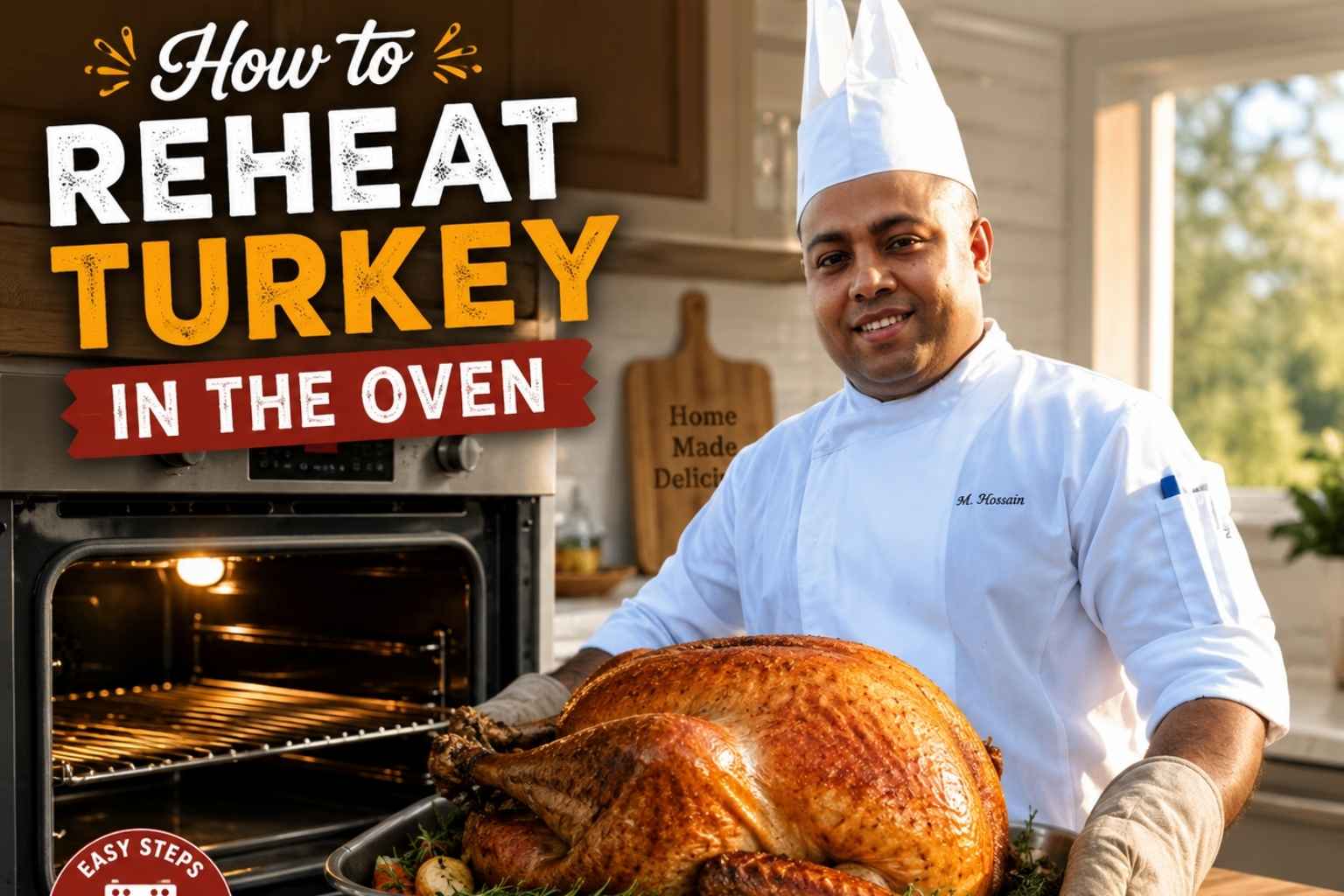
At A Glance
- Reheat turkey low and slow. Use 300°F to 325°F, not 400°F. High heat pulls out moisture fast.
- Add liquid before you reheat. Broth or melted butter under foil keeps the meat from drying out.
- Check temperature with a thermometer. The USDA safety target is 165°F in the thickest part (USDA FSIS, 2025).
- Whole birds need the most care. Carved slices heat fast and dry out even faster if left uncovered.
- Skip the microwave for anything bigger than a single plate. It cooks unevenly and turns turkey rubbery.
We’ve all been there. You’ve got a fridge full of turkey leftovers, and the thought of dry, sad meat makes your heart sink. Good news: I’ve tested this so many times for OvenInsights that I could do it in my sleep. Today, I’ll show you how to reheat turkey in the oven so it comes out juicy, warm, and just as good as day one. Grab your baking dish, and let’s fix that turkey right now.
Why Reheating Turkey Is Tricky
Turkey dries out fast the second time around because it already lost moisture once, during the first cook. Cooking meat pushes water out of the muscle fibers. This is called carryover cooking, and it keeps happening even after you pull the bird from the oven.
I have run Thanksgiving service in three different restaurant kitchens. Every year, someone tries to save time by blasting leftover turkey at 400°F. Every year, it comes out like jerky.
Here is the real problem. A whole turkey is dense. Heat has to travel through thick muscle to reach the center. That takes time, and during that time, the outer layers keep losing water. Carved slices are the opposite problem. They are thin and have a lot of surface area exposed to dry oven air. They heat fast, but they also dry out fast if you do not protect them.
The fix is different for each cut. A whole bird needs low heat and patience. Slices need a moisture barrier and a short reheat time. Treat them the same way and you will ruin one or the other.
The Low-and-Slow Method: Why Temperature Matters
Low and slow means reheating turkey at 300°F to 325°F instead of cranking the oven higher. Lower heat gives the inside time to warm up before the outside dries out or turns tough.
Chefs at America’s Test Kitchen tested a similar approach with their own twist, using a 275°F oven and foil-wrapped meat on a wire rack, pulling pieces once they hit about 130°F internal for serving warmth (America’s Test Kitchen, 2025). That is lower and gentler than what most home cooks try.
I land in the middle. For food safety, I reheat to 165°F, per USDA guidance (USDA FSIS, 2025). But I get there slowly, at 325°F, with the meat covered and moist. Speed is the enemy here. Every extra ten minutes you shave off the reheat time costs you moisture.
Here is the tradeoff in plain terms:
- Higher heat (375°F+): Faster, but the outside overcooks before the inside catches up.
- Lower heat (300–325°F): Slower, but the whole piece heats evenly and stays juicy.
- Too low (under 275°F): Takes too long and holds the turkey in the temperature danger zone longer than it should sit there.
Reheat Time and Temperature Guide by Cut
Every cut of turkey behaves differently in the oven. Use this table as your starting point, then check with a thermometer to confirm it is done.
| Cut | Oven Temp | Estimated Time | Notes |
|---|---|---|---|
| Whole turkey (10–14 lbs) | 325°F | 5–6 min per lb, roughly 60–90 min | Add 1–2 cups broth to the pan, cover tightly with foil |
| Turkey breast (bone-in) | 325°F | 25–35 min | Cover with foil, baste once halfway through |
| Legs and thighs (dark meat) | 325°F | 25–30 min | Dark meat holds moisture better; still cover to protect skin |
| Carved slices | 325°F | 12–20 min | Layer slices in a shallow dish, spoon broth over the top before covering |
These times are estimates. Oven calibration, starting temperature, and how tightly the turkey is packed all shift the actual time. Always confirm with a thermometer rather than a clock.
Step-by-Step: How to Reheat a Whole Turkey
Start by pulling the turkey from the fridge about 20 minutes before you reheat it. A slightly less cold bird heats more evenly.
- Preheat the oven to 325°F. Do not skip preheating. An oven that is still climbing to temperature adds inconsistent heat to the bird.
- Place the turkey in a roasting pan. Pour 1 to 2 cups of turkey or chicken broth into the bottom of the pan, not over the top of the bird.
- Cover the whole pan tightly with foil. This traps steam and bastes the turkey from the inside as it heats.
- Reheat for 5 to 6 minutes per pound. For a 12-pound turkey, that is about 60 to 75 minutes.
- Check the internal temperature in the thickest part of the breast and the innermost part of the thigh. Both need to read 165°F (USDA FSIS, 2025).
- Rest the turkey for 10 minutes before carving. This lets the juices settle back into the meat instead of spilling out onto the cutting board.
Step-by-Step: How to Reheat a Turkey Breast
A bone-in breast holds moisture better than boneless, so buy or cook bone-in when you can.
- Preheat the oven to 325°F.
- Place the breast in a baking dish with a half cup of broth poured around it, not on top.
- Rub a tablespoon of softened butter over the skin. This adds fat back to a cut that tends to run dry.
- Cover tightly with foil and reheat for 25 to 35 minutes, depending on the size of the piece.
- Check the thickest part with a thermometer. Pull it at 165°F.
- Let it rest for 5 minutes, tented loosely with foil, before slicing.
Step-by-Step: How to Reheat Turkey Legs and Thighs
Dark meat has more fat than breast meat, so it is more forgiving. That does not mean you should skip the moisture step.
- Preheat the oven to 325°F.
- Arrange the legs and thighs in a single layer in a baking dish. Do not stack them.
- Pour a quarter cup of broth around the pieces, then cover with foil.
- Reheat for 25 to 30 minutes.
- Check the temperature at the thickest point, near the bone but not touching it. Target 165°F.
- If you want crisp skin back, uncover for the last 5 minutes and finish under a broiler for 60 to 90 seconds. Watch it closely. Broilers turn skin from golden to burnt in seconds.
Step-by-Step: How to Reheat Pre-Carved Turkey Slices
Slices are the trickiest cut because they have so much exposed surface area. This is where most people go wrong.
- Preheat the oven to 325°F.
- Lay the slices flat in a single layer in a shallow baking dish. Overlapping slices heat unevenly.
- Spoon warm broth over the top, enough to coat but not drown the meat.
- Cover tightly with foil.
- Reheat for 12 to 20 minutes, checking at the 12-minute mark.
- Pull the slices as soon as they hit 165°F. Slices go from perfect to dry in a matter of minutes, so do not walk away.
Why Broth, Butter, and Foil Tenting Matter
Broth adds back the moisture the turkey lost during its first cook and during storage. Butter adds fat, which carries flavor and coats the meat so it feels less dry on the tongue, even at the same moisture level. Foil traps steam, turning the inside of your pan into a small, controlled oven within the oven.
Skip any one of these three and you are reheating in dry air, which is the fastest way to ruin turkey twice in one holiday.
I use a simple ratio: about 2 tablespoons of broth per cup of sliced turkey, and a half tablespoon of butter per pound of dark or white meat. It is not exact science. It is closer to instinct built from doing this more times than I can count.
Using a Meat Thermometer the Right Way
A thermometer is the only tool that tells you the real temperature inside the meat, not a guess based on time or color. Insert it into the thickest part of the cut, avoiding bone, which heats faster and gives a false high reading.
For a whole turkey, check both the breast and the thigh separately. They do not heat at the same rate, and the thigh often lags behind. Manufacturers like Taylor Precision Products recommend inserting probe thermometers at an angle, sideways into the thickest muscle, rather than straight down from the top, to avoid hitting bone or empty cavity space (Taylor Precision Products, 2025).
Wait a few seconds for the reading to stabilize before you trust the number. Instant-read thermometers still need a moment to settle.
Gas Oven vs. Electric Oven: Does It Change Anything
Gas ovens run hotter near the bottom and can have more humidity from combustion byproducts, which can actually help keep turkey a little moister during reheating. Electric ovens tend to heat more evenly from top to bottom but run drier.
If you have a gas oven, you likely do not need to change much. If you have an electric oven, add a small dish of water next to the turkey while it reheats. The extra humidity in the oven cavity helps offset the drier heat.
Either way, use an oven thermometer if you have one. Built-in oven dials are often off by 15 to 25 degrees, which matters more than people think when you are trying to hit a precise reheat temperature.
Convection vs. Conventional Setting for Reheating
Convection ovens use a fan to circulate hot air, which cooks food faster and browns the outside more. That speed is exactly what you do not want when reheating turkey, since faster heat pulls out more moisture.
If your oven has a convection setting, turn it off for this job and use the conventional bake setting instead. If convection is your only option, drop the temperature by 25 degrees from what the recipe or table above calls for, since convection ovens cook hotter than the number on the dial suggests.
Reheating From the Fridge vs. From Frozen
Reheating straight from the fridge is the standard method and the one covered in every step above. The turkey is already cold, not frozen, so it heats through in a predictable amount of time.
Reheating from frozen is a different job. The USDA notes it is safe to reheat frozen leftovers without thawing them first, though it takes noticeably longer (USDA FSIS, 2025). For turkey, I do not recommend skipping the thaw step. A frozen piece reheated straight in the oven tends to heat unevenly, with the outside drying out long before the center reaches a safe temperature.
If you are working from frozen, thaw the turkey in the refrigerator overnight first. It takes longer, but you get an even reheat and a much better result. If you truly need to skip thawing, drop the oven to 300°F and expect to nearly double your reheat time, checking the internal temperature often.
Common Mistakes and How to Fix Them
Mistake: Overcrowding the Pan
Piling turkey pieces on top of each other blocks heat from reaching the pieces underneath. The top pieces overheat and dry out while the bottom pieces stay cold.
Fix: Use a pan large enough to hold everything in a single layer. If you do not have one big enough, reheat in two batches instead of one crowded one.
Mistake: Skipping the Resting Step
Cutting into turkey the second it comes out of the oven lets all the juice run out onto the cutting board instead of staying in the meat.
Fix: Let a whole turkey rest 10 minutes and smaller cuts rest 5 minutes before slicing or serving. The juices redistribute back into the muscle during that short wait.
Mistake: Reheating Without Any Liquid
Turkey heated in dry air loses more moisture with every passing minute, no matter what temperature you use.
Fix: Always add broth, stock, or melted butter before covering and reheating.
Mistake: Using the Microwave for Large Portions
Microwaves heat unevenly and turn turkey texture rubbery, especially breast meat.
Fix: Save the microwave for single servings only, and even then, add broth and cover the dish with a damp paper towel.
When It Is Safe to Skip Reheating vs. When You Must Reheat Thoroughly
Cold turkey straight from the fridge is safe to eat without reheating, as long as it was cooked properly the first time and refrigerated within two hours of cooking, per USDA guidance (USDA FSIS, 2025). This is why cold turkey sandwiches are a holiday tradition and not a food safety gamble.
You must reheat thoroughly, to 165°F, if the turkey has been frozen and thawed, if it sat out of refrigeration for any length of time close to two hours, or if you are serving it as a hot dish rather than a cold one. When in doubt, reheat it. The two-hour rule and the 165°F target are not flexible guidelines. They are the line between safe leftovers and a bad night.
My Method for Reheating Thanksgiving Leftovers
Here is exactly what I do at home, the day after Thanksgiving, every single year.
I carve any turkey still on the bone the night before and store white meat separate from dark meat, since they reheat at slightly different rates. I keep about a cup of the pan drippings or gravy in a separate container in the fridge overnight.
The next day, I preheat the oven to 325°F and pull the turkey out to lose its chill for about 15 minutes on the counter. I lay the white meat in one dish and the dark meat in another, since dark meat handles a few extra minutes of heat better than breast meat does. I spoon the reserved gravy over both, more on the white meat since it needs the extra moisture most.
Both dishes go in covered tightly with foil. White meat comes out around the 15-minute mark, dark meat closer to 20. I check both with a thermometer rather than trusting the clock, because pan size and portion thickness shift the timing every year.
I do not reheat the skin with the meat. Skin goes back on for the last few minutes under the broiler, uncovered, so it crisps instead of turning soft under foil. This two-step approach takes an extra five minutes of attention, and it is worth every second of it.
Frequently Asked Questions About Reheating Turkey
What temperature should I reheat turkey to?
Reheat turkey to an internal temperature of 165°F, measured with a food thermometer in the thickest part of the meat. This is the food safety standard set by the USDA (USDA FSIS, 2025).
How long does it take to reheat a whole turkey in the oven?
A whole turkey typically takes 5 to 6 minutes per pound at 325°F, so a 12-pound turkey needs roughly 60 to 75 minutes. Always confirm with a thermometer rather than relying on time alone.
Can I reheat turkey without drying it out?
Yes. Add broth or butter before reheating, cover tightly with foil, and use a lower oven temperature of 300°F to 325°F instead of a hot oven. These three steps together are what keep the meat moist.
Is it safe to reheat turkey twice?
Reheating turkey more than once increases the risk of bacterial growth each time it cools and reheats. If you have leftovers you will not finish, reheat only the portion you plan to eat and keep the rest refrigerated or frozen.
Can I reheat turkey straight from frozen?
It is possible, but not ideal. The USDA confirms it is safe to reheat frozen leftovers without thawing (USDA FSIS, 2025), though the texture suffers. For the best result, thaw turkey in the refrigerator overnight before reheating.
Should I cover turkey with foil when reheating?
Yes, always. Foil traps steam inside the pan, which keeps the meat from drying out in the open air of the oven. Only remove the foil at the very end if you want to crisp the skin.
Why does my reheated turkey come out rubbery?
Rubbery texture usually comes from microwaving too long, reheating at too high an oven temperature, or skipping the resting step after reheating. Switch to a lower oven temperature with added moisture, and let the meat rest a few minutes before serving.
Can I eat cold turkey without reheating it?
Yes, cold turkey is safe to eat straight from the fridge as long as it was cooked and refrigerated properly the first time, within two hours of cooking (USDA FSIS, 2025). This is standard practice for turkey sandwiches.
Key Takeaways
- Reheat turkey at 300°F to 325°F, never higher, to protect moisture.
- Always add broth or butter and cover with foil before reheating any cut.
- Check internal temperature with a thermometer. The safety target is 165°F (USDA FSIS, 2025).
- Rest the meat for 5 to 10 minutes after reheating, and never skip this step.
- Treat carved slices differently than whole pieces. Slices need less time and more moisture protection.
- Skip thawing shortcuts. Reheating from frozen works in a pinch, but thawed turkey reheats far more evenly.
Sources and Further Reading
- USDA Food Safety and Inspection Service, “Leftovers and Food Safety” (2025)
- America’s Test Kitchen, “Reheat Leftover Turkey Without Drying It Out” (2025)
- The Kitchn, “How to Reheat Turkey to Keep it Extra Moist” (2024)