At A Glance
- A frittata bakes in the oven at 325-375°F until just set – pull it when the center still has a slight jiggle.
- Use an oven-safe skillet: cast iron is the best all-around choice for heat retention and crust development.
- The ideal egg-to-dairy ratio is 6 eggs to 2 tablespoons of cream or milk for a 10-inch skillet.
- Always pre-cook wet fillings like mushrooms, zucchini, and tomatoes – raw vegetables release water and wreck the texture.
- A frittata is done at an internal temperature of 165°F (America’s Test Kitchen, 2023).
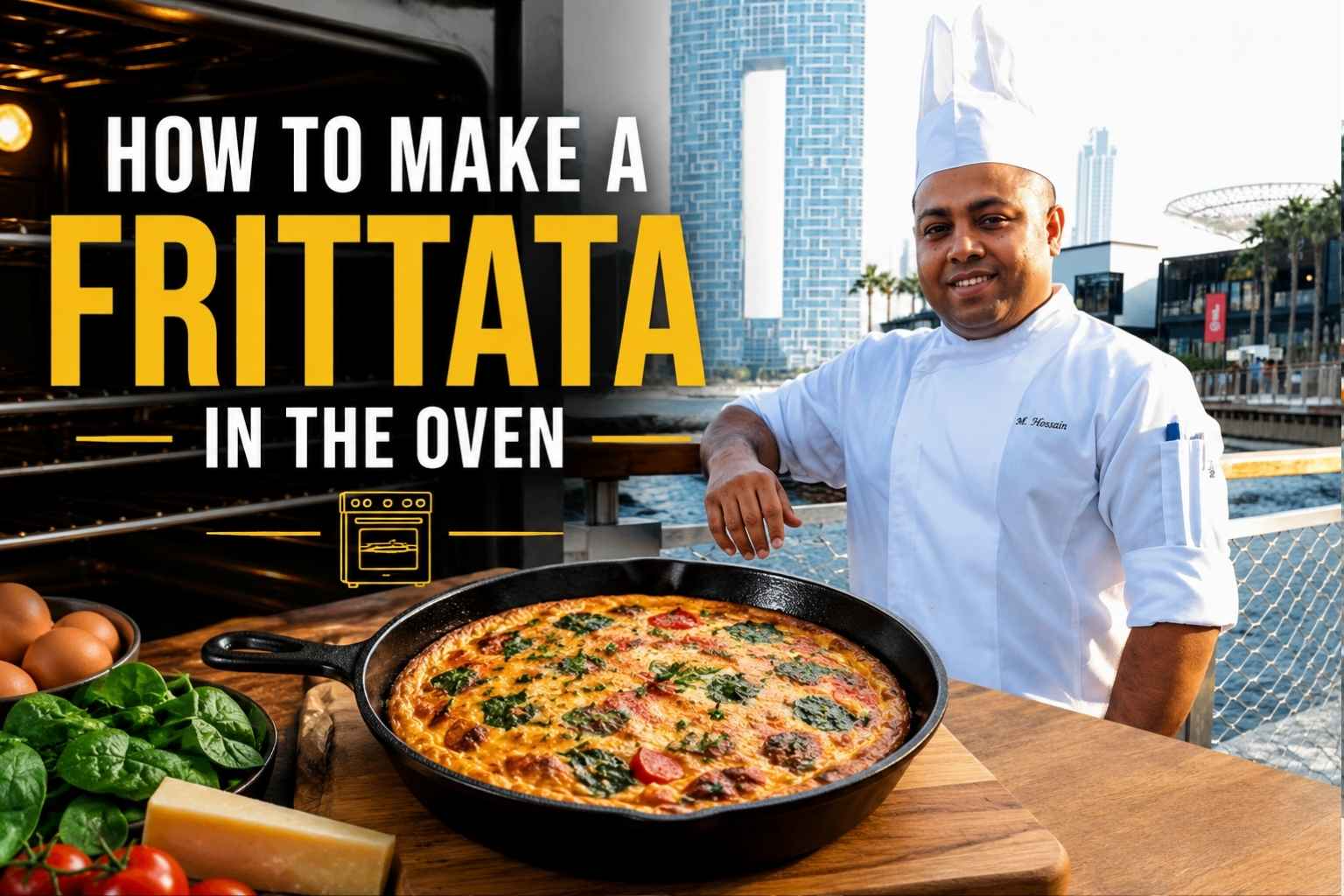
Some of my best meals started with a few eggs and the food I already had at home. That is why I love How to Make a Frittata in the Oven. It is quick, easy, and always turns out warm, fluffy, and full of flavor.
I have made oven-baked frittatas for busy mornings, lazy weekends, and even simple family dinners. Over time, I learned the small tips that help every time, from picking the right pan to getting the perfect texture without overcooking the eggs.
In this guide, I will show you each step in a simple way. You will learn the best ingredients, baking time, common mistakes to avoid, and easy ideas for making your frittata even better. Let’s get started and make a delicious oven-baked frittata you will want to cook again and again.
What Is a Frittata and How Is It Different from an Omelet, Quiche, or Strata?
A frittata is an Italian baked egg dish. You mix the fillings directly into the eggs, cook it partially on the stovetop, then finish it in the oven. The result is a thick, set egg cake – sliceable, sturdy, and good hot or at room temperature.
Here is how it differs from the dishes people confuse it with:
- Omelet: An omelet cooks entirely on the stovetop over high heat. The eggs fold around the filling. A frittata bakes open-faced. The texture is completely different – an omelet is soft and custardy, a frittata is firmer and sliceable.
- Quiche: A quiche has a pastry crust and a much higher dairy-to-egg ratio, which gives it a creamy, almost pudding-like texture. A frittata has no crust and uses far less dairy.
- Strata: A strata is a baked egg dish built on layers of bread, dairy, and eggs. It needs hours to soak. A frittata has no bread and takes about 25 minutes start to finish.
The frittata is the most practical of the group. No crust to make, no soaking time, no folding technique to master. Just eggs, fillings, a good pan, and an oven.
Choosing the Right Pan: Cast Iron vs. Nonstick vs. Ceramic
Cast iron is my top pick for a frittata. It holds heat evenly, goes from stovetop to oven without issue, and gives the bottom of the frittata a light golden crust that nonstick pans can’t match.
A 10-inch cast iron skillet is the standard size for a 6-egg frittata. If you’re feeding two people, use an 8-inch pan.
Nonstick is a solid backup. The eggs release easily, which matters if you want to slide the frittata out onto a board for serving. The downside is that most nonstick pans have a maximum oven temperature of around 400-450°F – check yours before you preheat. Also, the bottom won’t brown the same way.
Ceramic and stainless work, but they’re harder to use. Eggs stick to both without careful preheating and sufficient fat. I don’t recommend them unless cast iron or nonstick isn’t available.
The one non-negotiable: the pan must be fully oven-safe, including the handle. A pan with a rubber or plastic handle will fail in the oven. If your skillet handle isn’t oven-safe, wrap it tightly in several layers of aluminum foil.
The Egg-to-Dairy Ratio That Gets the Best Texture
For a standard 10-12-inch frittata (6 eggs), use 2 tablespoons of heavy cream or whole milk. That ratio gives you a firm but not rubbery set – the eggs hold their shape when sliced, but they’re not dry.
Here is how the dairy options break down:
- Heavy cream: Richer flavor, slightly creamier texture. My preference for a dinner frittata.
- Whole milk: Lighter texture, still works well. Better if you want a cleaner egg flavor.
- No dairy: Totally fine. Leave it out and the frittata will be denser and more savory. Some Italian recipes use no dairy at all (Serious Eats, 2022).
- Half-and-half: A middle ground between cream and milk. Works perfectly.
Do not use skim milk. The water content is too high and the eggs come out looser than you want.
Whisk the eggs and dairy together until fully combined – no streaks of white. Season at this stage with salt and black pepper. I use about 1/2 teaspoon of salt for 6 eggs. Under-seasoned eggs are the most common problem I see in home kitchens.
Oven Temperature and Bake Time: The Complete Reference Table
| Pan Size | Eggs | Oven Temp | Bake Time | Rack Position | Notes |
|---|---|---|---|---|---|
| 6-inch skillet | 3-4 eggs | 350°F | 10-14 min | Middle | Works as a single serving |
| 8-inch skillet | 4-5 eggs | 350°F | 12-16 min | Middle | Good for two people |
| 10-12-inch skillet | 6-8 eggs | 350-375°F | 15-20 min | Middle | Standard family size |
| Muffin tin (12-cup) | 6 eggs | 375°F | 10-13 min | Middle | Mini frittatas, great for meal prep |
A few notes on this table:
- These are starting points, not exact times. Oven calibration varies. Start checking 3 minutes early.
- Always use the middle rack. The top rack browns the surface before the center sets. The bottom rack can scorch the eggs before the top sets.
- For muffin-tin frittatas, grease the cups generously and fill them only 3/4 full – the eggs puff slightly during baking.
Stovetop Start vs. All-Oven Method: When to Use Each
The Stovetop-to-Oven Method (My Default)
Start the frittata on the stovetop over medium heat. Cook until the edges are set and the bottom is lightly golden – about 3-4 minutes. Then transfer the whole pan to the oven to finish.
Why this works: The stovetop sets the bottom and sides quickly. The oven then gently finishes the center with even, indirect heat. You get a better crust and a more even texture than the all-oven method.
This is how I cook frittatas in my restaurant kitchen and at home. It’s faster and the results are more consistent.
The All-Oven Method
Pour the egg mixture directly into a greased, oven-safe pan and bake from the start. No stovetop step.
When to use it: If you’re making a large batch of muffin-tin frittatas and don’t want to manage multiple pans on the burner. Also useful if your stovetop is occupied.
The all-oven method works, but the texture is slightly more uniform throughout – less crust development on the bottom. Bake at 350°F and add 5-7 minutes to the total time compared to the stovetop-start method.
Why Moderate Heat Beats High Heat Every Time
Eggs are proteins. Proteins seize and tighten when hit with high heat. A frittata baked at 425°F will be rubbery, dry, and tough on the edges before the center finishes cooking.
The sweet spot is 325-375°F. At this range, the eggs set slowly and evenly. The center reaches the right temperature without the edges overcooking.
America’s Test Kitchen tested oven frittatas at multiple temperatures and confirmed that moderate heat (350°F) produces the most consistent, tender texture (America’s Test Kitchen, 2023).
One more thing on heat: once you pull the pan off the stovetop, get it into the preheated oven immediately. A warm skillet sitting on the counter will continue cooking the bottom while the center stays raw.
How to Know When a Frittata Is Done: Three Reliable Methods
Visual cues: The edges will be fully set and pulling slightly away from the pan. The surface should look matte, not wet or shiny.
The jiggle test: Give the pan a gentle shake. The very center – about a 2-inch circle – should jiggle slightly, like a nearly-set gelatin. If the whole surface jiggles, it needs more time. If nothing moves, it’s likely overcooked.
Internal temperature: The most accurate method. Insert a probe thermometer into the center. You want 160-165°F (FDA, 2024). Pull it at 160°F – it will carry-cook to 165°F as it rests.
I pull my frittata when the jiggle looks right and the thermometer reads 160°F. That combination has never failed me in 15 years.
Let the frittata rest for 3-5 minutes before slicing. This allows the eggs to finish setting and makes cleaner cuts.
Add-In Strategy: Vegetables, Meats, and Cheese
Moisture Control Is Everything
Wet fillings are the number one reason home cooks end up with a watery, sad frittata. Raw vegetables – especially zucchini, mushrooms, tomatoes, and spinach – release a large amount of liquid when heated. That liquid has nowhere to go inside a frittata. It pools at the bottom and prevents the eggs from setting properly.
The rule: Pre-cook all vegetables before adding them to the egg mixture. Sauté them in the same skillet you’ll use for the frittata, season them, and let them cool slightly before pouring the eggs over.
Pre-Cooking Guide by Filling Type
- Leafy greens (spinach, kale, chard): Wilt in a dry pan or with a splash of olive oil, then squeeze out excess liquid with a clean towel.
- Mushrooms: Sauté over medium-high heat until all moisture has evaporated and they start to brown. Do not rush this step.
- Zucchini, summer squash: Slice thin, salt lightly, let sit 10 minutes, pat dry, then sauté.
- Tomatoes: Use them sparingly and roast or blister them first. Fresh raw tomatoes are a moisture bomb.
- Bell peppers, onions: Sauté until soft and slightly caramelized.
- Meats (sausage, bacon, pancetta): Cook fully and drain on paper towels before adding.
- Cured meats (prosciutto, salami): No pre-cooking needed.
Cheese Placement
Add cheese in two stages for the best result:
- Mix one-third of the cheese directly into the egg mixture.
- Scatter the rest on top just before the pan goes into the oven.
This gives you cheese flavor distributed throughout the frittata and a golden, slightly crispy top layer. Gruyere, fontina, feta, and sharp cheddar all work well. Fresh mozzarella releases too much water – avoid it unless you dry it out first.
Filling volume: Do not overfill. Fillings should make up no more than 30-40% of the total volume. Too many add-ins and the egg can’t bind them together.
Common Frittata Mistakes and How to Fix Them
| Mistake | Why It Happens | Fix |
|---|---|---|
| Rubbery, tough texture | Oven too hot or baked too long | Keep temp at 325-375°F, pull at 160°F internal |
| Watery, loose center | Raw vegetables in the mix | Pre-cook and dry all vegetables |
| Eggs stick to the pan | Pan not hot enough before adding eggs | Preheat pan and fat for 2-3 minutes before pouring |
| Frittata deflates after baking | Overbeating the eggs or oven too hot | Whisk just until combined; keep heat moderate |
| Bland, flat flavor | Under-seasoning the egg mixture | Season eggs with salt before cooking; taste fillings too |
| Undercooked center | Moved to oven too quickly from stovetop | Let edges set fully on stovetop before transferring |
The most damaging mistake is overcooking. A slightly undercooked frittata will finish as it rests. An overcooked frittata can’t be fixed.
My Chef’s Go-To Frittata: The One I Make Every Week
After 15 years in professional kitchens and probably a thousand frittatas, this is the one I make most often. It’s a caramelized onion, goat cheese, and fresh herb frittata. It works for breakfast, lunch, or a light dinner. It takes 30 minutes.
What you need (serves 4):
- 6 large eggs
- 2 tablespoons heavy cream
- 1/2 teaspoon kosher salt
- Black pepper to taste
- 2 tablespoons olive oil
- 1 large yellow onion, thinly sliced
- 60g (2 oz) soft goat cheese, crumbled
- 2 tablespoons fresh flat-leaf parsley or chives, roughly chopped
How I make it:
Preheat the oven to 375°F. Heat the olive oil in a 10-inch cast iron skillet over medium-low heat. Add the onions with a pinch of salt and cook, stirring occasionally, for 20-25 minutes until deep golden and soft. This step can’t be rushed. If the onions aren’t truly caramelized, the flavor isn’t there.
Whisk the eggs, cream, salt, and pepper together in a bowl. Stir in half the goat cheese and half the herbs.
Turn the heat under the skillet to medium. Pour the egg mixture over the onions. Let it cook undisturbed for 3-4 minutes until the edges are set and the bottom is lightly golden. Scatter the remaining goat cheese and herbs on top.
Transfer the pan to the oven. Bake 12-15 minutes, until the center reads 160°F on a thermometer. Rest 5 minutes. Slice and serve.
My tips from experience:
First, taste the onions before adding the eggs. If they need more salt, add it now. You cannot fix under-seasoning once the eggs are in.
Second, don’t move the pan once you’ve poured the eggs in. Every time you shift the pan, you disturb the set. Let the stovetop do its work.
Third, the frittata will look slightly underdone when you pull it from the oven. Trust the thermometer. The carry-over cooking during the rest period finishes the job.
Frequently Asked Questions About Oven Frittatas
What temperature should I bake a frittata at?
Bake a frittata at 325-375°F. Lower temperatures (325°F) produce a more tender, evenly cooked result. Higher temperatures (375°F) work fine for thinner frittatas in smaller pans or muffin tins. Never go above 400°F – the eggs toughen and dry out at that heat.
How long does it take to bake a frittata in the oven?
A standard 10-inch frittata using 6 eggs takes 15-20 minutes in a 350-375°F oven, after 3-4 minutes on the stovetop. Smaller frittatas (6-inch, 3-4 eggs) take 10-14 minutes. Mini muffin-tin frittatas take 10-13 minutes. Always verify doneness with a thermometer rather than relying on time alone.
Can I make a frittata without starting it on the stovetop?
Yes. Pour the egg mixture into a greased, oven-safe pan and bake from the start at 350°F. Add 5-7 minutes to the total bake time. The result is slightly less crusty on the bottom, but the texture is still good. This works especially well for muffin-tin mini frittatas.
Why is my frittata watery in the middle?
The most likely cause is raw or under-cooked vegetables releasing water during baking. Always sauté vegetables before adding them to the eggs, and press out excess liquid from greens. A second possible cause is too much dairy in the egg mixture – stick to 2 tablespoons of cream or milk per 6 eggs.
How do I keep a frittata from sticking to the pan?
Preheat the pan and fat together for 2-3 minutes before adding the egg mixture. The pan should be hot enough that a drop of egg sizzles on contact. For cast iron, make sure it’s well-seasoned. For nonstick, a tablespoon of butter or olive oil is enough. Do not skip the preheating step.
Can I make a frittata ahead of time?
Yes. A frittata keeps well in the fridge for up to 4 days. Store it covered in the pan or transfer slices to an airtight container. Reheat in a 300°F oven for 8-10 minutes, or briefly in a dry skillet over low heat. Microwaving works but tends to make the eggs rubbery.
What size skillet is best for a frittata?
A 10-inch skillet is the most useful size for a standard 6-egg frittata that serves 3-4 people. For two people, use an 8-inch pan. For one, use a 6-inch pan. The depth matters too – you want the egg mixture to come up at least 3/4 inch in the pan so the frittata has enough structure to slice cleanly.
Can I use egg whites only for a frittata?
You can, but the texture changes noticeably. Whole eggs produce a richer, more cohesive set. All-white frittatas are drier and more foam-like. If you want to cut some yolks, replace 2 whole eggs with 3 egg whites for a 6-egg frittata – that’s the furthest I’d go before the texture starts to suffer.
Key Takeaways
- Use a 10-inch cast iron skillet and bake at 350-375°F for the best all-around frittata.
- The ideal egg-to-dairy ratio is 6 eggs to 2 tablespoons of cream or milk.
- Always pre-cook wet vegetables – raw fillings release water and prevent the eggs from setting.
- Start on the stovetop over medium heat, then finish in the oven for better crust and even texture.
- Pull the frittata when the center reads 160°F – it will carry-cook to 165°F as it rests.
- Season the egg mixture before cooking. Under-seasoning is the most common and most avoidable mistake.
- Rest the frittata for 5 minutes before slicing for clean cuts and a fully set center.

I’m Mossaraof, a trained chef and the founder of OvenInsights.com. I spent years cooking at Larrupin’ Cafe and in kitchens across Chicago and Seattle. Now I test kitchen gear for a living. I moved to North Acton, London, and I test every tool I write about. I use real meals and real heat. No brand deals. No shortcuts. I cover 12 kitchen types and hundreds of recipes. I believe this: the right tools matter as much as the recipe.