Have you ever pulled food out too early, only to serve it cold? I have done this more times than I want to admit. Guests show up late, dinner sits, and the food turns cold fast. That is why I want to show you how to keep food warm in oven for guests, the easy way I learned after many trial runs. Stick with me, and your next meal will stay hot, tasty, and ready right on time.
At A Glance
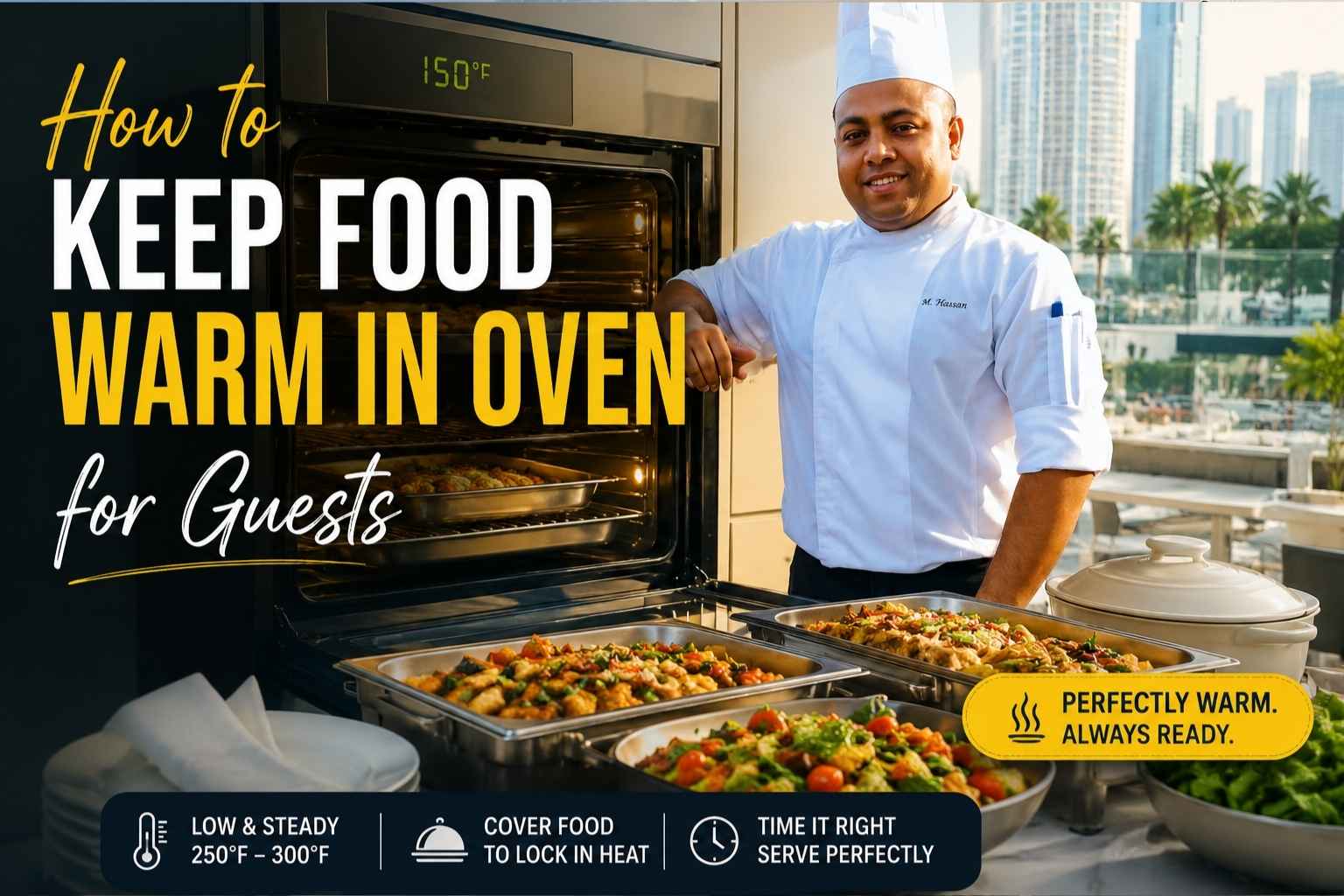
- Set your oven to 170-200°F (77-93°C) to hold food warm without cooking it further.
- The food safety danger zone is 40°F-140°F. Don’t let food sit in that range for more than two hours (USDA Food Safety and Inspection Service, 2024).
- Most dishes hold well for 30-60 minutes. After that, quality drops fast.
- Cover wet dishes to lock in moisture. Leave fried foods uncovered on a wire rack to keep them crisp.
- Plan your cook times backward from serving time. This is the single biggest fix for a smooth dinner party.
What “Keep Warm” Really Means in Your Oven
Your oven’s “keep warm” setting is not a second cooking cycle. It’s a low, steady heat that slows down heat loss. That’s it.
Three things happen inside the oven during this time. First, residual heat keeps moving through the food. A roast pulled at 130°F can climb to 145°F just from heat stored in its center. Second, evaporation starts to dry out anything with a moist surface. Third, carryover cooking continues to firm up proteins, even at low oven heat.
This matters because food doesn’t just sit still. It keeps changing. A steak held too long gets tougher. A casserole held too long gets dry on top. Knowing this is the first step to holding food the right way.
I learned this the hard way during my second year as a line cook. We held a tray of pork loin at 250°F for “just twenty extra minutes.” It came out gray, dry, and tough. My chef at the time told me something I never forgot: “The oven doesn’t pause food. It keeps cooking it, just slower.”
The Food Safety Danger Zone: Why Timing Matters
The danger zone is the temperature range where bacteria grow fastest: 40°F to 140°F (USDA Food Safety and Inspection Service, 2024). Food should not sit in this range for more than two hours total.
This rule applies before, during, and after cooking. If your turkey rests on the counter for 45 minutes, then sits in a warm oven below 140°F for another hour, you’re already close to the limit.
Here’s the simple fix. Keep your holding oven at 200°F or higher for any meat, poultry, or dairy-based dish. At that temperature, the food inside stays above 140°F, which is the safe minimum hold temperature (ServSafe, 2023).
Use a probe thermometer. Don’t guess. I check the internal temp of every holding dish at the 20-minute mark and again at 40 minutes. If anything drops below 140°F, it goes back in at a higher temp or gets served right away.
Warm-Hold Temperature and Time Reference Chart
This chart is the one I keep taped inside my pantry door. It covers six food categories you’ll most likely serve at a dinner party.
| Food Type | Oven Temp | Max Safe Hold Time | Notes |
|---|---|---|---|
| Roasted meats (beef, pork, lamb) | 200°F (93°C) | 45-60 minutes | Tent loosely with foil. Let it rest 15 minutes before covering. |
| Poultry, whole or carved | 200°F (93°C) | 30-45 minutes | Cover tightly. Add a splash of broth to the pan. |
| Casseroles and gratins | 200-225°F (93-107°C) | Up to 60 minutes | Cover with foil. Remove for the last 5 minutes to re-crisp the top. |
| Fried foods (chicken, fries, fritters) | 200°F (93°C), wire rack | 20-30 minutes | Leave uncovered. The rack keeps air moving under the food. |
| Baked goods (bread, rolls, biscuits) | 170-200°F (77-93°C) | 30 minutes | Wrap in a towel, then foil, to trap steam without sogginess. |
| Vegetables (roasted or steamed) | 175-200°F (79-93°C) | 30-45 minutes | Cover. Add a pat of butter or a spoon of broth for moisture. |
| Sauces and gravies | 150°F oven, or low stovetop | Up to 60 minutes on stovetop | Stir every 10-15 minutes. Ovens dry sauces out fast. |
These numbers come from a mix of food safety guidance and kitchen testing (USDA Food Safety and Inspection Service, 2024; America’s Test Kitchen, 2023). Your results will shift slightly based on oven calibration, so check with a thermometer the first time you try a new setting.
How to Hold Each Type of Food at Its Best
Different foods fail in different ways when held too long. Here’s how I handle each one.
Meats and Roasts
The biggest risk with meat is moisture loss. As it sits, juices keep draining out, and the surface dries.
Rest the meat first, uncovered, for 10-15 minutes. This lets the juices settle back into the muscle. Then tent it loosely with foil and place it in a 200°F oven. Don’t wrap it tight. Tight foil traps steam and turns a crisp crust soggy.
For a big roast, I slide a small oven-safe dish of water onto the rack below. The steam it gives off keeps the air around the meat from drying it out.
Casseroles and Gratins
Casseroles hold well because they’re already moist and dense. The main risk is the top layer drying out or the cheese turning rubbery.
Cover with foil at 200-225°F. About five minutes before serving, pull the foil off and let the top re-crisp. This brings back the texture your guests expect.
Fried Foods and Crispy Items
This is the one category where covering is a mistake. Fried chicken, fries, and fritters need airflow, or the steam they release will soften the crust.
Set your oven to 200°F. Place the food on a wire rack set inside a sheet pan. The rack lets hot air move underneath, so the bottom stays crisp instead of steaming itself soft (America’s Test Kitchen, 2023).
I learned this one at a catering job. We stacked fried chicken in a covered pan to keep it warm for a wedding. By the time it hit the buffet, the skin had gone soft and pale. Never again. Now it’s rack, uncovered, every time.
Baked Goods and Bread
Bread and rolls dry out fast in an oven, since they have so much surface area.
Wrap them in a clean kitchen towel, then in foil. The towel absorbs extra steam so the bread doesn’t get gummy, while the foil holds in warmth. Keep the oven at 170-200°F. Anything hotter and the crust turns hard.
Vegetables and Sides
Roasted vegetables hold up well if you add a little fat or liquid before covering. A pat of butter, a drizzle of olive oil, or a spoon of broth keeps them from turning leathery.
Steamed vegetables need a tighter cover and a slightly lower temp, around 175°F, since they have less natural fat to protect them.
Sauces and Gravies
Sauces and gravies are best held on the stovetop over low heat, not in the oven. The oven’s dry air thickens sauces and can scorch the edges of the pan.
If you must use the oven, keep it at 150°F or lower, in a covered dish, and stir every 10-15 minutes. A splash of stock or cream can loosen a sauce that’s thickened too much (Serious Eats, 2022).
How to Stop Food From Drying Out
Drying out is the most common complaint about held food, and it’s also the easiest to fix.
Cover with foil, but don’t seal it tight. A loose tent traps heat without trapping so much steam that crusts go soft. For crisp foods, skip the cover entirely and use a rack instead.
Add moisture before you hold, not after. A splash of broth in the pan, a pat of butter on vegetables, or a drizzle of pan juices over meat all help. Adding liquid after holding doesn’t fix dried-out food. It just makes it soggy on top and dry underneath.
Use a water bath for delicate dishes. Place your dish inside a larger pan filled with an inch of hot water. The water keeps the heat gentle and even, which is ideal for things like mac and cheese or bread pudding.
Try a steam tray for vegetables and rice. A shallow pan of water on the rack below your food releases steam as it heats. That steam keeps the air inside the oven from pulling moisture out of your dish.
Oven vs. Other Holding Methods
The oven is one of several tools for holding food warm, but it’s not always the best one. Here’s how it stacks up.
| Method | Best For | Downsides |
|---|---|---|
| Oven (170-200°F) | Roasts, casseroles, baked goods, fried foods | Uses up oven space you may need for last-minute cooking |
| Warming drawer | Plated food, bread, small sides | Limited capacity, not in every kitchen |
| Slow cooker | Soups, stews, dips, pulled meats | Can overcook delicate items if left too long |
| Chafing dish | Buffet-style serving, large groups | Needs fuel or an outlet, can dry food if flame runs too hot |
If you’re cooking multiple dishes for a dinner party, the oven is usually your best bet for anything that needs even, dry heat, like roasted meats or casseroles. Slow cookers and chafing dishes work well for wet dishes like soups or pulled pork, since they’re built to handle moisture without drying things out.
The one case where I’d skip the oven entirely is fried food in large batches. A warming drawer with good airflow, if you have one, beats an oven every time for keeping a big batch of fries crisp.
Convection vs. Conventional Ovens for Holding Food
Convection ovens use a fan to move hot air around. This changes how food behaves when you’re holding it warm.
With convection, food holds at a slightly lower temperature than a conventional oven would need, often by about 25°F, because the moving air transfers heat more efficiently (Cook’s Illustrated, 2023). So if a recipe calls for 200°F in a conventional oven, try 175°F in a convection oven for the same result.
Convection also speeds up moisture loss. The constant airflow that helps food heat evenly also pulls moisture off the surface faster. If you’re holding something delicate, like a custard or a delicate fish, switch off the convection fan if your oven allows it, or cover the dish more securely than you normally would.
For fried foods, though, convection is a clear win. The moving air does the same job as a wire rack, keeping the surface dry and crisp while the inside stays warm.
How Long Is Too Long? When to Reheat Instead of Hold
Holding and reheating are two different jobs, and mixing them up is where most timing problems start.
Holding keeps already-hot food above 140°F for a short stretch, usually under an hour. Reheating brings food that has dropped below 140°F back up to a safe serving temperature, generally 165°F for leftovers (USDA Food Safety and Inspection Service, 2024).
If a dish has been holding for more than 60 minutes, or if your thermometer shows it’s dropped below 140°F, don’t keep “holding” it. Bump the oven up to 350-400°F and bring the dish back to at least 165°F before serving again.
As a rule, I give most dishes a one-hour holding window. Past that, texture and flavor both suffer, even if the food is technically still safe. If your timeline is running long, it’s better to reheat one dish properly than to let everything coast on low heat for two hours.
Common Mistakes Hosts Make (and How to Fix Them)
These are the mistakes I see most often, both in home kitchens and on catering jobs.
Mistake: Overcrowding the oven. Packing too many dishes in at once blocks airflow. Some dishes end up too hot, others stay cold. Fix: leave gaps between pans, and group dishes by temperature needs. Put dense items like casseroles on the bottom rack, lighter items on top.
Mistake: Setting the oven too high “just to be safe.” A 300°F oven doesn’t just hold food, it keeps cooking it. Fix: stick to the 170-225°F range from the chart above, and use a thermometer to confirm.
Mistake: Covering fried food tightly. This traps steam and ruins the crust within minutes. Fix: use a wire rack and leave it uncovered, even if it feels like it’s getting cold faster.
Mistake: Holding food for too long before checking it. An hour can pass quickly when you’re hosting. Fix: set a timer the moment food goes in to hold, and check it at the 20 and 40-minute marks.
Mistake: Not accounting for carryover cooking. Pulling meat at the target temperature, then holding it warm, often pushes it past done. Fix: pull meat 5-10°F below your target, since it will keep rising while it holds.
My Dinner Party Timing Routine
After 15 years of cooking, including more dinner parties and catering events than I can count, I’ve settled on one routine that works almost every time.
I start by writing down every dish and its cook time, then I work backward from the moment I want to serve. If dinner is at 7:00 PM, I figure out what time each dish needs to come out of the oven to be ready, and in what order.
Anything that holds well, like a roast, a casserole, or root vegetables, goes in first and comes out earliest. These can sit in a 200°F oven for up to an hour without much loss.
Anything that doesn’t hold well, like a quick-sauteed vegetable, a delicate fish, or anything fried, gets cooked last, often while guests are already seated with appetizers.
I also always preheat a second “holding zone.” If I only have one oven, I use the lowest rack at 175-200°F for holding, and reserve the top rack and the broiler for anything that needs active cooking right up to serving time.
The one habit that’s saved more dinners than anything else: I set a phone timer the second the first dish goes into holding. It’s easy to lose track of time when you’re greeting guests, pouring drinks, and plating food all at once.
Frequently Asked Questions
What temperature should I set my oven to keep food warm?
Set your oven between 170°F and 200°F (77-93°C). This range holds most foods above the 140°F safety line without continuing to cook them (USDA Food Safety and Inspection Service, 2024).
Can I use the “warm” setting on my oven for hours?
No. Most dishes start losing quality after 45-60 minutes, even on a “warm” setting. For anything held longer than an hour, check the internal temperature and reheat to 165°F if it has dropped below 140°F.
Should I cover food when keeping it warm in the oven?
It depends on the food. Cover meats, casseroles, and vegetables loosely with foil to keep moisture in. Leave fried foods uncovered on a wire rack so they stay crisp.
How do I keep mashed potatoes warm without drying them out?
Place mashed potatoes in a covered dish set inside a larger pan with an inch of hot water. This water bath keeps the heat gentle and even, and you can stir in a splash of warm milk or cream right before serving.
Is it safe to keep food warm in the oven overnight?
No. Food should never sit in the danger zone (40°F-140°F) for more than two hours, and an oven left on overnight is both a safety risk and a fire risk. For overnight storage, refrigerate the food and reheat it the next day.
What’s the difference between keeping food warm and reheating it?
Holding keeps food that’s already hot above 140°F for a short time, usually under an hour. Reheating brings food that has cooled below 140°F back up to at least 165°F before serving (USDA Food Safety and Inspection Service, 2024).
Why does my fried chicken get soggy when I keep it warm?
Covering fried chicken traps the steam it releases, and that steam softens the crust. Instead, place it uncovered on a wire rack over a sheet pan in a 200°F oven. The airflow underneath keeps the bottom crisp.
How many dishes can I hold in one oven at the same time?
It depends on your oven size, but leave at least an inch of space around each pan for airflow. If you’re holding more than 3-4 dishes, group them by temperature needs, with dense items like casseroles on the bottom rack and lighter items on top.
Key Takeaways
- Keep your oven between 170°F and 200°F to hold food safely without continuing to cook it.
- Stay out of the danger zone: food should not sit between 40°F and 140°F for more than two hours (USDA Food Safety and Inspection Service, 2024).
- Cover moist dishes loosely with foil. Leave fried and crispy foods uncovered on a wire rack.
- Most dishes hold well for 30-60 minutes. After that, reheat to 165°F instead of continuing to hold.
- Plan backward from your serving time, and group dishes by how well they hold, so everything reaches the table at its best.

I’m Mossaraof, a trained chef and the founder of OvenInsights.com. I spent years cooking at Larrupin’ Cafe and in kitchens across Chicago and Seattle. Now I test kitchen gear for a living. I moved to North Acton, London, and I test every tool I write about. I use real meals and real heat. No brand deals. No shortcuts. I cover 12 kitchen types and hundreds of recipes. I believe this: the right tools matter as much as the recipe.