At A Glance
- Roast mushrooms at 425°F for 20-25 minutes for the best mix of browning and tender texture (Serious Eats, 2023).
- Never crowd the pan. Mushrooms release water as they cook, and a packed sheet pan turns that water into steam instead of letting it escape.
- Wipe mushrooms clean with a damp cloth instead of soaking them. Soaked mushrooms hold extra water and steam instead of brown.
- Add oil before roasting, but save butter, salt, and fresh herbs for after they come out of the oven.
- Bare metal or cast iron sheet pans brown mushrooms better than parchment paper, which traps moisture underneath.
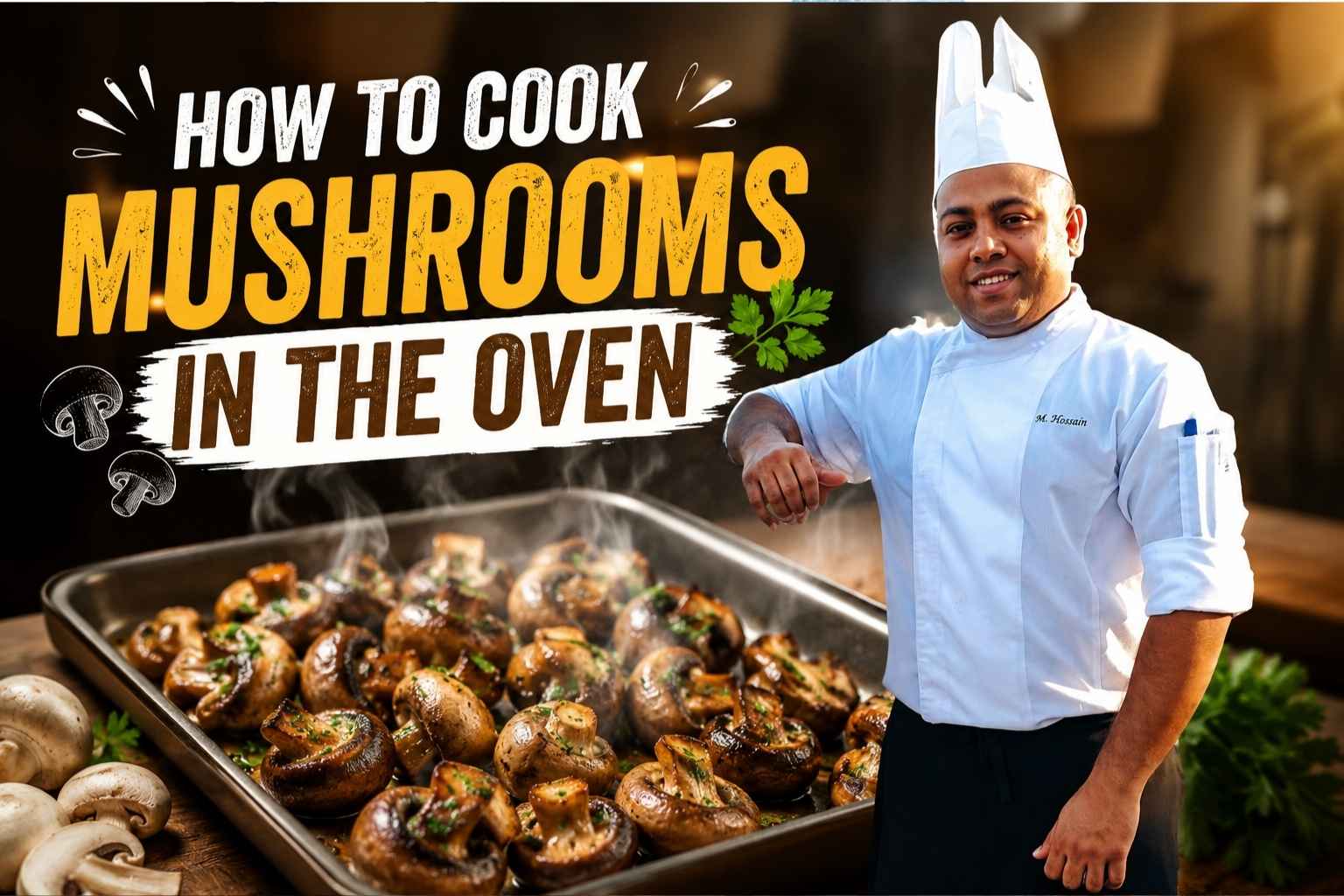
Mushrooms can turn into one of the best side dishes with very little work. If you want to learn How to Cook Mushrooms in the Oven, you are in the right place. I have made this recipe many times, and it always fills my kitchen with a rich, savory smell that makes everyone hungry.
Over the years, I have tested different oven temperatures, seasonings, and cooking times to find what works best. In this guide, I will show you how to roast mushrooms so they come out tender, juicy, and full of flavor every time. You will also learn simple tips, common mistakes to avoid, and easy ways to serve them, so let’s get started.
What Is Oven-Roasted Mushrooms and Why It Beats Pan-Frying
Oven-roasted mushrooms are mushrooms cooked dry in a hot oven until their water cooks off and their surfaces turn deep golden brown. The oven surrounds every piece with even heat, so you get browning on more sides without standing over a hot pan.
I spent over a decade cooking in restaurant kitchens, and pan-frying mushrooms was always a fight. You’d get one good side seared, then flip, then wait, then flip again, all while the pan temperature swings up and down every time you add more mushrooms.
The oven solves that problem. Spread the mushrooms on a sheet pan, slide it in, and walk away. The dry heat pulls moisture out fast, then turns the sugars on the surface brown once the water is gone. You get a hands-off process and a better result at the same time.
Pan-frying still has its place for a quick weeknight side dish in a small batch. But if you’re cooking more than two cups of mushrooms, or you want deep, even color, the oven wins.
The Science of Why Mushrooms Release So Much Water
Mushrooms are roughly 90% water by weight (USDA, 2019). When you apply heat, the cell walls break down and that water has to go somewhere. In a crowded pan, it pools at the bottom and the mushrooms sit in their own liquid.
This is why a packed pan ruins texture. Steam can’t escape past all those mushroom pieces stacked on each other. The mushrooms boil in their own juice instead of roasting, and you end up with a soft, rubbery, gray result instead of a brown one.
Give the mushrooms space and the math changes completely. Each piece has open air around it. The water that leaks out hits the hot pan and evaporates right away, instead of building up into a puddle. Once most of the water is gone, the surface sugars and proteins can finally brown through the Maillard reaction (Cook’s Illustrated, 2022).
This single fact – space equals browning – explains almost every common mushroom mistake. If your roasted mushrooms come out wet and pale, overcrowding is almost always the cause.
Prepping Mushrooms: Washing, Slicing, and Sizing
Should You Wash or Wipe Mushrooms?
Wipe mushrooms with a damp paper towel or soft brush instead of running them under water. A quick rinse won’t ruin them, but soaking turns into a problem fast.
Mushrooms act like little sponges. Dunk them in a bowl of water and they’ll soak some of it into their flesh, on top of the water they already contain naturally. That’s extra moisture your oven now has to cook off before browning can even start.
If your mushrooms are very dirty, a fast rinse under cold running water is fine. Just dry them well with a kitchen towel right after. The goal is no standing water on the surface when they hit the oven.
Slicing Thickness and Why Consistency Matters
Cut mushrooms into pieces between 1/4 inch and 1/2 inch thick for most roasting jobs. Thinner pieces dry out and turn leathery. Thicker pieces stay raw and spongy in the center while the outside browns.
Size consistency matters just as much as thickness. If you have some halves, some quarters, and some whole small mushrooms on the same pan, they’ll finish at different times. The small pieces burn while the big ones are still releasing water.
Take an extra two minutes to cut everything to a similar size before they go on the pan. This one habit fixes more roasting problems than any other single tip in this guide.
Temperature Breakdown: 375°F, 400°F, 425°F, and 450°F+
The right oven temperature depends on how much time you have and how dark you want the color. Here’s how each range performs based on my own testing across home and restaurant ovens.
375°F: Gentle and Forgiving
At 375°F, mushrooms cook slowly and evenly. This is the best choice if you’re roasting a large batch on multiple pans, or if you’re nervous about burning. Expect 30-35 minutes and a softer, more golden (rather than deeply browned) finish.
400°F: The Reliable Middle Ground
400°F is a solid all-purpose temperature. It gives you good browning in about 25-30 minutes without much risk of scorching. If you only remember one number from this guide, make it this one.
425°F: My Go-To for Most Mushrooms
This is the temperature I reach for most often at home. At 425°F, mushrooms release their water quickly and start browning while there’s still time left on the clock. Most batches finish in 20-25 minutes with deep color and a slightly crisp edge.
450°F and Above: Fast and Aggressive
At 450°F or higher, you get the fastest browning, often in 15-18 minutes. But the margin for error shrinks. Check at the 12-minute mark, because the difference between perfectly browned and burnt can be just a few minutes at this heat.
Mushroom Roasting Reference Table
| Mushroom Type | Oven Temp | Roast Time | Notes |
|---|---|---|---|
| Button | 425°F | 18-22 min | Small size means they cook fast; cut larger ones in half |
| Cremini | 425°F | 20-25 min | Slightly meatier than button; holds shape well |
| Portobello | 400°F | 20-25 min (caps), 12-15 min (sliced) | Whole caps release a lot of liquid; tilt gill-side down first |
| Oyster | 425°F | 15-18 min | Delicate and thin; watch closely to avoid drying out |
| Shiitake | 425°F | 18-22 min | Remove tough stems first; caps brown beautifully |
| Mixed wild | 400°F | 20-25 min | Different sizes cook at different rates; sort by size before roasting |
Oil, Butter, and Seasoning: What Goes On Before vs. After
Toss mushrooms with oil before they go in the oven, but hold off on butter, salt, and fresh herbs until after they come out. The timing of each ingredient affects the final result more than most people realize.
Why Oil Goes On First
Oil can handle high heat without burning (depending on the type), and it helps conduct heat into the mushroom’s surface for better browning. A neutral oil like avocado oil or a moderate-smoke-point oil like olive oil works well here. Toss the mushrooms in 1-2 tablespoons of oil per pound before spreading them on the pan.
Why Salt Should Wait
Salting mushrooms before roasting pulls even more water out of them through osmosis, on top of the water they’re already releasing from heat. That’s a double dose of moisture working against your browning. Salt after roasting instead, when the mushrooms are already dry and caramelized.
Why Butter and Herbs Go On at the End
Butter burns at a much lower temperature than oil and turns bitter in a hot oven. Fresh herbs like parsley, thyme, or chives lose their color and flavor under sustained heat. Toss the finished mushrooms with a pat of butter and chopped fresh herbs right after they come out of the oven, while they’re still hot enough to melt the butter.
Sheet Pan Setup: Layer, Spacing, and Pan Material
Single Layer Is Non-Negotiable
Spread mushrooms in a single layer with a little space between each piece. If your mushrooms are touching on all sides or stacked, use a second pan. This goes back to the same principle from earlier: steam needs somewhere to go.
Parchment Paper vs. Bare Metal vs. Cast Iron
Bare metal sheet pans and cast iron skillets brown mushrooms better than parchment paper. Metal gets hotter and transfers that heat directly to the mushroom’s underside. Parchment insulates slightly and can trap a thin layer of moisture underneath the mushrooms.
That said, parchment makes cleanup easier and prevents sticking, which matters if you’re roasting something delicate like oyster mushrooms. If you use parchment, expect slightly less browning on the bottom and consider flipping the mushrooms halfway through.
Cast iron is my favorite for smaller batches. It holds heat exceptionally well, so mushrooms start browning the moment they touch the pan instead of waiting for the pan to reheat.
Convection vs. Conventional Oven: What Changes
Convection ovens use a fan to circulate hot air, which speeds up moisture evaporation and gives you faster, more even browning. If you have a convection setting, use it for mushrooms.
In a convection oven, drop the temperature by about 25°F from what’s listed in the reference table above, or shorten the cook time by about 20%. The moving air does extra work that a conventional oven’s still air can’t match.
If you’re using a conventional oven, you may notice one side of the pan browns faster than the other due to uneven heat distribution. Rotate the pan halfway through cooking to even things out.
How to Tell When Mushrooms Are Done
Look for these signs together, not just one on its own:
- Color: The edges should be deep golden-brown to dark brown, not pale tan.
- Size: Mushrooms shrink noticeably, often by 30-40% of their raw size, as water cooks off.
- Texture: Press a piece with a fork. It should feel firm with slightly crisp edges, not squishy or wet.
- Sound: Pull the pan out and listen. A faint sizzle means the pan is still actively cooking off moisture; near silence often means the mushrooms are close to done.
- Liquid: There should be little to no visible liquid pooling on the pan. If you see a puddle, give them another 5 minutes uncovered.
Common Mistakes and How to Fix Them
Overcrowding the pan: This is the number one cause of soggy, gray mushrooms. Fix it by using two pans instead of one, or roasting in batches. Give every piece breathing room.
Wrong temperature for the job: Roasting at 350°F or lower takes too long and risks drying mushrooms out before they brown. Stick to 400-425°F for most situations, and save lower temps for very large batches.
Seasoning with salt too early: Salting raw mushrooms draws out moisture before they even hit the heat. Wait until after roasting to salt.
Skipping the altitude adjustment: At higher elevations (above 3,000 feet), water evaporates faster and ovens often run slightly cooler than the dial suggests. Increase the temperature by 15-25°F and check mushrooms a few minutes earlier than the recipe states (America’s Test Kitchen, 2021).
Using cold mushrooms straight from the fridge: Cold mushrooms take longer to start releasing water and browning. Let them sit at room temperature for 10-15 minutes before they go in the oven.
My Go-To Method for Roasted Mushrooms
This is the exact method I use at home most weeks. It works for button, cremini, or a mix of both.
- Preheat the oven to 425°F. Don’t skip preheating; mushrooms need that initial blast of heat to start releasing water quickly.
- Wipe 1 pound of mushrooms clean and slice them into roughly 1/4-inch pieces, keeping the sizes consistent.
- Toss the mushrooms in a large bowl with 1.5 tablespoons of avocado oil until every piece is lightly coated.
- Spread them in a single layer on a bare metal sheet pan, leaving small gaps between pieces.
- Roast for 20 minutes, then check. If they’re still pale and there’s visible liquid, give them another 5 minutes.
- Pull the pan out, transfer the mushrooms to a bowl, and toss immediately with 1 tablespoon of butter, a pinch of salt, and a small handful of chopped fresh thyme.
That’s it. Six steps, about 25 minutes total, and you get mushrooms with deep color, tender centers, and crisp edges every time.
Flavor Variations to Try
Garlic Herb
Add 2-3 cloves of minced garlic to the butter and herb toss at the end. Raw garlic added before roasting will burn and turn bitter, so always add it after.
Balsamic
Drizzle 1 tablespoon of balsamic vinegar over the finished mushrooms while they’re still hot. The heat will help the vinegar reduce slightly and coat each piece (Bon Appétit, 2022).
Parmesan-Crusted
Toss the roasted mushrooms with 2-3 tablespoons of freshly grated parmesan immediately after they come out of the oven. The residual heat melts the cheese into a light coating without making it rubbery.
Asian-Inspired
Skip the butter and herb finish. Instead, toss the roasted mushrooms with a small amount of soy sauce, a drizzle of sesame oil, and a sprinkle of toasted sesame seeds.
Frequently Asked Questions About Roasting Mushrooms
What temperature is best for roasting mushrooms?
425°F works well for most mushrooms, giving you a good balance of browning and tenderness in 20-25 minutes. Use 400°F if you want a gentler result with a bit more margin for error.
Do I need to wash mushrooms before roasting?
Wipe them clean with a damp paper towel instead of soaking. Mushrooms absorb water like a sponge, and extra moisture slows down browning in the oven.
Why are my roasted mushrooms soggy?
Soggy mushrooms almost always come down to overcrowding the pan. When pieces are too close together, steam can’t escape and the mushrooms cook in their own liquid instead of roasting.
Should I cover mushrooms while roasting?
No. Covering mushrooms traps steam and prevents browning, the opposite of what you want. Roast them uncovered on an open sheet pan.
How long do mushrooms take to roast at 400°F?
At 400°F, most sliced mushrooms take 25-30 minutes. Whole portobello caps take about the same time, while sliced portobellos finish faster, in 12-15 minutes.
Can I roast frozen mushrooms?
You can, but expect a wetter result and longer cook time, since frozen mushrooms release extra water from ice crystals as they thaw in the oven. Pat them dry partway through cooking if liquid builds up.
What’s the difference between roasting and broiling mushrooms?
Roasting uses moderate, even heat from all directions, while broiling uses intense heat from above only. Broiling browns the tops fast but can leave the bottoms underdone, so it works best for thin slices.
Why do my mushrooms shrink so much?
Mushrooms are about 90% water, so as that water cooks off in the oven, the mushrooms naturally lose volume (USDA, 2019). A 30-40% reduction in size is normal and is actually a sign they’re roasting correctly.
Key Takeaways
- Roast mushrooms at 425°F for 20-25 minutes for the best combination of speed and browning.
- Give every piece space on the pan. Overcrowding is the top cause of soggy mushrooms.
- Wipe mushrooms clean instead of soaking, and let them come to room temperature before roasting.
- Add oil before roasting, but wait until after to add butter, salt, and fresh herbs.
- Use a bare metal or cast iron pan for the best browning, and adjust temperature down slightly if using convection.

I’m Mossaraof, a trained chef and the founder of OvenInsights.com. I spent years cooking at Larrupin’ Cafe and in kitchens across Chicago and Seattle. Now I test kitchen gear for a living. I moved to North Acton, London, and I test every tool I write about. I use real meals and real heat. No brand deals. No shortcuts. I cover 12 kitchen types and hundreds of recipes. I believe this: the right tools matter as much as the recipe.