
At A Glance
- Bake ground turkey at 375°F for most jobs. It’s the sweet spot between speed and moisture.
- Always cook to 165°F internal temp. Use a meat thermometer. Don’t guess.
- Buy 93/7 ground turkey for most oven recipes. It has enough fat to stay juicy but stays lean.
- Spread crumbles thin on a sheet pan for meal prep. Use a loaf pan for meatloaf.
- Add broth, oil, or a foil cover partway through to stop the turkey from drying out.
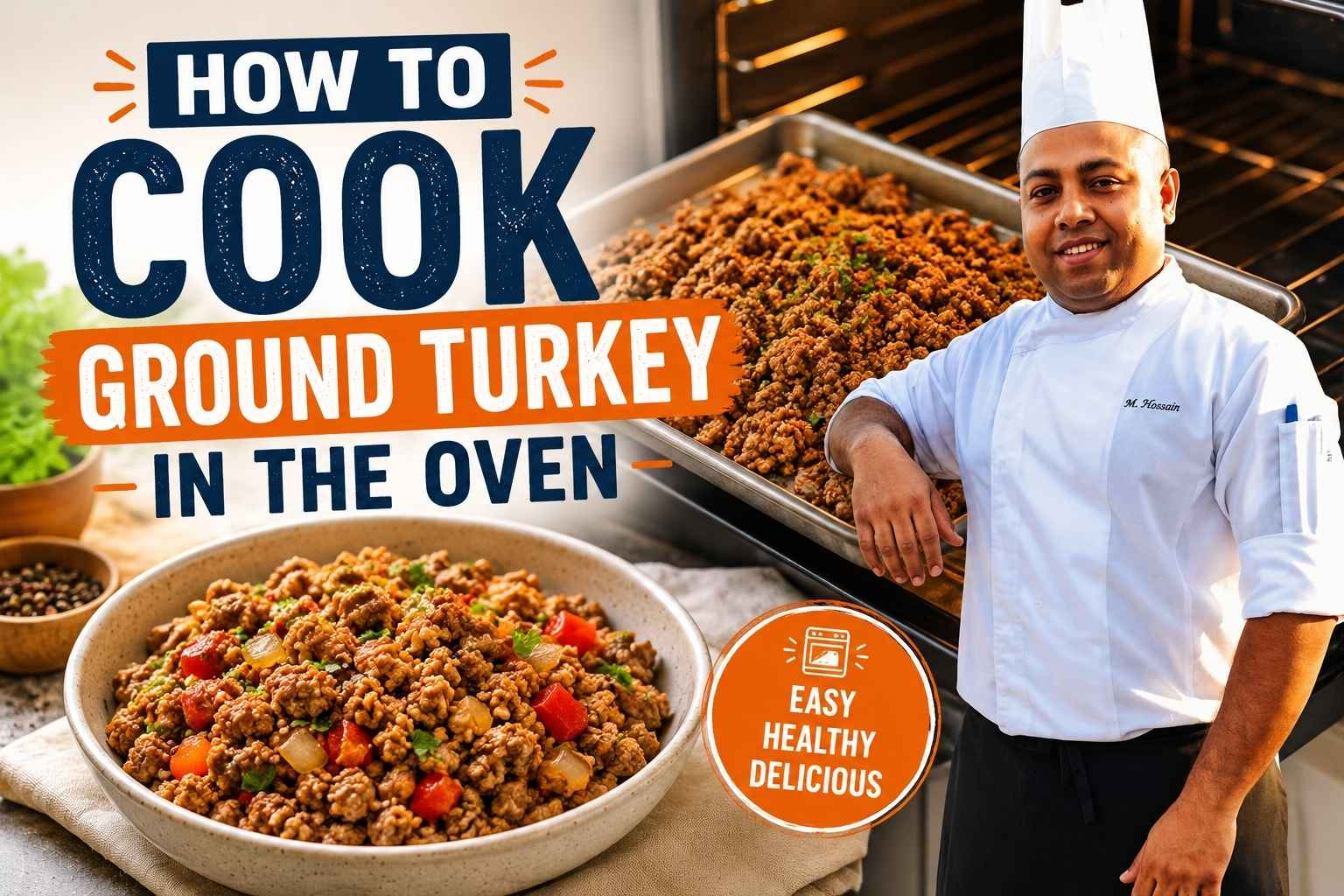
Cooking with ground turkey does not have to feel hard. Once I learned How to Cook Ground Turkey in the Oven, it became one of my favorite ways to make quick, juicy, and healthy meals with less mess. I have tested this method many times, and it gives me even results every time. In this guide, I will show you the best steps, simple tips, and easy tricks so you can cook ground turkey with confidence and enjoy great flavor from the first bite.
Why the Oven Treats Ground Turkey Differently Than the Stovetop
The oven cooks ground turkey slower and more evenly than a stovetop pan. That’s the short answer. A skillet hits the meat with direct, hard heat from one side. The oven surrounds it with steady, gentle heat from all sides.
I ran a butcher counter for three years before I moved into restaurant kitchens, and turkey was always the meat home cooks feared most. They’d dump it in a hot pan, walk away, and come back to gray rubber. The oven fixes that problem, but only if you understand what’s happening inside the meat.
Ground turkey has less fat than ground beef. Fat holds moisture and flavor. When you lose fat, you lose your safety margin. Overcooking by even two or three minutes can dry out a turkey dish fast, and the oven’s slower pace gives you more room to catch it before that happens.
Even heat also means even cooking. On a stovetop, the crumbles touching the pan cook faster than the ones on top. In the oven, heat wraps around the whole pan. That’s why a sheet pan of turkey crumbles comes out more consistent than a skillet batch, as long as you spread it in a thin, even layer.
There’s also the hands-off factor. A stovetop pan needs constant stirring, or it burns on one side while the rest stays raw. An oven does the work for you. You set the temp, set a timer, and use that time to chop vegetables, make a sauce, or clean up. In a busy kitchen, that trade-off matters. At home, it matters just as much, especially on a weeknight when you’re juggling five things at once.
One more difference: the oven browns meat differently than a pan does. A skillet gives you a hard sear on the bottom layer of meat that touches the metal. An oven gives you a softer, more even color across the whole batch, since the heat comes from the air around the food rather than direct contact with hot metal. Neither is better across the board. It depends on what you’re making. For crumbles going into tacos or a grain bowl, I want that oven-even texture. For a burger patty, I sometimes finish it under the broiler for the last minute to get a bit of that hard, stovetop-style crust on top.
Choosing the Right Ground Turkey for Oven Cooking
93/7 vs. 85/15 vs. 99/1: What the Numbers Mean
Those numbers show the ratio of lean meat to fat. A package labeled 93/7 is 93% lean meat and 7% fat. 85/15 has more fat. 99/1 has almost none.
For most oven recipes, I reach for 93/7. It has enough fat to baste itself while it bakes, but it’s still lean enough for everyday meals. The USDA classifies this as the standard “lean” ground turkey blend (USDA, 2024).
85/15 works well for turkey burgers and meatloaf, where extra fat means extra juiciness and better browning. If you’re baking burger patties at high heat, this blend forgives small timing mistakes better than a leaner one.
99/1 is nearly all breast meat. It’s the driest option by far. I only recommend it if you’re mixing it into a sauce, soup, or another dish where added liquid will do the moisture work for you. Baked on its own, it turns tough fast.
Fresh vs. Frozen Ground Turkey
Fresh turkey gives you more control over texture. Frozen turkey works fine too, but thaw it fully in the fridge first. A pan of half-frozen turkey cooks unevenly, and the outside can hit 165°F while the center is still cold and raw.
Prepping Ground Turkey for the Oven
Sheet Pan, Loaf Pan, or Casserole Dish?
Your pan choice depends on your dish, not just habit.
- Sheet pan: Best for turkey crumbles, taco filling, and meal-prep batches. Spread the meat thin so heat reaches every part fast and evenly.
- Loaf pan: Best for turkey meatloaf. The pan’s walls hold the shape and trap in juices while the loaf bakes.
- Casserole dish: Best for baked dishes with sauce, like turkey and rice bakes. The extra depth holds liquid without spilling.
Shaping Matters More Than People Think
For crumbles, break the meat into small, even pieces before it goes in the oven. Chunks that are too large won’t cook through in time, and you’ll end up with a raw center hiding inside a browned shell.
For meatballs, keep them uniform in size, roughly 1.5 inches across. Mixed sizes mean mixed cook times, and you’ll pull the tray out with some done and some not.
For patties, press a shallow dimple into the center of each one with your thumb before baking. Turkey burgers puff up as they cook, and that dimple keeps them from turning into little domes.
Oven Temperature and Time Reference Table
Use this table as your starting point. Always confirm doneness with a thermometer, since pan size, oven calibration, and meat thickness all shift the numbers slightly.
| Oven Temp | Best For | Estimated Time | Internal Temp Target | Notes |
|---|---|---|---|---|
| 325°F | Turkey meatloaf | 55-65 min | 165°F | Slow and gentle. Best for holding moisture in a dense loaf. |
| 350°F | Turkey meatballs, casseroles | 20-25 min | 165°F | The most forgiving all-purpose setting. |
| 375°F | Turkey crumbles, general baking | 18-22 min | 165°F | My go-to temp for most recipes. Good balance of speed and moisture. |
| 400°F | Turkey burgers, thicker patties | 20-25 min | 165°F | Gives good browning without drying out a properly fatted patty. |
| 425°F | Crispy crumbles, fast weeknight meals | 12-15 min | 165°F | Fast, but watch closely. Easy to overshoot past 165°F. |
Times assume a standard home oven with meat at room temperature before baking. Cold-from-the-fridge meat adds 3-5 minutes.
Best Oven Methods by Dish
Turkey Crumbles for Meal Prep
I bake crumbles at 375°F on a parchment-lined sheet pan. Spread the meat out, break it into small pieces with a spatula halfway through, and bake for 18-22 minutes. Stirring halfway is the step most people skip, and it’s why their crumbles come out with dry edges and wet centers.
Turkey Meatloaf
Meatloaf wants low, steady heat. I bake mine at 325°F for about an hour. A glaze brushed on during the last 15 minutes adds flavor and a thin protective layer that helps hold moisture in.
Turkey Meatballs
350°F for 20-25 minutes gives meatballs an even bake without blowing out the outside before the inside catches up. Rolling them the same size, as I mentioned above, matters more than any temperature trick.
Turkey Burgers Baked in the Oven
Bake patties at 400°F on a wire rack set over a sheet pan. The rack lets air move under the patty, so both sides brown instead of just the top. Flip once at the halfway point.
The Safe Internal Temperature: Why 165°F Isn’t Optional
Ground turkey must reach 165°F at its center before it’s safe to eat (USDA, 2024). This isn’t a suggestion. Ground meat mixes surface bacteria throughout the whole batch during processing, unlike a solid cut like a turkey breast, where bacteria mostly sits on the outside.
A meat thermometer is the only reliable way to check this. Color is a bad indicator. Turkey can look done on the outside and still be under temp inside, or it can look slightly pink even after it’s fully cooked and safe (America’s Test Kitchen, 2023).
I keep an instant-read thermometer next to my stove at all times, at home and at work. Push it into the thickest part of the meat, away from the pan or bone, and wait for the reading to settle. A five-dollar thermometer prevents more foodborne illness than any cooking trick you’ll read online (ThermoWorks, 2023).
How to Keep Ground Turkey from Drying Out in the Oven
Dry turkey is the single biggest complaint I hear from home cooks, and it’s almost always fixable.
Add liquid before baking. A few tablespoons of chicken or turkey broth mixed into crumbles before they hit the oven adds moisture that cooks off slowly instead of leaving the meat dry.
Use oil, not just cooking spray. A light coat of olive oil on the pan and mixed into the meat itself helps carry heat evenly and stops the surface from drying out first.
Cover with foil for part of the bake. For meatloaf and casseroles, tent foil over the dish for the first two-thirds of cook time, then remove it near the end to let the top brown.
Don’t overbake past 165°F. Every extra minute past that mark pulls more moisture out. Pull the pan the moment your thermometer hits target, not five minutes later “just to be safe.”
Convection vs. Conventional Oven: What Changes
A convection oven uses a fan to circulate hot air, which cooks food faster and more evenly than a conventional oven (Serious Eats, 2022). For ground turkey, that means two adjustments.
First, drop your temperature by about 25°F from what a recipe states for conventional baking. Second, check your meat a few minutes early, since convection ovens often finish faster.
I use convection for crumbles and burger patties, where faster, even browning is a win. For meatloaf, I stick with conventional heat. The gentler airflow keeps the dense center from drying out before the surface finishes cooking.
Seasoning Ground Turkey Before It Goes in the Oven
Turkey has a mild flavor on its own. That’s an advantage, not a flaw, since it takes on seasoning better than a fattier meat like beef. But it also means bland turkey happens fast if you skip this step.
I salt the meat before it goes in the oven, not after. Salt added early has time to work its way into the meat instead of just sitting on the surface. For one pound of ground turkey, I use about three-quarters of a teaspoon of kosher salt, mixed in evenly.
For crumbles, I like a simple mix: garlic powder, onion powder, smoked paprika, and a pinch of black pepper. It’s simple, but it works with tacos, grain bowls, and pasta dishes without fighting other flavors in the meal.
For meatloaf and meatballs, I add an egg and a small amount of breadcrumbs soaked in milk. This isn’t just for binding. The soaked breadcrumbs, called a panade in classic French cooking, hold moisture inside the meat as it bakes, which matters even more with a lean protein like turkey.
Fresh herbs go in raw, mixed into the meat before baking. Dried herbs can go in earlier, since they need the oven’s heat and time to release their flavor fully. I keep this order in mind every time I build a turkey dish, and it’s one of the simplest ways to raise the flavor without extra work.
Common Mistakes and How to Fix Them
Mistake: Undercooking because the meat “looks” done. Color lies. Fix it by checking every batch with a thermometer, no exceptions.
Mistake: Overcrowding the pan. A packed sheet pan traps steam and stops browning. Fix it by using two pans, or bake in batches, so the meat has room to breathe.
Mistake: Skipping resting time. Cutting into meatloaf right out of the oven lets all the juice run out onto the cutting board. Fix it by resting for 5-10 minutes before slicing.
Mistake: Not breaking up crumbles evenly. Big clumps cook unevenly and hide raw centers. Fix it by chopping the meat into small, uniform pieces with a spatula partway through baking.
Mistake: Skipping the oil or broth step. Bare, lean turkey dries out fast under oven heat. Fix it by adding a small amount of fat or liquid before baking, every time.
My Personal Method for Oven-Baked Ground Turkey
Here’s the exact routine I use at home, built from years of trial and error in professional kitchens.
I buy 93/7 ground turkey and let it sit at room temperature for 15 minutes before cooking. Cold meat straight from the fridge cooks unevenly, and that extra 15 minutes closes the gap.
I line a sheet pan with parchment paper, then toss the raw turkey with one tablespoon of olive oil and two tablespoons of chicken broth per pound of meat. This step alone fixed more of my early dry-turkey mistakes than anything else I tried.
I spread the meat thin, no more than half an inch deep, and bake at 375°F. At the 10-minute mark, I pull the pan out and break up the meat with a metal spatula, spreading it back into an even layer. This is the step most recipes leave out, and it’s the difference between a pan of dry, clumpy meat and one that’s evenly cooked all the way through.
I bake for another 8-10 minutes, then check the center with a thermometer. Once it hits 165°F, it comes out immediately. No extra time “to be sure.” That extra time is exactly what dries turkey out.
Food Safety Notes
Cross-Contamination
Raw ground turkey carries bacteria that can spread to anything it touches. Use a separate cutting board for raw turkey, and wash your hands, knives, and counters with hot soapy water right after handling it (USDA, 2024).
Storage
Cooked ground turkey keeps in the fridge for 3-4 days in a sealed container (USDA, 2024). If you’re not eating it within that window, freeze it. It holds well in the freezer for up to 4 months.
Reheating Leftovers
Reheat leftover turkey to 165°F again before eating, not just until it’s warm. A microwave works, but stir halfway through to avoid cold spots. The oven at 350°F, covered with foil, gives more even results if you’re reheating a larger batch.
Frequently Asked Questions About Cooking Ground Turkey in the Oven
What temperature should I bake ground turkey at?
375°F is the best all-purpose temperature for most ground turkey dishes. It cooks fast enough to stay convenient but slow enough to keep the meat from drying out.
How long does it take to bake ground turkey crumbles?
Ground turkey crumbles take about 18-22 minutes at 375°F on a sheet pan, spread in a thin, even layer. Break up the meat once halfway through for the most even results.
Is it safe to eat ground turkey that’s slightly pink?
Color alone doesn’t confirm doneness. Ground turkey is safe once it reaches 165°F internally, even if a slight pink tint remains in some spots (America’s Test Kitchen, 2023). Always check with a thermometer, not by eye.
Can I bake frozen ground turkey?
Thaw ground turkey fully before baking. Frozen or partially frozen meat cooks unevenly, which can leave the center raw while the outside looks fully done.
What’s the best ground turkey blend for oven cooking?
93/7 works best for most oven recipes. It has enough fat to stay moist without turning greasy. Use 85/15 for burgers and meatloaf, where extra richness helps.
Why does my baked turkey always come out dry?
Dry turkey usually comes from too little fat, too little liquid, or overbaking past 165°F. Add oil or broth before baking, and pull the meat the moment it hits temperature.
Does convection baking work well for ground turkey?
Yes. Convection ovens cook ground turkey faster and more evenly than conventional ovens (Serious Eats, 2022). Lower your set temperature by about 25°F and check the meat a few minutes early.
How do I know my ground turkey is fully cooked without a thermometer?
You really can’t, not reliably. Color and texture aren’t consistent enough indicators for ground meat. A meat thermometer costs very little and removes all the guesswork (ThermoWorks, 2023).
Key Takeaways
- Bake most ground turkey dishes at 375°F, and adjust up or down based on the recipe type.
- Always confirm doneness with a meat thermometer at 165°F. Never rely on color alone.
- Choose 93/7 ground turkey for most oven recipes, and reach for 85/15 when you want extra richness in burgers or meatloaf.
- Add oil or broth before baking, and break up crumbles halfway through cooking to stop dry, clumpy results.
- Rest meatloaf and larger bakes for 5-10 minutes before slicing to keep the juices inside.
Sources referenced: USDA Food Safety and Inspection Service (2024), America’s Test Kitchen (2023), Serious Eats (2022), ThermoWorks (2023).