At A Glance
- A preheated oven at 425°F or higher cooks most proteins and vegetables in 15-20 minutes flat — no babysitting required.
- Sheet pans heat faster and more evenly than glass baking dishes, making them the right tool for weeknight speed.
- Convection mode cuts cook time by 25% compared to conventional — use it whenever you can (America’s Test Kitchen, 2023).
- Prepping ingredients during the preheat window is the single biggest time-saver in my 15-year kitchen career.
- The broiler in the last 2 minutes does more for a finished dish than anything else in the oven.
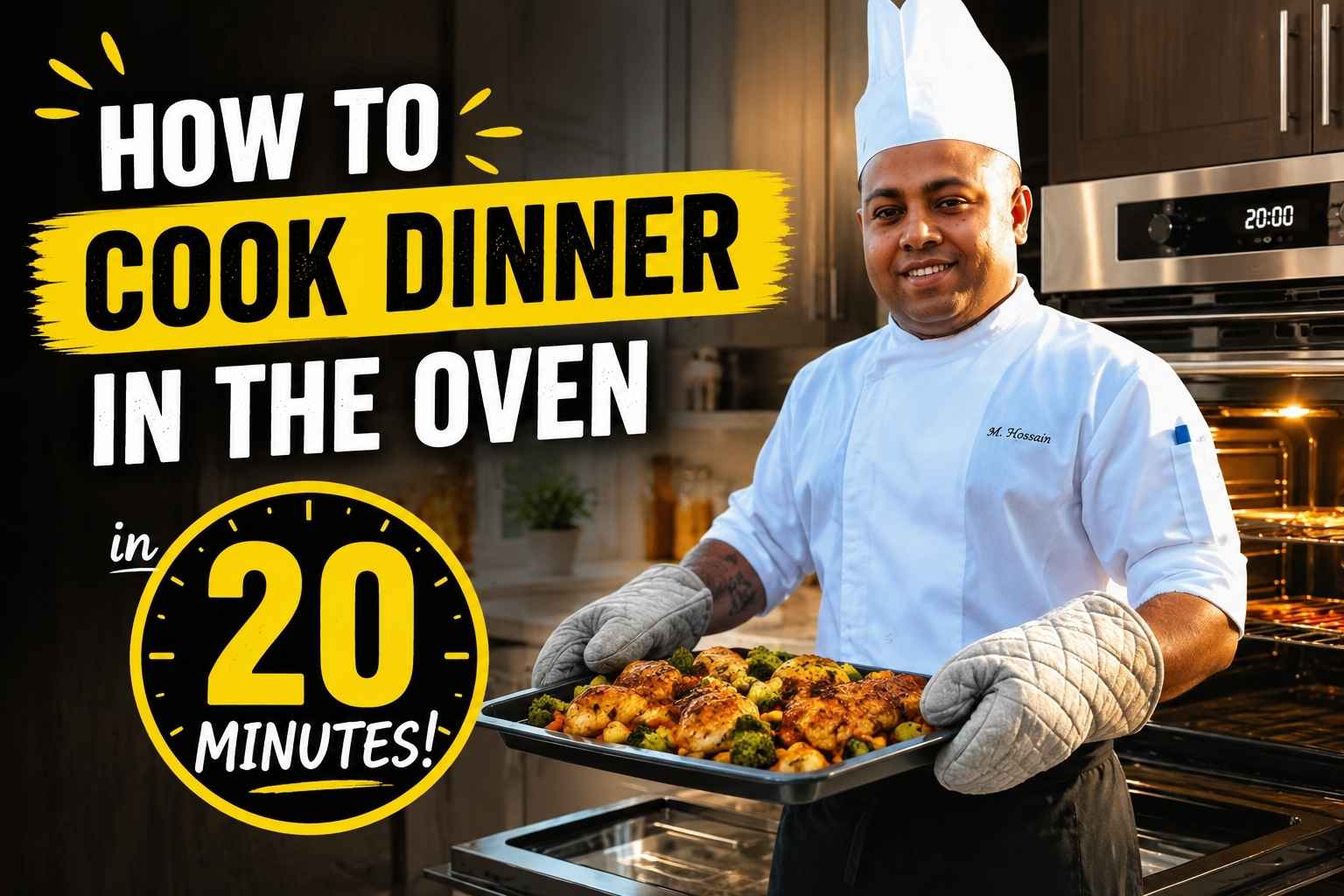
You can learn how to cook dinner in the oven in 20 minutes — and it’s easier than you think. I used to dread weeknights. Work was long. Energy was low. But the oven changed everything for me.
Most people think fast meals mean bland meals. That’s just not true. The oven locks in flavor fast. You get real food without the wait.
I’ve tested dozens of quick oven dinners. I know what works and what wastes your time. These meals are simple, filling, and genuinely good.
Get ready for easy wins in the kitchen. You’ll find fast recipes, smart tips, and zero stress ahead. Let’s make tonight’s dinner the easiest one yet.
Why the Oven Is the Fastest Hands-Off Cooking Method for Busy Weeknights
The oven is the most underrated tool in the home kitchen. Slide food in, set a timer, walk away. No stirring, no watching, no standing over a hot pan. For anyone cooking after a long day, that hands-off time is everything.
I’ve worked professional kitchens for 15 years — fine dining, catering, ghost kitchens, and everything in between. And when I get home at 9 p.m. and need to feed myself and my family in under 30 minutes, I turn on the oven before I even take my coat off. It’s that automatic.
The stovetop is faster for single items, yes. But the oven lets you cook a protein, a vegetable, and sometimes a starch all at once, on one or two pans. That’s the real efficiency gain: parallel cooking, not sequential.
According to Serious Eats (2022), high-heat roasting at 425°F or above activates the Maillard reaction — the same browning process that makes steakhouse food taste like steakhouse food — in under 15 minutes on most thin-cut proteins and cut vegetables. You’re not just cooking fast. You’re cooking well.
The Quick-Reference Oven Dinner Table: 5 Recipes in 20 Minutes or Less
| Recipe | Oven Temp | Cook Time | Difficulty | Pan Type |
|---|---|---|---|---|
| Sheet Pan Salmon with Asparagus | 425°F | 12-14 min | Easy | Rimmed sheet pan |
| Crispy Chicken Thighs | 450°F | 18-20 min | Easy | Cast iron skillet |
| Roasted Broccoli and White Beans | 425°F | 15 min | Easy | Rimmed sheet pan |
| Stuffed Mini Peppers | 400°F | 18 min | Medium | Baking dish |
| Sausage and Zucchini Sheet Pan Dinner | 425°F | 18 min | Easy | Rimmed sheet pan |
| Broiled Tilapia with Lemon Butter | Broil (high) | 8-10 min | Easy | Broiler-safe pan |
The Science of High-Heat Roasting: Why 425°F Is Your Weeknight Best Friend
At 425°F and above, two things happen fast: moisture on the surface of food evaporates quickly, and browning starts before the interior dries out. That’s the window you want.
Drop below 375°F and you’re braising in steam, not roasting. The food turns soft and pale. It takes longer and tastes less interesting.
J. Kenji López-Alt covers this in The Food Lab (2015) in detail: surface browning on chicken skin and fish begins around 300°F, but it only happens fast enough to develop flavor — without overcooking the interior — at temperatures above 400°F. At 450°F on boneless chicken thighs, you’re looking at 18 minutes to fully cooked, golden skin and all.
I run nearly everything at 425°F as a default. It’s hot enough to get color, safe enough not to burn before things cook through (as long as pieces are cut to the right size — more on that below), and consistent across most home ovens.
The one exception: delicate fish like sole or thin tilapia fillets. Those go under the broiler, not the oven, because they’re done in 8 minutes and the intense direct heat of the broiler suits them better than circulating oven air.
5 Specific 20-Minute Oven Dinners (With Brief Instructions)
Sheet Pan Salmon with Asparagus
This is my most-cooked weeknight meal. One pan, 12 minutes, done.
Season salmon fillets (about 6 oz each) with olive oil, salt, pepper, and garlic powder. Lay asparagus spears alongside, toss in olive oil. Roast at 425°F for 12-14 minutes. The salmon is done when it flakes with a fork. Add a squeeze of lemon straight from the oven.
No sauce. No garnish. The roasting does the work.
Crispy Chicken Thighs
Bone-in, skin-on thighs are the best protein in the oven. The fat renders, the skin crisps, the meat stays juicy — and you did almost nothing.
Pat them dry (this matters — wet skin doesn’t crisp). Season with salt, pepper, and smoked paprika. Place skin-side up in a cold cast iron skillet, then put it in a 450°F oven for 18-20 minutes. You don’t need to preheat the pan. The gradual heat from a cold start helps render the fat before the skin fully sets.
Per America’s Test Kitchen (2023), starting chicken thighs in a cold pan reduces splatter and produces more even fat rendering than a preheated pan.
Roasted Broccoli and White Beans
Cut broccoli into small florets. Drain and rinse one can of white beans. Toss both with olive oil, salt, red pepper flakes, and lemon zest. Spread on a sheet pan in a single layer. Roast at 425°F for 15 minutes.
The beans crisp at the edges. The broccoli chars just slightly. Add a drizzle of tahini or olive oil at the end. This is a complete dinner as-is, or a side for anything else on this list.
Stuffed Mini Peppers
Halve mini sweet peppers lengthwise. Fill with a mixture of cream cheese, cooked Italian sausage (or black beans for a vegetarian version), and shredded mozzarella. Place cut-side up in a baking dish. Roast at 400°F for 18 minutes until the cheese bubbles and the pepper edges soften.
These work as a main with a salad or as a party appetizer. The filling can be prepped the night before and refrigerated, which drops the active prep time to under 5 minutes.
Sausage and Zucchini Sheet Pan Dinner
Slice Italian sausage into coins. Cut zucchini into half-moons. Halve cherry tomatoes. Toss everything with olive oil, Italian seasoning, salt, and pepper. Spread on a sheet pan and roast at 425°F for 18 minutes, tossing once halfway through.
Everything caramelizes together. The sausage fat bastes the vegetables as it renders. Serve over rice or with crusty bread.
Sheet Pan vs. Baking Dish vs. Cast Iron: Which Heats Fastest and Why It Matters
This is the question I get asked most often at cooking demos, and the answer changes how fast dinner lands on the table.
Rimmed sheet pans (also called half-sheet pans) heat fastest and most evenly because of their thin, dark aluminum construction. They’re the right tool for any recipe where you want browning and some moisture evaporation — roasted vegetables, fish fillets, sausage and vegetables together. Food Lab testing (J. Kenji López-Alt, 2015) found that dark aluminum sheet pans brown food 30-40% faster than light-colored pans at the same temperature.
Baking dishes (the glass or ceramic kind) hold heat longer once hot but take more time to get there. They trap steam, which makes them great for braises, casseroles, and stuffed items that benefit from a moist environment. Use them for stuffed peppers, not for roasted broccoli.
Cast iron skillets are the slowest to heat but the most consistent once they do. They’re the best choice for proteins that need searing — chicken thighs, pork chops — because they hold a steady temperature even when cold food hits the surface. Put a cast iron skillet in the oven at the start of preheat and it becomes almost as effective as a commercial convection oven’s deck heat.
The wrong pan choice alone can add 5-8 minutes to a 20-minute recipe. Pick the right one before you start.
How to Prep Ingredients While the Oven Preheats: The Chef’s Multitasking Method
A home oven takes 10-12 minutes to fully preheat to 425°F. Most people wait. I don’t. I work.
Here’s exactly how I run the first 12 minutes of any weeknight oven dinner:
- 0:00 – Turn on the oven. Pull everything from the fridge.
- 1:00 – Pat proteins dry with paper towels (wet = no browning).
- 2:00 – Season proteins and set aside. Start cutting vegetables.
- 5:00 – Finish vegetable prep. Mix any sauces or seasonings.
- 8:00 – Arrange everything on the pan or in the dish.
- 10:00 – Oven is at temperature. Food goes in.
- 10:00-25:00 – Cook. Do dishes. Set the table. Eat.
The whole prep window is 10 minutes, which means a 20-minute oven cook time still gets dinner on the table in 30 minutes or less.
The only thing that breaks this system is not starting the preheat first. Every extra minute the oven spends heating after you’re ready to cook adds a minute to dinner. Turn it on before anything else.
Food Network Kitchen (2022) calls this the “parallel prep method” and cites it as the most common habit separating fast home cooks from slow ones. I’ve called it common sense for 15 years.
Convection vs. Conventional Oven: Which One to Use for Fast Weeknight Cooking
Use convection. Every time. If your oven has it.
Convection mode runs a fan that circulates hot air around the food. That moving air strips away the cool, moist boundary layer that forms around food as it cooks — the same layer that slows browning and extends cook times.
America’s Test Kitchen (2023) tested identical recipes in convection and conventional modes and found convection reduced cook times by 20-25% on average while producing more even browning. For a 20-minute recipe, that’s 4-5 minutes saved with zero extra effort.
One adjustment you must make: drop your oven temperature by 25°F when switching to convection. Convection at 400°F cooks like conventional at 425°F. Don’t forget this or things will over-brown before the interior cooks through.
If your oven doesn’t have convection, don’t worry. Everything in this guide works in a standard oven at the temperatures listed. You might lose 3-4 minutes on some recipes — just pull out food a minute or two later than the guide suggests and check for doneness.
The Biggest Mistakes That Slow Down Oven Dinners
Most people who say they can’t get dinner done fast in the oven are making one of three mistakes.
Overcrowding the Pan
This is the most common one. When food is packed together, steam can’t escape. Instead of roasting, food stews in its own moisture and turns soft and pale. It also takes longer to cook through because the trapped moisture keeps the surface temperature lower than the oven air.
Spread food in a single layer with at least half an inch between pieces. For a standard half-sheet pan, that means cooking for two people at most — or using two pans side by side. If you need a third pan, you’ll need a second rack.
Using the Wrong Rack Position
Most home cooks default to the middle rack. For roasting at high heat, the top third of the oven is better — it’s closer to the broiler element (which most ovens run briefly to help maintain temperature) and produces faster browning.
For broiling in the final minutes, the top rack is mandatory. Two inches from the broiler element is the sweet spot. At 6 inches, you’ll be waiting. At less than 2 inches, food burns before it browns.
Skipping the Preheat
Putting food into a cold or lukewarm oven extends cook time and ruins texture. An underheated oven means the food spends the first 5-10 minutes in a warm but not hot environment — long enough to start drying out without ever getting the initial blast of heat that sets the surface.
Always fully preheat. Use an oven thermometer if you’re not sure your oven runs accurate — many home ovens run 25-50°F off from what the dial says (Consumer Reports, 2021).
When to Broil for the Final 2 Minutes: The Chef’s Finishing Move
The broiler is not a cooking method. It’s a finishing tool. And it’s the fastest way to transform a technically-cooked dish into something that looks and tastes like it came from a restaurant.
Two minutes under a high broiler does three things: it deepens the color on browned surfaces, crisps the top layer of anything with fat or cheese, and concentrates the exterior flavors through rapid moisture evaporation.
I use the broiler to finish almost everything I roast:
- Salmon gets 2 minutes to crisp the skin.
- Chicken thighs get 90 seconds to tighten and darken the skin after roasting through.
- Stuffed peppers get 2 minutes for cheese color and a slight char on the pepper edges.
- Roasted vegetables get 1-2 minutes for more caramelization on the edges.
Watch the clock. Two minutes under a broiler is an eternity. At 3 minutes, cheese burns. At 4 minutes, thin vegetables char through. Set a timer the moment the broiler goes on and don’t leave the kitchen.
Position the rack in the top slot before you start roasting, not after. Moving a hot pan to a different rack mid-cook is how burns happen.
My Personal 20-Minute Weeknight Oven Routine
This is what I actually do, not a cleaned-up version for a recipe blog.
I walk in the door and the oven goes on to 425°F. That’s automatic. I don’t decide what to cook first — I start the heat.
Then I open the fridge and work with whatever protein is already there. If it’s chicken thighs, I bump the oven to 450°F and grab the cast iron. If it’s salmon or fish, I stay at 425°F and pull the sheet pan. If there’s no protein and it’s a vegetable night, the sheet pan and a can of white beans or chickpeas covers everything.
I always start with the protein seasoning because it benefits from 5-10 minutes of salt contact before going into the oven. Then I move to vegetables. By the time both are prepped and arranged, the oven is ready.
I set one timer for the main cook time and a second timer as a broiler reminder — usually 2 minutes before the main timer ends. When the first timer goes off, I switch to broil. When the second goes off, food comes out.
Total active time: 12 minutes. Total elapsed time from door to plate: 30-32 minutes, including sitting down.
The only things that break this routine are forgetting to start the oven first, or trying to make something too complicated. Simple food, high heat, the right pan, and proper prep timing — that’s the whole system.
Common Oven Dinner Mistakes and How to Fix Them
| Mistake | Why It Happens | Fix |
|---|---|---|
| Food steams instead of roasting | Overcrowded pan | Use two pans or cook in batches |
| Pale, rubbery skin on chicken | Food went in wet | Pat dry before seasoning — always |
| Uneven cooking across the pan | Uneven piece sizes | Cut vegetables to uniform size before roasting |
| Food done on top, raw underneath | Rack too high | Move to center rack for initial cook, top rack for broil finish only |
| Oven takes forever to preheat | Preheat skipped or started late | Start preheat before any prep work |
| Cheese burns before filling cooks | Added cheese too early | Add cheese in last 4-5 minutes only |
Frequently Asked Questions About 20-Minute Oven Dinners
How do I know when oven-cooked chicken is done without a thermometer?
You need a thermometer. There’s no reliable visual shortcut for chicken doneness. Chicken thighs are safe at 165°F internal temperature (USDA, 2023), though many chefs prefer 175-180°F for thighs because the connective tissue breaks down more fully. A probe thermometer costs under $15 and eliminates guessing forever.
Can I use frozen vegetables straight from the freezer?
Yes, but expect longer cook times and a wetter result. Frozen vegetables release water as they thaw in the oven, which causes steaming rather than roasting for the first 8-10 minutes. Spread them with extra space on the pan and add 5-8 minutes to the cook time. Pat them with a paper towel before seasoning if you want any browning at all.
What’s the fastest protein to cook in the oven?
Shrimp (6-8 minutes at 425°F) and thin fish fillets like tilapia or sole under the broiler (8-10 minutes) are the fastest. Thin-cut boneless chicken breast also works in 12-14 minutes at 425°F if pounded to even thickness. Bone-in proteins always take longer — plan for 20+ minutes minimum.
Does it matter if I use parchment paper or foil on my sheet pan?
Yes. Parchment paper is better for most roasting because it’s slightly insulating — food lifts off the pan easily without sticking, and cleanup is a single move. Foil conducts heat faster and can lead to over-browning on the bottom. For proteins where you want maximum bottom crust (like salmon skin), skip both and oil the pan directly.
Can I cook multiple dishes at different temperatures at the same time?
Not reliably in a single-oven setup. If recipes are within 25°F of each other, you can compromise on one temperature, but anything further apart will produce undercooked or overcooked results on one item. The better approach: pick recipes that share a temperature, or cook the higher-temp item first and let the oven cool slightly before the second goes in.
What’s the best way to reheat oven-cooked food the next day?
Back in the oven at 375°F for 8-10 minutes, uncovered. The microwave steams food and destroys any texture you built during roasting. The oven restores crispness on the surface and heats evenly. For fish, use lower heat — 325°F for 8 minutes — to avoid overcooking a protein that’s already cooked once.
How do I prevent thin vegetables from burning before thick ones cook through?
Cut everything to uniform size, or stagger when things go onto the pan. If you’re roasting broccoli and sweet potatoes together, put the potatoes in 8 minutes early, then add the broccoli. The same logic applies to onions (slower) versus cherry tomatoes (faster). When in doubt, keep similar-density items together and roast different items on separate pans.
Is it safe to put a cold glass baking dish into a hot oven?
No. Thermal shock — the rapid temperature change from cold to 425°F — can crack or shatter glass bakeware. Let glass dishes come to room temperature for 10-15 minutes before placing them in a preheated oven, or start them in a cold oven and heat everything together. This is a safety issue, not just a cooking one (Pyrex Product Safety Guidelines, 2022).
Key Takeaways
- Start the preheat before any prep work — that 10-12 minute window is your active prep time, not dead time.
- Use 425°F as your default oven temperature for most weeknight proteins and vegetables.
- Rimmed sheet pans are the fastest pan for most applications; cast iron is best for skin-on proteins that need fat rendering.
- Convection mode reduces cook time by 20-25% — drop the temperature by 25°F when you use it.
- Avoid crowding the pan — spacing is the single biggest factor in whether food roasts or steams.
- Use the broiler for the final 2 minutes on almost everything: it finishes color, crisps texture, and elevates the whole dish.
- Pat proteins dry before seasoning — moisture on the surface is the enemy of browning.
- A meat thermometer is not optional for chicken. Buy one if you don’t have one.

I’m Mossaraof, a trained chef and the founder of OvenInsights.com. I spent years cooking at Larrupin’ Cafe and in kitchens across Chicago and Seattle. Now I test kitchen gear for a living. I moved to North Acton, London, and I test every tool I write about. I use real meals and real heat. No brand deals. No shortcuts. I cover 12 kitchen types and hundreds of recipes. I believe this: the right tools matter as much as the recipe.