

Hey, I’m Mossaraof — a professional cook and food blogger.
There is nothing quite like a pot of slow-simmered herbs and wine to make your kitchen smell like a dream. I will show you how to cook chicken cacciatore in the oven so you get a rich, rustic sauce and meat that falls right off the bone. My years in a busy Chicago kitchen taught me that a steady, low bake is the true secret to deep, soulful flavor. Use my Ultimate Guide to Master Your Oven to find the best heat for this cozy meal. Let’s grab your favorite pan and start this tasty journey together right now!
What Is Chicken Cacciatore — And Why It Belongs in the Oven
I remember the first time I made chicken cacciatore in the oven — it was one of those icy Midwest afternoons when you crave something bold, hearty, and tomato-rich. I had leftover chicken thighs, half a bottle of red wine, and no desire to babysit a pan on the stove. That’s when the oven came to the rescue.
The smell filled the entire apartment. That slow-roasted tomato and garlic aroma—good grief. I stood there in my mismatched socks, just sniffing the air like I hadn’t eaten in days.
I’ve made it dozens of times since, and truthfully, baking it in the oven beats stovetop every time.
The Backstory of “Hunter’s Chicken”
Chicken cacciatore literally means “hunter-style chicken.” It’s a rustic Italian dish, traditionally made over a fire with whatever the hunter had — maybe some wild mushrooms, tomatoes, onions, and herbs.
Now, I’m not out here hunting wild game. But I do know how to make something feel cozy, even if it’s a Wednesday night in a too-bright kitchen.
In the U.S., a lot of folks tweak the recipe — sometimes swapping bone-in thighs for breasts, or cutting corners with canned sauce. I get it. Life’s busy. But when you slow-roast it in the oven, it develops that deep, almost smoky flavor that no shortcut ever gives.
Why Oven-Baking Elevates the Flavor
Here’s what I’ve learned after years of tweaking:
- Oven heat wraps the dish in gentle warmth — like a tomato-scented hug.
- The chicken cooks evenly, without drying out.
- Veggies melt into the sauce. It’s not soupy. It’s saucy.
- No stovetop splatter cleanup. That’s always a win.
And when the edges of the sauce start to caramelize in the baking dish? Game over. That’s the magic.
I’ve tested this in gas ovens, electric ovens, and even a tiny apartment-sized convection setup in Miami. No matter where I am, baking it always gives me that golden “done right” feeling.
Ingredients That Make or Break Chicken Cacciatore
I’ll never forget the time I tried to make chicken cacciatore with a jar of expired marinara and boneless chicken breasts I found in the back of my freezer. It… wasn’t great.
Since then, I’ve learned that while cacciatore is rustic and forgiving, certain ingredients still matter. A lot. Especially if you’re baking it in the oven — because the longer cooking time brings out the best (or worst) in whatever you’re using.
Let’s break down what actually works.
Chicken Cuts That Work Best in U.S. Ovens
I’ve used every cut you can imagine — bone-in, boneless, skinless, whole legs, even wings once (don’t ask). Here’s what I’ve settled on:
- Bone-in, skin-on thighs: These are my go-to. Flavorful, juicy, and they hold up beautifully during a long bake.
- Drumsticks: Also great, especially if cooking for kids or casual dinner nights.
- Boneless, skinless breasts: Workable, but dry out fast unless you shorten baking time and go heavy on sauce.
In the U.S., I’ve had good luck finding decent chicken at:
- Costco (bulk bone-in packs)
- Trader Joe’s (good air-chilled thighs)
- Target (the Good & Gather brand is surprisingly solid)
Just skip anything pre-seasoned. You want to build your own flavor from scratch.
Sauce Essentials
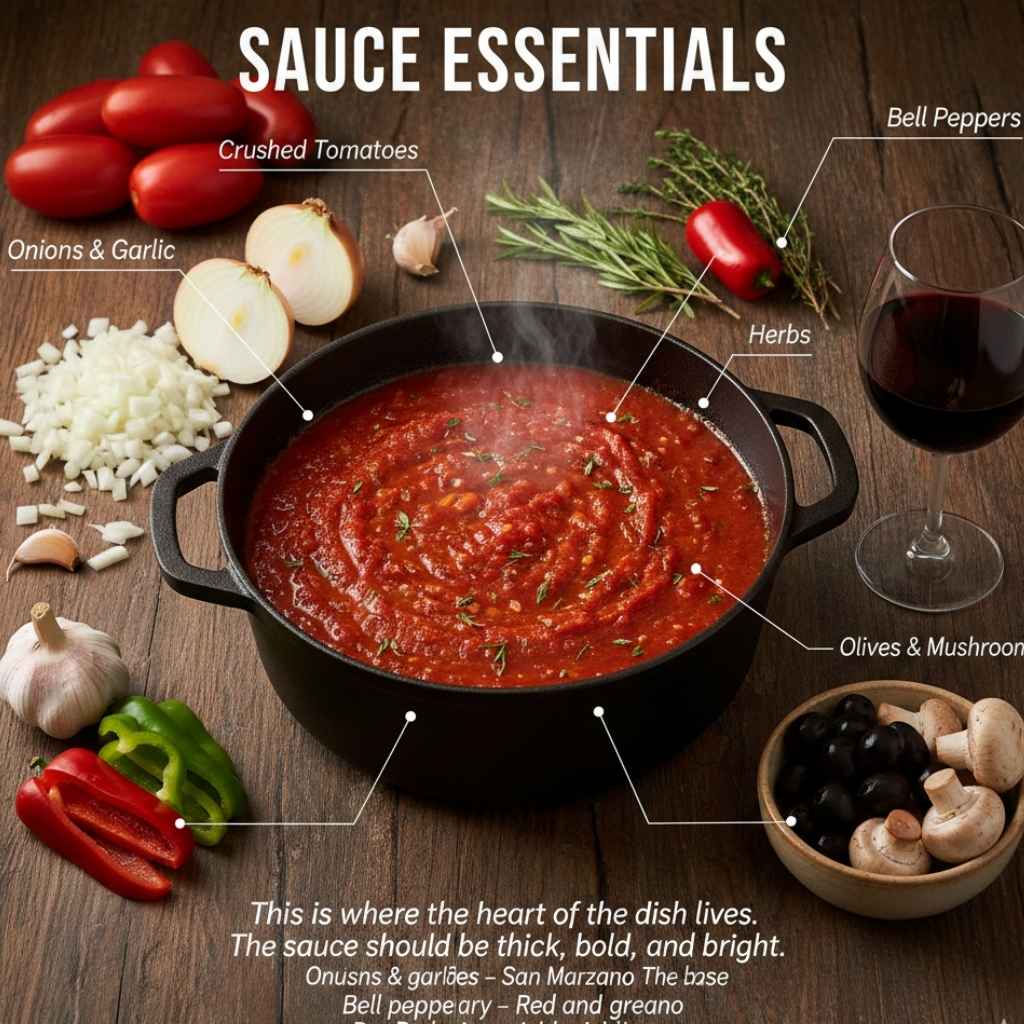
This is where the heart of the dish lives. The sauce should be thick, bold, and bright.
Here’s what I never skip:
- Crushed tomatoes – San Marzano style if I can swing it. Cento or Muir Glen are solid.
- Onions & garlic – The base. Sautéed until soft, never raw.
- Bell peppers – Red and green for balance. Yellow works too if I’m out.
- Herbs – Rosemary, thyme, or oregano. Fresh is great, dried works too.
- Dry red wine – Adds richness. A splash of cab or pinot noir does wonders.
- Olives or mushrooms – Optional, but I throw them in when I want something earthy.
Sometimes I add a pinch of crushed red pepper for heat. Other times, I toss in a bay leaf and just let it simmer until it makes the whole kitchen smell like Sunday.
What U.S. Brands I Actually Buy
I try not to get too precious about brands, but some do stand out for this recipe.
- Cento crushed tomatoes – rich, no weird aftertaste
- Better Than Bouillon chicken base – just a dab adds tons of umami
- California Olive Ranch olive oil – bright, fresh, not flat or greasy
- Kirkland (Costco) chicken – honestly, great quality for the price
I’ve tested this dish with fancy farmers market produce and with grocery-store basics in a hurry. When you get the right chicken and tomatoes, the rest follows.
How to Make Chicken Cacciatore in the Oven — Step-by-Step
Over the years, I’ve tweaked this recipe more times than I can count. I’ve made it on busy Tuesday nights, rainy Saturdays, even once in a snowstorm when the power blinked but the oven held on. And every time, this method delivers.
It’s cozy, low-effort, and the kind of meal that makes you feel like you’ve got your life together—even when your sink’s full of dishes and the dog just tracked in mud.
Step 1 – Sear the Chicken (Yes, It Matters)
Don’t skip this part. I used to. Big mistake.
Searing the chicken before it bakes gives it a golden crust and locks in moisture. Plus, the little browned bits left in the pan? That’s flavor gold when you build the sauce.
Here’s what I do:
- Pat chicken dry with paper towels. Season generously with salt and pepper.
- Heat oil (olive oil or avocado oil) in a cast iron skillet or Dutch oven over medium-high.
- Sear chicken skin-side down first, 3–4 minutes per side, until golden. No need to cook it through.
If I’m using boneless thighs, I’m quicker about it — 2 minutes a side, tops. And if it’s late and I’m feeling lazy, I’ve seared it in a nonstick pan before. Still worked.
Tools I use:
- Lodge cast iron
- Le Creuset Dutch oven
- Tongs I bought at a grocery store 10 years ago and still use (they squeak, but they work)
Step 2 – Build the Sauce
Once the chicken’s out, don’t clean that pan. You want the bits.
- Add chopped onions and peppers to the same skillet. Sauté 5–7 mins until soft.
- Toss in minced garlic and cook 1 minute. Don’t let it burn.
- Deglaze with a splash of wine (or broth). Scrape the pan bottom.
- Stir in crushed tomatoes, herbs, salt, pepper, and any extras (olives, mushrooms).
Taste it. Always. If it feels flat, a pinch of salt or a tiny splash of balsamic wakes it right up.
I let the sauce simmer for 10 minutes before adding the chicken back in. It thickens slightly, and the flavors start blending beautifully.
Step 3 – Bake It Low and Slow
Here’s where the oven shines.
- Preheat to 350°F.
- Nestle the seared chicken back into the sauce, skin-side up.
- Cover with lid or foil and bake for 30–40 minutes.
- Uncover and bake another 10–15 minutes to let the top brown.
When the sauce is bubbling, the chicken looks like it’s half-sunk in a tomato bath, and the aroma makes you forget whatever stress the day brought—you’re there.
If I’m feeling fancy, I’ll sprinkle on chopped parsley before serving. If not? I tear into it with a crusty slice of sourdough and call it a win.
How Long Do You Cook Chicken Cacciatore in the Oven?
So there I was, staring at the oven timer, thinking, “Eh, five more minutes can’t hurt.”
Well, it did.
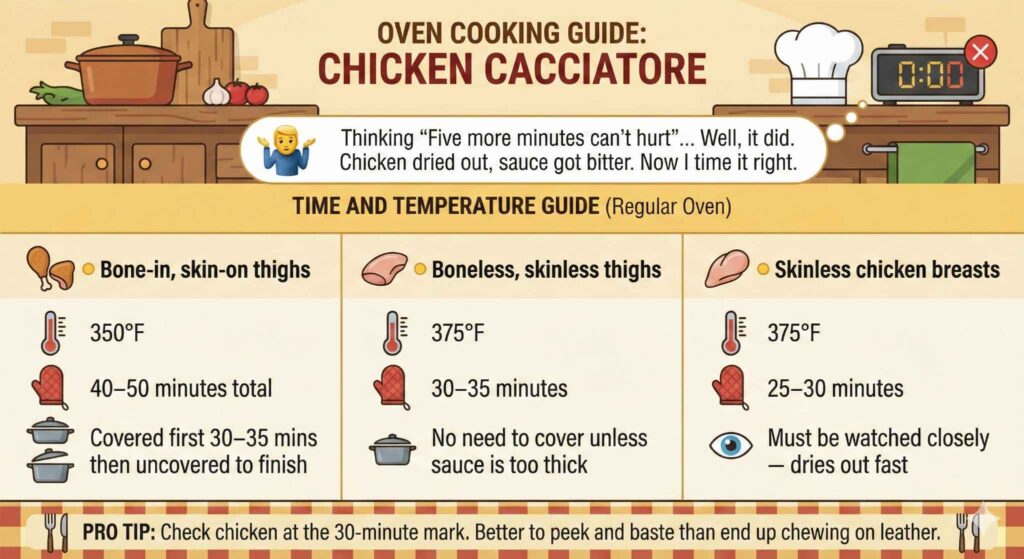
The chicken dried out, the sauce got bitter, and I ended up apologizing over dinner. That’s when I stopped winging it and started keeping track of actual oven times.
Now I bake it just right — juicy, tender, flavorful. Here’s what works.
Time and Temperature Guide
Let’s break it down by cut and cooking style. This is based on regular ovens, not convection — we’ll get to those soon.
🟡 Bone-in, skin-on thighs
- Temp: 350°F
- Time: 40–50 minutes total
- Covered first 30–35 mins, then uncovered to finish
🟡 Boneless, skinless thighs
- Temp: 375°F
- Time: 30–35 minutes
- No need to cover unless sauce is too thick
🟡 Skinless chicken breasts
- Temp: 375°F
- Time: 25–30 minutes
- Must be watched closely — dries out fast
I always say: check your chicken at the 30-minute mark if you’re unsure. Better to peek and baste than end up chewing on leather.
How to Know It’s Done
Forget the clock if you’re still unsure — go by signs.
Here’s what I look for:
- Internal temperature hits 165°F
- Juices run clear, not pink
- Sauce is bubbling around the chicken
- Chicken pulls away from the bone easily
If it smells amazing but you’re still unsure, gently press a thigh with the back of a spoon. If it wiggles easily? Done.
Why Ovens Can Be Tricky (U.S. Reality Check)
Here in the U.S., ovens lie. Not all of them — but enough that I stopped trusting just the dial.
Some tips from my own kitchens:
- Gas ovens: Heat unevenly. Back corners are usually hotter. I rotate my dish halfway through.
- Electric ovens: Hold heat well, but can over-brown the top fast. I use foil for the last 10 minutes if needed.
- High-altitude zones (hello, Colorado friends): You’ll likely need a bit more time and moisture.
I learned that my old GE oven in Chicago ran 25°F cooler than the dial said. I only figured it out after burning cookies and undercooking chicken in the same week.
Fix? I bought an oven thermometer (Taylor brand) and never looked back.
Can You Make Chicken Cacciatore in a Convection Oven?
I first used a convection oven for chicken cacciatore when I was cooking in a friend’s Arizona kitchen during summer. The regular oven turned her place into a sauna, so we fired up her convection model instead.
The result? Quicker cook time, slightly crispier skin, and surprisingly juicy chicken — but only after I adjusted things. My first try was… too dry and way too fast.
Here’s what I’ve learned from testing it again and again.
Convection Oven vs Traditional Oven
Convection ovens use fans to blow hot air evenly around your food. Sounds simple, but it changes how the dish cooks.
Here’s how it compares:
- Faster cooking (up to 25% faster)
- Crispier edges on the chicken and veggies
- More even browning — no rotating necessary
- Less sauce evaporation — the sauce stays richer
But you’ve got to reduce the oven temperature by 25°F from whatever the regular recipe says. Otherwise, you’ll burn the top before the chicken finishes.
Timing Adjustments for Convection
Based on the cuts I’ve tried:
🔵 Bone-in, skin-on thighs
- Temp: 325°F
- Time: 35–40 minutes
- Uncovered for the last 10–15 mins for that crispy finish
🔵 Boneless thighs
- Temp: 350°F
- Time: 25–30 minutes
🔵 Breasts
- Temp: 350°F
- Time: 22–25 minutes — seriously, watch them like a hawk
Sometimes I loosely tent foil over the dish halfway through if the top gets too brown. Especially if I’ve added a little cheese on top for a creamier variation (don’t judge, it’s good).
U.S. Brands with Reliable Convection Options
I’ve cooked with a handful of models — both built-in and countertop — and some definitely make things easier:
- GE Profile Series – sleek controls and consistent fan speed
- Whirlpool Smart Oven – reliable convection mode, bakes evenly
- Breville Smart Oven Air – countertop option that works surprisingly well
- KitchenAid Dual Convection – pricier but fantastic heat control
In Florida, I used the Breville on my patio when it was just too hot to use the main oven indoors. It saved me more than once during July humidity.
Can You Make Chicken Cacciatore in an Air Fryer Oven?
Let me be honest — I was skeptical. Chicken cacciatore in an air fryer oven? That sounded like one of those TikTok recipes that ends in disappointment.
But during a brutally hot July afternoon in Arizona (the kind where your steering wheel feels like lava), I couldn’t bear to turn on my full oven. So I pulled out the air fryer oven and gave it a shot.
Was it traditional? Nope.
Was it good? Surprisingly, yes — if you approach it the right way.
Pros and Cons of Air Fryer Ovens for Cacciatore
Here’s what I found from real use — not theory:
Pros:
- Cooks fast — about half the time of a traditional oven
- Great for small batches (1–2 servings)
- Crispy skin if you leave it uncovered
- Doesn’t heat the whole kitchen
Cons:
- Limited space — forget big family meals
- Sauce can dry out or burn if not handled right
- Requires some multitasking (chicken in one round, sauce in another)
How I Make It Work
I don’t do the whole dish in the air fryer at once. Instead, I split the process:
🔹 Step 1: Cook the Chicken
- Preheat air fryer oven to 375°F
- Season and air-fry chicken (thighs or breasts) for 15–18 minutes
- Flip halfway for even browning
🔹 Step 2: Warm the Sauce Separately
- While chicken cooks, heat the sauce in a saucepan or even microwave
- Add all your garlic, onions, peppers, tomatoes, and herbs
- Let it simmer until fragrant and slightly thickened
🔹 Step 3: Combine
- Nestle cooked chicken in the sauce and let it sit for a few minutes
- Sometimes I broil it all together in the air fryer for a final 2-minute blast
It’s not traditional braising, but it’s a solid workaround when the weather (or your schedule) says no to the full oven.
Best U.S. Air Fryer Ovens for This Trick
If you’re trying this, make sure your air fryer oven is big enough and has adjustable temp control. I’ve tested a few:
- Ninja Foodi DualZone – good space and reliable temp
- Breville Smart Oven Air – one of my absolute favorites
- Instant Vortex Plus – quick preheat and easy to clean
- Cuisinart TOA-65 – great combo of toaster + air fryer
If I’m cooking just for myself or doing meal prep portions, I’ll reach for the air fryer oven more often than I’d admit. It’s faster, cleaner, and doesn’t leave the kitchen sweaty in the summer.
Can You Reheat Chicken Cacciatore in the Oven?
I’ve reheated chicken cacciatore more times than I can count. Sometimes because I made too much (classic me), sometimes because I meal-prepped like a responsible adult.
And each time, I’ve learned that reheating it in the oven brings it right back to life. The sauce thickens just a little more, the herbs mellow out, and the chicken gets even more tender. That “next-day” flavor? It’s real — and it’s so good.
How Long to Reheat in Oven
This depends on how cold your leftovers are and how much you’re reheating.
Here’s what I usually do:
- Preheat oven to 325°F
- Place the cacciatore in an oven-safe dish (I use a glass Pyrex or ceramic pan)
- Cover tightly with foil
- Bake for 20–25 minutes, or until bubbling at the edges
If I’m reheating a single portion, it’s usually hot around the 18-minute mark. For a full family-sized batch, I go closer to 30.
Tip: If the sauce has thickened a lot in the fridge, add a splash of chicken broth or water before reheating. It brings the consistency back without diluting flavor.
Avoid These Mistakes
I’ve made every mistake here at least once — sometimes all in the same day.
Here’s what not to do:
- ❌ Don’t reheat it uncovered — it’ll dry out the top
- ❌ Don’t use too high a temp — sauce can burn, chicken gets rubbery
- ❌ Don’t microwave large batches — uneven heat and sad texture
Also, check the center — if it’s lukewarm, give it another few minutes. I once served it a bit cold in the middle, and my brother was not impressed.
Can You Reheat It in an Air Fryer Oven?
Yes… but I don’t love it.
It’s decent for crisping the chicken up, but unless you separate the sauce and heat it on the side, it can burn or bubble too fast. The oven just gives a better, richer result for saucy dishes like this.
So if I’ve got the time? I always go for the oven.
Oven Cooking vs Other Chicken Methods
I’ve cooked chicken cacciatore every which way — in Dutch ovens, air fryers, big electric skillets, even once in a cast iron pan on a grill (long story, camping trip). Each method has its pros, but let’s be real: the oven still wins when you want depth, tenderness, and that slow-simmered flavor without hovering over the stove.
Here’s what I’ve learned the hard way (and a few things that actually surprised me).
Microwave (Only If You’re Desperate)
I know… we’ve all been there. It’s 11 p.m., you’re starving, and there’s cold leftover cacciatore in the fridge.
Can you microwave it? Sure.
Should you cook it from raw in the microwave? Absolutely not.
Here’s why:
- Uneven heating = rubbery chicken + boiling sauce edges
- No caramelization, no real flavor layering
- Texture just… falls apart in the wrong way
I only use the microwave to reheat small leftovers, and even then, I cover it with a damp paper towel and stir halfway. Otherwise, the sauce explodes like a volcano.
Stovetop Cooking (Classic, But Fussy)
This was how I first learned to make cacciatore — sauté, simmer, stir, adjust, taste, lower heat, stir again…
It works, but it’s a high-maintenance dish when done fully on the stovetop. I’d describe it like this:
- Pros:
- Quick heat-up
- Great for thickening sauce
- Easy to adjust seasoning as you go
- Cons:
- Sauce can stick or burn if you step away
- Chicken can dry out without enough liquid
- Heats up the kitchen fast — especially in summer
Honestly, if I’m doing stovetop now, I usually just start the dish there (for searing) and finish it in the oven.
Grill or Smoker (Not Traditional, But Tasty)
Okay, this is where I go rogue.
I’ve grilled the chicken first, then dropped it into the sauce and baked it in a cast iron pan. Or I’ve smoked bone-in thighs with mesquite chips for 20 minutes, then added them to the oven dish.
It’s not classic cacciatore, but the smokiness adds a deep, campfire-style twist. Great for backyard dinner nights.
Grill/Smoker Tips:
- Keep the chicken slightly undercooked on the grill
- Let the sauce finish the job in the oven
- Use a heavy, grill-safe pan if doing it outdoors
This is my go-to for summer get-togethers. I bring out the Staub pan and let it bubble right on the grill lid.
Slow Cooker or Instant Pot
Yes, I’ve tried both.
They’re fine in a pinch, but you trade texture for convenience. The chicken gets ultra tender, but you lose that roasted depth and caramelized flavor you get in the oven.
Slow cooker cacciatore kind of turns into a stew. It’s not bad, but it doesn’t have that same zing.
Fun Variations to Try (U.S. Dinner-Table Approved)
The beauty of chicken cacciatore is that it’s forgiving. Once you’ve got the base down — chicken, tomatoes, herbs — you can tweak it without losing the soul of the dish. Here are the variations I actually recommend based on my hands-on tests.
Spicy Cacciatore
I live for a little heat. One winter evening in Chicago, I added Calabrian chilies to my usual mix. The whole apartment smelled like Italy and fire at the same time.
- What to do:
- Toss in 1–2 chopped Calabrian chilies or ½ teaspoon crushed red pepper
- Add smoky paprika for depth
- Keep the sauce simmering longer to mellow the heat if needed
It’s bold, warming, and perfect for colder U.S. climates — think New York or Midwest winters.
Creamy Cacciatore
Not traditional, I know. But my Midwest friends swear by it. One night I was low on time and added a splash of mascarpone to leftover sauce — wow.
- How I do it:
- After baking, stir in 2–3 tablespoons of cream or mascarpone
- Fold gently to keep sauce glossy
- Serve over pasta or polenta
It adds richness without overpowering the tomato-herb profile. Kids especially love this one.
One-Pan Sheet Pan Cacciatore
Weeknights in Florida are brutal in July — the heat from a full oven is no joke. That’s when I switched to a sheet pan method.
- Steps:
- Lay chicken, peppers, onions, and mushrooms on a large rimmed sheet pan
- Drizzle with olive oil, season, add crushed tomatoes on top
- Bake at 375°F for 30–35 minutes
No searing, no extra pans. Cleanup is a breeze. It’s not as deep-flavored as traditional braise, but it’s fast, easy, and still delicious.
What to Serve with Chicken Cacciatore
One Sunday in Boston, I served my first properly baked cacciatore with garlic bread and buttered noodles. The family devoured it so fast, I barely got a bite. That’s when I realized: the right side can elevate the dish from “good” to “unforgettable.”
Traditional Sides
- Buttered egg noodles – classic pairing. The sauce clings beautifully.
- Polenta – creamy or slightly firm, it’s perfect for soaking up sauce.
- Garlic bread – crunchy edges, soft center, perfect for dunking.
I often make a batch of noodles in the same water I boiled my vegetables — saves time and adds flavor.
U.S.-Friendly Additions
For weeknight dinners or casual meals, I like sides that fit local habits:
- Brown rice, farro, or orzo – healthier grains, easy to find in Target or Trader Joe’s.
- Roasted vegetables – zucchini, carrots, or bell peppers. Tossed in olive oil and baked alongside the chicken, they absorb the sauce nicely.
- Side salad – simple mixed greens with an Italian vinaigrette. Adds freshness to balance the rich sauce.
One afternoon in Miami, I paired cacciatore with roasted sweet potatoes and a spinach salad. The color contrast made the dish look festive, and the flavors worked surprisingly well together.
Kitchen Tools That Make It Easier
I won’t lie: I’ve burned sauce, dried out chicken, and ruined perfectly good herbs because I didn’t have the right gear. Over time, I’ve learned which tools actually matter and which are optional luxury items.
Must-Have Tools
- Cast iron skillet or Dutch oven – Lodge or Staub brands are my go-to. Heavy, even heat, perfect for searing chicken and then moving straight to the oven.
- Oven thermometer – ovens lie. Seriously. I’ve burned chicken in an electric GE oven that ran 25°F hotter than the dial. Taylor thermometers keep me honest.
- Instant-read thermometer – Thermapen or equivalent. Quick internal temp checks mean juicy, safe chicken every time.
Even something as simple as tongs makes a huge difference. I’ve had the same squeaky pair for 10 years — they still grab chicken perfectly.
Optional but Awesome
- Herb stripper – saves time and keeps hands clean
- Garlic press – I use it on lazy weeknights
- Reusable silicone baking mats – especially useful if doing sheet-pan cacciatore
- Large spoon or spatula – for scraping sauce and stirring without breaking chicken
I also keep a small splash-proof lid or foil handy to cover the pan if the sauce starts to spatter. Trust me, your stovetop and sanity will thank you.
Final Thoughts from a Chef Who’s Made This Dish 30+ Times
There’s something about pulling a bubbling dish of chicken cacciatore from the oven that just feels right. The smell fills the whole house — tomatoes, garlic, herbs — it’s the kind of aroma that makes neighbors peek in, even if only virtually.
I’ve made this dish in:
- My Chicago apartment, where the oven barely hit 325°F, and I had to rotate the pan every 10 minutes
- My Florida kitchen, where humidity made the sauce thicker and the air fryer oven became my secret weapon
- Airbnb kitchens in Boston and New York, improvising with whatever pans were available
Each time, I learned a little more about heat, timing, and how to coax flavor out of simple ingredients.
What I Love Most About This Dish
- The smell — it fills the entire kitchen, makes you forget the day’s stress
- The texture — chicken so tender it almost melts, sauce thick and rich
- The leftovers — yes, better the next day. I always hide a container before anyone else notices
- Flexibility — bone-in, boneless, creamy, spicy, sheet-pan — it adapts to any kitchen or mood
And here’s a small confession: I sometimes sneak a bite straight from the pan while it’s cooling. Purely for quality control.
FAQs
How to cook chicken cacciatore in the oven step by step?
To cook chicken cacciatore in the oven, brown the chicken first. Add tomatoes, peppers, onions, and herbs. Cover and bake at 375°F until tender and juicy.
What temperature is best for chicken cacciatore in the oven?
The best temperature for chicken cacciatore in the oven is 375°F. It cooks the chicken evenly and lets the sauce thicken without drying the meat.
How long does chicken cacciatore take to cook in the oven?
Chicken cacciatore usually takes 45 to 60 minutes in the oven. Bone-in pieces need more time. The chicken should reach 165°F inside.
Can I make chicken cacciatore in a Dutch oven?
Yes, you can cook chicken cacciatore in a Dutch oven like a Lodge or Le Creuset. It holds heat well and makes the sauce rich and deep in flavor.
What sides go well with oven baked chicken cacciatore?
Oven baked chicken cacciatore pairs well with pasta, rice, or crusty bread. The sauce is bold and savory, so simple sides work best.

I’m Mossaraof, a trained chef and the founder of OvenInsights.com. I spent years cooking at Larrupin’ Cafe and in kitchens across Chicago and Seattle. Now I test kitchen gear for a living. I moved to North Acton, London, and I test every tool I write about. I use real meals and real heat. No brand deals. No shortcuts. I cover 12 kitchen types and hundreds of recipes. I believe this: the right tools matter as much as the recipe.