Hey, I’m Mossaraof — a professional cook and food blogger.
There is a special joy in the salty crunch of prosciutto and the scent of fresh sage on tender meat. I will show you how to bake chicken saltimbocca in the oven so you get a perfect gold finish without all the stovetop fuss. My years in a busy Chicago kitchen taught me that a hot tray is the true secret to keeping the ham crisp and the bird moist. Use my Ultimate Guide to Master Your Oven to find the best heat for this elegant and quick meal. Let’s grab your toothpicks and start this tasty dish together right now!
Why I Went with the Oven (and Skipped the Sear)
I’ve pan-fried Saltimbocca plenty of times. It’s rich and flavorful, but man — the cleanup.
When I’m not in chef mode and just cooking for myself or my partner, I lean hard into baked dishes. Especially in summer when the last thing I want is extra heat from the stovetop.
Plus, baking gave me a chance to:
- Roast a side dish at the same time (hello, sheet pan efficiency)
- Avoid splattering grease all over my apron (or arms)
- Walk away while it cooked (because multitasking is real life)
I used my Lodge cast iron pan this time. Could’ve gone with a sheet tray, but I like how cast iron keeps heat even, especially in uneven ovens. If you’ve ever cooked in a rented apartment oven from the ’90s, you know what I mean.
How This Started My Obsession
That night kicked off a whole run of me baking chicken recipes in the oven — not just Saltimbocca. I even tested:
- How to cook tandoori chicken in a gas oven (more on that later)
- How to roast chicken with rosemary, no skillet needed
- How to get crispy prosciutto edges in a convection oven
But Saltimbocca? That was the turning point. It felt like a little win on a tough day. The kind of dinner that made me pause, take a bite, and go: “Dang, that’s good.”
And the best part? Barely any cleanup.
What Is Chicken Saltimbocca, and Why It Belongs in Your Oven
I still remember the first time I heard the word Saltimbocca. I was working prep in a tiny Chicago Italian spot back in my early twenties. The line cook said it meant “jump in the mouth,” and I thought it sounded a bit dramatic.
But once I finally tried it?
Yeah. That name earned its keep.
It’s the kind of dish that hits all the notes — salty, juicy, herby, crisp — and somehow feels both rustic and elegant. You’ll find it in white-tablecloth restaurants, but it’s honestly easy enough to throw together on a weeknight in a regular U.S. kitchen.
The Anatomy of Chicken Saltimbocca
At its core, Saltimbocca is beautifully simple.
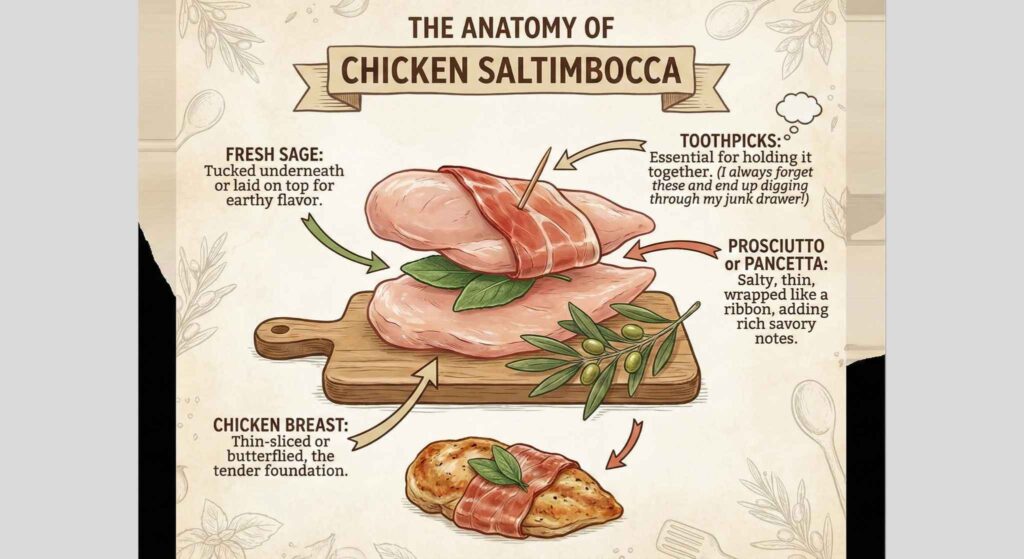
- Chicken breast — usually thin-sliced or butterflied
- Fresh sage — tucked underneath or laid right on top
- Prosciutto or pancetta — salty, thin, and wrapped like a ribbon
- Toothpicks — I always forget these and end up digging through my junk drawer
You can dress it up with:
- A splash of white wine
- A thin slice of mozzarella (melts beautifully, but leaks if overbaked)
- A squeeze of lemon just before serving
Honestly, it’s flexible — which is what I love most.
Why I Bake It Instead of Pan-Frying
Traditionally, chicken Saltimbocca is pan-fried. Quick sear, reduce the sauce, plate it hot.
But when you’re juggling laundry, emails, and a dog that insists on barking at every delivery guy, standing at the stove isn’t always the move.
Baking it:
- Frees up your hands
- Makes less mess
- Keeps the kitchen cooler (a lifesaver in hot U.S. states like Florida or Texas)
Plus, the flavors still develop beautifully. The sage perfumes the chicken, and the prosciutto crisps up just enough. It’s not as caramelized as the skillet version, but it’s darn close — and much easier.
I’ve done this in both a conventional oven and a convection one. If you’ve got convection? Use it. I’ll talk more about the timing tweaks in a bit.
How It Compares to Other Roasted Chicken Dishes
Here’s where things get fun. Baking Saltimbocca helped me realize just how versatile oven-cooked chicken can be — and how it stacks up against other methods I’d tried.
Compared to:
- How to cook rosemary chicken in the oven → Saltimbocca has a bolder, brinier edge. Less delicate. More of a punch.
- How to cook roast chicken and vegetables in a convection oven → That’s a full meal in one. Saltimbocca shines brighter when you pair it with light sides.
- How to cook rotisserie chicken in an oven → Rotisserie’s more about slow, all-over browning. Saltimbocca focuses flavor on the surface. It’s quick, not slow-cooked.
Saltimbocca isn’t trying to replace those recipes — but if you’re tired of dry, bland chicken dinners, this one feels like a treat.
And trust me, when it’s been a long week, and you’re looking for something that feels a little special… Saltimbocca in the oven never lets me down.
Ingredients You’ll Need (And What I Had on Hand)
I’ll be real with you: I didn’t plan to make Saltimbocca that night.
I wasn’t wearing an apron. I wasn’t even wearing matching socks. I just opened the fridge and started pulling things out like a tired, slightly hungry raccoon.
Surprisingly, I had almost everything I needed. But I’ve made this dish a bunch of times now — and whether I’m cooking in a cozy Midwest kitchen in December or a stuffy Airbnb oven in July, here’s what I grab (or swap).
The Core Four (Don’t Skip These)
- Thin-sliced chicken breasts
If they’re thick, I butterfly or pound them a little. Uniform thickness matters in the oven. - Fresh sage leaves
I’ve tried dried sage in a pinch. Meh. Use fresh if you can. The smell is half the magic. - Prosciutto or pancetta
Prosciutto’s traditional, but I’ve used pancetta strips and even deli ham. Just keep it thin. - Toothpicks
I forget these every time. Wrapping the meat without them is like wrestling a toddler. Grab a box and keep it in your drawer. Trust me.
When You’re Missing Stuff (Been There)
Sometimes, I don’t have all the fancy things. Here’s what I’ve done when I was out:
- No sage?
Rosemary works. It’s more pungent, so use less. Thyme’s too delicate for this one. - No prosciutto?
Thin bacon can work, but it makes the dish heavier. It’s more Southern brunch than Italian supper. - No chicken breast?
Boneless thighs work too. Juicier. Just adjust bake time by a few minutes. - No wine?
I usually splash a bit of white wine for flavor, but if I’m out, a squeeze of lemon does the job.
U.S. Brands I Trust in My Own Kitchen
These aren’t sponsored or fancy. Just what’s worked for me here in the States:
- Chicken – Perdue thin-sliced is easy to find and cooks evenly
- Prosciutto – Volpi or Boar’s Head. Saltier than imported stuff but reliable
- Pan – Staub cast iron if I want crisp edges, or just a basic Nordic Ware sheet pan
I know we all have different setups. Some weeks I’ve got Trader Joe’s options and fresh herbs from the garden. Other weeks I’m pulling pre-chopped garlic out of a jar while the smoke alarm chirps low-battery.
This recipe still holds up.
And that’s why it’s become a staple for me — even when life (and the fridge) are a little messy.
How I Prep Chicken Saltimbocca for the Oven (Step-by-Step)
Honestly, prep is my favorite part of making Saltimbocca. It feels almost meditative — like lining up your ingredients, assembling a puzzle with sage and prosciutto, then just letting the oven handle the heavy lifting.
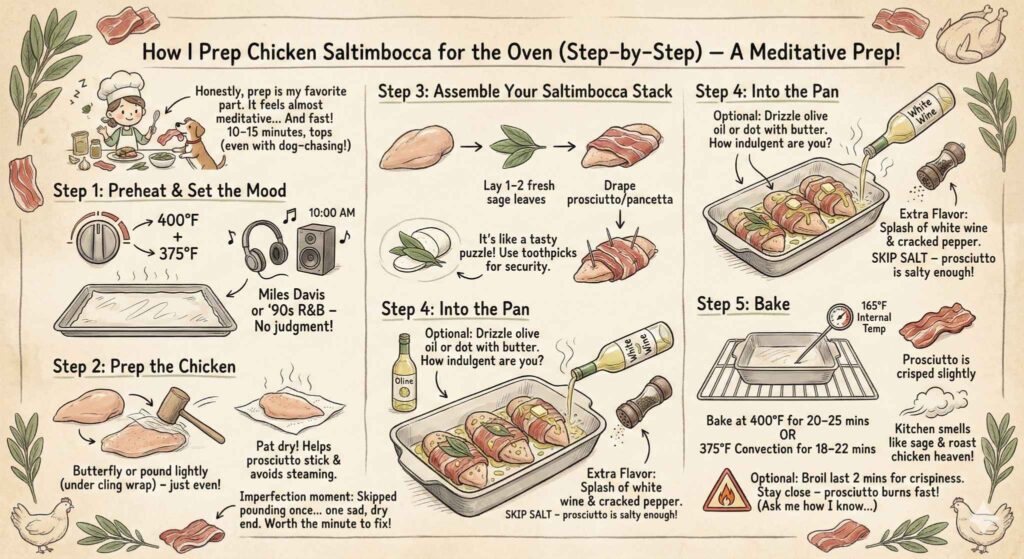
It’s also fast. I’m talking 10–15 minutes, tops. And that’s with me chasing my dog away from the pancetta more than once.
Here’s exactly how I do it in my own kitchen:
🥣 Step 1: Preheat and Set the Mood
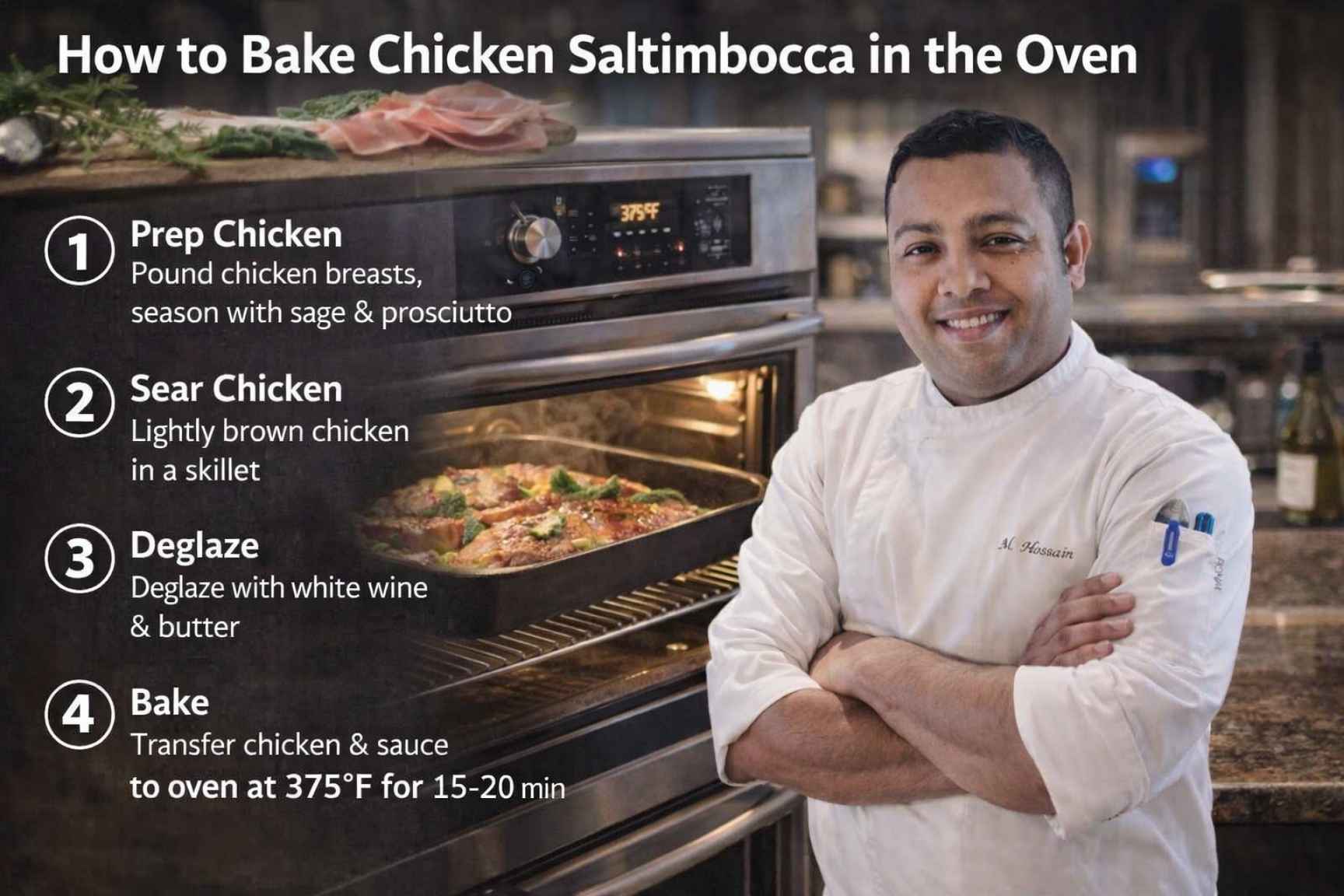
- Preheat the oven to 400°F.
- If I’m using convection, I drop it to 375°F — things crisp faster in there.
- I line a baking dish or sheet pan with parchment paper (because cleanup matters).
While that’s heating, I turn on some music — usually something like Miles Davis or random ‘90s R&B. No judgment.
🔪 Step 2: Prep the Chicken
- If the chicken breasts are thick, I butterfly them or lightly pound them with the back of a pan (covered in cling wrap). I don’t go full “cutlet-thin,” just even.
- Pat dry with a paper towel — this helps the prosciutto stick and keeps the chicken from steaming.
Imperfection moment: Sometimes I get lazy and skip the pounding. Then I end up with one thick end and one sad, dry end. Worth the extra minute to fix.
🌿 Step 3: Assemble Your Saltimbocca Stack
This is the fun part.
- Lay 1–2 fresh sage leaves on top of each chicken piece.
- Drape prosciutto or pancetta over the top — it should stick on its own, but I use a toothpick at each end to keep it secure.
- Optionally, if I want a richer flavor, I sneak a thin mozzarella slice under the sage. Just a little.
No sauce yet. That comes after baking if I’m feeling fancy.
🧈 Step 4: Into the Pan
- Place each assembled chicken piece onto the pan or baking dish.
- Optional: Drizzle lightly with olive oil or dot with butter. Depends how indulgent I’m feeling.
For extra flavor, I’ll sometimes:
- Add a splash of white wine to the pan for moisture and aroma
- Sprinkle cracked pepper (but skip salt — prosciutto is already salty)
⏲️ Step 5: Bake
Pop the pan in the oven — middle rack.
I bake at:
- 400°F for 20–25 minutes
- Or 375°F convection for 18–22 minutes
You’ll know it’s ready when:
- The chicken hits 165°F internal temp
- The prosciutto has crisped slightly
- The kitchen smells like sage and roast chicken heaven
Sometimes I broil for the last 2 minutes just to crisp the top. But stay close — prosciutto burns fast. Ask me how I know…
How Long to Bake Chicken Saltimbocca in the Oven (And How I Know It’s Done)
Let me confess something up front: I used to be terrible at knowing when chicken was done.
For years, I’d go off looks alone — which is like guessing if a cake is baked just by its smell. Not the best method. I’ve served dry Saltimbocca with burnt prosciutto and once sliced into a gorgeous-looking piece only to find it still pink in the middle. Rookie move.
Now? I’ve got it down to a system. And it works every single time — whether I’m using a gas oven in Chicago or a countertop convection model in a Florida rental.
🕒 General Bake Time and Temperature
Here’s what I’ve found works best for oven-baked Saltimbocca:
- 400°F (standard oven) → 20 to 25 minutes
- 375°F (convection oven) → 18 to 22 minutes
You don’t need to flip them. The prosciutto crisps on top, and the chicken roasts evenly underneath.
If you’re using boneless chicken thighs instead of breasts, add about 3–5 extra minutes — they take longer to cook but stay juicier.
🌡️ Internal Temperature — My Thermometer Trick
The most accurate way to know when it’s done?
Stick a meat thermometer in the thickest part of the chicken. I aim for:
- 165°F — USDA safe internal temperature
- Not 170°F. That’s dry chicken territory. Been there, chewed that.
I use a simple ThermoPro digital thermometer. Takes the guesswork out, and I don’t have to cut into the chicken mid-bake.
👃 When I Don’t Use a Thermometer (Yes, It Happens)
Sometimes I’m lazy. Or I’ve already dirtied all my tools.
Here are the signs I trust when I’m going by instinct:
- The prosciutto looks slightly crisp but not blackened
- Juices are sizzling around the chicken — no pale pink liquid pooling
- Smell = done
You’ll get that deep, roasted sage and salty fat aroma that floats through the whole kitchen. When it smells that good? It’s close.
If I’m still unsure, I’ll do a small cut near the center. It should be:
- Opaque white
- Juicy, not shiny
- Hot steam escaping (watch your fingers)
🔁 Quick Recap (If You’re in a Rush)
If you just need the bullet points:
- 400°F oven → 20–25 mins
- 375°F convection → 18–22 mins
- Internal temp: 165°F
- Prosciutto should look crisp but not burnt
- Chicken = juicy, not dry
That’s it. You don’t need a culinary degree to get this right — just a thermometer, a nose, or a bit of practice.
And now that I’ve got this dialed in, Saltimbocca’s become one of my “safe” recipes — the kind I make when I want comfort without chaos.
What to Serve with Baked Saltimbocca (My Go-To Combos)
When the Saltimbocca is baking and the whole kitchen smells like crispy prosciutto and sage? That’s the moment I start panicking about the side dishes.
Some days I plan ahead. Most days I wing it.
But over time — and plenty of last-minute “what’s-in-the-fridge” moments — I’ve figured out a few combos that just work.
🍽️ My Favorite Pairings (Comfort Meets Fancy)
When I’m going for the full comfort experience (like a Friday night with no emails and a glass of wine), I lean into these:
- Roasted garlic mashed potatoes
Creamy, fluffy, and mellow enough to let the salty chicken shine. I mash mine with sour cream and a splash of warm milk. - Crispy green beans with lemon
Tossed in olive oil, roasted at 425°F until blistered. A squeeze of lemon at the end cuts through the richness. - Warm baguette + herbed dipping oil
Because soaking up pan juices should be a sport.
⏱️ Quick U.S. Sides That Save Dinner (When I’m Low on Time)
Some nights, I’m not making everything from scratch. And that’s okay. Here are a few shortcut sidekick heroes that have saved me more than once:
- Trader Joe’s Mushroom Risotto (frozen section)
Cooks in 5 minutes, tastes like effort. Pairs beautifully with Saltimbocca. - Steamer bag of asparagus or Brussels sprouts
Add butter and lemon. No shame in convenience. - Minute rice + olive oil + herbs
I’ve stirred in some jarred roasted red peppers too — adds color without extra work. - Salad kits with arugula + shaved parmesan
Especially the balsamic or lemon vinaigrette ones. I usually add some pine nuts or sunflower seeds if I’m feeling fancy.
🥂 When I’m Hosting (Or Just Want to Feel Like It)
If I’ve got guests (or I’m pretending I do), I add little touches:
- A splash of white wine reduction drizzled over the plate
- Roasted cherry tomatoes for color and acidity
- Or even a small bowl of grilled polenta squares on the side — yes, I’ve overachieved once or twice
But really? Saltimbocca does a lot of heavy lifting. The rest just supports the show.
Variations I’ve Tried (Some Worked, Some… Eh)
Chicken Saltimbocca is one of those recipes that invites creativity. Once I got the hang of the classic version, I started playing around. I mean — what kind of chef would I be if I didn’t tinker a little?
Some variations were legit winners. Others taught me what not to do… like stuffing the chicken with too much cheese and turning the oven into a dairy explosion zone.
Here are the versions I tested — what worked, what flopped, and which ones I’ll definitely make again.
🧀 Mozzarella-Stuffed Saltimbocca
This one almost turned into a weeknight miracle.
- I tucked a thin slice of fresh mozzarella between the sage and the chicken.
- Baked it just like usual — same temp, same timing.
What happened:
The flavor? Incredible. The mozzarella added a creamy center that played well with the salty prosciutto.
The downside? If you overbake even by a minute, that cheese starts leaking out the side like lava.
My tip:
If you try this version, use low-moisture mozzarella and don’t overfill. Less is more.
🧂 Breaded Saltimbocca
One night I got wild. I had leftover breadcrumbs from a chicken parmesan recipe and thought, “What if I give Saltimbocca a crispy shell?”
So I did:
- Dipped the chicken in flour, egg, and panko
- Added the sage + prosciutto on top
- Baked as usual
Results:
It was kind of a chicken schnitzel-Saltimbocca hybrid. Crunchy on the outside, juicy inside, and sagey as ever.
It felt heavier — more of a cozy winter dish than something I’d serve in Florida in July. But I’d make it again on a cold night with a glass of red wine.
🌶️ Spicy Saltimbocca
One of my favorite experiments:
- Spread a thin layer of Calabrian chili paste on the chicken before laying on the sage and prosciutto.
The heat didn’t overpower — it just gave the whole dish this subtle, slow-building warmth. Great for anyone who likes a little kick without going full hot wing.
Bonus: It pairs beautifully with roasted potatoes and garlic aioli.
🧄 Garlic-Herb Saltimbocca
This was a simple swap:
- I mixed minced garlic and rosemary into a softened butter
- Brushed it on top before baking
Prosciutto crisped beautifully, and the chicken took on a richer, deeper flavor. I served it with sautéed spinach and lemon rice — felt like a restaurant meal but done in 30 minutes.
🧪 Flop Alert: Balsamic-Glazed Saltimbocca
I thought a balsamic drizzle would be a smart move. Turns out, baking balsamic vinegar can turn your kitchen into a sour-smelling science lab.
The vinegar over-reduced in the oven and burned around the edges of the pan. The flavor clashed with the sage, too. Way too sharp.
So… yeah. Don’t do that.
What If You Don’t Have an Oven? (Alt Cooking Tips)
Not everyone has a big, shiny oven with convection settings and five racks. I’ve lived in apartments with old-school gas ovens that didn’t hold temp and stayed in places where a toaster oven was all I had. Been there, made it work.
Saltimbocca doesn’t need fancy equipment — just heat, time, and a little patience. If you’re in a dorm, studio apartment, or summer rental with sketchy appliances, here’s what you can do.
🔥 How to Cook Roasted Chicken Without an Oven
This is the method I used during a summer in Tucson when the oven turned my whole rental into a sauna:
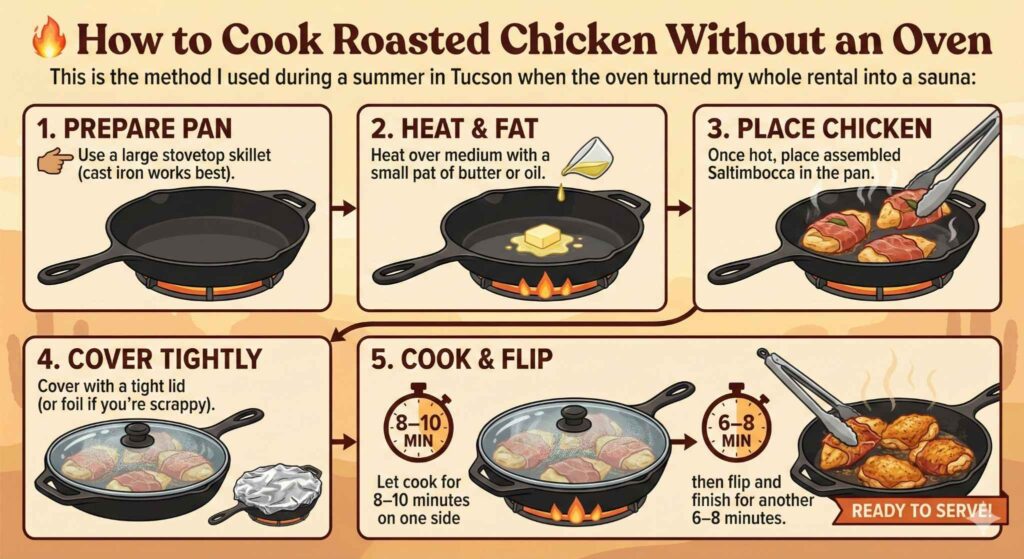
- Use a large stovetop skillet (cast iron works best).
- Heat over medium with a small pat of butter or oil.
- Once hot, place assembled Saltimbocca in the pan.
- Cover with a tight lid (or foil if you’re scrappy).
- Let cook for 8–10 minutes on one side, then flip and finish for another 6–8 minutes.
Pro tip: Lower heat after the first 3–4 minutes. You want to avoid burning the prosciutto before the chicken finishes.
It won’t get that roasted finish, but the flavor still sings. It’s more like a pan-steamed version, but still 100% delicious.
🔌 How to Cook Saltimbocca in a Microwave Convection Oven
I tested this once in a vacation rental in Michigan. The built-in microwave had a convection-bake mode, and I was curious (and hungry).
- Preheat to 375°F convection.
- Place chicken on parchment inside the metal convection rack or tray.
- Bake for about 20 minutes, checking at the 15-minute mark.
Watch closely — microwave ovens tend to brown unevenly. I rotated the tray halfway through, and it turned out surprisingly great.
Bonus: It didn’t heat up the whole room, which was nice on a hot August evening.
🔥 Gas Oven vs. Electric Oven for Saltimbocca
I’ve cooked this recipe in both — and yeah, there’s a difference.
- Gas ovens brown the prosciutto better, especially if you place the rack higher. I’ve used this trick when making tandoori chicken or oven-roasted rosemary chicken too.
- Electric ovens offer better temperature stability, especially in older homes where gas might be finicky.
If you’re trying to figure out how to cook tandoori chicken in a gas oven or how to roast chicken in an electric oven — both can be great. You just need to tweak the rack placement and timing a bit.
🚫 What About a Toaster Oven?
Actually… yes.
I’ve done mini Saltimbocca in a Breville Smart Oven Air — which fits about 2–3 pieces of chicken at a time. The bake setting at 375°F worked great. Took about 20 minutes, and it crisped up just like my full-sized oven.
Perfect for:
- Small servings
- Summer cooking (less heat)
- Meal prep in small spaces
My Kitchen Tools (That Made a Real Difference)
Let’s be honest — kitchen tools can either make things easier… or just take up drawer space. I’ve used both the overpriced gadgets and the $10 basics. When it comes to baking Saltimbocca in the oven, a few essentials really help — and no, you don’t need a sous vide machine or a $300 thermometer.
Here’s what I actually use in my own kitchen — from Florida humidity to snowy Midwest winters.
🌡️ Meat Thermometer (Lifesaver)
Before I owned one of these, I either:
- Overcooked chicken “just to be safe”
- Or nervously cut into the thickest part like I was doing exploratory surgery
Now? I trust the numbers.
My pick:
I use a simple ThermoPro digital meat thermometer. It’s under $20 and gives me fast, accurate readings.
Why it matters:
- Saltimbocca is thin — it can overcook fast
- Internal temp should hit 165°F, not more
- It lets me avoid guesswork or dry chicken disasters
🧱 Quality Sheet Pan (No Warping, Please)
You’d think any old pan would do, right?
Wrong. I once used a super thin, dollar-store baking tray, and it warped mid-bake, flinging oil toward the heating element. Smoke alarm. Panic. Not fun.
Now I stick with:
- Nordic Ware half sheet pans — sturdy, U.S.-made, and even-heating
- Or my trusty Staub cast iron pan when I want a crisp bottom
A good pan holds heat better, prevents hot spots, and just makes the whole experience smoother.
🍳 Parchment Paper (Low-Key Hero)
Especially when using prosciutto, parchment keeps the pan clean and prevents sticking. I’ve had Saltimbocca cement itself to unlined trays before — not a great moment.
Also handy when:
- Cooking in a convection toaster oven (easier cleanup)
- Making multiple portions (I slide the parchment onto a cutting board to cool)
🌬️ Convection Oven Settings (If You Have It)
Not a tool, exactly — but if your oven has a convection bake setting, use it.
I find:
- Better browning on the prosciutto
- Slightly shorter cook time (by about 2–3 minutes)
- More even roasting in older ovens
If you don’t have convection, that’s fine too. I used a regular GE electric oven for years and just adjusted the rack to the middle or upper-middle position to get a similar result.
🦴 Bonus: Tongs + Toothpicks
- Tongs for flipping or plating — I prefer silicone-tipped ones to avoid tearing the prosciutto
- Toothpicks — I can’t say it enough. Keep them near the prep station. Forgetting them mid-assembly is one of my most common Saltimbocca bloopers
Leftovers and Reheating: Saltimbocca That Doesn’t Go Sad
Let’s be honest: most leftover chicken dishes end up dry and sad by the next day. I’ve been there. You pull a piece out, poke it, and it’s basically cardboard with a hint of meat.
Not with Saltimbocca.
Because of the prosciutto and sage, it retains moisture better, and the flavors actually intensify in the fridge overnight. I’ve made it for Sunday meal prep, and by Monday it was almost as good as fresh — just needed a little heat.
🔥 Best Way to Reheat
I’ve tried a ton of methods. Here’s what actually works:
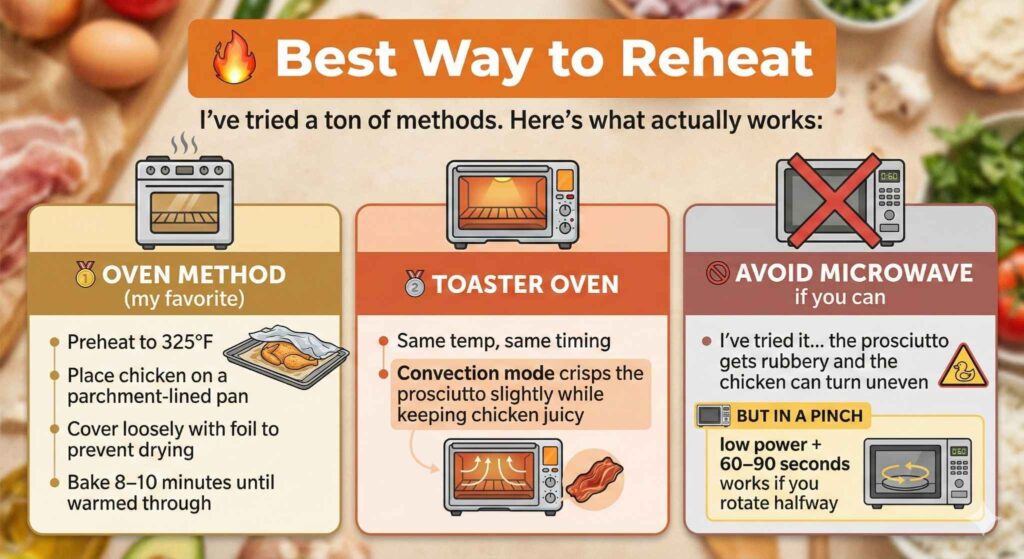
- Oven method (my favorite)
- Preheat to 325°F
- Place chicken on a parchment-lined pan
- Cover loosely with foil to prevent drying
- Bake 8–10 minutes until warmed through
- Toaster oven
- Same temp, same timing
- Convection mode crisps the prosciutto slightly while keeping chicken juicy
- Avoid microwave if you can
- I’ve tried it… the prosciutto gets rubbery and the chicken can turn uneven
- But in a pinch, low power + 60–90 seconds works if you rotate halfway
🥪 Make It Into a Sandwich
One of my favorite hacks is turning leftover Saltimbocca into a sandwich for lunch. Here’s my go-to:
- Slice the reheated chicken thinly
- Layer on ciabatta or baguette
- Add arugula and a drizzle of lemon aioli or olive oil
- Optional: add roasted red peppers or a thin slice of mozzarella
It feels like a gourmet lunch but takes 5 minutes to assemble. Perfect for work-from-home days or a quick post-gym meal.
🍋 Quick Tips to Keep Flavor Alive
- Let chicken rest for 2–3 minutes after reheating — juices redistribute
- Don’t overheat; 10 minutes is usually enough for small pieces
- If prosciutto isn’t crisp enough, pop it under the broiler for 30–60 seconds, watching closely
Related Chicken Recipes You Might Love
Intro: Once I nailed Saltimbocca, I started branching out. These were surprisingly fun to test in my own kitchen.
After I got comfortable with oven-baked Saltimbocca, I realized there are a ton of ways to apply the same techniques. I mean, why stop at one delicious chicken dinner if the oven is ready to help?
Here’s what I’ve been playing with — all practical for real U.S. kitchens.
Related Chicken Recipes You Might Love
After I got comfortable with oven-baked Saltimbocca, I realized there are a ton of ways to apply the same techniques. I mean, why stop at one delicious chicken dinner if the oven is ready to help?
Here’s what I’ve been playing with — all practical for real U.S. kitchens.
🍗 How to Cook Tandoori Chicken in the Oven
- Marinate chicken in yogurt, garlic, ginger, and tandoori spices
- Bake at 400°F for 20–25 minutes, depending on thickness
- If using convection, reduce to 375°F and check early
- Learned: same assembly and baking principles from Saltimbocca help with even cooking
It’s amazing for weeknights because you can prep the marinade in advance and just bake — minimal hands-on time.
🥘 How to Cook Shredded Chicken in the Oven
- Perfect for meal prep or tacos
- Bake breasts with a little olive oil, garlic, and herbs
- Pull apart with forks after baking; juicy and flavorful
- Pro tip: cover loosely with foil to trap steam — prevents dryness
I use this for sandwiches, burrito bowls, and even salads. The method is essentially the same as Saltimbocca — controlled heat and thin cuts for even cooking.
🍖 How to Cook Chicken Schnitzel in the Oven
- Breaded chicken, baked instead of fried
- Gives you crispy edges without the splatter
- I sometimes layer sage and prosciutto under the panko for a Saltimbocca-inspired twist
I tried this in both gas and electric ovens — small adjustments in rack placement make a huge difference for crispiness.
🧄 How to Bake Chicken Parmesan in the Oven
- Similar to schnitzel but topped with sauce and cheese
- Thin chicken pieces cook faster, and I learned that baking at slightly lower temps keeps the cheese from over-browning
- Again, the same oven principles from Saltimbocca apply: even heat, timing, and using parchment or a cast-iron pan
🪴 Why These Recipes Work Well Together
- All involve thin cuts or even thickness
- Flavor layering is key — herbs, cheese, spices
- Oven-baking reduces mess, especially in small U.S. kitchens
- Convection helps crisp tops, electric works better for stable baking
Experimenting with these recipes taught me that once you know the baking fundamentals, you can get creative without stressing about timing or dryness.
Plating and Serving Your Oven-Baked Saltimbocca
I’ll be honest: I don’t have a Michelin-star kitchen. Sometimes I’m cooking on a sticky Florida counter with a fan blowing like crazy and a dog circling my feet. Yet, a little attention to plating can make Saltimbocca feel special.
🍽️ How I Plate Saltimbocca
- I place one or two pieces of chicken slightly overlapping in the center of the plate
- Spoon any pan juices around or over the top — adds shine and moisture
- Keep sides simple: roasted green beans, mashed potatoes, or a small salad
Quick tip: I often use a slanted plate for a casual but elegant presentation. It makes the colors pop without extra effort.
🌿 Garnishes That Really Work
- Fresh sage leaves lightly torn and scattered on top
- A thin lemon slice on the side for brightness
- Optional: drizzle of olive oil or balsamic reduction (sparingly — prosciutto is salty enough)
I’ve learned that less is more. Overdoing garnishes can make the plate look cluttered, especially if you’re serving weeknight dinners.
🧂 Seasoning at the Table
Even though Saltimbocca is flavorful, I sometimes add a tiny sprinkle of flaky sea salt or freshly cracked pepper just before serving. It elevates the flavor and lets the diner control intensity — especially in U.S. households where taste preferences vary widely.
🥂 Serving Ideas
- Serve with a light white wine if it’s a special night
- For casual lunches, just plate with toasted baguette slices and a small salad kit
- Saltimbocca leftovers? Slice thin and add to sandwiches or wraps — instantly gourmet
🌟 My Personal Touch
I like to tilt the prosciutto so it peeks out over the chicken — adds texture and drama. My partner once said, “It looks like a restaurant plated it.”
I laughed, because behind the scenes, the dog was barking and the cat had knocked over the salt shaker. But a little plating effort goes a long way.
Common Mistakes and Troubleshooting
Let’s get real. Even after years of cooking, Saltimbocca has humbled me more than once. I’ve made mistakes that smell terrible, look sad, or end up in the trash. But those kitchen blunders taught me a lot.
Here’s what I’ve learned from real-life U.S. kitchens — from tiny apartments in NYC to hot Florida summers.
🔥 Mistake 1: Overcooking the Chicken
- What happens: Dry, tough chicken with crispy prosciutto that tastes bitter
- How I fixed it: I started using a meat thermometer religiously
- Pro tip: Thin-sliced breasts bake fast. 20–25 minutes at 400°F is usually perfect. Convection? Reduce temp to 375°F and check early
Lesson: It’s better to check a minute early than to trust looks alone. My first burnt batch set off the smoke alarm and left a lingering “oops” smell for hours.
🥓 Mistake 2: Prosciutto Burns
- What happens: Edges blacken while chicken is still undercooked
- How I fixed it: I learned to place the chicken on the middle rack
- Optionally, tent a piece of foil over the prosciutto for the last 5 minutes if it’s browning too fast
Lesson: Oven placement matters. I once tried broiling without watching it — the prosciutto literally jumped from the pan to the oven bottom. Not fun.
🌿 Mistake 3: Sage Disappears
- What happens: Leaves dry out or stick to the pan, losing flavor
- How I fixed it: Lay sage on the chicken before prosciutto, and don’t overbake
- Sometimes, I add fresh sage just before serving to punch up aroma
Lesson: The little herb details make Saltimbocca shine — don’t skip them.
🧄 Mistake 4: Overstuffing with Cheese
- What happens: Cheese oozes everywhere, sticks to pan, burns
- How I fixed it: Use thin slices of mozzarella or skip it entirely if you want clean edges
- Optional: Add cheese after baking and briefly broil for a controlled melt
Lesson: Sometimes less is more — especially in a hot oven.
⚡ Mistake 5: Uneven Oven Heat
- What happens: One piece cooks faster than the others, some dry, some underdone
- How I fixed it: Rotate the pan halfway through bake, or use a cast iron pan for better heat distribution
- Convection helps, but in older U.S. electric ovens, rotation is key
Lesson: Every oven behaves differently. You can’t always trust the timer alone — watch, smell, and check internal temp.
Tips and Tricks for Perfect Oven-Baked Saltimbocca
Even when the recipe is solid, a few small habits make a huge difference. These are the things I do every time I bake Saltimbocca, whether I’m in a cramped NYC kitchen or a humid Florida apartment.
🧈 Tip 1: Butter or Olive Oil for Extra Juiciness
- I lightly brush the chicken with olive oil or dot with unsalted butter before baking
- Keeps the chicken tender, prevents prosciutto from drying
- Adds a subtle richness that makes leftovers just as good as fresh
I’ve tried skipping this — the chicken comes out fine, but that little fat layer really amplifies flavor.
🌬️ Tip 2: Convection Magic (If You Have It)
- Use convection mode for even crisping of prosciutto
- Reduce temp by about 25°F to prevent over-browning
- Rotate the pan halfway through for older ovens
I swear, the difference is noticeable — it’s that subtle golden edge that makes the dish look restaurant-ready.
🍋 Tip 3: Lemon and Wine Finish
- A splash of white wine in the pan before baking adds depth
- Squeeze fresh lemon over the chicken right after it comes out — brightens flavors
- Small touches like this elevate the dish without adding work
I learned this trick in a Chicago apartment where I couldn’t leave the pan unattended — it made a huge difference in aroma.
🌿 Tip 4: Fresh Herbs at the End
- Sprinkle fresh sage or rosemary right before serving
- Even if you cooked with sage under the prosciutto, fresh leaves perk up the aroma
- Optional: microgreens add color and a subtle bite
It’s amazing how just tossing a few leaves changes the perception of the dish.
🕒 Tip 5: Timing Is Everything
- Let chicken rest 2–3 minutes after baking before slicing
- Internal juices redistribute, keeping it tender
- Quick slice = immediate dryness; patience pays off
I’ve overcut Saltimbocca too many times — it was dry and sad. Resting is my little “chef secret.”
🥄 Tip 6: Don’t Skip the Pan Juices
- Spoon pan juices over the chicken for serving
- Adds flavor, moisture, and that “restaurant touch”
- Bonus: drizzle over mashed potatoes or roasted vegetables — instant synergy
Even in casual weeknight dinners, this elevates the experience.
A Day in the Life: Making Saltimbocca in My Kitchen
It was a humid Thursday afternoon in Orlando. My apartment felt like a sauna, and the last thing I wanted was to heat the kitchen further. But I had chicken breasts, sage, and pancetta calling my name.
I put on some music — Ella Fitzgerald, because she’s timeless — and opened the fridge like a treasure hunter.
🔪 Prep: Organized Chaos
- I pounded the chicken lightly on a cutting board, sage leaves ready, prosciutto strips in hand
- Toothpicks scattered around (my dog tried to steal one)
- Parchment paper on the baking sheet — because, honestly, cleaning is not my favorite part
I could smell the pancetta’s saltiness mingling with sage even before the oven was on. My cat jumped on the counter like she was supervising — probably judging my technique.
🌡️ Baking: Waiting Game
- Oven preheated to 400°F
- Chicken assembled and placed on the middle rack
- I peeked at 18 minutes: prosciutto crisping, aroma filling the kitchen
- I did a little dance — yes, impatient chef dance — because that smell is impossible to ignore
During this time, I roasted green beans with olive oil and lemon zest on another tray. Efficiency and multitasking at its finest.
🍋 Plating: Small Touches Matter
- I let the chicken rest for a couple of minutes — those juices redistribute and make every bite tender
- Arranged pieces slightly overlapping in the center
- Drizzled a bit of pan juices on top
- Sprinkled fresh sage leaves and a thin lemon slice for brightness
Even with a slightly messy counter, the plate looked like it belonged in a small Italian bistro. The aroma alone made me want to take a picture before eating.
🥂 Eating: The Reward
First bite: the prosciutto’s crisp, the chicken tender, sage fragrant, a hint of butter lingering. Juicy enough that even leftovers the next day were amazing.
I paired it with mashed potatoes and green beans, and poured a tiny glass of chilled Sauvignon Blanc — because sometimes you deserve a little luxury, even in a tiny apartment kitchen.
😂 The Real-Life Quirks
- I dropped a toothpick while plating and spent two minutes fishing it out
- My dog barked at the mailman right as I pulled the tray from the oven
- The music skipped mid-song, but honestly, it didn’t matter — the smell took over
This is why I love Saltimbocca: it’s elegant enough to impress, simple enough to manage, and forgiving enough that real-life chaos doesn’t ruin it.
Leftovers and Weekly Meal Prep for Saltimbocca
I’ve learned that the real magic of Saltimbocca isn’t just how it tastes fresh out of the oven. It’s how well it holds up as leftovers. In my own U.S. kitchen — juggling work-from-home days, errands, and the occasional “oops, I forgot to defrost dinner” moment — Saltimbocca became a weeknight lifesaver.
🥡 Storing Leftovers
- Cool completely before covering or refrigerating
- Store in an airtight container — prevents the prosciutto from getting too soggy
- Keeps well for 3–4 days in the fridge
- For longer storage, wrap individually in parchment and freeze — microwave or oven reheat works fine
I’ve had meals last four days and still taste nearly as good as day one — a huge win for a busy kitchen.
🔥 Reheating Tips
- Oven: 325°F for 8–10 minutes, loosely covered with foil
- Toaster oven: Same temp, convection mode optional for crisping
- Microwave: Low power for 60–90 seconds, rotating halfway, though I prefer the oven method
Quick note: I always avoid overcooking when reheating. The prosciutto can burn, and chicken dries out fast if you’re not careful.
🥪 Turning Leftovers into New Meals
Saltimbocca is versatile — I often repurpose it into:
- Sandwiches: Slice thin, layer on ciabatta, add arugula, drizzle lemon aioli
- Salads: Dice chicken over mixed greens, add roasted veggies, sprinkle a little parmesan
- Wraps: Thin slices with hummus, spinach, and roasted red peppers
These hacks make meal prep easy while still feeling fresh and flavorful. I’ve packed these lunches for work, road trips, or lazy weekend brunches — and people actually complimented them. That’s a win.
⏱️ Weekly Meal Prep Strategy
- Make a batch of Saltimbocca on Sunday
- Pair with quick sides: roasted green beans, instant mashed potatoes, or salad kits
- Store in containers, label days if you like
- Reheat in oven or toaster oven — minimal effort, maximum flavor
For me, this is how Saltimbocca stays part of my regular cooking rotation. It’s fancy enough to impress but practical enough for weekday meals.
Final Serving Ideas and Flavor Boosters
Even after years of making Saltimbocca, I still like to tweak little things before serving. These are the details that turn a simple oven-baked meal into a dish that feels special, whether it’s a casual weeknight or a small dinner with friends.
🌿 Herbs and Citrus
- Fresh sage or rosemary sprinkled on top right before serving — adds aroma and color
- Lemon wedges on the side — brightens the flavors and balances the richness of prosciutto
- Optional: zest a little lemon over the top for a subtle pop
I do this every time — it’s like a visual and flavor “upgrade” with almost zero effort.
🧄 Butter and Wine Enhancements
- Finish with a small drizzle of melted butter or a light splash of white wine over the chicken
- Helps moisten the dish, adds depth, and enhances the roasted flavors
- Works beautifully if you’re serving mashed potatoes or roasted vegetables on the side
I discovered this trick in a Florida rental where my oven was old and uneven — it made the dish feel fully “restaurant-quality” even in a humble kitchen.
🥗 Pairing Sides
- Vegetables: roasted green beans, asparagus, or cherry tomatoes
- Carbs: mashed potatoes, risotto, or crusty baguette slices
- Greens: arugula or mixed greens with a light vinaigrette
I try to keep sides simple but complementary. In the U.S., prepped greens or frozen roasted veggies save time while still making the plate look vibrant.
🥂 Drink Pairings (Optional)
- White wine: Sauvignon Blanc, Pinot Grigio — crisp acidity cuts through the richness
- Sparkling water with lemon: perfect for a lighter, casual dinner
I sometimes pour a small glass of wine while plating — mostly for me, not the dog — but it makes the cooking process feel celebratory.
🌟 My Personal Touches
- Tilt the prosciutto slightly so edges peek out — visually appealing and crispy
- Drizzle pan juices over both chicken and sides — flavor everywhere
- Serve on a warm plate — it keeps the chicken hot longer
Even after many repetitions, these small habits make each meal feel thoughtful. Saltimbocca is forgiving, but attention to these details ensures every bite hits the mark.
Troubleshooting Tricky U.S. Kitchen Scenarios
I’ve cooked Saltimbocca in all kinds of American kitchens: old gas ovens in Chicago apartments, tiny toaster ovens in New York studios, electric ovens that run 25°F hotter than they say in Florida, and even vacation rentals with convection microwaves. Each comes with quirks, but Saltimbocca is forgiving if you know a few tricks.
🔥 Oven Runs Hot or Cold
- Problem: Prosciutto browns too quickly or chicken cooks unevenly
- Fix: Use an oven thermometer to check real temp. Adjust the rack up or down, or reduce temperature by 25°F for convection ovens
- Tip: Rotate the pan halfway through cooking to ensure even browning
I learned the hard way that the dial saying “400°F” doesn’t always mean 400°F. Trust the thermometer, not the dial.
🥡 Small or Toaster Ovens
- Problem: Limited space, uneven heating, or no convection
- Fix: Bake 2–3 pieces at a time on a tray, rotate halfway through
- Tip: Use parchment paper or a small cast-iron pan for even heat distribution
- Optional: Broil for 30–60 seconds at the end to crisp prosciutto
Tiny appliances don’t have to be limiting. I once made Saltimbocca for two in a mini countertop oven — turned out perfect.
🌬️ Humid Kitchens
- Problem: Prosciutto can get soft, chicken may sweat
- Fix: Bake uncovered, allow slight air circulation, and pat chicken dry before assembly
- Tip: Use convection if available, or preheat longer to stabilize oven heat
Florida summers taught me that humidity matters. A little prep ensures the final dish isn’t soggy.
🧂 Ingredient Substitutions
- Problem: No prosciutto, fresh sage, or chicken breast
- Fix: Pancetta or deli ham works for prosciutto; rosemary or thyme for sage; boneless thighs instead of breast
- Tip: Adjust bake time slightly for thicker cuts, keep seasoning balanced
Flexibility is key. I’ve done this multiple times when my fridge was sparse, and the flavor still hits.
⏱️ Timing Adjustments for Busy Schedules
- Problem: Need dinner fast
- Fix: Assemble Saltimbocca ahead and refrigerate; bake when ready
- Tip: Side dishes like frozen roasted veggies or instant mashed potatoes can cook while chicken is baking
I’ve saved myself on long workdays by prepping in advance and letting the oven do the work.
Final Tips and Chef Hacks for Easy Saltimbocca
Even with all the previous steps, little habits and hacks make Saltimbocca smoother, faster, and more reliable. These come from real-life kitchens — messy counters, barking dogs, and unpredictable ovens included
⏲️ Prep Ahead
- Assemble chicken, sage, and prosciutto in advance
- Store on a parchment-lined tray in the fridge until ready to bake
- Saves 10–15 minutes on weeknights and keeps everything organized
I often prep in the morning while making coffee — by dinner, it’s ready to hit the oven.
🧈 Flavor Boosters
- Dot chicken with butter or olive oil for extra richness
- Add a splash of white wine or chicken stock to the pan before baking
- Sprinkle fresh herbs at the end for aroma
Even minimal touches make the difference between good and “wow” without extra effort.
🥄 Easy Cleanup Hacks
- Use parchment paper or foil on the pan
- Bake sides on the same tray when possible
- Wipe down counters while the chicken rests
I swear by this — I can prep, bake, eat, and clean in under an hour on a busy weeknight.
🌡️ Oven Consistency
- Check your oven temperature with a thermometer — many run hot or cold
- Rotate pans halfway through if the oven has hot spots
- Use convection if available for crisping prosciutto
Even old U.S. apartments can yield perfect Saltimbocca with these adjustments.
🥪 Leftover Hacks
- Slice thin for sandwiches or wraps
- Dice into salads or bowls for lunches
- Reheat in toaster oven or conventional oven instead of microwave for best texture
I use this method every week — Saltimbocca stretches into 3–4 meals without losing flavor.
😂 Personal Quirks That Work
- I hum while I plate — weirdly, it keeps me relaxed
- I always drop at least one toothpick while plating (dog may try to eat it)
- Sometimes I broil for 30 seconds to crisp the edges — risky, but delicious
These small, slightly imperfect habits make the dish approachable for real life.
FAQs
How to Bake Chicken Saltimbocca in the Oven without drying it out?
Bake at 400°F for about 20 to 25 minutes. Use thin chicken breasts and do not overcook. A quick rest keeps the meat juicy and tender.
What temperature is best for How to Bake Chicken Saltimbocca in the Oven?
Set your oven to 400°F. This heat cooks the chicken fast and keeps the prosciutto crisp. Check that the center reaches 165°F before serving.
Do I need to sear chicken before I bake Chicken Saltimbocca in the oven?
You can bake it straight in the oven. But a quick pan sear adds more flavor and color. It only takes a few extra minutes.
How long does it take to bake Chicken Saltimbocca in the oven?
Most pieces bake in 20 to 25 minutes. Thin cuts cook faster. Always use a meat thermometer to avoid dry chicken.
Can I make How to Bake Chicken Saltimbocca in the Oven ahead of time?
Yes, you can prep it a few hours early. Keep it chilled, then bake when ready. It reheats well in the oven at low heat.

I’m Mossaraof, a trained chef and the founder of OvenInsights.com. I spent years cooking at Larrupin’ Cafe and in kitchens across Chicago and Seattle. Now I test kitchen gear for a living. I moved to North Acton, London, and I test every tool I write about. I use real meals and real heat. No brand deals. No shortcuts. I cover 12 kitchen types and hundreds of recipes. I believe this: the right tools matter as much as the recipe.