
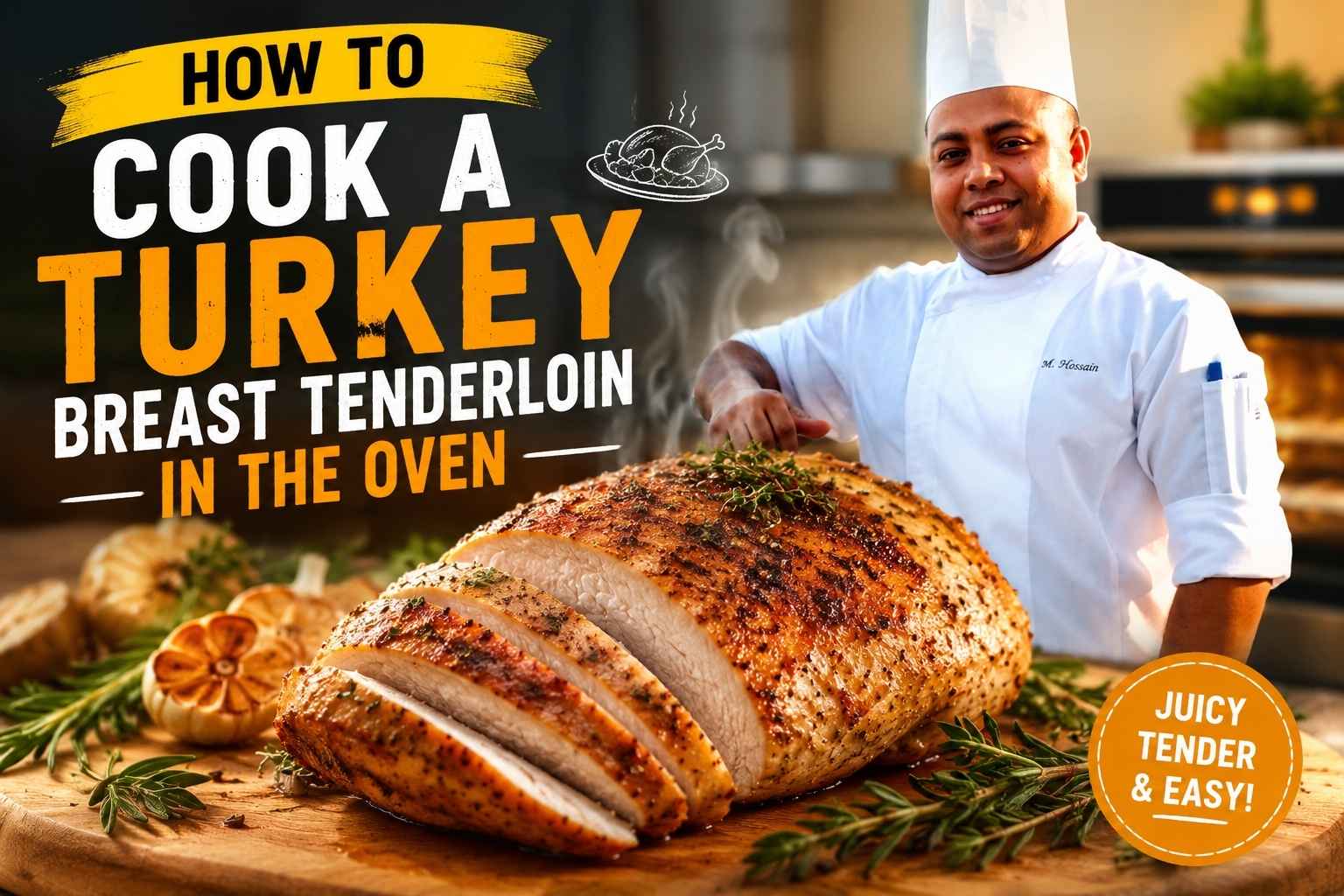
At A Glance
- A turkey breast tenderloin is a small, boneless strip cut from the breast. It cooks in 35-55 minutes, not the 3-4 hours a whole turkey needs.
- Roast at 375°F for the best mix of speed and juicy meat. Use 325°F if you want a slower, gentler cook.
- Pull the tenderloin at 160-162°F internal temp. It will climb to 165°F as it rests. Do not wait for 165°F on the dial or you will overcook it.
- Brining for 30-60 minutes is the single best fix for dry turkey breast. Salt does more work than any other step in this guide.
- Rest the meat for 10 minutes before you slice it. Skipping this step is the #1 reason home cooks end up with dry turkey.
- A meat thermometer is not optional. Guessing by color or time is how most turkey breast tenderloin goes wrong.
I once dried out a turkey breast so bad, my dog walked away. True story. It still makes me laugh today.
Want to know how to cook a turkey breast tenderloin in the oven? You are in the right spot.
I have cooked in real kitchens for years. I know where this dish goes wrong, and how to fix it.
Stick with me. I will show you easy steps for a juicy, tender turkey every time.
What a Turkey Breast Tenderloin Actually Is
A turkey breast tenderloin is a small, boneless piece of meat pulled from the underside of the turkey breast. It sits next to the main breast muscle and weighs between 1 and 3 pounds. It has no skin and no bone in most cases.
This is not the same thing as a whole turkey breast, which is much larger, often bone-in, and can weigh 4 to 7 pounds. A whole breast needs closer to 90 minutes to 2.5 hours in the oven. A tenderloin needs under an hour.
It is also not the same as chicken tenderloin, even though the cut comes from a similar spot on the bird. Turkey tenderloin is larger, denser, and needs a bit more time and a slightly lower risk tolerance for overcooking, since turkey breast meat dries out faster than chicken.
Why Turkey Breast Tenderloin Is a Smart Weeknight Choice
I reach for turkey breast tenderloin when I want turkey flavor without the full production. It cooks fast, feeds 3 to 4 people, and needs almost no cleanup. You get white meat, a light sear, and a real roasted flavor in under an hour, start to finish.
It also works well for small holiday gatherings. Not everyone needs a 15-pound bird. A 2-pound tenderloin covers a table of four with leftovers for sandwiches the next day.
The Best Oven Temperature for Turkey Breast Tenderloin
The short answer: 375°F gives you the best balance of speed, browning, and juicy meat for most home cooks. That said, both low-and-slow and high-heat methods have real merit, and I use both depending on the night.
The Case for Low and Slow (325°F)
Cooking at 325°F takes longer, usually 15-20% more time than 375°F. The payoff is a gentler rise in internal temperature, which gives you a wider window to catch the meat at the right moment. If you tend to lose track of time in the kitchen, 325°F is more forgiving.
The Case for High Heat (400-425°F)
A hotter oven browns the surface faster and can lock in more moisture up front, according to testing from America’s Test Kitchen (2023). The tradeoff is a smaller margin for error. At 425°F, the difference between perfectly cooked and dry can be as little as 5 minutes.
My rule: use 375°F on a normal weeknight. Use 400-425°F if you seared the meat first and just need to finish it in the oven. Use 325°F if you are multitasking and want a bigger safety window.
Cook Time and Temperature Chart by Size
This chart assumes a boneless turkey breast tenderloin, fully thawed, roasted uncovered in a conventional oven. Always confirm doneness with a thermometer, not the clock.
| Weight | Oven Temp | Estimated Cook Time | Pull Temp (Internal) | Rested Final Temp |
|---|---|---|---|---|
| 1 lb | 375°F | 30-35 min | 160°F | 165°F |
| 1.5 lb | 375°F | 35-40 min | 160°F | 165°F |
| 2 lb | 375°F | 40-50 min | 160°F | 165°F |
| 2.5 lb | 375°F | 45-55 min | 160-162°F | 165°F |
| 3 lb+ | 350°F | 55-65 min | 160-162°F | 165°F |
For bone-in cuts, add 10-15 minutes to any row on this chart. For convection ovens, subtract 5-8 minutes and drop the temperature by 25°F.
The USDA sets 165°F as the minimum safe internal temperature for all poultry (USDA Food Safety and Inspection Service, 2024: https://www.fsis.usda.gov/food-safety/safe-food-handling-and-preparation/food-safety-basics/safe-minimum-internal-temperature). Carryover cooking, explained below, means you pull the meat before it hits that number.
Step-by-Step: How I Cook Turkey Breast Tenderloin
Step 1: Thaw It Right
Move a frozen tenderloin to the fridge 24-48 hours before you plan to cook. A 2-pound piece usually needs about 24 hours. Never thaw turkey on the counter. Bacteria grow fast in the temperature range between 40°F and 140°F, and a counter thaw pushes the outside of the meat into that zone for hours (USDA FSIS, 2024).
Step 2: Bring It to Room Temperature
Pull the tenderloin out of the fridge 30-45 minutes before it goes in the oven. Cold meat straight from the fridge cooks unevenly. The outside overcooks while the center lags behind. This single step fixes a lot of uneven roasting.
Step 3: Season or Brine
Pat the meat dry with paper towels first. Dry surfaces brown better than wet ones. Then season generously with salt, or better, run a quick brine (details below). Salt is doing more for your final result than any spice blend you add on top.
Step 4: Sear First (Optional, but I Recommend It)
Heat 1 tablespoon of oil in an oven-safe skillet over medium-high heat. Sear the tenderloin for 90 seconds per side until it picks up color. This step builds flavor through browning and gives the outside a head start, so the oven only has to finish the job.
Step 5: Roast
Move the skillet straight to a preheated 375°F oven, or transfer the tenderloin to a roasting pan if you skipped the sear. Use a pan that is close to the size of the meat. A pan that is too large lets juices spread thin and scorch.
Step 6: Check the Temperature the Right Way
Start checking at the low end of the time range in the chart above. Pull the meat at 160-162°F. Don’t wait for the dial to hit 165°F in the oven.
Step 7: Rest
Tent the meat loosely with foil and let it sit for 10 minutes before slicing. This is not a suggestion. It is the step most home cooks skip, and it is the reason their turkey turns out dry.
How to Use a Meat Thermometer Correctly
A thermometer is the difference between a guess and a fact. Insert the probe into the thickest part of the tenderloin, straight down from the top, avoiding the very center seam where two muscles sometimes meet. Don’t let the tip touch the pan or hang out the other side.
Instant-read thermometers (ThermoWorks, 2023: https://www.thermoworks.com/blog/turkey-temp/) give a reading in 2-4 seconds and are the standard tool for a cut this small. Check the temperature in two spots, since tenderloins can be uneven in thickness.
Why 165°F Matters
165°F is the temperature at which harmful bacteria in poultry are destroyed almost instantly, per USDA guidance (USDA FSIS, 2024). Below that number, the bacteria need more time at a lower heat to be neutralized, which is not a practical approach for a home kitchen.
Carryover Cooking
Meat keeps cooking after it leaves the oven. Residual heat inside the tenderloin pushes the internal temperature up another 3-5 degrees while it rests. That is why you pull the meat at 160-162°F instead of 165°F. If you wait for 165°F on the dial, the rest period will carry it past 168-170°F, and the texture turns chalky.
Bone-In vs. Boneless: How It Changes Your Cook Time
Most turkey breast tenderloins sold in stores are boneless, but a few brands, including Butterball, sell a bone-in version seasonally. Bone slows down heat transfer to the meat around it, so a bone-in tenderloin needs 10-15 more minutes than the boneless chart above.
Bone also insulates the meat closest to it, which means that section reads slightly cooler than the rest. Always probe away from the bone when checking temperature, since a reading taken near bone can run a few degrees low and mislead you into overcooking the rest of the piece.
Fresh vs. Frozen: Thawing Safely and How It Affects Timing
Fresh turkey breast tenderloin goes straight into your seasoning and roasting steps. Frozen needs a full thaw first, and this is where most timing mistakes happen.
Refrigerator thaw is the only method I recommend for food safety and even cooking. Budget 24 hours for every 2 pounds (USDA FSIS, 2024).
Cold water thaw works if you’re in a pinch. Submerge the sealed tenderloin in cold water, changing the water every 30 minutes. A 2-pound piece thaws in about an hour this way, but it needs to go straight into the oven once thawed.
Never cook a tenderloin straight from frozen unless the package explicitly says it’s designed for that. Even then, expect the cook time to roughly double, and the outside will overcook well before the center catches up.
Convection vs. Conventional Ovens: Adjusting Time and Temp
A convection oven circulates hot air with a fan, which cooks food faster and more evenly than a standard conventional oven. If your oven has a convection or “true convection” setting, use it for turkey breast tenderloin.
Drop the temperature by 25°F from what the recipe calls for, and check the meat 5-8 minutes earlier than the chart above suggests. Convection browns the surface faster, so a tenderloin that would take 40 minutes at 375°F conventional might be done in 32-35 minutes at 350°F convection.
If you’re not sure which oven you have, conventional is the safer assumption. Cooking convection times in a conventional oven leaves you with undercooked meat.
Resting the Meat: Why You Can’t Skip This Step
When meat cooks, the muscle fibers tighten and push juice toward the center. Cut into it right away and that juice runs straight onto your cutting board instead of staying in the meat. Give it 10 minutes and the fibers relax, letting the juice redistribute evenly through the slice.
Tent the tenderloin loosely with foil while it rests. Don’t wrap it tight, or the trapped steam will soften the surface you just spent 40 minutes browning.
How to Keep It From Drying Out (The #1 Complaint)
Turkey breast is lean, which means it has very little fat to protect it from overcooking. Here’s what actually works, ranked by how much difference each one makes.
Brining
A 30-60 minute brine in a simple saltwater solution (1/4 cup kosher salt per quart of water) changes the protein structure in the meat, letting it hold onto more moisture during cooking (Serious Eats, 2022: https://www.seriouseats.com/why-you-should-brine-turkey). This is the highest-impact step in this entire guide. If you only do one thing differently, brine.
Basting
Basting with pan juices every 15-20 minutes adds a thin layer of moisture to the surface and helps with browning. It does not meaningfully change the moisture level inside the meat, but it helps flavor and color.
Tenting With Foil
If the outside is browning faster than the inside is cooking, loosely tent foil over the top. This slows surface browning without lowering the oven temperature, giving the center time to catch up.
Don’t Overcook, Full Stop
None of the above matters if you pull the meat 10 degrees too late. A thermometer and the carryover math above will do more for moisture than any brine, baste, or foil tent.
Common Mistakes and How to Fix Them
- Cooking straight from the fridge. Cold meat cooks unevenly, with an overdone outside and underdone center. Fix: rest at room temp for 30-45 minutes before roasting.
- Using a pan that’s too big. Juices spread thin across a large pan and scorch instead of basting the meat. Fix: match the pan size to the meat, with just a couple inches of clearance.
- Skipping the rest time. Cutting into the meat right out of the oven sends the juice onto your board instead of into the meat. Fix: tent with foil and wait a full 10 minutes.
- Guessing instead of using a thermometer. Color and juice clarity are not reliable doneness signals for turkey breast. Fix: use an instant-read thermometer and pull at 160-162°F.
- Not thawing fully. A partially frozen center throws off every time estimate in this guide. Fix: check that the tenderloin bends easily and has no ice crystals before it goes in the oven.
- Skipping salt entirely. Unsalted turkey breast tastes flat no matter how well it’s cooked. Fix: salt at least 30 minutes ahead, or brine if you have the time.
Flavor and Seasoning Ideas I Actually Use
Dry Rub
My go-to mix is 1 tablespoon kosher salt, 1 teaspoon smoked paprika, 1 teaspoon garlic powder, 1/2 teaspoon black pepper, and 1/2 teaspoon dried thyme per pound of turkey. Rub it on after patting the meat dry, and let it sit for at least 30 minutes before roasting.
Herb Butter
Soften 4 tablespoons of butter and mix in a tablespoon of chopped fresh sage, a teaspoon of lemon zest, and a clove of minced garlic. Rub half under any loose skin or over the top of the meat, and save the rest to melt over the sliced turkey at the table. This is my top pick for a small holiday meal, since it adds richness that lean turkey breast is missing on its own.
Marinade
For a lighter option, whisk olive oil, apple cider vinegar, Dijon mustard, garlic, and fresh rosemary. Marinate for 1-4 hours in the fridge. Don’t go longer than 4 hours. The acid in the vinegar will start to break down the texture of the meat if it sits too long.
My Go-To Method (What I Actually Do at Home)
Here’s exactly what I do on a Tuesday night when I want turkey without the hassle of a whole bird.
I pull a 2-pound boneless tenderloin from the fridge 30 minutes before I plan to cook. I pat it dry, salt it heavy, and let it sit uncovered on the counter. While it rests, I heat my cast iron skillet over medium-high with a tablespoon of olive oil, and I preheat the oven to 375°F.
I sear the tenderloin 90 seconds per side, just until it picks up real color, then I rub the top with a spoonful of the herb butter above. The whole skillet goes into the oven. I check the temperature at the 30-minute mark, then every 5 minutes after that until I hit 160°F. On a 2-pound piece, that’s usually around 42 minutes.
I learned the hard way, early in my career, that walking away from turkey breast for “just five more minutes” is how you end up serving sawdust. I had a cook on my line once pull a tray of tenderloins a full 15 minutes late during a rush, and every plate that went out that night came back with the same note: dry. I’ve probed early ever since, and I’ve never had that problem again.
Once it hits 160°F, I pull the skillet, tent it with foil, and let it rest exactly 10 minutes while I finish the sides. Slice against the grain, in pieces about half an inch thick, and serve with the extra herb butter melted on top.
Frequently Asked Questions
Can I cook turkey breast tenderloin from frozen?
You can, but only if the package specifically says the product is safe to cook from frozen. Otherwise, thaw it fully first. Cooking from frozen roughly doubles the cook time and makes it much harder to avoid overcooking the outside before the center is done.
How do I know it’s done without a thermometer?
You can’t know for certain without one. Color and juice clarity are unreliable for turkey breast, since the meat can look done on the outside while the center is still under temperature. A $15 instant-read thermometer solves this problem completely.
Can I use the same method for turkey tenderloin and chicken tenderloin?
Mostly yes, but chicken tenderloin is smaller and cooks faster, usually in 20-25 minutes at 375°F. Check chicken tenderloin earlier than you would turkey, and use the same 160-162°F pull temperature with the same rest period.
Why is my turkey breast tenderloin always dry?
The most common cause is pulling it too late, waiting for the oven to show 165°F instead of accounting for carryover cooking. The second most common cause is skipping salt or a brine. Fix both and you’ll notice the difference immediately.
What temperature should I set my oven to?
375°F works best for most home ovens and most tenderloin sizes. Use 325°F if you want more of a safety margin, or 400-425°F if you seared the meat first and just need to finish it in the oven.
How long should I rest turkey breast tenderloin?
10 minutes, tented loosely with foil. This lets the juices redistribute through the meat instead of running out onto the cutting board.
Can I brine a tenderloin the night before?
Yes, but keep it under 12 hours for a piece this small. A longer brine on a small cut can push the meat past seasoned into overly salty and slightly spongy in texture.
Do I need to flip the tenderloin while it roasts?
No. Roasting is even heat from all sides in the oven, unlike pan-searing where only one side touches direct heat at a time. Flipping isn’t necessary once the meat is in the oven.
Key Takeaways
- Turkey breast tenderloin is a small, boneless cut that cooks in under an hour, making it a solid choice for weeknights and small holiday meals.
- Roast at 375°F for most sizes, and always confirm doneness with a thermometer, not the clock.
- Pull the meat at 160-162°F and let carryover cooking finish the job during a 10-minute rest.
- Brining is the single most effective step against dry turkey breast, ahead of basting or foil tenting.
- Bone-in cuts, convection ovens, and frozen starting points all shift your timing, so adjust from the base chart rather than ignoring it.