
At A Glance
- Hot water and a soak break down baked-on grease in hours, not minutes of scrubbing.
- Light grime needs only dish soap and hot water. Heavy carbon needs ammonia or a baking soda paste.
- Always check if your racks are dishwasher-safe before you soak them in hot water or chemicals.
- A trash bag soak is the least messy method for ammonia. A bathtub soak works best for baking soda paste.
- Rust spots or bent wires mean you should stop and check the rack before any soak (Whirlpool, 2024).
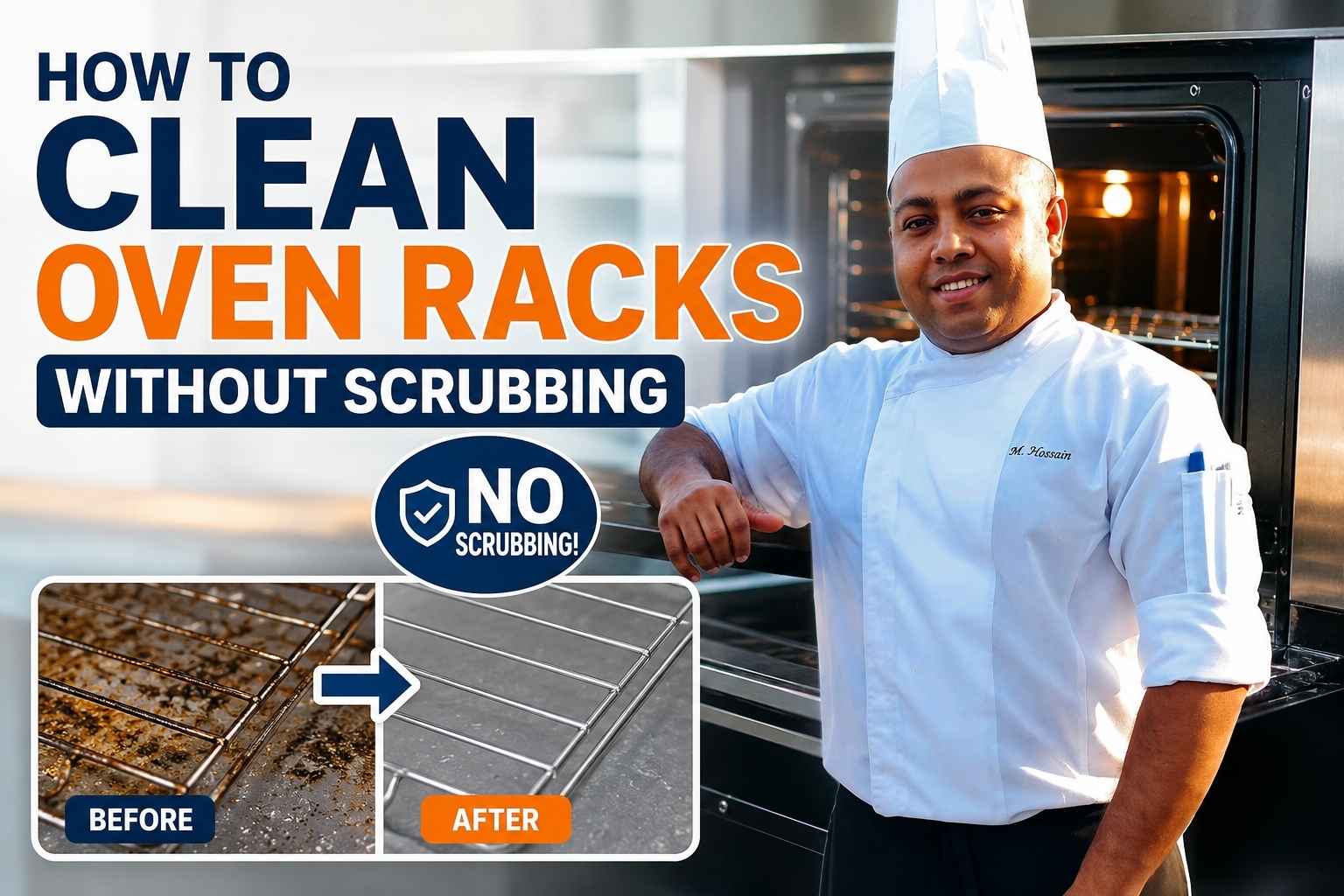
Grimy oven racks used to make me groan every single time. I’d sit on my kitchen floor with steel wool, arms tired, and barely any shine to show for it. Then I found a better way, and now I always show readers how to clean oven racks without scrubbing. As a chef who has cleaned more ovens than I can count, I trust this trick with my own kitchen. Grab your racks, and let’s get them sparkling clean in no time.
What You Need Before You Start
You don’t need fancy tools for this. Here’s what I keep on hand:
- Dish soap (any brand works fine)
- Baking soda
- White vinegar
- Old towels or a drop cloth
- Rubber gloves
- A large trash bag (for the ammonia method)
- A soft sponge or microfiber cloth (no steel wool)
That’s it. No special sprays. No power tools. Just time and patience.
Why Baked-On Grease Sticks to Oven Racks Like Glue
The short answer: heat turns oil into a hard, glue-like coating that bonds to metal. This is why a quick wipe never works on an old rack. The grease isn’t just sitting on top. It’s fused to the surface.
How Heat Turns Oil Into Hard Carbon
When oil hits high heat over and over, it goes through a process called polymerization. The oil molecules link together and form long chains. Those chains harden into a tough, plastic-like layer.
Keep heating that layer, and it goes one step further. It turns black and flaky. This is carbonization. At this point, the grease is basically burnt char. It’s no longer oil at all. It’s closer to soot stuck to steel.
This bonded layer is why scrubbing barely scratches the surface. You’re trying to chip away at something that’s now part of the metal’s surface texture (America’s Test Kitchen, 2023).
I learned this the hard way in my first restaurant job. I spent forty minutes with steel wool on one rack. I got through maybe a third of it. My hands were raw the next day. There had to be a better way. There is.
Why You Should Never Scrub First
Here’s the rule: soak before you scrub, every time. Scrubbing dry, hardened grease just wears down your sponge, your rack’s coating, and your patience. Water and time do the real work.
When a rack sits in hot water with soap, baking soda, or ammonia fumes, the soak softens that hard polymer layer. Grease that was rock-solid turns soft and gummy. At that point, it wipes off with almost no pressure.
Think of it like a burnt pot. If you scrub a burnt pot right away, you’re fighting the burn. If you fill it with hot water and let it sit, the burnt bits float free on their own. Same idea, bigger surface.
The “soak first” rule saves your back, your sponge, and your rack’s finish. Skip it, and you’ll be scrubbing for an hour. Follow it, and most grime wipes away in seconds.
Dishwasher-Safe vs. Non-Dishwasher-Safe Racks: How to Tell
Check your oven’s manual first. If you don’t have it, look for a small sticker or stamp on the rack itself, often near the back edge. It may say “dishwasher safe” directly.
If you can’t find a label, look at the finish. Chrome-plated racks are usually dishwasher-safe. Non-stick or coated racks (often dark gray or black) are usually not, since harsh detergent and high heat can break down the coating over time (Good Housekeeping, 2024).
When in doubt, treat the rack as non-dishwasher-safe. A hand soak takes longer, but it won’t strip a coating you can’t get back. I’ve seen home cooks ruin a six-month-old non-stick rack in one dishwasher cycle. It’s not worth the risk.
The No-Scrub Soak Methods, Sorted by Mess Level
Pick your method based on how bad the buildup is. Light grime needs less time and gentler tools. Heavy, years-old carbon needs stronger methods and more patience.
Light Grime: Dish Soap and Hot Water Soak
This is your go-to for racks with light grease, fresh spills, or a quick monthly clean. Fill your tub or a large container with hot water and a generous squirt of dish soap.
Submerge the racks fully. Let them sit for two to four hours, or overnight if you can. The hot, soapy water loosens fresh grease without any extra chemicals.
After soaking, wipe with a sponge. Grime that looked stuck on will slide right off. Rinse well and dry before putting the racks back in the oven.
Moderate Buildup: Baking Soda and Vinegar Paste
For racks with a season or two of buildup, baking soda paste is your best friend. Mix baking soda with a small amount of water until it forms a thick paste, about the texture of toothpaste.
Spread the paste over both sides of the rack. Cover every greasy spot. Let it sit for at least one hour, though overnight works even better.
Next, spray the paste with white vinegar. It will fizz. That fizzing reaction helps lift grease away from the metal (The Spruce, 2024). Let it sit another 15 minutes, then wipe with a damp cloth. Rinse and dry.
This method is gentle enough for most coated racks, but always do a small test spot first if you’re unsure about the finish.
Heavy, Years-Old Carbon: The Ammonia Bag Method
This is the method for racks that look like they’ve been through a fire. Years of carbon buildup need something stronger than soap or baking soda. Ammonia fumes do the trick without any scrubbing at all.
Place the rack inside a large plastic trash bag. Add about half a cup of household ammonia in a small open container, like a bowl, set on top of the rack. Seal the bag tightly so the fumes stay trapped.
Leave it outside or in a well-ventilated garage overnight, for 8 to 12 hours. Do not breathe the fumes directly, and never mix ammonia with bleach.
The next morning, open the bag outside, away from your face. The fumes will have loosened the carbon so much that it often wipes off with a wet rag, no scrubbing needed (Bar Keepers Friend, 2023).
Method Comparison Table
| Method | Time Required | Effort Level | Best For |
|---|---|---|---|
| Dish soap and hot water soak | 2-4 hours | Low | Light grime, fresh spills, regular upkeep |
| Dryer sheet soak | 4-8 hours | Low | Light to moderate grease, sensitive coatings |
| Baking soda + vinegar paste | 1-12 hours | Low to medium | Moderate buildup, most coated racks |
| Ammonia bag method | 8-12 hours | Low (but needs ventilation) | Heavy, years-old carbon on metal racks |
| Full-size dishwasher (e.g., ASKO or commercial models) | One cycle, 1-2 hours | Very low | Dishwasher-safe chrome racks that fit |
Where to Soak: Bathtub vs. Trash Bag vs. Outdoor
Your soak location depends on the method and the mess you’re willing to clean up afterward. Each option has clear trade-offs.
Bathtub soak works best for the baking soda and vinegar method, or a simple hot water soak. Lay an old towel down first to protect the tub’s finish from scratches. The downside: you’ll need to rinse the tub well afterward, and grease can leave a ring if you don’t act fast.
Trash bag soak is the right call for the ammonia method, since it traps fumes and keeps the mess contained. It’s also great for hot water soaks if your tub is too small. The downside: bags can leak, so double-bag if you’re worried, and place it on concrete, not carpet.
Outdoor soak is ideal for ammonia, since you need ventilation anyway. A patio table or driveway works well. The downside: weather. Don’t plan an outdoor soak if rain is coming, and bring racks in before dark to avoid pests.
My personal pick is the trash bag, set on the back patio. It contains the mess, keeps fumes outside, and I can hose down the concrete after. No tub rings, no indoor smell.
How to Use Dryer Sheets Safely
Dryer sheets work because they’re coated with fabric softener, which is a mild surfactant. That coating helps break down grease the same way dish soap does, just more slowly (Good Housekeeping, 2023).
Here’s how to use them: fill your tub or a large bin with hot water. Add 3 to 4 dryer sheets and submerge your racks completely. Let them soak for 4 to 8 hours.
The fabric softener slowly loosens grease from the metal. After soaking, wipe with a cloth. Most grime should come off easily.
This method is gentle. It’s a good first try on chrome racks, non-stick racks, and anything you’re nervous about putting chemicals on. It won’t fully clean a heavily carbonized rack, but for light to moderate grime, it’s nearly effortless.
One small warning: dryer sheets can leave a faint fragrance behind. Rinse the rack well with plain water before it goes back in your oven, especially if you’re sensitive to smells while cooking.
Check for Rust and Damage Before You Soak Anything
Before any soak, take two minutes to inspect your racks. This step matters more than people think, and skipping it can make small problems much worse.
Look for orange or brown rust spots, especially where the rack’s coating has chipped or worn thin. Run your fingers along the wires (carefully) to feel for rough or flaky patches.
Check for bent wires or loose welds where the rack’s frame meets the cross bars. A soak won’t fix structural damage, and a long soak in water can actually speed up rust on already-compromised metal.
If you find small rust spots, dry the rack completely after cleaning and consider a light coat of cooking oil on bare metal spots to slow future rust (Whirlpool, 2024). If the rack is heavily rusted or bent, it’s safer and cheaper to replace it than to keep cleaning around the damage.
When You Can Skip a Deep Clean (and When It’s a Fire Risk)
You can skip a deep clean if buildup is thin, dry, and not actively smoking when the oven heats up. A light haze or a few spots of old grease won’t hurt your food or your oven’s performance.
But there’s a clear line where light buildup becomes a real fire risk. If you notice smoke coming from the oven during preheat, or grease that’s dripping and pooling at the bottom of the oven, stop and clean immediately.
Thick, flaky carbon buildup can also catch fire if it gets hot enough, especially during high-heat cooking like broiling or self-cleaning cycles (Whirlpool, 2024). If your oven smells like burning plastic or chemicals when you turn it on, that’s another sign buildup has gone too far.
My rule of thumb: if you can see a layer of grease, not just discoloration, it’s time to clean. Discoloration is cosmetic. A visible layer is fuel.
Common Rack-Cleaning Mistakes I See All the Time
These mistakes turn a simple job into a frustrating one, or damage racks that could’ve lasted years longer.
Mistake 1: Using abrasive scrubbers on coated racks. Steel wool, scouring pads, and harsh powders scratch through non-stick and enamel coatings. Once that coating is gone, grease sticks even faster than before, and it won’t come back. Fix: stick to soft sponges and soaks, and save abrasive pads for plain chrome racks only.
Mistake 2: Skipping the soak and going straight to scrubbing. This wastes time and energy on grease that would’ve wiped off easily after a few hours in water. Fix: always soak first, even if you’re in a hurry. Start the soak, then go do something else.
Mistake 3: Mixing ammonia and bleach. This creates toxic fumes and is genuinely dangerous. Fix: use ammonia alone, in a sealed bag, outdoors or in a ventilated space, and never combine cleaning chemicals without checking first.
Mistake 4: Putting wet racks straight back in a hot oven. Trapped moisture can cause spotting, rust, or even a small steam burst when the oven heats up. Fix: dry racks completely with a towel, then let them air-dry for 30 minutes before reinstalling.
Mistake 5: Soaking non-dishwasher-safe racks in hot water for days. Extended soaks can lift coatings that weren’t designed for prolonged moisture exposure. Fix: cap hand soaks at 12 hours max, and check the rack’s finish for any bubbling or peeling afterward.
My Own Rack-Cleaning Routine
After 15 years in kitchens, here’s what I actually do at home. I keep it simple, because I don’t want to spend my Saturday on this.
Every two months, I pull both racks out and check them for buildup. If it’s light, I do a quick dish soap soak in the tub for two hours while I run other errands. Wipe, rinse, done in under ten minutes of actual work.
Every six months, or after a big holiday cooking stretch, I go straight to the baking soda and vinegar paste. I spread it on at night before bed, spray with vinegar in the morning, and wipe it off before my coffee’s done brewing.
Once a year, usually in spring, I do the ammonia bag method on my chrome racks. I set them up on the back patio before bed and deal with them the next morning. It’s the closest thing to “set it and forget it” for heavy carbon.
The one thing I never do anymore is scrub dry grease with steel wool. I learned that lesson early, and my hands have thanked me ever since.
Frequently Asked Questions
How long should I soak oven racks?
For light grime, 2 to 4 hours is usually enough. For moderate buildup with baking soda paste, soak for at least 1 hour, though overnight works better. For heavy carbon with the ammonia bag method, plan for 8 to 12 hours.
Can I use the dishwasher to clean oven racks?
Yes, if your racks are labeled dishwasher-safe and they physically fit. Large or commercial-style dishwashers, like some ASKO models, can fit full-size racks that won’t fit in a standard home dishwasher. Always check the label first.
Will baking soda damage my oven racks?
No, baking soda is gentle and safe for most finishes, including coated and non-stick racks. It’s mild enough to use regularly without wearing down the surface, unlike abrasive scouring powders.
Is the ammonia method safe to do indoors?
It’s not recommended. Ammonia fumes are strong and can irritate your eyes, throat, and lungs in an enclosed space. Always do this method outdoors or in a garage with the door open, and seal the bag tightly.
How do I know if my racks have rust damage?
Look for orange or brown spots, especially where the coating has chipped. Run your fingers gently along the wires to feel for rough or flaky areas. If you find rust, dry the rack fully after cleaning and add a light coat of oil to bare spots.
What’s the fastest no-scrub method for light grease?
A dish soap and hot water soak is the fastest option for light grease, usually working in 2 to 4 hours. Dryer sheets are nearly as fast and add almost no effort, but take a bit longer to fully soften grime.
Can I clean racks while they’re still in the oven?
You can do a quick wipe-down with a damp cloth for light dust, but soaking methods require removing the racks. Soaking in place isn’t practical and can damage your oven’s interior with pooled water or chemicals.
How often should I deep clean my oven racks?
For most home cooks, every 3 to 6 months is plenty. If you bake or roast often, or notice smoke during preheat, clean sooner. A light monthly wipe-down between deep cleans keeps buildup from getting out of hand.
Key Takeaways
- Baked-on grease is hardened carbon, not just oil, so scrubbing rarely works well on its own.
- Always soak before you scrub. Hot water, baking soda paste, or ammonia fumes do the heavy lifting.
- Match your method to the mess: soap for light grime, baking soda paste for moderate buildup, ammonia bags for heavy carbon.
- Check for dishwasher-safe labels and rust spots before soaking any rack.
- A trash bag soak outdoors is the cleanest, lowest-effort option for the ammonia method.

I’m Mossaraof, a trained chef and the founder of OvenInsights.com. I spent years cooking at Larrupin’ Cafe and in kitchens across Chicago and Seattle. Now I test kitchen gear for a living. I moved to North Acton, London, and I test every tool I write about. I use real meals and real heat. No brand deals. No shortcuts. I cover 12 kitchen types and hundreds of recipes. I believe this: the right tools matter as much as the recipe.