Hey, I’m Mossaraof — a professional cook and food blogger.
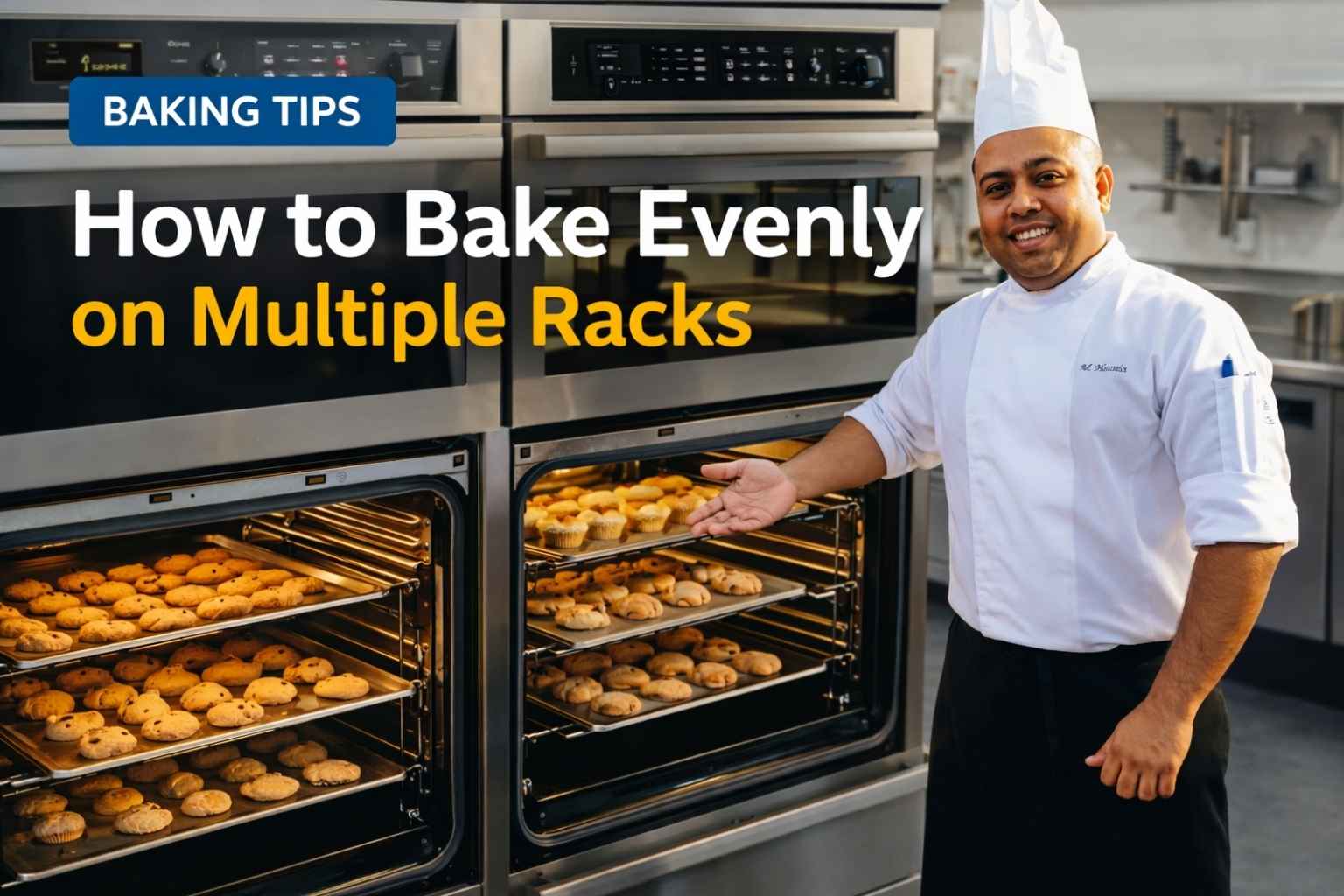
We all want those perfectly golden trays where every cookie or sheet-pan meal comes out with a consistent, shattered-glass crunch regardless of which level they sat on. I will show you how to bake evenly on multiple racks so you can maximize your kitchen’s output without ending up with some pieces burnt and others pale and doughy.
My years in a busy Chicago kitchen taught me that rotating your pans halfway through and leaving enough space for air to “breathe” between trays are the true secrets to a uniform, restaurant-quality tan. Use my Ultimate Guide to Master Your Oven to find the ideal rack spacing and learn when to engage your convection fan for a flawless, multi-level finish. Let’s grab your extra baking sheets and start this efficient, high-volume bake together right now!
What Causes Uneven Baking in U.S. Ovens
Most of us blame the recipe. But often, it’s the oven playing tricks. Here’s why your bakes might not come out evenly—especially across multiple racks.
🔥 Heat Zones and Hot Spots Explained
Ovens don’t heat evenly. I didn’t want to believe it either.
Some areas run hotter. That’s just how they’re built. I once did a toast test in my cousin’s rental in New York—laid slices edge to edge on one rack. The back-left corner burned black. Front-right? Barely golden.
Here’s what causes hot zones:
- Bottom heating coils (especially in electric ovens)
- Poor airflow
- Dirty oven walls
- Bent or warped racks
- Inconsistent insulation
Even new ovens aren’t immune. I had a Whirlpool that ran cool on one side, hot on the other.
🌬️ Convection vs Traditional Bake
If your oven has a fan setting (convection), use it. It’s not just a fancy feature—it actually moves the air around.
I once made two trays of croissants in a gas oven without convection. Top ones were raw in the center. Bottom tray was golden, but flat. Next week, I used convection mode. Both trays puffed evenly—crispy layers, flaky tops.
Convection helps by:
- Circulating hot air
- Reducing hot spots
- Shortening bake time
But you’ve got to lower the temp—usually by 25°F.
🧱 Oven Design and Insulation Quality
Not all ovens are built the same. Older U.S. models—especially in rentals or older homes—often leak heat or struggle to stay consistent.
Better brands like GE, KitchenAid, or Bosch tend to have tighter seals. But even then, it’s worth testing. My Chicago apartment came with a GE oven. It still ran 20°F hotter on the bottom rack than the top.
Should You Bake on Multiple Racks? Pros and Pitfalls
Multi-rack baking sounds efficient. But not every dish loves the spotlight.
Some recipes handle it well. Others? Not so much.
✅ When It Works
I’ve had the most success with:
- Cookies (if spaced right)
- Roasted veggies
- Sheet pan dinners
- Bread rolls
- Granola or baked oats
These don’t mind a little unevenness. They’re sturdy, quick-cooking, and easy to rotate.
⚠️ When to Avoid It
Skip multiple racks for:
- Delicate soufflés
- Cheesecakes
- Layered cakes
- Tall muffins or cupcakes
I once baked cupcakes on two racks in Arizona. Top tray looked fine. Bottom tray? Sunken centers. I rotated halfway, but it was too late.
Now I stick to one rack for anything that needs precise rise or air flow.
Start Here: Setting Up Your Oven for Even Heat
Before you even turn the oven on, setup matters. Here’s how I prep mine when baking on more than one rack.
📏 Rack Placement Basics
I use the upper-middle and lower-middle slots.
Avoid putting trays too close to the top or bottom heating elements. That’s where scorching happens.
Give at least one rack’s space between trays. Heat needs room to move.
🪵 Add a Baking Stone or Steel
This changed everything for me.
I keep a Lodge baking stone on the bottom rack—always. It holds heat and helps balance temperature spikes, especially in older ovens.
If you don’t have one, even a thick cast iron griddle (not upside down!) can help stabilize things.
🌡️ Use Multiple Oven Thermometers
Never trust the dial alone.
I use two cheap Taylor thermometers—one near the top, one near the bottom.
One time, I set the oven to 375°F. Top read 360°F. Bottom said 410°F. That’s why my cookies were burning.
Baking Strategy: How to Rotate, Swap, and Space Pans
Once you’re baking, the real work begins. I learned early on that how you rotate and space trays matters just as much as the recipe.
🔁 Rotate Halfway Through
Simple rule: always rotate.
- Swap the top and bottom trays
- Turn each pan front to back
- Don’t open the door too often—just once midway
In my Minnesota test kitchen, rotating made the difference between burnt zucchini and perfect crisp.
📐 Pan Spacing Tips
Leave 2 inches between trays and between pans. No overlapping edges.
If they touch, heat can’t flow—and food bakes unevenly.
Avoid jamming trays close to oven walls. I once did this with sheet pan salmon. One side was juicy, the other—dry as toast.
💨 Leave Room for Airflow
Don’t overload the oven.
One Sunday, I made four trays of cookies for a bake sale. Thought I was being efficient. They baked uneven, stuck together, and took twice as long.
Two trays per batch is my new rule. If I’m in a rush, I do smaller rounds—fewer fails.
Recipe Adjustments for Multi-Rack Baking
Even the best technique won’t save a recipe that isn’t adjusted. Here’s what I tweak when baking across racks.
⏱️ Lower the Temp Slightly
I usually drop the oven temp by 15–25°F, especially if using convection.
It slows things down, which is good—gives the oven time to even out.
⏰ Watch the Time
Baking on multiple racks often adds 5–10 minutes. But it depends on:
- Your oven
- What you’re baking
- Rack position
I start checking halfway. Rotate, then keep an eye every 5 minutes.
🧂 Rebalance Ingredients If Needed
High-sugar batters caramelize faster. They’ll brown quicker on bottom trays.
Same for cheese-heavy bakes like ziti or lasagna.
For those, I’ll sometimes:
- Use light-colored pans
- Bake with parchment
- Shield with foil halfway through
Best Bakeware for Even Cooking
After years of trial and error, I’ve got favorites. Some pans just bake better—especially when using multiple racks.
🪞 Go Light, Not Dark
Dark pans absorb heat and over-brown the bottoms. I learned this the hard way with cornbread in a black steel tray.
Now I use Nordic Ware aluminum for almost everything. They reflect heat better. Less burning, more even color.
🔲 Rimmed Sheets That Don’t Warp
Cheap pans twist in the heat. That warping throws off everything—liquid shifts, cookies slide.
Brands that haven’t failed me:
- USA Pan
- Wilton Naturals
- OXO (nonstick surface is smooth)
🧻 Use Silicone Mats or Parchment
These aren’t just for sticking. They also:
- Slow bottom browning
- Help airflow under cookies
- Make cleanup easier
Tools I Actually Use in My Multi-Rack Setup
This is what I use every week. Nothing fancy—just dependable.
🔥 Double Thermometers
One for top, one for bottom. Check both during preheat and midway.
🪨 Baking Stone or Steel
Balances the temperature. I leave it in year-round.
🧼 Silicone Mats and Cooling Racks
Mats go on pans. Cooling racks can be used in-roasting to elevate food (good for crisping).
🧊 Timer + Sticky Notes
I label which tray started where, and how long it’s been in. Helps when rotating.
Real-Life Bake Tests From My U.S. Kitchens
I’ve tested multi-rack baking in different homes, climates, and ovens. Some results were fantastic. Others… not so much.
🍪 Cookie Tray Showdown (Florida Kitchen, August)
Hot, sticky air. I was baking three trays of chocolate chip cookies at once.
- Top rack: barely browned
- Middle: perfect
- Bottom: burned edges
Lesson? That bottom tray was too close to the heat. Now I space trays apart and use lighter pans. I also rotate halfway. That single step improved everything.
🥖 Bread Rolls in a New Jersey Winter
Cold outside, dry inside. I baked two trays of sourdough dinner rolls in a GE electric oven.
Used convection mode. Dropped temp by 25°F.
- Rotated trays halfway
- Both came out golden
- Crust crisped, centers soft
That’s the moment I started trusting convection with bread.
🍠 Sheet Pan Veggies (Arizona, Dry Air)
I filled the oven with four trays. Too much. Sweet potatoes on top crisped fine. Broccoli on bottom—mushy.
So I tried again next week with just two pans, spaced apart. Used a baking stone on the bottom. Huge difference.
Moral? Don’t crowd. Let heat do its job.
Mistakes I’ve Made So You Don’t Have To
Some lessons I learned the hard way. Here’s what not to do when baking on multiple racks.
🧊 Cold Pans in a Hot Oven
Once, I prepped cookie trays ahead and left them in the fridge. Took them straight to the oven. Bad idea.
Cold metal threw off the oven temp. First batch baked uneven. Center cookies were raw.
Now I let trays sit at room temp for 10–15 minutes before baking. It helps everything heat up evenly.
🧺 Greasy or Dirty Oven Walls
Oven walls reflect heat. Grease messes that up.
Back in Chicago, I skipped cleaning for a while. My biscuits started browning unevenly. Turns out, the baked-on grease was absorbing heat unevenly.
Quick fix: a damp rag and a baking soda paste. Took ten minutes. Worth it.
🪞 Using Different Pans Together
One Thanksgiving, I baked dinner rolls in a shiny tray and brownies in a dark one. Same rack, same time.
- Rolls: pale and soft
- Brownies: dark and crisp on the edges
Lesson? Use matching pans when baking together. Same material, same size if possible. Keeps things predictable.
My Weekly Multi-Rack Bake Routine (Chef’s Notes)
Every Sunday, I meal prep. I use my oven for 2–3 hours straight—multi-rack baking is a lifesaver if you do it right.
🥯 Breakfast Bakes
- Top rack: homemade granola
- Bottom: English muffins (on a cast iron tray)
I rotate after 10 minutes. Both come out toasted and golden.
🥗 Roasted Veggies for Lunch
- Sweet potatoes + bell peppers on one tray
- Chickpeas + broccoli on the other
375°F convection, 25-minute bake, rotated once.
I use parchment for easier cleanup and less scorching.
🍪 Double Batch Cookies
I make cookies in bulk—freeze half for later.
Two matching trays, spaced apart. Rotate halfway.
My go-to tip: add a third thermometer in the center during bake. I once caught a temp swing of 30°F mid-bake.
Bonus: Using Convection Mode the Right Way
If your oven has convection, you’ve got an edge. But use it smartly.
🌬️ Lower Temp by 25°F
Every convection recipe I test, I reduce heat by 25°F. If not, tops brown too fast while centers lag behind.
💨 Don’t Crowd the Fan
The fan needs airflow. Don’t block it with foil, flapping parchment, or oversized pans.
One time I stuck a foil-lined pan too close to the fan. It fluttered and blocked circulation. Half my cookies were raw.
🧪 My Convection Test: Banana Bread
Same batter, same pan. One loaf in convection mode, one in standard.
- Convection: done in 42 minutes
- Regular: 55 minutes
Both rose, but the convection one had a better crack and even crumb.
Now I use convection for bread, veggies, cookies—anything where airflow helps.
When Nothing Works: It Might Be the Oven
Sometimes, no matter how careful you are, the oven fights back.
🔍 Test for Hot Spots
I do two tests:
- The Toast Test
Lay white bread slices on a rack. Bake at 350°F for 5–7 minutes. See which slices toast first. - The Sugar Melt Test
Add 1 tsp sugar to each cup in a muffin tray. Bake at 375°F. Uneven melting = uneven heat.
I’ve done these in rentals, test kitchens, and friends’ houses. Always tells the truth.
🔧 Calibrate or Service the Oven
If your oven runs hot or cold, check the manual. Most let you calibrate the internal thermostat.
My Whirlpool electric oven was 20°F off. I adjusted it +15°F in the settings. Huge difference.
🧑🔧 When to Call the Pros
If you notice:
- Burning plastic smell
- Sparks near the coil
- Uneven preheat times
- Door that won’t seal
Stop using it. I once ignored a smell—turned out the lower element had cracked. Replaced it for $40.
Don’t wait until something fails mid-bake.
FAQs
How to bake evenly on multiple racks in a home oven?
Use the middle and lower racks, space trays apart, and rotate them halfway. This lets hot air move and helps both trays brown at the same pace.
Should I use convection mode for baking on multiple racks?
Yes, convection helps move heat between racks. Lower the temp by 25°F and still rotate trays if one side browns faster than the other.
Why do my top rack cookies bake faster than the bottom?
Heat rises, so the top rack gets hotter first. Swap rack spots halfway and turn trays front to back to fix uneven baking.
What pans work best when baking on more than one rack?
Light metal pans bake more even than dark ones. Heavy pans also help hold heat, which keeps the bottoms from overbrowning too fast.
When should I avoid baking on multiple racks?
Skip it for cakes, soufflés, and soft breads. These need steady heat and can sink or bake uneven when air moves too much.

I’m Mossaraof, a trained chef and the founder of OvenInsights.com. I spent years cooking at Larrupin’ Cafe and in kitchens across Chicago and Seattle. Now I test kitchen gear for a living. I moved to North Acton, London, and I test every tool I write about. I use real meals and real heat. No brand deals. No shortcuts. I cover 12 kitchen types and hundreds of recipes. I believe this: the right tools matter as much as the recipe.