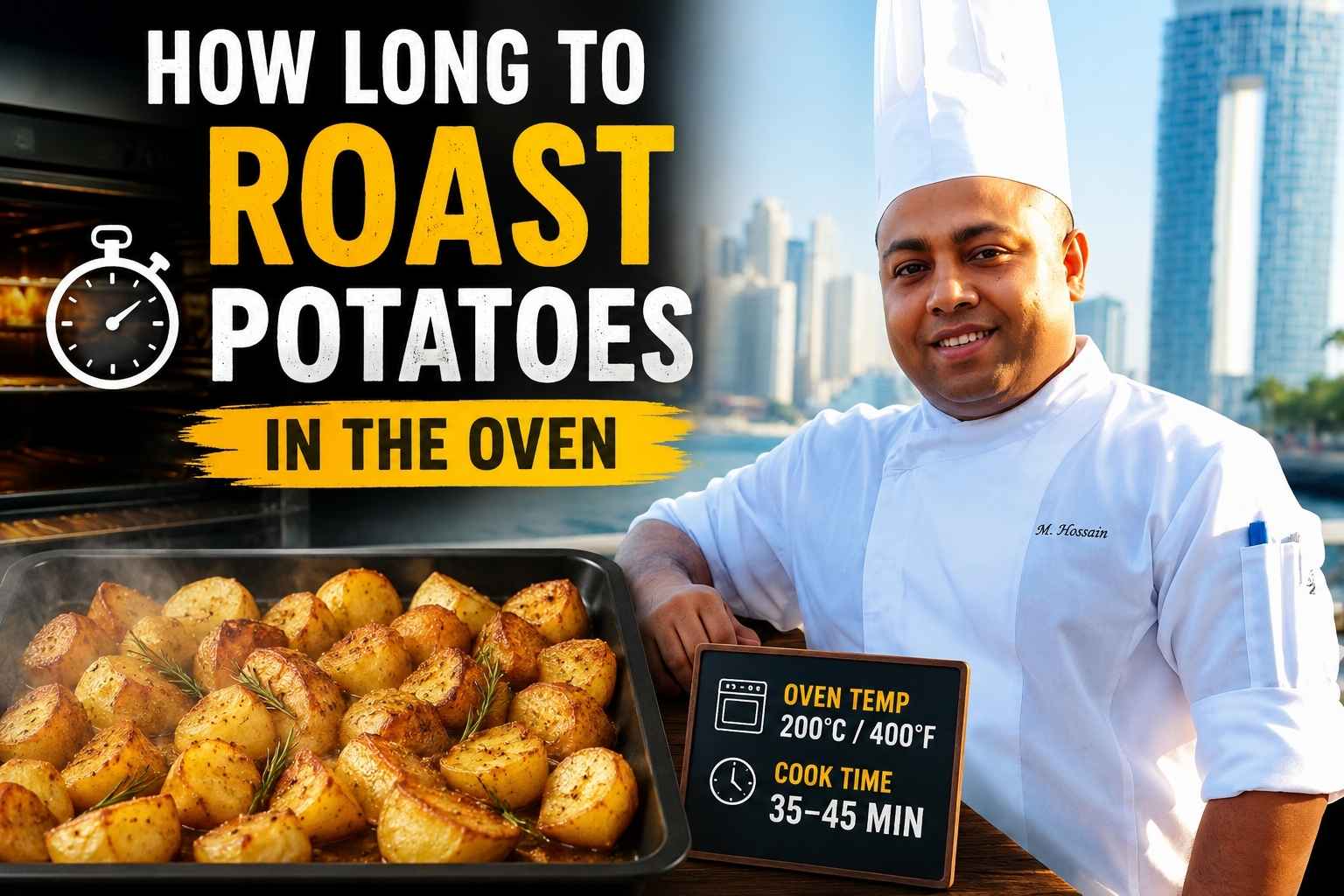
I burned a whole tray of potatoes once. They looked golden on top but were rock hard inside. That’s when I learned how long to roast potatoes in the oven actually matters more than I thought.
It’s not just about tossing them in and hoping for the best. Time, heat, and cut size all play a part.
After lots of trial and error (and a few sad dinners), I finally found the simple rules that work every time. Stick with me, and I’ll walk you through the exact times and tips so your potatoes turn out crispy and golden, not sad and soggy.
At A Glance
- Most cut potatoes roast at 400°F–425°F in 25–45 minutes, depending on cut size and potato type.
- Cubed potatoes (1-inch) take 25–30 minutes at 425°F. Halved baby potatoes take 20–25 minutes. Whole large russets need 60–75 minutes at 400°F.
- The single biggest mistake home cooks make is overcrowding the pan — it steams the potatoes instead of roasting them.
- Parboiling before roasting adds 10 minutes of prep but produces crispier edges, especially with russets (America’s Test Kitchen, 2023).
- A convection oven cuts roasting time by about 20% and improves browning without extra oil.
Why Roasting Time Is Not One-Size-Fits-All
Roasting time depends on three things: potato type, cut size, and oven temperature. Change any one of them and your timing shifts.
I spent the first three years of my career in professional kitchens getting this wrong. I’d pull potatoes based on a timer someone taped inside a cabinet door. Half the time they were underdone in the center, or the edges were burnt while the middle was dense and waxy. The fix wasn’t a better timer — it was understanding what actually drives doneness.
Potato type matters because starch content controls texture. High-starch potatoes (russets, Idaho) break down at the edges as they cook, which creates that crisp, shaggy crust everyone wants. Low-starch, waxy potatoes (red, fingerling, new potatoes) hold their shape better but don’t get as crispy. Yukon Golds sit in the middle — enough starch for good browning, enough wax to stay creamy inside (Idaho Potato Commission, 2024).
Cut size controls how fast heat reaches the center. A 1-inch cube of potato reaches full doneness at 425°F in about 25 minutes. A halved large russet at the same temperature can take 45–50 minutes. The math is simple: more mass means more time.
Oven temperature sets the balance between surface browning and interior cooking. Too low (350°F), and the outside turns soft before the inside is done. Too high (475°F+), and the outside burns before the center cooks through. The sweet spot for most cuts is 400°F–425°F.
Roasting Time Reference Table by Cut and Temperature
Use this table as your starting point. Check for doneness at the low end of each range — ovens vary by up to 25°F from the dial setting (Taylor Precision Products, 2022).
| Cut | Potato Type | 375°F | 400°F | 425°F | 450°F | Notes |
|---|---|---|---|---|---|---|
| Whole (small, 6 oz) | Russet, Yukon | 60 min | 50 min | 40 min | 35 min | Prick skin before roasting |
| Whole (large, 12 oz) | Russet | 80 min | 70 min | 60 min | 50 min | Best at 400°F for even cook |
| Halved | Yukon Gold | 40 min | 35 min | 28 min | 22 min | Cut side down, no flipping |
| Quartered | Russet, Yukon | 45 min | 38 min | 30 min | 25 min | Flip once at halfway |
| 1-inch cubed | Any | 35 min | 30 min | 25 min | 20 min | Best for sheet-pan meals |
| Wedges | Russet | 45 min | 40 min | 32 min | 26 min | Skin side down |
| Baby/new potatoes (whole) | Red, fingerling | 35 min | 28 min | 22 min | 18 min | Halve if over 1.5 inches |
| Baby potatoes (halved) | Red, fingerling | 25 min | 22 min | 18 min | 15 min | Cut side down |
Times assume a single layer, pre-dried potatoes, coated in 2 tbsp oil per pound, on a rimmed sheet pan.
The Role of Oven Temperature: Why Higher Usually Wins
The best temperature for crispy-outside, fluffy-inside potatoes is 425°F for most cuts. At that temperature, the surface of the potato dries out and browns through the Maillard reaction before the interior turns mushy.
At 375°F, you get a softer, more even cook — good for whole potatoes or if you’re roasting alongside a protein that needs lower heat. At 450°F, you get faster browning but a narrower window before things burn, especially with smaller cuts.
My default for weeknight roasted potatoes is 425°F with convection on. I’ll explain why convection matters in the next section. For a Sunday dinner where I want a dramatic, deep-gold crust, I’ll push to 450°F and watch them more carefully.
One rule I follow without exception: always preheat the pan. Slide your oiled sheet pan into the oven while it preheats. When you add the potatoes, they hit immediate searing heat from below. That contact crispiness is the difference between a good roast and a great one. Serious Eats tested this method and found it improved bottom crust formation by producing faster moisture evaporation on contact (Serious Eats, 2022).
Convection vs. Conventional Ovens: Time and Texture Differences
A convection oven circulates hot air around the pan with a fan. That moving air does two things: it speeds up cooking by about 20%, and it pulls moisture away from the surface of the potato faster, which means better browning.
In practical terms: if a recipe says 30 minutes at 425°F in a conventional oven, set your convection oven to 425°F and start checking at 22–24 minutes.
Some ovens have a “convection roast” setting, which runs the fan at higher speed than “convection bake.” For potatoes, use convection roast if you have it.
If your oven only has a conventional setting, you can get close to convection results by:
- Using a dark sheet pan instead of a light aluminum one (dark pans absorb more radiant heat).
- Preheating the pan as described above.
- Not covering the potatoes at any point during roasting.
Potato Types and How They Change Your Approach
Russet Potatoes: Best for Crispy Edges
Russets are high in starch and low in moisture. When you roast them, the starch at the cut edges gelatinizes and then dries out to a crust. That is what gives you those rough, craggy bits that hold seasoning and oil.
For maximum crispiness, parboil quartered russets in salted water for 8 minutes before roasting. Drain them, let them steam-dry for 2 minutes, then shake the pot with the lid on to rough up the edges. Those rough edges turn into extra-crispy points in the oven (America’s Test Kitchen, 2023).
Russets at 425°F: quartered, 30–35 minutes. Cubed (1-inch), 25–28 minutes.
Yukon Gold Potatoes: Best All-Purpose Roaster
Yukon Golds have a naturally buttery flavor and a medium starch content. They crisp well, but not as aggressively as russets. Their flesh stays creamy even when fully roasted, which makes them the right call for roasted potatoes that serve as a side dish — you want tenderness and some crispiness, not pure crunch.
Halved Yukons roasted cut-side down at 425°F take 28–32 minutes and come out with a golden, slightly caramelized flat face and a soft interior.
Red Potatoes: Hold Their Shape, Less Crunch
Red potatoes are waxy and low in starch. They don’t break apart during cooking, so they work well in recipes where you need the potato to stay intact — sheet-pan dinners, roasted potato salads, or dishes with braising liquid.
Don’t expect the same crust from a red potato that you get from a russet. The surface stays smoother. To compensate, roast at 425°F–450°F and give them more oil.
Baby Potatoes: Fastest, Least Fuss
Baby potatoes (under 1.5 inches) roast whole or halved and are done in 18–25 minutes at 425°F. They need almost no prep — just scrub, toss with oil, and go. Because of their small size, the heat reaches the center fast. Halving them cut-side down gives you one flat, browned face, which is often enough.
Oil, Fat, and Seasoning: How They Affect Roast Time and Texture
The fat you use changes both flavor and how quickly the surface browns.
Olive oil is my everyday choice. It has a smoke point around 375°F–405°F depending on quality (not ideal at 450°F but fine at 400°F–425°F). It adds flavor and produces good browning.
Duck fat is the professional kitchen standard for roast potatoes. Its smoke point is around 375°F, but in practice it works well up to 400°F–425°F because the potato surface insulates it. Duck fat produces an exceptionally crispy, even crust with a faint savory depth. If you have it, use it for a special occasion roast (Serious Eats, 2021).
Butter browns faster than oil due to its milk solids, which can lead to burning at temperatures above 400°F. If you want butter flavor, use it for the last 10 minutes only, or use clarified butter (ghee), which has a higher smoke point.
Coat evenly and don’t under-oil. I use 2 tablespoons of oil per pound of potatoes as my baseline. Under-oiled potatoes steam in their own moisture. Over-oiled ones can get greasy, but that is a harder mistake to make.
Salt before roasting, not after. Salt draws moisture out of the surface during the first 10 minutes in the oven, which actually helps the crust dry and brown. Add herbs in the last 10–12 minutes to prevent burning.
Why Pan Spacing Is the Most Ignored Rule in Roasting
Every potato piece needs airflow around it. When pieces touch, moisture trapped between them turns to steam and the potatoes cook in that steam instead of dry oven heat. The result is soft, pale potato with no crust.
The rule: leave at least half an inch between each piece. If you can’t fit everything on one pan with that spacing, use two pans. Crowding two pans is always better than cramming one.
I use an 18×13-inch rimmed half-sheet pan. That fits about 2 pounds of quartered potatoes with proper spacing. For 3 pounds, I use two pans and rotate them halfway through cooking.
The pan material matters too. A heavy, dark-colored sheet pan transfers heat better than a thin, light-colored one. Thin pans warp at high heat and create uneven browning. If your pan is warping in the oven, replace it (America’s Test Kitchen, 2024).
How to Tell When Roasted Potatoes Are Done
Don’t rely only on time. Use these three checks:
The fork test. A fork or thin knife should slide into the thickest part with no resistance. If it drags or catches, they need more time.
Color check. The cut surfaces should be deep golden to light brown — not pale yellow, not dark brown. Pale means undercooked or under-browned. Dark brown (not just golden) means the sugars are burning and the next stage is bitter.
Sound test. Tap the bottom of a potato piece with a spoon. A crispy piece makes a light, hollow sound. A soggy one sounds dull. This one takes practice, but once you know it, you’ll use it every time.
The worst mistake is pulling them too early because a timer went off. My rule: check the timer, then check the potato. The potato wins.
Parboiling vs. No-Parboiling: When the Extra Step Is Worth It
Parboiling means partially cooking the potatoes in boiling water before they go in the oven. It is an extra step, but for russets and large cuts, it makes a real difference.
When to parboil:
- Quartered or halved russets where you want a truly crunchy exterior.
- Any time you want the “British-style” roast potato — thick, shaggy crust, fluffy interior.
- When roasting at temperatures below 400°F (the lower heat benefits from a head start).
Method: Bring salted water to a boil (1 tablespoon of salt per quart of water). Add cut potatoes. Cook for 7–10 minutes until the edges are just starting to soften but the center is still firm. Drain, steam-dry, then rough up the edges by shaking in a covered pot. Toss in fat and roast as usual. This method reduces oven time by about 8–10 minutes and produces a dramatically crispier surface (America’s Test Kitchen, 2023).
When to skip it:
- Baby potatoes — too small to benefit.
- Yukon Golds roasted for a softer texture.
- Weeknights when you want one fewer pot to wash.
Common Mistakes and How to Fix Them
Mistake 1: Overcrowding the pan. Fix: Use two pans. Spacing is not optional. Crowded potatoes steam.
Mistake 2: Skipping the dry-off step. Potatoes contain a lot of water. If you rinse them and toss them directly into oil without drying, that surface moisture steams off in the oven and delays crust formation by 10–15 minutes. Fix: After cutting and rinsing, spread potatoes on a clean towel and pat dry. Or let them sit in a colander for 5 minutes to air-dry.
Mistake 3: Using the wrong pan. A rimmed baking sheet with low sides allows moisture to escape. A high-sided roasting pan traps steam and prevents crisping. Fix: Use a half-sheet pan with a 1-inch rim. Dark-colored pans brown faster — factor that into timing.
Mistake 4: Flipping too early. Potatoes stick to the pan while they are still releasing moisture. If you try to flip them at 10 minutes and they resist, they are not ready to be flipped. Fix: Wait until they release cleanly. That usually happens at the halfway point or slightly past it. Force-flipping tears the crust.
Mistake 5: Not accounting for altitude. At elevations above 3,500 feet, water boils at a lower temperature, which affects parboiling. Oven roasting is less affected, but you may need to add 5–10 minutes to your total time (Idaho Potato Commission, 2024).
My Personal Roast Potato Routine
I’ve made roast potatoes in restaurant kitchens that served 200 covers a night and in my home kitchen for four people on a Tuesday. The process I use is the same.
What I do:
- Cut Yukon Golds into quarters (or russets if I want maximum crunch).
- Rinse under cold water, then spread on a towel and pat dry. Let air-dry while the oven heats.
- Preheat the oven to 425°F with a sheet pan inside.
- Toss potatoes with 2 tablespoons of olive oil per pound, 1 teaspoon of kosher salt, and black pepper in a bowl.
- Pull the hot pan from the oven, add the potatoes in a single layer — they should sizzle on contact.
- Roast for 15 minutes. Flip. Roast for another 12–15 minutes.
- In the last 10 minutes, add 2 crushed garlic cloves and a few sprigs of rosemary to the pan.
- Pull when the cut faces are deep gold and the fork slides in clean.
Total time: 35–40 minutes at the oven. 5 minutes of prep. No parboil on weeknights.
On Sundays when I want to go further, I parboil first and use duck fat. That adds 15 minutes and one extra pot, and the result is worth it.
Frequently Asked Questions About Roasting Potatoes
How long do you roast potatoes at 400°F?
At 400°F, quartered potatoes take 35–40 minutes, 1-inch cubes take 28–32 minutes, halved baby potatoes take 20–24 minutes, and a whole large russet (12 oz) takes 65–70 minutes. Always preheat the pan and check for doneness with a fork at the low end of the range.
Do you need to parboil potatoes before roasting?
No, but parboiling russets and large cuts before roasting produces a crispier crust. For baby potatoes, Yukon Golds cut into small pieces, and weeknight cooking, skip it. The texture difference is most noticeable with russets — parboiled russets at 425°F produce a thick, crunchy exterior that’s hard to achieve otherwise (America’s Test Kitchen, 2023).
Why are my roasted potatoes soft instead of crispy?
The most common cause is overcrowding the pan. When potatoes are too close together, the steam they release has nowhere to go, and the surface stays moist. Other causes: not drying the potatoes before oiling them, using a high-sided pan that traps moisture, or roasting at too low a temperature. Fix all three and your results will change immediately.
What is the best temperature to roast potatoes?
425°F is the best all-purpose temperature for roasted potatoes. It gives fast enough surface browning for crispiness while leaving enough time for the interior to cook through. For very small cuts (baby potatoes, ½-inch cubes), 400°F gives more control. For maximum crust on parboiled russets, 450°F works well if you watch them closely.
How do I keep roasted potatoes crispy after cooking?
Serve them immediately. Roasted potatoes lose their crispiness fast because the crust absorbs moisture from the air and from the potato interior. If you need to hold them for 10–15 minutes, leave them uncovered in the oven at 300°F with the door slightly ajar. Never cover them with foil — that traps steam and softens the crust within minutes.
Can you roast potatoes at 350°F?
Yes, but expect softer results. At 350°F, the surface doesn’t dry out fast enough to form a proper crust before the interior is fully cooked. Whole potatoes come out fine at 350°F (they take 70–90 minutes), but cut potatoes tend to be soft-skinned. Use 350°F only when roasting alongside a dish that needs lower heat and accept a different texture.
Does the type of oil matter for roasting potatoes?
Yes. High-smoke-point oils (avocado oil at 520°F, refined olive oil at 465°F) work at any temperature without burning. Standard extra-virgin olive oil is fine at 400°F–425°F. Butter burns above 300°F unless clarified. Duck fat is the best choice for flavor and crispiness at 400°F–425°F. Coconut oil works but adds a faint sweetness that not everyone wants with savory potatoes (Serious Eats, 2021).
How long do roasted potatoes last in the fridge?
Roasted potatoes keep in an airtight container in the refrigerator for up to 4 days. To reheat and restore crispiness, spread them on a sheet pan and roast at 425°F for 8–12 minutes. Microwaving makes them soft and rubbery — avoid it.
Key Takeaway
- Roasting time depends on cut size, potato type, and temperature — not just one of them.
- 425°F is the best starting temperature for most cuts.
- Preheat your sheet pan inside the oven before adding potatoes.
- Dry the potatoes before oiling — surface moisture delays crust formation.
- Leave space between every piece. Touching potatoes steam instead of roast.
- Parboiling is optional but produces noticeably crispier russets.
- Use the fork test and color check — not just a timer — to confirm doneness.
- Convection ovens cut roasting time by about 20% and improve browning.

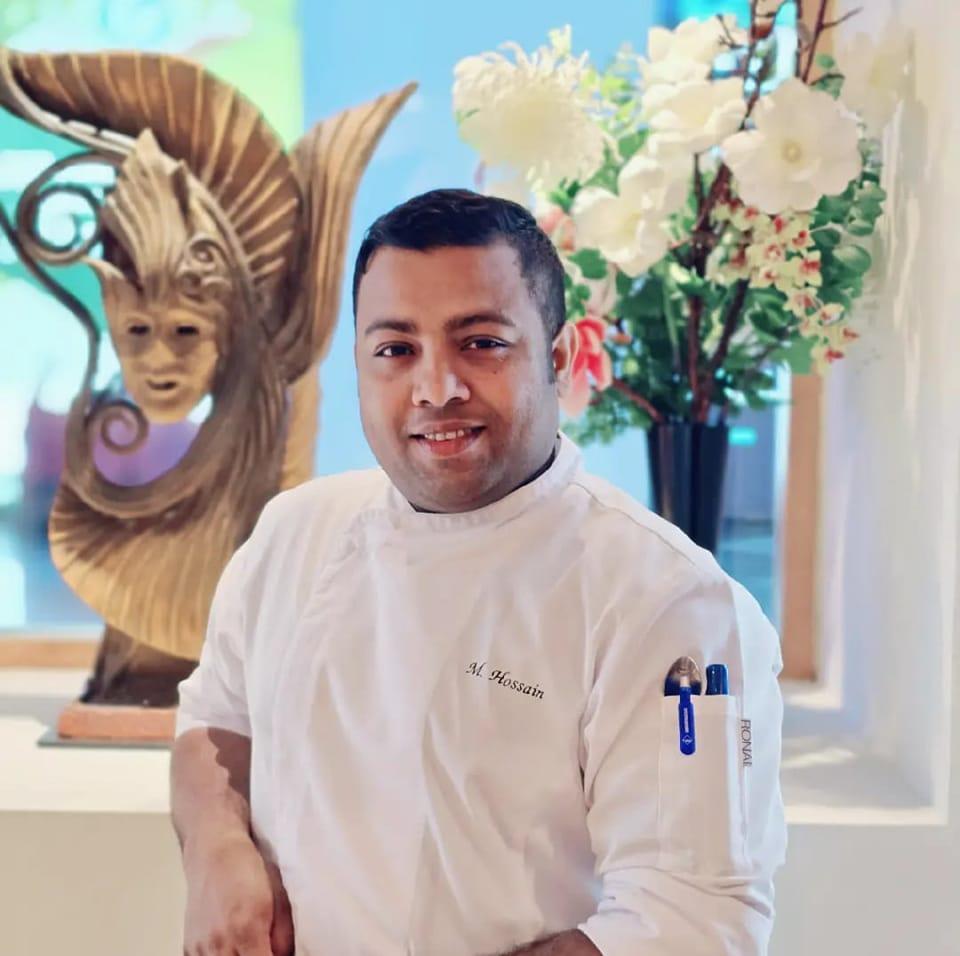
I’m Mossaraof, a trained chef and the founder of OvenInsights.com. I spent years cooking at Larrupin’ Cafe and in kitchens across Chicago and Seattle. Now I test kitchen gear for a living. I moved to North Acton, London, and I test every tool I write about. I use real meals and real heat. No brand deals. No shortcuts. I cover 12 kitchen types and hundreds of recipes. I believe this: the right tools matter as much as the recipe.