At A Glance
- Oven baking cuts 30–60% of the fat compared to pan-frying the same ingredients, without sacrificing flavor (Harvard T.H. Chan School of Public Health, 2024).
- The single biggest mistake home cooks make with “healthy” oven meals: they strip out all the fat, then wonder why the food tastes like cardboard.
- Eight to ten well-planned oven-baked recipes cover a full week of meals and take under two hours of batch cooking on Sunday.
- Umami-stacking – combining ingredients like tomato paste, soy sauce, and mushrooms – is the chef’s trick that makes low-calorie food taste like it’s not low-calorie.
- The best oven temperature for lean proteins is 400-425°F. Higher than that and chicken breast turns into shoe leather.
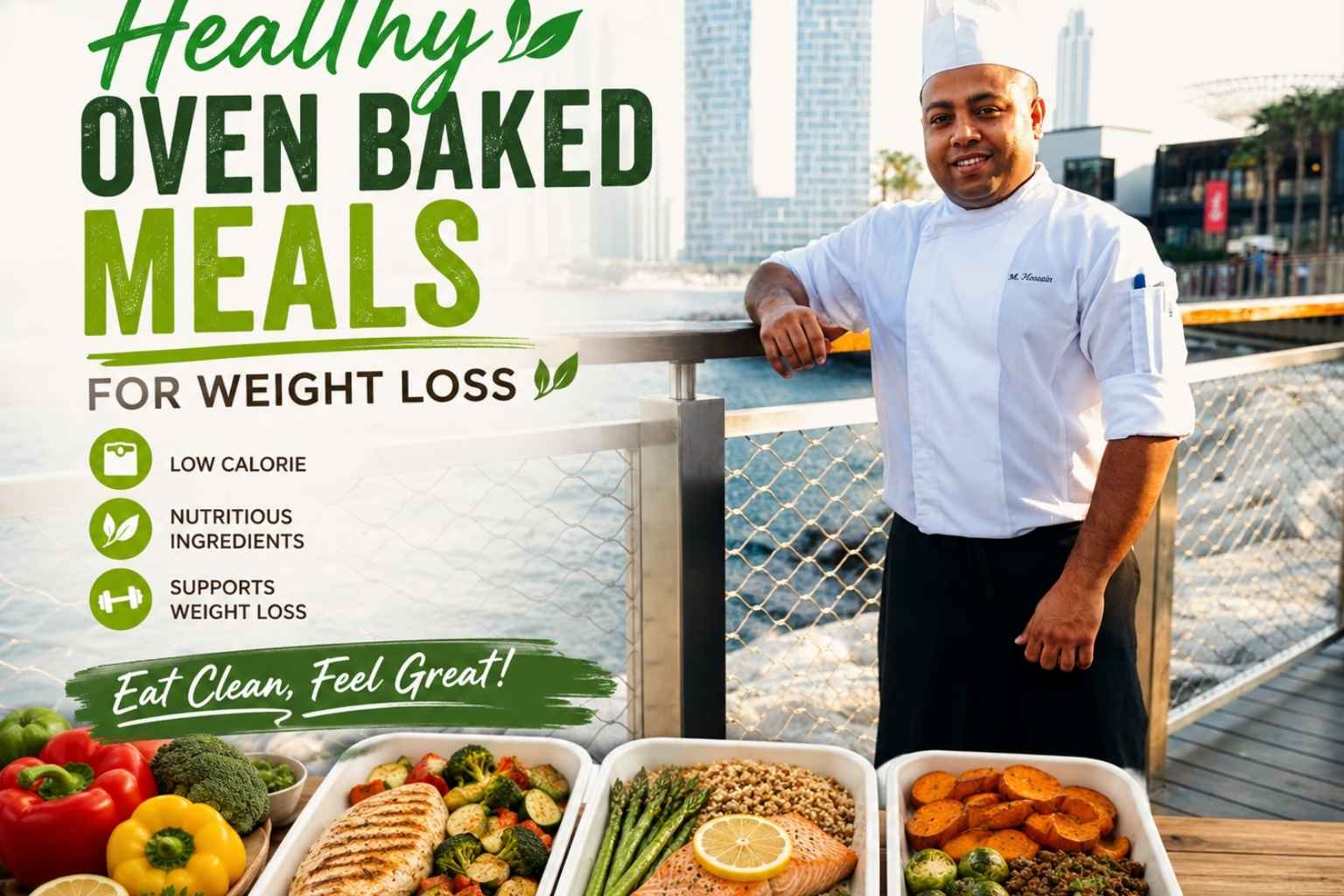
Healthy Oven Baked Meals for Weight Loss changed the way I eat, and I wish I had found them sooner. I still enjoy good food, but now I feel full, light, and happy after each meal. It feels like giving my body the fuel it has been asking for.
After years of cooking at home, I learned that a hot oven can do more than make food taste great. It can help cut extra fat while keeping meals full of flavor and color. In this guide, I will share my favorite healthy recipes, easy cooking tips, and simple ideas that make weight loss feel easier. Let’s get started and make your next meal both healthy and delicious.
The Quick Reference: 10 Healthy Oven-Baked Meals at a Glance
| Recipe | Calories (per serving) | Protein (g) | Prep Time | Oven Temp |
|---|---|---|---|---|
| Lemon-herb roasted chicken thighs (skinless) | 280 | 34g | 10 min | 425°F |
| Sheet pan salmon with asparagus | 320 | 38g | 8 min | 400°F |
| Turkey-stuffed bell peppers | 295 | 31g | 15 min | 375°F |
| Roasted cauliflower steak with tahini | 210 | 8g | 10 min | 450°F |
| Baked cod with tomatoes and olives | 245 | 36g | 10 min | 400°F |
| Chicken and vegetable grain bowl (farro base) | 410 | 42g | 20 min | 400°F |
| Slow-roasted turkey breast with herbs | 265 | 40g | 15 min | 325°F |
| Sheet pan shrimp fajitas | 290 | 28g | 12 min | 425°F |
| Baked eggplant with ground turkey | 310 | 29g | 20 min | 375°F |
| Roasted chickpea and sweet potato bowl | 385 | 14g | 15 min | 425°F |
Why Oven Baking Beats Frying for Weight Loss – The Real Science
Oven baking reduces total fat in a meal by 30–60% compared to pan-frying or deep-frying the same proteins and vegetables (Harvard T.H. Chan School of Public Health, 2024). The reason is dry heat. The oven pulls moisture out through evaporation and lets fat drip away from the food, instead of the food sitting in it.
When you pan-fry a chicken thigh, the meat absorbs oil throughout the cooking process. A pan-fried thigh can carry 8–12 grams of added fat. The same thigh roasted on a rack in a 425°F oven absorbs almost none.
That difference is roughly 70–110 calories per serving. Multiply that across three meals a day, five days a week, and you’re talking about a 1,000+ calorie weekly deficit from one cooking method change alone.
There’s another reason I tell this to every culinary student I’ve trained: dry heat concentrates flavor. Water evaporates from the surface of the food, and what’s left behind is a more intense version of whatever was already there. This is why a roasted tomato tastes ten times better than a boiled one. You’re not losing flavor by baking – you’re gaining it.
The Chef’s Core Principles for Making Baked Meals Satisfying
The number one reason “healthy oven recipes” fail is that people treat fat reduction as the only goal. They pull out all the oil, skip the salt, and wonder why they’re miserable at dinner. Satisfaction in food comes from fat, salt, and umami together. You don’t need much of any of them. You just can’t eliminate all three.
How Umami Layering Works and Why It Matters
Umami is the fifth basic taste – savory, deep, mouth-filling. It comes from glutamate compounds. Foods high in umami include tomato paste, soy sauce, miso, anchovies, Parmesan, mushrooms, and fish sauce.
When you layer two or three umami sources into a dish, the flavor compounds interact. The result tastes richer than the calorie count suggests. I use this trick constantly.
A standard baked chicken breast with herbs is fine. That same chicken breast rubbed with a teaspoon of white miso, a few drops of soy sauce, and a smear of tomato paste before it hits the oven? It tastes like something you’d pay $28 for at a restaurant. The added calories from those three ingredients combined: about 35.
Texture Contrast Is Non-Negotiable
Soft food with no contrast is boring, no matter how well it’s seasoned. The oven gives you the ability to create texture without adding fat.
Panko breadcrumbs on top of a baked fish fillet add crunch. Roasting chickpeas at 425°F turns them into something close to a crouton. Slicing cauliflower into thick steaks and roasting at 450°F gives you a caramelized crust and a tender inside – two textures in one vegetable.
Build texture into every baked meal and you’ll stop craving the fried version.
Aromatics Are Free Calories
Garlic, ginger, shallots, lemon zest, fresh herbs – these add almost no calories and an enormous amount of flavor. Use them aggressively.
I always add aromatics in two phases. Half goes into the marinade or rub before cooking. The other half goes in fresh at the end. Cooked garlic and raw garlic taste completely different. Both have a place.
Lean Protein Oven Meals: Chicken, Fish, and Turkey Done Right
Lean proteins are the core of any weight-loss meal plan. The Academy of Nutrition and Dietetics (2025) recommends 1.2–1.6 grams of protein per kilogram of body weight for people actively losing weight. That number is hard to hit without making protein the center of most meals.
How to Bake Chicken Thighs Without Drying Them Out
Chicken thighs are better than chicken breast for weight loss cooking. I know that sounds backward. But skinless chicken thighs have more fat than breast – about 7–9 grams per serving versus 3–4 grams. That fat is what keeps them moist in the oven. They’re also cheaper and harder to overcook.
Remove the skin to cut the fat in half. Marinate in lemon juice, garlic, and olive oil for 30 minutes minimum. Roast at 425°F for 22–25 minutes, internal temperature 165°F. Rest for five minutes before cutting.
The acid in the lemon breaks down surface proteins and lets the marinade penetrate faster. This is the same principle used in professional kitchens to speed up brining.
Sheet Pan Salmon: 8 Minutes of Prep, 15 Minutes in the Oven
Salmon is one of the most efficient proteins you can eat for weight loss. A 5-ounce portion delivers 34 grams of protein and significant omega-3 fatty acids (DHA and EPA), which the National Institutes of Health (2024) links to reduced inflammation – a factor in metabolic function.
Place salmon fillets skin-side down on a foil-lined sheet pan. Brush with 1 teaspoon of olive oil and season with salt, pepper, and smoked paprika. Add asparagus spears (tossed in olive oil spray and garlic) around the fillets. Bake at 400°F for 12–14 minutes. Done.
The whole thing takes 22 minutes from fridge to table. There is no simpler high-protein weeknight dinner.
Turkey Is Underrated and I’ll Die on This Hill
Everyone eats turkey at Thanksgiving and ignores it for the other 364 days. That’s a mistake. Ground turkey (93% lean) has 22 grams of protein per 3-ounce serving at only 170 calories. Turkey breast is even leaner at 135 calories per 3 ounces with 26 grams of protein.
My go-to: slow-roasted turkey breast at 325°F with a dry rub of smoked paprika, garlic powder, onion powder, dried thyme, and black pepper. Internal temp 160°F, then rest. Slice thin, use throughout the week.
Vegetable-Forward Oven Dishes That Actually Fill You Up
Most people undershoot on vegetables. A serving of roasted broccoli is not a side dish – it’s structural calories. Fiber slows digestion, increases satiety hormones, and reduces total calorie intake at subsequent meals (Nutrition Reviews, 2023).
The Cauliflower Steak Method
Cut a head of cauliflower into 1-inch-thick slabs through the core so they hold together. Brush both sides lightly with olive oil. Season with cumin, coriander, and a pinch of cayenne. Roast at 450°F for 20 minutes, flip once at 10 minutes.
The high heat caramelizes the surface sugars. What comes out is nutty, slightly sweet, and satisfying in a way that steamed cauliflower never is. Top with two tablespoons of tahini mixed with lemon juice and water. Total calories: about 210. Total satisfaction: high.
Roasted Vegetable Grain Bowls with Farro
Farro is an ancient wheat grain with 7 grams of protein and 3.5 grams of fiber per half-cup cooked serving (USDA FoodData Central, 2024). It holds up better in meal prep than rice – it doesn’t get mushy after two days in the fridge.
Build the bowl: cooked farro on the bottom, sheet pan roasted vegetables (zucchini, red onion, cherry tomatoes, and chickpeas at 425°F for 20 minutes), sliced roasted chicken thigh on top. Dress with a tablespoon of za’atar mixed into plain Greek yogurt. This is a complete, balanced, 410-calorie meal.
Marinades, Spices, and Herbs That Add Flavor Without Adding Calories
The right seasoning strategy is the difference between a diet meal and a good meal. These are the combinations I use most, all tested across years of professional and home cooking.
Five High-Impact Flavor Combinations
- Mediterranean: lemon zest, garlic, dried oregano, olive oil, and fresh parsley. Works on chicken, fish, and any white-fleshed vegetable.
- Smoky-spiced: smoked paprika, cumin, garlic powder, cayenne, and a drop of apple cider vinegar. Best on cauliflower, chickpeas, and turkey.
- Asian-inspired: soy sauce, fresh ginger, sesame oil (use sparingly – 1 teaspoon max), rice vinegar, and garlic. Use on salmon, shrimp, and eggplant.
- Herb-forward: Dijon mustard, fresh thyme, rosemary, garlic, and black pepper. Best on chicken thighs and pork tenderloin.
- North African: harissa paste (2 teaspoons), lemon juice, garlic, and cumin. Works on everything, especially sheet pan shrimp and lamb.
The rule I follow: pick one dominant flavor, one acid, and one aromatic. Three elements make a complete marinade. More than five and the flavors start to fight each other.
The Right Oven Temperatures for Each Food Type
Temperature is not optional information – it’s the variable that determines whether food is good or dry and sad.
| Food Type | Best Method | Temperature | Why |
|---|---|---|---|
| Chicken breast | Roasting | 400°F | Cooks through fast, limits moisture loss |
| Chicken thighs (skinless) | Roasting | 425°F | Higher heat crisps exterior |
| Fish fillets (thin) | Baking | 400°F | Gentle heat prevents overcooking |
| Salmon (thick) | Baking | 375–400°F | Keeps interior silky |
| Dense vegetables (cauliflower, sweet potato) | Roasting | 425–450°F | Caramelizes surface |
| Tender vegetables (asparagus, zucchini) | Roasting | 400–425°F | Quick cook, keeps color |
| Ground turkey dishes | Baking | 375°F | Even heat through mass |
| Whole turkey breast | Slow-roasting | 325°F | Keeps large mass moist |
| Legumes (chickpeas) | Roasting | 425°F | Creates crunch, not mush |
| Grain bowls (pre-cooked) | Warming | 300°F | Heats without drying out |
Roasting means high, dry heat with the food uncovered – it browns the exterior. Baking means moderate heat, often with moisture trapped or food surrounded by sauce. Slow-roasting means low heat over a long time for large cuts. These are three different techniques, not just different temperatures.
Meal Prep Strategy: Two Hours on Sunday, Meals Ready All Week
Two hours of focused oven cooking on Sunday covers six dinners and four lunches. This is not aspirational – it’s a repeatable system I’ve used myself for years.
The Sunday Batch Order
- Start the slow-roast first. Turkey breast at 325°F takes 75–90 minutes. Put it in, then do everything else while it cooks.
- Roast your vegetables in two batches. Dense vegetables (sweet potatoes, cauliflower, carrots) at 425°F for 25 minutes. Tender vegetables (zucchini, peppers, asparagus) at 400°F for 15 minutes.
- Cook your grain. Farro takes 30 minutes on the stovetop. Start it while the first vegetable batch is in.
- Bake your fish last. Fish only keeps two to three days in the fridge. Bake salmon or cod on Monday or Tuesday, not Sunday.
- Portion immediately. Don’t refrigerate everything in bulk and portion later. Portion into containers the moment each thing is cool enough to handle. This removes friction from the entire week.
Total active time: about 60–70 minutes. Hands-off oven time handles the rest.
Ingredient Swaps That Cut Calories Without Wrecking the Dish
These are not gimmicks. Each swap is one I’ve used in professional kitchen contexts where the output still had to taste good.
- Greek yogurt instead of sour cream or mayonnaise in sauces and dips: cuts calories by 40–60%, adds protein, same creamy texture. Use 2% fat, not nonfat – nonfat separates when heated.
- Cauliflower rice instead of white rice as a bowl base: drops the base from ~200 calories per cup to 25. Mix half-and-half with actual rice if you’re not ready to go full cauliflower.
- Olive oil spray instead of poured olive oil on sheet pans: a two-second spray is about 10–15 calories. A tablespoon poured is 120. Both coat the surface. The spray wins for roasting vegetables where you don’t need more than a light coat.
- Nutritional yeast instead of Parmesan as a topping: 2 tablespoons of nutritional yeast is 45 calories with 5 grams of protein. The same amount of Parmesan is 85 calories. The umami flavor is similar.
- Shirataki noodles or hearts of palm pasta instead of pasta under baked dishes: both are almost calorie-free, work well under sauces, and hold baked toppings without getting soggy.
Common Mistakes People Make with Healthy Oven Cooking
Mistake 1: Overcrowding the Sheet Pan
If vegetables or proteins are touching on the pan, they steam instead of roast. Steamed vegetables are soft and pale. Roasted vegetables are golden and slightly crisp. Use two pans instead of one. Give everything an inch of space.
Mistake 2: Skipping the Rest Time
Resting meat after it comes out of the oven is not optional advice. It’s how proteins work. Muscle fibers contract under heat and push moisture toward the center. Resting (5–10 minutes, covered loosely) lets those fibers relax and the moisture redistribute. Cut immediately and the juice runs out onto the board. Rest it and it stays in the meat.
Mistake 3: Underseasoning and Then Blaming “Healthy” Food
Salt does not make you fat. A measured amount of salt – say, 3/4 teaspoon per pound of protein – makes food taste like itself. Under-salted food tastes like deprivation. Season properly and you’ll stop missing the fries.
Mistake 4: Using the Oven as a Set-and-Forget Appliance
Most home ovens run 25–50°F hotter or cooler than the dial says (America’s Test Kitchen, 2023). Buy an oven thermometer. It costs $8 and fixes more baking problems than any recipe can.
Mistake 5: Marinating for Too Long in Acid
Acid (lemon juice, vinegar, wine) breaks down proteins. For thin fish fillets, 15–20 minutes of acid marinade is the maximum before the texture starts to turn mushy. For chicken, two hours is ideal. For steak, overnight is fine. Match the marinating time to the density of the protein.
My Personal Weekly Oven Meal Plan
This is what I actually eat, not a theoretical plan. It assumes Sunday prep, Tuesday fish cooking, and Thursday prep of a second protein.
Sunday dinner: Roasted chicken thighs with sheet pan sweet potatoes and broccolini. 425°F, 25 minutes.
Monday lunch: Farro grain bowl with Sunday’s roasted vegetables and sliced chicken thigh. Cold from the fridge, dressed fresh.
Monday dinner: Turkey-stuffed bell peppers, made Sunday and reheated at 350°F for 15 minutes.
Tuesday dinner: Sheet pan salmon with Sunday-prepped asparagus. Fresh cook, 12 minutes.
Wednesday lunch: Baked cod with tomatoes (Tuesday’s leftover salmon works here too). Easy protein swap.
Wednesday dinner: Roasted cauliflower steak with tahini yogurt sauce and chickpeas. 450°F. The fastest full dinner in my rotation.
Thursday dinner: Slow-roasted turkey breast (fresh batch). Prep it at 5PM, eat at 7PM.
Friday lunch: Sliced turkey with roasted red peppers, mustard, and farro. No cooking required.
Friday dinner: Sheet pan shrimp fajitas. 425°F, 10 minutes. End-of-week, low effort.
Saturday: Eat what you want. The week is covered.
Frequently Asked Questions About Healthy Oven Baked Meals for Weight Loss
What oven temperature is best for weight loss cooking?
For most proteins and vegetables, 400–425°F is the sweet spot. High enough to brown the surface and seal in juices – lower enough to avoid burning thin fillets or overcooking lean meat. Dense root vegetables and legumes handle 450°F well. Large, thick cuts like turkey breast need 325°F to cook through without drying out.
How many calories should a healthy oven-baked meal have?
A balanced, weight-loss-focused oven meal should sit between 300–450 calories per serving, with at least 25–35 grams of protein. The protein target is what keeps hunger controlled between meals. The Academy of Nutrition and Dietetics (2025) notes that high-protein meals reduce ghrelin (the hunger hormone) for longer than high-carbohydrate meals at the same calorie level.
Can I meal prep oven-baked fish for the whole week?
No – and don’t try. Cooked fish stays good in the refrigerator for two to three days at most (USDA Food Safety and Inspection Service, 2024). Plan fish meals for Tuesday and Wednesday if you prep on Sunday. Everything else – chicken, turkey, vegetables, grains – holds four to five days without issue.
Is olive oil okay to use for weight loss?
Yes. Olive oil is calorie-dense (120 calories per tablespoon), but you don’t need large amounts to get the benefit. One to two teaspoons of olive oil per serving of roasted vegetables adds flavor and helps fat-soluble vitamins absorb. The problem isn’t the oil – it’s the amount. Use an olive oil spray for sheet pans, and measure rather than pour when you do use liquid oil.
What is the difference between roasting and baking for weight loss?
Roasting uses higher heat (400°F+) with the food uncovered, which creates browning and a drier exterior. Baking uses moderate heat (325–375°F), sometimes covered, and produces a softer result. For weight loss, roasting is generally better for proteins and vegetables because high heat drives off more surface fat and creates texture without added oil. Baking is better for dishes with sauce or for large cuts that need even, slow heat.
How do I keep chicken breast moist in the oven without adding fat?
Three things: brine it, don’t overcook it, and let it rest. A simple brine is 1 tablespoon of salt dissolved in 1 cup of cold water, with the chicken submerged for 30–60 minutes before cooking. Brining pulls water into the muscle fibers, which offsets moisture loss in the oven. Cook to exactly 165°F internal temperature, not higher. Rest for five minutes before slicing.
Are grain bowls with oven-roasted proteins good for weight loss?
Yes – grain bowls are one of the most weight-loss-friendly meal formats when built correctly. The structure forces you to include a protein, a fiber source, and a vegetable in every meal. Farro and barley are better grain base choices than white rice because they have more fiber and protein per serving. Keep the sauce to one tablespoon and measure it – sauces are where grain bowls quietly stop being low-calorie.
How do I add flavor to oven meals without adding calories?
Use acids (lemon juice, vinegar), fresh herbs, spices, and umami-rich ingredients in small amounts. These all add flavor at near-zero calorie cost. Fresh ginger, garlic, and citrus zest each add significant complexity. Smoked paprika makes food taste like it has more fat than it does. Toasting whole spices (cumin seeds, coriander) in a dry pan for 60 seconds before adding them to a dish doubles their intensity. None of these add meaningful calories.
Key Takeaways
- Oven baking cuts 30–60% of fat compared to frying the same ingredients. That alone creates a meaningful calorie deficit over a week (Harvard T.H. Chan School of Public Health, 2024).
- Temperature is the most important oven variable. Use 400–425°F for most proteins and vegetables. Buy an oven thermometer – your dial is probably lying to you.
- Umami layering (combining miso, soy, tomato paste, or similar ingredients) makes low-calorie food taste rich and satisfying without adding significant calories.
- Aim for 300–450 calories and 25–35g of protein per meal. Protein controls hunger better than any other macronutrient at the same calorie level.
- Sunday batch cooking in two hours covers six or more meals for the week. The system only works if you portion immediately after cooling.
- Don’t overcrowd your sheet pan. Crowded pans steam food instead of roasting it. Use two pans when in doubt.
- Greek yogurt, olive oil spray, and nutritional yeast are the three ingredient swaps with the highest calorie-to-flavor return.
- Fish is the exception to meal prep. Cook salmon and cod no more than two days ahead.

I’m Mossaraof, a trained chef and the founder of OvenInsights.com. I spent years cooking at Larrupin’ Cafe and in kitchens across Chicago and Seattle. Now I test kitchen gear for a living. I moved to North Acton, London, and I test every tool I write about. I use real meals and real heat. No brand deals. No shortcuts. I cover 12 kitchen types and hundreds of recipes. I believe this: the right tools matter as much as the recipe.