
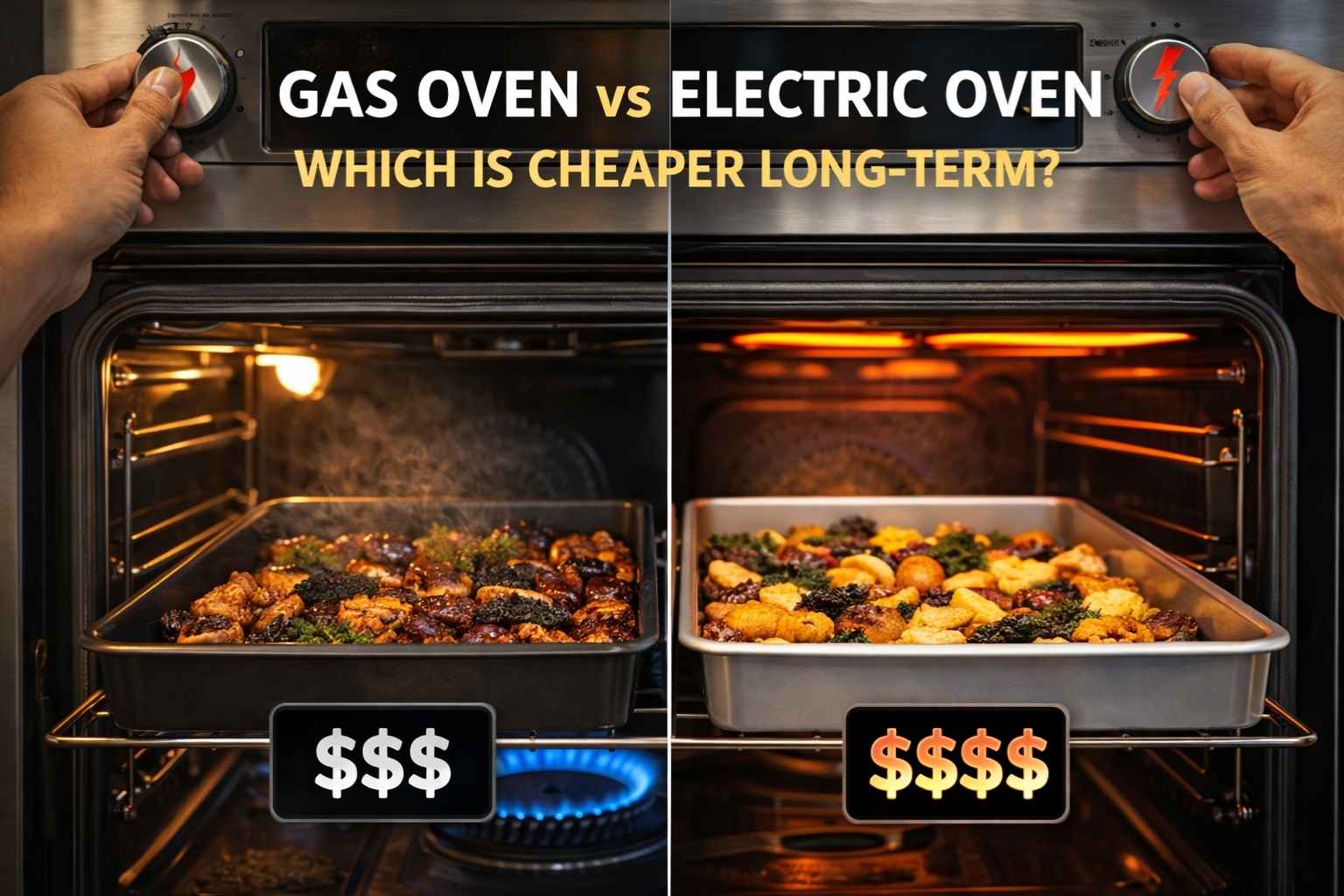
Buying a new range feels like picking a partner for your kitchen adventures. As a pro cook, I have used both flames and fans, and I often hear: gas oven vs electric oven — which is cheaper long-term? My years of baking taught me that the right choice keeps your food tasty and your bills low. Today, I will help you pick the best one for your home and your wallet. Read our Ultimate Guide: Energy Use & Costs to see how much you can save!
Understanding the Basics of Gas vs Electric Ovens
Before talking dollars, let me walk you through how each oven works in the real world — not just in manuals or showrooms.
How a Gas Oven Works (From Someone Who’s Burnt Things In One)
Gas ovens heat with an open flame — usually from the bottom.
It kicks on with a little whoosh sound, and you’ll feel the warmth almost immediately.
But it’s not just about speed.
- The heat rises fast, sometimes too fast.
- It’s not evenly spread, especially without a fan.
- That bottom heat? It’s aggressive. Burned a few cookies before I learned that.
In my Arizona apartment, where the air was already dry, this oven made my roasted chicken juicy. But baking? That was another story. Uneven browning, pale tops, and always the guesswork of rotating pans.
How an Electric Oven Works (And Why It Felt More Predictable)
Electric ovens use coils — one at the bottom, sometimes one on top for broiling.
No flame, just a slow warm-up that hugs your food in steady heat.
At first, I wasn’t a fan. Waiting 12–15 minutes to preheat felt like forever when I was hungry.
But over time, I noticed something.
- My cakes came out even.
- My baked ziti didn’t have a burnt bottom.
- And the heat stayed where I set it — no weird hot spots.
In my Florida rental, I relied on this consistency — especially for baking batches during the holidays.
Initial Costs: Buying and Installing Gas vs Electric Ovens
When I first moved into my Florida rental, I assumed swapping ovens would be easy.
Turns out, the “cheap” oven I found online wasn’t so cheap after all — once I factored in installation.
Let’s talk about the costs that hit your wallet before you even cook a single meal.
Upfront Price Tag Differences (And the Catch I Didn’t Expect)
Electric ovens usually show up with a lower sticker price.
Gas ovens often cost more — especially if you want features like convection or dual fuel.
But what surprised me?
- Some gas ranges were priced lower, but only for the basic models
- The mid-range gas ovens (think GE, Frigidaire, Samsung) started around $800
- Meanwhile, I found decent electric ranges from Whirlpool for $600–$700
In my experience, the price difference isn’t massive… unless you start adding extras.
The moment you want air fry mode, built-in temp probe, or double ovens — the price shoots up fast, no matter the fuel type.
The Installation Surprise (Yes, It Got Me Twice)
So, here’s where it really hit me.
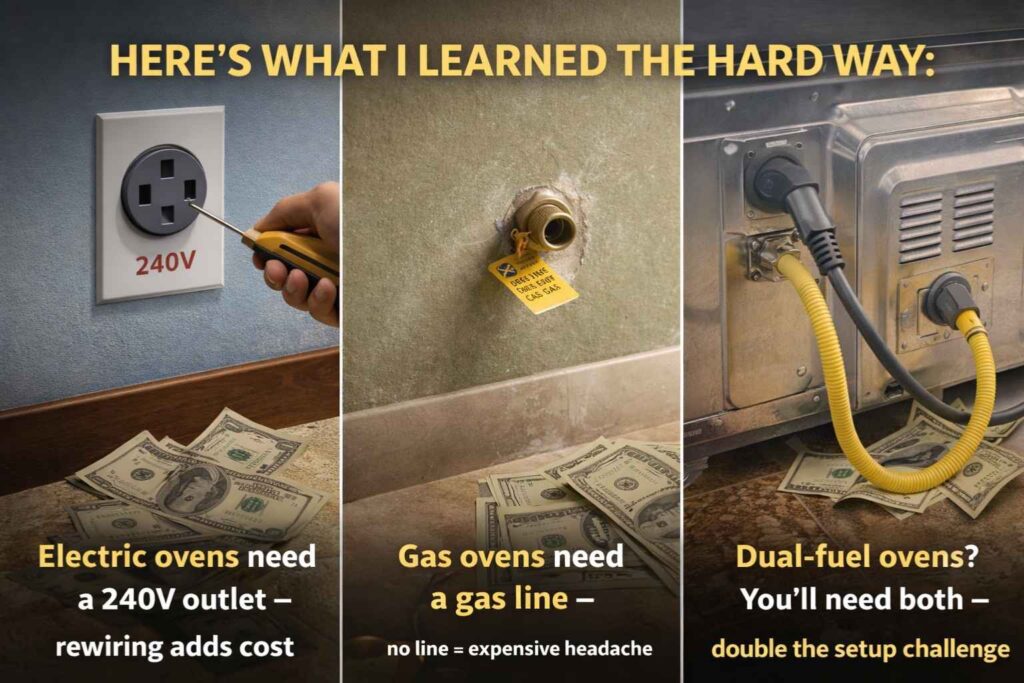
In my Florida kitchen, I bought a new electric oven. But the outlet behind the stove?
It was a standard 110V. Electric ovens need 240V.
I had to call in an electrician. That alone added $250+.
Gas ovens, on the other hand, need a working gas line.
In my Chicago apartment, it was already there. Easy plug-in.
But in Arizona, I had to schedule a gas hookup — and wait three weeks for the utility to come out.
Here’s what I learned the hard way:
- Electric ovens need a 240V outlet — rewiring adds cost
- Gas ovens need a gas line — no line = expensive headache
- Dual-fuel ovens? You’ll need both — double the setup challenge
So don’t just look at the appliance price. Look behind your oven and ask:
“Is my kitchen even ready for this?”
Energy Usage: Which Oven Costs More to Run?
This is the part that really made me pause — because bills don’t lie.
Whether it’s winter in Chicago or summer in Florida, you feel the difference when your oven adds to the utility cost.
So I started tracking. And testing. And squinting at those monthly statements.
The Basics: How Energy Efficiency Actually Works
Here’s what I learned — in plain, non-engineer terms.
- Gas ovens heat faster but waste more energy through venting
- Electric ovens are more efficient at converting power to heat
- But — and it’s a big but — electricity costs more per unit than gas in most U.S. states
So while electric ovens use energy more efficiently, they still might cost more to run.
I didn’t believe it until I did the math.
Real-Life Numbers: What I Paid in Different States
Let me break this down the way it actually hit me:
In Chicago (Cold Winters, Gas Heating)
- My gas oven helped warm the kitchen — not a bad side effect
- I was running the oven 5–6 nights a week
- Average bump in gas bill: $10–$14/month
In Florida (Hot and Humid)
- My electric oven made the kitchen hotter — especially brutal with no ceiling fan
- Ran the AC more to compensate
- Electric bill went up by about $20–$25/month just from oven use
In Arizona (Dry and Sunny)
- Both ovens performed fine, but gas felt cheaper overall
- Electric oven raised the temp inside enough to need more cooling — again, AC took a hit
What the Numbers Say (Based on Averages)
According to U.S. Energy Information Administration (EIA):
- Natural gas: ~$1.50 per therm
- Electricity: ~$0.15 per kilowatt-hour (kWh)
Let’s say you’re cooking for 1 hour daily:
- A gas oven might cost $0.10–$0.20 per hour
- An electric oven could run $0.30–$0.50 per hour
That adds up fast — especially if you’re baking often or batch cooking.
A Small Tip That Helped Me Save
I started batch cooking once a week. Roasted veggies, baked chicken thighs, casseroles — all in one go.
- Less oven time = lower energy use
- Preheating once instead of five times
- And the kitchen didn’t heat up as much during summer
Cooking Results: Flavor, Browning, and the Real-World Difference
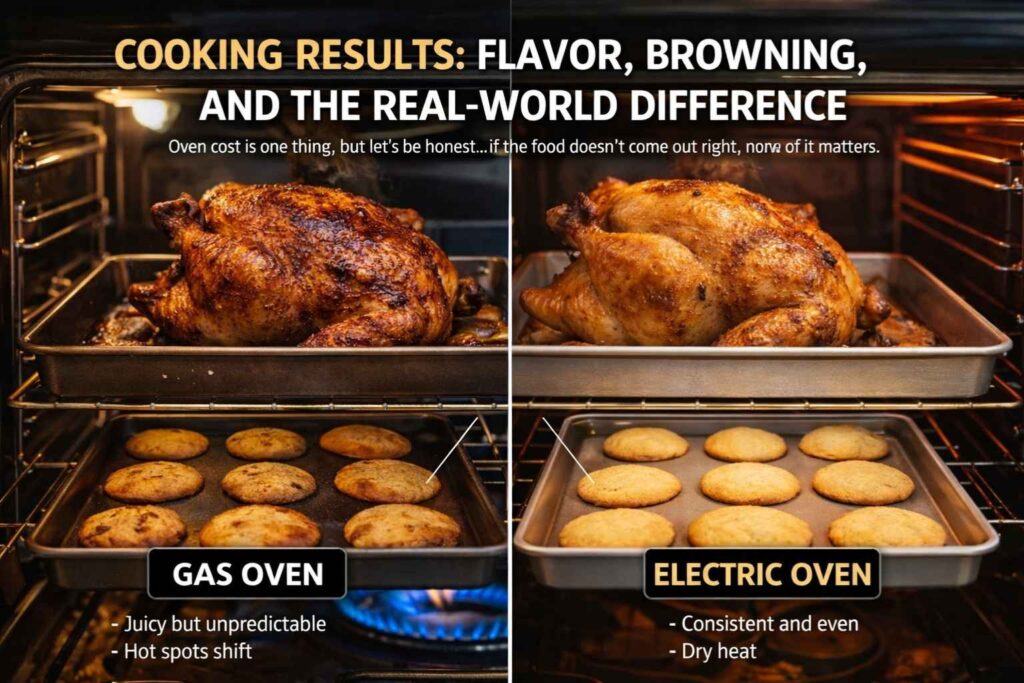
Oven cost is one thing, but let’s be honest… if the food doesn’t come out right, none of it matters.
I’ve cooked enough family dinners, weeknight meals, and blog recipe tests to know — the type of oven you use can make or break a dish.
Some flavors pop in gas.
Some textures just work better in electric.
Here’s what I’ve seen — and tasted — over the years
Roasting in a Gas Oven: Juicy But Unpredictable
Gas ovens create a moist heat thanks to the water vapor released during combustion.
This made a huge difference when I was roasting meats or vegetables.
- My roast chicken skin blistered beautifully
- Veggies came out caramelized and tender — especially sweet potatoes
- But… sometimes the tops stayed pale while the bottoms crisped too fast
I remember a night in Arizona — dry climate, gas oven, pork shoulder roast.
The meat? Melted like butter.
But the crust? Only half of it browned. I had to crank on the broiler for a finish.
Also — gas ovens take more babysitting.
- Hot spots shift
- I rotated pans more often than I cared to
- Opening the door meant losing a lot of heat (fast)
Baking in an Electric Oven: Consistency is King
When I switched to electric, the first thing I noticed?
My cakes stopped tilting to one side. That was a small miracle in itself.
Electric ovens offer dry, even heat.
That’s perfect for baking — especially if you’re after golden crusts and uniform texture.
- Muffins rose evenly
- Lasagna browned just right on top
- Cookies had less burnt edges and more soft centers
I once tested the same batch of sugar cookies in both ovens — same dough, same pan, same bake time.
- Electric oven: pale gold, lightly crisped edges, perfect shape
- Gas oven: darker bottoms, puffier middles, uneven browning
If you’re a baker? I’d lean electric every time.
Broiling: Gas vs Electric Showdown
This one’s tricky.
Gas broilers use an open flame, and electric broilers rely on intense top coils.
My Florida electric oven broiled faster and more evenly — perfect for:
- Garlic bread
- Cheese-topped pasta
- Melting marshmallows for s’mores (don’t judge)
But gas gave a different texture — toastier, almost grill-like.
Just harder to control.
The Moisture vs Crispiness Trade-Off
In short:
- Gas ovens give you moisture — great for roasting, bread, meats
- Electric ovens give you crispness — better for pastries, cookies, casseroles
That trade-off matters when you’re cooking for picky eaters or testing recipes for a blog.
I often found myself adjusting not just time and temp, but entire methods depending on the oven.
Maintenance and Repairs: What Really Breaks (and How Often)
I wish ovens came with a warning sticker that said: “Surprise repairs inside.”
Because trust me — both gas and electric ovens come with their own drama.
I’ve had burners stop lighting, heating elements burn out, and even a door hinge snap mid-holiday prep.
Let me walk you through what’s broken for me — and what it cost to fix.
Gas Oven Repairs: More Frequent but Familiar
My first issue with a gas oven was something small — the igniter stopped sparking.
At first, I thought the stove was just being moody. Then I realized… it wasn’t clicking at all.
Turns out, igniters are one of the most common repairs in gas ovens.
- Igniter replacement: $100–$200
- Thermocouple sensor: another $50–$100
- Gas valve repair? That was $250 in my Florida rental (not including the hour wait for the technician)
I also noticed that the burner ports got gunky fast — especially when I roasted greasy meats or spilled sauce during broiling.
Cleaning them became part of my weekly routine.
Electric Oven Repairs: Less Often, But Still Frustrating
Electric ovens are simpler in design. Fewer parts, fewer moving pieces.
But that doesn’t mean they’re invincible.
In my Chicago apartment, the bottom heating coil cracked during winter.
One night it worked. The next, my baked ziti just sat there — cold in the center.
- Replacing a coil: $50–$100 (I actually did it myself — with gloves and a YouTube video)
- Control board shorted once during a power surge — that fix was closer to $300
The upside? No gas. No pilot light. No flame. That made me feel safer, especially when I was living alone or leaving food to cook while I cleaned.
Cleaning: Who Wins the Messy Award?
If you roast a lot — like I do — you’ll notice how fast a gas oven gets greasy.
- Gas ovens collect residue around the flame area
- Bits of burnt food fall through the bottom plate
- I often had to pull the whole drawer out to vacuum crumbs (not fun)
Electric ovens stay cleaner longer — especially ones with self-cleaning cycles.
I still wipe down spills right away, but I’ve spent way less time scrubbing baked-on goo in electric models.
Personal Tip: Keep a Spare Thermometer Handy
Oven temp sensors fail.
And sometimes, the dial says 375°F… but your cookies come out raw.
After a few too many baking fails, I bought an $8 oven thermometer — and I keep it inside every oven I use.
Helps me avoid guessing games, especially in rental kitchens or Airbnb setups.
Safety: Gas Scares, Electric Burns, and What I’ve Learned the Hard Way
One night in my Chicago apartment, I walked into the kitchen and froze.
There was a faint smell — not food, not burnt — almost like metal and eggs.
It was gas.
My oven’s pilot light had gone out.
Let’s just say… I learned a lot that night.
Gas Oven Safety: You Have to Stay Alert
Gas ovens can be amazing to cook with — but they come with serious safety considerations.
- Gas leaks are real. Even small ones can be dangerous.
- You need ventilation, especially in winter when windows stay shut.
- Carbon monoxide risks go up if things aren’t burning cleanly.
After that scare, I bought a carbon monoxide detector and set a habit:
- Always listen for the igniter
- Never walk away during preheat
- Keep a window cracked, even a little
In older kitchens — especially in Midwest or Northeast homes — gas lines and seals wear out.
If your oven is hissing, smells weird, or won’t stay lit? Shut it off and call someone. Don’t guess.
Electric Oven Safety: Less Scary, But Still Has Risks
Electric ovens feel safer overall — no gas lines, no open flame.
But they’re not foolproof.
I once dropped a silicone trivet onto the lower coil while broiling.
The smell? Awful. The cleanup? Worse.
The coil warped and started sparking two days later.
Here’s what I learned from that mess:
- Keep plastic, paper, and silicone far away from the heating elements
- Don’t use foil to line the bottom — it reflects heat and can mess with temperature sensors
- Use the oven light instead of opening the door constantly (yes, I still forget)
Families and Small Kitchens: My Take
If you’ve got kids, pets, or a super tight kitchen layout?
- Electric ovens are safer for everyday use
- Less chance of open flame incidents
- No risk of gas leaks or fire from draped towels
That said, I know families who cook safely with gas every day — it just takes extra awareness.
Which Oven Is Cheaper Long-Term? My Honest Take
If I had to pick one based only on numbers — gas would probably win.
But when you factor in comfort, repairs, and climate? The answer gets complicated.
Let me break down what I’ve actually experienced — from cooking habits to real savings — across different homes and kitchens.
Monthly Energy Bills: Gas Wins (But Not Everywhere)
In most places I’ve lived — especially the Midwest and Arizona — gas was cheaper per hour to run.
- Lower per-unit cost of natural gas
- Quicker preheat times = less running time
- Great in cold weather — my kitchen stayed cozy
But in humid Florida? That gas oven made my kitchen sticky hot.
I ended up running the AC harder, which killed the savings.
Electric would’ve made more sense in that climate — especially in a small rental.
Maintenance: Electric Gave Me Less Trouble
Gas ovens needed more fixes over time. Igniters, valves, flame issues.
They added up — and often came at the worst times (like Thanksgiving).
Electric ovens? Simpler parts, fewer surprises.
- One coil replacement in 8 years
- One control board repair after a lightning storm
- I could fix small issues myself with a screwdriver and 20 minutes
If you’re handy — or have a reliable repair service nearby — this might not matter.
But for renters, or folks in rural areas? Fewer repairs = long-term peace of mind.
Cooking Style Matters More Than People Think
If you’re mostly roasting and baking casseroles like me — electric ovens do a stellar job.
But if you’re into crusty bread, bone-in meats, or big family meals that need juicy results?
Gas wins for texture and moisture.
I’ve found myself choosing recipes around the oven type sometimes.
Sounds silly, but when I had a gas oven, I avoided delicate pastries.
When I had electric, I cooked fewer big meat roasts.
Your habits will shift — trust me.
Long-Term Ownership (Over 10–15 Years)
Let’s say you keep the oven for a decade or more — here’s what added up for me:
| Category | Gas Oven | Electric Oven |
|---|---|---|
| Purchase + Install | Higher (needed hookup) | Lower (unless rewiring) |
| Monthly Energy | Lower in cool states | Lower in hot states |
| Repairs | More frequent, costlier | Fewer, cheaper |
| Safety | More risk (gas leaks) | Safer overall |
| Cooking Quality | Moist, rich, uneven heat | Crisp, precise, even heat |
So which is cheaper long-term?
Gas — if you already have a gas line, cook heavy meals, and live somewhere cool.
Electric — if you want steady performance, fewer repairs, and bake often.
Hidden Costs That Add Up Over Time (That Nobody Talks About)
It’s easy to compare oven prices and energy bills — but there’s a whole category of quiet costs that sneak up on you.
Trust me, I’ve felt all of them — sometimes in small ways, sometimes big enough to change how I cook.
These aren’t flashy, but they matter long-term.
Preheat Time = Time + Money
My electric oven takes 12–15 minutes to reach 400°F.
My old gas oven? Maybe 6–8 minutes, tops.
That delay doesn’t just test your patience — it adds to your energy bill.
- If you cook multiple times a day (like I do), that’s a lot of waiting
- And more preheat time = more electricity used before food even goes in
- I started baking in bulk just to avoid back-to-back preheats
Electric ovens are better at holding heat, sure — but preheat waste is real.
Bakeware Compatibility (Learned the Hard Way)
This one surprised me early on.
I used a thick glass Pyrex dish in my gas oven — directly on the lower rack.
Bad move.
- The direct flame cracked the glass from underneath
- I lost an entire casserole and the dish
- Learned to switch to metal bakeware with gas after that
Gas ovens need more durable, flame-safe pans.
Electric ovens? More forgiving — I use ceramic, glass, aluminum, and even silicone molds without worry.
It sounds small, but replacing bakeware adds up.
Heat Spillover (And How It Impacts A/C Bills)
In Arizona and Florida, my gas oven cranked out serious heat into the room.
During summer? That heat made me run the A/C more, especially in smaller kitchens.
Electric ovens still add warmth, but it’s more contained — especially modern models with insulation and convection settings.
For hot states, this really matters:
- In Florida, I timed my cooking to mornings or late evenings to avoid heating the house
- In Chicago winters? I welcomed the extra heat — it saved on gas heating costs
- I even cracked the oven door open after baking to warm up the kitchen (don’t tell the energy experts)
Cooking Time Adjustments
Gas ovens often fluctuate more than electric.
You’ll need to adjust:
- Cook times
- Pan positions
- Temp settings
Electric ovens hold steady. I noticed I burned fewer things once I made the switch.
If you’re new to gas, there’s a learning curve — and that can mean more trial and error (and wasted food).
U.S. Incentives, Rebates, and the Big Push Toward Electric
This part really surprised me.
I always thought choosing an oven was a personal decision.
But depending on where you live in the U.S., your city or state might already be nudging you toward one option — especially electric.
Let’s talk rebates, bans, and policies I didn’t know existed until I started researching my next upgrade.
Rebates for Electric Ovens (Yes, They’re Real)
When I bought a new electric range in Chicago, the appliance store handed me a flyer.
“Check your utility company — you might get money back.”
And I did.
- My local utility offered a $75 rebate for ENERGY STAR electric ovens
- Some states even give up to $150 for electric or induction upgrades
- You just had to register the oven and send in your receipt
Not every state does this, but many do — especially places pushing for cleaner energy use.
✅ Tip: Check your ZIP code at energystar.gov/rebate-finder
Gas Stove Bans in U.S. Cities
Some U.S. cities — especially on the West Coast — are going all-in on electric.
- Berkeley, California banned gas hookups in new construction
- New York City passed a similar law for buildings under 7 stories
- Other cities like Seattle, San Francisco, and Denver are pushing electric, too
Now, if you already have gas, no one’s coming to take it away.
But it does mean fewer new homes are being built with gas lines.
And that could impact:
- Resale value
- Future repair options
- Whether parts stay affordable
Environmental Push: Why It’s Happening
Natural gas burns cleaner than coal — but it still emits carbon dioxide and methane.
Electric ovens, when powered by cleaner energy sources (solar, wind), reduce emissions over time.
That’s why many programs now:
- Encourage switching to induction
- Promote electric-only kitchens in government buildings
- Offer tax credits for all-electric home upgrades
In short — this shift isn’t going away.
Should You Care?
Honestly? It depends where you live.
- In big U.S. cities? Electric incentives might make it cheaper to upgrade
- In rural or colder regions? Gas may still be cheaper and easier to maintain
- If you’re building a new kitchen from scratch? Choosing electric might make permitting smoother
I didn’t think policies would affect my cooking — but now I always check local programs before buying anything major.
What I’d Choose Again — Based on Real Kitchens, Real Bills, and Real Cooking
After all the testing, cooking, comparing bills, and cleaning up burned lasagna crusts… I’ve got a pretty solid take on what actually works — and what I’d buy again.
But my answer isn’t one-size-fits-all.
So instead of just saying “gas is better” or “electric is cheaper,” here’s how I think about it now — based on where I am, how I cook, and what actually matters in real U.S. kitchens.
If I Were in Arizona Again (Dry Heat, Hot Summers)
Gas worked well for cooking, but the oven turned my small kitchen into a sauna.
If I moved back?
- I’d probably go electric — especially with good insulation and AC
- Bonus if it had convection — helps cook faster and evenly in dry air
- Energy cost difference would balance out with better cooling
If I Were Back in Chicago (Cold Winters, Tight Apartments)
Gas was a win — cheaper bills, bonus kitchen warmth, and hearty meals all winter.
- I’d go with a gas oven, hands down
- Already had the hookup, and heat wasn’t wasted
- And honestly, I missed that toasty kitchen on snow days
If I Were Renting or in a Smaller Space
Electric wins.
- Easier to install — no special gas line or permits
- Safer with kids or pets around
- More consistent for things like baked oatmeal, muffins, and meal-prep dishes
In fact, when I lived in a rental in Florida, I was glad I didn’t have to worry about a gas leak.
If I Were Building My Dream Kitchen
Now this one’s tough.
Honestly, I’d go dual fuel — electric oven with a gas cooktop.
- Best of both worlds
- Electric for consistent baking and broiling
- Gas burners for fast stovetop control
Yes, it’s pricier. But if you love to cook like I do — and you plan to stay in that home long-term — it’s worth the extra setup.
Final Thought From My Chef Brain
Don’t choose based on trend or what your neighbor swears by.
Choose based on:
- How often you cook
- What kind of meals you love
- Where you live
- What your utility bills look like
- And what makes you enjoy being in the kitchen
Because long-term savings aren’t just about dollars — they’re about making the space work for you.
FAQs
Is a gas oven cheaper than an electric oven in the long run?
Yes, gas ovens often cost less to run over time, especially in areas with low natural gas prices. They also heat faster and cool down more quickly.
What’s the energy cost difference between gas and electric ovens?
Gas ovens cost about $0.15 per hour, while electric ovens can cost $0.50 or more, depending on your state’s electricity rate and oven wattage.
Which oven lasts longer, gas or electric?
Both gas and electric ovens can last 13–15 years with good care. Gas models may require more regular maintenance due to burners and ignition systems.
Is cooking performance better with gas or electric ovens?
Gas ovens heat fast and are great for roasting, while electric ovens offer more even baking. Your cooking habits decide which works better long term.
Does climate or region affect oven choice?
Yes. In cold U.S. states, electric ovens can help warm the kitchen. In warmer states, gas ovens may be more efficient and produce less lingering heat.

I’m Mossaraof, a trained chef and the founder of OvenInsights.com. I spent years cooking at Larrupin’ Cafe and in kitchens across Chicago and Seattle. Now I test kitchen gear for a living. I moved to North Acton, London, and I test every tool I write about. I use real meals and real heat. No brand deals. No shortcuts. I cover 12 kitchen types and hundreds of recipes. I believe this: the right tools matter as much as the recipe.