At A Glance
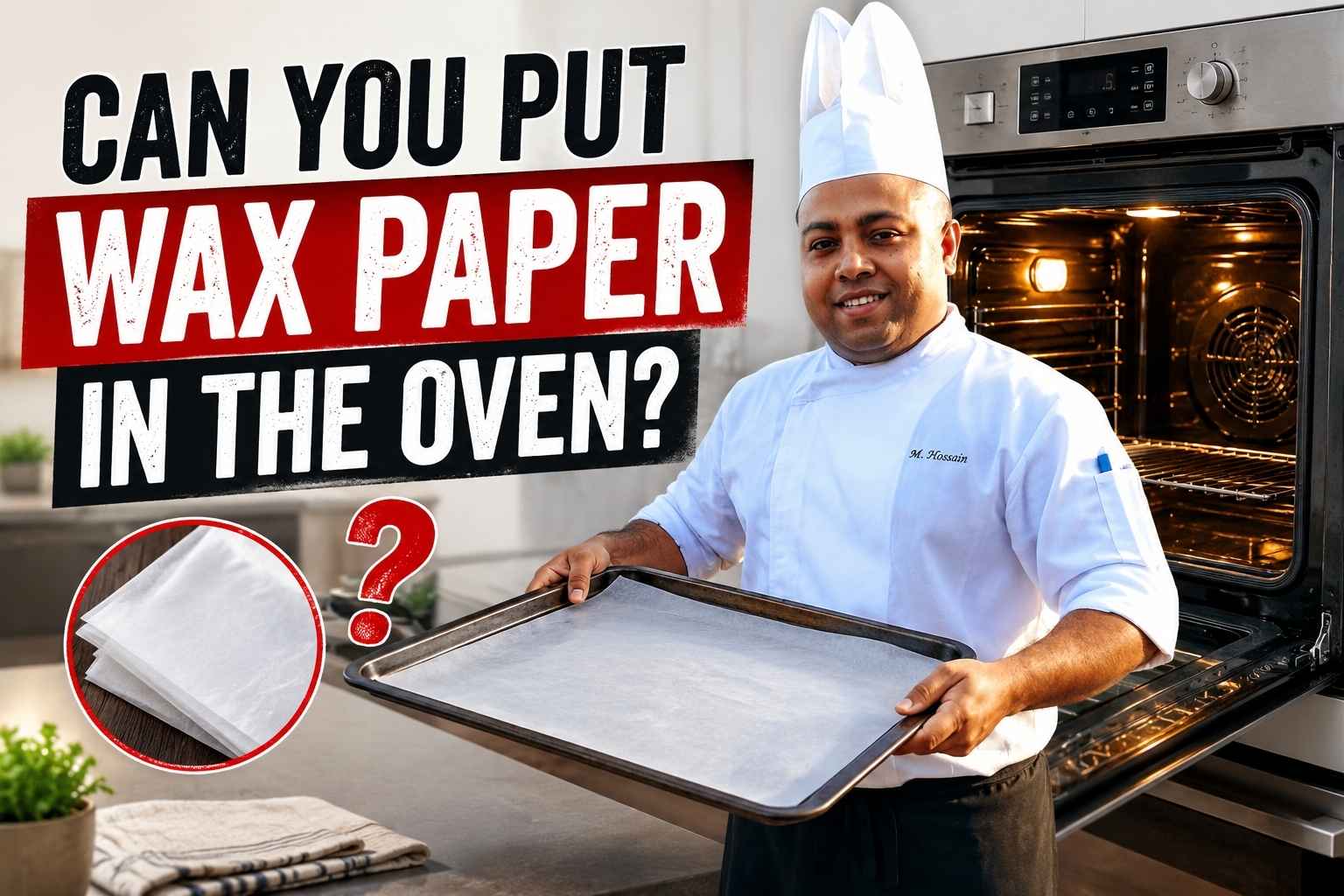
- No — wax paper is not oven-safe. The wax coating melts at around 200°F (93°C) and will smoke, drip, and can ignite at higher temperatures.
- Wax paper and parchment paper look nearly identical in the drawer, but they are completely different products made for completely different jobs.
- Parchment paper is the correct substitute for any oven use — it handles heat up to 425°F-450°F (218°C-232°C) depending on the brand.
- Wax paper is excellent for cold prep work: rolling dough, wrapping candy, lining counters, and separating frozen foods.
- If you have ever wondered why your oven filled with smoke during baking, a sheet of wax paper on the rack is a very likely suspect.
I once grabbed the wrong roll from my kitchen drawer and almost lined a baking sheet with it, total kitchen panic mode. That’s when I really dug into can you put wax paper in the oven, and the answer surprised a lot of home cooks I know. After 15 years working in professional kitchens, I’ve seen this mix-up happen more times than you’d think. In this guide, I’ll break down exactly what happens when wax paper meets heat, and what to use instead. Stick around, your next baking day will be so much safer!
What Wax Paper Actually Is – and Why Heat Is Its Enemy
Wax paper is regular paper with a thin coat of food-grade paraffin wax applied to both sides. That wax layer is what gives it the slightly shiny, slightly slippery feel — and it is exactly what makes it dangerous in a hot oven.
Paraffin wax melts at roughly 99°F to 200°F (37°C to 93°C), depending on the blend (Reynolds Consumer Products, 2023). Most home ovens sit at 325°F to 450°F for everyday baking. That is two to four times hotter than wax paper can survive.
The paper underneath the wax is untreated. It has no silicone coating, no heat treatment, and no fire resistance. Once the wax melts off, what you have left is a bare sheet of paper sitting in a hot oven — and paper ignites at around 451°F (233°C) (National Fire Protection Association, 2022).
So wax paper in the oven is not just a mess problem. At high temperatures, it is a fire risk.
What Actually Happens When Wax Paper Goes in the Oven
Wax paper in the oven will melt, smoke, and potentially catch fire. Here is how it plays out at different temperature ranges:
- Under 200°F: The wax starts softening. You may not notice anything yet.
- 200°F-300°F: The wax melts and migrates into your food or drips onto the oven floor. Your baked goods pick up an off taste.
- Above 300°F: Visible smoke. The paper browns rapidly.
- Above 400°F-450°F: Real fire risk. The paper can ignite if it contacts the oven element or a hot rack directly.
I saw this firsthand early in my career, working pastry prep at a high-volume catering operation. A new kitchen assistant lined three hotel pans with what she thought was parchment. She pulled the rolls of paper from the same drawer, grabbed the wrong one, and slid all three pans into a 375°F deck oven.
Four minutes later, smoke was pouring out. We pulled the pans – wax had melted across the entire surface of every sheet, soaked into the bottom of 90 dinner rolls, and left a waxy residue baked into the pans. We scrapped all three batches and lost 45 minutes re-prepping. The rolls tasted faintly of petroleum. The oven needed a full cleaning.
That was a fixable mistake. A fully ignited sheet of wax paper in an oven that no one is watching is not.
Wax Paper vs. Parchment Paper – Why They Look the Same but Behave Differently
These two papers look almost identical, but they are made completely differently and have nothing in common when it comes to heat.
| Feature | Wax Paper | Parchment Paper |
|---|---|---|
| Coating | Paraffin wax | Silicone |
| Heat tolerance | ~200°F (93°C) before melting | 425°F-450°F (218°C-232°C) |
| Oven-safe | No | Yes |
| Non-stick | Yes (cold use only) | Yes (cold and hot use) |
| Moisture resistant | Yes | Yes |
| Price | Slightly cheaper | Slightly more expensive |
| Food contact approved | Yes | Yes |
The silicone coating on parchment paper is what makes all the difference. Silicone is stable at baking temperatures — it does not melt, smoke, or leach into food (America’s Test Kitchen, 2024). It also releases baked goods cleanly, which is why professional bakeries use it by the case.
The visual similarity is the root cause of most kitchen mistakes involving these two products. Both come on rolls, both are off-white or light tan, and both feel smooth to the touch. The easiest way to tell them apart: parchment paper is slightly stiffer and has a matte, dry feel. Wax paper has a faintly waxy, almost slightly damp texture if you rub it between your fingers.
If your roll does not say “parchment” clearly on the box, check the label. Do not guess.
Quick-Reference Comparison: Wax Paper, Parchment, Foil, and Silicone Mats
| Material | Heat Tolerance | Oven-Safe | Best Uses | Approximate Cost |
|---|---|---|---|---|
| Wax paper | ~200°F (93°C) | No | Rolling dough, wrapping candy, cold food storage, counter lining | $3-$5 per 75 sq ft roll |
| Parchment paper | 425°F-450°F (218°C-232°C) | Yes | Baking cookies, roasting vegetables, lining cake pans | $5-$8 per 75 sq ft roll |
| Aluminum foil | 1,220°F+ (660°C+) | Yes | Wrapping, roasting, broiling, covering dishes | $4-$7 per 75 sq ft roll |
| Silicone baking mat | Up to 500°F (260°C) | Yes | Baking cookies, pastry work, sticky items, roasting | $10-$25 per mat (reusable) |
Sources: Reynolds Consumer Products (2023), King Arthur Baking (2024), Serious Eats (2023)
Every Safe Alternative to Wax Paper in the Oven
If you reached for wax paper to line a baking sheet, swap it for one of these four options instead. Each has a specific strength depending on what you are making.
Parchment Paper – the Default Choice for Almost Everything
Parchment paper handles the full range of everyday baking temperatures and releases food cleanly without any grease. Use it for cookies, cakes, roasted vegetables, fish fillets, sheet-pan dinners, and anything sticky. It is the closest functional replacement for wax paper in an oven context.
One note: parchment paper has a temperature ceiling. Most brands list 425°F as the safe maximum (King Arthur Baking, 2024). Above that, it starts to brown and can scorch at the edges — it will not catch fire the way wax paper does, but it will darken and eventually degrade. For high-heat roasting above 450°F, use foil instead.
Aluminum Foil – for High Heat, Broiling, and Easy Cleanup
Foil handles temperatures that would destroy any paper product. Use it when you are roasting meat above 450°F, using the broiler, or wrapping food to trap steam and moisture. It also works well under messy dishes to catch drips and make cleanup faster.
The one downside: foil is not great for delicate baked goods. Cookies on foil brown faster on the bottom than cookies on parchment, and they are more prone to sticking (Serious Eats, 2023). Grease it well if you use it for baking.
Silicone Baking Mats – best for Frequent Bakers
A good silicone baking mat (also called a Silpat, which is the original brand name) is reusable, non-stick, and oven-safe up to 500°F (260°C). It is the most economical choice if you bake multiple times per week, since you buy it once and it lasts for years.
The trade-off is texture. Cookies baked on a silicone mat tend to spread slightly more and have a softer bottom than cookies baked on parchment, because the mat insulates them from direct heat (America’s Test Kitchen, 2024). For most home bakers, that is a minor difference. For professional pastry work where bottom color matters, parchment is still preferred.
A Greased Pan – When You Have Nothing Else
Butter, oil, or cooking spray directly on the pan works fine for most baking. It is what every baker used before parchment paper was widely available. Cleanup is harder and sticking is more likely than with a liner, but it is completely safe.
The One Time Wax Paper Is Acceptable Near a Warm Oven
Wax paper is safe on a countertop next to a warm oven — it is not safe inside one. This distinction matters for one specific task: using wax paper as a work surface while preparing items that then go into the oven.
Rolling pie dough on wax paper is standard practice. The wax coating prevents sticking without adding flour that can toughen the crust. You roll the dough, lift it off the wax paper, place it in the pan, and discard the paper. The wax paper never enters the oven.
The same principle applies to:
- Rolling out cookie dough and cutting shapes on wax paper, then transferring cookies to a parchment-lined pan
- Tempering chocolate on wax paper for candy work and setting it at room temperature
- Dipping strawberries or truffles and placing them on wax paper to set (no oven involved)
The rule is simple: wax paper does its job on the counter. Parchment paper does its job in the oven.
Three Kitchen Mistakes That Send Wax Paper Where It Does Not Belong
Mistake 1: Confusing the Two Papers in the Drawer
This is the most common one. Wax paper and parchment paper rolls sit side by side in most kitchen drawers, and in a rush, people grab the wrong one. I have watched it happen in home kitchens, catering prep areas, and even in cooking class settings.
Fix: Label both rolls in permanent marker on the cardboard core. Write “WAX – NO OVEN” on the wax paper roll. Thirty seconds of labeling prevents a smoke-filled kitchen.
Mistake 2: Using Wax Paper Under the Broiler
The broiler is the most dangerous place for wax paper. Broiler temperatures run 500°F to 550°F (260°C to 288°C), and the heating element is directly above the food, inches away from anything on the pan. If wax paper goes in under a broiler, it will smoke immediately and can ignite within minutes.
Never line a broiler pan with wax paper. Use foil for broiling — it handles the heat without issue.
Mistake 3: Wrapping Hot Baked Goods in Wax Paper
Hot cookies, bread, or cake wrapped in wax paper while still warm will cause the wax coating to soften and transfer onto the food. The result is a faint waxy taste on whatever you baked, and a sticky wax residue on the food’s surface.
Wait until baked goods are fully cooled before wrapping in wax paper for storage. Better yet, use parchment paper or plastic wrap for storing warm items — parchment handles residual heat without issue, and plastic wrap seals moisture effectively.
When Wax Paper IS the Right Tool
Wax paper is genuinely useful — just not anywhere near an oven. These are the tasks where it performs better than the alternatives:
- Rolling dough: The wax surface is more non-stick than parchment when rolling out pie crust, cookie dough, or pasta. Place one sheet under the dough and one on top, then roll between them — no sticking, no extra flour needed.
- Candy and chocolate work: Wax paper is the standard surface for setting dipped chocolates, candies, and truffles. It releases cleanly once the chocolate hardens.
- Separating frozen items: Layer wax paper between burger patties, cookie dough balls, or pancakes before freezing. They separate cleanly straight from the freezer.
- Counter lining during messy prep: When breading chicken, rolling meatballs, or working with anything sticky, wax paper under your work area saves cleanup time.
- Gift wrapping food: Wax paper wraps cookies, cheese, and sandwiches for transport without sticking.
For all of these tasks, wax paper is the correct choice. It is a good product used in the wrong place that causes problems.
My Paper Drawer Setup – What Every Home Cook Should Stock
After 15 years in professional kitchens, here is what I keep at home and why:
Parchment paper (full roll and pre-cut sheets): This is the workhorse. Pre-cut half-sheet parchment sheets (available at restaurant supply stores and online) save time — no cutting, no curling, just lay them flat and go. I use parchment for nearly all baking and most roasting.
Wax paper (one roll, clearly labeled): I keep exactly one roll, and it lives at the back of the drawer with “NO OVEN” written across the box in red marker. I use it for rolling dough and setting candy. Nothing else.
Aluminum foil (one standard roll, one heavy-duty roll): Standard foil for covering dishes and wrapping items. Heavy-duty foil for anything that goes under the broiler, wraps tight around something for roasting, or needs to hold its shape under weight.
One silicone baking mat: I use this when I bake cookies in large batches. It reduces the number of parchment sheets I go through and gives consistent results on a good non-stick surface.
That is the full setup. Four items, all clearly stored, each used for its intended purpose. The labeling is not optional — it is what prevents the smoke and the wasted food.
Frequently Asked Questions About Wax Paper in the Oven
Can you put wax paper in the oven at low temperatures, like 170°F for warming?
No. Even at 170°F-200°F, the paraffin wax coating begins to soften and melt. At warming temperatures used for proofing dough or keeping food warm, wax paper will transfer wax onto your food and leave residue on your pan. Use parchment paper even at low temperatures.
What happens if you accidentally bake with wax paper?
If you catch it early (within 1-3 minutes), turn off the oven and carefully remove the pan. The wax will have melted onto the pan surface and possibly into your food. Toss the food if wax has visibly soaked in or if you notice an off smell. Clean the pan thoroughly before using it again. If the paper smoked heavily, ventilate the kitchen and check the oven floor for any wax drips before the next use.
Is wax paper the same as freezer paper?
No. Freezer paper has a plastic coating on one side (not wax) and is designed for long-term cold storage — it seals out moisture and freezer burn better than wax paper. Neither wax paper nor freezer paper is oven-safe. Only parchment paper is safe in the oven.
Can wax paper go in the microwave?
Yes, wax paper is generally safe in the microwave for short heating sessions, according to FDA Food Safety guidelines (FDA, 2023). Microwave heating is moist and does not reach the dry temperatures of a conventional oven, so the wax does not typically melt or smoke. That said, for longer microwave sessions, parchment paper or a microwave-safe cover is the better choice.
Does parchment paper have a wax coating?
No. Parchment paper (also called baking paper in some countries) is coated with silicone, not wax. Silicone is heat-stable up to 425°F-450°F depending on the brand (Reynolds Consumer Products, 2023). This is the only coating that makes paper safe in a hot oven.
Can you reuse parchment paper?
Yes, you can reuse parchment paper 2-3 times for baking the same type of food, as long as it is not heavily soiled or burned. Once it starts to brown at the edges or takes on a dark color across the surface, replace it. Wax paper, by contrast, should never be reused — once the wax surface has been in contact with food or moisture, its coating is compromised.
What is the maximum temperature for parchment paper?
Most standard parchment paper brands are rated to 425°F (218°C). Some heavy-duty or professional-grade parchment is rated to 450°F (232°C). Check the box for the specific rating of the brand you use. Above 450°F, switch to aluminum foil (King Arthur Baking, 2024).
Why does my parchment paper turn dark brown in the oven?
Parchment paper naturally darkens with heat, especially at temperatures above 375°F or after multiple uses. Light browning is normal and does not affect performance or food safety. If the paper is black at the edges, scorching, or burning, your oven temperature may be running higher than the dial shows, or the paper is too close to a heating element. An oven thermometer is the fastest way to verify actual oven temperature.
Key Takeaways
- Wax paper is not oven-safe at any standard baking temperature. The paraffin wax coating melts around 200°F, and the bare paper underneath can ignite above 450°F.
- Parchment paper is the correct oven liner for baking, roasting, and most oven cooking. It handles temperatures up to 425°F-450°F without melting, smoking, or contaminating food.
- The two papers look nearly identical in the drawer. Label your wax paper roll clearly to prevent grabbing the wrong one.
- Aluminum foil is the right choice for broiling and high-heat roasting above 450°F.
- Silicone baking mats are the most cost-efficient option for frequent bakers and are safe up to 500°F.
- Wax paper is genuinely useful for cold prep: rolling dough, setting candy, separating frozen foods, and lining counters during messy prep work.
- If you used wax paper in the oven by mistake, remove the food, check for wax transfer, ventilate the kitchen, and clean the pan and oven floor before the next use.

I’m Mossaraof, a trained chef and the founder of OvenInsights.com. I spent years cooking at Larrupin’ Cafe and in kitchens across Chicago and Seattle. Now I test kitchen gear for a living. I moved to North Acton, London, and I test every tool I write about. I use real meals and real heat. No brand deals. No shortcuts. I cover 12 kitchen types and hundreds of recipes. I believe this: the right tools matter as much as the recipe.