
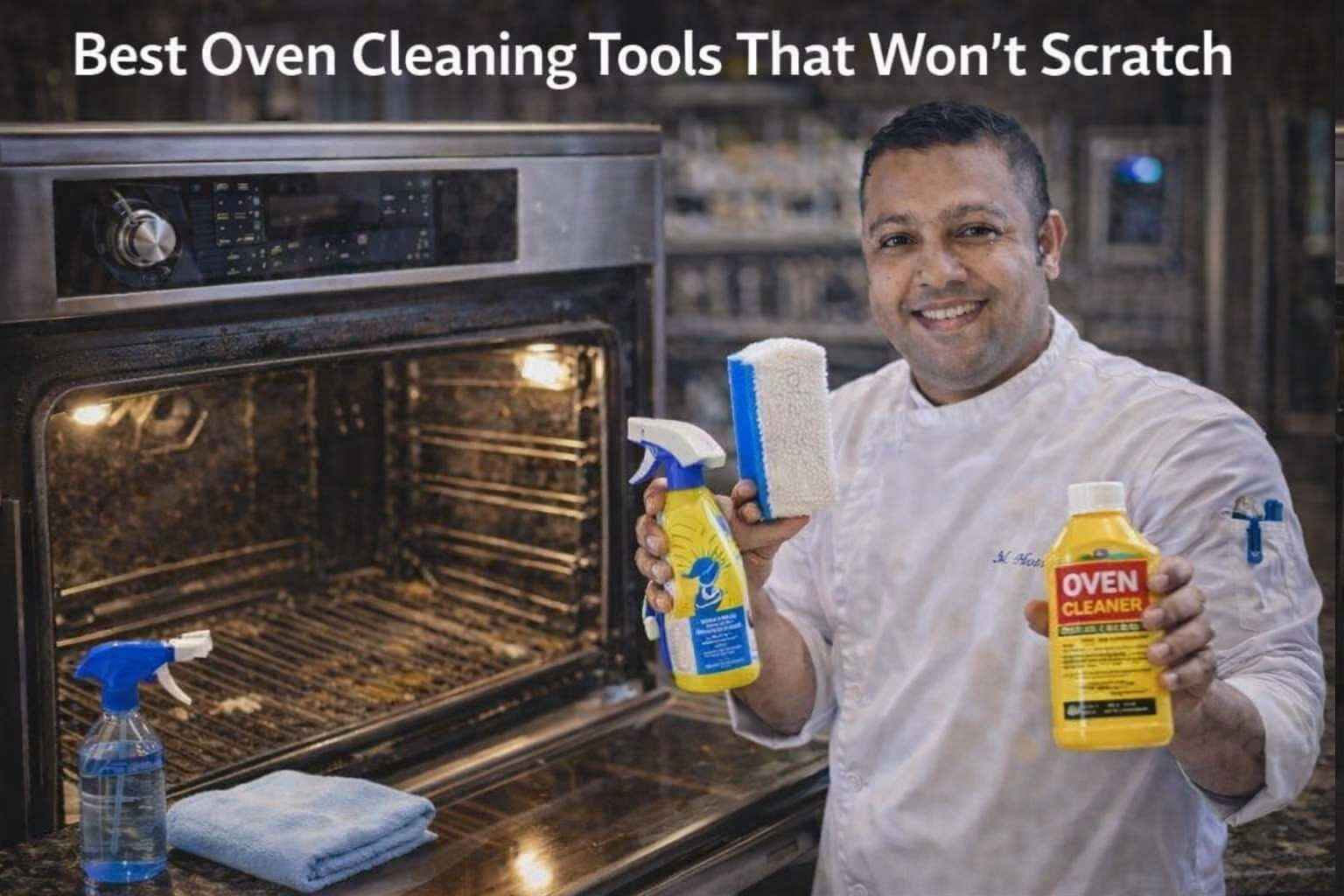
Hi, I’m Mossaraof. Do you dread scrubbing your oven because you fear leaving ugly marks on the glass? As a cook, I have found the Best Oven Cleaning Tools That Won’t Scratch and keep your kitchen shining like new. I will show you how to cut through tough grease without any harm to your gear. Check out my Professional’s Guide to Essential Cookware for more pro tips. Let’s get your oven clean the easy way!
Why Non-Scratch Cleaning Matters for American Kitchens
Scratches are more than just ugly to look at. They actually change how your oven cooks and smells over time.
The Hidden Cost of Scratched Enamel
Most ovens in the USA use porcelain enamel. It looks like blue paint. But it is actually glass fused to metal.
It is hard. But it is brittle. Once you scratch that coating, rust can start. The metal underneath is not safe from water.
I learned this the hard way with a rental unit in Chicago. I scrubbed too hard to get my deposit back.
The landlord saw the scratches. He charged me for the damage. It cost me hundreds of dollars.
Rough spots also hold onto carbon. This creates hot spots on the floor.
- Your cookies might burn on one side.
- Your pizza crust cooks unevenly.
- The heat does not flow right.
The “New Oven” Smell
Scratches act like tiny cups. They hold onto old food oils. You might wipe it “clean,” but oil hides in the cracks.
You turn on the oven for Thanksgiving. You expect the smell of turkey. Instead, it smells like the salmon you cooked last month.
It is gross. It changes the taste of fresh food. A smooth surface does not have this problem.
Chemical Safety in Home Kitchens
I worry about fumes. Harsh cleaners settle into scratches. They are hard to rinse out.
When you heat the oven to 400 degrees, those chemicals turn into gas. You breathe that in.
- It can sting your eyes.
- It smells like burning plastic.
- It is not safe for pets or kids.
You don’t want cleaning paste in your pizza crust. Smooth surfaces rinse clean fast. You just wipe and go.
Essential Criteria for Selecting Safe Cleaning Tools
Not all sponges are the same. Here is what I look for when I buy gear for my own kitchen.
Material Hardness and Composition
We need materials softer than glass but harder than burnt cheese. It is a balancing act.
In the science world, we use the Mohs Scale. Glass is about a 5.5. We need tools that are a 3 or 4.
- Plastic Scrapers: These are key. They snap before they scratch.
- Walnut Shells: These are great. They are tough but safe.
- Coconut Husks: A natural choice. They scrub well.
Avoid stone or metal. They are too hard. They will cut right into the finish.
Ergonomics and Grip
You need to reach the back corner. You do not want to burn your arm. The oven is a deep box.
I look for long handles. I also look for a good grip. Ovens are greasy places.
If your hand slips, you can bang your knuckles. That hurts. I have the scars to prove it.
A slick handle is dangerous. You want rubber or rough wood. You need control when you push hard.
Durability and Reusability
Some pads fall apart fast. One heavy scrub and they are gone. You end up with bits of plastic everywhere.
I hate that. It is a waste of money. I prefer tools I can wash.
- Dishwasher Safe: I toss them in with the plates.
- Long Life: Good tools last for months.
- No Shedding: Cheap pads leave blue fuzz behind.
A cheap pad that sheds is not worth it. You spend more time cleaning up the tool than the oven.
Top Rated Non-Scratch Scrapers
Sometimes you just need to chip off the big chunks. These tools do it safely without ruin.
Polycarbonate Scrapers
These are my favorite. Think of them like a thick credit card. They are simple plastic squares.
They flex just enough. If you hit a hard spot, they bend. They do not dig in.
I keep one in my apron pocket. They are cheap. You can buy them in packs of two or three.
Brand names don’t matter much here. Just look for “pan scrapers.” They are often sold for cast iron skillets.
- The Corners: Each corner has a different shape.
- The Edge: It is thin but dull.
- Versatility: Use them on glass or metal.
Be careful with the hinge. Sharp corners on plastic scrapers can get stuck in the door hinge.
Wooden Scrapers and Spatulas
Bamboo is a chef’s best friend. It is naturally clean. It fights bacteria.
It is very hard wood. But it is still softer than enamel. It will not scratch.
I use a flat wooden spatula for the oven floor. It covers a lot of space. It pushes the grease effortlessly.
Heat is not an issue. Wood won’t melt if the oven is still a little warm. Plastic might warp.
- Shape: Flat edges work best.
- Grip: Wood feels good in the hand.
- Care: Do not soak them in water.
Razor Blade Scrapers (The “Pro Only” Exception)
I hesitate to share this one. It works, but it is risky. You must be careful.
Only use this on the glass window. Never use a blade on the blue enamel. The metal is too soft.
The glass is harder. But you have to use the right angle. Keep it low.
- Wet Surface: Never scrape dry glass. Use soapy water.
- Low Angle: Keep it almost flat.
- Slow Passes: Do not rush.
If you hear a scratching sound, stop. You are digging in. Always retract the blade when done. Keep it high up, away from kids.
Best Soft Abrasive Pads and Sponges
After scraping, you need to scrub. These pads cut through grease films without sanding down the surface.
Walnut Shell Scouring Pads
These are a game changer. They use crushed shells for grit. The shell is softer than glass.
They look like brown sponges. They feel rough to the touch. But they act gentle.
I use them for the sticky spots. The spots that look like syrup.
- Texture: Tough but giving.
- Eco-Friendly: They are natural.
- Waste: They break down in the trash. No microplastics.
They do not last forever. But they do a great job while they last.
Microfiber Scrubbers
This is modern tech for the kitchen. The weave is special. Loops of fabric lift oil.
It is just polyester and nylon. There is zero scratch risk. You can scrub as hard as you want.
I use these for the final wipe. They grab the dirty water. They do not just push it around.
- Absorbency: They hold a lot of liquid.
- The Weave: It grabs dust and grease.
- Washable: Throw them in the laundry.
Do not use fabric softener. It coats the fibers. Then they won’t absorb water.
Silicone Scrubbers
Silicone is very popular now. It is hygienic. It does not hold bacteria like foam does.
Sponges can get gross. They smell like mildew. Silicone rinses clean instantly.
They are not great for hard carbon. They are too soft for that. But for fresh spills, they are perfect.
- Longevity: One scrubber lasts for years.
- Hygiene: No smells. No germs.
- Gentle: Safe for the door seal.
I keep one by the sink. I use it for the racks too. It gets between the wires.
Natural Cleaning Pastes to Pair with Your Tools
The tool is only half the battle. You need a lubricant to help it glide.
The Baking Soda and Water Method
This is the classic way. Every grandma in the US knows this trick. It is cheap and safe.
I mix 3 parts soda with 1 part water. I want a thick paste. It should feel like toothpaste.
I smear it all over the cold oven. I focus on the floor and the door.
- Time: Let it sit overnight.
- Action: It softens the carbon.
- Safety: It is non-toxic.
The next day, I spray it with vinegar. It fizzes. That is the fun part. The bubbles lift the dirt.
Coarse Salt for Extra Grit
Sometimes you need more power. I grab the Kosher salt. The grains are big and sharp.
I sprinkle it on fresh spills. The salt absorbs the fat. It pulls the oil out of the mess.
It adds scrubbing power. But it is safe. Why? Because salt dissolves.
If you scrub too hard, the salt melts. It won’t cut the glass.
- Application: Use on warm spills.
- Wiping: Use a damp cloth.
- Clean Up: The salt washes away easily.
Commercial Natural Cleaners
Sometimes you don’t have time to mix paste. You want a jar ready to go.
Look for citrus oils. Look for pumice. These are natural scrubbers.
“Pink” pastes are popular right now. I see them in every store. They work well.
They use fine grit. It cleans fast. But be careful with rinsing.
- Residue: They can leave a chalky film.
- Rinsing: You must rinse twice.
- Smell: They usually smell nice. Like grapefruit.
Step-by-Step Guide: Cleaning Without Damage
Here is my Sunday routine. Follow this order to get a showroom shine safely.
Preparation and Safety
First, make sure the oven is cold. Never spray cold liquid on hot enamel. It can crack. Thermal shock is real.
Take the racks out. They just get in the way. I take them to the bathtub.
Lay old towels on the kitchen floor. You will drip. Black water stains grout.
- Unplug: If you can, unplug the oven.
- Light: Turn on the kitchen lights. You need to see.
- Gloves: Wear rubber gloves. Protect your hands.
The “Soak and Sit” Technique
Patience is your best tool. Do not scrub yet. Let the chemistry work.
Spread your baking soda mix. Cover every nasty spot. Be generous.
Go watch a movie. Go to sleep. Give it 4 to 12 hours. The longer, the better.
If it dries out, spritz it with water. You want it damp. Dry paste does nothing.
The Gentle Scrub
Now you can scrub. Use circular motions. Like you are waxing a car.
Do not press too hard. Let the grit work. If it hurts your arm, you are pushing too hard.
Use the plastic scraper for the thick piles. They should pop right off now.
Use the walnut pad for the film. Work in small sections.
- Edges: Be careful near the heating element.
- Sensors: Watch out for the temp sensor. It is a little metal stick.
- Door: Do not let water drip into the vents.
The Final Rinse
This is the satisfying part. You need white vinegar.
Dip your microfiber cloth in vinegar. Wipe the paste. It will fizz again.
The vinegar cuts the soda residue. It leaves the glass shiny.
Keep wiping until the rag comes up clean. You might need three buckets of water.
- Dry: Use a soft cotton towel.
- Buff: Buff the glass window.
- Check: Turn on the oven light. Look for streaks.
Caring for Your Cleaning Tools
A dirty tool just spreads grease around. Keep your gear fresh for the next mess.
Cleaning Scouring Pads
Food gets stuck in the pads. It rots. It smells terrible.
I put my pads in the dishwasher. Top rack is best. The high heat kills germs.
If you don’t have a dishwasher, boil them. A pot of water on the stove works.
Boil for 5 minutes. It releases all the grease.
- Drying: Stand them up.
- Air Flow: Air stops mold.
- Storage: Keep them under the sink.
Maintaining Scrapers
Plastic edges get dull. They get jagged. A jagged edge can scratch.
Check the edge with your finger. If it feels rough, fix it.
You can sand it smooth. Use fine sandpaper. Or just buy a new one. They cost two dollars.
- Wood: Oil it sometimes.
- Soaking: Do not let wood soak in water. It will warp.
- Blades: Wipe razor blades dry immediately. Rust is the enemy.
When to Toss Them
Nothing lasts forever. If a sponge smells bad after washing, toss it.
If a scraper is cracked, toss it. It is not worth the risk.
I replace my heavy-duty pads every month. I cook a lot. You might get three months.
- Smell Test: If it stinks, it goes.
- Visual Test: If it is falling apart, it goes.
- Feel Test: If it is too soft, it goes.
Common Mistakes That Ruin Ovens
I have seen cooks make these errors. Learn from our kitchen nightmares.
Using Steel Wool on Enamel
I see this the most. People think, “It works on my pots!”
Yes, it works on stainless steel pots. But your oven is not a pot.
It looks clean at first. But you sanded off the shine. The next week, it gets dirty faster.
There is no fix. You can’t paint the inside of an oven. You have to live with the rough patch.
Ignoring Spills Until They Bake On
We all do it. A pie bubbles over. We say, “I’ll clean it later.”
Then we bake a lasagna. Then we roast a chicken. The spill burns again and again.
It turns into hard carbon. It fuses to the floor.
- The Fix: Wipe spills as soon as the oven is cool enough.
- The Habit: Check the floor every time you cook.
- The Shield: Use a baking sheet on the bottom rack to catch drips.
Mixing Chemicals
This is dangerous. Never mix bleach with oven cleaner.
Commercial cleaners have strong stuff in them. If you add bleach, it creates toxic gas.
I cleared a kitchen out once because of this. The fumes were overwhelming.
- Rule: Stick to one cleaner at a time.
- Natural: Soda and vinegar are safe to mix.
- Ventilation: Always open a window. Turn on your hood fan.
FAQs: Best Oven Cleaning Tools That Won’t Scratch
What are the best oven cleaning tools that won’t scratch surfaces?
The best oven cleaning tools that won’t scratch include silicone scrubbers, microfiber cloths, and non-scratch sponges. They lift grease and grime while protecting oven glass and enamel surfaces.
Are non-scratch oven scrubbers effective for tough grease?
Yes. Non-scratch oven scrubbers can remove baked-on grease when used with a mild oven cleaner. They clean safely without damaging oven walls, racks, or glass doors.
Can I use a microfiber cloth to clean my oven safely?
Yes. A microfiber cloth is one of the best oven cleaning tools that won’t scratch. It traps grease and food residue easily while keeping delicate oven surfaces safe.
Why should I avoid steel wool for oven cleaning?
Steel wool can scratch oven glass, enamel, and coated racks. Using non-scratch oven cleaning tools like soft scrub pads or silicone brushes helps keep your oven surfaces smooth and damage-free.
How often should I use non-scratch oven cleaning tools?
Use non-scratch oven cleaning tools after spills or once every few weeks. Regular gentle cleaning prevents heavy buildup and keeps your oven looking clean without harsh scrubbing.

I’m Mossaraof, a trained chef and the founder of OvenInsights.com. I spent years cooking at Larrupin’ Cafe and in kitchens across Chicago and Seattle. Now I test kitchen gear for a living. I moved to North Acton, London, and I test every tool I write about. I use real meals and real heat. No brand deals. No shortcuts. I cover 12 kitchen types and hundreds of recipes. I believe this: the right tools matter as much as the recipe.