Hey, I’m Mossaraof — a professional cook and food blogger.
We all want to understand the heat dancing inside our stoves so we can choose the right technique for a perfect, golden finish every time. I will show you the differences between baking vs roasting vs broiling so you can master the texture of your meals, from soft, airy breads to charred, succulent meats.
My years in a busy Chicago kitchen taught me that knowing which type of heat to use is the true secret to moving from a home cook to a kitchen pro. Use my Ultimate Guide to Master Your Oven to find the best rack height and settings for each of these essential methods. Let’s grab your favorite pan and break down these three heat styles together right now!
🔥 What’s the Difference, Really? (And Why It Matters in a U.S. Kitchen)
I used to treat those buttons like they were interchangeable. I’d bake a frozen pizza with the broil setting once. Big mistake. Crispy top, raw bottom.
🔄 Dry Heat Cooking Methods: The Big Three
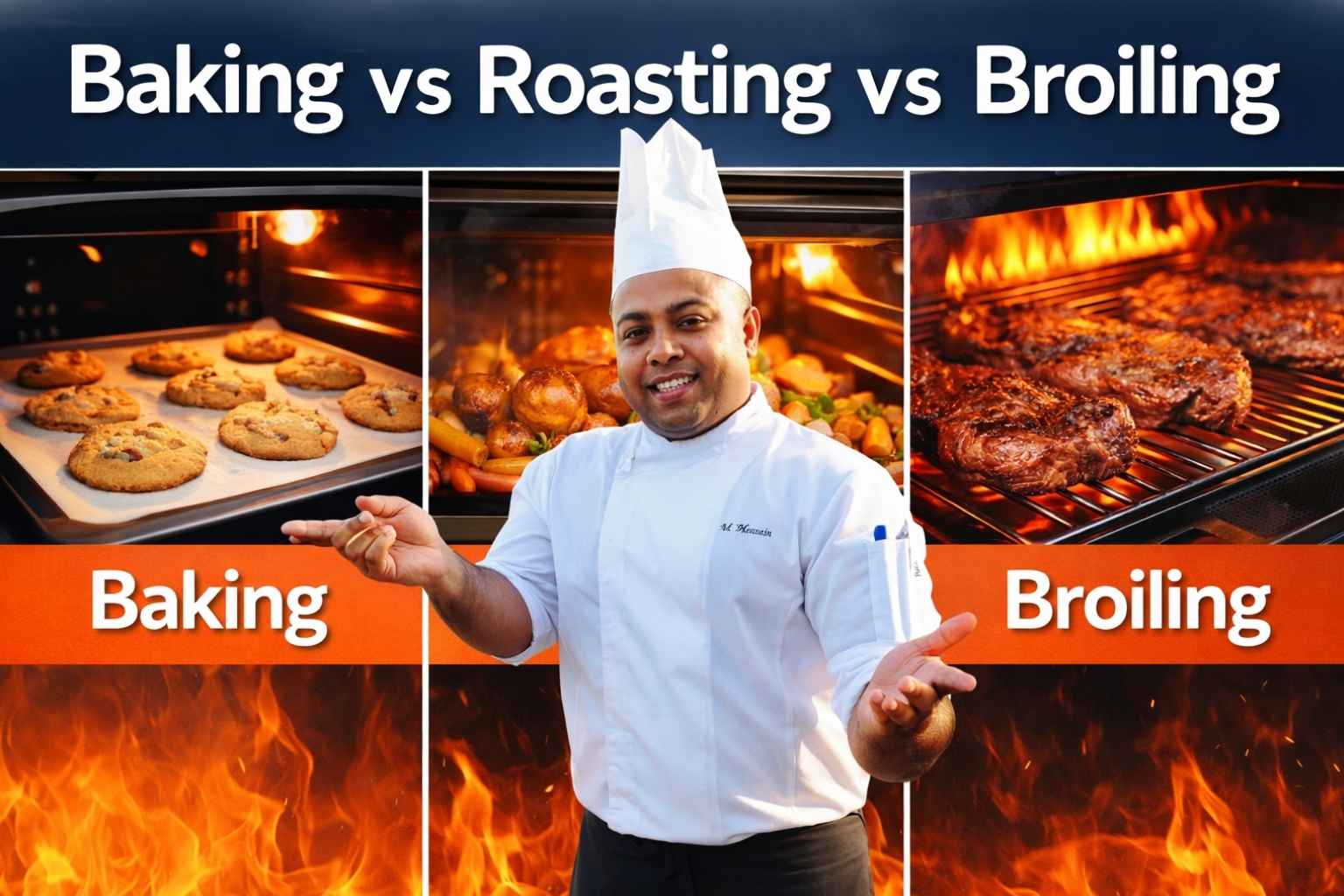
- Baking: Steady heat all around the food
- Roasting: Higher temps, encourages browning
- Broiling: Heat blasts down from the top
📍 Why U.S. Kitchens Make It Trickier
- Gas ovens (like mine in Florida): Heat fast but run moist
- Electric ovens (like the one I used in a Chicago rental): Even but slow to preheat
- Old apartments: Sometimes have weak broilers or missing calibration
Knowing which setting to use has saved me from ruined dinners more times than I can count.
🧱 Baking: Gentle Heat, Precise Results
This is my go-to when I want softness, structure, or even cooking. Breads, cakes, lasagna — they all thrive here.
📦 What I Use It For
- Cookies, muffins, quick breads
- Casseroles and layered dishes
- Quiches, frittatas
🔧 How Baking Works
- Lower oven temps: 300–375°F
- Heats from bottom (sometimes both top and bottom)
- Longer cook times but more control
🥵 U.S. Oven Issues I’ve Faced
- In humid Florida, cookies take longer to crisp
- My electric oven in Michigan kept an even bake but took forever to preheat
- Older ovens? Temperature swings up to 25°F (tested with my Taylor thermometer)
🍰 What’s Gone Wrong
- Burned bottoms with dark pans
- Muffins sank from opening the door too early
- Uneven baking when I forgot to rotate pans halfway
Baking rewards patience. It doesn’t forgive shortcuts.
🥕 Roasting: High Heat, Bold Flavor
When I want crisped edges and browned tops, roasting is my best friend. Especially in winter.
🥩 What I Roast Regularly
- Chicken thighs with skin on
- Carrots, Brussels sprouts, sweet potatoes
- Pork tenderloin with rosemary
🪼 How Roasting Works
- High oven temps: 400–475°F
- Dry heat, often uncovered
- Caramelization = flavor bomb
🌭 U.S. Kitchen Specifics
- In Arizona, food roasts faster — the air is dry
- In Minnesota winters, I have to preheat longer for stable temps
- I use my Lodge cast iron pan for meats — it holds and distributes heat evenly
🍽️ Real-Life Mess-Ups
- Overcrowded my sheet pan → steamed, not roasted
- Used olive oil on high heat → smoky mess
- Forgot to flip veggies → burnt bottoms, raw tops
Roasting makes things taste better than they should — when done right.
🔥 Broiling: Fast, Direct, and a Little Wild
I use this when I want that seared finish or bubbling top. But I never walk away.
🍔 What I Broil
- Salmon fillets
- French bread pizza
- Cheese-topped casseroles
⚖️ What Broiling Really Does
- Heats from top only
- High intensity, short bursts
- Usually 500°F or more
🛡️ Watchouts in U.S. Homes
- Some ovens don’t broil with the door closed (safety sensor)
- My Frigidaire gas oven broiler is strong — too strong
- Aluminum foil reflects too much heat — caused flare-ups
🚨 Close Calls I’ve Had
- Cheese overflow → set off smoke alarm
- Broiled too long → fish dried out, blackened edges
- Used a glass dish once → cracked from the heat
Broiling is intense. One second too long? It’s gone.
📊 Side-by-Side: Baking vs Roasting vs Broiling
Here’s how I think about it when I’m staring at the oven dial:
| Method | Temp Range | Heat Source | Texture | Best For |
|---|---|---|---|---|
| Baking | 300–375°F | Bottom | Soft, uniform | Cakes, breads, eggs |
| Roasting | 400–475°F | Bottom | Crispy, browned | Meats, veggies |
| Broiling | 500°F+ | Top | Charred, crisp | Cheese, thin meats |
It’s less about the food and more about the finish you want.
🧪 Oven Behavior Across the U.S.
I’ve cooked in every type of oven across multiple states. Here’s what changes.
🔌 Electric vs Gas
- Electric: Even heat, drier, slow to preheat
- Gas: Moist heat, quick response, uneven sometimes
💨 Convection vs Standard
- Convection fans = better browning
- I drop temp 25°F when using convection (especially for cookies)
- My Whirlpool convection oven in Chicago cooks faster
🔢 How I Check Oven Accuracy
- Thermometers in 3 zones (left, center, right)
- Bread slice test (toasted edges show hot spots)
- Sugar melt test in a muffin tin (uneven caramel = uneven oven)
Some ovens lie. Mine said 375°F but ran 410°F. That’s a ruined soufflé.
🧑🍳 Real Meals I’ve Cooked — And Why I Chose That Method
This part’s fun. These are actual days from my life.
🌮 Tuesday: Taco Night
- Roasted bell peppers and onions on a sheet pan
- Broiled tortillas for 30 seconds per side (crispy edges)
🍽️ Sunday: Baked Ziti in Minnesota
- Baked covered at 350°F
- Removed foil, broiled top for 90 seconds → golden cheese
🥩 Friday: Ribeye Steak Craving
- Roasted thick-cut ribeye at 425°F in cast iron
- Broiled top for 2 minutes → steakhouse-style crust
🍝 Wednesday: Roasted Veggie Bowl
- Used leftover veggies from Sunday’s dinner
- Reheated under broiler for a crisp finish
🛠️ Tools I Swear By (and a Few I Regret)
Gear makes a difference. These are the ones I keep reaching for.
✅ My Keepers
- Lodge cast iron: Heats evenly, perfect for roasting
- Light metal sheet pans: Avoids over-browning
- ThermoWorks thermometer: Trust it over the oven dial
- Silicone mats: Help with sticking during baking
❌ Regrets I’ve Had
- Glass dish under broiler = crack city
- Thin, cheap pans = warp at high heat
- Overcrowding trays = steam instead of crisp
I’ve tossed more bad pans than I care to admit.
📝 What Your Oven Labels Don’t Tell You
Even with labels, ovens vary wildly.
📄 From My U.S. Experience
- Whirlpool: Even baking, broiler needs watching
- Frigidaire: Fast preheat, strong broil, uneven sides
- GE: Steady but slow, convection helps a lot
⚖️ Manual Tweaks I Do
- I calibrated mine +15°F (based on thermometer tests)
- I preheat 10 minutes past the beep
- I use sticky notes with temp offsets — yes, really
🏡 How Climate Affects Cooking Style
Where I am changes what works best. Here’s what I’ve learned.
☀️ Florida
- Humidity slows browning
- Dough spreads faster
- Breads bake softer
❄️ Midwest Winters
- Ovens cool faster when opened
- I increase bake time slightly
- Roasting takes longer to reach caramel stage
🔥 Arizona Summers
- Food cooks faster
- I reduce roasting temps by 15°F
- Great for broiling fish — quick, clean finish
🍳 What I Teach New Cooks
If you’re just starting out, here’s how I walk people through it.
📅 Simple Tips
- Always preheat, even for roasting
- Don’t crowd pans → allow air to flow
- Rotate trays halfway for even cooking
- Know rack positions: top = broil, middle = bake, bottom = crispy
📚 Try These Dishes First
- Baking: Banana bread, cookies, egg casserole
- Roasting: Carrots, chicken thighs, potatoes
- Broiling: Garlic bread, salmon, cheesy nachos
I wish someone had shown me this when I started.
👨🍳 From My Kitchen to Yours
Every oven I’ve used has had its quirks. Some ran hot, others slow. Some cooked unevenly until I learned to work around it.
Understanding the difference between baking, roasting, and broiling changed how I cook. It’s not just about technique — it’s about paying attention. Knowing what you want the food to look, taste, and feel like.
Sometimes the only way to learn is to burn a few things. And that’s okay.
Just don’t do it with glass under a broiler. Trust me on that one.
FAQs
What’s the main difference between baking, roasting, and broiling?
Baking uses gentle, even heat. Roasting adds high heat for browning. Broiling blasts heat from above for quick, crispy finishes.
When should I use roasting instead of baking?
Use roasting for meats and veggies when you want crisp edges. Baking is better for soft textures like bread or cake.
Can I broil food in a regular oven without a special setting?
Yes, most ovens have a broil mode. Just place the rack near the top and watch closely — broiling cooks fast.
Why does my food burn when I broil it?
Broiling uses intense heat. Food burns if left too long or placed too close. Stay nearby and check often to prevent overcooking.
Is convection better for baking or roasting?
Convection works great for both. It helps food cook evenly and browns faster. Just lower the temp by 25°F when using it.

I’m Mossaraof, a trained chef and the founder of OvenInsights.com. I spent years cooking at Larrupin’ Cafe and in kitchens across Chicago and Seattle. Now I test kitchen gear for a living. I moved to North Acton, London, and I test every tool I write about. I use real meals and real heat. No brand deals. No shortcuts. I cover 12 kitchen types and hundreds of recipes. I believe this: the right tools matter as much as the recipe.