At A Glance
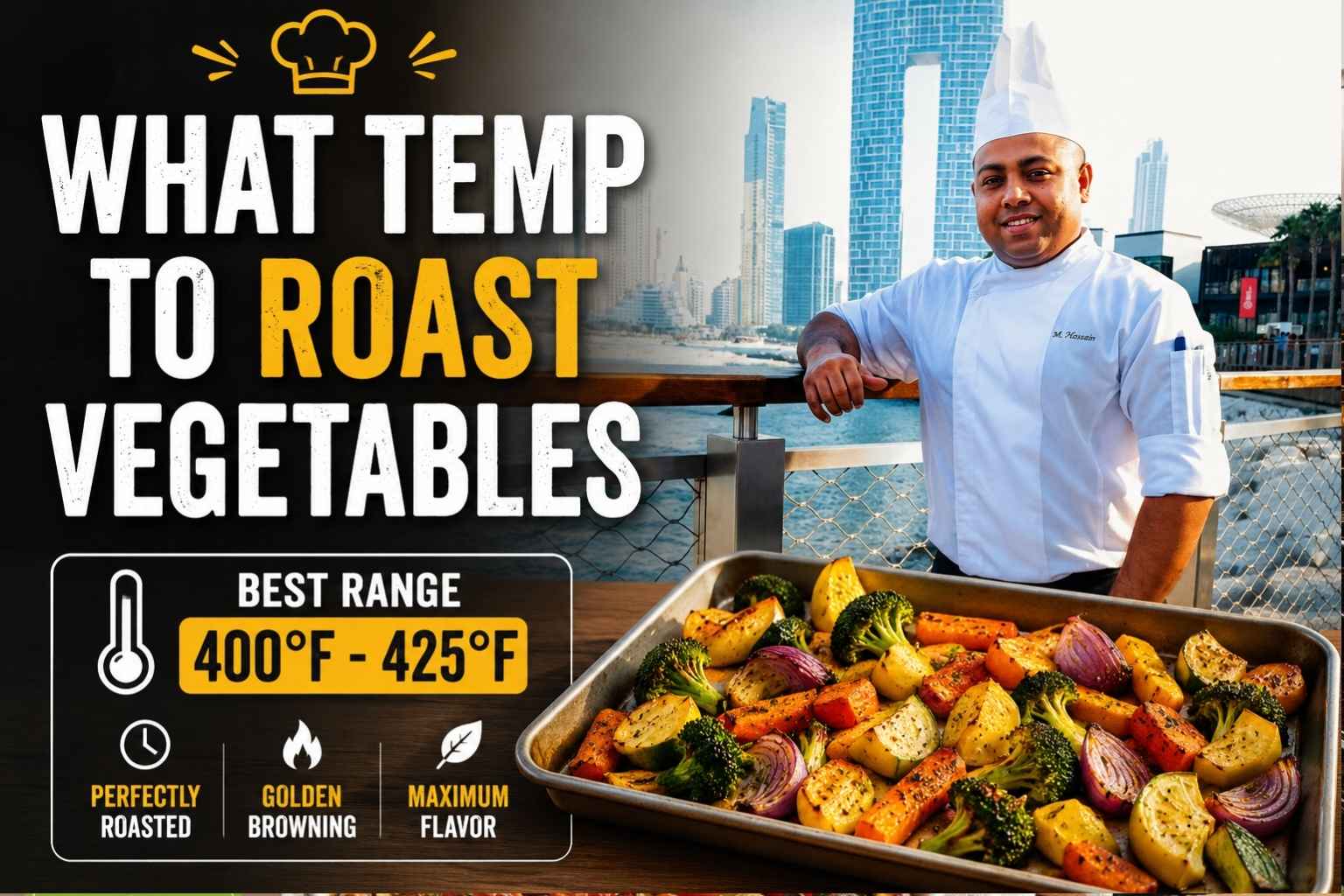
- Roast most vegetables at 400-425°F (204-218°C) – this range drives caramelization without burning.
- Dense vegetables like carrots and beets need 400-425°F for 35-45 minutes. Thin, quick-cooking vegetables like asparagus and zucchini do best at 425-450°F for 12-18 minutes.
- Convection ovens cook faster and more evenly than conventional ovens – drop the temperature by 25°F when switching modes.
- Overcrowding your sheet pan is the single most common roasting mistake. It turns roasting into steaming, and your vegetables come out soft and pale instead of browned and crisp.
- Use an oil with a smoke point above your roasting temperature – avocado oil (520°F smoke point) is the safest all-purpose choice for high-heat roasting.
Burnt edges. Soggy middles. Sound familiar? I used to pull sad, limp veggies out of my oven all the time, until I learned the real answer to what temp to roast vegetables. After 15 years in professional kitchens, I can tell you the magic number changes everything. In this guide, I’ll share my go-to temps, timing tricks, and a few chef secrets that make veggies taste like a treat, not a chore. Grab your favorite pan, and let’s get those veggies golden and crisp!
Why Temperature Is the Most Important Variable When Roasting Vegetables
The right temperature determines whether your vegetables brown or steam, caramelize or burn. Get it wrong by even 50°F in either direction, and you lose either flavor or texture – sometimes both.
Two chemical reactions drive good roasting results: the Maillard reaction and caramelization.
The Maillard reaction is what creates the deep brown crust on meat and vegetables. It starts at around 280-330°F (138-165°C) at the surface of the food (America’s Test Kitchen, 2023). Caramelization – the breakdown of sugars into complex, slightly bitter-sweet compounds – begins around 320°F (160°C) for fructose and around 338°F (170°C) for sucrose (Serious Eats, 2022).
Here is the practical takeaway: your oven needs to run hot enough that the surface of the vegetable reaches these temperatures quickly, before the inside turns to mush. That is why roasting at 325°F usually produces disappointing results. The vegetable cooks through before its surface has time to brown properly.
At the same time, moisture matters. Vegetables contain a lot of water. As they heat, they release steam. If that steam cannot escape – because the pan is crowded or the temperature is too low – the vegetables braise themselves instead of roasting. They turn soft and grey. The right temperature drives that moisture out fast enough to allow browning.
Roasting Temperature Reference: The Complete Chart by Vegetable Type
Use this table as your baseline. These are the temperatures I return to every time, based on 15 years of cooking in professional kitchens and testing at home.
| Vegetable | Temp (°F) | Temp (°C) | Time (approx.) | Notes |
|---|---|---|---|---|
| Beets (whole, medium) | 400°F | 204°C | 50-70 min | Wrap in foil to steam-roast, then unwrap last 10 min |
| Carrots (halved lengthwise) | 425°F | 218°C | 25-35 min | Cut uniform pieces for even cooking |
| Parsnips (quartered) | 425°F | 218°C | 25-30 min | High sugar content – watch for burning after 25 min |
| Sweet potatoes (1-inch cubes) | 400°F | 204°C | 30-40 min | Lower temp prevents exterior burning before center cooks |
| Potatoes (Yukon Gold, cubed) | 425°F | 218°C | 30-40 min | Par-boil 5 min first for crispier results |
| Cauliflower (florets) | 425°F | 218°C | 25-35 min | Flat side down on the pan – that is your browning surface |
| Broccoli (florets) | 425-450°F | 218-232°C | 18-22 min | High heat fast – broccoli tips burn beautifully at 450°F |
| Brussels sprouts (halved) | 425°F | 218°C | 20-25 min | Cut side down, do not stir until the last 5 min |
| Asparagus (medium spears) | 425-450°F | 218-232°C | 10-14 min | Thin spears: 10 min. Thick spears: 14 min max |
| Zucchini (half-inch rounds) | 425°F | 218°C | 12-16 min | Single layer only – this vegetable releases a lot of water |
| Bell peppers (strips) | 400-425°F | 204-218°C | 20-30 min | Lower temp gives you tender and sweet; higher gives you char |
| Red onions (wedges) | 400°F | 204°C | 30-40 min | Goes jammy and sweet at 400°F; bitter and burned above 450°F |
| Cherry tomatoes (whole) | 375-400°F | 190-204°C | 20-30 min | Too much heat and they explode and dry out |
| Kale (torn leaves) | 300-325°F | 149-163°C | 10-15 min | Kale is not really roasted – it is crisped. Low and slow is the rule here |
| Garlic (whole head, top cut off) | 375°F | 190°C | 40-50 min | Roasts best low and slow; high heat burns the outer cloves before the center softens |
| Fennel (wedges) | 400°F | 204°C | 30-35 min | Flat side down; the fronds burn so remove them before roasting |
Why 400°F Is the Default Temperature — and When It Is Wrong
Most cookbooks default to 400°F (204°C), and for good reason. It works reliably for the widest range of vegetables. At 400°F, you get consistent browning without a narrow margin for error. You can walk away for 30 minutes and most vegetables will not burn.
But 400°F is not always right.
It is too low for broccoli, asparagus, and Brussels sprouts. These vegetables benefit from fast, aggressive heat. At 400°F, they cook through before the surface develops any real color. Push them to 425-450°F and you get browned edges, slightly charred floret tips, and a much better flavor.
It is too high for cherry tomatoes, whole garlic, and kale. Tomatoes split and dry out too fast. Garlic burns on the outside before the center gets creamy. Kale turns to ash. These need 300-375°F depending on the result you want.
It is also wrong at altitude. At elevations above 3,500 feet, water boils at a lower temperature – around 203°F instead of 212°F at sea level (King Arthur Baking, 2024). That means vegetables release their moisture faster and can dry out before they brown. At altitude, increase your roasting temperature by 15-25°F and check for doneness 5-10 minutes earlier than the recipe says.
The rule I follow: start with 425°F as your default, not 400°F. Most vegetables respond better to slightly higher heat, and the browning is visibly better. Drop to 400°F only for dense, sugar-heavy vegetables that need more time to cook through.
Temperature Breakdown by Vegetable Category: Dense vs. Quick-Cooking
Dense Root Vegetables: 400-425°F for 30-45 Minutes
Dense vegetables – carrots, parsnips, sweet potatoes, turnips, beets – need sustained heat to cook through. Their cell structure is tight, and heat transfers slowly from the outside in.
At 400-425°F, the exterior browns in the first 15-20 minutes while the interior has enough time to soften completely. Go higher and you risk burning the outside before the center is done.
One technique I use for large root vegetables: start covered with foil for the first 15-20 minutes, then uncover. The foil traps steam and jumpstarts the interior cooking. Once you remove it, the surface has a chance to brown. This works especially well for thick carrot halves and whole beets.
Quick-Cooking Vegetables: 425-450°F for 10-20 Minutes
Broccoli, asparagus, zucchini, green beans, and snap peas have a soft, high-moisture structure. They cook fast. They also need a short, hot blast of heat to caramelize the surface before they turn limp.
At 425-450°F, broccoli florets get lightly charred at the tips – that is the flavor you are after. At 400°F, the same broccoli comes out dull and army-green.
Watch the time closely with these. There is maybe a 3-4 minute window between perfectly roasted asparagus and rubbery-then-shriveled asparagus. Set a timer.
How to Roast Dense and Quick-Cooking Vegetables Together on One Pan
This is one of the most common home-cooking problems I see. People want to roast a mix of vegetables – say, sweet potatoes and broccoli – but they hit the pan at the same time and come out at different stages of done.
The fix is simple: stagger your start times.
Put the dense vegetables in first at 425°F. After 20-25 minutes, add the quick-cooking vegetables to the same pan. Everything finishes at roughly the same time and at the same temperature.
If you want everything to go in at once, cut the dense vegetables smaller and the quick-cooking vegetables larger. Size adjusts cooking time more than most people realize. A 1/2-inch sweet potato cube roasts in about 20 minutes. A 1-inch broccoli floret takes about 18 minutes. Now they are in the same time range.
Convection vs. Conventional Oven: Which Setting to Use for Roasting
Use convection for roasting vegetables whenever you have the option. Convection fans circulate hot air around the food, which does two things: it drives moisture away from the surface faster, and it keeps the oven temperature consistent instead of creating hot and cool spots.
The result is better browning, especially on the tops of vegetables, and a more even cook across a full sheet pan.
The temperature adjustment rule: when using convection, drop the oven temperature by 25°F from what the recipe states (Cook’s Illustrated, 2023). A recipe that calls for 425°F in a conventional oven becomes 400°F in convection mode. Cooking time may also drop by 10-15%.
If your oven has a convection roast setting (separate from convection bake), use that for vegetables. Convection roast typically runs the fan at higher speed, which helps more with browning.
One thing to watch: convection dries out thin, delicate vegetables faster. Asparagus and cherry tomatoes can shrivel before they brown properly under aggressive convection heat. For those, conventional mode at the same temperature often gives a better result.
Oil Choice and Smoke Point: Why They Matter at High Roasting Temperatures
Every oil has a smoke point – the temperature at which it starts to break down, smoke, and develop bitter, acrid flavors. If you roast at 450°F with an oil that smokes at 375°F, your vegetables will taste burnt even if they are not.
Here are the oils I use and when:
| Oil | Smoke Point | Best Use |
|---|---|---|
| Avocado oil | 520°F (271°C) | High-heat roasting at 450°F+ |
| Refined coconut oil | 450°F (232°C) | 425-450°F roasting |
| Ghee (clarified butter) | 450°F (232°C) | 400-425°F, adds richness |
| Light olive oil (refined) | 465°F (240°C) | Up to 450°F roasting |
| Extra virgin olive oil | 375-405°F (190-207°C) | Best at 375-400°F only |
| Unrefined sesame oil | 350°F (177°C) | Finishing oil only – not for roasting |
Extra virgin olive oil is the one that trips people up most often. It is the most popular roasting oil by far, but its smoke point sits at 375-405°F depending on the brand and quality (Serious Eats, 2023). At 425°F or above, it will smoke and add a slightly bitter edge to your vegetables.
My everyday pick for high-heat roasting is refined avocado oil. It has a neutral flavor, a very high smoke point, and handles 450°F without any issue. For anything at 400°F or below where I want a richer flavor, I use a mix of ghee and extra virgin olive oil – half and half.
Coat your vegetables with just enough oil to gloss them, not drench them. About 1.5-2 tablespoons per pound of vegetables is the right amount (America’s Test Kitchen, 2022). Too much oil and the vegetables fry in pooled fat rather than roasting in dry heat.
Sheet Pan Size, Spacing, and Overcrowding: The Hidden Temperature Problem
Here is what most home cooks do not realize: overcrowding your sheet pan lowers the effective cooking temperature your vegetables experience. Not the oven temperature – the temperature at the surface of the food.
When vegetables are packed close together, they release steam. That steam collects around the food and creates a humid microclimate. Instead of dry oven air at 425°F hitting the surface of each vegetable, you have moist air that sits much cooler. The vegetables braise instead of roast.
The result: pale, soft vegetables with no browning and a slightly waterlogged texture.
The fix is giving every piece of vegetable at least 1/2 inch of space on all sides. That gap lets air circulate and moisture escape.
For practical purposes, this means: one pound of vegetables per standard half-sheet pan (18×13 inches). If you are cooking for four people and have 2-3 pounds of mixed vegetables, use two sheet pans on separate oven racks.
If you must use a single pan, roast in batches. Pull the first batch off when done and set it aside. The texture holds well for 10-15 minutes while the second batch finishes.
One more detail that matters: sheet pan material. Dark pans absorb more radiant heat and brown the bottom of vegetables faster. Light aluminum pans reflect heat and give a more even cook. I prefer a heavy-gauge light aluminum half-sheet pan – the kind used in professional kitchens – for most vegetable roasting. The bottom does not brown faster than the top, and the vegetables cook evenly.
When to Roast Low and Slow vs. High and Fast: Trade-Offs in Flavor and Texture
High-heat roasting (425-475°F) gives you caramelized, slightly crispy exteriors and a concentrated flavor. The moisture drives off quickly, the sugars brown fast, and the texture has a little bite. This is the right method for almost every vegetable you want to eat as a side dish or add to a salad.
Low-and-slow roasting (300-375°F) gives you soft, jammy, deeply sweet vegetables with almost no crust. The moisture stays in longer, the sugars caramelize slowly without browning heavily, and the texture becomes almost spreadable. This is the right method for roasted garlic, slow-roasted tomatoes, and caramelized onions that you plan to use as a condiment or sauce base.
Think of it this way: high heat for eating as-is, low heat for turning into a sauce, spread, or flavor base.
There is a middle ground too. Roasting at 375-400°F for a longer time – 40-60 minutes – gives you tender vegetables with moderate browning. This works well for fennel, beets, and red onions where you want the full sweetness to develop without rushing the process.
My personal preference for most weeknight cooking: 425°F, single layer, no touching. That setting covers 80% of what I roast and rarely fails.
8 Common Roasting Mistakes and How to Fix Them
Mistake 1: Cold vegetables straight from the fridge. Cold vegetables release more steam when they hit the hot oven, which slows browning. Let vegetables sit at room temperature for 15-20 minutes before roasting. It makes a visible difference in how fast the browning starts.
Mistake 2: Not drying the vegetables before oiling. Wet vegetables steam instead of roast. After washing, dry thoroughly with a clean kitchen towel or paper towels. This is especially important for mushrooms, which hold a lot of surface moisture.
Mistake 3: Cutting pieces unevenly. A pan with some half-inch pieces and some two-inch pieces will always produce mixed results. Small pieces burn before large ones cook through. Take one extra minute to cut everything the same size – it matters more than any other prep step.
Mistake 4: Using the wrong oil for high heat. As covered in the oil section: extra virgin olive oil smokes above 405°F. Use refined avocado oil, refined coconut oil, or ghee for anything above 400°F.
Mistake 5: Opening the oven too often. Every time you open the oven door, the temperature drops 25-50°F (Bon Appétit, 2022). It takes several minutes to recover. Open the oven once at the halfway mark to flip the vegetables, then leave it alone until the timer goes off.
Mistake 6: Stirring too early. The browning on the bottom of each piece needs time to set before you move it. If you stir or flip too early, you pull the vegetable off its developing crust and it ends up pale. Wait until at least the halfway point – usually 15-20 minutes in – before you touch anything.
Mistake 7: Roasting at the wrong oven rack position. The bottom rack gets the most direct heat from the heating element. The top rack runs hotter because heat rises. For most vegetable roasting, the middle rack gives the most even result. If you are running two pans, use the second and fourth rack positions and swap them halfway through.
Mistake 8: Not adjusting for altitude. At elevations above 3,500 feet, lower air pressure means water evaporates faster from food. Vegetables at altitude can dry out before they properly brown. Add 15-25°F to your target temperature and check doneness 5-10 minutes earlier than a sea-level recipe suggests (King Arthur Baking, 2024).
My Go-To Roasting Routine After 15 Years in Professional Kitchens
I have roasted vegetables in Michelin-starred kitchens, catering operations, and my own apartment. The routine I always come back to is this:
Preheat the oven to 425°F with the pan inside. Starting with a cold pan means the bottom of your vegetables heats up slowly. A preheated pan gives you immediate bottom contact heat and starts the browning from the second the vegetable hits the surface. I learned this the hard way after years of wondering why restaurant Brussels sprouts had better bottoms than mine at home.
Use a heavy aluminum half-sheet pan. No parchment paper for anything I want truly brown – parchment insulates the bottom slightly. For any vegetable I want charred and crispy on the bottom, I go bare pan with a thin film of oil.
Season after oiling, not before. Salt draws moisture out of vegetables. If you salt first, then oil, then wait while the rest of your ingredients are prepped, you will see water beads forming on the surface. Season right before the pan goes in.
Roast at 425°F for 20 minutes, flip once, check every 5 minutes after that. This covers most of my vegetable work. I adjust down to 400°F for anything particularly dense or sugar-heavy – sweet potatoes, beets, parsnips.
Finish with a splash of acid. After roasting, a quick squeeze of lemon juice or a small splash of sherry vinegar over the hot vegetables wakes everything up. It contrasts the sweetness from caramelization and makes the dish taste more alive. This is the step most home cooks skip and the one professional cooks never forget.
Frequently Asked Questions About Roasting Vegetables
What temperature do you roast vegetables at for the best results?
For most vegetables, 400-425°F (204-218°C) gives the best results. This range is high enough to drive caramelization and browning without burning thin edges. Quick-cooking vegetables like broccoli and asparagus do better at 425-450°F. Dense root vegetables like beets and sweet potatoes do better at 400-425°F where they have time to cook through before the surface burns.
How long does it take to roast vegetables at 400°F?
At 400°F, most vegetables take between 25 and 45 minutes, depending on density and cut size. Root vegetables cut into 1-inch pieces take 35-45 minutes. Broccoli and cauliflower florets take 25-35 minutes. Asparagus and zucchini take 15-20 minutes. Always check at the earlier end of the range and add time in 5-minute increments.
Does roasting temperature change for frozen vegetables?
Yes. Frozen vegetables contain more surface ice and moisture, which creates steam in the oven and slows browning. Roast frozen vegetables at 450°F instead of 400-425°F – the extra heat drives off the moisture faster. Spread them in a single layer with extra space between pieces and do not thaw them first. Thawed frozen vegetables turn soft and mushy before they brown.
Should I cover vegetables when roasting them?
For most vegetables, no. Covering traps steam and prevents browning. The only time I cover vegetables during roasting is for dense root vegetables in the first 15-20 minutes – a loose foil tent helps the interior cook faster. I always remove the cover for the final 15-20 minutes to let the surface brown.
What is the difference between roasting and baking vegetables?
Roasting uses high dry heat (typically 400°F+) and produces browning on the surface through the Maillard reaction and caramelization. Baking typically refers to cooking at lower temperatures (300-375°F) with more moisture retention. In practice, the terms are used interchangeably, but if a recipe says “roast,” it means high heat and expects browning.
Why are my roasted vegetables soggy instead of crispy?
Soggy roasted vegetables are almost always caused by one of three things: overcrowding the pan (steam cannot escape), too much oil (the vegetables fry instead of roast), or an oven temperature that is too low (moisture does not evaporate fast enough). Fix all three at once – one layer of vegetables per pan with space between each piece, a thin film of high-smoke-point oil, and an oven set to at least 425°F.
Can I roast vegetables at 500°F?
Yes, but you need to stay at the oven and watch carefully. At 500°F, thin vegetables like asparagus are done in 6-8 minutes and can burn in 10. I use 500°F only for cherry tomatoes I want blistered and slightly charred, or for broccoli where I specifically want aggressive char on the tips. For everything else, 425-450°F gives good browning without the risk.
Does altitude affect how long it takes to roast vegetables?
Yes. At elevations above 3,500 feet, water evaporates faster due to lower atmospheric pressure (King Arthur Baking, 2024). Vegetables at altitude lose moisture more quickly, which can cause them to dry out before their surface browns properly. Increase your roasting temperature by 15-25°F and start checking for doneness 5-10 minutes before the recipe’s stated time.
Key Takeaways
- Default to 425°F, not 400°F, for most vegetables – the browning is visibly better.
- Match temperature to vegetable density: root vegetables need 400-425°F for 30-45 minutes; quick-cooking vegetables need 425-450°F for 10-20 minutes.
- Convection beats conventional for roasting – use convection when available and drop the temp by 25°F.
- Check your oil’s smoke point before roasting above 400°F – extra virgin olive oil is not the right pick for high-heat roasting.
- One pound of vegetables per half-sheet pan – overcrowding is the single most common mistake and the one that most affects the final result.
- Preheat the pan inside the oven – a hot pan starts browning the vegetable bottom immediately on contact.
- Finish with acid – a squeeze of lemon or splash of vinegar after roasting is the step that makes the biggest difference in how the dish tastes.

I’m Mossaraof, a trained chef and the founder of OvenInsights.com. I spent years cooking at Larrupin’ Cafe and in kitchens across Chicago and Seattle. Now I test kitchen gear for a living. I moved to North Acton, London, and I test every tool I write about. I use real meals and real heat. No brand deals. No shortcuts. I cover 12 kitchen types and hundreds of recipes. I believe this: the right tools matter as much as the recipe.