
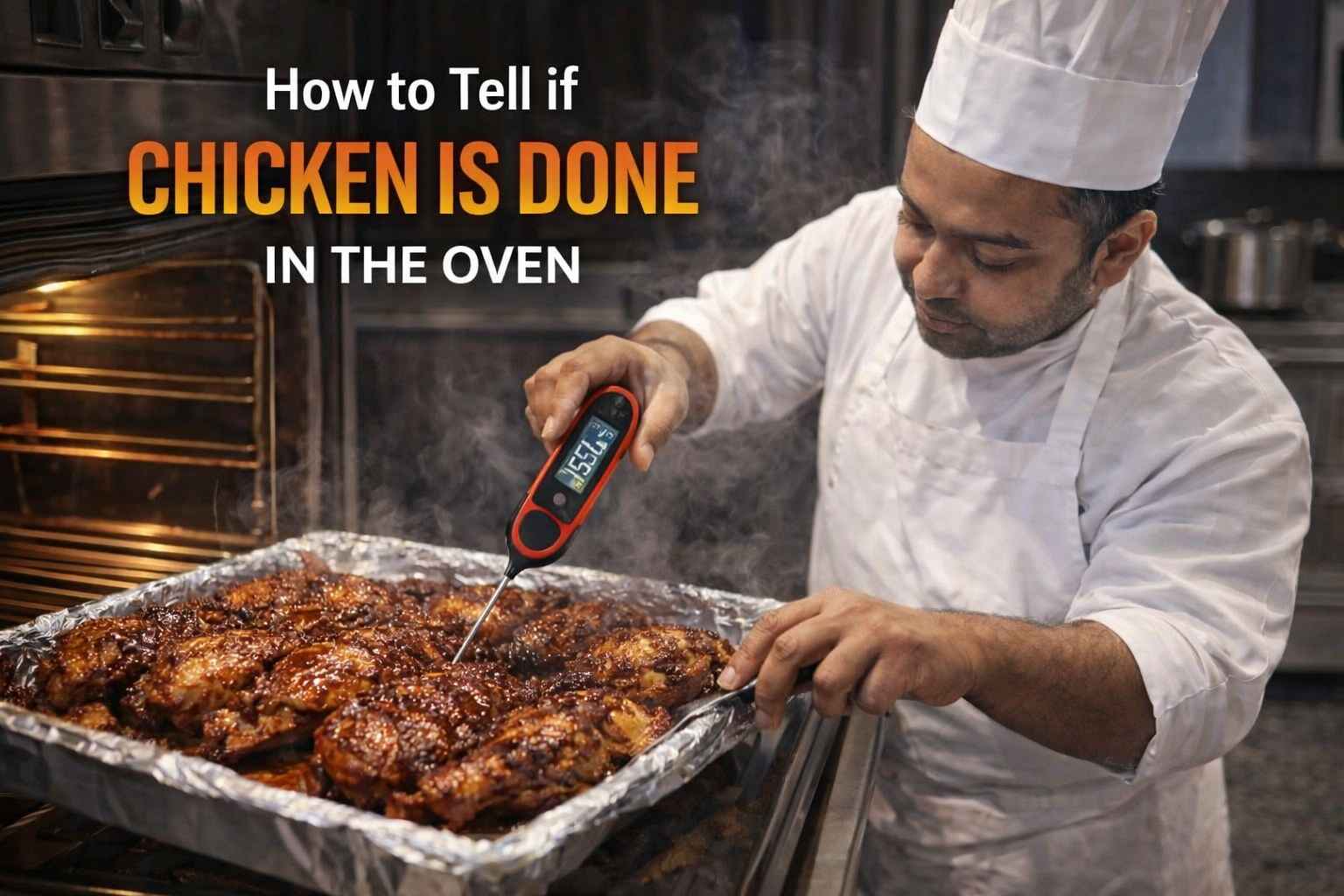
Hey, I’m Mossaraof — a professional cook and food blogger.
Nothing ruins a good dinner party like a dry, overcooked bird or the fear of a raw center. I’ve spent years in professional kitchens learning exactly how to tell if chicken is done in the oven so every bite stays tender. Using my Ultimate Guide to Master Your Oven will give you the confidence to cook like a pro. Read on to learn my simple tricks for checking doneness and serving a meal your family will love!
The Visual Signs of a Perfectly Cooked Bird
Before I even touch a tool, I use my eyes. Looking at the meat tells a story about how the heat is moving through your kitchen.
- Color Check: Look for a deep, golden brown. If it looks like a tan beach day, it is likely ready. Pale skin usually means the middle is still cold.
- The Shape: Watch the meat fibers. As chicken cooks, it shrinks slightly. If the meat pulls away from the bone, it’s a huge hint.
- The Surface: For oven baked chicken, the surface should look matte or crisp. If it still looks wet or slimy, it needs more time in the heat.
How to Tell if Chicken Breast is Done in Oven
White meat is the hardest to get right because it has so little fat. If you go over by just two minutes, it feels like chewing on a sponge.
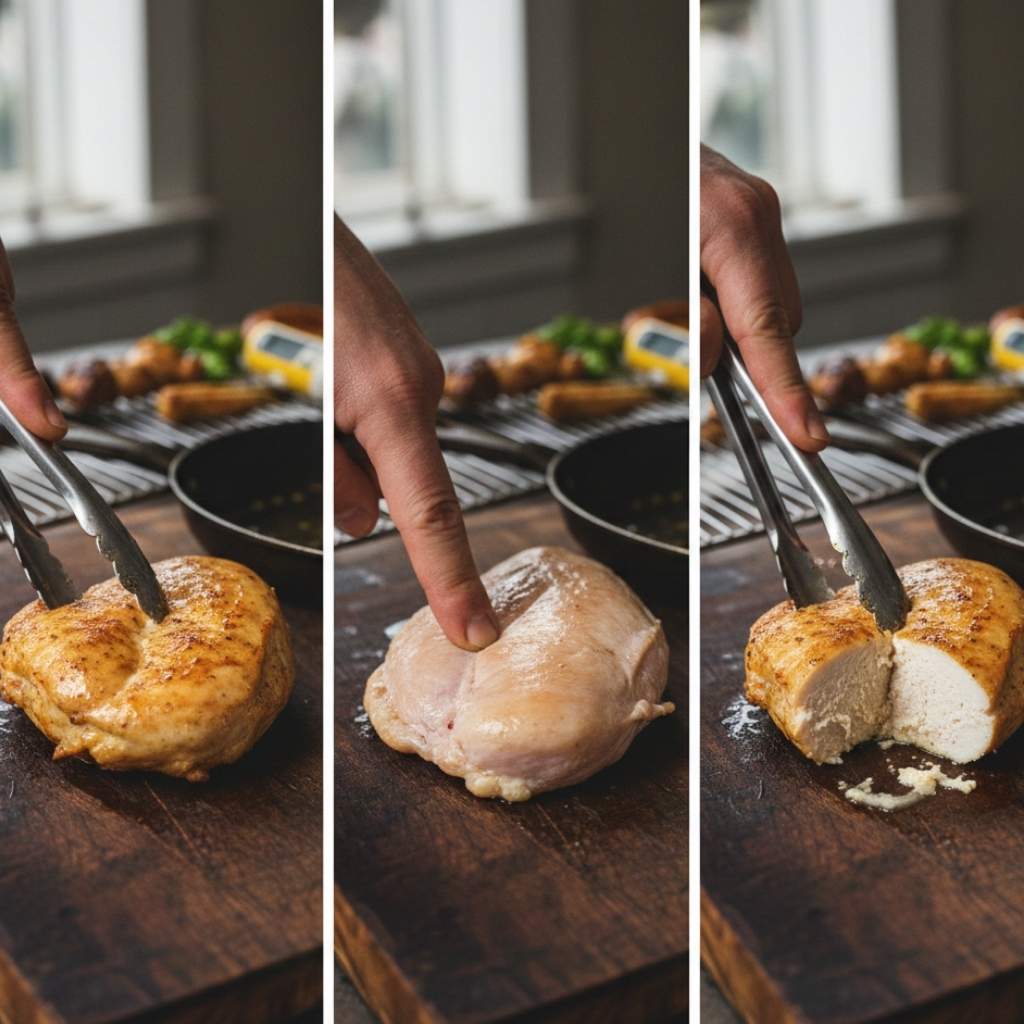
To master how to tell when chicken breast is done in oven, I use the “press test.” It is a trick I learned on a busy line in a steakhouse.
- The Firmness: Gently press the thickest part with your tongs. It should feel firm but spring back.
- The Poke: If your finger sinks in and the meat feels soft, it is raw. If it feels hard like a rock, you overcooked it.
- White Fibers: When you make a tiny cut, the meat should be opaque white. No shiny or “glassy” spots should remain.
Checking Your Chicken Drumsticks and Thighs
Dark meat is much more forgiving. In fact, I think it tastes better when it cooks a bit longer than a breast.
Here is how to tell if chicken drumsticks are done in oven without losing your mind. I usually look at the “joint.”
- The Bone Gap: Look at where the meat meets the bone. If the meat has pulled back and exposed the bone end, you are in the clear.
- Loose Joints: Grab a drumstick with tongs and give it a little wiggle. It should move very easily in the socket.
- Juice Color: This is the classic test. Poke the thigh near the bone. The liquid that runs out must be clear, not cloudy or pink.
Using a Meat Thermometer Like a Pro
I know some people think using a probe is “cheating.” Trust me, it isn’t. Every pro chef I know uses one to be 100% sure.
If you want to know how to tell if chicken is cooked in oven with zero doubt, buy a digital thermometer. I use a simple one I got at a local store in Philly. It changed my life.
- The Sweet Spot: Always aim for the thickest part of the meat. Stay away from the bone. Bones hold more heat and will give you a fake high number.
- The Target: The USDA says 165°F. But here is my secret: pull it out at 160°F.
- Carryover Heat: The chicken keeps cooking on the counter. This “rest” lets the juices settle so they don’t leak out when you cut it.
Why US Kitchens Are Different
I’ve noticed that American kitchens often have huge ovens. This can lead to uneven cooking if you aren’t careful.
- The Rack Position: I always cook my chicken on the middle rack. Too high and the skin burns. Too low and the bottom gets soggy.
- Altitude Issues: If you are in a place like Denver, water boils at a lower temp. You might need a few extra minutes to get that center safe.
- Brand Variance: My old GE oven ran 25 degrees cold. My new Samsung is spot on. Always test your oven with a cheap oven thermometer.
Common Mistakes I’ve Made (So You Don’t)
I’ve messed up plenty of meals. One time, I forgot to defrost the chicken all the way. The outside was burnt, and the inside was literally ice.
- Crowding the Pan: I used to jam six breasts on one tray. They ended up steaming instead of roasting. Give them space to breathe.
- No Resting: I used to be so hungry I’d cut it right away. All the flavor ended up on the cutting board. Wait five minutes. It’s worth it.
- Cold Meat: Don’t throw a cold bird into a hot oven. Let it sit on the counter for 15 minutes first. It helps it cook evenly.
How to Know if Chicken is Done in Oven by Sound
This sounds crazy, but you can actually hear it. When the fats start to render, the chicken “sings.”
- The Sizzle: A quiet, steady sizzle means the fat is melting and the skin is crisping.
- The Pop: If you hear loud popping, your oven might be too hot.
- Silence: If it’s silent, your oven might have clicked off, or the temp is too low.
Knowing how to tell if chicken in the oven is done is about using all your senses. You use your eyes for the color. You use your hands for the firmness. You use your ears for the sizzle. And you use a probe for the final truth.
The Magic of the Rest Period
I used to think resting meat was just something fancy chefs did to sound important. Then, one Tuesday night in a frantic rush to feed my family, I sliced a breast the second it hit the cutting board.
- The Flood: All the juices poured out like a broken dam. The meat went from plump to parched in seconds.
- The Science: Heat pushes juices to the center. Resting lets them flow back to the edges.
- The Timing: For small pieces like oven baked chicken thighs, five minutes is plenty. For a whole bird, give it fifteen.
How to Tell if Chicken is Cooked in Oven Using Touch
If you don’t have a thermometer nearby, don’t panic. I’ve been in rentals with empty drawers where I had to rely solely on my hands and a fork.
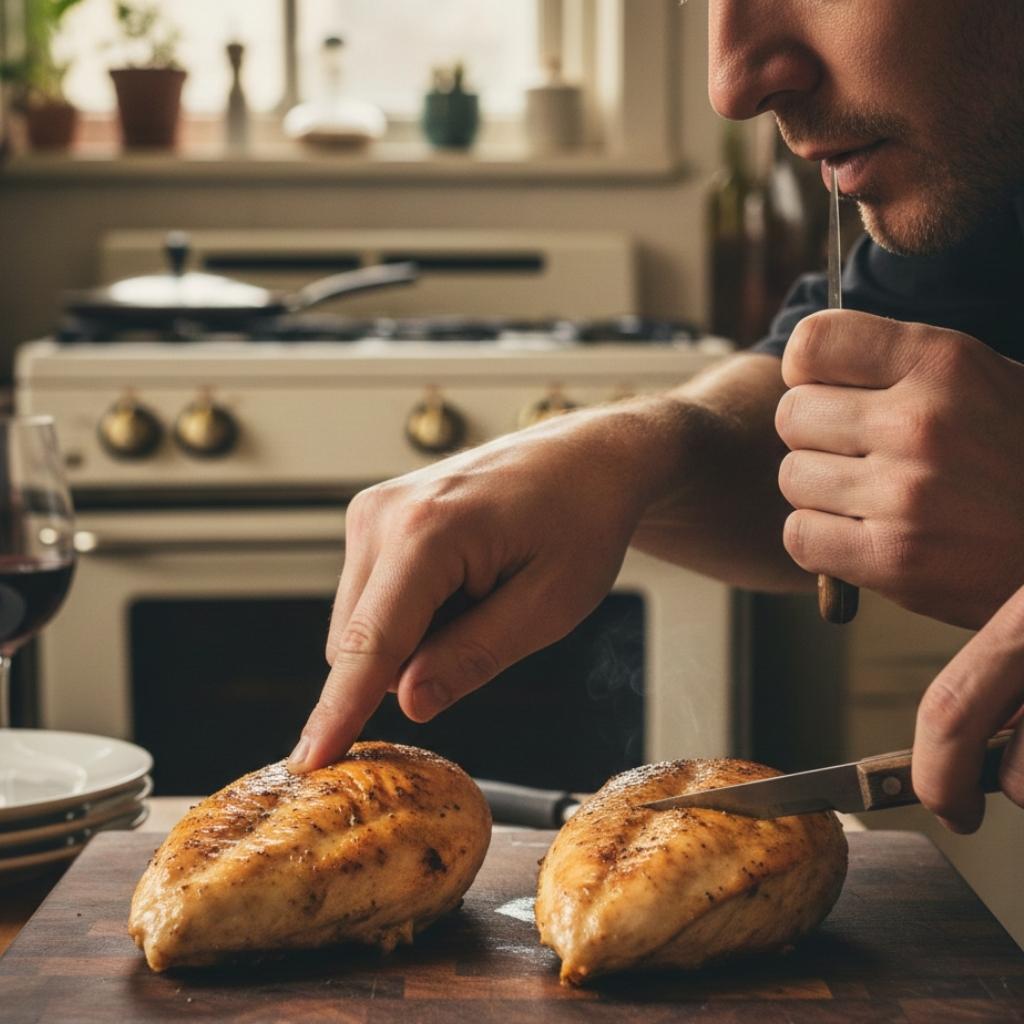
This is a skill that takes a few tries to master, but once you get it, you feel like a kitchen wizard.
- The Bounce Test: Press the meat with your pointer finger. If it feels “mushy,” it is still raw. If it has a firm “spring” like a sponge, you are in the “done” zone.
- The Knife Tip: Insert a metal paring knife into the center for three seconds. Pull it out and touch the flat side of the blade to your lower lip.
- Temperature Sensation: If the blade is cold, it’s raw. If it’s uncomfortably hot, it is likely overdone. You want it to feel warm.
Why “Clear Juices” is a Trusted Rule in the US
Most American home cooks grew up hearing that juices must “run clear.” While it is an old-school tip, it has saved many a dinner party from disaster.
- The Pierce: Take a skewer or a fork and poke the thickest part of the chicken drumsticks in oven.
- The Red Flag: If the liquid has any hint of pink or red, the hemoglobin hasn’t reached a safe temp.
- The Clear Truth: When the liquid looks like plain water or a light yellow oil, the proteins are set.
How to Tell When Chicken Breast is Done in Oven by Weight
This is a weird one, but I swear by it when I’m meal prepping for the week. As chicken cooks, it loses moisture and becomes lighter.
- The “Heft”: If you pick up a raw breast with tongs, it feels heavy and floppy.
- The “Done” Feel: A cooked breast feels light and rigid. It doesn’t droop over the sides of the tongs anymore.
- Sensory Detail: You can actually feel the difference in the tension of the meat through the metal of your tongs.
Troubleshooting Your Oven’s Hot Spots
I once lived in a house where the back-left corner of the oven was basically a blowtorch. I burned so many drumsticks before I figured out my oven’s “personality.”
- The Toast Test: Lay slices of white bread on a baking sheet and bake at 350°F. See which ones brown first.
- The Rotation: If your oven is uneven, rotate your pan halfway through. This ensures how to tell if chicken drumsticks are finished oven isn’t a guessing game of which side was facing the back.
- Convection vs. Conventional: Most newer US ovens have a fan. If you use it, your chicken will cook about 25% faster. Always keep an eye on it!
The Truth About Pink Meat Near the Bone
I get asked this all the time: “I checked the temp and it was 165°F, but the meat near the bone is still a little pink. Is it safe?”
- The Bone Marrow Leak: In young chickens, the bones aren’t fully calcified. Marrow can seep through and stain the meat purple or pink.
- Safe to Eat: If your thermometer hit the right number, that pinkness is just a cosmetic “stain.” It is perfectly safe to eat.
- Texture Over Color: Safe chicken should be easy to chew and not “slimy.” If the texture is right, the color is often just a distraction.
How to Tell if Chicken is Cooked Oven YouTube Lessons
When I was starting out, I watched hours of cooking videos. I noticed the best chefs always look for the “skin crackle.”
- Visual Cues: Watch for tiny bubbles of fat dancing under the skin. That’s a sign that the moisture is steaming out and the meat is finishing.
- Audio Clues: If you hear a loud, aggressive “hiss,” your pan is too dry. Add a splash of broth or water to keep things juicy.
- Pro Tip: If the video shows the chef cutting the meat and steam pours out, that is exactly what you want to see in your own kitchen.
My Final Advice for Stress-Free Cooking
At the end of the day, cooking should be fun. Don’t let the fear of raw chicken ruin your vibe. I usually put on some music, pour a drink, and just stay near the kitchen.
- Trust the Process: Start checking your chicken about 5-10 minutes before the recipe says it should be done.
- Stay Alert: Use your nose. When it smells like “Sunday dinner,” it’s time to start probing.
- Relax: Even if you overcook it a little, a good gravy or a squeeze of lemon can fix almost anything.
Pro Tricks for the Perfect Finish
After years of burns and triumphs, I’ve found that the little things make the biggest difference. Here is how I handle the final minutes of a roast.
- The Broiler Boost: If your chicken is done inside but the skin looks sad, turn on the broiler. Stand right there. Watch it for 60 seconds. It will go from “okay” to “gorgeous.”
- The Foil Tent: If the skin is getting too dark but the middle is still cold, cover it with foil. This stops the browning but keeps the cooking going.
- The Pan Sauce: Don’t toss the brown bits in the pan. Add a little water or wine. Scrape it up. That is pure gold.
Your Quick “Done” Checklist
Keep this in your head (or on your fridge) for every Tuesday night dinner. It will save you every time.
| Method | What to Look For | Why It Works |
| Sight | Golden skin and meat pulling away from bones. | Shows heat has reached the core. |
| Touch | Firm and springy like a sponge. | Proteins have tightened and set. |
| Sound | A gentle, steady sizzle. | Fat is rendering without burning. |
| Probe | 160°F to 165°F in the thickest part. | The only 100% safe measurement. |
Final Thoughts from My Kitchen to Yours
I know it feels like a lot to remember. But trust me, after three or four tries, you won’t even need this guide. You will just “know” by the smell and the look.
I’ve had many nights where I doubted myself. I’ve had nights where I served slightly dry wings. It happens to the best of us! Just keep practicing. Your oven is your friend, not your enemy. Use your senses, trust your tools, and always, always let that bird rest before you dive in.
Frequently Asked Questions: How to Tell if Chicken is Done in the Oven
How can I tell if chicken is done without a thermometer?
You can use the juice test. Pierce the thickest part of the meat with a fork or knife. If the juices run clear, it is done. If they are pink or cloudy, it needs more time. You can also use the finger test—the meat should feel firm and spring back when pressed, similar to the base of your thumb.
What temperature is chicken done in the oven?
The USDA recommends an internal temperature of 165°F (74°C). However, many chefs pull the chicken at 160°F and let it “rest” for 5 to 10 minutes. During this time, “carryover cooking” brings the temperature up to the safe 165°F mark without drying it out.
Is it okay if chicken is a little pink?
Yes, sometimes. If you have verified the temperature is 165°F with a probe, slight pinkness near the bone is often just bone marrow staining the meat. However, the texture must be opaque and fibrous, not “glassy” or slimy.
How long does it take to cook chicken at 400°F?
In most standard U.S. ovens, a large chicken breast takes about 20 to 25 minutes at 400°F. Drumsticks and thighs usually take 35 to 45 minutes. Always start checking about 5 minutes early to account for oven hot spots.
Why is my oven-baked chicken always dry?
You are likely skipping the resting phase or leaving it in too long. Even two extra minutes can ruin a breast. Try pulling the meat out just before it hits the target temp and let it sit on the counter. This keeps the juices inside the meat instead of on your plate.

I’m Mossaraof, a trained chef and the founder of OvenInsights.com. I spent years cooking at Larrupin’ Cafe and in kitchens across Chicago and Seattle. Now I test kitchen gear for a living. I moved to North Acton, London, and I test every tool I write about. I use real meals and real heat. No brand deals. No shortcuts. I cover 12 kitchen types and hundreds of recipes. I believe this: the right tools matter as much as the recipe.