Hey, I’m Mossaraof — a professional cook and food blogger.
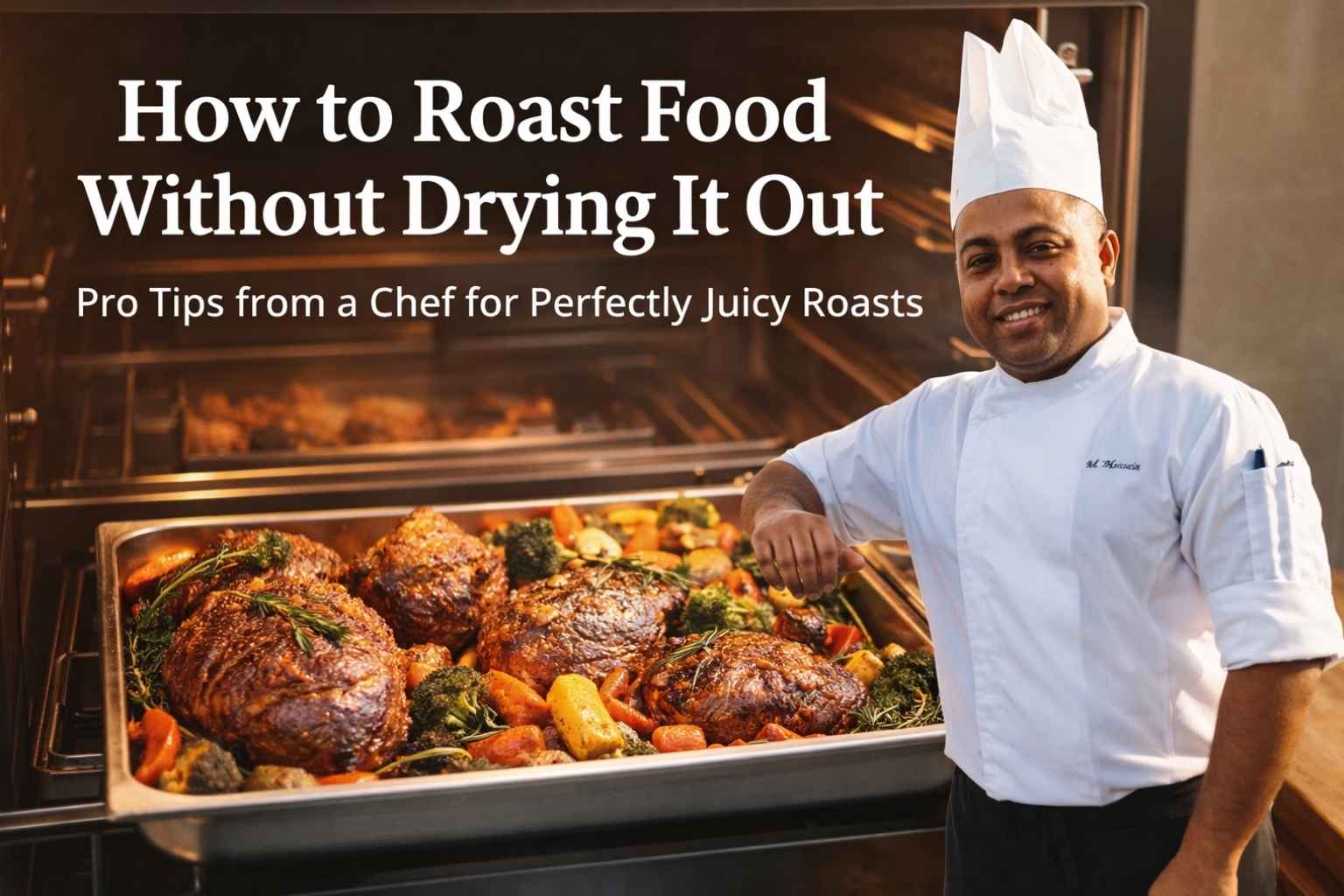
We all want those tender, savory bites where the outside is beautifully caramelized but the center remains dripping with juice. I will show you how to roast food without drying it out so you get a perfect, succulent texture every time, whether you’re cooking a thick cut of meat or a tray of vibrant vegetables.
My years in a busy Chicago kitchen taught me that a high-heat start followed by a short rest is the true secret to locking in moisture while building a rich, salty crust. Use my Ultimate Guide to Master Your Oven to find the best rack height for an even heat flow that prevents your food from becoming tough or rubbery. Let’s grab your favorite roasting pan and start mastering the art of juicy, oven-roasted meals together right now!
Why Roasted Food Dries Out in the First Place
Roasting problems aren’t just about bad luck. There’s science behind the dryness.
How Heat Pulls Moisture Out of Food
When heat climbs too high too fast, it sucks moisture from the surface. Lean meats suffer most. Chicken breasts, pork loin, even thin beef roasts.
My pork dried out in that Chicago oven because I cooked it too hot, too fast, with no fat to protect it.
The Role of Airflow and Oven Type
I noticed a big difference between my old GE electric oven and my current Whirlpool convection one. That fan? It dries things quicker.
In dry Arizona air, convection made my roast chicken skin crisp—but the meat inside was bone-dry unless I lowered the temp.
Pan Choice and Surface Contact
A thin baking sheet dries out meat faster. Why? Less insulation. I used to roast chicken on bare metal—big mistake.
Now I use a Lodge cast iron or a heavy enamel pan with a rack. It holds heat better, keeps moisture where it belongs.
Best Oven Settings for Juicy Roasting
Small changes in heat make a big difference.
When to Use Convection and When Not To
Convection is great for browning. I love it for veggies and skin-on thighs. But for pork loin or turkey breast? I stick with regular bake.
In Florida, my convection setting dried out green beans in half the time it used to take in my Chicago oven.
Low and Slow vs Hot and Fast
Here’s my rule:
- Fatty meats = hot and fast (they self-baste)
- Lean meats = low and slow (protect the juices)
I roast beef at 300–325°F now. I used to do 375°F or higher—big mistake.
Preheating and Why It Changes Moisture
A cold oven steals heat from your roast. That delay pulls moisture out instead of sealing it in.
Now, I let my oven preheat 10 minutes after the beep. It’s worth the wait.
Choosing the Right Cut Makes All the Difference
What you roast is just as important as how.
Fat Is Your Best Friend
Fat protects meat. It renders slowly and helps with basting.
- Chicken thighs stay juicy
- Pork shoulder roasts beautifully
- Turkey breast? Always needs a plan
Bone-In vs Boneless
Bones help distribute heat and slow moisture loss.
When I roast bone-in chicken thighs, I barely need to check them. Boneless breasts? I have to baby them.
Size and Thickness Matter
Thin cuts roast too fast. They don’t hold moisture well.
I once roasted a one-inch pork chop. It dried out in 20 minutes. Now I pan-sear thin cuts and save the oven for thicker pieces.
Prep Steps That Lock In Moisture
Moisture starts before the oven even turns on.
Salt Timing and Surface Drying
I salt meat 12–24 hours ahead if I can. That draws moisture to the surface, which then reabsorbs—seasoning from within.
Also: always pat your meat dry. Wet surfaces steam, not roast.
Marinades vs Dry Rubs
Marinades add flavor and a bit of moisture, but don’t rely on them alone. Acid can help tenderize, but over-marinate and it turns mushy.
Dry rubs? Great for sealing the surface. I use a sugar-free spice rub on pork for a nice crust.
Brining for Poultry
This changed everything for my turkeys.
I use a simple 1/4 cup salt per quart of water. Brine overnight. Rinse and pat dry. The bird stays juicy—even the white meat.
Pan Setup and Rack Placement
The way you arrange things in the oven matters.
Middle Rack for Even Heat
I stick to the middle rack 90% of the time. Too high, and the top browns too fast. Too low, and heat bakes from one side.
Elevating Food for Airflow
I use a rack to lift the roast above the pan. Juices drip, air circulates, and the bottom doesn’t steam.
No rack? Crumple foil into rings and rest the meat on top. Did that for years.
Adding Moisture to the Pan
For lean cuts, I add a splash of broth, white wine, or water in the pan. Just a little. Helps steam the bottom gently.
Did this with pork tenderloin in Arizona—kept it juicy without going soggy.
Covering, Uncovering, and Foil Tricks
Foil is a tool. Not a default setting.
When to Tent with Foil
I tent roasts that start browning too fast. It buys me time without killing the heat.
Especially useful for:
- Pork loin
- Turkey breast
- Lasagna (to avoid burned tops)
When to Remove the Cover
You want browning, not steaming.
For covered dishes, I pull the foil 20–30 minutes before the end. That’s when the top can crisp without drying the whole thing out.
Loose vs Tight Covers
Loose foil protects. Tight foil traps steam.
If I want soft, steamy texture (like pulled pork), I wrap tight. If I want a golden crust, I tent loosely.
Using Thermometers Instead of Guesswork
This saved me from ruining meat—again and again.
Internal Temp vs Cook Time
I used to trust recipes with times. Never again.
Every oven runs a little different. Now I cook to temp:
- Chicken: 165°F
- Pork: 145°F (then rest)
- Beef roast: 130–135°F for medium rare
Best Spots to Check Temperature
Always check thickest point, away from bone. I use a ThermoWorks DOT or a basic dial probe.
Never rely on color. Ever.
Resting After Roasting
I let roasts sit at least 10–15 minutes. Bigger cuts? Longer.
Resting lets juices redistribute. Cut too soon? The board is wet, the meat is dry.
Vegetables That Stay Tender Instead of Dry
Yes—veggies can dry out too.
Oil Amount and Coating Style
Too little oil = dried-out veggies. Too much = mush.
I toss in a bowl, not drizzle on the tray. That way everything gets an even coat.
Crowding vs Spacing
This is the meal prep mistake I made often. I’d pile trays high and wonder why nothing browned.
Roast in a single layer with space. Otherwise, you’re steaming.
Cover First, Then Uncover
Some veggies benefit from a foil cover at the start:
- Potatoes
- Carrots
- Squash
Cover for 15 minutes, then uncover to finish. Inside soft, outside golden.
Climate and Kitchen Factors in the U.S.
Not every kitchen is the same.
Dry Air in Southwest Kitchens
In Arizona, my oven cooked faster. Dry air plus convection? Even quicker.
I lowered my roast temps by 25°F compared to what I used in Florida.
Humidity in Southern Kitchens
In Florida, moisture hangs in the air. Roasting took longer. I used convection to help brown the surface.
Also ran a fan to vent steam out of the kitchen.
Cold Winter Homes and Oven Behavior
In winter, my oven took longer to preheat. In my Chicago apartment, the kitchen was drafty, and roasts cooked unevenly unless I rotated the pan.
My Most Common Roasting Mistakes and Fixes
Here’s my hall-of-fame list of fails—and how I fixed them.
Too Much Heat at the Start
I used to blast roasts at 425°F. They browned fast—but dried inside.
Now I start lower and finish hotter if I need color.
Skipping the Rest Period
Guilty. Many times.
Now I treat rest time like part of the recipe. I even set a timer.
Trusting Recipe Times Too Much
Recipe says 90 minutes? I start checking at 60. My Whirlpool runs hotter than my old Frigidaire. Each oven’s different.
Real Meals I Now Roast Without Drying Out
These are my go-to dishes. I’ve tested them in different states, different ovens, different moods.
Whole Roast Chicken
- Salted overnight
- Roasted at 350°F for 1 hour 20 mins
- Rested 20 minutes before carving
Pork Tenderloin with Veggies
- Rubbed with dry spices
- Roasted at 325°F with foil for first 25 mins
- Finished uncovered with carrots and potatoes
Sheet Pan Salmon and Potatoes
- Started potatoes at 400°F for 15 mins
- Added salmon (skin-on) for last 10–12 mins
- Finished with a squeeze of lemon and a side salad
Simple Checklist I Follow Every Time I Roast
I taped this on the inside of my spice cabinet.
- Preheat fully (and then some)
- Choose the right rack (middle = safest)
- Pat food dry before it goes in
- Use a thermometer—not guesswork
- Tent with foil if needed
- Rest the meat. Always.
And most of all? Don’t rush it. Let the food tell you when it’s ready.
FAQs
How to roast food without drying it out in a home oven?
Roast at lower heat, use the middle rack, and check temp with a probe. Rest the food after cooking so juices stay inside instead of running out.
Does convection mode dry out roasted food faster?
Yes, convection moves hot air, which can pull moisture out faster. Use it for browning, but switch to bake for lean meats like pork or turkey breast.
Should I cover food with foil when roasting?
Cover lean meats if the top browns too fast. Remove foil near the end so you still get color without losing moisture inside the food.
What roasting temperature keeps meat juicy?
Most roasts stay juicy at 300°F to 350°F. Higher heat works for fatty cuts, but lean meats dry out fast if cooked too hot.
Why does my roast look done but taste dry?
It likely cooked too long or was sliced too soon. Always rest meat after roasting so the juices spread back through the cut.

I’m Mossaraof, a trained chef and the founder of OvenInsights.com. I spent years cooking at Larrupin’ Cafe and in kitchens across Chicago and Seattle. Now I test kitchen gear for a living. I moved to North Acton, London, and I test every tool I write about. I use real meals and real heat. No brand deals. No shortcuts. I cover 12 kitchen types and hundreds of recipes. I believe this: the right tools matter as much as the recipe.