At A Glance
- An oven bag cooks a turkey breast faster than open roasting because it traps steam and self-bastes the meat (Reynolds Kitchens, 2026).
- Use 1 tablespoon of flour inside the bag, six half-inch vent slits on top, and a nylon tie — never a metal twist tie (Reynolds Kitchens, 2026).
- Cook to a minimum internal temperature of 165°F in the thickest part of the breast, checked with a real food thermometer, not a pop-up timer alone (USDA FSIS, 2026).
- A 6-lb boneless breast takes about 1 hour 45 minutes at 325°F in a bag. A bone-in breast of the same weight needs closer to 2 hours.
- Rest the breast for 15 to 20 minutes in the bag before you cut it open. This step keeps the juice in the meat, not on your cutting board.
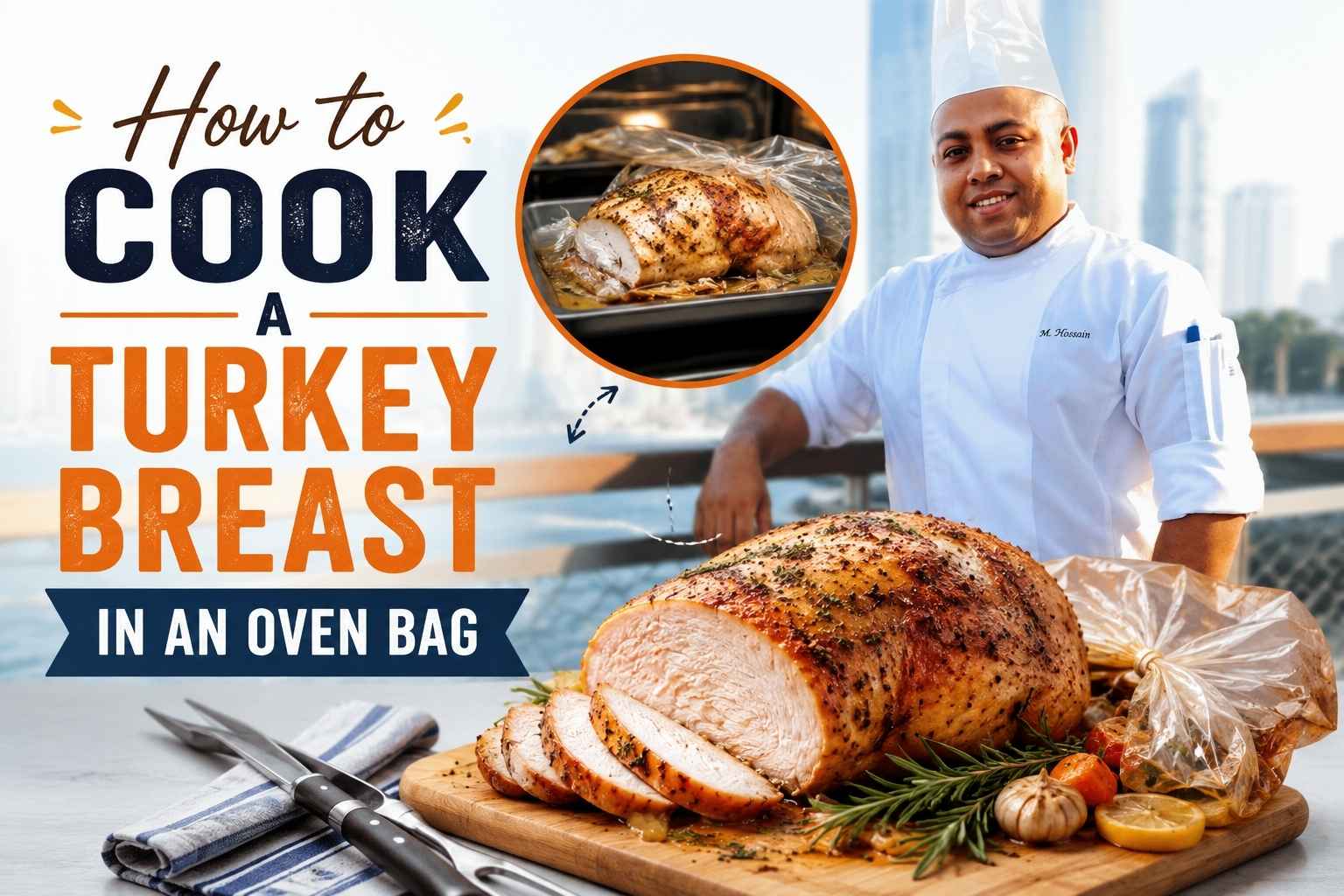
My first turkey breast came out dry. It was sad and gray. That is when I found a better way. I learned how to cook a turkey breast in an oven bag, and it changed my whole holiday. The bag traps steam around the meat. You get juicy turkey almost every time. I have used this trick for years in my own kitchen. It still works for me today. Stay with me. I will show you my exact steps. I will also share a few tricks I wish I knew sooner.
Why Oven Bags Work: Steam, Speed, and Self-Basting
An oven bag works because it turns your oven into a small, wet pressure chamber. The nylon traps steam from the turkey’s own juices. That steam surrounds the meat on all sides and cooks it faster than dry oven air (Reynolds Kitchens, 2026).
I have cooked turkey breast both ways: open pan and bagged. Open roasting dries out the outer layer of meat while the inside catches up. A bag skips that problem. The steam cooks the surface and the center at close to the same rate.
Self-basting is the other big win. The bag holds in fat, juice, and steam, so the meat bastes itself the entire time it cooks. You never open the oven to spoon juice over the top. That means fewer temperature swings and a shorter total cook time.
Reynolds Kitchens notes that bag cooking at 350°F runs about 25°F hotter than open-roasting directions on most turkey packaging, yet the enclosed heat still produces a moist result (Reynolds Kitchens, 2026). For large whole turkeys, the company reports cook times up to one hour faster than open roasting (Reynolds Kitchens, 2026). A breast is smaller, so the time saved is smaller too, but it is still real.
Choosing the Right Turkey Breast and Bag Size
Bone-In vs. Boneless
Bone-in breasts hold more flavor. The bone conducts heat unevenly, though, so the meat near the bone cooks slower than the outer meat. Boneless breasts cook faster and carve easier, but they can dry out quicker if you overcook them.
I default to bone-in for a holiday table because the flavor payoff is worth the extra 20 to 30 minutes in the oven. For a quick weeknight dinner, I grab boneless every time.
Thawed vs. Partially Frozen
Always start with a fully thawed breast if you can. A partially frozen breast cooks unevenly. The outside can hit 165°F while the center is still cold and unsafe (USDA FSIS, 2026).
If you forgot to thaw, you can still cook from frozen, but plan on 50% more time (USDA FSIS, 2026). Check the internal temperature more often near the end, since frozen-start cooking is far less predictable.
Picking the Bag Size
Reynolds makes two main sizes. The Large bag (16″ x 17.5″) fits foods up to 8 pounds, including most turkey breasts. The Turkey size bag (19″ x 23.5″) is built for whole turkeys from 8 to 24 pounds (Reynolds Kitchens, 2026).
For almost every turkey breast, the Large bag is the right pick. Save the Turkey size bag for a full bird.
Step-by-Step Prep: Flour, Seasoning, Aromatics, and Sealing
Step 1: Flour the Bag
Add 1 tablespoon of flour or cornstarch directly into the bag. Shake it around until it coats the inside. This step matters more than people think. The flour keeps the fat and juice from pooling into a thin layer that can scorch and burst the bag (Reynolds Kitchens, 2026).
I have skipped this step exactly once, early in my career. The bag split at the seam 40 minutes in. I do not skip it anymore.
Step 2: Season and Brine the Breast
Pat the turkey breast dry with paper towels first. A dry surface takes seasoning better than a wet one.
For extra flavor, I dry-brine the breast the night before. Rub 1 tablespoon of kosher salt per 5 pounds of turkey over the skin and under it, then leave it uncovered in the fridge overnight. This pulls moisture out, then pulls it back in with the salt, which seasons the meat all the way through.
On cook day, rub the skin with softened butter or oil. Slide some of that butter under the skin too, directly on the meat. This step helps the skin brown, since the bag traps steam and steam alone will not crisp skin.
Step 3: Add Aromatics and Vegetables
Place sliced onion, celery, and carrot in the bottom of the bag before the turkey goes in. These vegetables lift the meat off the bag floor, so it does not stew in its own fat. They also flavor the drippings, which you can strain into gravy later (Reynolds Kitchens, 2026).
Step 4: Seal and Vent the Bag
Slide the turkey breast into the bag on top of the vegetables. Gather the open end and close it with the nylon tie that comes in the box. Do not swap in a metal twist tie. Metal can spark against the oven’s heating element and melt through the bag.
Cut six half-inch slits across the top of the bag. These slits let steam escape in a controlled way. Tuck the loose end of the bag into the pan so it cannot touch the oven walls or the heating element (Reynolds Kitchens, 2026).
Oven Temperature and Timing by Breast Weight
Set your oven to 325°F to 350°F for bag cooking. Reynolds recommends 350°F for most turkey bag recipes, since the enclosed bag runs cooler than the number on the dial (Reynolds Kitchens, 2026). I use 325°F for bone-in breasts over 6 pounds, since the slower ramp gives the bone time to release heat evenly, and 350°F for boneless cuts under 6 pounds.
Use the chart below as a starting point. Always confirm doneness with a thermometer, not the clock.
| Breast Weight | Oven Temp | Bone-In Time | Boneless Time | Target Internal Temp |
|---|---|---|---|---|
| 2–3 lbs | 350°F | 55–70 min | 45–60 min | 165°F |
| 3–4 lbs | 350°F | 70–85 min | 60–75 min | 165°F |
| 4–5 lbs | 325°F | 85–100 min | 75–90 min | 165°F |
| 5–6 lbs | 325°F | 100–115 min | 90–105 min | 165°F |
| 6–7 lbs | 325°F | 115–130 min | 105–120 min | 165°F |
| 7–8 lbs | 325°F | 130–150 min | 120–135 min | 165°F |
| 8+ lbs | 325°F | 150–170 min | 135–155 min | 165°F |
These ranges line up with general bag-cooking guidance from Reynolds Kitchens and standard roasting times from Butterball, adjusted down for the faster heat transfer a sealed bag provides (Reynolds Kitchens, 2026; Butterball, 2026). Every oven runs a little different, so start checking the temperature at the low end of the range.
Why You Should Never Skip the Venting Slits
The six slits on top of the bag are not optional. Without them, steam builds up pressure inside a sealed bag with nowhere to go. That pressure can force a seam open or blow a hole straight through the plastic, usually right when you open the oven door (Reynolds Kitchens, 2026).
I have seen a bag burst on a home cook’s turkey breast because they wanted extra-moist meat and skipped the slits. The result was turkey grease across the bottom of a 400°F oven and a smoke-filled kitchen twenty minutes before guests arrived. Cut the slits. It takes five seconds and it protects your oven, your turkey, and your evening
Using a Meat Thermometer the Right Way
A bag thermometer or pop-up timer is a rough guide, not a guarantee. Pop-up timers are built for whole turkeys and calibrated for the thigh, not the breast. They also fail more often than most cooks expect, especially in a bagged breast where steam changes how heat moves around the meat (USDA FSIS, 2026).
Use a real instant-read or probe thermometer instead. Push the probe into the thickest part of the breast, away from any bone. Bone conducts heat differently than muscle, so a reading taken near the bone will run falsely low or high.
The USDA’s minimum safe internal temperature for turkey is 165°F, measured with a food thermometer (USDA FSIS, 2026). Do not trust color. Turkey can still look pink at a safe 165°F, especially near the bone or after bag cooking, since the enclosed steam changes how the meat browns (USDA FSIS, 2026).
I keep a Taylor Precision instant-read thermometer in my knife roll for exactly this reason. A five-dollar tool has saved more Thanksgiving dinners than any recipe I own.
Convection vs. Conventional Oven Adjustments
If your oven has a convection setting, drop the temperature by 25°F from the conventional bag-cooking number. Convection fans move hot air around the bag faster, so the same set temperature cooks food quicker than a standard oven.
For a 6-lb boneless breast, that means setting convection to around 300°F to 325°F instead of 350°F. Check the internal temperature 15 to 20 minutes earlier than a conventional-oven timeline suggests. Convection also tends to brown the bag’s surface faster, which can help crisp the skin once you open the bag near the end of cooking.
One caution: convection fans can push a loose bag flap against the heating element. Tuck the bag ends firmly under the pan before you turn the fan on.
Resting Time After Cooking
Pull the turkey breast out of the oven once it hits 165°F. Leave it inside the closed bag and let it rest for 15 to 20 minutes before you cut it open (Reynolds Kitchens, 2026).
Resting matters because heat pushes juice toward the center of the meat as it cooks. If you cut into the breast right away, that juice runs straight out onto the cutting board. A rest period lets the juice redistribute evenly through the meat, so every slice stays moist.
I set a timer for this step every single time. Fifteen minutes feels long when the whole kitchen smells like turkey, but it is the difference between a juicy plate and a dry one.
Common Mistakes and How to Fix Them
Overfilling the bag. A bag packed too tight with turkey and vegetables cannot let steam circulate. Leave at least an inch of space around the breast. If your vegetables crowd the meat, cook them in a separate dish instead.
Using a metal twist tie. Metal ties can spark against the oven’s heating coil and melt through the bag. Use only the nylon tie included in the box, or cut a strip from the bag’s open end as a backup tie (Reynolds Kitchens, 2026).
Placing the bag directly on a cold metal pan. Always use a pan at least 2 inches deep. A shallow or uneven pan lets the bag droop against the oven rack, which can tear it (Reynolds Kitchens, 2026).
Not cutting slits. As covered above, this causes pressure buildup and can burst the bag mid-cook.
Undercooking bone-in breasts. Bone-in cuts need more time near the bone than the surface temperature suggests. Always probe close to, but not touching, the bone, and check a second spot on the other side of the breast before you call it done.
The Chef’s Method: My Go-To Bag Turkey Breast
Here is exactly how I cook a bone-in turkey breast at home.
- Dry-brine the breast overnight in the fridge, uncovered, with kosher salt.
- The next day, pat it dry and rub softened butter mixed with minced garlic and fresh thyme under the skin.
- Flour the bag, add sliced onion and celery to the bottom, and set the breast on top, skin side up.
- Tie the bag, cut six slits, and tuck the ends into a 2-inch deep roasting pan.
- Roast at 325°F until the breast hits 155°F internally.
- Cut the bag open, fold it back, and finish uncovered at 425°F for 15 to 20 minutes, basting once with pan juices, until the skin is deep golden and the internal temperature reaches 165°F.
That last step is my trick for crisp skin. The bag does the heavy lifting for moisture, then a short blast of dry, high heat at the end finishes the skin the way an open roast would. You get the speed and juiciness of a bag with the crackling skin people expect from a holiday turkey.
Frequently Asked Questions About Cooking Turkey Breast in an Oven Bag
Can you use an oven bag in a slow cooker?
No. Reynolds Kitchens oven bags are built for dry oven heat, not the moist, lower-temperature environment inside a slow cooker (Reynolds Kitchens, 2026). Slow cookers also lack the airflow a bag needs to cook safely. Use a slow-cooker-specific liner instead if you want that convenience.
Do you need to add liquid to the bag?
No, not for a turkey breast. The bag traps the meat’s own juices, so added liquid is not needed to produce gravy or keep the meat moist (Reynolds Kitchens, 2026). If you want extra gravy, add up to a quarter cup of broth, but skip it if you are keeping things simple.
Can you cook a frozen turkey breast in a bag?
Yes, but plan for about 50% more cooking time than a fully thawed breast (USDA FSIS, 2026). Check the internal temperature at multiple points, since frozen-start cooking heats unevenly. I recommend thawing first whenever your schedule allows it.
Why did my bag burst?
The most common causes are a missing flour coating, missing vent slits, an overfilled bag, or a metal twist tie touching the oven’s heating element (Reynolds Kitchens, 2026). Check all four before you blame the bag itself.
Does the turkey brown in a bag?
Yes, though smaller breasts brown lightly while larger ones turn a deeper golden color simply because they spend more time in the oven (Reynolds Kitchens, 2026). Brushing the skin with oil or butter before bagging helps browning. My finishing trick above gets you the deepest color and crispest skin.
What if my thermometer reads different temperatures in different spots?
Trust the lowest reading. Check the thickest part of the breast and a second spot near any bone. The turkey is only done once every spot you check reaches 165°F (USDA FSIS, 2026).
Can I stuff the bag with more than vegetables, like bread stuffing?
Keep stuffing out of the bag with a turkey breast. Stuffing needs to reach 165°F on its own, and it heats slower than the surrounding meat. Cook stuffing separately in its own dish for even, safe results (USDA FSIS, 2026).
How full should the roasting pan be?
The pan needs to be at least 2 inches deep to hold the bag safely and catch any juice. Do not add water to the pan itself. The bag holds all the liquid you need.
Key Takeaways
- Oven bags cook turkey breast faster and juicier than open roasting because they trap steam and self-baste the meat.
- Always flour the bag, use six vent slits, and seal with a nylon tie, never metal.
- Cook to 165°F internal, checked with a real thermometer in the thickest part of the breast, away from bone.
- Rest the breast in the closed bag for 15 to 20 minutes before carving.
- For crisp skin, open the bag for the last 15 to 20 minutes of cooking and finish at a higher heat.
Sources:
- USDA Food Safety and Inspection Service, Turkey from Farm to Table (2026)
- Reynolds Kitchens, How to Cook a Turkey in an Oven Bag (2026)
- Reynolds Kitchens, Oven Bags Product Guide (2026)
- Reynolds Kitchens, Oven Bags Cooking Chart (2026)
- Butterball, How to Roast a Turkey (2026)