At A Glance
- Shortcrust pastry fails in two ways: warm fat and overworking the dough. Fix both and you fix 90% of problems.
- Fat must stay below 18°C (65°F) throughout mixing – warm fat dissolves into the flour and creates a tough, chewy crust instead of a tender one (The Culinary Institute of America, 2022).
- Rest the dough in the fridge for at least 30 minutes before rolling – this relaxes the gluten and stops shrinkage in the oven.
- Blind bake any shell that holds a wet or pre-cooked filling, using proper weights and a lined base, or you will get a soggy bottom every time.
- My go-to ratio is 2 parts flour : 1 part fat : 0.5 parts water by weight – everything else is adjustment from there.
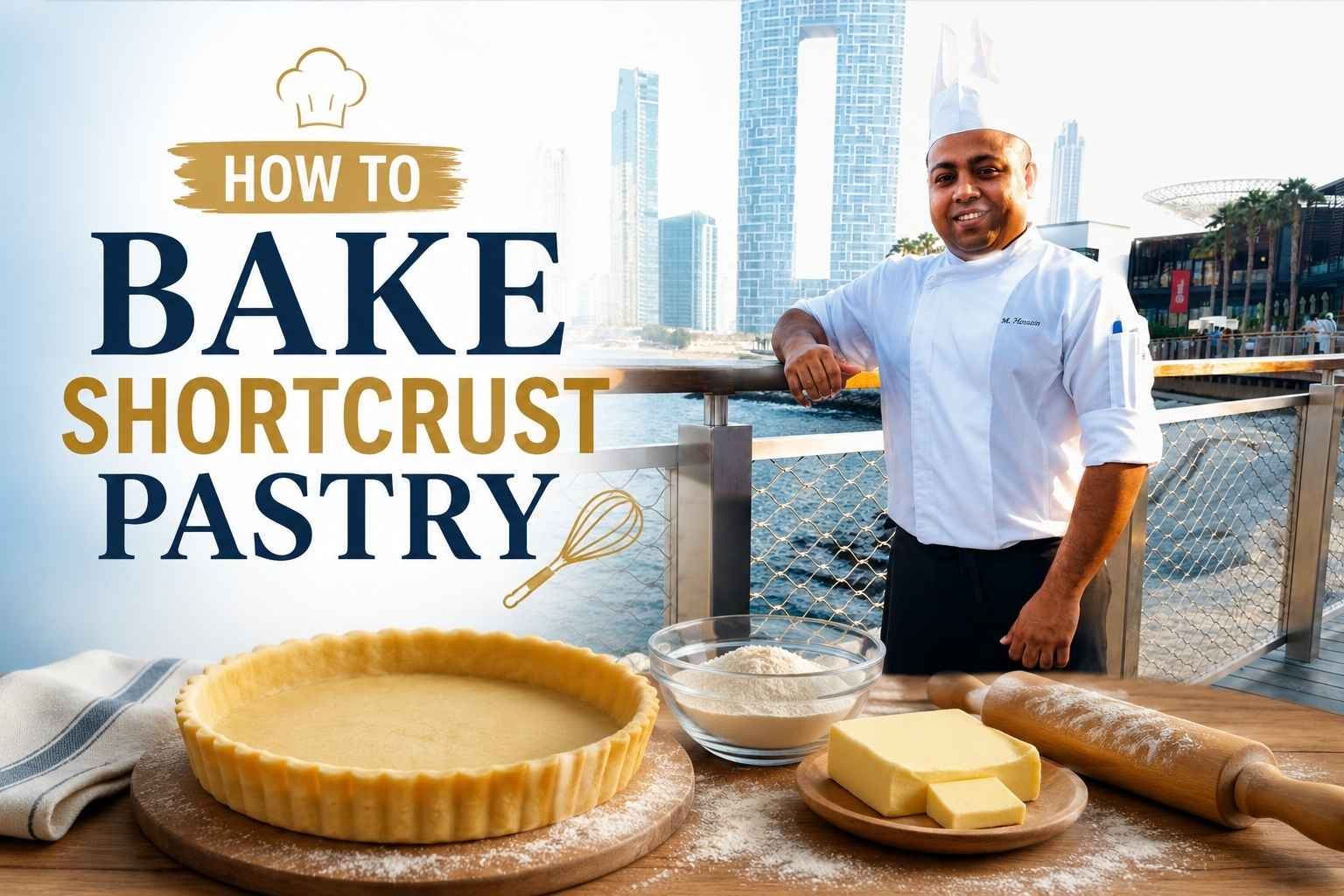
My first shortcrust pastry came out hard as a biscuit. I almost gave up on pie crusts for good! But I kept trying, and now I know exactly how to bake shortcrust pastry that’s flaky every time. I’ve taught this method in my own kitchen for years, and today I’ll show you each step. Grab your rolling pin, and let’s bake something wonderful together.
What Shortcrust Pastry Actually Is: Fat, Flour, and the Science of “Short”
Shortcrust pastry is a crumbly, tender pastry made by cutting cold fat into flour before adding a small amount of water to bind the dough. The word “short” in baking means tender and crumbly, not flaky or thin – it refers to the way fat shortens gluten strands, stopping them from forming long, chewy networks.
When fat coats the flour particles before water is added, it physically blocks the proteins (glutenin and gliadin) from linking up. No long gluten chains = no chew = a pastry that breaks apart cleanly when you bite it. That’s exactly what you want in a quiche shell, a tart case, or a pie base.
Shortcrust is not puff pastry. Puff pastry works by layering fat and dough repeatedly to create steam pockets that push apart in the oven. Shortcrust skips all of that. No lamination, no folding, no layers. The goal is a uniform, short crumb that holds a filling without fighting it.
Per Harold McGee’s On Food and Cooking (2004), the ratio of fat to flour is what controls texture. More fat = shorter (more crumbly). Less fat = firmer and easier to roll but less tender. Most professional shortcrust recipes sit between 40% and 60% fat by flour weight depending on the application.
The Two Rules That Cannot Be Broken
Rule 1: Cold fat, always. Fat temperature is not optional. Butter, lard, or shortening must stay cold – below 18°C / 65°F – from the fridge to the bowl to the oven. The moment fat warms up and starts to melt, it absorbs into the flour rather than coating it. You lose the shortening effect and end up with a crust that is dense and tough rather than tender.
I learned this the hard way during my second year at Le Cordon Bleu London. I was making 40 tart shells for a lunch service and left my butter on the bench too long on a warm day. Every single shell shrank and went leathery. Chef Rousseau said exactly four words: “Cold. Everything. Always. Again.” I haven’t made that mistake since.
Rule 2: Minimal handling. The longer you work shortcrust dough, the more gluten develops. Gluten development is your enemy here. Mix only until the dough just comes together – you should still see small, uneven lumps of fat when you press the dough into a disc. Those lumps melt in the oven and create tiny air pockets that give the crust its characteristic tender crumble.
If the dough feels smooth and elastic, you have gone too far. Use it anyway (there’s no saving it), note what happened, and fix it next time by working faster in a cooler kitchen.
Quick-Reference Baking Guide: Shortcrust by Type
| Crust Type | Temperature | Time | Doneness Cue |
|---|---|---|---|
| Blind bake (empty shell) | 190°C / 375°F | 15-18 min with weights, then 5-8 min without | Pale gold, dry to the touch, no raw sheen on base |
| Filled (quiche / custard) | 160-170°C / 325-340°F | 30-45 min depending on depth | Filling set at edges, slight wobble at centre |
| Filled (fruit / dense) | 180°C / 355°F | 35-50 min | Base is deep gold when you lift with a palette knife |
| Sweet shortcrust (pâte sucrée) | 170°C / 340°F | 20-25 min blind, 5-10 min to finish | Even golden colour, edges pulling slightly from tin |
| Savory shortcrust | 190-200°C / 375-390°F | 18-25 min blind, fill and bake as needed | No grey-white raw patches, firm to a light press |
How to Make Shortcrust Pastry Dough: Step by Step
Shortcrust dough takes about 10 minutes to make and 30-60 minutes to rest. There is no rush, and rushing is exactly what breaks it.
Step 1: Weigh Everything Cold
Use a scale, not cups. Pastry is chemistry. My base ratio for a 23cm (9-inch) tart tin:
- 250g plain flour (all-purpose flour in the US)
- 125g cold unsalted butter, cut into 1cm cubes
- 1/2 tsp fine salt
- 2-3 tbsp ice-cold water (start with 2, add the third only if needed)
Put the cubed butter back in the fridge for 10 minutes after cutting it. That one step saves more tarts than any technique I can name.
Step 2: Cut Fat into Flour
Add the flour and salt to a wide, cold mixing bowl. Add the butter cubes. Using your fingertips (not your palms – palms are warm), rub the butter into the flour with a fast, light snapping motion. Work from the outside of the bowl inward. Lift and drop the mixture as you go to keep air in and heat out.
Stop when the mixture looks like coarse breadcrumbs with some pea-sized butter lumps still visible. This takes about 90 seconds if you work quickly. Alternatively, use a food processor: 10 quick pulses, check, 5 more if needed. The food processor runs cold, which actually helps.
Step 3: Add Water and Bring Together
Drizzle 2 tablespoons of ice-cold water over the flour and fat mixture. Use a table knife or a palette knife to cut and fold – not stir – until the dough starts to clump. If it is still dry and powdery after mixing, add the third tablespoon, one teaspoon at a time.
Press the dough together with your hands. It should hold without cracking when pressed but not feel sticky or smooth. If it feels like Play-Doh, you have added too much water. Manage it by pressing together and moving straight to the fridge.
Step 4: Rest the Dough
Flatten the dough into a disc about 2cm thick, wrap it in cling film (plastic wrap), and refrigerate for a minimum of 30 minutes. One hour is better. Overnight is fine and actually improves the texture (King Arthur Baking, 2023).
Resting does two things: it firms up the butter again and it allows the gluten that did develop to relax. A rested dough rolls out more easily and shrinks less in the oven than dough baked straight from mixing.
Step 5: Roll and Line the Tin
Take the dough out of the fridge 5 minutes before rolling – it should be firm but not rock solid. Flour your work surface lightly. Roll from the centre outward, turning the dough 90 degrees after every few passes. You are aiming for an even 3mm thickness.
Lift the rolled dough by draping it over your rolling pin, then lower it into the tin. Press it gently into the base and up the sides – do not stretch it. Stretched dough shrinks back as the gluten contracts in the oven heat. Trim the overhang with a sharp knife, leaving 5mm above the tin edge to account for shrinkage.
Prick the base all over with a fork. This is called docking – it lets steam escape and stops the base from puffing up. Then rest the lined tin in the fridge for another 20-30 minutes before baking.
Blind Baking Shortcrust: When and How to Do It Right
Blind baking is baking a pastry shell without its filling, using weights to hold the shape. You must blind bake shortcrust when the filling is pre-cooked (like a quiche Lorraine with cooked lardons), when the filling is liquid and quick-setting (crème brûlée tart), or when the filling bakes faster than the pastry would.
If you skip blind baking for a wet filling, the moisture from the filling steams the base before it can set. The result is what the British call a “soggy bottom” and what I call a ruined tart.
How to Blind Bake Correctly
Line the chilled, docked pastry shell with a sheet of baking parchment – it should sit flat against the base and up the sides. Fill it completely with blind baking weights (also called pie weights or baking beads). Dried beans or uncooked rice work fine if you do not have ceramic weights. The weights must reach the top of the parchment to support the sides.
Bake at 190°C / 375°F for 15-18 minutes, until the edges are set and lightly coloured. Remove the parchment and weights carefully – they will be very hot. Return the shell to the oven for 5-8 minutes until the base is dry and pale gold with no visible raw patches. Brush the base with a thin wash of beaten egg and put it back in for 2 minutes. This egg wash seals the pastry and creates a moisture barrier between the base and the filling (Serious Eats, 2021).
How to Fix a Soggy Bottom After the Fact
If you pull out a tart with a pale, raw-looking base, you can often save it. Remove the filling if possible. Put the tart base directly on the oven floor or a preheated baking stone for 5-10 minutes at 200°C / 390°F. The direct heat crisps the base fast. This works better with savory tarts than sweet ones, where the direct heat can burn sugar in the pastry too quickly.
Baking Filled Shortcrust: Temperature, Position, and Doneness
Filled shortcrust is trickier than blind baking because you need the pastry to finish at the same time as the filling.
For custard-based fillings (quiche, lemon curd tart), keep the temperature low: 160-170°C / 325-340°F. High heat scrambles the egg proteins in the filling before the pastry is done. Low, slow heat lets both finish together. The filling is done when the edges are set and the centre has a slight wobble – it will firm as it cools.
For fruit-based fillings (apple, pear, cherry), 180°C / 355°F works better. Fruit releases water as it cooks, and you need enough heat to evaporate that steam rather than let it pool on the base. Check the base doneness by sliding a palette knife under the tart and lifting gently to peek. It should be deep golden, not pale.
Shelf position matters. Always bake pastry on the lower third of the oven. Heat rises, so the lower position means the base gets more direct heat and the top of the filling does not overbrown before the base is done. Per Stella Parks in BraveTart (2017), most home bakers bake too high and wonder why their bases are underdone.
Sweet Shortcrust vs. Savory Shortcrust: How They Differ
Sweet and savory shortcrust use the same base technique but different ratios and additions.
Sweet shortcrust (pâte sucrée) has added sugar and often an egg yolk in place of some of the water. The sugar adds flavour and promotes browning. The egg yolk adds fat and richness, which makes the pastry more tender and slightly less crumbly than plain shortcrust. Use it for fruit tarts, lemon tart, and chocolate tart shells. Bake at slightly lower temperatures (170°C / 340°F) to avoid burning the sugar.
Savory shortcrust uses no sugar and often includes a small amount of cold water plus one beaten egg. Some recipes add dried herbs or a pinch of mustard powder. Bake at higher temperatures (190-200°C / 375-390°F) to get a proper golden colour. The firmer texture of savory shortcrust holds up better under heavy fillings like meat or dense vegetable mixtures.
The key difference in baking: sweet shortcrust burns faster because of its sugar content. Watch it from the 15-minute mark and use a pie shield or foil around the edges if they are darkening too fast.
Common Shortcrust Mistakes and How to Fix Them
Shrinkage in the Oven
Why it happens: The gluten in the dough is still under tension when it goes in the oven. Heat causes it to contract. This is almost always from not resting the dough long enough or from stretching the pastry into the tin instead of laying it in gently.
Fix: Always rest the dough twice – once before rolling (30-60 minutes) and again after lining the tin (20-30 minutes). When lining, use a small ball of excess dough to press the pastry into the corners without stretching.
Cracks in the Base
Why it happens: The dough was too dry, or it was overchilled before rolling. Very cold dough is brittle and cracks when you flex it.
Fix: Let the dough warm for 5 minutes before rolling. If cracks appear when lining the tin, press a small amount of excess dough into the crack like a patch and smooth it over. It holds in the oven.
Soggy Bottom
Why it happens: Wet filling, underbaking, or skipping the blind bake. Also common when baking on too high a shelf or in a shiny tin (shiny tins reflect heat away from the base).
Fix: Blind bake whenever the filling is wet. Use a dark metal tart tin rather than a shiny one – dark metal absorbs more heat and delivers it to the base (King Arthur Baking, 2023). Bake on the lower oven shelf. Use the egg wash seal after blind baking.
Overbrowning Edges
Why it happens: The thin edge of the pastry cooks faster than the base. This gets worse with sweet pastry because the sugar accelerates browning.
Fix: Fold a strip of foil around the edge of the tart ring 10 minutes into baking. A silicone pie shield works even better. Remove it for the final 5 minutes to let the edges get a little colour.
Tough, Chewy Texture
Why it happens: Overworked dough. Gluten developed fully and the fat warmed up during mixing.
Fix: Next time, work faster and keep everything cold. There is no fix for overworked dough once it is baked – it will be tough. You can use it as a base for a crumble-style topping or a biscuit base by baking it loose, but you cannot reverse the gluten development.
Gas Oven vs. Electric Oven: What Changes for Pastry
Gas and electric ovens behave differently, and those differences matter for pastry.
Gas ovens run moister because combustion produces water vapour. This is good for bread and bad for pastry. The moisture slows crisping and makes it harder to get a truly dry, short base. If you bake in a gas oven, add 5 minutes to blind bake times and check the base carefully before adding a filling. Bake on the lowest shelf possible or on the oven floor if your model allows it.
Electric ovens (especially fan/convection models) run drier and circulate heat more evenly. Fan-forced heat can cause the edges of shortcrust to brown faster than the base catches up. Reduce the temperature by 15-20°C from any recipe written for a conventional (non-fan) oven – so 190°C in a conventional recipe becomes 170-175°C in a fan oven.
Fan ovens and pastry: The circulating air is excellent for even baking. Use a fan oven if you have one, but reduce the temperature and check 5 minutes before the recipe says. Per Le Cordon Bleu’s Professional Baking course (2020), most fan oven pastry problems come from overbaking caused by not adjusting the temperature down.
My Personal Shortcrust Routine: What I Actually Do in the Kitchen
After 15 years of rolling pastry professionally, here is my honest routine, not the textbook version.
I use 125g cold unsalted butter, 250g plain flour, 1/2 tsp fine salt, and 2-3 tbsp ice-cold water for a standard 23cm tart. I cut the butter the night before and leave it in the fridge on a small tray covered with cling film.
I mix by hand, always. I find I get more control than with a food processor – I can feel the dough changing as I work and stop at exactly the right moment. I keep a bowl of iced water next to my mixing bowl and dip my hands in it between stages to keep them cold.
I rest the dough overnight, not for 30 minutes. The difference in rollability and shrinkage resistance is significant. Overnight-rested dough rolls beautifully, holds its shape, and has a noticeably more tender crumb after baking.
I always blind bake, even for dense filled tarts. I would rather over-insure and have a slightly crispier base than under-insure and cut into a wet tart at the table.
I bake on a preheated pizza stone on the lower rack. The stone conducts direct heat to the base and eliminates soggy bottoms almost entirely. If you do not own a baking stone, a preheated heavy baking sheet does 80% of the same job.
Frequently Asked Questions About Baking Shortcrust Pastry
What is shortcrust pastry?
Shortcrust pastry is a type of pastry made from flour, cold fat (usually butter), and a small amount of water. The fat is rubbed into the flour before the water is added, which coats the flour proteins and stops them from forming long gluten strands. The result is a crumbly, tender pastry that holds its shape well around fillings. “Short” in baking means tender and crumbly, referring to the shortened gluten structure.
Why does my shortcrust pastry shrink in the oven?
Shortcrust shrinks when the gluten in the dough is still under tension when it goes into the oven. This happens when the dough has not rested long enough after rolling, or when you stretched the dough to fit the tin rather than laying it in loosely. The fix is to rest the dough in the fridge both after mixing (30-60 minutes) and again after lining the tin (20-30 minutes).
How do I stop shortcrust pastry from getting a soggy bottom?
Blind bake the shell before adding any wet or liquid filling. After blind baking, brush the base with beaten egg and bake for an extra 2 minutes to seal it. Always bake on the lower oven shelf, use a dark metal tin rather than a shiny one, and make sure your oven is fully preheated before the tart goes in.
Do I need to blind bake shortcrust pastry every time?
No. You only need to blind bake when the filling is wet (like custard or fresh fruit), pre-cooked (like a quiche with cooked ingredients), or quick-setting (like curd-based fillings). Dense, dry fillings like meat pies can go into an unbaked shell, as long as the pastry is thick enough and the baking time is sufficient for the base to cook through.
How thick should I roll shortcrust pastry?
Roll shortcrust pastry to about 3mm thickness for tart and quiche shells. This is roughly the thickness of two stacked coins. Thinner than 2mm and the base becomes fragile and prone to cracking. Thicker than 4mm and the base takes too long to cook through relative to the filling.
Can I make shortcrust pastry ahead of time?
Yes. Shortcrust dough keeps well in the fridge for up to 3 days wrapped in cling film, or in the freezer for up to 3 months. Thaw frozen dough overnight in the fridge before rolling. You can also freeze baked, unfilled tart shells for up to 1 month – reheat them at 180°C / 355°F for 8-10 minutes directly from frozen before filling.
Why is my shortcrust pastry tough and chewy instead of crumbly?
A tough shortcrust means the gluten over-developed during mixing. This happens when the dough was worked too long, when the fat was too warm, or when too much water was added. There is no fix once the pastry is baked. For next time: work quickly, use cold butter straight from the fridge, and stop mixing the moment the dough holds together.
What fat is best for shortcrust pastry?
Unsalted butter produces the best flavour and the most tender crumb. Lard produces an even shorter, crisper pastry but with less flavour. Shortening (vegetable fat) gives a very stable dough that is forgiving to work with but has a bland taste. I use butter for sweet tarts and savoury tarts alike, occasionally replacing 20% with lard for the texture in savory applications like pot pie. Per the Culinary Institute of America’s Baking and Pastry: Mastering the Art and Craft (2015), butter is the standard for shortcrust in professional kitchens for good reason.
Key Takeaways
- Cold fat is non-negotiable. Work fast, keep your hands cool, and put the butter back in the fridge if you stop at any point.
- Overworking the dough is the number one shortcrust mistake. Stop the moment it holds together.
- Rest the dough twice: after mixing and after lining the tin. Both rests reduce shrinkage.
- Blind bake any shell that holds a wet or liquid filling. Use the egg wash seal for a proper moisture barrier.
- Bake on the lower oven shelf, use a dark metal tin, and use a preheated baking stone or heavy tray if you have one.
- Sweet shortcrust burns faster than savory because of its sugar content – reduce temperature by 10°C and watch the edges.
- Adjust temperature down by 15-20°C if you use a fan/convection oven.

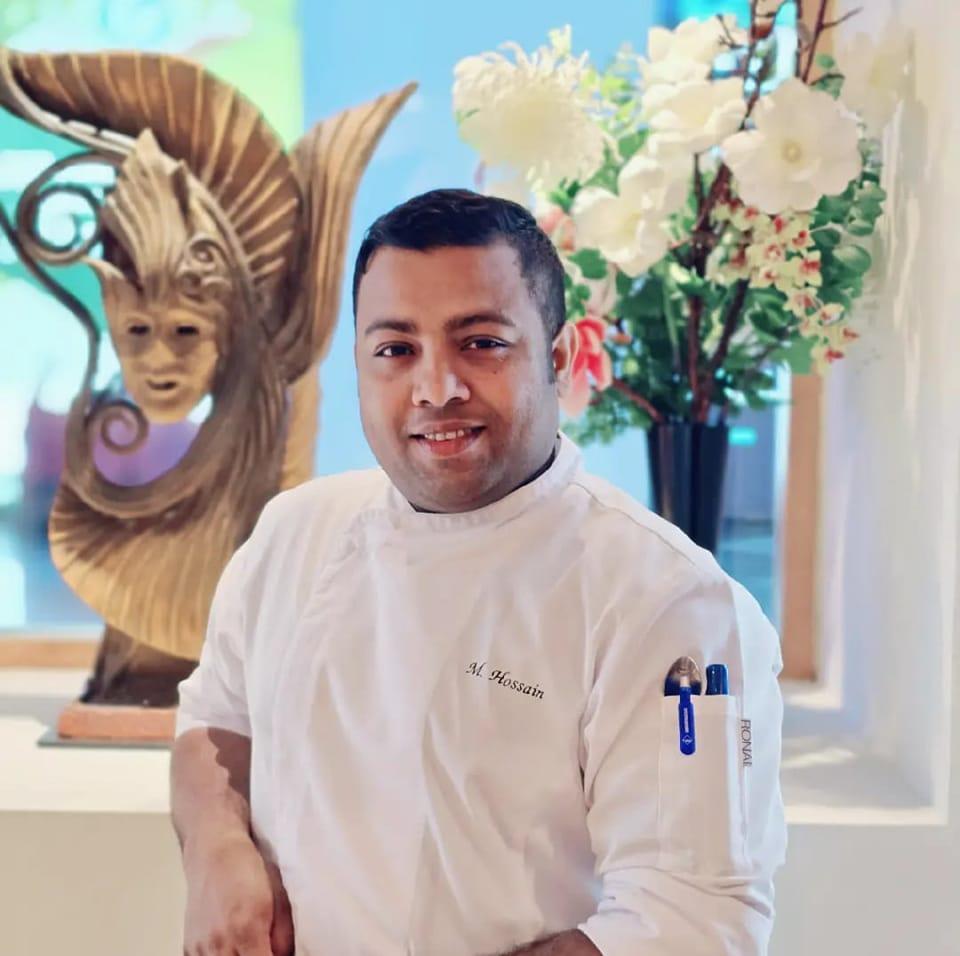
I’m Mossaraof, a trained chef and the founder of OvenInsights.com. I spent years cooking at Larrupin’ Cafe and in kitchens across Chicago and Seattle. Now I test kitchen gear for a living. I moved to North Acton, London, and I test every tool I write about. I use real meals and real heat. No brand deals. No shortcuts. I cover 12 kitchen types and hundreds of recipes. I believe this: the right tools matter as much as the recipe.