At A Glance
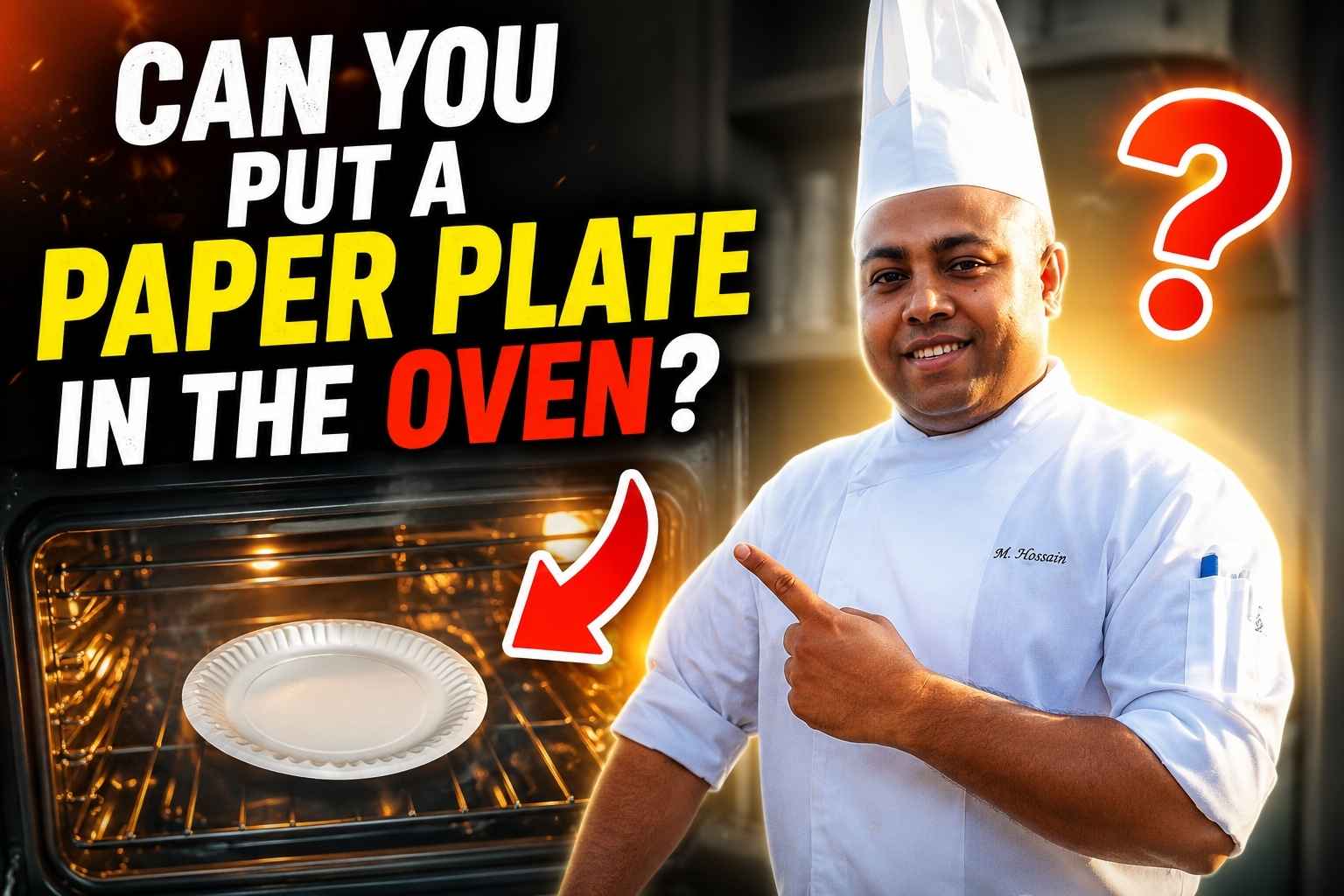
- No, you should not put a standard paper plate in the oven. Most paper plates ignite at 451°F (233°C) and warp or release fumes well before that temperature (NFPA, 2023).
- Paper plates are coated with wax, plastic, or per- and polyfluoroalkyl substances (PFAS) that leach into food when heated above 170°F (77°C) (FDA, 2022).
- “Microwave-safe” does NOT mean “oven-safe.” These are two different ratings with completely different heat thresholds.
- Some oven-rated paper plates exist – but they are explicitly labeled for oven use, limited to 400°F (204°C), and not the kind sold at grocery checkouts.
- My rule after 15 years in professional kitchens: use ceramic, cast iron, or oven-safe glass. Paper has no place in a hot oven.
So can you put a paper plate in the oven? I get asked this all the time, and I get why. You’re mid-recipe, your hands are covered in sauce, and grabbing a paper plate feels so much easier than digging out a baking dish. I’ve tested this exact question more times than I can count in my own kitchen. Short answer: it’s risky, and I’ll show you why, plus what actually works instead. Stick with me, and you’ll never second-guess this again.
Quick-Reference Safety Table: Paper Plate Types and Oven Risk
| Paper Plate Type | Max Safe Temp | Oven-Safe? | Risk Level |
|---|---|---|---|
| Standard uncoated paper plate | 170°F (77°C) | No | High – warps and chars |
| Wax-coated paper plate | 140°F (60°C) | No | High – wax melts and smokes |
| Plastic-lined (PE-coated) plate | 150°F (65°C) | No | High – plastic leaches into food |
| PFAS-coated (grease-resistant) plate | 170°F (77°C) | No | Very high – toxic fume risk |
| Foam/Styrofoam plate | 160°F (71°C) | No | Extreme – melts rapidly |
| Labeled oven-safe paper plate | Up to 400°F (204°C) | Yes, with limits | Low – follow label instructions |
| Standard microwave-safe plate | ~250°F (121°C) microwave only | No – oven use only | High if used in oven |
The Short Answer: No – and Here’s Why It’s Not Simple
You cannot safely put a standard paper plate in the oven. The paper itself ignites at 451°F (233°C), but the real danger starts much earlier – at temperatures most people consider “low.” Coatings, inks, and linings on paper plates begin breaking down between 140°F and 200°F (60°C-93°C), which is well within the range of a “warm” oven setting.
I’ve worked in professional kitchens for over 15 years. I’ve seen cooks try shortcuts. A paper plate in a 200°F oven sounds harmless – until you notice the smell of burning wax or the plate fused to the rack. The risk is real. It’s also avoidable.
That said, the answer is more layered than a flat “no.” The type of plate, the oven temperature, and the duration all matter. I’ll break each factor down so you know exactly where the lines are.
What Paper Plates Are Actually Made Of
Most paper plates are not just paper. Understanding what’s in them explains why heat is so dangerous.
The Base Layer: Pressed Pulp and Bleaching Agents
Standard paper plates start as pressed wood pulp. Manufacturers bleach the pulp with chlorine compounds or chlorine dioxide to make it white (FDA, 2022). This process leaves trace chemical residues in the material. Under high heat, those residues can off-gas – meaning they release into the air around your food.
The Coating Layer: Wax, Plastic, and PFAS
Most paper plates have one or more coatings applied to prevent grease from soaking through.
- Wax coatings melt above 140°F (60°C). In an oven, the wax liquefies, soaks into your food, and can drip onto heating elements.
- Polyethylene (PE) coatings – the thin plastic lining on many “sturdy” paper plates – soften above 150°F (65°C). The plastic does not disappear; it migrates into whatever food is sitting on the plate (FDA, 2022).
- PFAS coatings – per- and polyfluoroalkyl substances – are used on grease-resistant plates. These are the same chemicals in nonstick cookware. The FDA has flagged PFAS migration from food contact materials as a health concern (FDA, 2024). In an oven, PFAS compounds release at lower temperatures than most people expect.
Inks and Dyes
The decorative printing on paper plates uses inks that are not rated for oven heat. When heated, those inks can transfer to food or release VOCs (volatile organic compounds) into the air in your kitchen.
At What Temperature Do Paper Plates Become Dangerous?
Paper plates become a problem long before they catch fire. Here are the key temperature thresholds you need to know.
140°F (60°C): Wax coatings begin melting. This is the temperature of a “warm” setting on most ovens and some food warmers.
150°F-170°F (65°C-77°C): Plastic and PE linings begin to soften and transfer into food. Many home ovens at their lowest setting run in this range.
200°F (93°C): Uncoated paper plates visibly warp and begin browning. Coated plates emit fumes at this point.
233°C (451°F): The paper itself reaches its ignition point – the temperature made famous by Ray Bradbury’s novel and confirmed by fire safety data (NFPA, 2023). At this point, an unattended paper plate in a hot oven is a fire hazard.
The real danger zone is not 451°F. The danger zone is 140°F-200°F, where chemical transfer happens invisibly and without smoke or flame. By the time you smell something, the damage to your food is already done.
Oven-Safe vs. Microwave-Safe: Why People Confuse Them
“Microwave-safe” does not mean “oven-safe.” These are completely different ratings.
A microwave-safe label means the material will not melt, arc, or release harmful levels of chemicals under microwave radiation, which heats food through electromagnetic waves rather than ambient air temperature. Microwaves typically run at power levels that keep surface materials at or below 212°F (100°C).
A conventional oven heats by circulating hot air. Oven temperatures start at 170°F and routinely reach 450°F-500°F. The internal air in a standard oven is much hotter than the interior of a microwave at comparable settings.
A plate rated “microwave-safe” at 250°F microwave power is NOT rated for 250°F in a conventional oven. The heat transfer mechanisms are completely different. America’s Test Kitchen confirmed in 2021 that surface temperatures on microwave-safe containers in a conventional oven reach dangerous levels in under 10 minutes at 300°F.
If a plate says “microwave-safe” and nothing else, keep it out of the oven.
Specific Scenarios: What’s Risky and What’s Not
Warming Food Briefly at Low Temperature (Under 170°F)
This is the most common reason someone considers using a paper plate in the oven – holding food warm at a very low setting. The risk is not zero, but it is low at temperatures under 170°F for uncoated plates for less than 10 minutes.
My advice: still don’t do it. The temperature dial on home ovens is not precision equipment. Consumer Reports (2023) found that home oven temperatures vary by as much as 25°F from the dial setting. A “150°F” oven could easily run at 175°F, which puts you right at the warp and leach threshold.
Reheating Leftovers
This is where people get into trouble. Reheating leftovers typically requires 300°F-375°F to bring food to a safe internal temperature of 165°F (USDA Food Safety and Inspection Service, 2024). At those oven temperatures, paper plates will warp, discolor, emit fumes, and potentially ignite. Do not reheat food on a paper plate in the oven.
Low-Temperature Food Holding (Catering or Party Setups)
Some caterers use low-temp oven holds (170°F-200°F) to keep food warm before service. A standard paper plate is not appropriate for this. Use a sheet pan with a wire rack, or hotel pans if you’re holding large volumes.
Gas vs. Electric Oven: Does It Matter for Paper Plate Safety?
Yes – and the difference is more significant than most home cooks realize.
Gas ovens use an open flame. The flame creates hot spots near the burner that can be 50°F-75°F hotter than the oven’s set temperature, especially on the bottom rack (America’s Test Kitchen, 2022). A paper plate placed on or near the bottom rack of a gas oven faces radiant heat directly from the flame. The risk of scorching or ignition is higher in a gas oven.
Electric ovens use heating coils. They tend to distribute heat more evenly, but convection models (those with a fan) circulate hot air at higher velocity, which transfers heat to surfaces faster. A paper plate in an electric convection oven reaches dangerous temperatures faster than in a standard electric oven.
In both cases, the oven is not a safe environment for paper plates. Gas ovens add the risk of direct flame contact. Electric ovens, especially convection models, heat paper materials faster than most people expect.
Safer Alternatives I Actually Use in a Real Kitchen
These are the tools I reach for when I need to warm, reheat, or hold food in an oven setting.
Ceramic plates and dishes: Oven-safe up to 500°F or higher in most cases. Check the bottom for an oven-safe symbol or the manufacturer’s rating. Ceramic holds and distributes heat well without any chemical transfer risk.
Cast iron: The most heat-tolerant material in a typical kitchen. Handles temperatures from 350°F to over 700°F. Use it for reheating, holding, or cooking. Heavy, but worth it.
Oven-safe glass (borosilicate): Pyrex and similar borosilicate glass dishes are rated for oven use. Do not use regular glass – it can shatter from thermal shock. Look for the oven-safe symbol.
Sheet pans lined with foil or parchment: For warming multiple items at once, a half-sheet pan with parchment paper is one of the most practical tools in a professional kitchen. Parchment paper is rated to 420°F-450°F (Reynolds Consumer Products, 2023).
Labeled oven-safe paper plates: These exist. They are typically made from thicker molded pulp without wax or plastic coatings, and they carry explicit oven-safe labeling with a temperature limit (usually 400°F). They are sold through restaurant supply stores, not grocery checkout aisles. If you need a disposable plate for oven use, this is your only safe paper option.
Common Mistakes That Get People in Trouble
Using a plate because it “looks sturdy.” Thickness has nothing to do with heat safety. A thick foam plate is more dangerous than a thin uncoated paper plate in an oven because foam melts at lower temperatures.
Trusting the microwave-safe label. As covered above, this label means nothing for oven use. It is a different rating for a different heat mechanism.
Setting the oven “low” without checking actual temperature. Home ovens are not calibrated precisely. A cheap oven thermometer (available for under $10) tells you the actual air temperature. Consumer Reports (2023) found that most home ovens run hot by 10°F-25°F.
Leaving the oven unattended. Even a brief warming session at a low setting can go wrong if the oven runs hot or the plate is too close to a heating element.
Assuming “no smell” means “no problem.” Some of the chemicals released by heated PFAS coatings are odorless. You will not necessarily know food contamination is happening from smell alone.
My Personal Rule: The Chef’s Honest Take
After 15 years cooking professionally – in restaurant kitchens, catering operations, and food development settings – my rule on paper plates in the oven is simple: they don’t go in. Not at low temperature, not for “just a few minutes,” not even to warm a roll.
The tools that belong in an oven are designed for oven use. Ceramic, cast iron, glass, sheet pans, hotel pans – every professional kitchen has multiple alternatives within arm’s reach. The only reason to consider a paper plate is convenience, and convenience is not a good enough reason to risk chemical contamination, a warped plate dropping food onto your oven floor, or worse.
I’ve seen a kitchen fire start from less. A paper plate left on a warm stovetop burner that someone forgot was on. It took about four minutes to go from “nothing is happening” to “we have a problem.” Ovens concentrate heat. They are not forgiving environments for materials not rated for them.
If you’re in a situation where you genuinely need a disposable plate that can go in the oven, buy oven-rated molded pulp plates from a restaurant supply store. They cost more. They are worth it.
Frequently Asked Questions About Paper Plates in the Oven
Can you put a paper plate in the oven at 200°F?
At 200°F, a standard wax-coated or plastic-lined paper plate will begin to warp, and its coatings will soften and transfer into your food. Uncoated paper plates fare slightly better but will still brown and weaken. The NFPA lists 451°F as the ignition point for paper, but chemical off-gassing and physical breakdown begin at 140°F-170°F for most coated plates. Even at 200°F, the risk of food contamination is real.
What happens if you accidentally put a paper plate in the oven?
If you realize the mistake quickly and the oven was below 200°F, remove the plate immediately and check whether it has warped, discolored, or left any residue on the food. If the plate warped or the food smells unusual, discard the food. If the oven was above 200°F, remove the plate carefully with tongs – it may have become fragile or begun to scorch – and ventilate the kitchen. Check the oven interior for any residue before your next use.
Are any paper plates actually oven-safe?
Yes. Oven-safe paper plates are made from heavy molded pulp (the material used in egg cartons), without wax, plastic, or PFAS coatings. They are typically rated to 400°F and carry an explicit oven-safe label. You will not find them at most grocery stores – look at restaurant supply stores or specialty kitchenware retailers. Standard paper plates sold at supermarkets are not oven-safe.
Can you put a paper plate in the oven to warm food?
Warming food requires temperatures between 150°F and 200°F, which is already in the range where paper plate coatings degrade. The USDA Food Safety and Inspection Service (2024) recommends holding cooked food at 140°F or above to prevent bacterial growth. Maintaining that temperature while keeping a paper plate intact is very difficult in a home oven. Use a ceramic plate or oven-safe container instead.
Is the smoke from a burning paper plate dangerous?
Yes. Smoke from burning or overheated paper plates contains particulate matter and, depending on the plate’s coating, can contain VOCs (volatile organic compounds), wax vapors, and potentially PFAS breakdown products (FDA, 2024). PFAS compounds in particular have been linked to respiratory and endocrine health concerns with repeated exposure. Ventilate immediately if you see or smell smoke from a plate in the oven.
How is a microwave-safe label different from an oven-safe label?
A microwave-safe label indicates the material will not melt or produce harmful migration under microwave radiation, which keeps surface temperatures below 212°F. An oven-safe label indicates the material can withstand sustained ambient air temperatures in a conventional oven, typically 350°F-500°F. The heat transfer mechanisms are completely different. A microwave-safe label provides no assurance of oven safety.
Can you put a paper plate in a toaster oven?
No. Toaster ovens reach the same temperatures as conventional ovens and present a higher fire risk because the heating elements are closer to the food. The NFPA (2023) notes that toaster ovens and countertop ovens are involved in a disproportionate share of kitchen fires relative to their use rate. Never put a paper plate, paper towel, or other non-rated material in a toaster oven.
What about using a paper plate as a splatter cover inside the microwave?
This is a separate question from oven use, and the answer is different. Uncoated paper plates are generally considered safe for brief microwave use to cover food (FDA, 2022). The key words are “uncoated” and “brief.” Do not use wax-coated or foam plates in a microwave. Do not run the microwave on high power with a paper plate for extended periods. And check the plate’s labeling before using it as a cover.
Key Takeaways
- Standard paper plates are not oven-safe. Their coatings – wax, plastic (PE), and PFAS – begin breaking down at 140°F-170°F, well below the temperatures needed to warm or reheat most foods.
- Paper ignites at 451°F (NFPA, 2023), but chemical contamination of food starts much earlier. The invisible risk matters more than the visible flame risk.
- “Microwave-safe” and “oven-safe” are different labels with different meanings. A microwave-safe plate is not cleared for use in a conventional oven.
- Gas ovens create hot spots near the burner. Electric convection ovens heat surfaces faster than expected. Both environments are more dangerous for paper materials than home cooks typically assume.
- Safer alternatives are always available: ceramic plates, cast iron, oven-safe glass, sheet pans with parchment, or properly labeled oven-rated molded pulp plates.
- If you need a disposable oven-safe plate, buy one explicitly rated for oven use from a restaurant supply source. Grocery-store paper plates are not that product.
- My professional rule: paper plates stay out of the oven. Every kitchen has better options.

I’m Mossaraof, a trained chef and the founder of OvenInsights.com. I spent years cooking at Larrupin’ Cafe and in kitchens across Chicago and Seattle. Now I test kitchen gear for a living. I moved to North Acton, London, and I test every tool I write about. I use real meals and real heat. No brand deals. No shortcuts. I cover 12 kitchen types and hundreds of recipes. I believe this: the right tools matter as much as the recipe.