
Hey, I’m Mossaraof — a professional cook and food blogger.
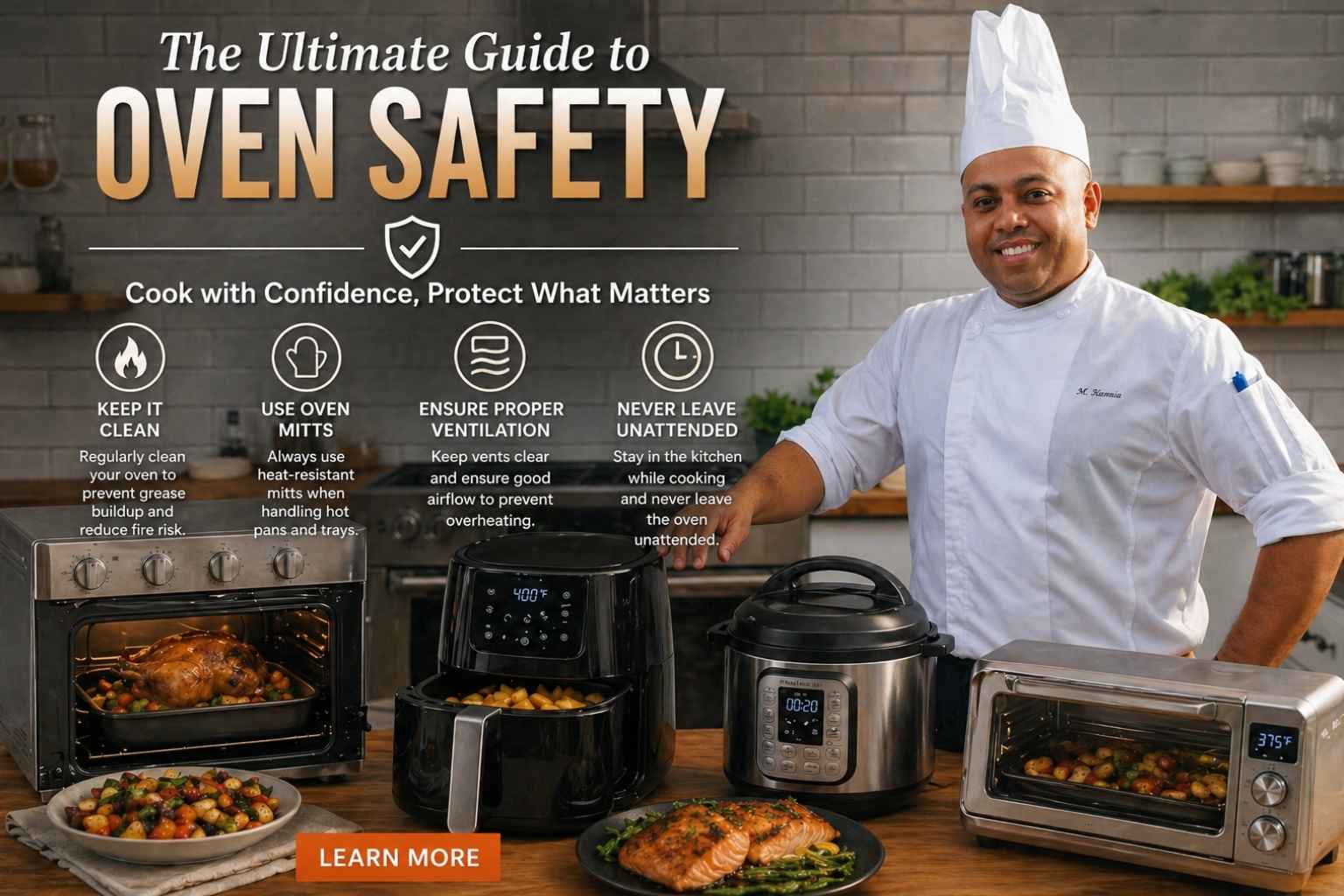
Nothing kills the joy of a home-cooked meal faster than a kitchen scare. I’ve seen my fair share of close calls in busy bistros, so I wrote The Ultimate Guide to Oven Safety just for you. My years behind the line taught me that a safe kitchen is a happy one. We’ll cover smart habits and quick checks to keep your home secure. Read on to learn how to protect your family while you bake!
Before you start your next recipe, take a look at my Complete Guide to Using an Oven at Home to master your appliance. Safety and skill go hand in hand for every great cook. Keep your space tidy and your mind at ease. Let’s make sure your kitchen stays the warm heart of your home!
Understanding Your Heat Source: Gas vs. Electric Safety
Every oven has its own personality and its own set of risks you need to watch for. To truly master your kitchen, you must understand what causes oven fires and how to prevent them regardless of your appliance type.
I grew up with a gas stove that clicked for ten seconds before lighting. It always made me nervous. Now, as a chef, I know that gas and electric ovens each have unique “danger zones.” In the US, your home setup usually depends on where you live or how old your house is.
The Power of the Flame: Gas Oven Nuances
Working with gas requires a high level of awareness. Following basic gas oven safety tips every home cook should know is the first step toward a safe kitchen.
- The Smell Test: If you smell “rotten eggs,” that is mercaptan. It is added to gas to warn you of a leak.
- Pilot Lights: On older models, a blown-out pilot light can slowly fill your kitchen with gas.
- Ignition Gaps: Never lean in too close when you turn the dial. A delayed spark can cause a small “poof” of fire.
- Proper Venting: Ensure your hood vent actually leads outside. This is huge in tight city apartments. Knowing when to turn off the oven and call for help is vital if you suspect a ventilation issue or a persistent gas leak.
The Glowing Coil: Electric Oven Risks
Electric ovens offer dry, consistent heat, but the heating elements pose their own threats.
- Hidden Heat: Electric coils look black but can be 400 degrees. I’ve ruined many plastic bowls by setting them on a “cool” burner, which is a reminder that you can never put plastic in the oven or on its hot surfaces.
- Heating Elements: Over time, the bottom coil can crack. If you see bright orange sparks, turn it off immediately.
- Spill Hazards: Sugar or fat hitting a hot coil creates thick, acrid smoke that triggers alarms fast. If this happens, you’ll need to know what to do if your oven starts smoking to prevent a full-blown fire and understand why your smoke alarm goes off when you use the oven.
Material Matters: What Goes Inside?
No matter your heat source, using the right cookware is essential. While you can put cast iron in the oven and most glass is safe in the oven under the right conditions, other materials are dangerous. For example, aluminum foil can go in the oven safely if used correctly, but you should never assume cardboard can go in the oven. Finally, remember that kitchen safety rules change depending on the appliance; for instance, what happens when you put metal in a microwave oven is very different from using metal in a standard gas or electric range.
Essential Safety Gear for the Home Cook
You wouldn’t work under a car without a jack, so don’t work in a kitchen without the right armor.
In my home kitchen, I keep my gear right next to the oven. I don’t want to be searching for a mitt while my cookies are burning. High-quality gear is worth every penny. Look for brands like KitchenAid or OXO that design for American hand sizes and heat levels.
The Great Glove Debate: Silicone vs. Cloth
- Silicone Mitts: These are my favorite. They are waterproof. If you spill hot gravy on them, you just rinse it off.
- Heavy Cotton: These feel more natural to hold. Just make sure they are thick. Look for “terry cloth” professional styles.
- Length Matters: Get mitts that go past your wrist. Most burns happen when your arm hits the top rack while reaching in.
Using the Right Tools
- Long Handles: Use long tongs for moving pans. It keeps your skin away from the heat “curtain” at the oven door.
- Cast Iron Care: Remember that Lodge skillets stay hot for thirty minutes. I always drape a towel over the handle so I don’t grab it by accident.
- Baking Stones: These get incredibly hot. Let them cool inside the oven overnight before you try to move them.
Pre-Cooking Rituals: The Safety Inspection
A safe bake starts ten minutes before you even turn the knob to preheat.
I have a rule: I never turn on the oven without opening the door first. One time, I found a plastic cutting board hidden inside. My roommate had put it there to save counter space. If I hadn’t looked, my kitchen would have smelled like burnt Lego for a month.
Clear the Cavity
- Storage Trap: Many Americans use the oven to store pans. Check for lids, plastic handles, or wooden boards.
- Rack Check: Move your racks to the right height while they are cold. It is much harder (and riskier) once the oven is at 400 degrees.
- Bottom Debris: Look for fallen bits of food or old grease. These are the primary causes of oven fires.
The Door and Seal
- Gasket Health: Feel the rubber seal around the door. If it is brittle or cracked, heat will leak out.
- Window Clarity: Keep the glass clean. If you can’t see through it, you’ll keep opening the door. This lets heat out and burns your face with steam.
Fire Prevention and Management
Smoke is a warning, but a flame is a crisis that you can handle if you stay calm.
I’ve seen a grease fire start in a split second. It’s scary. The flame jumps up and dances. Your first instinct is to scream or run for water. Don’t do either. Dealing with a fire is part of The Ultimate Guide to Oven Safety that every family needs to practice.
What to Do During a Flare-Up
- Keep It Closed: If a fire starts inside, keep the door shut. Fire needs oxygen. Closing the door starves the flame.
- Turn Off the Heat: Cut the power or gas immediately.
- Baking Soda: Keep a large box nearby. It can smother small grease fires on the stovetop or oven floor.
- Never Use Water: Water makes grease fires explode. It is a lesson you only want to learn by reading, not by doing.
Using an Extinguisher
- The Right Type: Make sure yours is rated for “B” (liquids) and “C” (electrical).
- The PASS Method: Pull the pin. Aim at the base. Squeeze the lever. Sweep side to side.
- Replacement: Check the pressure gauge once a year. If it’s in the red, it’s just a heavy paperweight.
Child and Pet Safety in the American Kitchen
The kitchen is the heart of the home, but for a toddler or a puppy, it is a forest of hot hazards.
When my nephew comes over, the kitchen changes. I have to be ten times more aware. In the US, our open-plan homes mean kids are always underfoot while we cook. It only takes a second for a curious hand to touch a hot glass door.
Child-Proofing Your Range
- Knob Covers: These are cheap and stop kids from turning on the gas.
- Oven Locks: Use a latch to keep the oven door shut. This is vital during the “self-clean” cycle.
- Back Burners: Always cook on the back burners of your stove. Keep pot handles turned inward so they can’t be pulled down.
Pet Protection
- The “Trip” Hazard: Pets love the smell of bacon. They will sit right behind your heels. Always look down before you step back with a hot pan.
- Low Heat: Some ovens vent heat at the bottom. This can be too hot for a cat or dog sleeping nearby.
- Bird Safety: If you have pet birds, be careful with non-stick coatings. High heat can release fumes that are toxic to them.
Deep Cleaning: The Safe Way to Shine
Cleaning the oven is a chore everyone hates, but a dirty oven is a fire hazard waiting to happen.
In my early years as a chef, I ignored the grease building up on the bottom of my home oven. One night, while roasting a chicken, the drippings caught fire. The smoke filled my apartment in seconds. Now, I make cleaning a regular part of my routine. It isn’t just about looks; it’s about making sure your The Ultimate Guide to Oven Safety includes a clean machine.
The Dangers of the Self-Clean Cycle
- High Heat Stress: These cycles can reach over 800°F. This often fries the delicate circuit boards in modern Samsung or LG ovens.
- Fume Hazards: The smell of burning food debris is toxic. If you have a bird or small pets, keep them in a different room with the windows open.
- The Rack Rule: Never leave your racks inside. The high heat strips the coating, making them hard to slide and prone to rusting.
- Door Lock Failures: Sometimes the heat warps the latch, and the oven stays locked for days. I’ve seen it happen to many frustrated friends!
The Natural “Chef’s Way” to Clean
- Baking Soda Paste: Mix baking soda and water. Spread it on the grime and let it sit overnight.
- Vinegar Spritz: Spray vinegar over the dried paste the next morning. It fizzes up and lifts the grease right off.
- The Razor Scraper: For the glass door, use a flat razor blade at an angle. It’s the most satisfying way to see your food clearly again.
Bakeware and Material Safety
The pan you choose is just as important as the temperature you set on the dial.
I once saw a glass baking dish shatter because someone took it out of the freezer and put it straight into a hot oven. It sounded like a gunshot. Shards of glass went everywhere, and the dinner was ruined. Understanding how materials react to heat is a core part of being an expert in your own kitchen.
Metal, Glass, and Ceramic 101
- Pyrex and Thermal Shock: In the US, older Pyrex was made of borosilicate, which handles heat changes better than modern soda-lime glass. Always let glass dishes come to room temp before baking.
- Warping Metal: Cheap cookie sheets will “pop” and twist in high heat. This can cause hot oil to splash. Invest in heavy-gauge Nordic Ware for stability.
- Ceramic Glazes: Ensure your decorative ceramic dishes are actually “oven-safe.” Some can crack or leach lead if they aren’t meant for high heat.
Understanding Non-Stick Coatings
- Temperature Limits: Most non-stick pans shouldn’t go above 450°F. At higher temps, the coating can break down.
- The “Empty Pan” Risk: Never preheat an empty non-stick pan. It heats up too fast and can release acrid fumes.
- Silicone Mats: These are great for clean-up. Just make sure they don’t touch the oven walls or the heating element directly.
Smart Oven and Tech Safety
We live in a world where you can preheat your oven from the gym, but that convenience comes with new risks.
I love tech, but I’m wary of “ghost” starts. My neighbor once had his smart oven turn on because of a software glitch. Luckily, he was home. Using these features requires a new kind of discipline that I’ve had to learn the hard way.
Managing Remote Starts
- The Visual Clear: Never enable “Remote Start” unless you have physically looked inside the oven five minutes ago.
- Pet Interference: Ensure your smart knobs have locks. Some dogs have been known to jump up and accidentally activate touch screens.
- Software Updates: Just like your phone, your oven needs updates. These often include safety patches for the heating logic.
Dealing with Digital Failures
- Error Codes: If your oven displays a weird code (like F5 or E1), don’t just ignore it. Look it up. It usually means a sensor is failing.
- The Hard Reset: Sometimes, cutting the power at the breaker for ten minutes can reset a glitchy control board.
Dealing with Common Oven Failures
Even the best-built American appliances will eventually wear out or break down.
I remember my oven’s thermostat went wonky right before a big dinner party. It said 350°F, but it was actually 450°F. My roast came out looking like a charcoal brick. Learning how to spot these failures early can save your meal and your safety.
Identifying Gas Leaks and Smells
- The Bubble Test: If you suspect a leak at the back hose, spray soapy water on the connection. If it bubbles, you have a leak.
- Sulphur Scent: If you smell gas while the oven is OFF, leave the house immediately. Do not use your phone or flip a light switch.
- Yellow Flames: Your gas burner should be blue. If it’s mostly yellow or orange, it’s not burning cleanly and could be releasing Carbon Monoxide.
Thermostat and Sensor Issues
- The $10 Fix: Buy a standalone oven thermometer. Trust it more than the digital display on your stove.
- Calibration: Most ovens allow you to “calibrate” the temp. Check your manual—it’s usually a simple button combo.
- Hot Spots: Every oven has them. Use a tray of white bread slices to see which ones toast faster. This tells you where the “danger zones” are for burning food.
Seasonal Safety: Holidays and Big Meals
The holidays are the “Super Bowl” of cooking, but they are also the most dangerous time for kitchen fires in the US.
Every Thanksgiving, I see the same thing: someone tries to cram a 25-pound turkey, three side dishes, and a tray of rolls into one oven. The oven works overtime, the grease splatters increase, and the stress levels skyrocket. In my house, we treat the holidays like a professional kitchen “service”—with a plan and a backup.
Managing the Marathon Bake
- Avoid the “Deep” Pre-Clean: Never run your self-cleaning cycle the day before Thanksgiving. The high stress often breaks the heating element right when you need it most.
- Airflow Matters: Don’t crowd the oven. If air can’t circulate, the oven works harder and can overheat the external cabinets.
- Heavy Lifting: Use a sturdy roasting pan with handles. Trying to lift a heavy bird out of a flimsy foil tray is how most floor fires and foot burns happen.
Using Secondary Heat Sources
- Countertop Safety: If you use a Ninja Foodi or a Breville Smart Oven to help, make sure it has its own dedicated outlet.
- Clearance: Keep these smaller ovens at least six inches away from walls and under-cabinet lights. They vent a lot of heat from the top.
- Slow Cooker Hazards: Don’t leave a slow cooker on a wooden cutting board. The base gets hot enough to char wood over eight hours.
Maintenance Checklist for Longevity
A well-maintained tool is a safe tool, and a little love once a month goes a long way.
I spend ten minutes every month doing a “walk-around” of my kitchen. I check the knobs, the seals, and the vents. It’s like a pre-flight check for a pilot. If you take care of your oven, it won’t let you down when you’re trying to bake that perfect birthday cake.
Your Monthly Safety Audit
- The Door Hinge: If the door feels loose or doesn’t sit flush, the hinges might be worn. This leaks heat and can burn your knobs.
- Light Bulb Replacement: Don’t cook in the dark. If your bulb pops, replace it with a high-heat appliance bulb, not a regular LED.
- Vent Inspection: For gas ranges, make sure the “chimney” (usually at the back of the stovetop) isn’t blocked by towels or spice jars.
When to Call a Pro
- Gas Line Flexibility: If your gas line is a stiff, copper pipe, have a pro replace it with a flexible stainless steel one. It’s safer during minor earthquakes or when moving the stove to clean.
- Faulty Igniters: If you hear “click-click-click” but no flame for more than five seconds, the igniter is failing.
- Sparking Elements: Any visible spark inside the oven means the insulation has failed. Stop using it immediately.
Carbon Monoxide: The Silent Kitchen Danger
You can’t see it, you can’t smell it, and you can’t taste it, but it can be deadly.
In the US, especially during cold winters in places like Michigan or Maine, we tend to seal our houses up tight. If your gas oven isn’t burning correctly, Carbon Monoxide (CO) can build up. I always keep a digital CO detector right in my kitchen, not just down the hall.
Signs of a CO Problem
- The Flame Color: I mentioned this before, but it bears repeating: Blue is good. Large, flickering yellow flames are bad.
- Soot Buildup: If you see black soot marks around the oven vents, your gas is not burning completely.
- Physical Symptoms: If you get a headache or feel dizzy every time you bake, turn off the oven and get fresh air.
Prevention Tips
- Never Use the Oven for Heat: It sounds obvious, but many people turn on the oven and leave the door open to warm the house. This is incredibly dangerous.
- Proper Hood Usage: If you have a gas stove, turn on your vent hood every single time you use the oven.
- Detector Placement: Put your CO detector at least 15 feet away from the stove to avoid “nuisance” alarms, but close enough to hear it.
Safety Around Modern Cookware Materials
Not all “oven-safe” labels are created equal, and some can lead to messy (and hot) surprises.
I once bought a cheap “non-stick” roasting pan from a big-box store. The first time I used it at 425°F, the coating started to peel and smoke. It smelled like burning plastic and ruined my expensive prime rib. I learned that day to trust reputable brands that meet US safety standards.
The Truth About Silicone
- Temperature Caps: Most silicone (like Silpat) is safe up to 480°F. If you’re broiling, take the silicone out.
- The “Flop” Factor: Silicone pans are flexible. Always put them on a metal baking sheet so they don’t fold when you lift them.
- Odor Absorption: Silicone can soak up oils. If it starts to smoke at low temps, it needs a deep degreasing soak.
Cast Iron Safety
- Weight Issues: A full Le Creuset Dutch oven can weigh 20 pounds. Make sure your oven racks are pushed all the way in before you set it down.
- The Handle Trap: I always use a “handle mitt” for my cast iron. It stays on the pan so I don’t forget it’s hot.
- Thermal Cracking: Never put a hot cast iron pan into cold dishwater. It can literally snap in half.
Electrical Safety and Circuit Management
In many older American homes, the kitchen wiring wasn’t designed for today’s high-powered appliances.
I remember living in an old brownstone where the lights would flicker every time the oven kicked on. It’s a common sight in places like Boston or San Francisco. Your oven pulls a lot of “juice.” If your electrical setup isn’t up to par, it can lead to tripped breakers or, in worse cases, electrical fires behind the wall.
Managing the Load
- Dedicated Circuits: Your range should be on its own heavy-duty circuit. If your toaster and oven are on the same line, you’re asking for a “pop” at the breaker box.
- The Plug Inspection: Every year, I pull my oven out (it’s a great time to find lost Cheerios anyway) and check the big 240v plug. If you see black scorch marks, call an electrician immediately.
- Extension Cord “No-Go”: Never, ever use an extension cord for an oven or a large toaster oven. They aren’t rated for that kind of heat and can melt in minutes.
Grounding and GFCI
- Water and Electricity: US building codes usually require GFCI outlets near sinks. Make sure your oven is properly grounded to prevent shocks if a liquid spill reaches the wiring.
- Control Board Protection: Modern ovens are basically computers that cook. A cheap whole-house surge protector can save your $2,000 range from a lightning strike or a power surge.
The “Curtain of Heat”: Steam and Rack Safety
Most people focus on the fire, but steam burns are actually more common and just as painful.
I’ve had steam burns that felt like my skin was melting. It usually happens when I’m checking a tray of vegetables. You open the door, lean in, and—BAM—a cloud of 400-degree water vapor hits your face. It’s a mistake you only make once before you learn the “Chef’s Lean.”
Mastering the Door Opening
- The Two-Step Open: Crack the door two inches. Wait three seconds for the steam to escape. Then open it all the way.
- The Side Stand: Never stand directly in front of the door. Stand to the side so the heat blast goes past you, not into your lungs.
- Dry Towels Only: I’ll say it again: a damp towel + a hot pan = an instant steam burn on your hand. Keep your towels bone-dry.
Rack Maneuvering
- Pull-Out Limits: Most modern racks have a “stop” so they don’t fall out. Test this while the oven is cold.
- The “Oven Push”: Use a wooden spoon or a specialized “rack puller” to slide racks in and out. It keeps your hands far away from the glowing elements.
- Cleaning the Tracks: If your racks are hard to slide, don’t use oil (it will smoke). Use a tiny bit of food-grade mineral oil on the side tracks only.
Microwave and Toaster Oven Combo Safety
Many US kitchens now use “Speed-Ovens” or microwave combos to save space.
These are great for quick snacks, but they confuse people. I once saw someone put a metal foil tray into a combo oven while it was in “microwave mode.” The sparks looked like a 4th of July show. You have to be twice as careful when one machine does two different things.
Combo Oven Rules
- Read the Mode: Double-check if you are in “Convection” or “Microwave” mode. Metal is fine for one, but a disaster for the other.
- Venting Requirements: These smaller units get much hotter on the outside than a standard microwave. Don’t stack mail or bread bags on top of them.
- The Popcorn Fire: Popcorn is the #1 cause of microwave-oven fires. Never leave the room while it’s popping. If it catches fire, leave the door closed and unplug the unit.
Emergency Protocols: When Things Go South
You hope you never need this information, but you need to know it by heart.
In a crisis, your brain freezes. I’ve seen people stare at a fire for ten seconds before moving. You need a “mental script.” In my kitchen, if something goes wrong, I follow three steps: Off, Isolate, Evacuate.
The 3-Step Emergency Plan
- OFF: Kill the heat. Turn the dial or hit the “Cancel” button.
- ISOLATE: Keep the oven door shut. If it’s a stovetop fire, slide a lid over the pan.
- EVACUATE: If the fire isn’t out in 30 seconds, get everyone out. Call 911 from the sidewalk. A kitchen can be replaced; you can’t.
Dealing with Minor Burns
- Cool Water, Not Ice: Run cool (not freezing) water over a burn for 10-20 minutes. Ice can actually damage the skin tissue further.
- Skip the Butter: The old “put butter on a burn” myth is dangerous. It traps the heat and can cause an infection.
- When to See a Doctor: If the burn is larger than your palm or starts to blister significantly, go to the ER or Urgent Care.
Kitchen Safety for Seniors and Aging in Place
As we get older, our reflexes and senses change, but the love for a home-cooked meal stays the same.
I watched my grandmother struggle with her heavy oven door as she hit her 80s. She had cooked for fifty years, but the heavy Maytag was becoming a burden. In the US, many families are adapting kitchens to help seniors stay independent. Safety here isn’t just about fire; it’s about making the tools fit the person.
Adapting the Environment
- High-Contrast Dials: If the numbers are wearing off your knobs, use a permanent marker or tactile stickers. Being able to see “Off” clearly is a huge safety win.
- Lighting is Everything: Add LED strip lighting under cabinets. Shadows make it easy to miss a spill or a burner that is still glowing.
- Automatic Shut-off: You can now buy devices that plug into your stove and shut it off if no motion is detected for a set time. It’s peace of mind for the whole family.
Handling and Mobility
- Lightweight Bakeware: Swap out heavy cast iron for hard-anodized aluminum. It’s much easier on the wrists when reaching into a hot oven.
- Counter-Height Ovens: If you’re remodeling, consider a wall oven. Not having to bend down while holding a hot tray reduces the risk of trips and falls.
Apartment Living: Small Space, Big Risks
Cooking in a tiny studio in Seattle or a walk-up in Brooklyn presents a very specific set of safety challenges.
I once lived in an apartment where the oven was so close to the fridge that the fridge handle got hot when I baked. In small spaces, everything is condensed. You don’t have the luxury of a giant island to set things down. You have to be organized, or things get dangerous fast.
Managing the Heat Footprint
- Wall Protection: If your oven is tucked into a corner, check the drywall. If it feels soft or charred, you need a heat shield.
- The “Landing Zone”: Always clear a spot on the counter before you open the oven. In a small kitchen, you don’t want to be standing there holding a 400-degree pan with nowhere to put it.
- Ventilation Hacks: Many apartments just circulate air back into the room. If you’re searing something, crack a window and use a box fan to pull the smoke out.
The Future of Oven Safety: AI and Beyond
We are entering an era where our ovens can literally “see” what we are cooking.
I recently tested a new smart oven that has a camera inside. It can tell the difference between a pizza and a tray of cookies. If the pizza starts to char, the oven sends a notification to your phone and lowers the heat. It’s like having a sous-chef who never sleeps.
Innovative Safety Features
- Induction Technology: While mostly for stovetops, induction-paired ovens are becoming more common in the US. They stay cooler to the touch than traditional ranges.
- Voice Control: “Alexa, turn off the oven.” For someone with limited mobility or messy hands, this is a game-changer for stopping a potential over-cook.
- Steam Cleaning: Newer ovens use low-heat steam cycles instead of the 800-degree “nuke” option. It’s safer for your cabinets and your lungs.
Creating a Culture of Safety in Your Home
At the end of the day, the best tool in your kitchen is your own awareness.
I treat my home kitchen like my professional one. We have “rules of the road.” When the oven is on, we say “Hot oven!” when walking behind someone. It sounds silly at first, but it prevents accidents. This is the heart of The Ultimate Guide to Oven Safety—communication.
Final Takeaways from the Chef
- Stay Present: Never leave the house with the oven on. Not for a quick “run to the store,” and not to “pick up the kids.”
- Trust Your Gut: If a recipe says bake for 60 minutes but it smells done at 45, check it. Your nose is often a better safety sensor than a timer.
- Respect the Tool: Your oven is a powerful piece of machinery. Treat it with the same care you would a power saw or a car.
Your Safety “Go-Bag”
- A working fire extinguisher.
- A fresh box of baking soda.
- A digital meat thermometer (to ensure food is cooked safely).
- A standalone oven thermometer.
My Final Thoughts: Bringing It All Together
I’ve spent thousands of hours in front of a hot oven. I’ve made beautiful soufflés and I’ve made smoky messes that set off every alarm in the building. The difference between a great meal and a kitchen disaster usually comes down to the small things. It’s about that split second where you decide to use a dry mitt instead of a wet rag.
Living and cooking in the US means we have access to some of the best appliances in the world. But a Viking or a Kenmore is only as safe as the person using it. I hope this personal journey through The Ultimate Guide to Oven Safety helps you feel more confident. Kitchens should be places of creation, not places of fear.
A Quick Recap of My Golden Rules
- Watch the light: If the oven light is on, treat the whole area as a “hot zone.”
- Clear the clutter: No towels, mail, or plastic bags on the stovetop—ever.
- Listen to the machine: If it clicks, hums, or smells different, give it a rest and call a pro.
- Keep your cool: If a fire starts, your calm head is your best extinguisher.
Cooking with Confidence
Now that you know the risks, go bake something amazing. Make that family lasagna or those chewy chocolate chip cookies. When you have a safety routine, you can stop worrying about the “what-ifs” and start focusing on the flavors.
I’ll see you in the kitchen. Just remember: stay alert, stay dry, and keep those oven mitts handy. Happy (and safe) cooking!

I’m Mossaraof, a trained chef and the founder of OvenInsights.com. I spent years cooking at Larrupin’ Cafe and in kitchens across Chicago and Seattle. Now I test kitchen gear for a living. I moved to North Acton, London, and I test every tool I write about. I use real meals and real heat. No brand deals. No shortcuts. I cover 12 kitchen types and hundreds of recipes. I believe this: the right tools matter as much as the recipe.