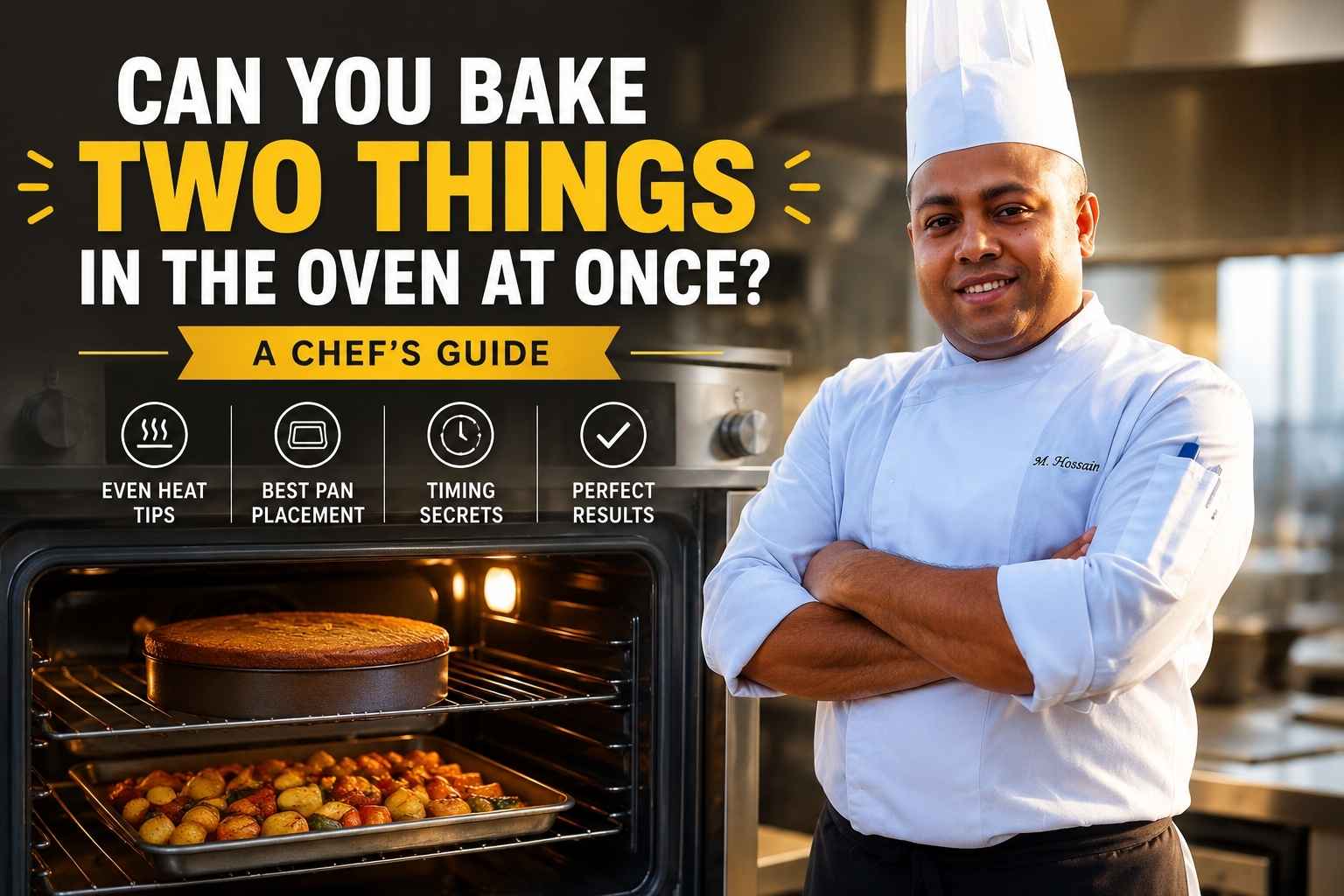
Have you ever looked at a full oven and wondered, Can You Bake Two Things in the Oven at Once without ruining dinner or dessert? I asked the same thing the first time I tried to bake cookies while roasting chicken for a family meal. It felt like a gamble, but I learned a few simple tricks that made it work every time.
The good news is that you can save time, energy, and effort when you use the right oven temperature, rack position, and baking plan. In this guide, I will share easy tips, common mistakes to avoid, and the best ways to cook multiple dishes at once so you can get great results with less stress. Let’s make your oven work smarter, not harder.
At A Glance
- Yes, you can bake two things at once – but only if the temperatures are within 25°F of each other and neither dish is moisture-sensitive next to a strong-flavored one.
- Place the dish that needs more browning on the lower rack and the one that needs a gentler top heat on the upper rack.
- Convection ovens handle multi-rack baking better than conventional ones because the fan evens out hot spots (America’s Test Kitchen, 2024).
- Expect bake times to increase by 10-15% when you load a second dish into a conventional oven, due to heat recovery time.
- Never bake a delicate cake next to garlic bread, onion-heavy casseroles, or anything that releases strong steam.
What Multi-Rack Baking Actually Means – and Why Most People Get It Wrong
Multi-rack baking means running two or more dishes in the same oven at the same time, on different racks. Done right, it saves you 30 to 60 minutes on a busy weeknight. Done wrong, you get a gummy center on your cornbread and burnt edges on your roasted carrots.
I’ve worked in professional kitchens for 15 years. Deck ovens, convection ovens, combi-steam ovens – I’ve used them all. And the number one mistake I see home cooks make is treating the oven like a simple box where temperature is the only variable. It isn’t. Position, airflow, thermal mass, and moisture all play a role. Once you understand those four things, multi-rack baking becomes second nature.
How Heat Distribution Changes When You Add a Second Dish
Every time you open the oven door and slide in a cold pan, the oven temperature drops. With one dish, the oven recovers in about 5 to 10 minutes. With two cold dishes added at once, especially heavy ones like a cast iron casserole or a ceramic baking dish, recovery can take 15 to 20 minutes (Cook’s Illustrated, 2023).
Thermal mass is the term for how much heat a pan or dish absorbs and holds. A thin aluminum sheet pan has low thermal mass – it heats up fast and responds quickly to temperature changes. A 5-quart cast iron Dutch oven has very high thermal mass – it takes longer to heat up, but once it does, it holds that heat even if you crack the oven door.
When you put a high-thermal-mass dish next to a low-thermal-mass dish, the high-mass dish pulls heat away from the oven cavity longer. The result is that your sheet pan cookies may bake unevenly because the oven was still recovering its temperature during the first half of their bake.
Why Airflow Matters More Than Most Cooks Think
In a conventional oven (also called a radiant oven), heat comes from heating elements at the top and bottom of the cavity. Air moves around naturally, but there’s no fan pushing it. That means hot spots develop – usually at the back of the oven and near the heating elements.
Add a second rack full of food and you’re now physically blocking some of that natural air movement. The area directly above a full sheet pan gets less airflow than the open space beside it. This creates localized temperature differences that can cause one side of a dish to brown faster than the other.
The fix: rotate every pan 180 degrees at the halfway point. Every time. No exceptions.
Rack Position Strategy: Where to Put Each Dish
The rack position you choose determines how much direct radiant heat hits your food from above and below.
Top rack sits closest to the upper heating element. Use it for dishes that need browning on top – gratins, casseroles with a cheese crust, broiled items. It’s also the right spot for a dish that’s nearly done and just needs color on top.
Middle rack is the default for most single-dish baking. Heat is balanced. Use it for cakes, muffins, cookies, and anything where even baking matters more than surface color.
Lower rack sits closest to the bottom heating element. Use it for pizza, crusty breads, and anything that needs a firm, browned bottom. It’s also where I put items that need to finish cooking faster.
The Two-Dish Rule for Rack Assignment
When baking two dishes at once, I follow a simple rule: put the dish that needs more bottom heat on the lower rack and the dish that needs even, gentle heat on the upper rack – but no higher than the second-to-top position.
If both dishes need even heat (like two cake layers), use the lower-middle and upper-middle positions. Switch their rack positions at the halfway point.
Food Pairing Reference Table: What Works Together and What Doesn’t
| Food Pairing | Recommended Rack Positions | Temperature Compatible? | Notes |
|---|---|---|---|
| Cookies + roasted vegetables | Cookies upper-middle / Veg lower | Yes (375-400°F) | Rotate both at halfway. Veg may need 5 extra minutes. |
| Casserole + dinner rolls | Casserole lower / Rolls upper-middle | Yes (350-375°F) | Watch roll tops – add foil if browning too fast. |
| Two cake layers | Lower-middle + Upper-middle | Yes (same temp) | Swap rack positions at the halfway point. |
| Sheet pan dinner + roasted potatoes | Both on separate lower racks | Yes (400-425°F) | Don’t overlap pans – leave 2 inches of clearance on all sides. |
| Lasagna + garlic bread | Lower + Upper | Yes (375°F) | Fine. Garlic bread takes 10-12 min; pull it early. |
| Cheesecake + anything aromatic | Never together | N/A | Cheesecake absorbs nearby odors and flavors. |
| Delicate sponge cake + roasting meat | Never together | No | Steam and fat splatter will ruin the cake texture. |
| Bread loaf + roasted broccoli | Separate sessions recommended | Technically yes | Steam from bread affects broccoli crispness. Do bread first. |
Why “Same Temperature” Doesn’t Guarantee the Same Results
Two recipes can both call for 375°F and still be incompatible for simultaneous baking. The issue is usually bake time and moisture release.
A tray of chocolate chip cookies needs 10 to 12 minutes at 375°F. A chicken thigh casserole needs 45 minutes at 375°F. If you start them at the same time, the cookies are done and pulled 33 minutes before the casserole. That’s fine – staggered finishing is totally normal. What’s not fine is leaving the cookies in for the full 45 minutes while you wait for the casserole.
The bigger issue is what happens in the first 10 minutes of a long bake. A casserole releases a lot of steam early on. That steam raises the humidity inside the oven cavity. High humidity is the enemy of crispy, golden cookies. Your cookies will spread and go chewy instead of snapping.
My rule: if one dish releases a lot of liquid or steam (braised meat, covered casserole, anything with watery vegetables), don’t pair it with something that needs to be dry and crisp.
Convection vs. Conventional Ovens for Multi-Rack Baking
Convection ovens have a fan (and usually a third heating element behind the fan) that circulates hot air throughout the cavity. This does two things that matter for multi-rack baking.
First, it reduces hot spots. The fan pushes air past every surface more evenly, so the back of the oven runs closer to the same temperature as the front. Second, it speeds up heat recovery after you open the door, because the fan is actively moving heat back into the cold zones faster.
The practical result: convection handles multi-rack baking better than conventional (America’s Test Kitchen, 2024). You still get some variation between racks, but it’s smaller. In a conventional oven, I see 15 to 25°F differences between the top and bottom rack. In a convection oven with the fan running, that gap narrows to 5 to 10°F.
How to Adjust for Convection When Baking Two Dishes
Standard convection guidance says to reduce temperature by 25°F or reduce time by 25%, compared to a conventional recipe (King Arthur Baking, 2023). When baking two dishes at once in convection, I reduce temperature by 25°F and check for doneness 5 minutes earlier than the shorter recipe calls for.
Also: skip rotating the pans in convection. The fan does that work for you.
What to Do When Two Recipes Call for Different Temperatures
This comes up constantly. One recipe says 350°F, another says 400°F. Here’s how I handle it.
If the difference is 25°F or less: Split the difference. Set the oven to the midpoint – say, 375°F. Adjust baking time accordingly. The dish meant for 350°F will finish slightly faster than expected. The dish meant for 400°F will take slightly longer. Check both earlier than the recipe says and pull each one when done.
If the difference is 50°F: Use the temperature of the dish that’s more sensitive to heat. Cakes and custards are more sensitive than roasted vegetables. Bread is more sensitive than a casserole. Put the sensitive dish at the right temperature and let the other dish run longer or shorter as needed.
If the difference is more than 75°F: Don’t bake them together. The gap is too large. One dish will be wrong. Bake separately or stagger them – start the longer, lower-temperature dish first, then crank the heat and add the second dish when the first is half done.
Pan Size, Spacing, and Airflow: Why Crowding Kills Your Results
A full-size sheet pan (18 x 26 inches) in a standard home oven leaves very little room for air to move around it. That’s one reason sheet pan dinners can have soggy spots – the pan is so close to the oven walls that air can’t circulate underneath or around the edges.
When you’re baking two things at once, the problem gets worse. Two large pans on two racks create a near-solid wall that hot air has to fight through. The result is longer bake times, uneven browning, and more steam trapped in the cavity.
Leave at least 2 inches of clearance between each pan edge and the oven wall. If two pans are on separate racks, offset them – don’t stack them directly above each other. Offset positioning lets air move between them diagonally instead of hitting a flat barrier.
For home ovens, half-sheet pans (18 x 13 inches) give much better airflow than full-sheet pans. If you own full-sheet pans, save them for when you’re only baking one thing.
Moisture and Flavor Transfer: When Not to Bake Two Things Together
The oven cavity is a shared air environment. Whatever one dish releases – steam, fat vapor, volatile aromatic compounds – the other dish is exposed to.
This usually isn’t a problem. Roasted carrots next to a chicken thigh? Fine. Two pans of bread rolls? Great.
But some combinations are genuinely bad.
Garlic, onions, and fish release strong volatile compounds that absorb into neutral-flavored baked goods. A plain butter cake baked next to a pan of garlic-roasted shrimp will taste faintly of garlic. I’ve seen this happen. It’s subtle, but once you know it’s there, you can’t un-taste it.
Meat roasts release fat splatter. That fat can land on uncovered baked goods on the rack above. Keep anything delicate covered with foil if you’re roasting meat in the same oven.
High-moisture dishes raise oven humidity. This is great for bread (steam helps crust formation), but it’s bad for anything that’s supposed to be crispy. Don’t bake roasted potatoes at the same time as a covered braise.
Cheesecakes are the most vulnerable. They absorb everything. Bake them alone, always.
When Multi-Rack Baking Works and When to Skip It
Multi-rack baking works well when:
- Both dishes are within 25°F of each other in temperature.
- Neither dish needs to stay dry and crispy while the other releases a lot of steam.
- Neither dish has a strong aroma that would contaminate the other.
- You’re using a convection oven or you’re willing to rotate pans at the halfway point.
- The dishes have overlapping bake times so you’re not pulling one out 30 seconds after putting it in.
Skip multi-rack baking when:
- One dish is a delicate baked good (cheesecake, soufflé, angel food cake) and the other is anything aromatic or steamy.
- The temperature difference between the two recipes is more than 75°F.
- You’re baking two dishes that both need to fill the full rack area, leaving no room for air to move.
- You’re at high altitude and already fighting longer, less predictable bake times (more on that below).
Common Mistakes Home Cooks Make When Baking Two Things at Once
Mistake 1: Not rotating pans halfway through. In a conventional oven, this is non-negotiable. Heat is uneven. Front-to-back and rack-to-rack differences are real. Rotate every pan 180 degrees at the halfway point, and swap rack positions if you have time.
Mistake 2: Using pans that are too large for the oven. Large pans block airflow. Use half-sheet pans when doubling up, not full-sheet pans.
Mistake 3: Starting both dishes at exactly the same time when they have very different bake times. Stagger the start. If one dish takes 45 minutes and the other takes 20 minutes, start the 45-minute dish first, then add the 20-minute dish 25 minutes in so they finish together.
Mistake 4: Ignoring the effect of altitude. At elevations above 3,500 feet, water boils at a lower temperature and leavening works faster. Baked goods rise and set more quickly, which means they can over-rise and then collapse (King Arthur Baking, 2022). When baking two dishes at high altitude, reduce leavening by about 25% in each recipe and check for doneness 5 to 10 minutes earlier than the recipe says. Don’t assume that a recipe tested at sea level will behave the same in Denver or Santa Fe.
Mistake 5: Not accounting for the extra heat recovery time. Adding two cold, heavy dishes to a hot oven drops the temperature more than most people expect. Set your oven 25°F higher than your target for the first 10 minutes, then reduce it. Or simply add 10 to 15 minutes to your total expected bake time and rely on visual and tactile cues – not the timer – to know when things are done.
Mistake 6: Opening the oven door to check too often. Every time the door opens, the oven loses 25 to 50°F. With two dishes already straining the oven’s heat recovery capacity, this compounds the problem. Use the oven light and look through the glass. Only open the door when you need to rotate or check for doneness.
My Personal Routine for Planning a Multi-Dish Bake
Before I load anything into the oven, I do three things.
First, I look at both recipes and write down the target temperature, total bake time, and whether the dish is sealed/covered or open to the oven air. This tells me immediately whether they’re compatible.
Second, I figure out which dish is more sensitive. The sensitive dish gets priority – it goes on the middle rack, gets the correct temperature, and I adjust everything else around it. If I’m baking a sponge cake and roasted asparagus at the same time, the cake is the sensitive one. It gets the middle rack, 350°F, and no steam source nearby.
Third, I set two separate timers – one for each dish – and I write on a sticky note which rack each dish is on. Sounds basic, but when you’re cooking a full dinner and someone is asking you where the plates are, you will forget which timer is for which dish.
I also preheat 15 minutes longer than usual when I know I’m doubling up. The extra preheat time brings the oven walls and racks up to temperature more fully, so they lose less heat when I open the door.
Frequently Asked Questions About Baking Two Things in the Oven at Once
Can you bake two things at the same time if they need different temperatures?
Yes, if the difference is 25°F or less. Set the oven to the midpoint temperature and adjust your expected bake times – the dish meant for the lower temperature will finish a bit faster, and the one meant for the higher temperature will take a bit longer. If the gap is 50°F or more, bake the sensitive dish first and then adjust for the second one.
Does it take longer to bake two things at once?
Yes, usually 10 to 15% longer in a conventional oven. Adding cold pans drops the oven temperature, and recovery takes time. In a convection oven, the extra time is smaller – about 5 to 10% – because the fan speeds up heat recovery (Cook’s Illustrated, 2023).
Can you bake two cake layers at the same time?
Yes. Place them on the lower-middle and upper-middle racks. Swap their rack positions at the halfway point. Use the same pan size for both layers so they bake at the same rate. Most home bakers do this routinely and it works well.
What is the best rack position when baking two things at once?
Put the dish that needs more bottom heat or faster browning on the lower rack. Put the dish that needs even, gentle heat on the upper-middle rack. Avoid the very top rack for most baking – it’s too close to the upper heating element and can scorch the tops of baked goods.
Is convection better than conventional for baking two things at once?
Yes. The fan in a convection oven evens out temperature differences between racks and speeds up heat recovery after you open the door. If your oven has a convection mode, use it when baking two dishes at once and reduce the target temperature by 25°F (America’s Test Kitchen, 2024).
Can you bake cookies and a casserole at the same time?
You can, but watch for steam from the casserole. If the casserole is covered, steam stays contained and the cookies should be fine. If the casserole is open and releasing liquid, the added humidity can make cookies spread more and come out chewier than intended. Start the casserole first, let it build up some heat and reduce surface moisture, then add the cookies.
What foods should never be baked together?
Cheesecake next to anything aromatic is a hard no. Delicate angel food or chiffon cake next to a meat roast is also a bad idea – fat splatter and steam will affect the texture. Fish and neutral baked goods shouldn’t share an oven for the same reason garlic and cakes shouldn’t. When in doubt, bake sensitive items alone.
How does altitude affect baking two things at once?
At elevations above 3,500 feet, leavening agents work faster and moisture evaporates more quickly. This makes baked goods more unpredictable, especially when two dishes are competing for oven heat. At high altitude, reduce leavening by 25% in both recipes, increase oven temperature by 15 to 25°F, and reduce sugar slightly in sweet baked goods. Check doneness earlier than the recipe says, because both dishes will likely finish ahead of schedule (King Arthur Baking, 2022).
Key Takeaways
- You can bake two things at once when temperatures are within 25°F of each other and neither dish is moisture-sensitive or strongly aromatic next to the other.
- Put the dish that needs more bottom browning on the lower rack and the more delicate dish on the upper-middle rack.
- In a conventional oven, rotate all pans 180 degrees at the halfway point and swap rack positions when possible. In a convection oven, skip rotation – the fan handles it.
- Add 10 to 15 minutes to your total expected bake time when doubling up in a conventional oven, and rely on visual cues – not just the timer – to pull each dish.
- Never bake cheesecake, soufflé, or delicate sponge cakes next to anything that releases strong steam or aromatic compounds.
- At high altitude, reduce leavening by 25%, raise oven temperature slightly, and check doneness earlier than usual.
- The simplest planning habit: write down both dishes’ temperatures and bake times before you start. If they’re compatible, go. If not, stagger the start times or bake separately.

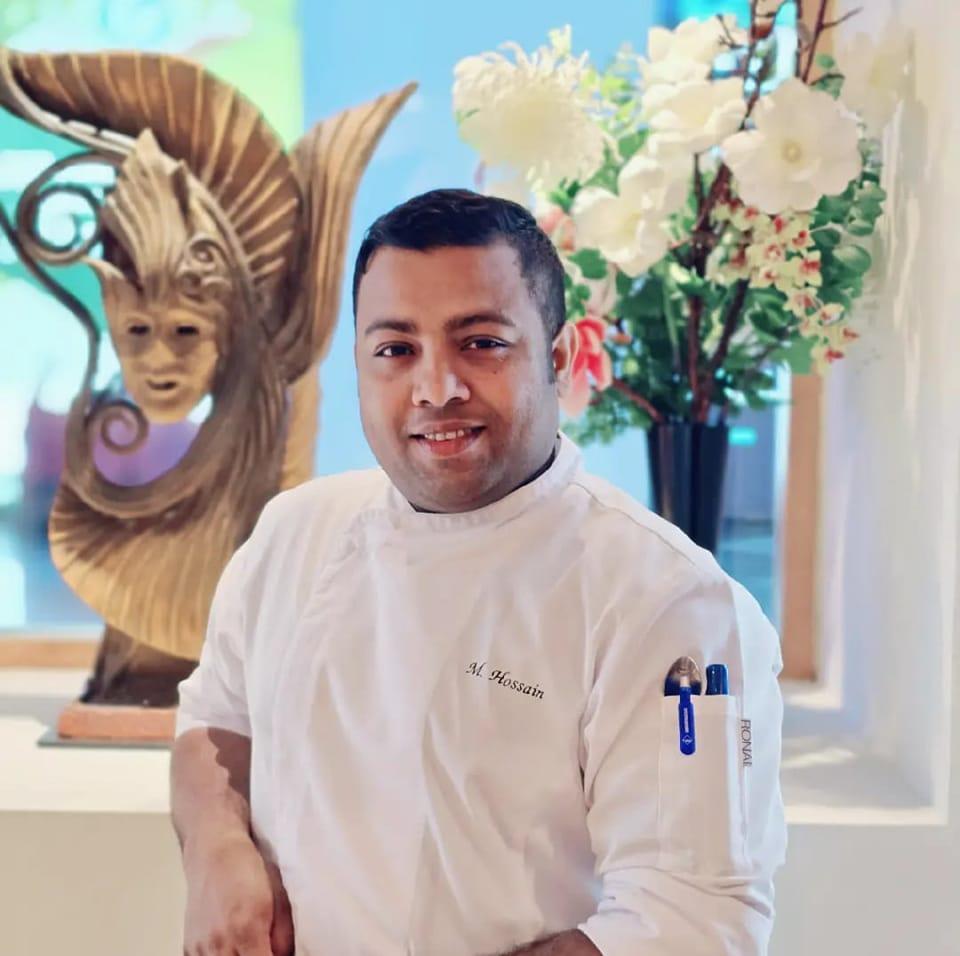
I’m Mossaraof, a trained chef and the founder of OvenInsights.com. I spent years cooking at Larrupin’ Cafe and in kitchens across Chicago and Seattle. Now I test kitchen gear for a living. I moved to North Acton, London, and I test every tool I write about. I use real meals and real heat. No brand deals. No shortcuts. I cover 12 kitchen types and hundreds of recipes. I believe this: the right tools matter as much as the recipe.