
At A Glance
- Best overall: Easy-Off Professional Fume Free Heavy Duty Oven Cleaner – it works on baked-on grease in 40 minutes without choking you out of the kitchen.
- Best natural option: Baking soda paste (baking soda + dish soap + hydrogen peroxide) handles light-to-medium buildup with zero fumes and no safety gear needed.
- Best budget pick: Zout or store-brand sodium hydroxide sprays, typically under $5, match name-brand performance on moderate grease.
- Best for heavy carbonized grease: Easy-Off Heavy Duty (the yellow can with lye) is the only product I trust when an oven looks like a crime scene.
- After 15 years running professional kitchens, I can say this clearly: the wrong cleaner wastes your time, and the right one saves you an hour of scrubbing.
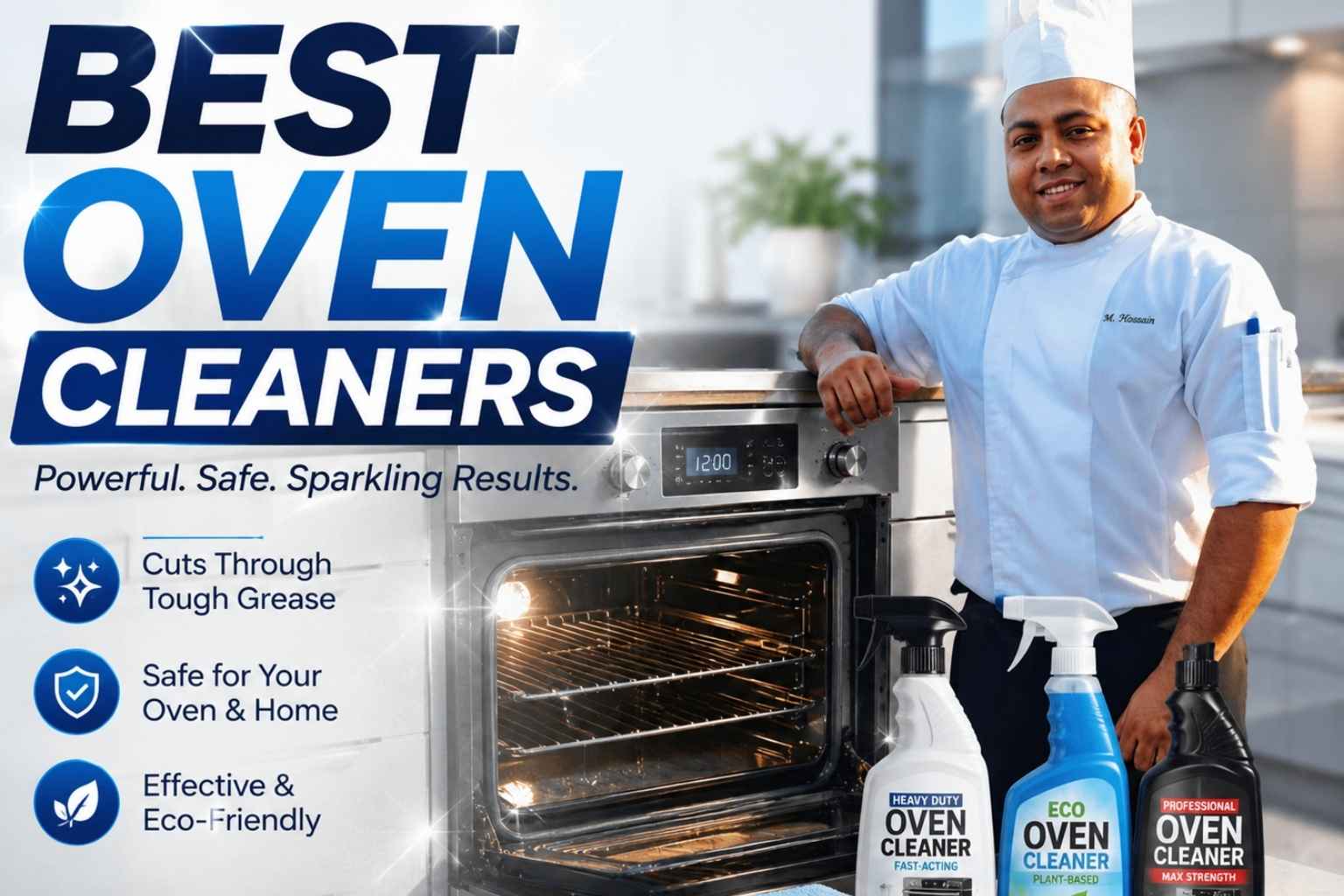
Have you ever opened your oven and wondered how it got so messy? I have been there too, and finding the Best Oven Cleaners made a bigger difference than I expected. I have tested many ways to remove baked-on grease, tough stains, and burnt food, so I know what really works. In this guide, I will help you choose the right cleaner, share simple tips, and make oven cleaning much easier, so let’s get started.
Why the Right Oven Cleaner Actually Matters
The wrong cleaner turns a 30-minute job into a two-hour nightmare. I learned that the hard way in 2013 at a 200-seat restaurant in Chicago, where a new line cook hit the inside of our Wolf range with a mild all-purpose spray. He scrubbed for 45 minutes and got nowhere. We pulled out the Easy-Off and had it done in 20.
Ovens build up two types of residue: grease splatter from roasting and sauteing, and carbonized crust, which is fat and food that has burned at high heat and hardened into a black, rock-solid layer. These are not the same problem. Grease responds to mild degreasers. Carbonized crust needs either strong alkalis, abrasives, or extended heat from a self-clean cycle.
When you cook on top of old residue, it smokes. That smoke changes the flavor of your food. It also sets off smoke alarms and, over time, can damage oven door seals (Whirlpool Service Manual, 2024).
Self-cleaning cycles heat the oven to around 900°F (482°C) to incinerate residue to ash. They work, but they take 2-4 hours, use a lot of electricity, and can trip thermal fuses on older ovens (Consumer Reports, 2025). Steam-clean cycles run at lower heat and only handle light, fresh grease. For anything that has been baking on for weeks, you still need a chemical or manual solution.
How Oven Cleaners Actually Work
There are four main cleaning methods, and each works differently on grime.
Alkaline chemical cleaners (like Easy-Off Heavy Duty) use sodium hydroxide, also called lye. Lye breaks the chemical bonds in fat through a process called saponification, turning hardened grease into a soft, water-soluble soap you can wipe away. This is the same chemistry used to make actual soap. It is the most effective method for heavy buildup.
Citrus and surfactant-based cleaners (like Goo Gone Oven and Grill Cleaner) use a mix of citric acid, surfactants, and solvents. They lift and dissolve grease rather than breaking it down chemically. These work well on moderate grease and produce fewer fumes.
Abrasive cleaners (like Bar Keepers Friend) use oxalic acid plus fine abrasive particles. They scrub off residue physically and chemically at the same time. Great for oven racks, broiler pans, and stainless surfaces. Not safe for enamel-coated interiors.
Enzyme and natural cleaners (baking soda paste, lemon steam) use either bacterial enzymes or mild acids to break down organic matter. These work slowly and only on light-to-medium buildup. They produce no fumes, which is why I use them at home between deep cleans.
Oven Cleaner Comparison Table
| Product | Type | Price Range | Time to Work | Fume Level | Best Use Case |
|---|---|---|---|---|---|
| Easy-Off Heavy Duty (yellow) | Sodium hydroxide spray | $8-$11 | 20-30 min (cold) | High – needs ventilation | Heavy carbonized buildup |
| Easy-Off Fume Free (blue) | Alkaline peroxide spray | $9-$12 | 40 min | Low | Everyday grime, enclosed spaces |
| Goo Gone Oven & Grill Cleaner | Citrus/surfactant gel | $7-$10 | 30-45 min | Low-medium | Moderate grease, sensitive surfaces |
| Bar Keepers Friend (powder) | Oxalic acid + abrasive | $3-$6 | 5-10 min (scrub) | Very low | Racks, stainless, broiler pans |
| Weiman Oven & Cooktop Cleaner | Surfactant gel | $8-$11 | 30 min | Low | Ceramic-top and enamel interiors |
| Mr. Muscle Oven Cleaner | Sodium hydroxide spray | $6-$9 | 20-30 min | High | Heavy grease on standard ovens |
| Baking soda + dish soap paste | Natural/DIY | Under $1 | Overnight | None | Light-to-medium buildup |
| Lemon steam method | Natural/DIY | Under $2 | 30 min steam | None | Fresh, light grease |
Reviews of the Top Store-Bought Oven Cleaners
Easy-Off Heavy Duty: The Strongest Tool in the Cabinet
Easy-Off Heavy Duty is the benchmark that everything else gets measured against. The active ingredient is sodium hydroxide at around 4-5% concentration. It works fast. Spray it cold on a room-temperature oven, wait 20-30 minutes, and most carbonized buildup wipes off with a damp cloth.
The trade-off is real: the fumes are strong. Sodium hydroxide vapor irritates your eyes, nose, and lungs. The EPA classifies it as a corrosive substance (EPA Safer Choice Program, 2024). Open a window, run your range hood, and wear rubber gloves. Do not use it in an enclosed space without ventilation.
Do not use Easy-Off Heavy Duty on: enamel-coated oven interiors, self-cleaning oven surfaces, or heating elements. The lye will strip enamel finishes and can permanently damage the coating.
I use this at work on our commercial convection ovens every two weeks. It is the fastest solution available when the job is bad.
Easy-Off Fume Free: The Smart Home Pick
The blue can swaps lye for alkaline peroxide, which is gentler but still effective. It takes about 40 minutes to work fully and handles everyday grease well. The fumes are dramatically lower, which matters if your kitchen has no exhaust fan.
Good Housekeeping rated it the best overall oven cleaner for home use in 2025 (Good Housekeeping, 2025). I agree for most households. If your oven is not caked in years of buildup, this is the one to keep under the sink.
Goo Gone Oven and Grill Cleaner: Best for Sensitive Surfaces
Goo Gone is citrus-based with surfactants. It is slower than lye-based cleaners, but it is safe on enamel, porcelain, and ceramic-coated oven interiors. If you own a range where the interior has a non-stick or enamel finish, Goo Gone is a smarter choice than Easy-Off.
It also works well on greasy oven doors and glass panels. Apply, wait 30-45 minutes, and wipe clean. For glass, I follow up with a scraper blade held at a 45-degree angle to lift any remaining film.
Bar Keepers Friend: Best for Racks and Stainless
Bar Keepers Friend powder is not made for oven interiors. It is made for hard surfaces like oven racks, broiler pans, cast iron grates, and stainless steel. The combination of oxalic acid and abrasive particles cuts through baked-on grease fast.
Mix the powder with a few drops of water to make a paste, scrub with a non-scratch pad, and rinse. America’s Test Kitchen rated it the best rack-cleaning method in their 2024 kitchen equipment roundup (America’s Test Kitchen, 2024). I would agree. It takes off what sprays leave behind.
Never use Bar Keepers Friend on: enamel or porcelain-coated oven interiors. The abrasive will scratch the coating.
Weiman Oven and Cooktop Cleaner: Best for Newer Ovens
Weiman makes a surfactant-based gel that is safe for ceramic cooktops and enamel oven interiors. It is not as aggressive as Easy-Off, but it is the right call for newer ovens where you want to protect the finish.
I use Weiman on enamel Dutch ovens and Le Creuset grill pans at home. It cleans without scratching. On a heavily soiled oven, it takes two rounds and more scrubbing than lye-based products.
Natural and DIY Oven Cleaning Methods: What Actually Works
Baking Soda Paste: Honest Assessment
The baking soda method works. I want to be specific about what that means, though, because you see it recommended everywhere without that context.
Mix 1/2 cup baking soda with 3 tablespoons dish soap and 2 tablespoons of 3% hydrogen peroxide into a thick paste. Spread it over every surface inside the oven, avoiding heating elements. Leave it overnight (8-12 hours). Wipe off with a damp cloth, then spray with white vinegar and wipe again.
This removes light-to-medium grease effectively. It will not touch carbonized black crust that has been there for more than a few months. It takes significantly longer than chemical cleaners.
The advantages are real: no fumes, no gloves needed, safe on all interior surfaces including enamel, and costs under $1 per clean. For a home cook who cleans regularly, this method is completely fine.
Lemon Steam Method: Good Maintenance, Not a Deep Clean
Fill an oven-safe bowl with water, add 4-5 tablespoons of lemon juice, and bake at 250°F (121°C) for 30 minutes. The steam loosens fresh grease, making it easy to wipe off.
This is a maintenance method, not a cleaning method. Use it after roasting a chicken when there is fresh splatter. Do not expect it to do anything useful against months-old baked-on grime.
Does Vinegar Alone Work?
No. Straight white vinegar is mildly acidic and will freshen the smell of your oven, but it does not cut grease. Use it as a final rinse after baking soda paste to neutralize any residue. On its own, it is not a grease cleaner.
Self-Cleaning vs. Steam-Clean vs. Manual Cleaning
When the Self-Clean Cycle Makes Sense
Self-cleaning cycles work by hitting 900-1000°F (482-538°C) for 2-4 hours, which incinerates food residue to ash. It is effective for moderate buildup. The ash wipes out with a damp cloth when the cycle ends and the oven cools.
There are real limits to this method. The extreme heat can damage oven door gaskets over time and has been linked to thermal fuse failures in older models (Consumer Reports, 2025). It also produces smoke and fumes from burning residue, so ventilation matters. Never run a self-clean cycle with pets in the kitchen – the fumes from burning carbon can be harmful to birds specifically (ASPCA, 2023).
Remove oven racks before running a self-clean cycle. The heat discolors them and can warp cheaper racks permanently.
When Steam-Clean Falls Short
Most new ovens include a steam-clean option that runs at around 250°F (121°C) for 20-30 minutes. This softens fresh grease enough to wipe away. It does almost nothing on older, carbonized buildup.
If your oven has a steam-clean option, use it monthly for maintenance. For a quarterly deep clean, you still need chemical cleaners or the self-clean cycle.
When You Need Chemical Cleaners Despite Having Self-Clean
Even on ovens with self-clean, I reach for Easy-Off in three situations. First, when I need the oven clean quickly and cannot wait 4 hours. Second, when the buildup is so thick that the self-clean would produce excessive smoke. Third, when there is grease on the door gasket or around the door frame where the self-clean heat does not reach.
Safety: What to Know Before You Start
Ventilation is not optional. Open windows, run the exhaust fan, and ideally prop the back door. Sodium hydroxide fumes irritate mucous membranes fast. Even “fume free” products benefit from airflow.
Wear nitrile or rubber gloves. Sodium hydroxide will burn skin with enough contact time. Citrus-based cleaners are gentler but still irritating on prolonged contact.
Never spray heating elements. Oven cleaners on electric heating elements can cause electrical shorts or damage the element permanently. Cover them with foil or apply product carefully around them. For gas ovens, keep spray away from the igniter and burner ports.
Enamel vs. standard steel interiors: Check your oven manual before choosing a cleaner. Many modern ovens have enamel-coated interiors that lye-based cleaners will strip. When in doubt, use a citrus or surfactant-based product.
Rinse thoroughly before using the oven. Any chemical residue left inside will smoke and off-gas when you heat the oven. After cleaning with any chemical product, wipe down all interior surfaces with a damp cloth at least twice, then run the empty oven at 350°F (177°C) for 15 minutes to burn off any remaining traces before cooking.
Common Mistakes That Make Oven Cleaning Take Twice as Long
Using the wrong product for the level of mess. Mild cleaners on heavy carbonized buildup is a waste of time. If the oven has not been cleaned in over six months and has black, hardened crust, start with Easy-Off Heavy Duty, not baking soda.
Not leaving the cleaner long enough. Every product needs dwell time. Spraying Easy-Off and wiping it off in 5 minutes removes almost nothing. The chemical reaction needs 20-40 minutes to fully break down the grease.
Cleaning a warm oven with lye-based products. The instructions on Easy-Off Heavy Duty say to apply to a cold oven. Heat speeds up the reaction in an unpredictable way and intensifies fumes. Let the oven cool completely first.
Forgetting the oven door glass. The inside of the oven door gets as dirty as the walls. A scraper blade at 45 degrees followed by Goo Gone works better than scrubbing pads on glass.
Putting dirty racks back in after cleaning. Pull the racks out and clean them separately in the sink with Bar Keepers Friend or in a garbage bag with Easy-Off (let them soak overnight). A clean oven with dirty racks is still a smoking oven.
Skipping the final heat-off rinse. Before cooking anything after a chemical clean, run the empty oven hot for 15 minutes. This matters every time.
My Personal Oven Cleaning Routine After 15 Years in Professional Kitchens
I have cleaned a lot of ovens. Commercial convection ovens used daily. Hotel banquet ovens that cooked for 300 people at a time. My own home oven where I test recipes on weekends. Here is what I actually do.
At work (commercial kitchen): Every two weeks, after the last service of the day, I spray Easy-Off Heavy Duty on the cold oven interior with racks removed. Let it sit 25 minutes. Wipe down with commercial blue roll, then a damp cloth rinse, then a final dry wipe. Racks get soaked in a 1:4 dilution of Easy-Off in a commercial sink overnight, then scrubbed and rinsed in the morning. Total active time: about 20 minutes.
At home: Once a month, I use the baking soda paste overnight method. It is slower but I am not in a hurry, and I prefer no fumes in a smaller space. Every three months, I use Easy-Off Fume Free for a deeper clean. Racks go in the bathtub with hot water and Bar Keepers Friend.
The one thing I would tell any home cook: clean more often and less intensely. An oven you clean monthly with baking soda paste takes 15 minutes. An oven you clean once a year with heavy chemicals takes two hours and a lot of elbow grease.
Frequently Asked Questions About Oven Cleaners
What is the best oven cleaner for heavy grease?
Easy-Off Heavy Duty (the yellow can) is the strongest option available for home use. It contains sodium hydroxide, which breaks down carbonized grease chemically. Apply to a cold oven, wait 20-30 minutes, and wipe clean. For extreme buildup, apply twice.
Are oven cleaners safe to use on self-cleaning ovens?
Most manufacturers advise against using chemical cleaners inside self-cleaning ovens because the interior has a special enamel coating that lye can damage. Check your manual first. If your oven has a standard steel interior, chemical cleaners are fine. If it has a continuous-clean or self-clean coating, use a citrus-based product like Goo Gone or the baking soda paste method instead (GE Appliances Owner Manual, 2024).
How long should I leave oven cleaner on?
For lye-based sprays like Easy-Off Heavy Duty, 20-30 minutes in a cold oven is standard. For Easy-Off Fume Free, 40 minutes. Citrus-based gels typically need 30-45 minutes. Baking soda paste works best if left overnight (8-12 hours). More dwell time generally means less scrubbing.
Can I use oven cleaner on oven racks?
Yes, but not inside the oven. Remove racks and clean them separately. The most effective method is placing racks in a garbage bag, spraying with Easy-Off, sealing the bag, and leaving overnight. Then take them outside, rinse thoroughly with a hose, and scrub with a stiff brush. Bar Keepers Friend in the sink is a good alternative with less chemical handling.
Is baking soda and vinegar really effective for cleaning ovens?
The baking soda paste (baking soda plus dish soap plus hydrogen peroxide) works well on light-to-medium grease. The vinegar is added as a final rinse to neutralize baking soda residue – it does not clean on its own. For heavily carbonized ovens, this combination will not be enough. Use a chemical cleaner instead.
What oven cleaner is safe for enamel interiors?
Goo Gone Oven and Grill Cleaner and Weiman Oven and Cooktop Cleaner are both formulated to be safe on enamel and porcelain coatings. The baking soda paste method is also safe on enamel. Avoid sodium hydroxide (lye) products and abrasive cleaners on enamel surfaces.
How often should I clean my oven?
A quick wipe-down after anything that spatters, once a week. A light clean with baking soda paste or a steam method, once a month. A full deep clean with chemical cleaners or the self-clean cycle, every three months if you cook regularly. More frequent cooks need more frequent deep cleans. If you use your oven daily, every 6-8 weeks for a full clean is more realistic (America’s Test Kitchen, 2024).
Can oven cleaner fumes harm pets?
Yes. Sodium hydroxide fumes and the smoke produced by burning residue during self-clean cycles can be harmful to pets, particularly birds, whose respiratory systems are far more sensitive than humans. Keep pets out of the kitchen and adjacent rooms when using lye-based cleaners or running the self-clean cycle (ASPCA, 2023). Ventilate for at least 30 minutes after cleaning before letting pets back in.
Key Takeaways
- Easy-Off Heavy Duty is the most effective chemical cleaner for heavy buildup, but it needs ventilation and should not be used on enamel interiors.
- Easy-Off Fume Free is the best all-around home oven cleaner for regular maintenance with lower fumes.
- Baking soda paste works well for light-to-medium grease and is safe on all oven surfaces including enamel.
- Bar Keepers Friend is the right tool for oven racks and stainless surfaces – not for interior walls.
- Dwell time matters: every cleaner needs 20-40 minutes minimum to work; baking soda paste needs overnight.
- Always rinse thoroughly and run the empty oven at 350°F for 15 minutes before cooking after any chemical clean.
- Clean more often in smaller sessions – monthly light cleans are faster and easier than annual deep cleans.

I’m Mossaraof, a trained chef and the founder of OvenInsights.com. I spent years cooking at Larrupin’ Cafe and in kitchens across Chicago and Seattle. Now I test kitchen gear for a living. I moved to North Acton, London, and I test every tool I write about. I use real meals and real heat. No brand deals. No shortcuts. I cover 12 kitchen types and hundreds of recipes. I believe this: the right tools matter as much as the recipe.